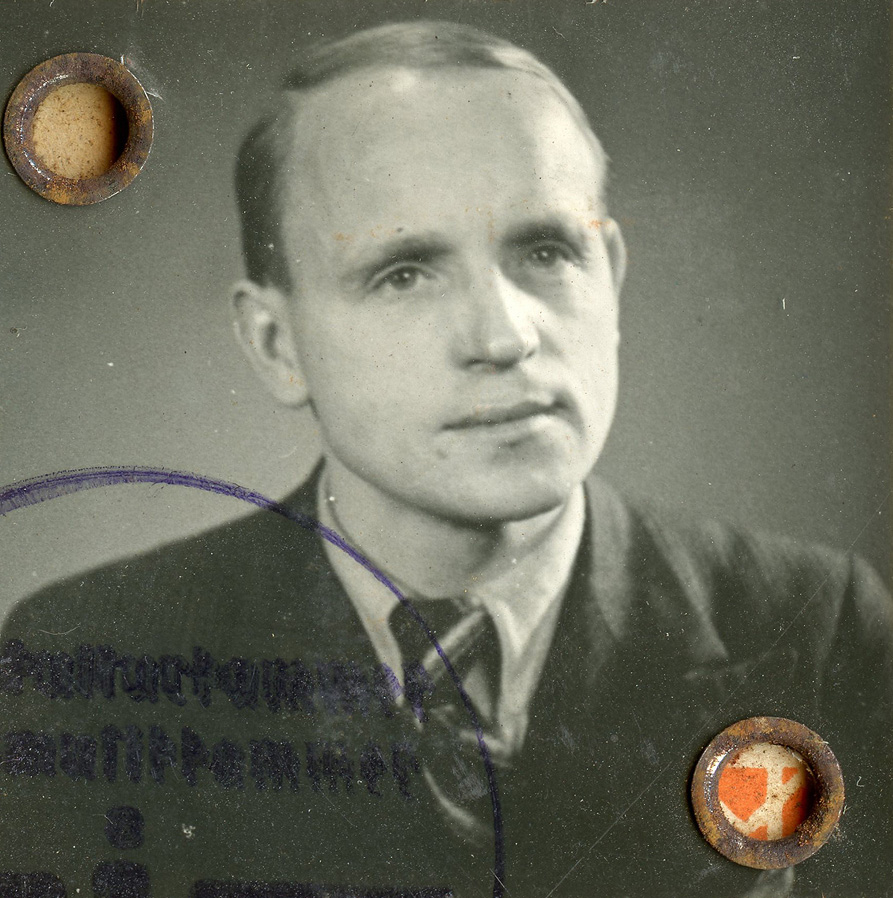
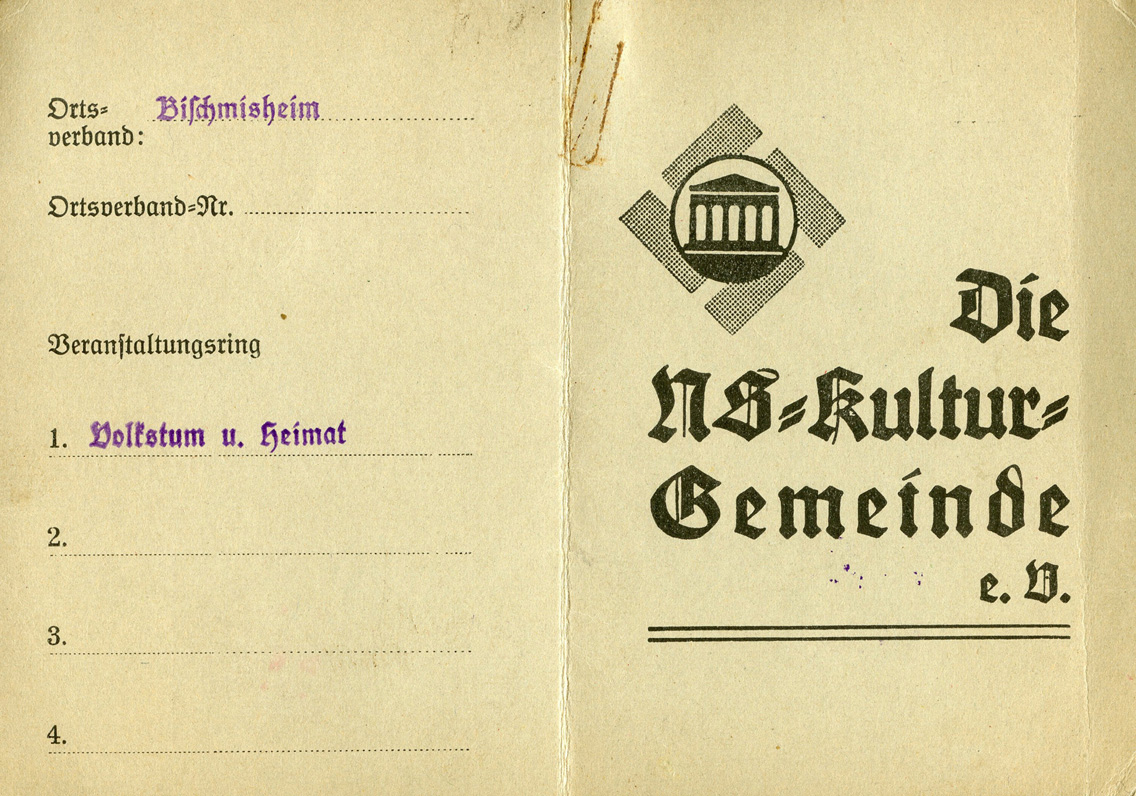
[Below: This rather rare book says: 'Die NS=Kultur=Gemeinde' (The NS Culture Community). Click to see more.]
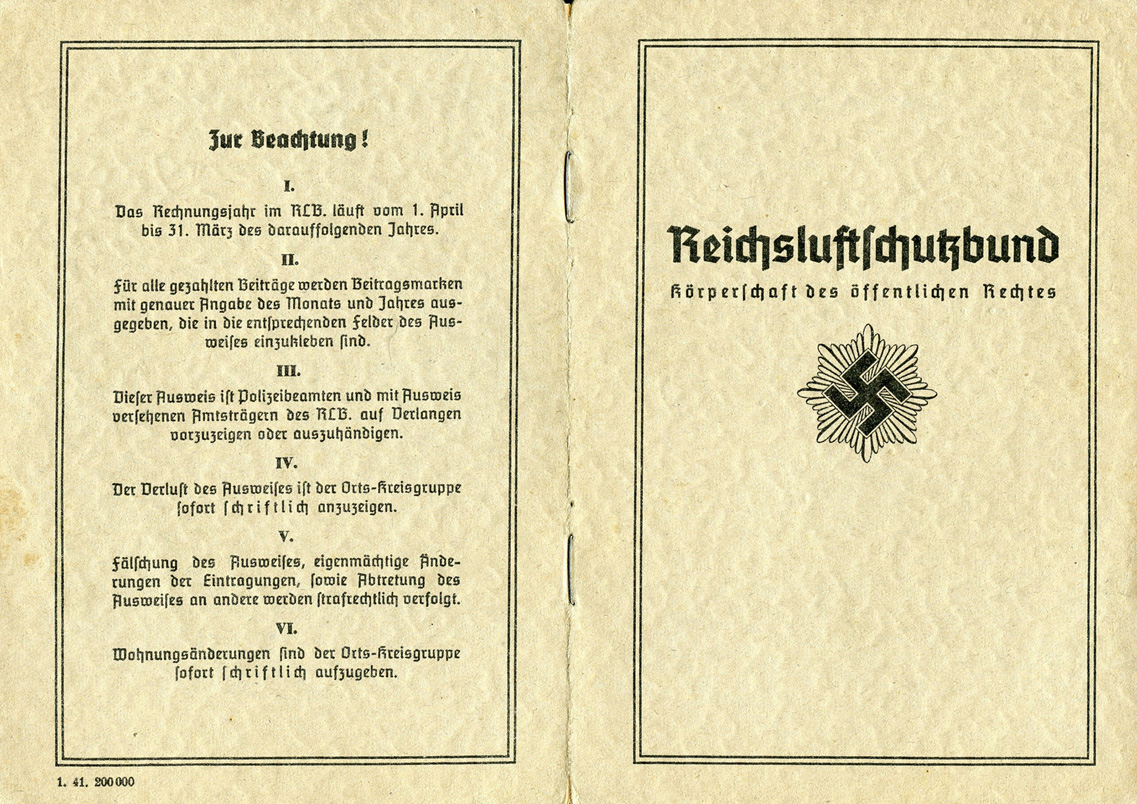
[Below: This book says: 'Reichsluftschutzbund - Körperschaft des öffentlichen Rechtes' (Reich Air Protection Association - Corporation under public law). Click to see more.]
[Below: This rare book says: 'Reichsmusikkammer' (Reich Music Chamber). Click to see more.]
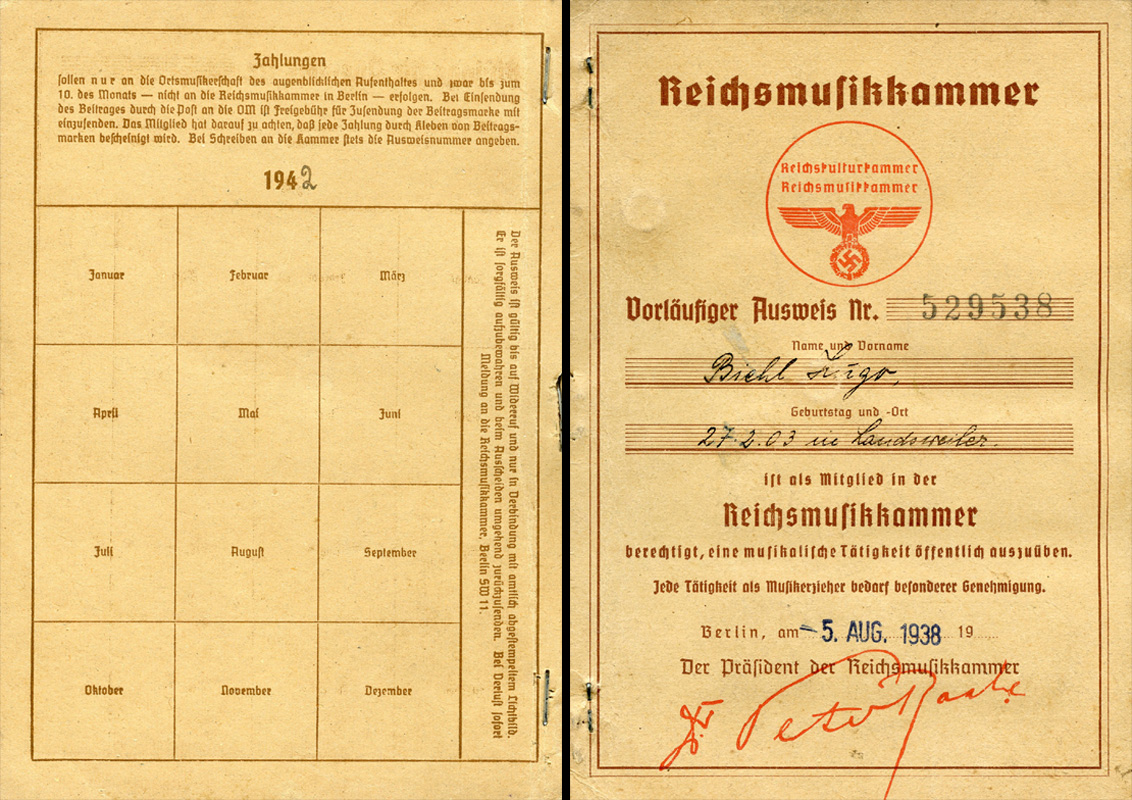
[Below: This card says: 'Nationalsozialistischer Lehrerbund' (National Socialist Teachers' League). Click to see more.]
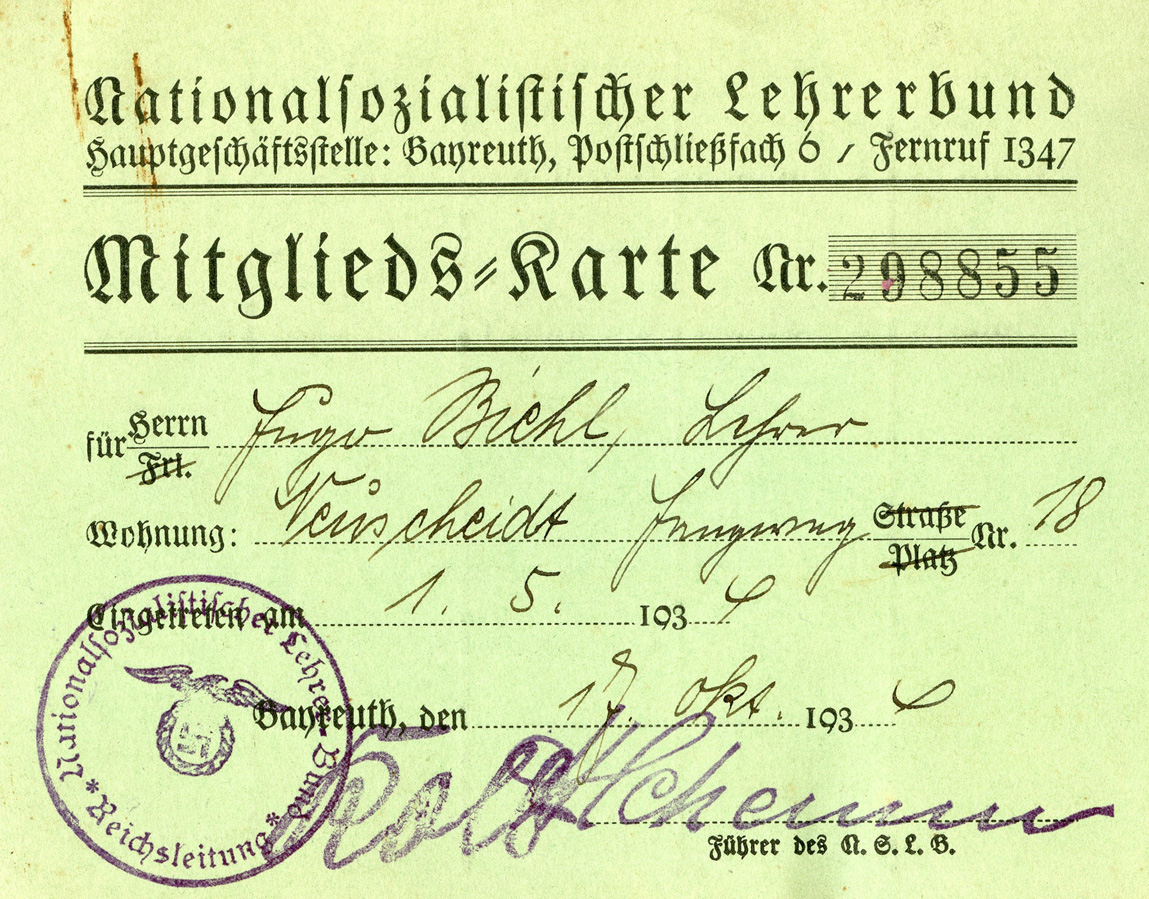
[Below: This card says: 'Nationalsozialistischer Lehrerbund Saargebiet' (National Socialist Teachers' League Saarland). Click to see more.]
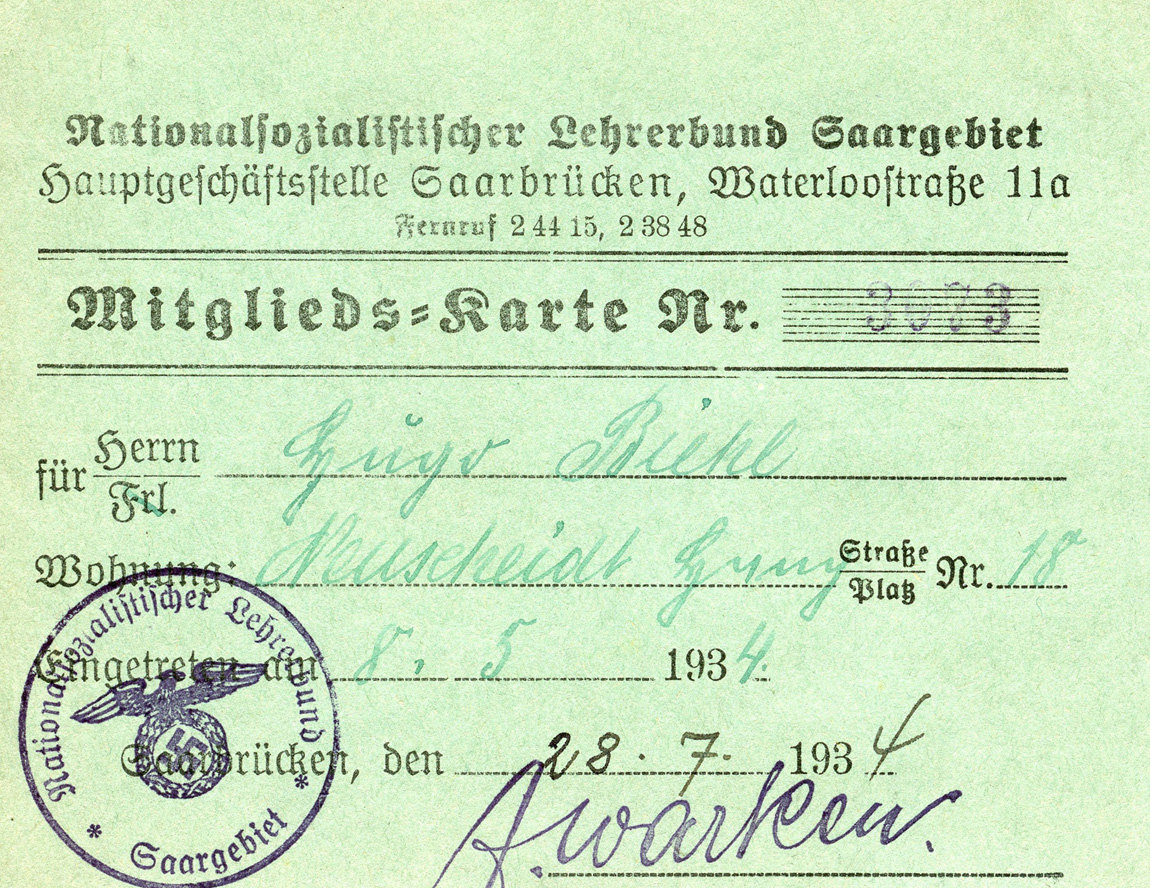
[Below: This card was his wife Anna's, it says: 'Reichsluftschutzbund' (Reich Air Protection Association). Click to see more.]
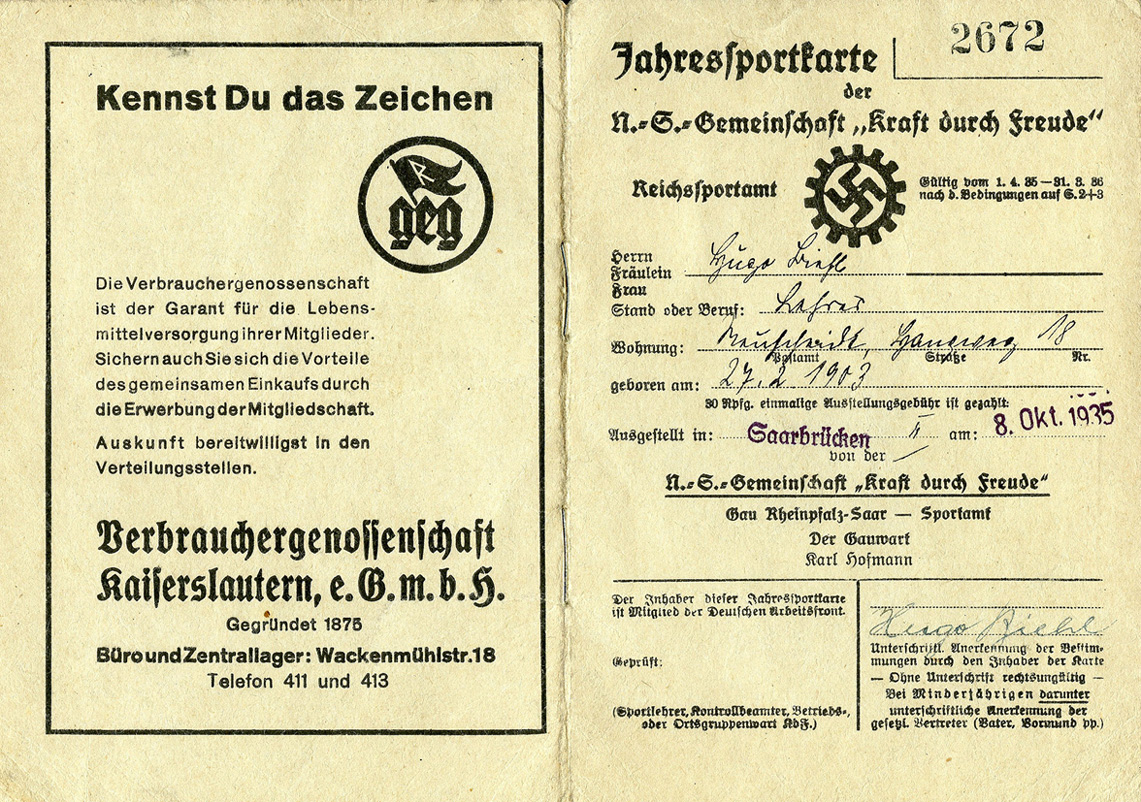
[Below: This card says: 'N.S. Volkswohlfahrt' (N.S. People's Welfare). Click to see more.]
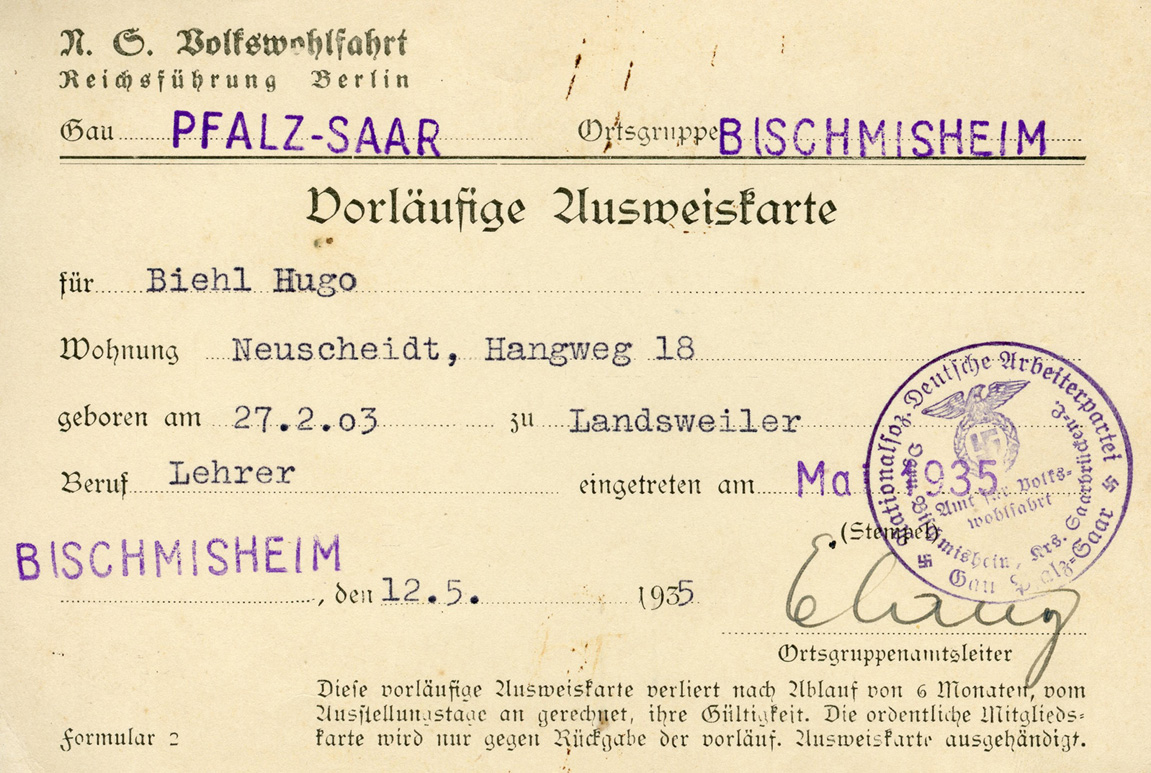
[Below: This card says: 'N.S. Volkswohlfahrt' (Exception permit to enter the Lorraine area). The regions of Alsace and Lorraine were contested throughout modern history between Germany and France. This card was issued just five months after France surrendered to Germany. Click to see more.]
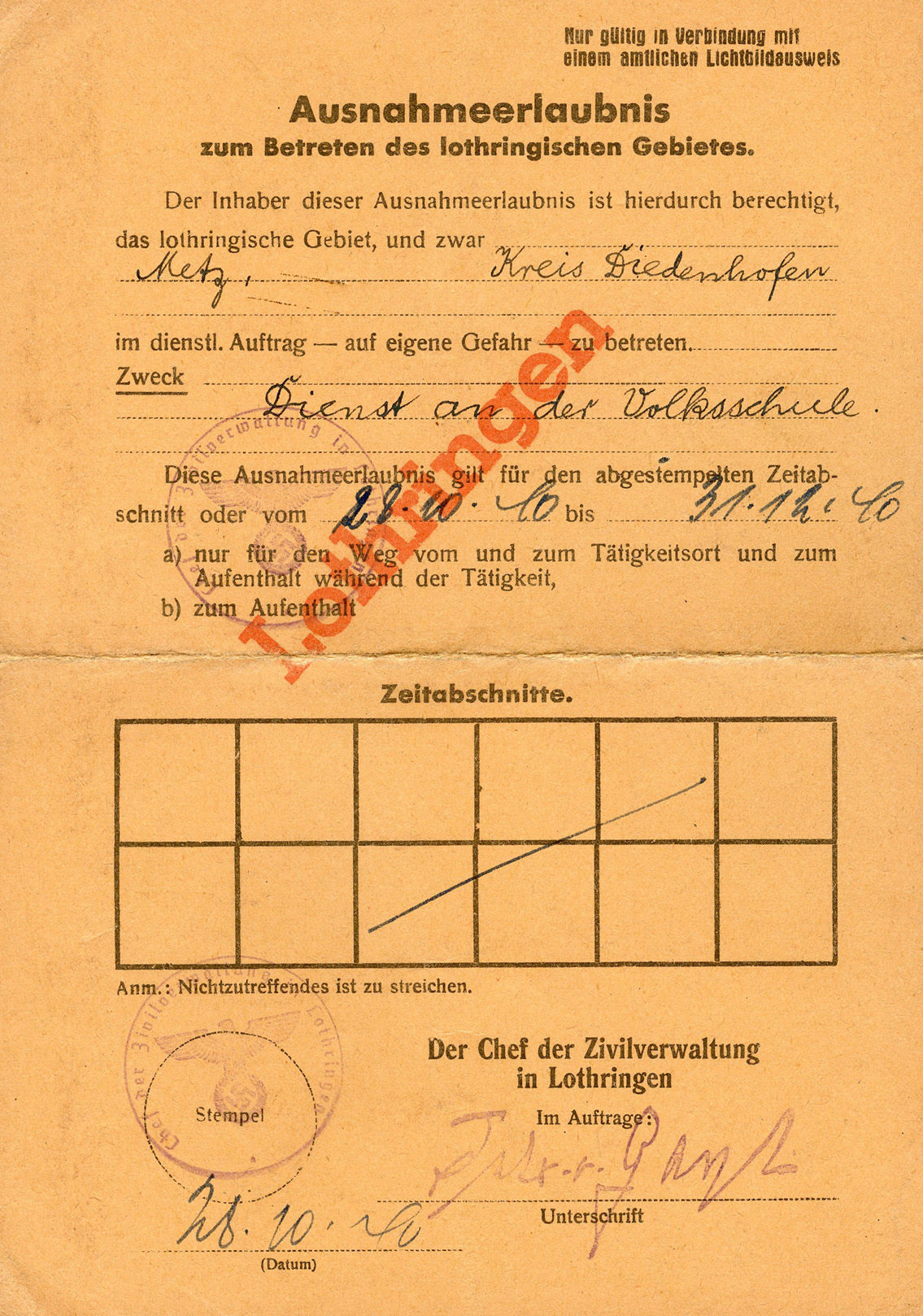
[Below: This card says: 'Heimkehrerausweis' (Returnee identification card). Click to see more.]
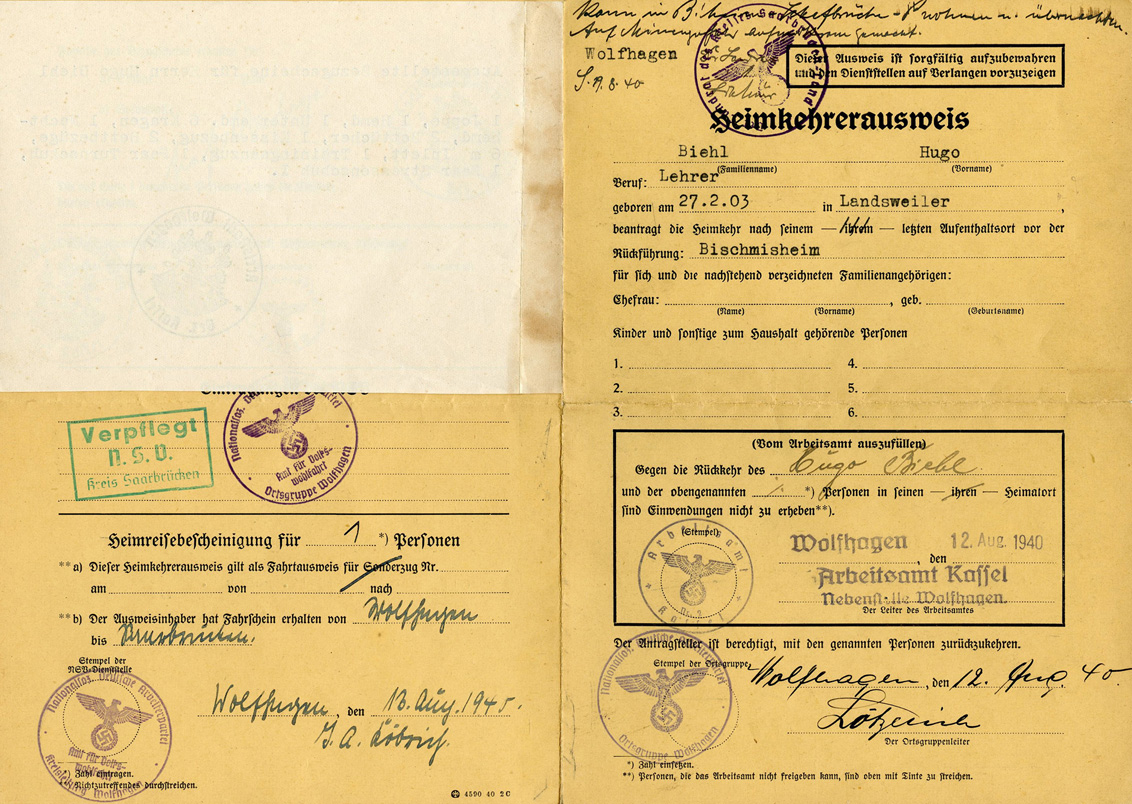
[Below: This card says: 'Jahressportkarte der N.=S.=Gemeinschaft "Kraft durch Freude"' (Annual sports card of the N.=S.=Community "Strength through Joy"). Click to see more.]
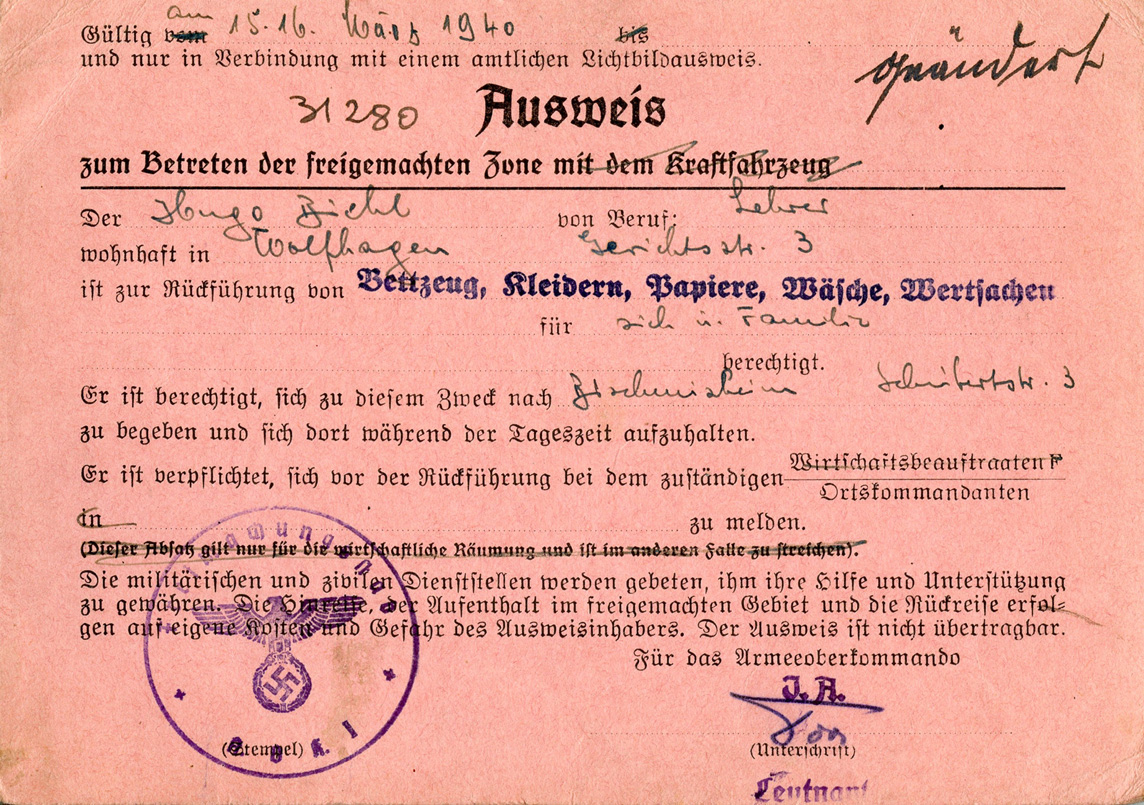
[Below: This card says: 'Ausweis zum Betreten der freigemachten Zone' (Permit to enter the cleared zone). Click to see more.]
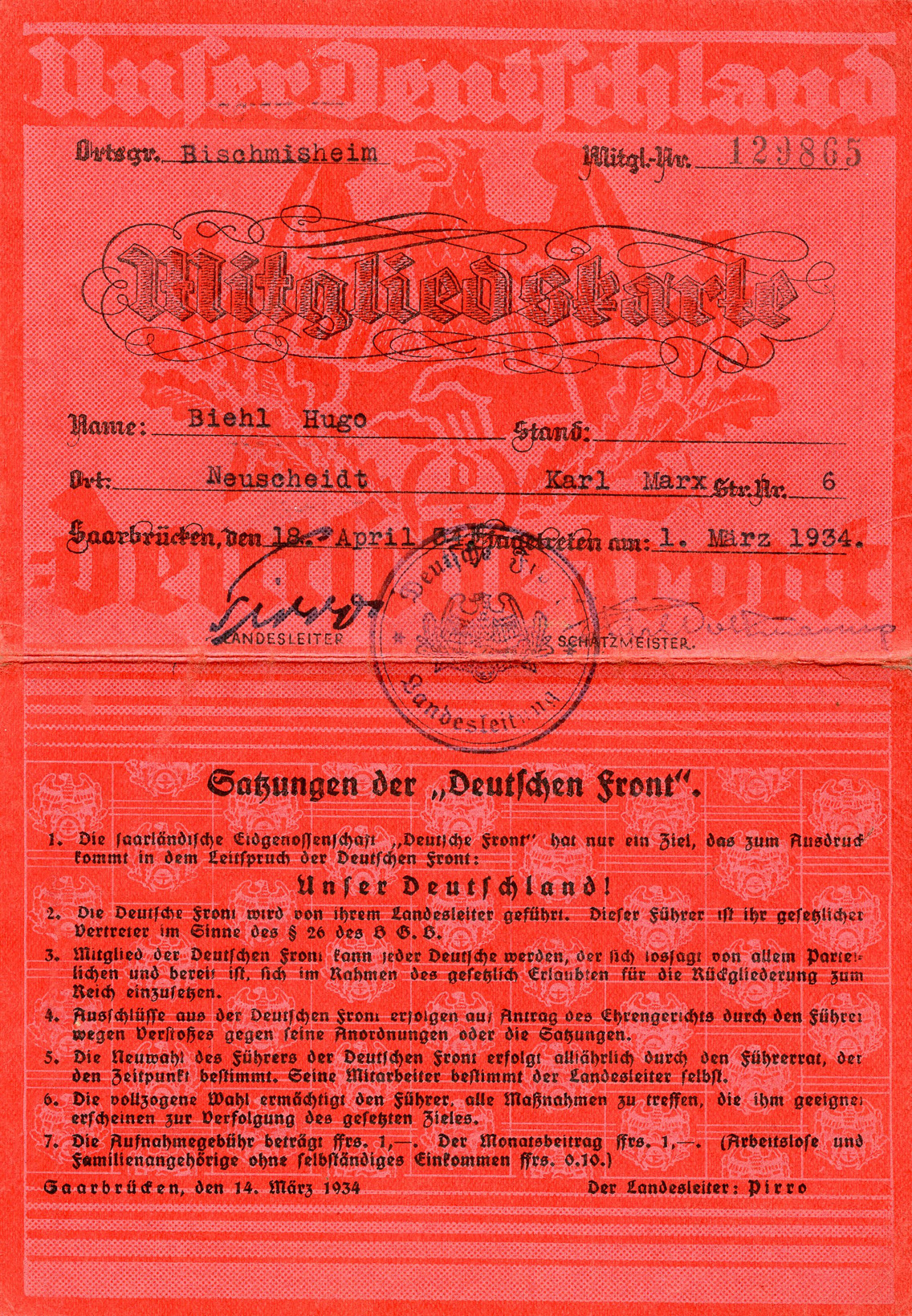
[Below: This card says: 'Unser Deutschland' (Our Germany) and below it says: 'Satzungen der "Deutschen Front"'. (Statutes of the "German Front"). This card was issued in 'Bischmisheim', a district in Saarland. Click to see more.]

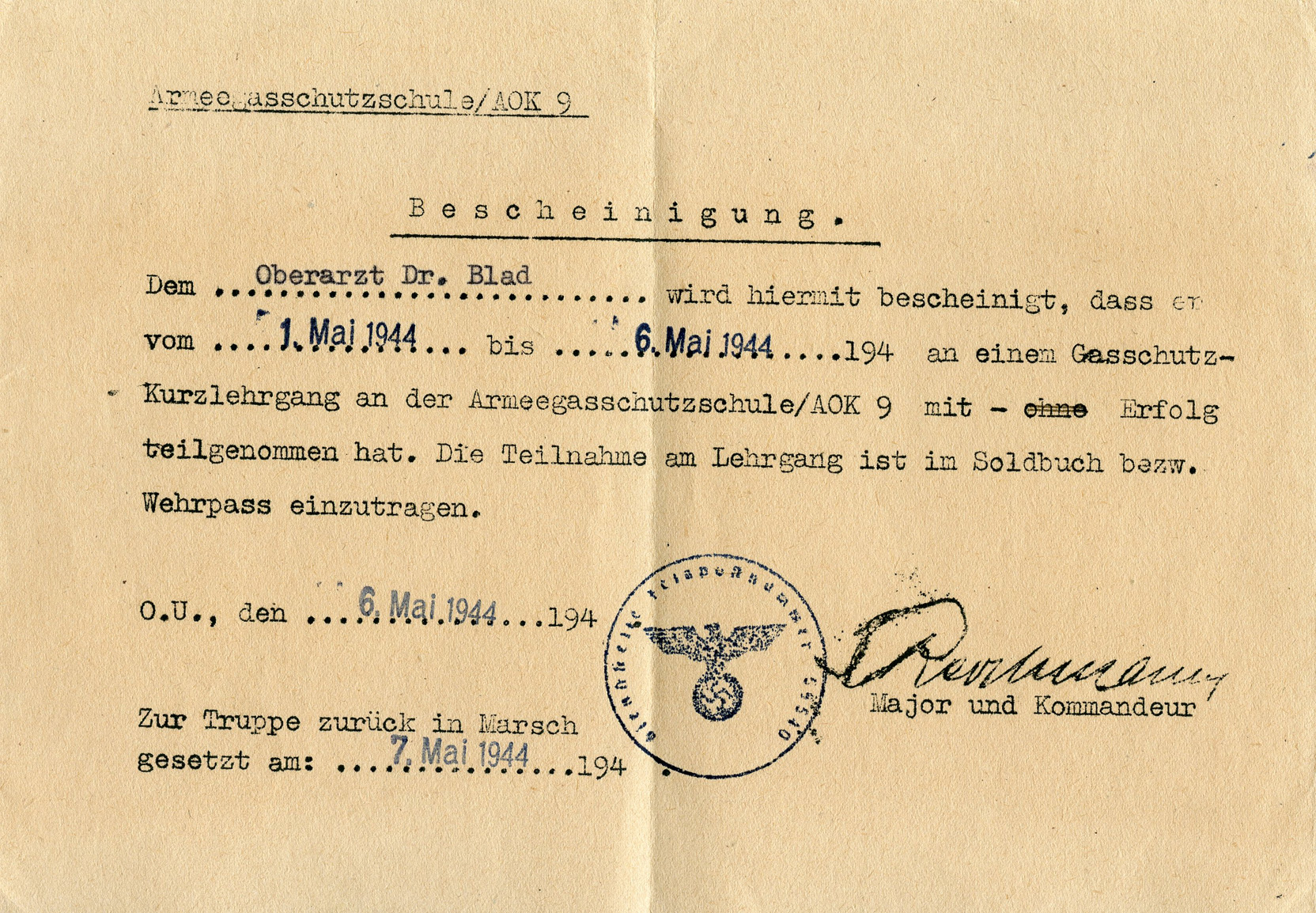
[Below: This card says:
'Armeegasschutzschule'
(Army Gas Protection School).]
'Bescheinigung
Dem Oberarzt Dr. Blad wird hiermit bescheinigt, dass er
vom 1. Mai 1944 bis 6. Mai 1944 an einem Gasschutz-
Kurzlehrgang an der Armeegasschutzschule/AOK 9 mit - Erfolg
teilgenommen hat. Die Teilnahme am Lehrgang ist im Soldbuch bezw.
Wehrpass einzutragen.'
(Certificate
The senior physician Dr. Blad is hereby certified that he
from May 1, 1944 to May 6, 1944 participated in a gas protection
short course at the Army Gas Protection School/AOK 9 successfully.
Participation in the course is recorded in the
soldier's log book.)
And at the bottom it says:
'Zur Truppe zurück in Marsch
gesetzt am: 7. Mai 1944'
(Military service pass.
Returned to the troops on: May 7, 1944)
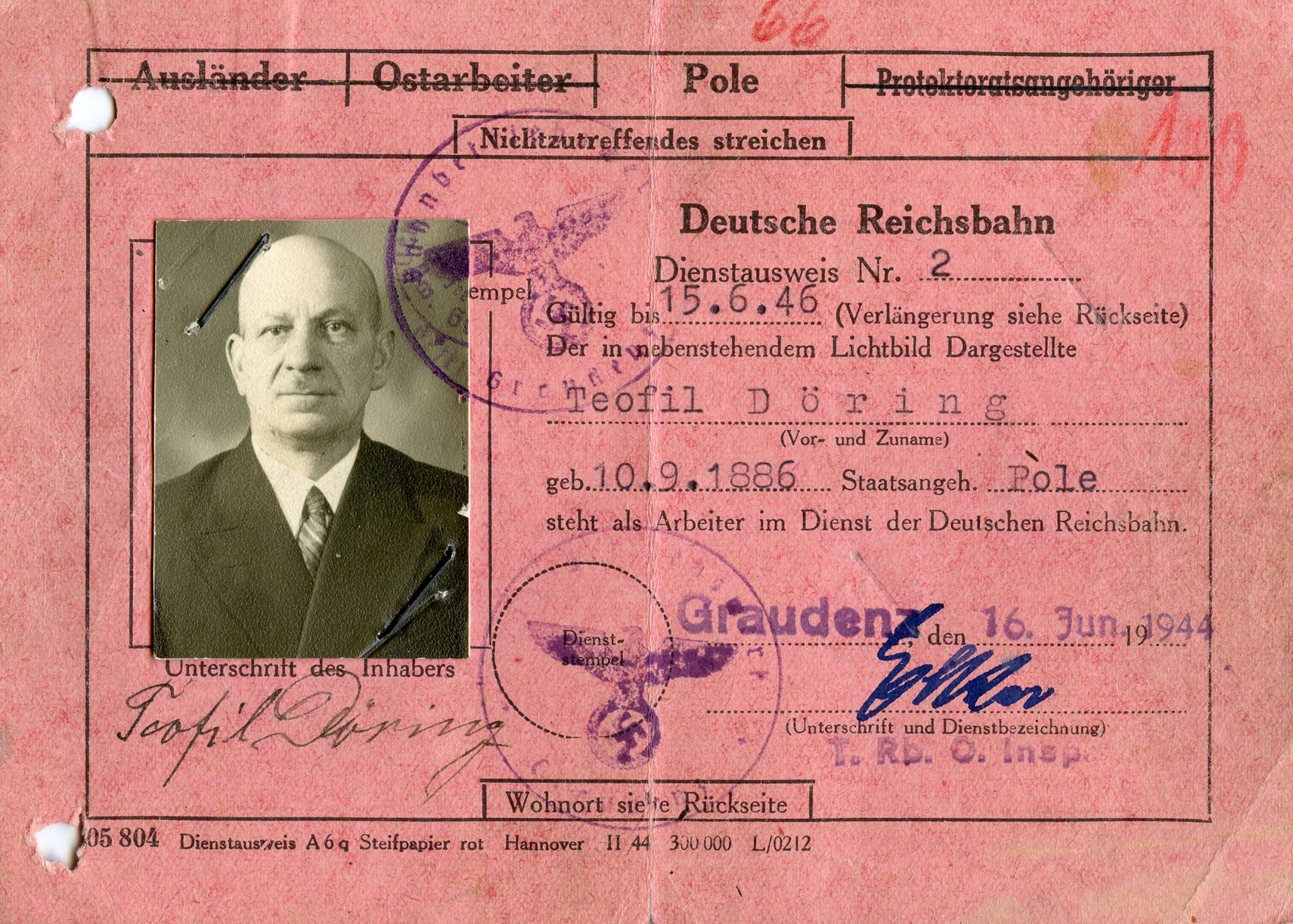
[Below: This is a German Reichsbahn employee card. It says:
'Nichtzutreffendes streichen
Deutsche Reichsbahn
Gültig bis 15.6.46 (Verlängerung siehe Rückeite)
Der in nebenstehendem Lichtbild Dargestellte
Teofil Döring
geb. 10.9.1886 Staatsangeh Pole
steht als Arbeiter im Dienst der Deutschen Reichsbahn'
(Delete as applicable
Deutsche Reichsbahn
Valid until June 15, 1946 (see reverse for extension)
The person depicted in the adjacent photograph
Teofil Döring
born September 10, 1886, Polish citizen
is employed as a worker by the Deutsche Reichsbahn).]
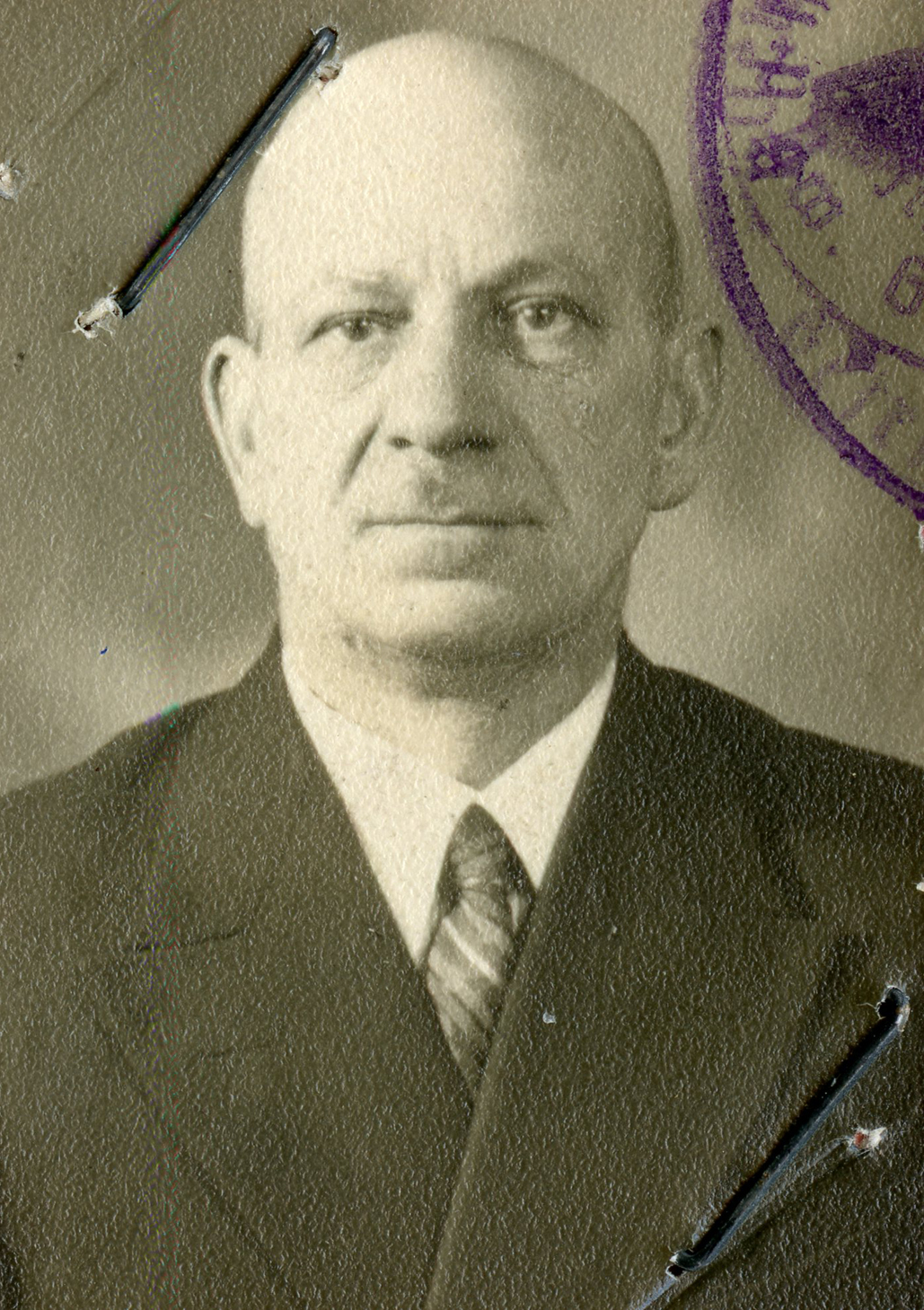
[Below: Close-up of Teofil. Teofil is generally a Polish and Romanian name, while Döring is German.]
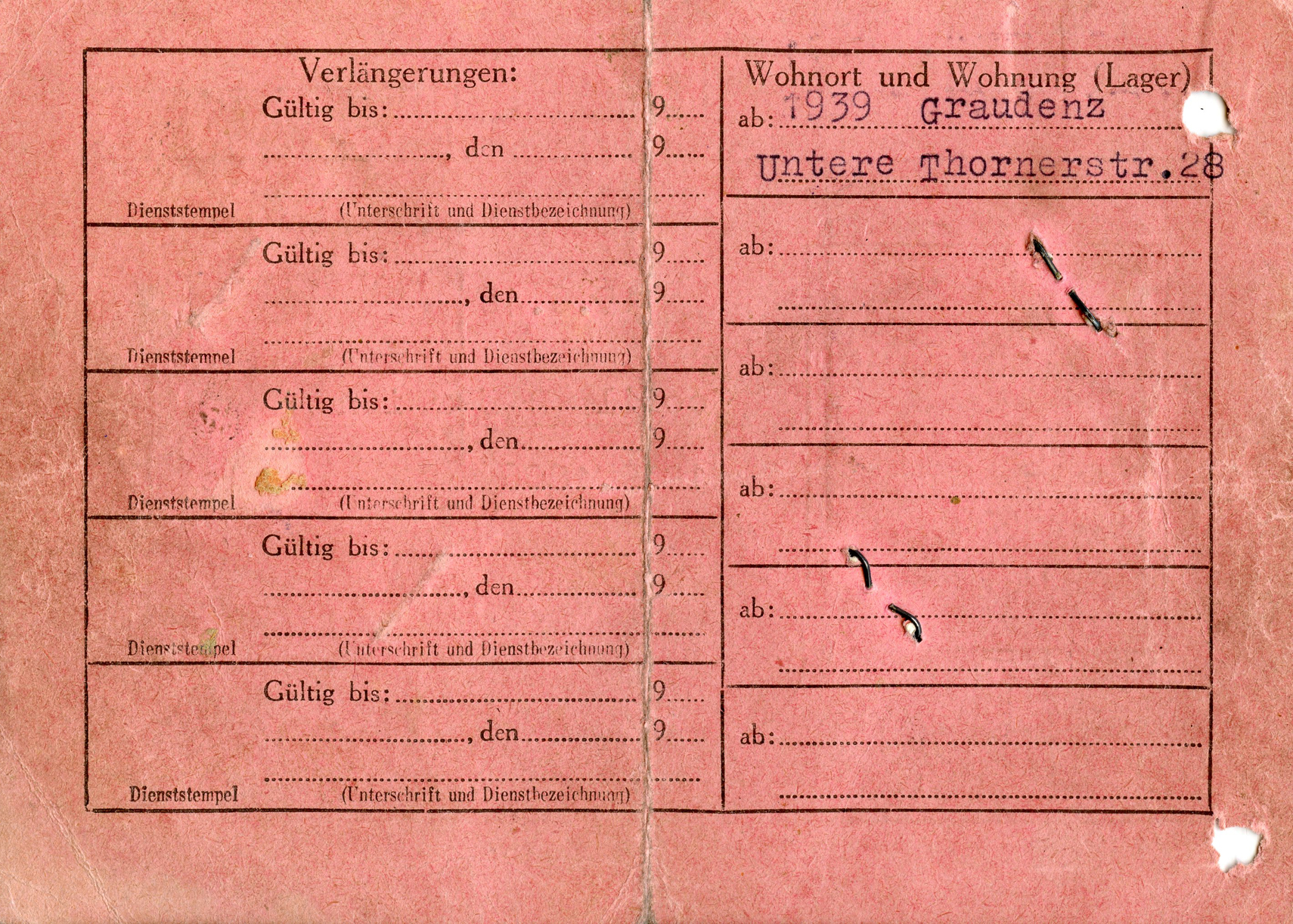
[Below: Reverse of card. Graudenz is in northern Poland today, but was part of the German empire. The criminal Treaty of Versailles stole it from German after WWI and gave it to Poland, even though there were more Germans than Poles living there.]
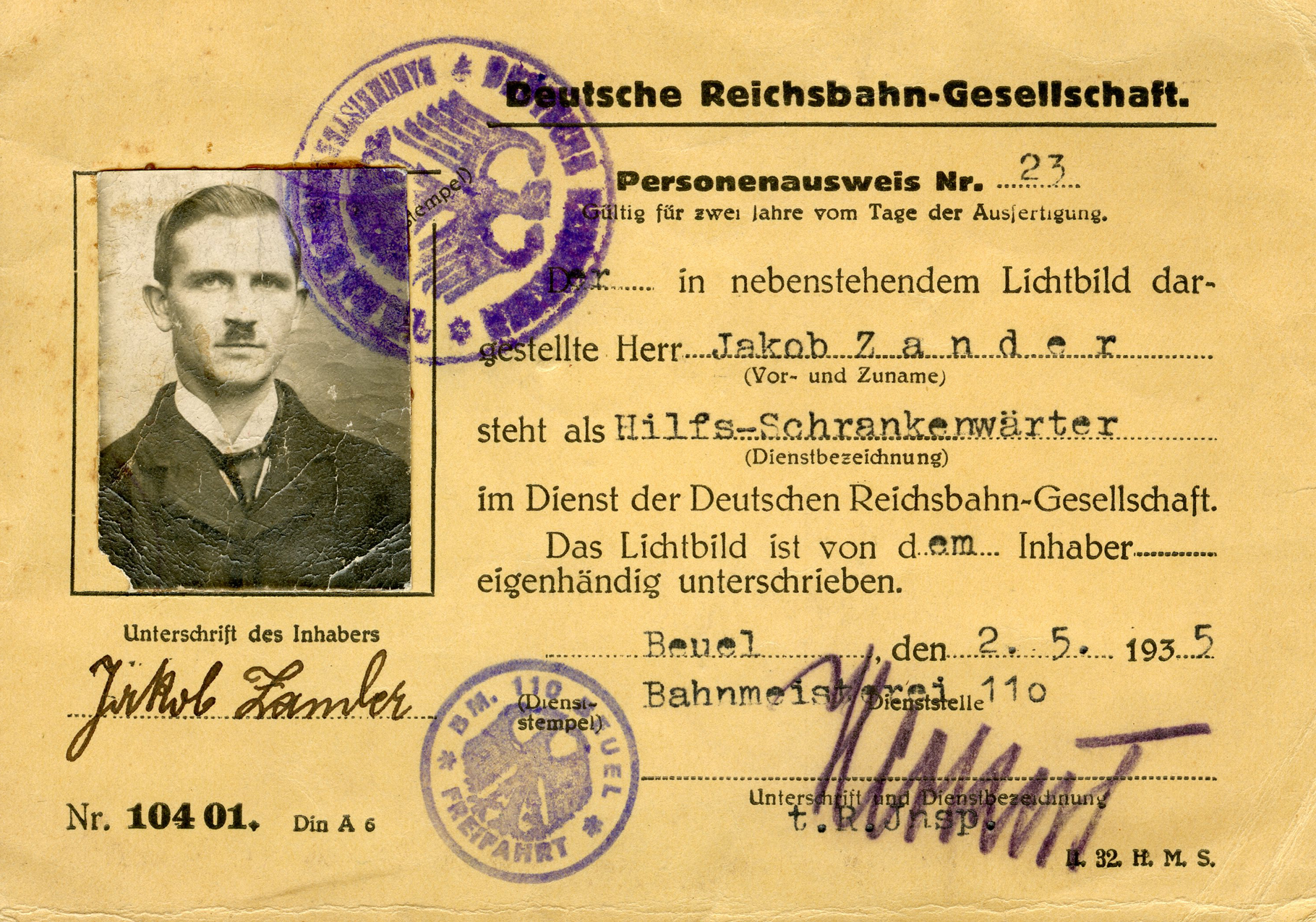
[Below: This is a German Reichsbahn employee card. It belonged to a suave-looking fellow named Jakob Zander. It says:
'Deutsch Reichsbahn-Gesellschaft' (German Railroad Company). It lists him as a 'Hilfs-Schrankenwärter' (Assistant barrier attendant). The reverse is blank.]
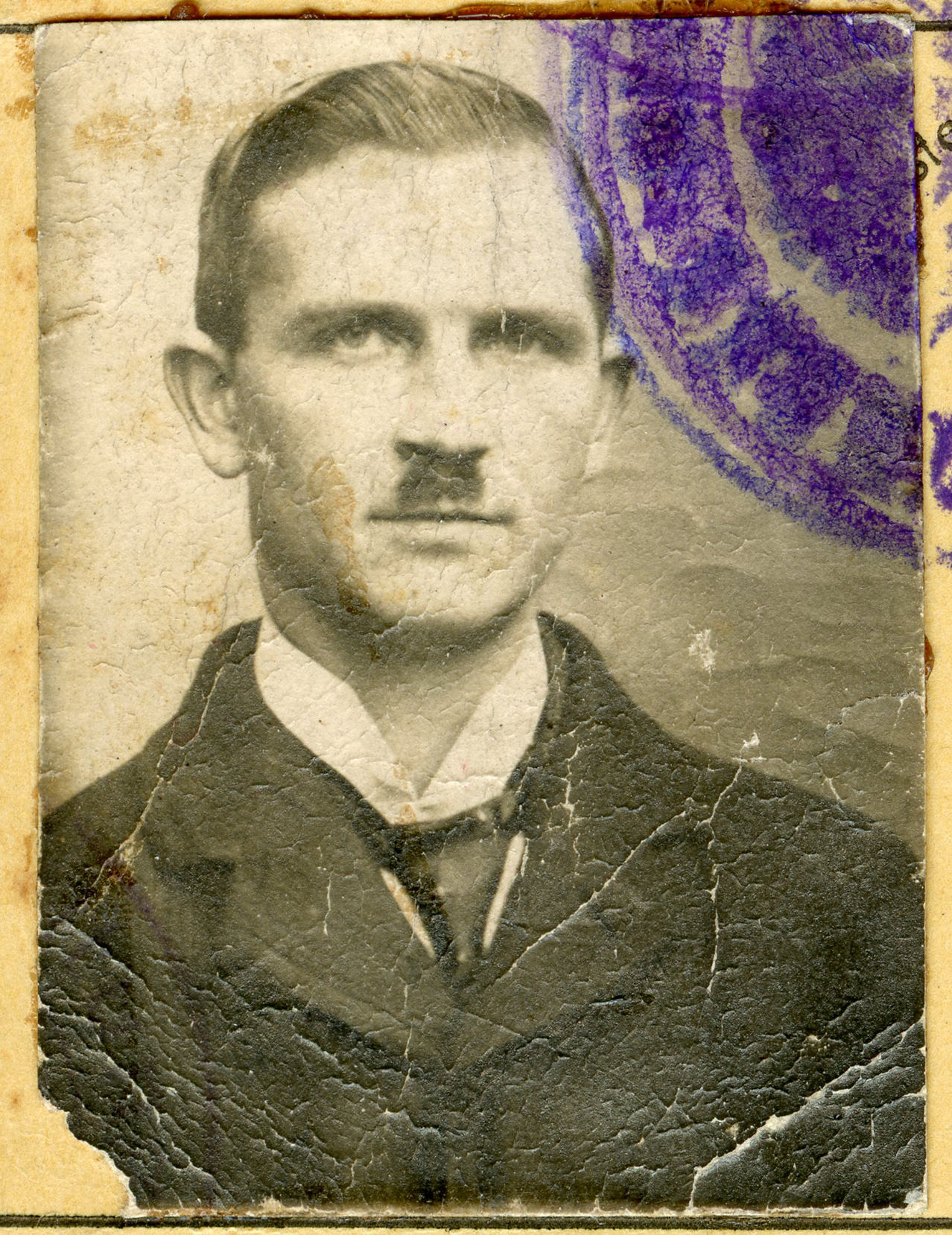
[Below: Close-up.]
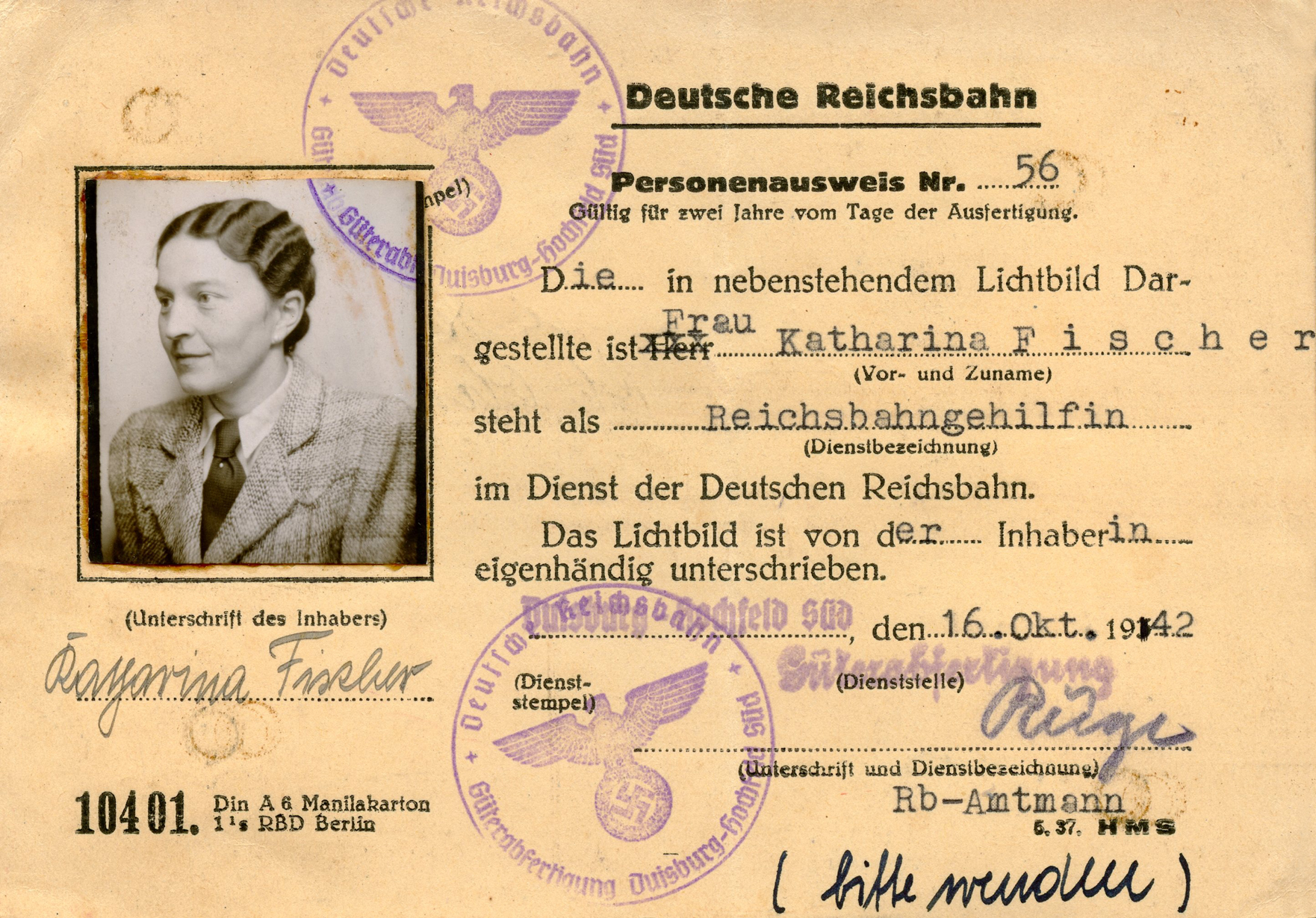
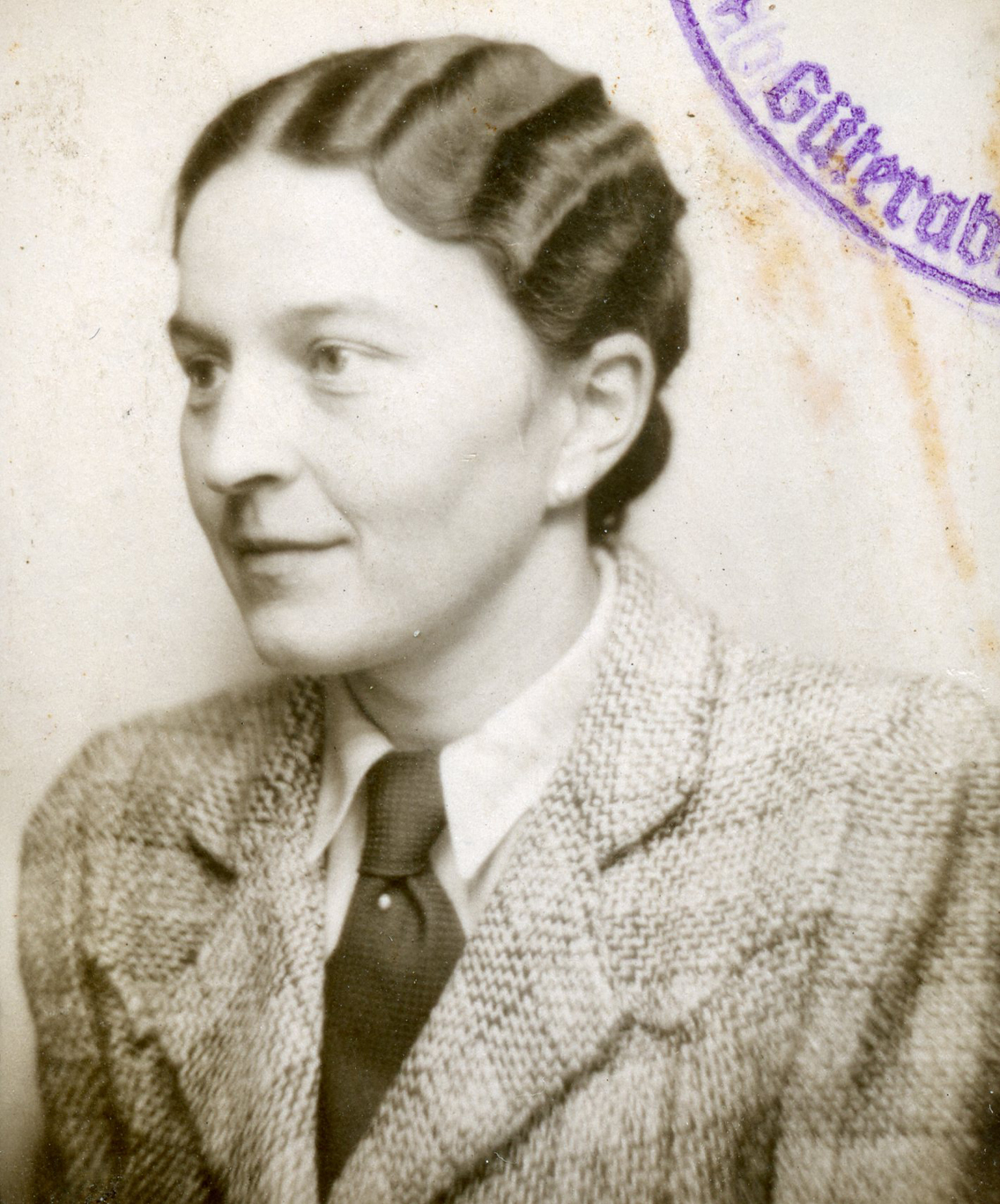
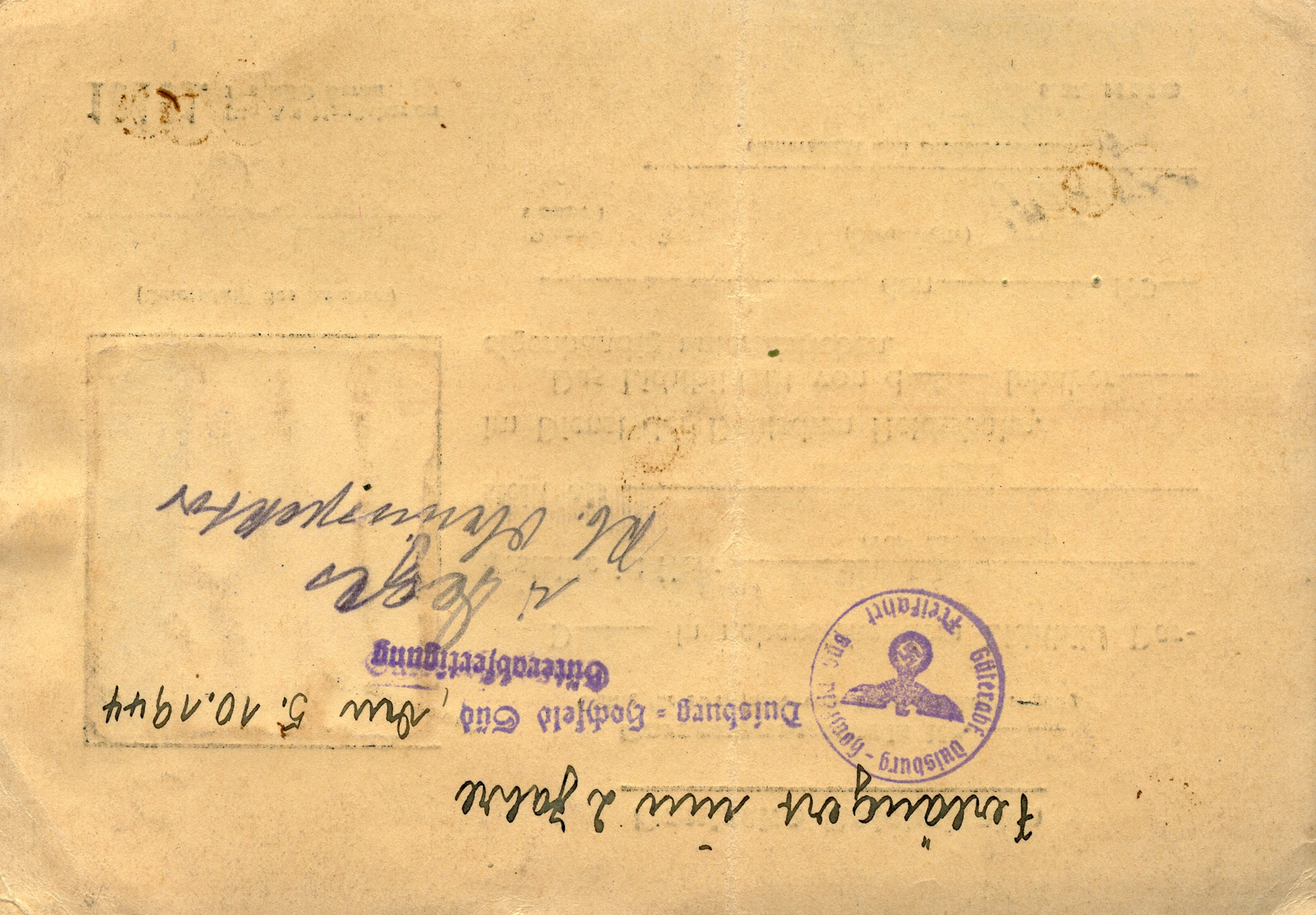
[Below: This is a German Reichsbahn employee card. It belonged to a woman named Katharina Fischer. It says:
'Deutsch Reichsbahn' (German Railroad). It lists her as a 'Reichsbahngehilfin' (Reichsbahn assistant).]
[Below: Close-up.]
[Below: Reverse.]
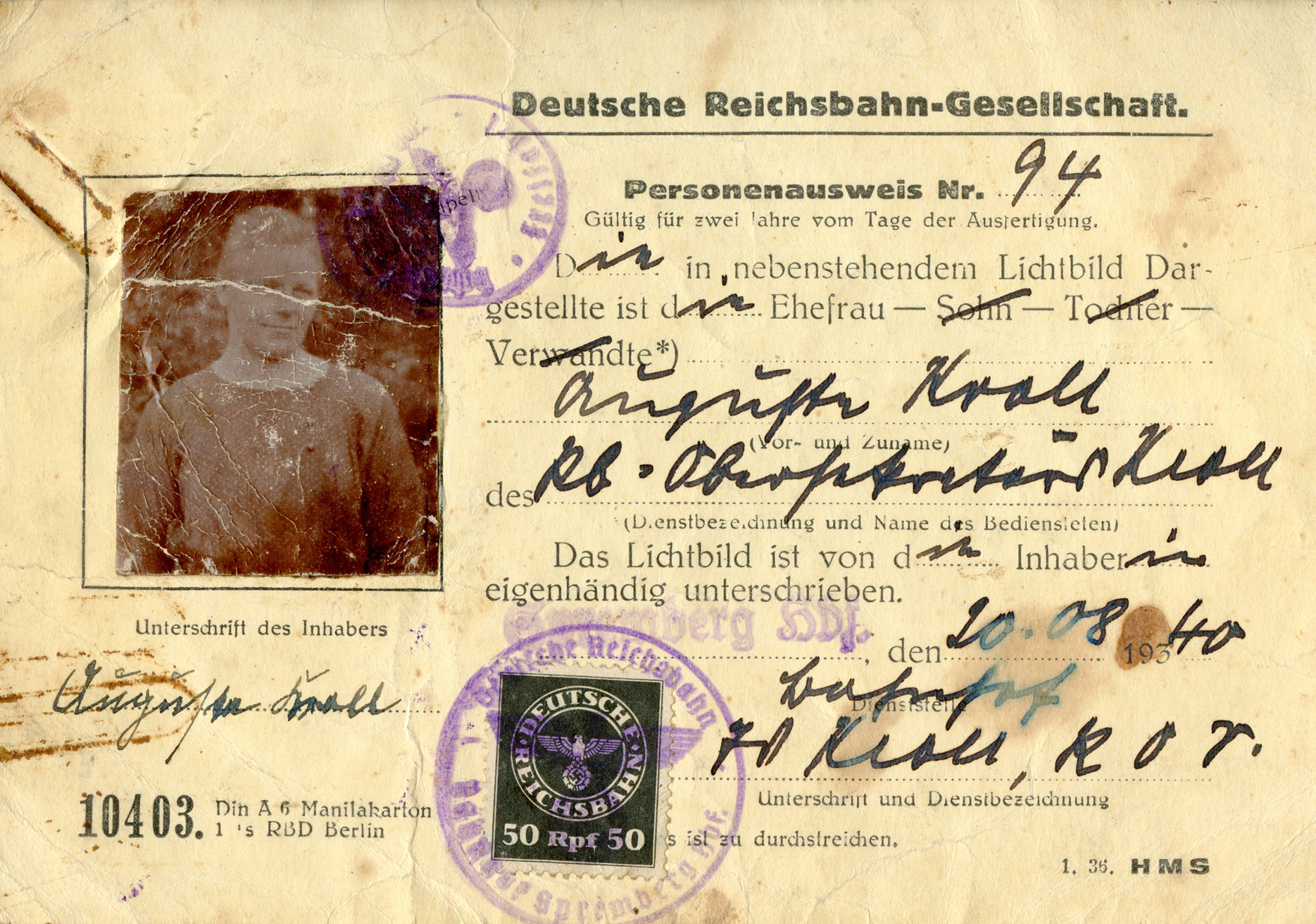
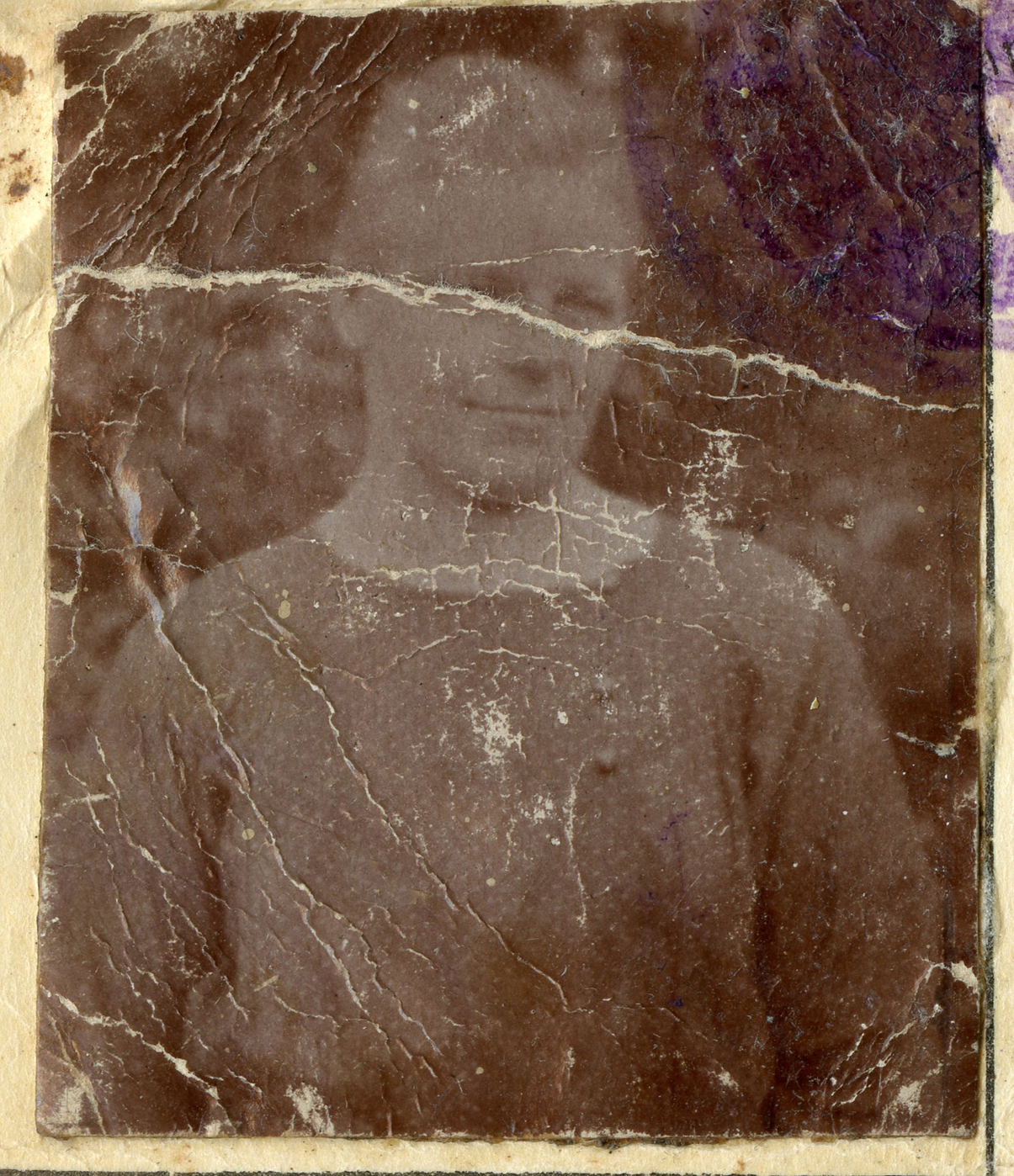
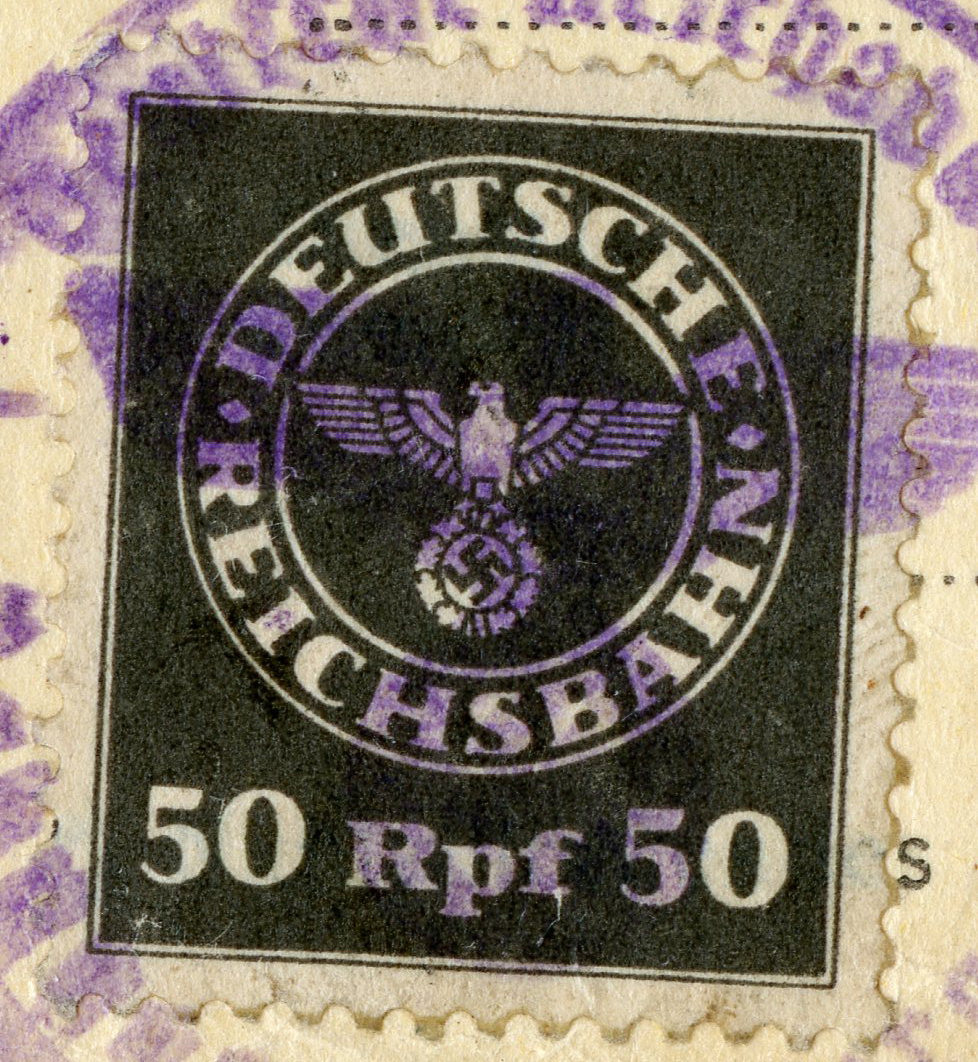
[Below: This is a German Reichsbahn employee card. It belonged to a woman named A. Kroll. Unfortunately I can't read her job description. This has a Reichsbahn tax stamp, which are pretty hard to find.]
[Below: Close-up.]
[Below: Tax stamp.]
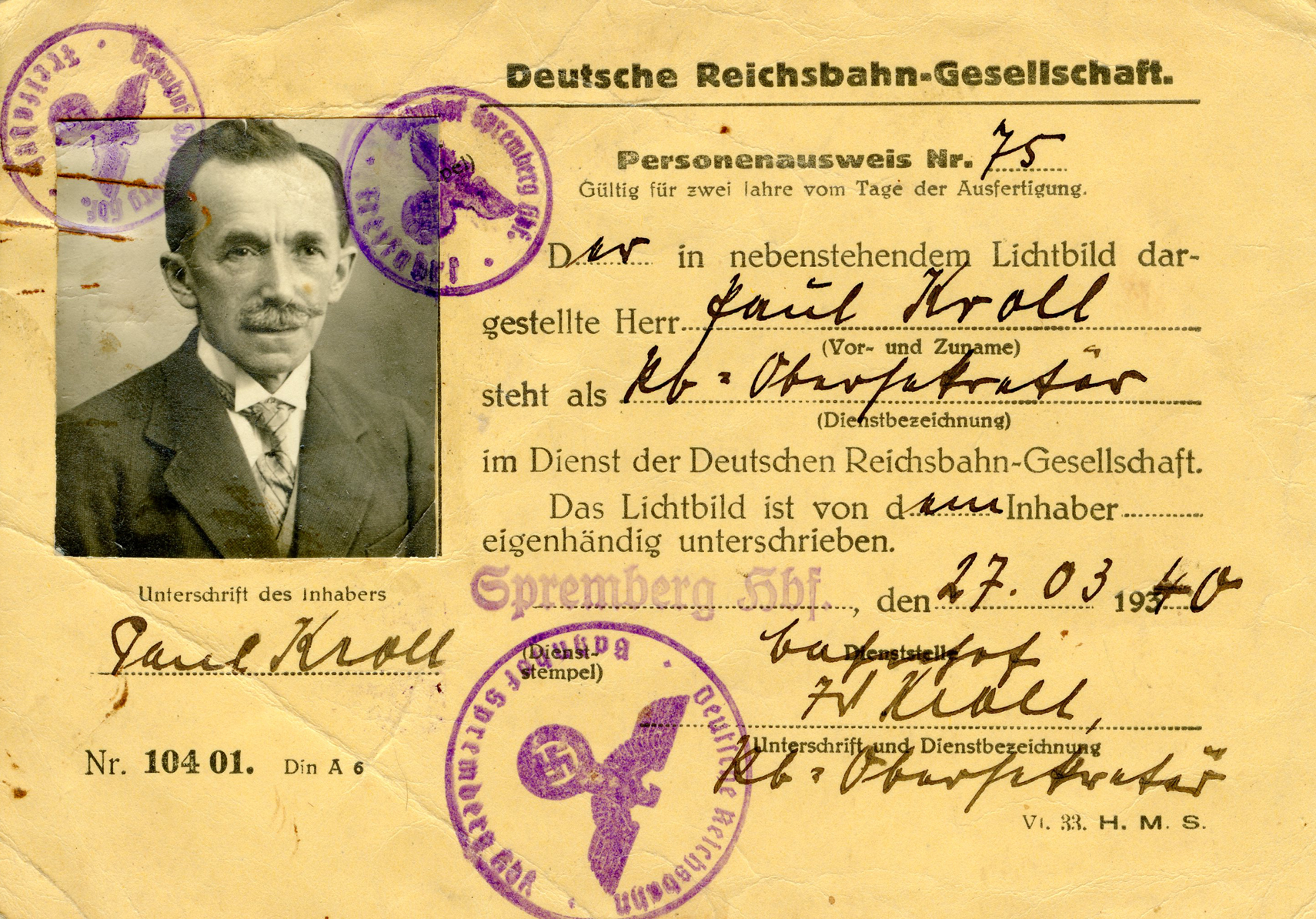
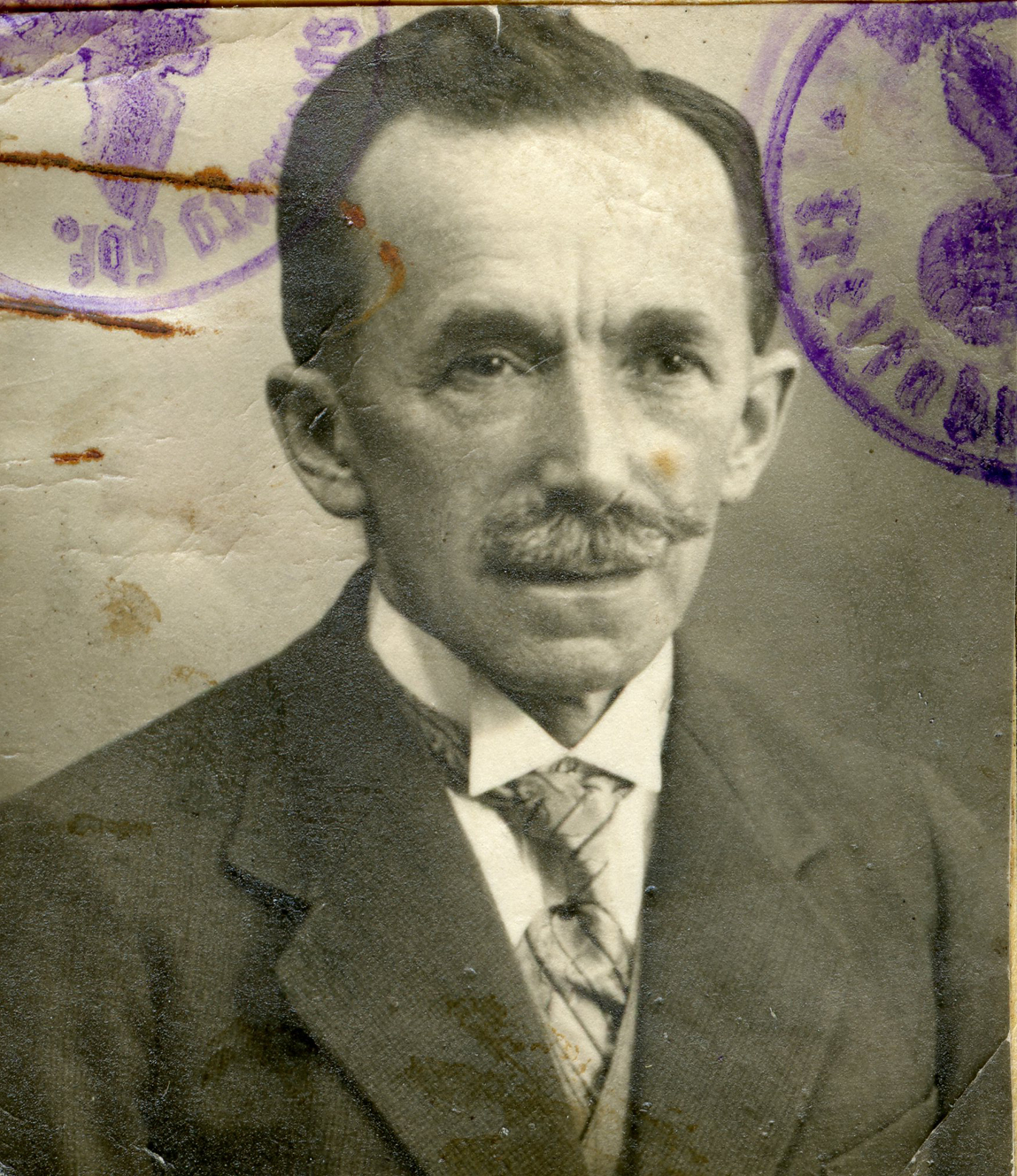
[Below: This is a German Reichsbahn employee card. It belonged to a man named Paul Kroll. He must be related or married to the Kroll woman above. Unfortunately I can't read his profession. This is dated March 27, 1940. The reverse of the card is blank.]
[Below: Close-up.]
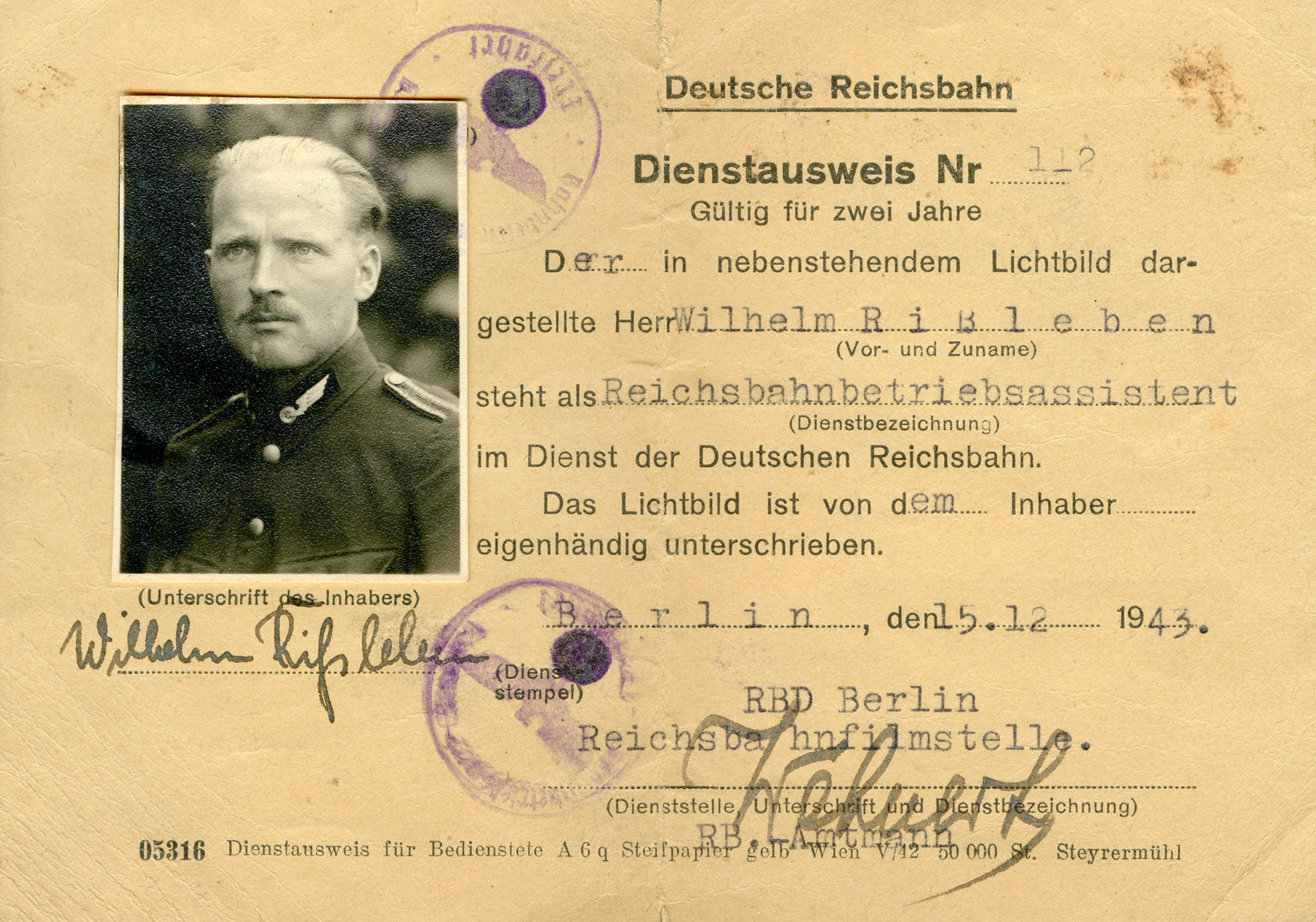
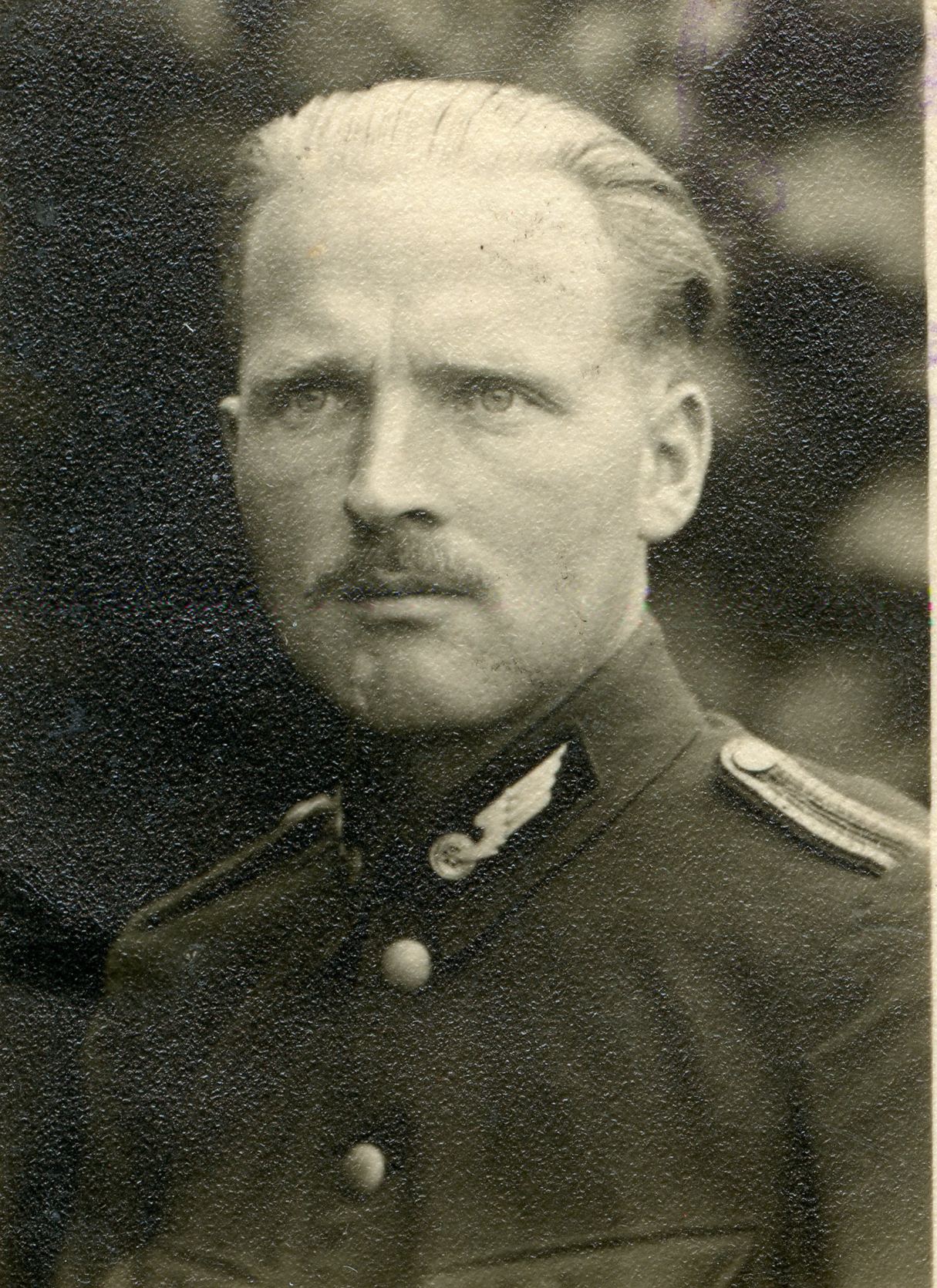
[Below: This is a German Reichsbahn employee card. It belonged to a handsome devil named Wilhelm Rißleben. It lists him as a 'Reichsbahnbetriebsassistant' (Reichsbahn operations assistant). Note that on the eagle and swastika stamp the swastika has been colored in by the Allies.]
[Below: Close-up.]
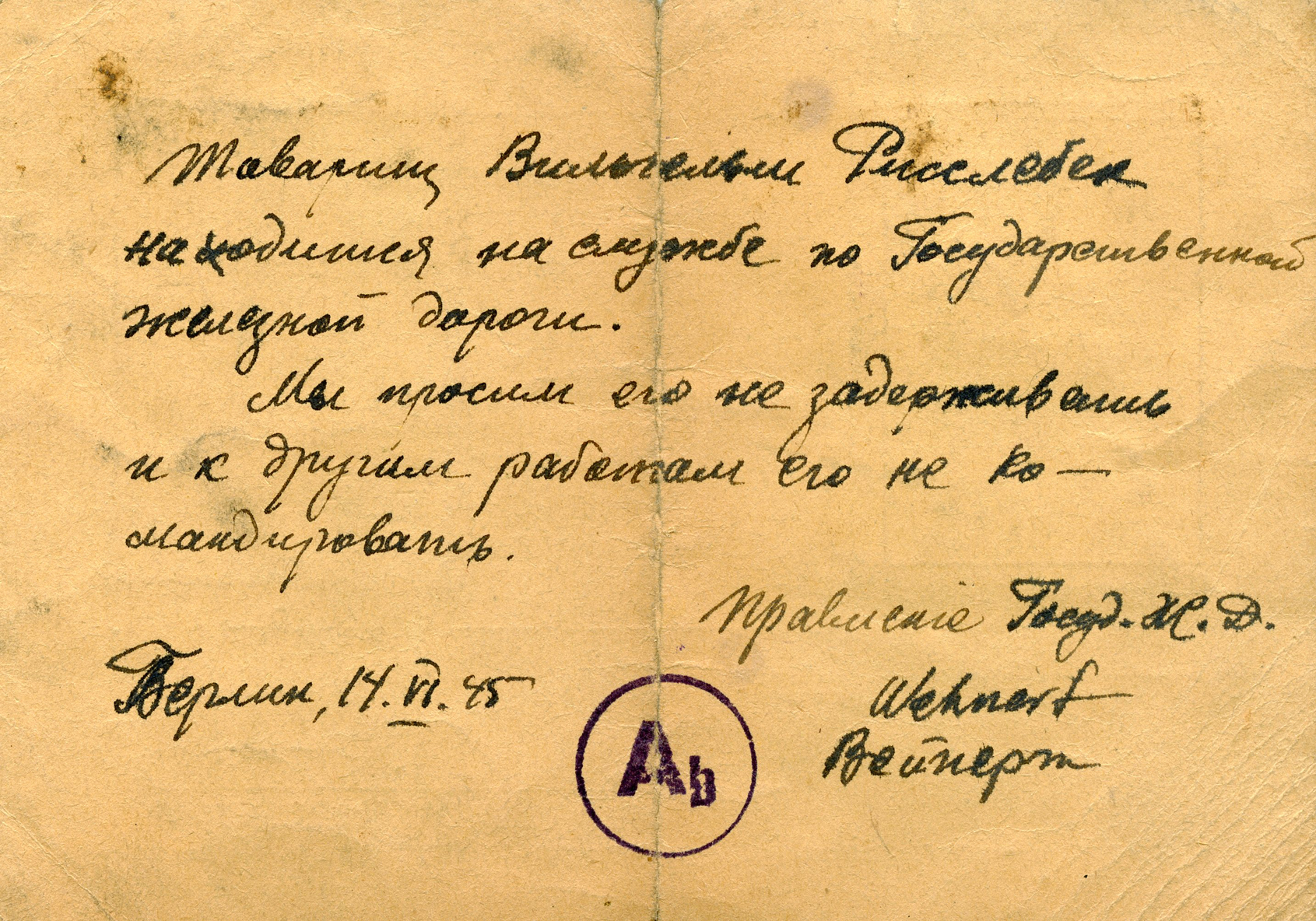
[Below: Reverse of card. This is dated June 14, 1945, so the Allies wrote whatever this is. The strange part it the Ab circle, that is a censor mark, meaning a censor has examined it. But I've only seen that used on mail...]
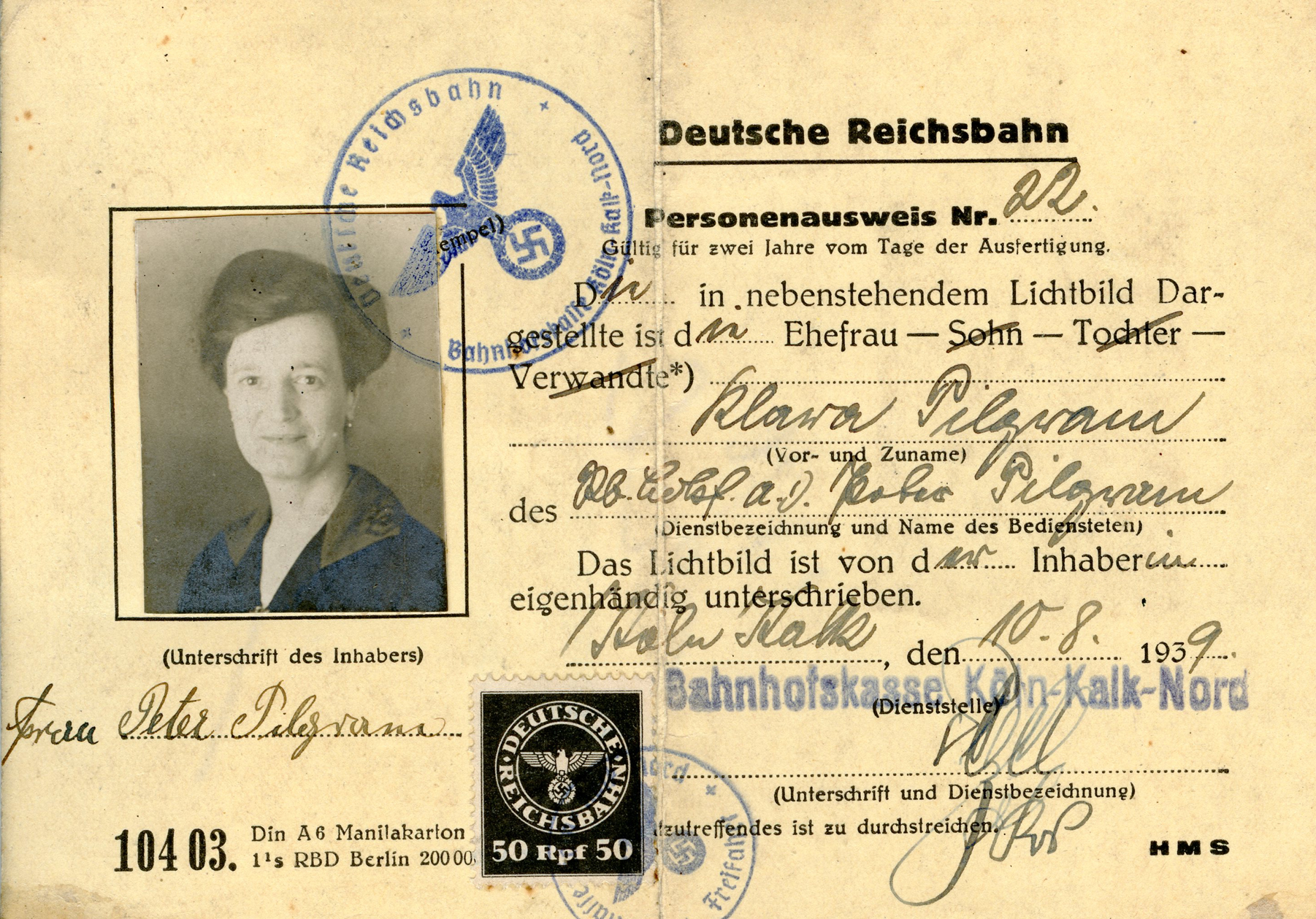
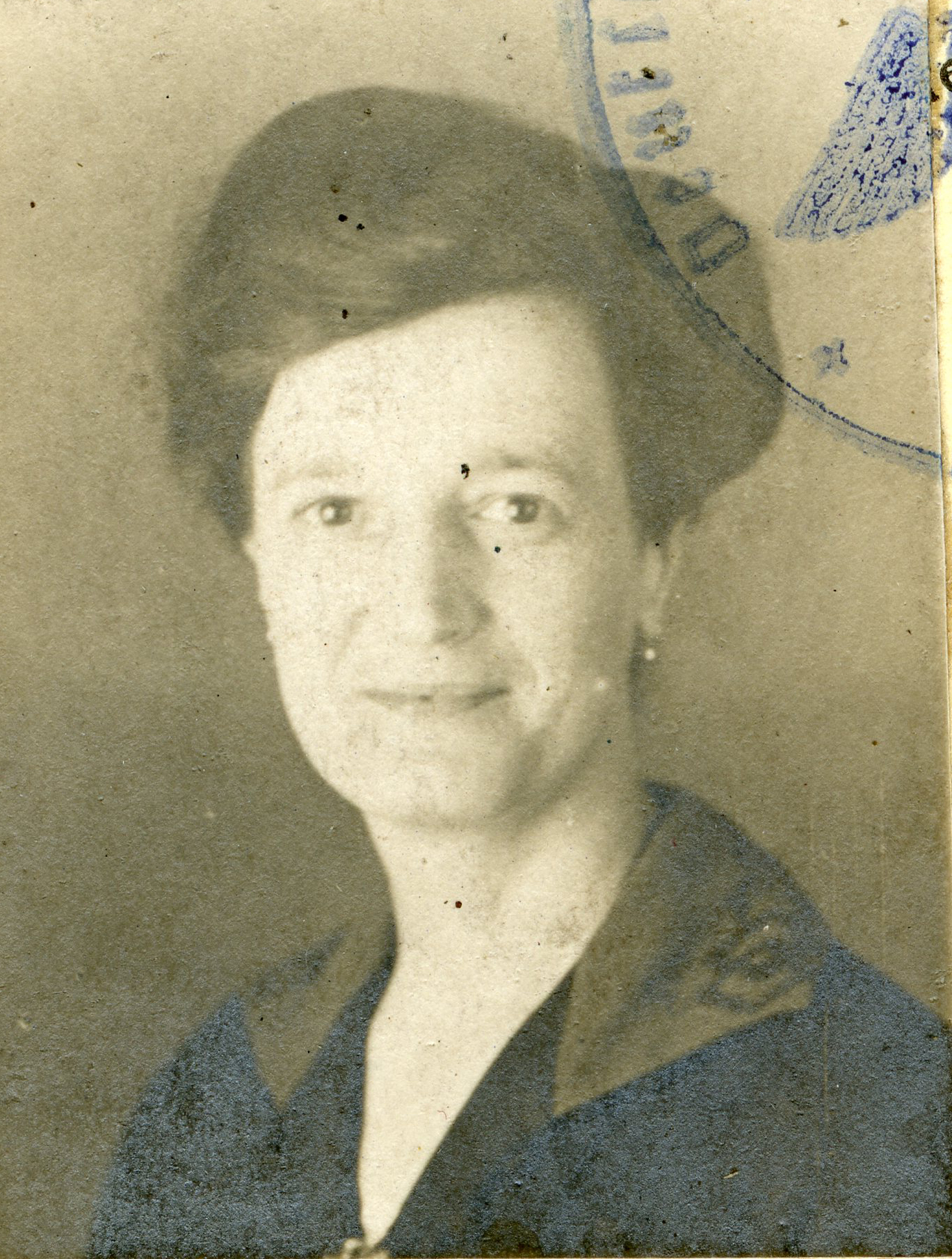
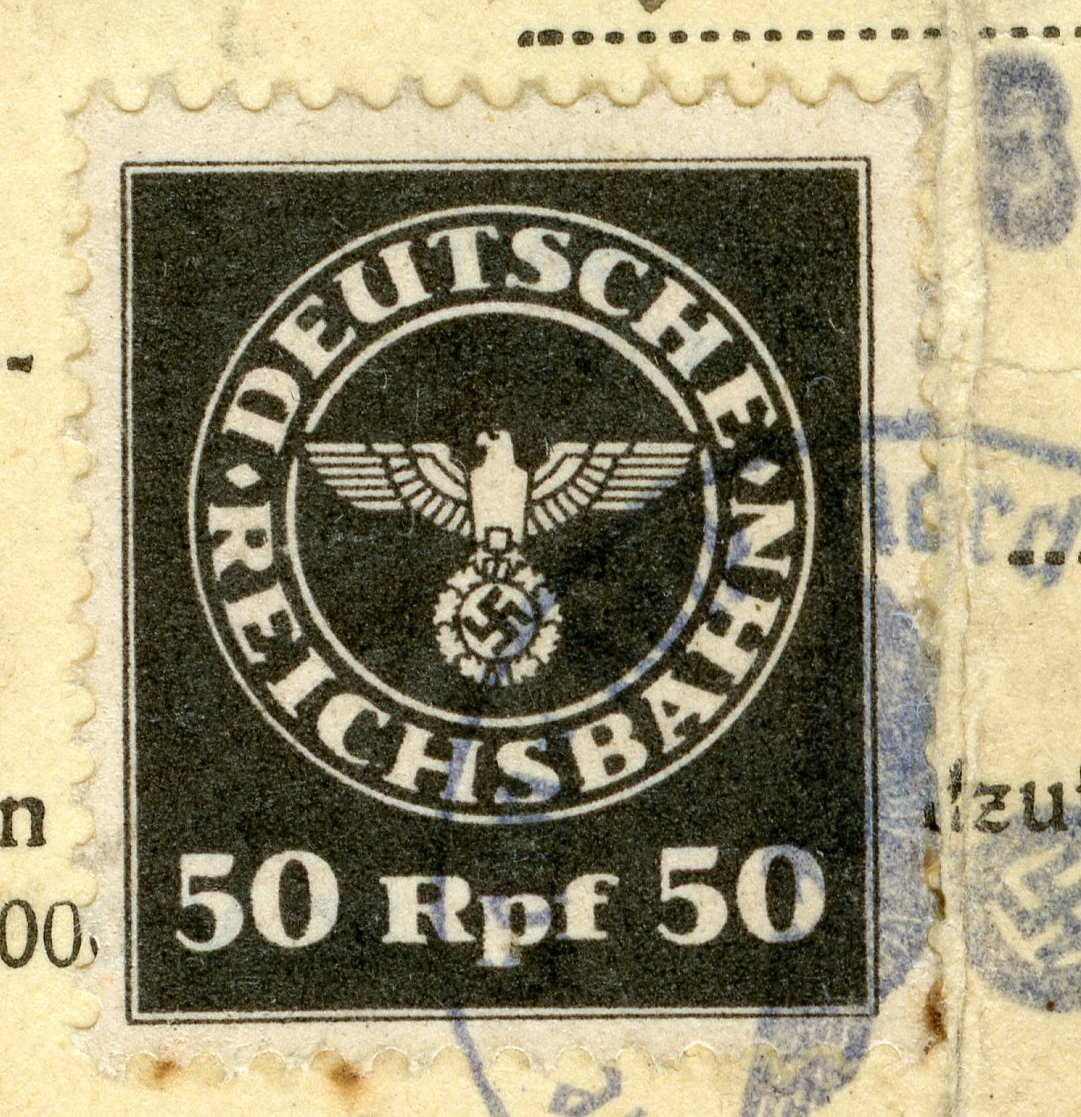
[Below: This is a German Reichsbahn employee card. It belonged to a woman named Klara Pilgram. Unfortunately we can't read what her profession was. It has a nice Reichsbahn tax stamp on the bottom.]
[Below: Close-up.]
[Below: Close-up of tax stamp.]
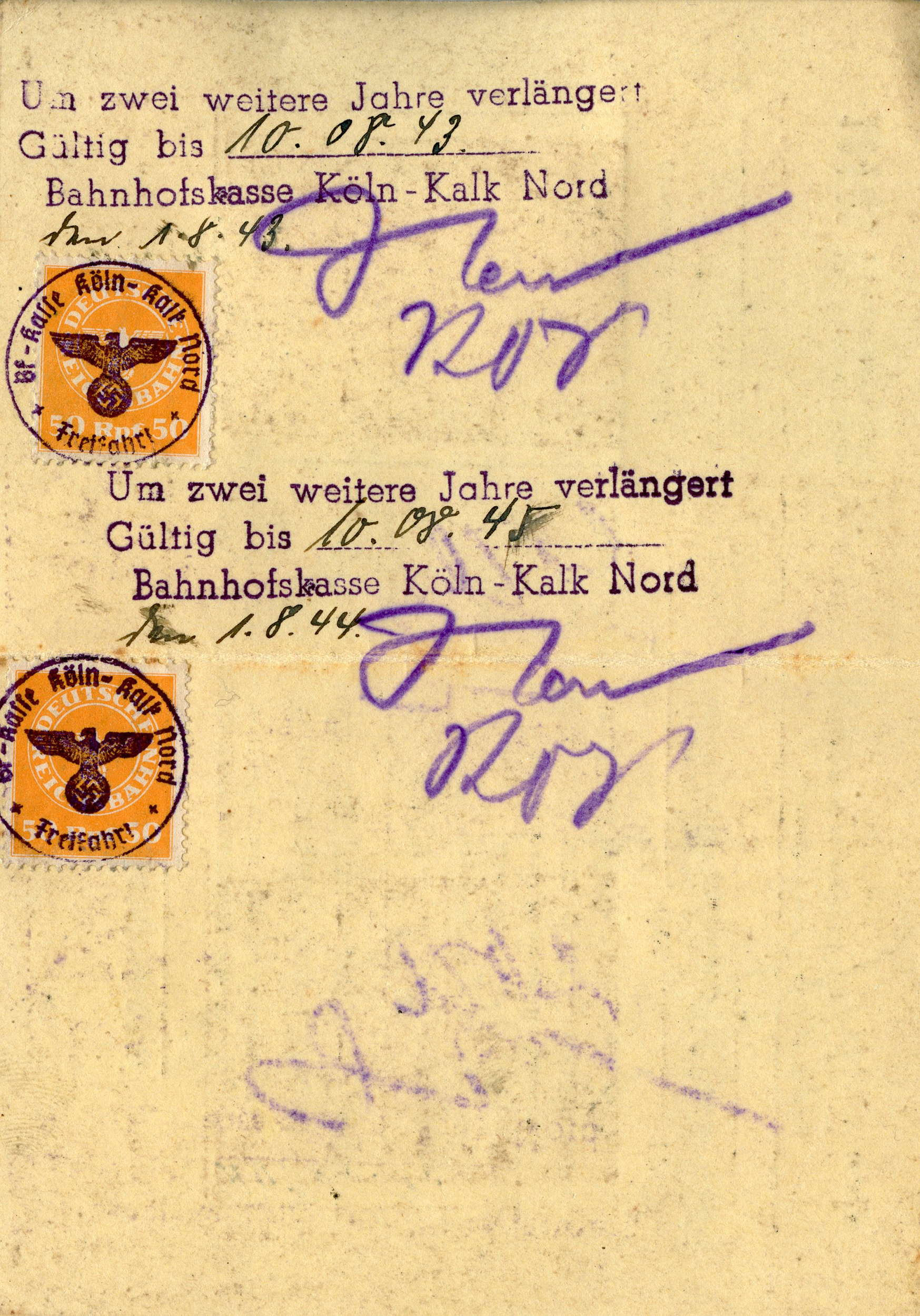
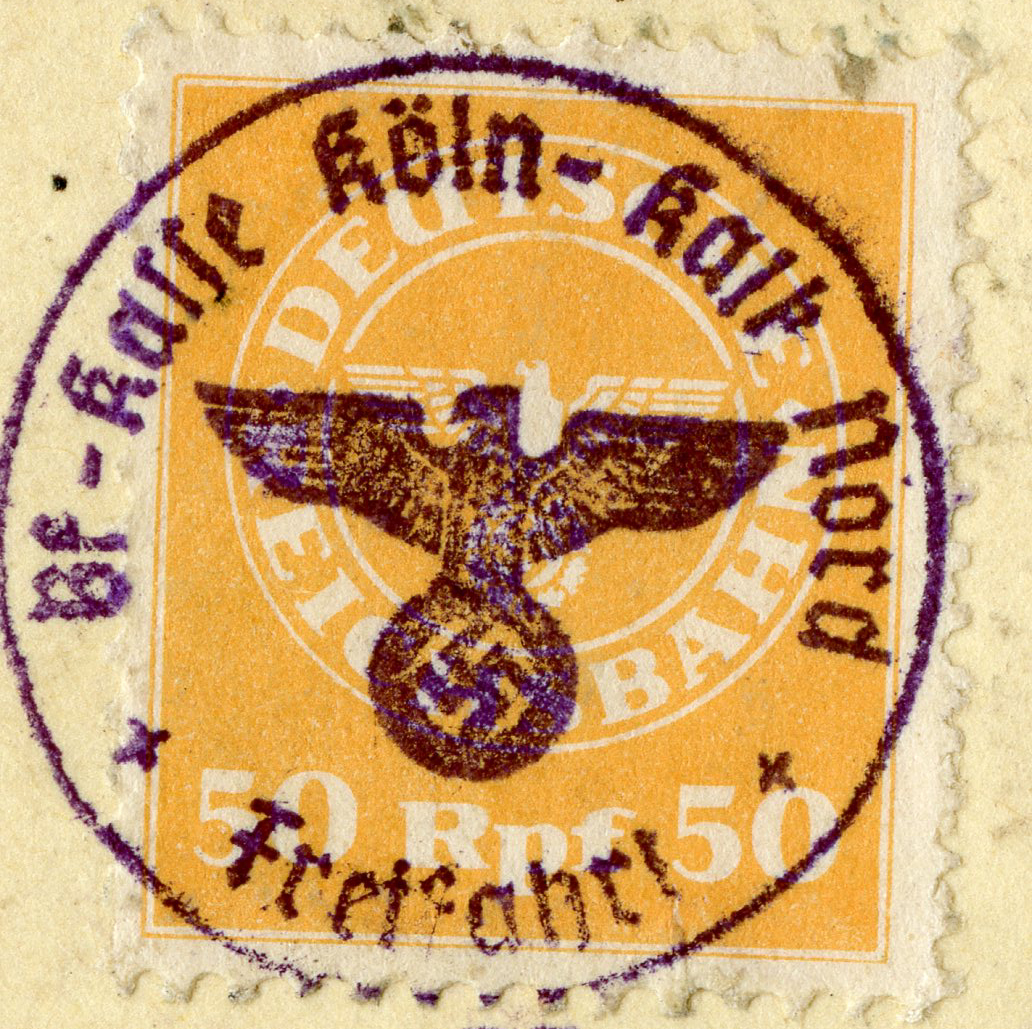
[Below: Reverse of card. Wow two more tax stamps. I wonder why some cards have the stamps and others do not.]
[Below: Close-up of tax stamp.]
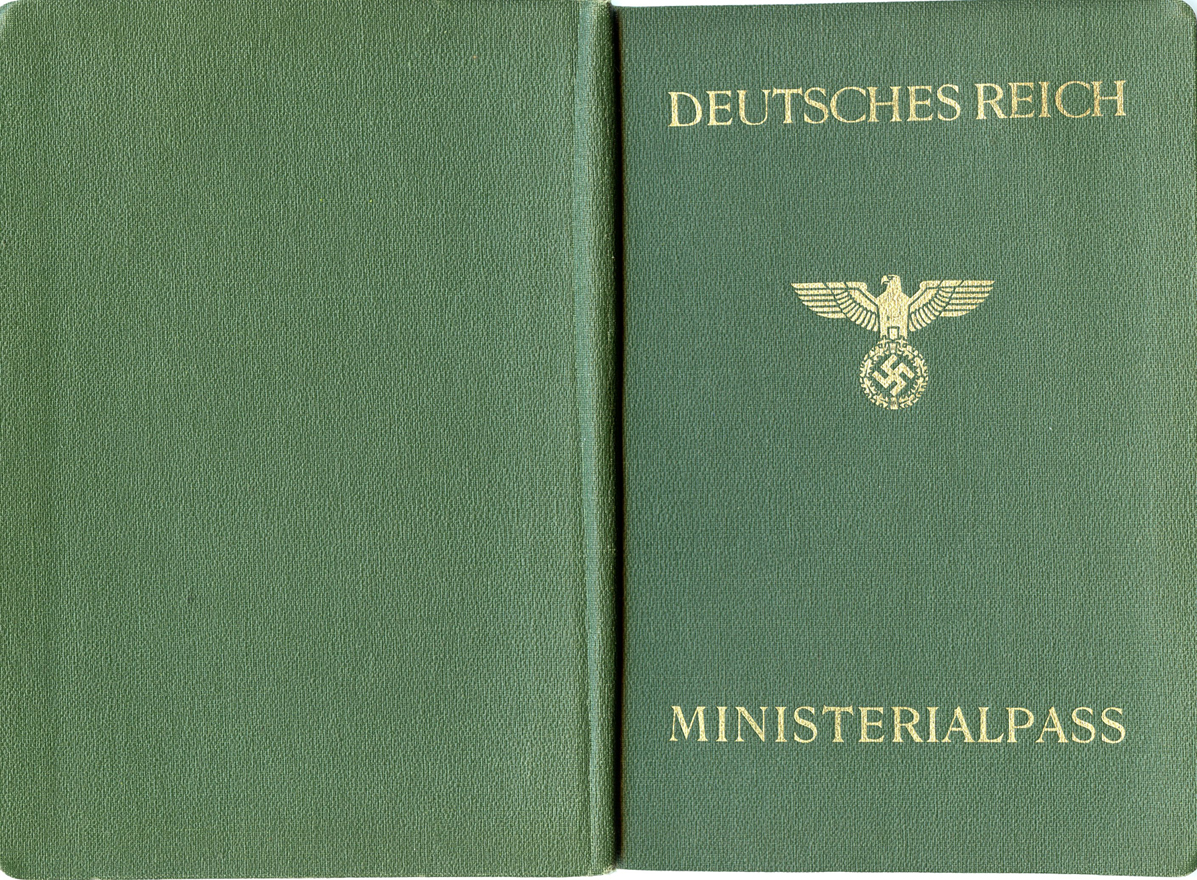
[Below: One of the rarest of all Third Reich identification books - the Ministerialpass! This was issued to the consulate secretary at the German Embassy in Ankara, Turkey. It was issued to Hans Kroeger on July 15, 1942 and was valid though July 14, 1947. It states that the booklet must be returned immediately upon expiration. On page two it says 'All authorities and military agencies at home and abroad are hereby requested to allow holders of this passport to travel freely and without hinderance and to provide them with protection and assistance, if necassary.'
Very rare to even see something like this. Click to see inside!]
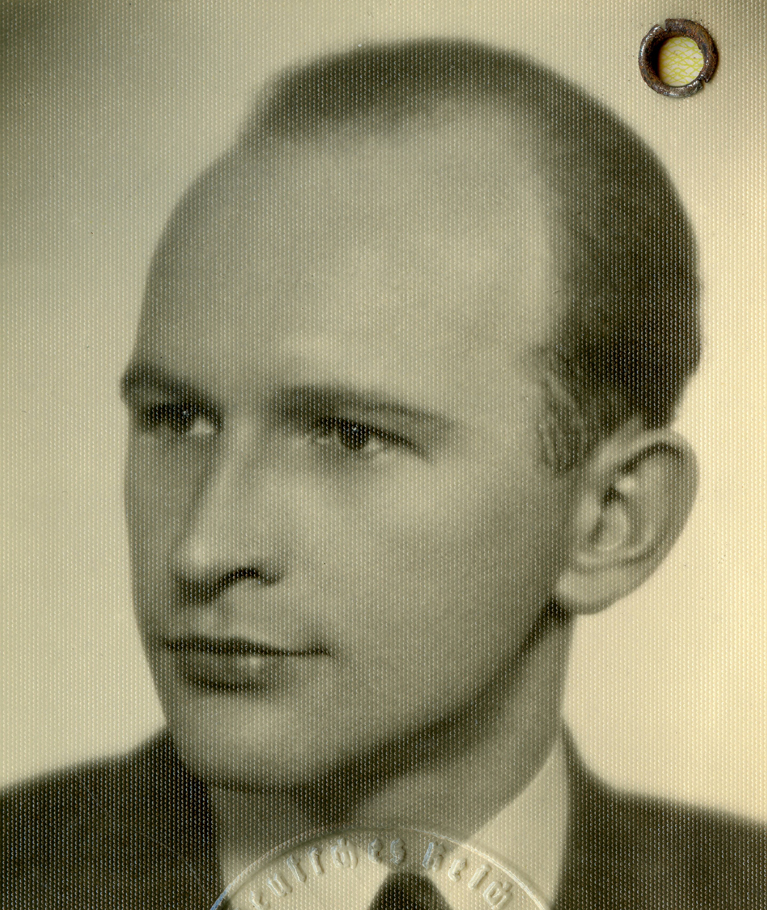
[Below: Mr. Hans Kroeger.]
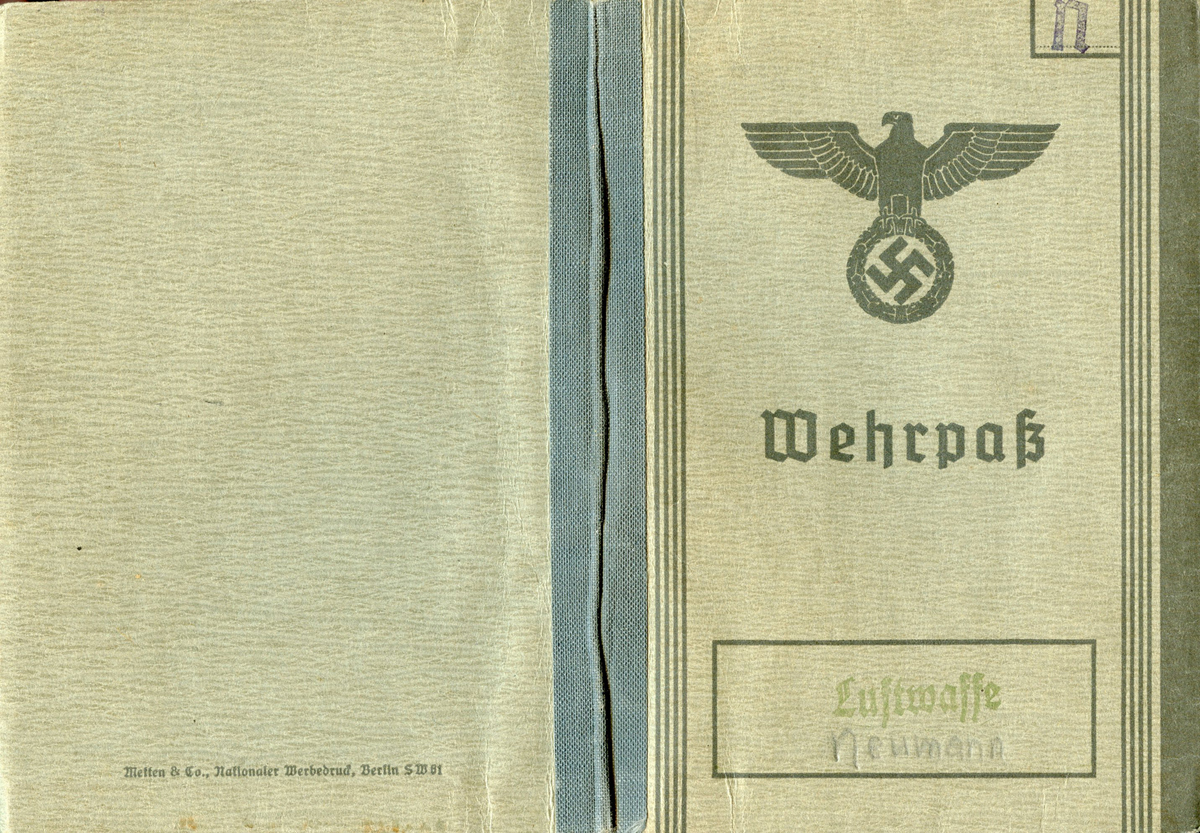
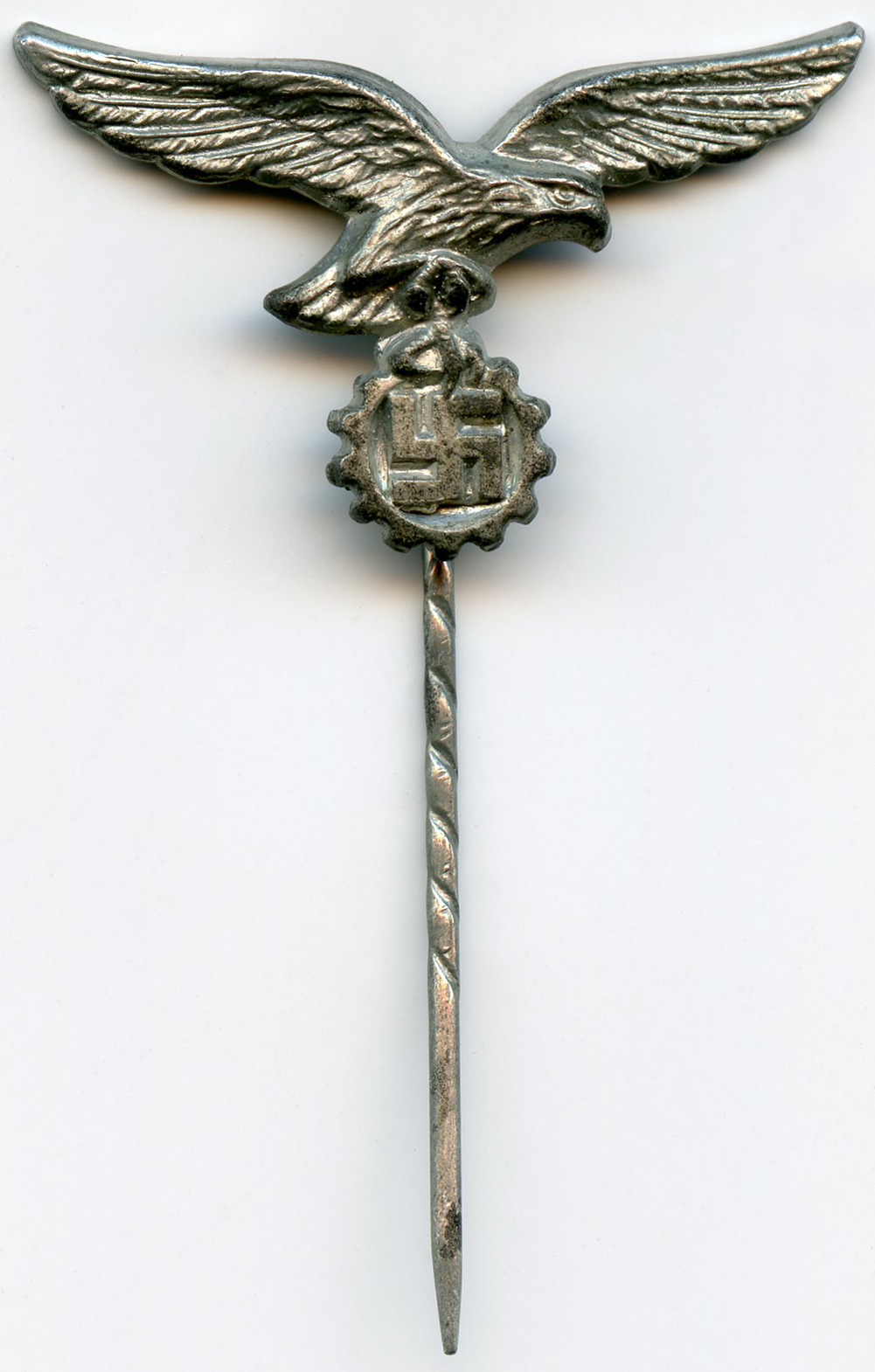
[Below: This is a Luftwaffe Wehrpass (Airforce Military Pass) to a flak volunteer with a very scarce Ausweis (I.D. Card), that of the Heimat Flak (Homeland Flak). The Homeland Flak were civilians who wore the stickpin seen below. Click to see inside!]
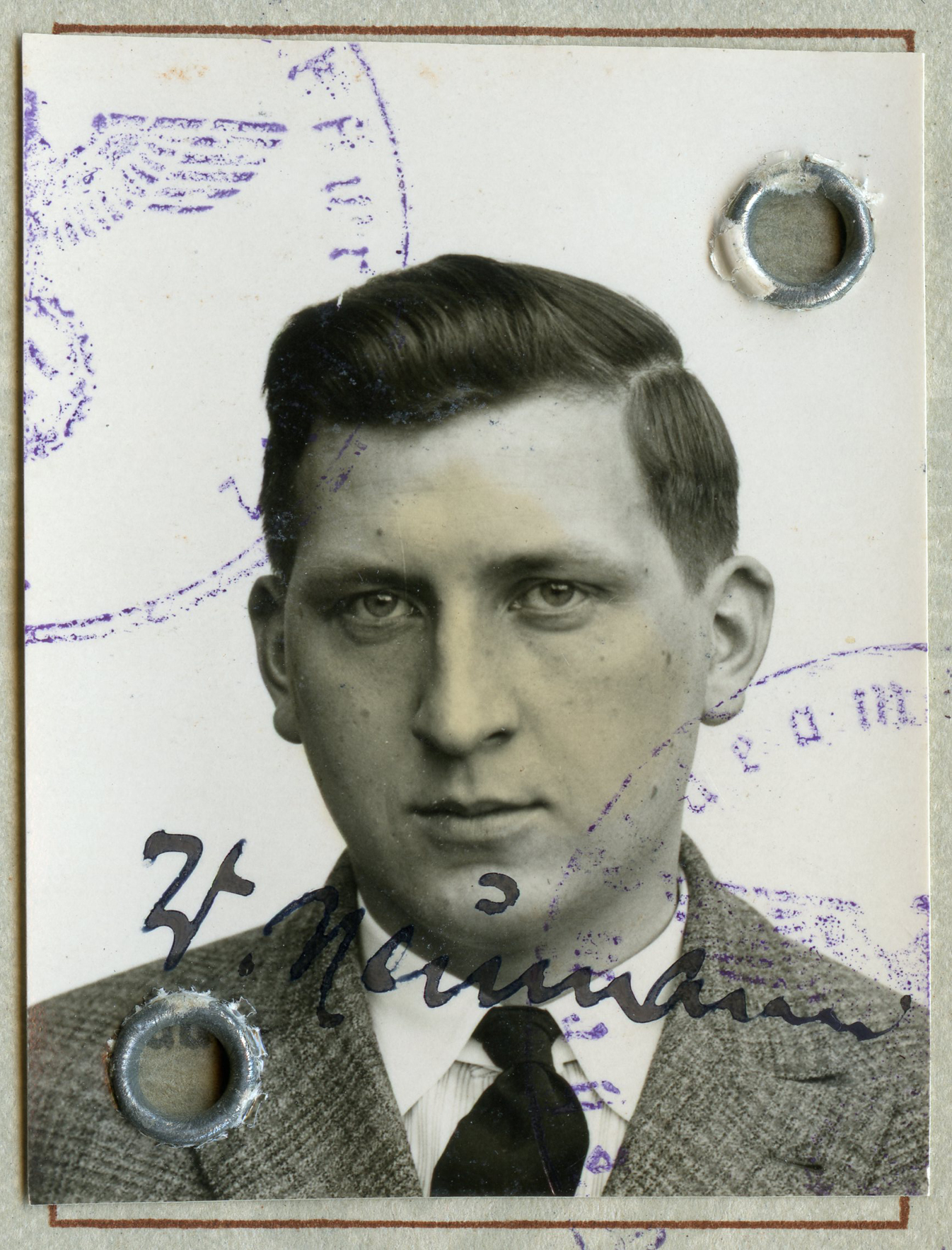
[Below: Picture of our man. Click to enlarge.]
[Below: Wehrpaß=Notiz F paper (March 26, 1943). Click to enlarge.]
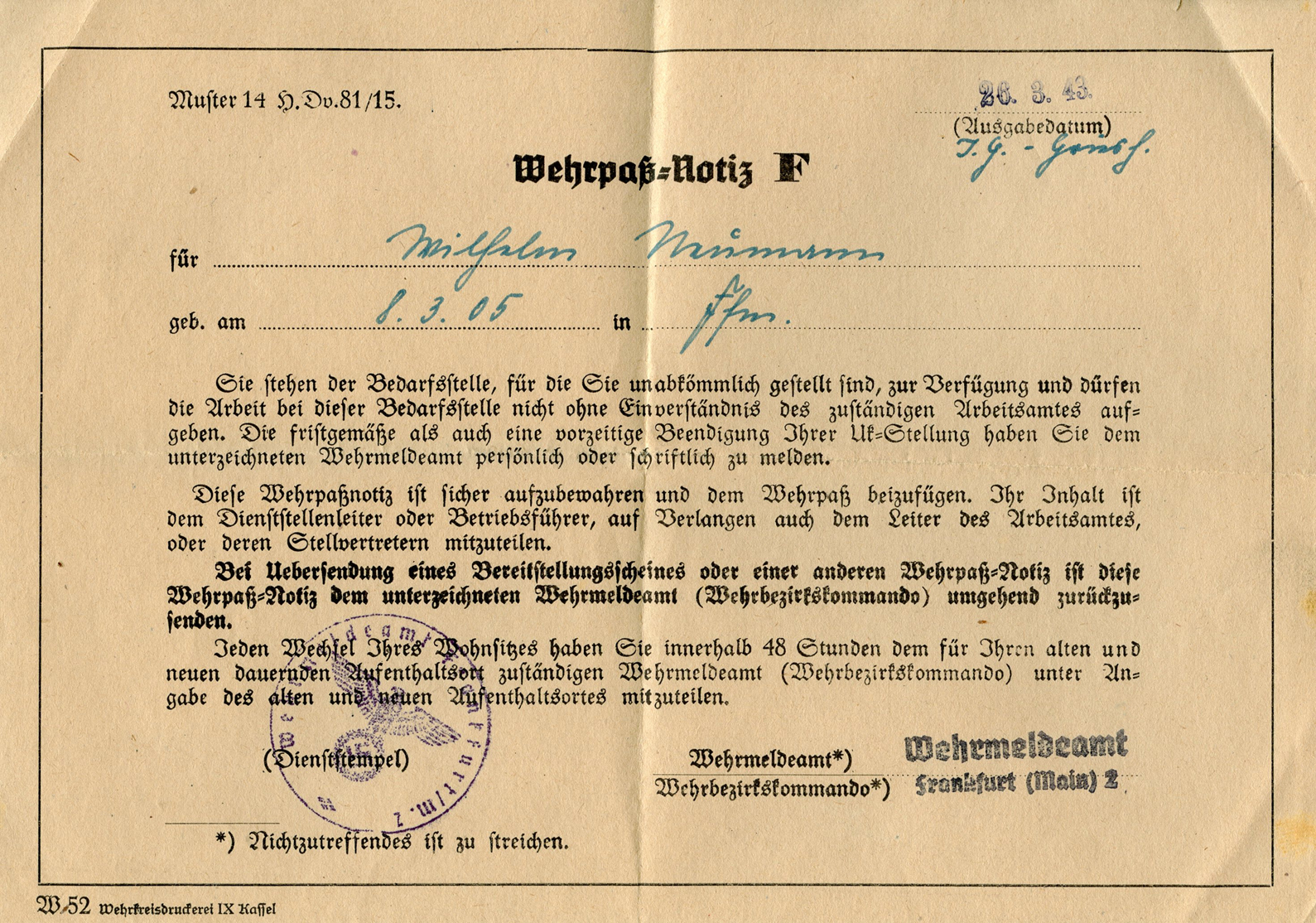
[Below: Wehrpaß=Notiz F paper (February 5, 1944). Click to enlarge.]
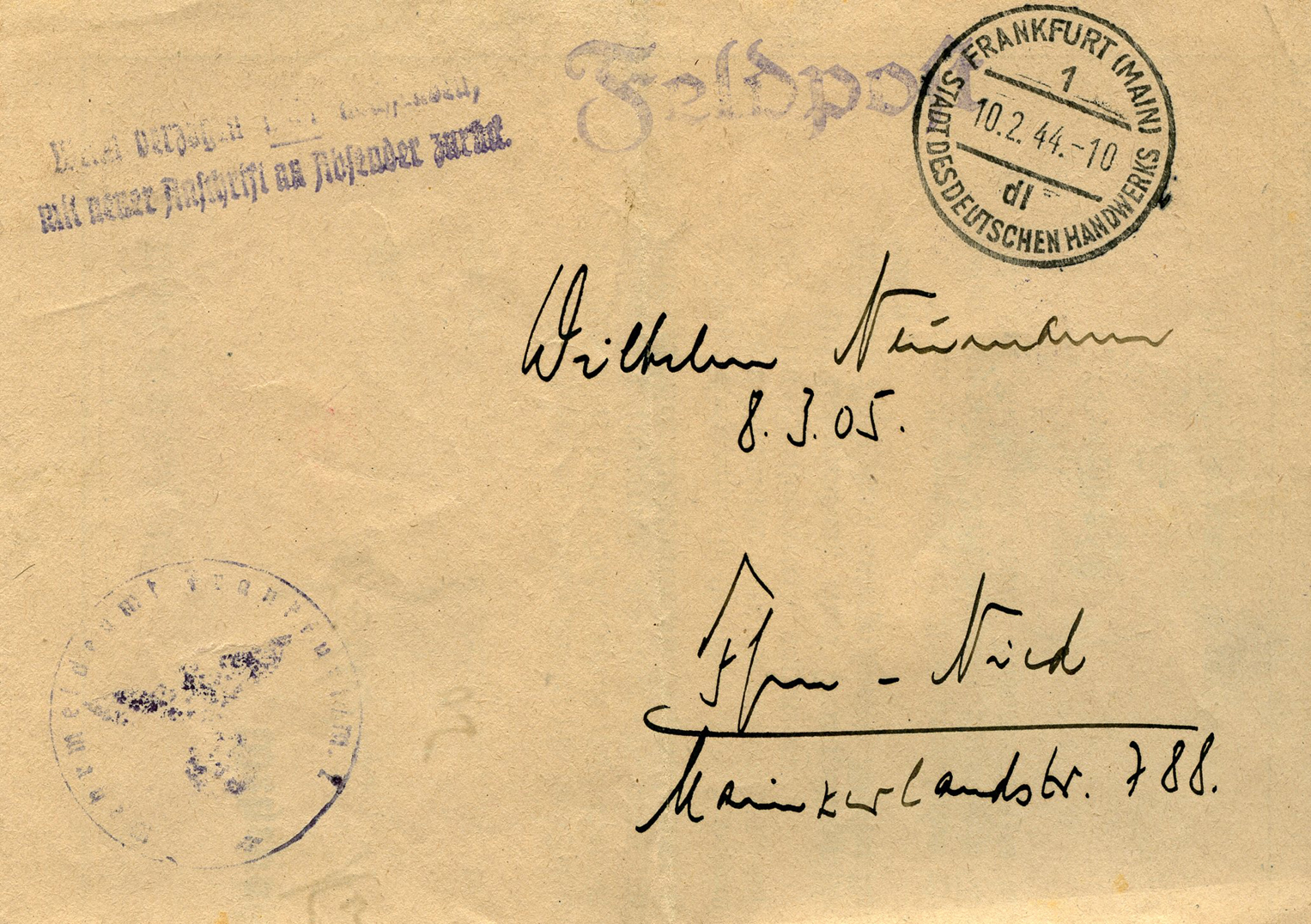
[Below: Feldpost envelope the above notice was sent in. Click to enlarge.]
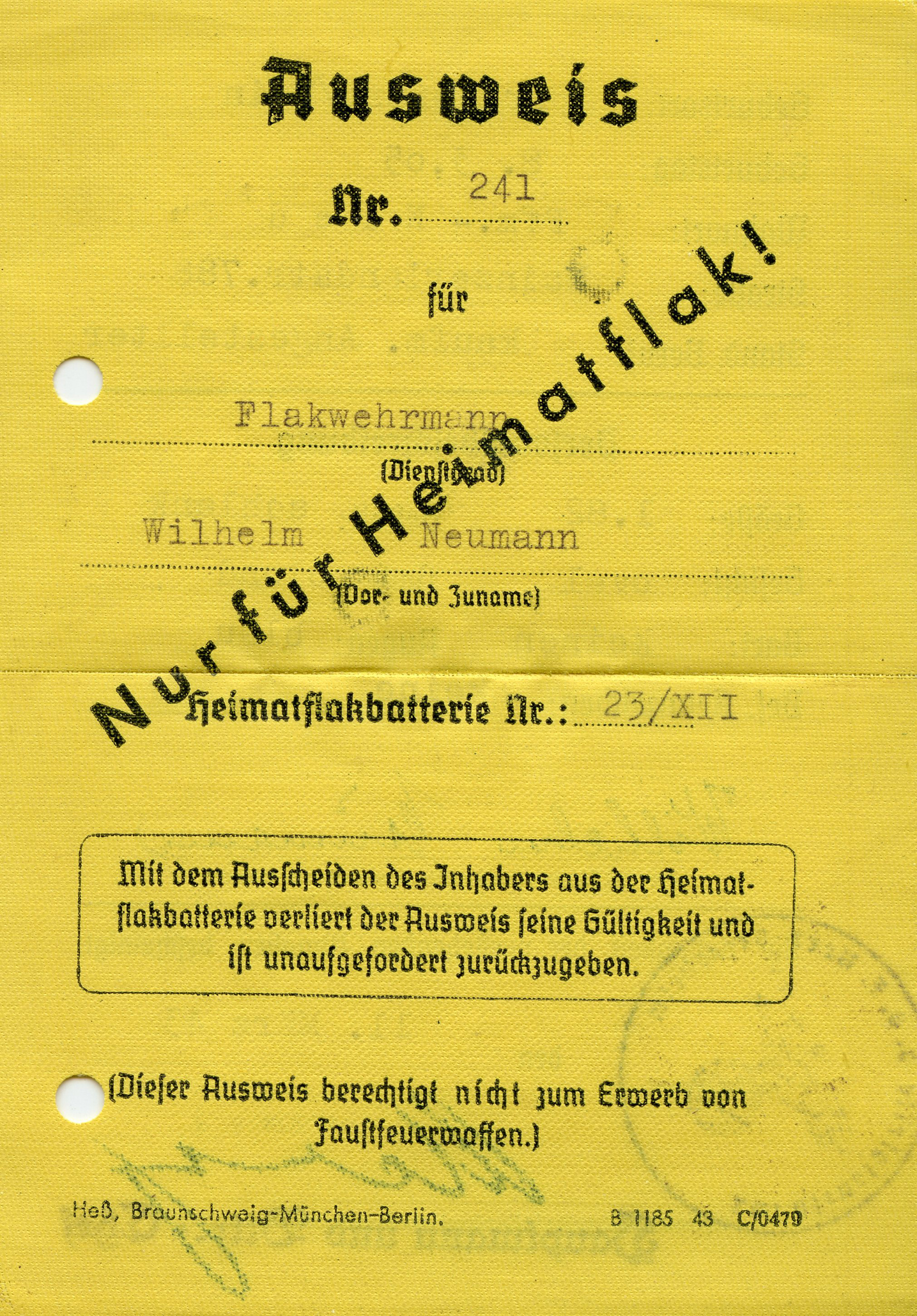
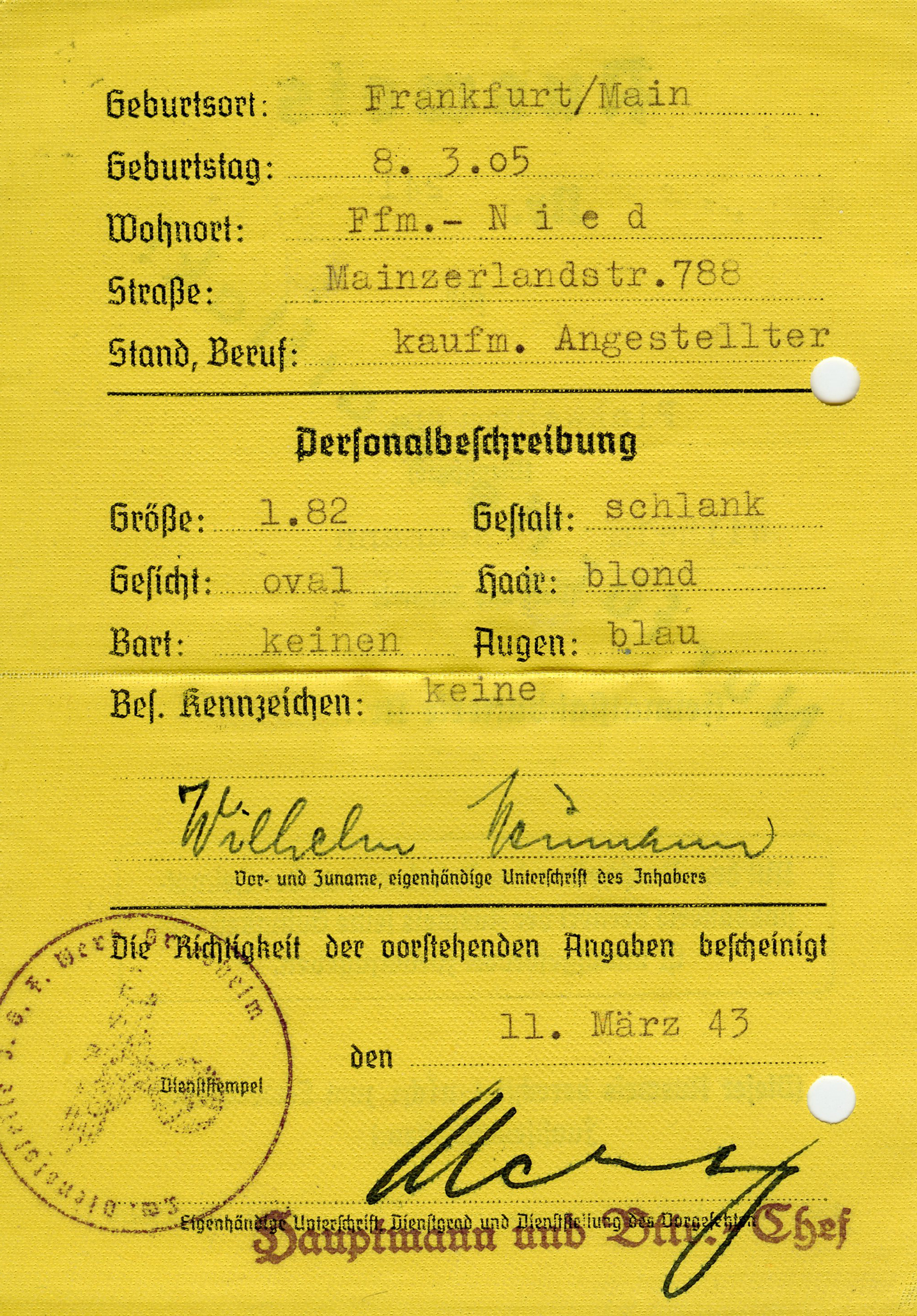
[Below: Oilskin Ausweis. The bold writing across it says 'Nur für Heimatflak!' (Only for homeland flak!). Front/reverse. Click to enlarge.]
[Below: Homeland Flak stickpin. Click to enlarge.]
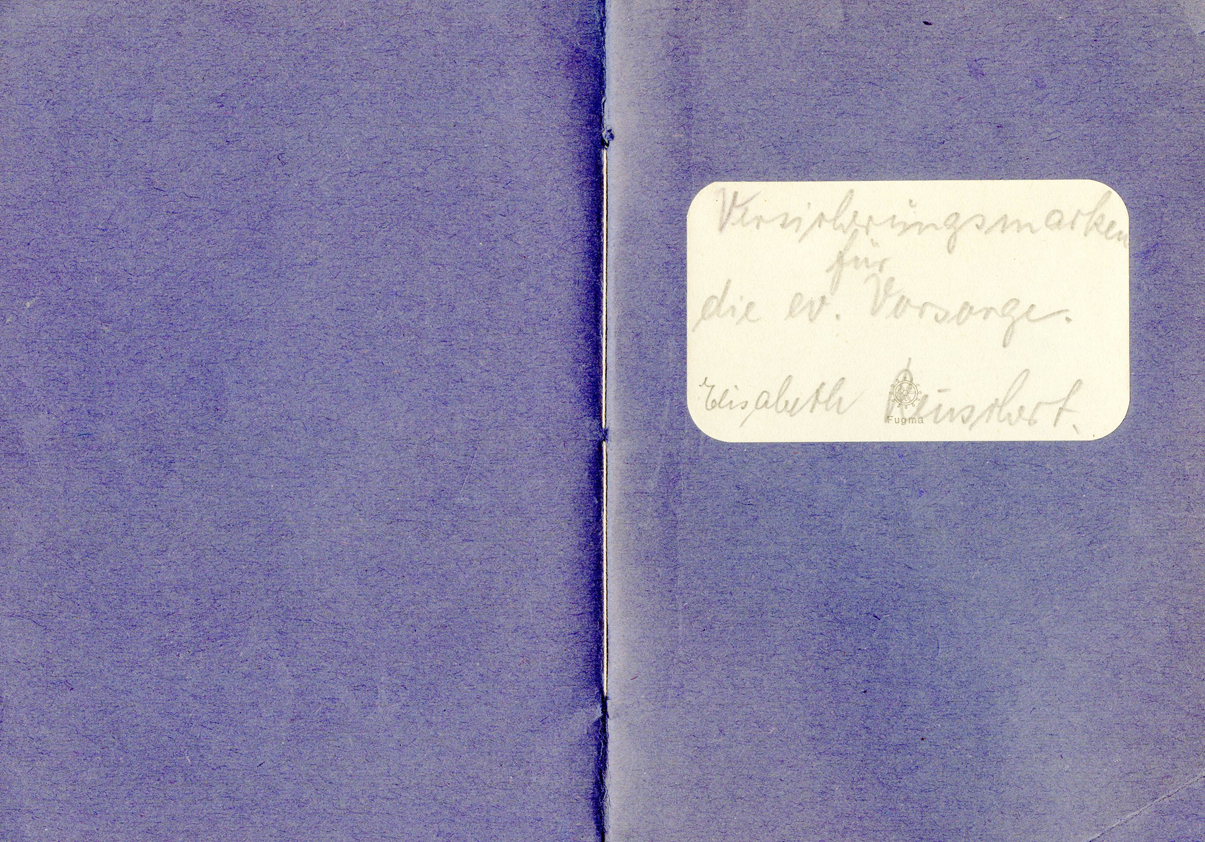
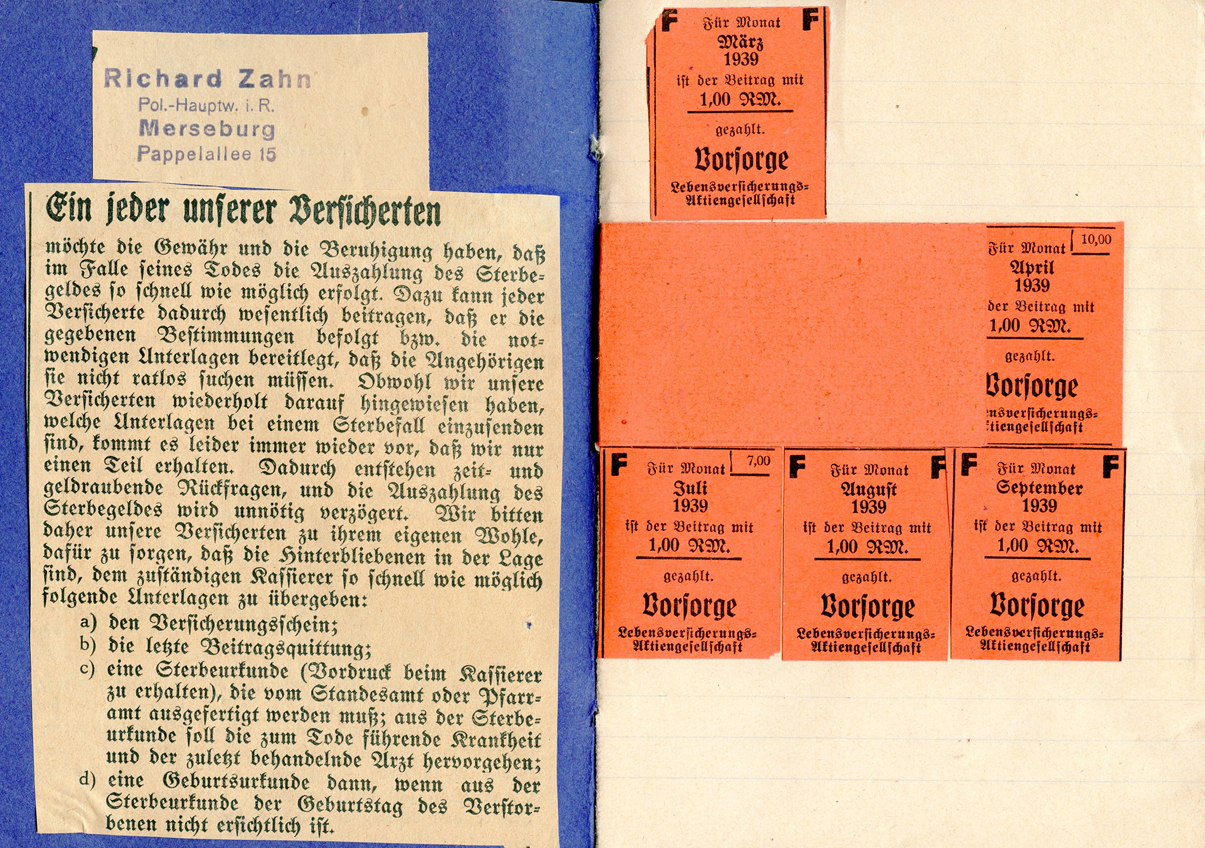
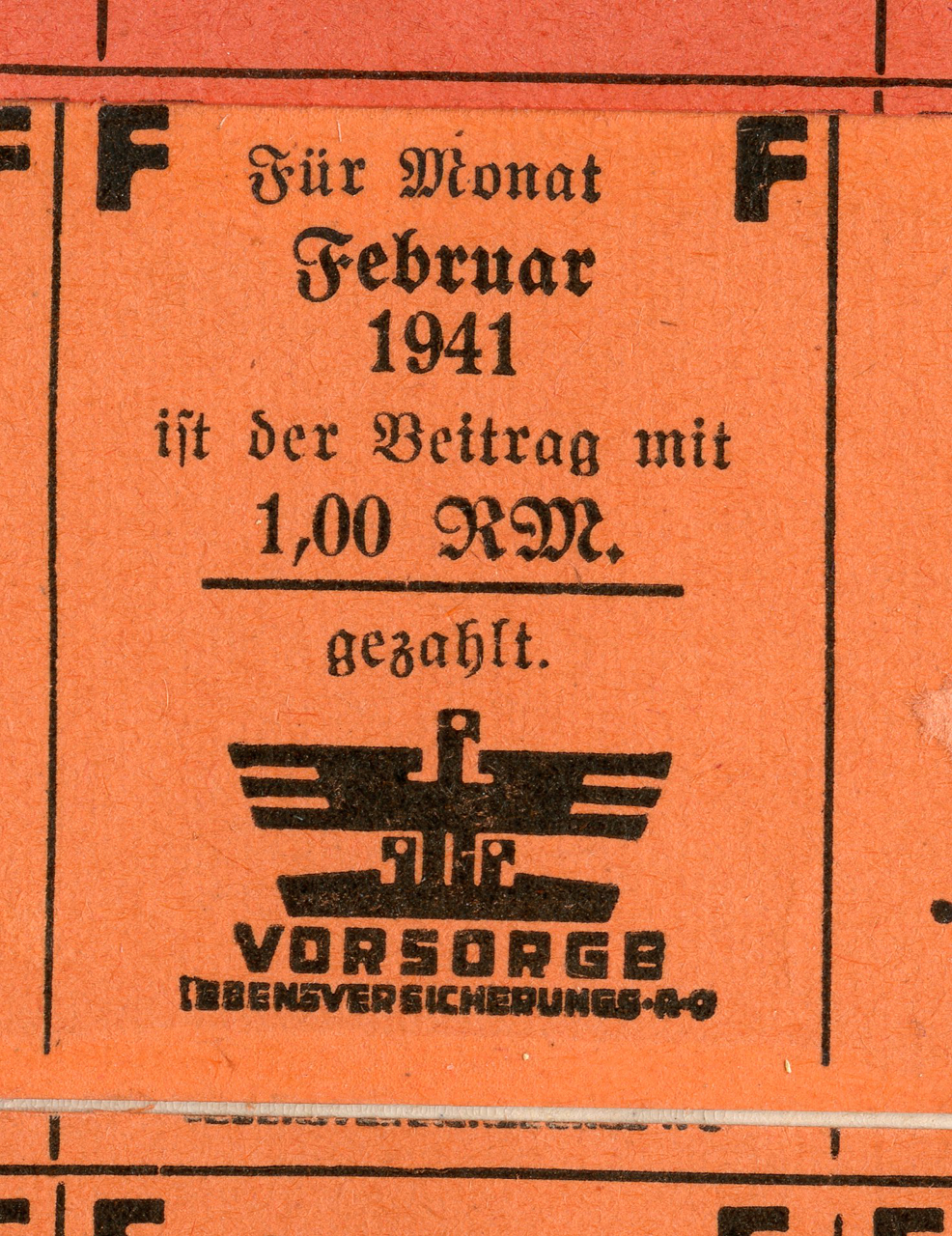
[Below: This is a strange little booklet that is homemade, oddly, from 1939-1944. It contains stamps which I've never seen before for a life insurance company called 'Vorsorge' (Precaution). Strange that the company didn't have its own book for the insured. Inside the booklet, on the opening page, is a description of the insurance and tips, which looks like it was cut out from a newspaper. This is from Merseburg, a town in central Germany in southern Saxony-Anhalt. Click to see within.]
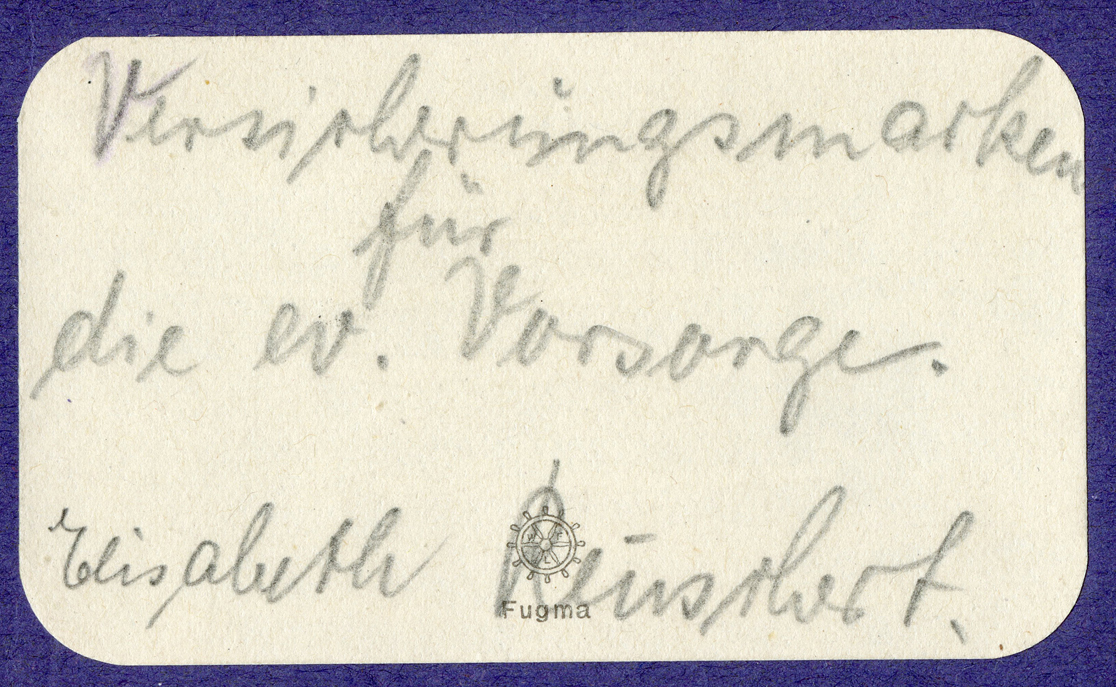
[Below: Close-up.]
[Below: Inside page one.]
[Below: Close-up of stamp within showing a strange eagle with its wings protecting young hatchlings, a theme I've seen before during the Third Reich.]
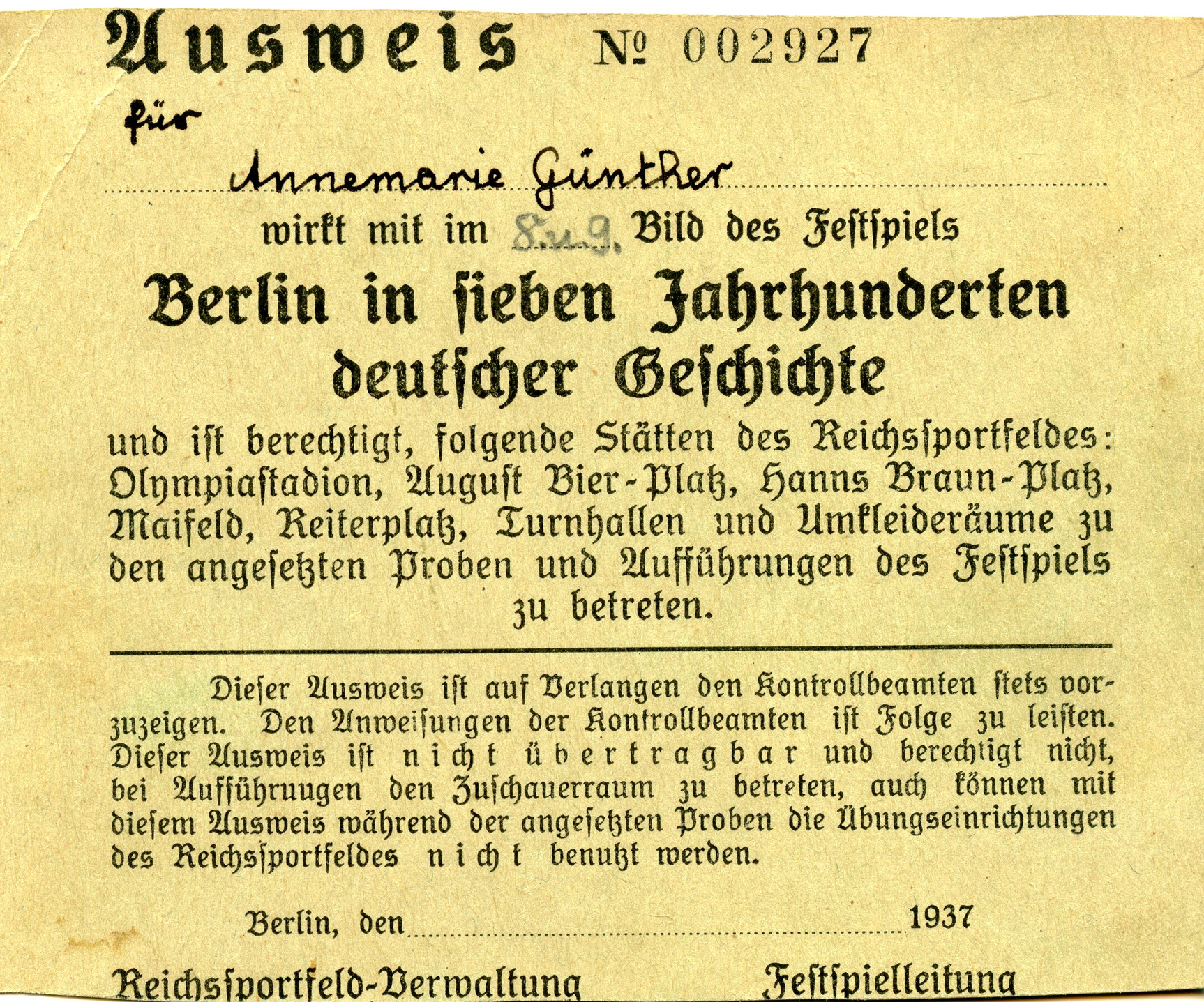
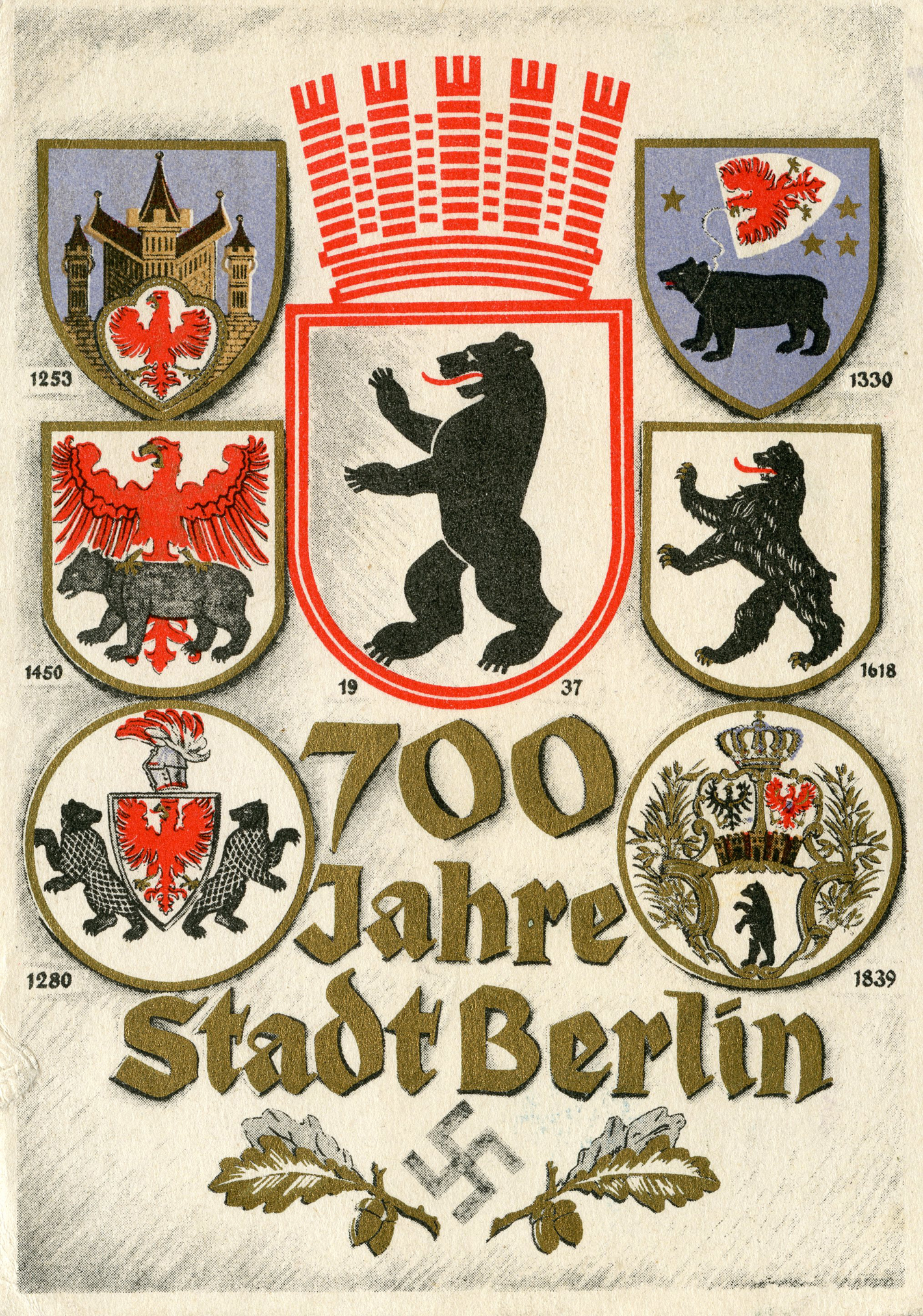
[Below: This is a 1937 participant identification card for a festival celebrating 700 years of German history in Berlin. It says:
'Ausweis für Annemarie Günther
wirkt mit im 8 u. 9 Bild des Festspiels Berlin in sieben
Jahrhunderten deutscher Geschichte.'
(ID for Annemarie Günther
features in the 8th and 9th stage of the Berlin Festival in
Seven Centuries of German History).]
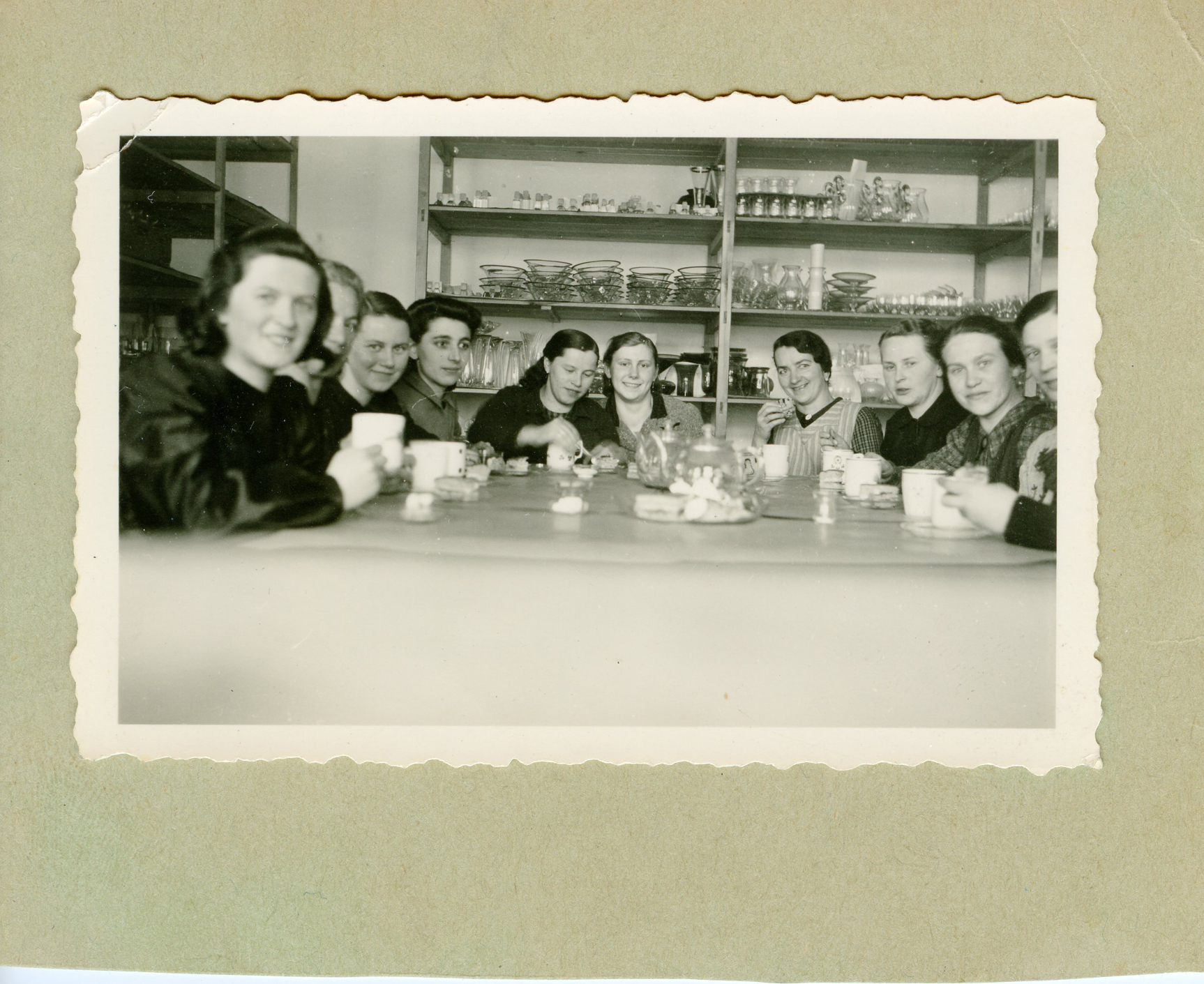
[Below: Reverse. This picture is glued to this side of the card. Which one are you, Annemarie Günther?]
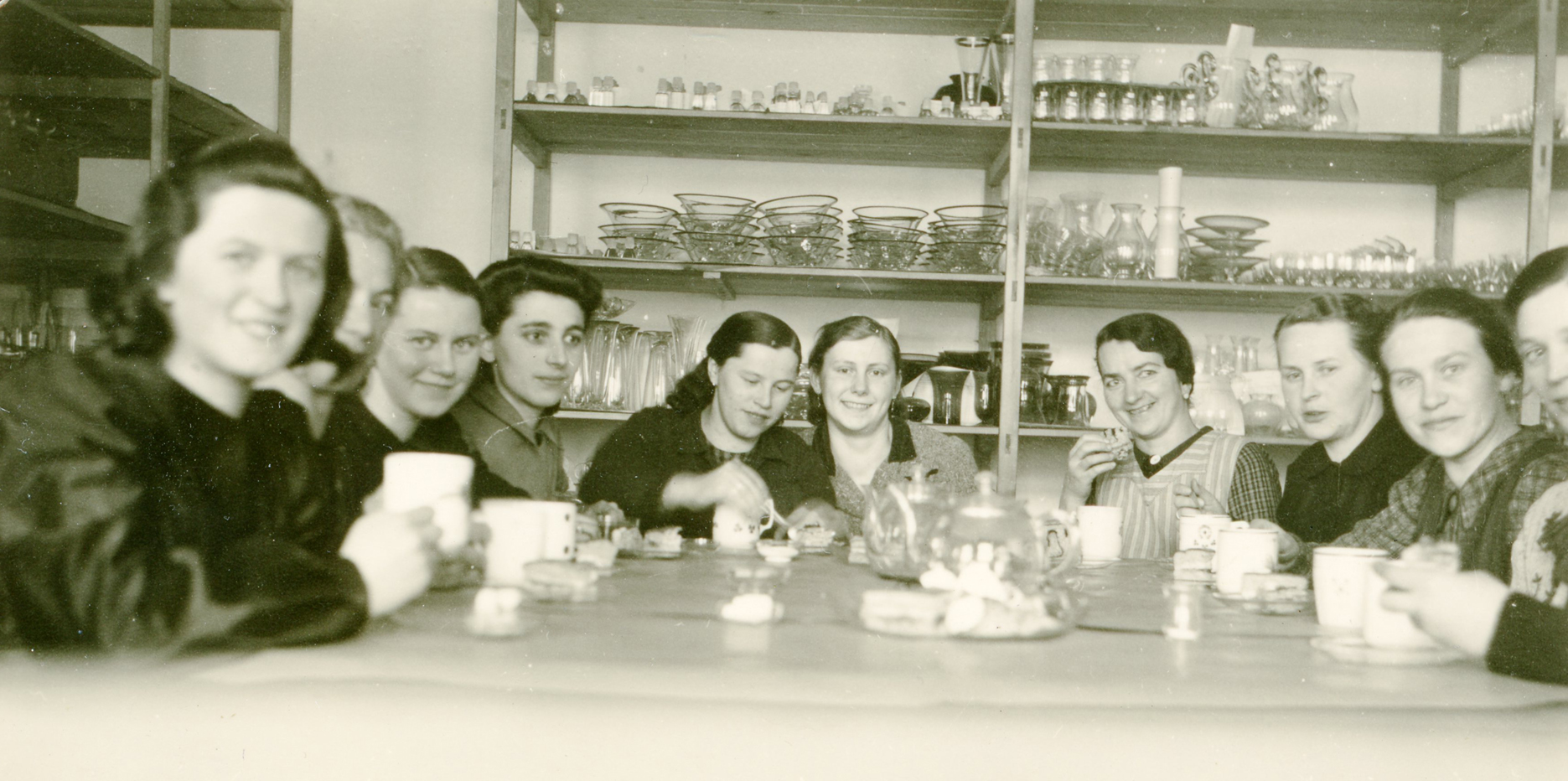
[Below: Close-up.]
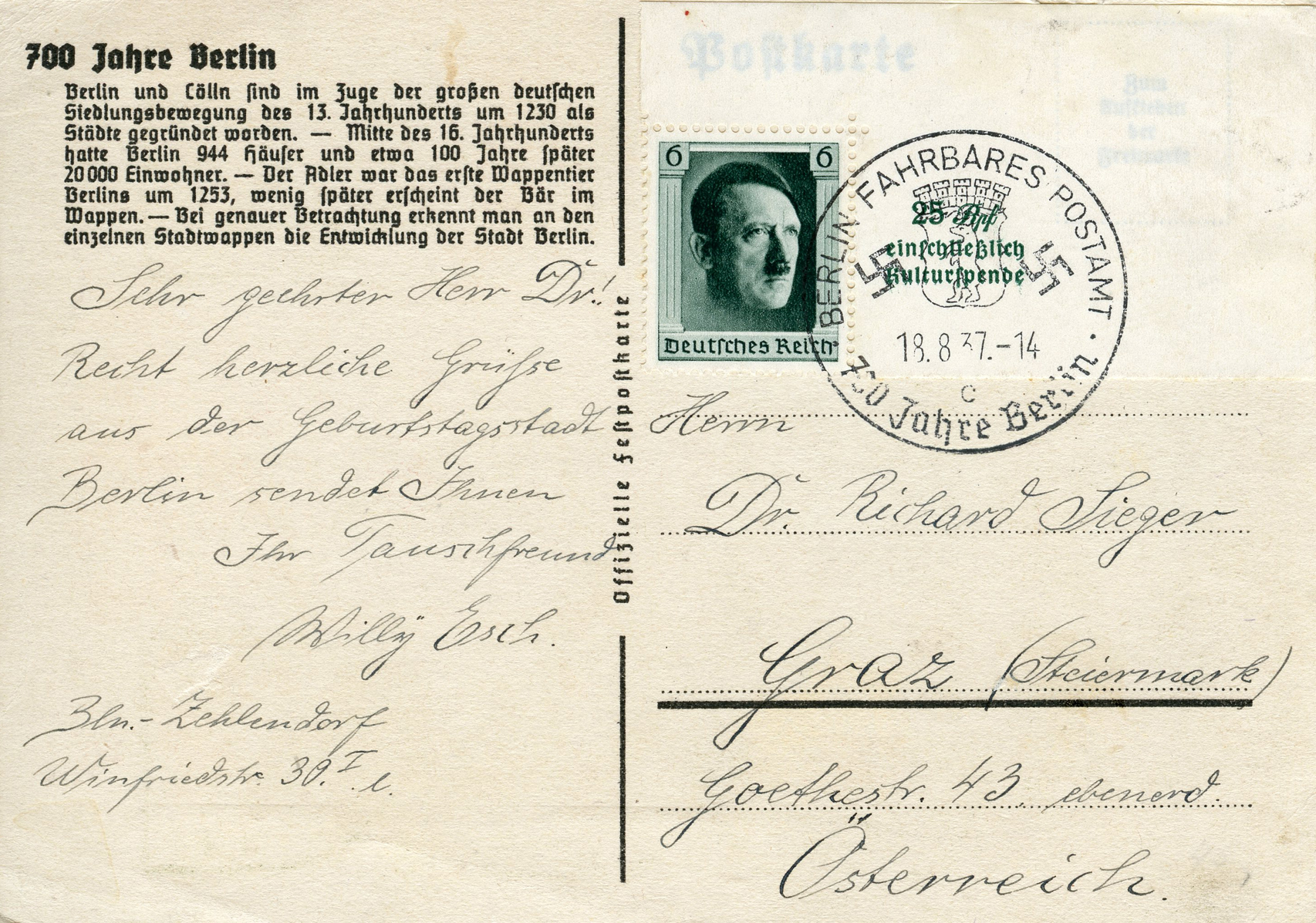
[Below: There were also postcards celebrating the event.]
[Below: Reverse.]