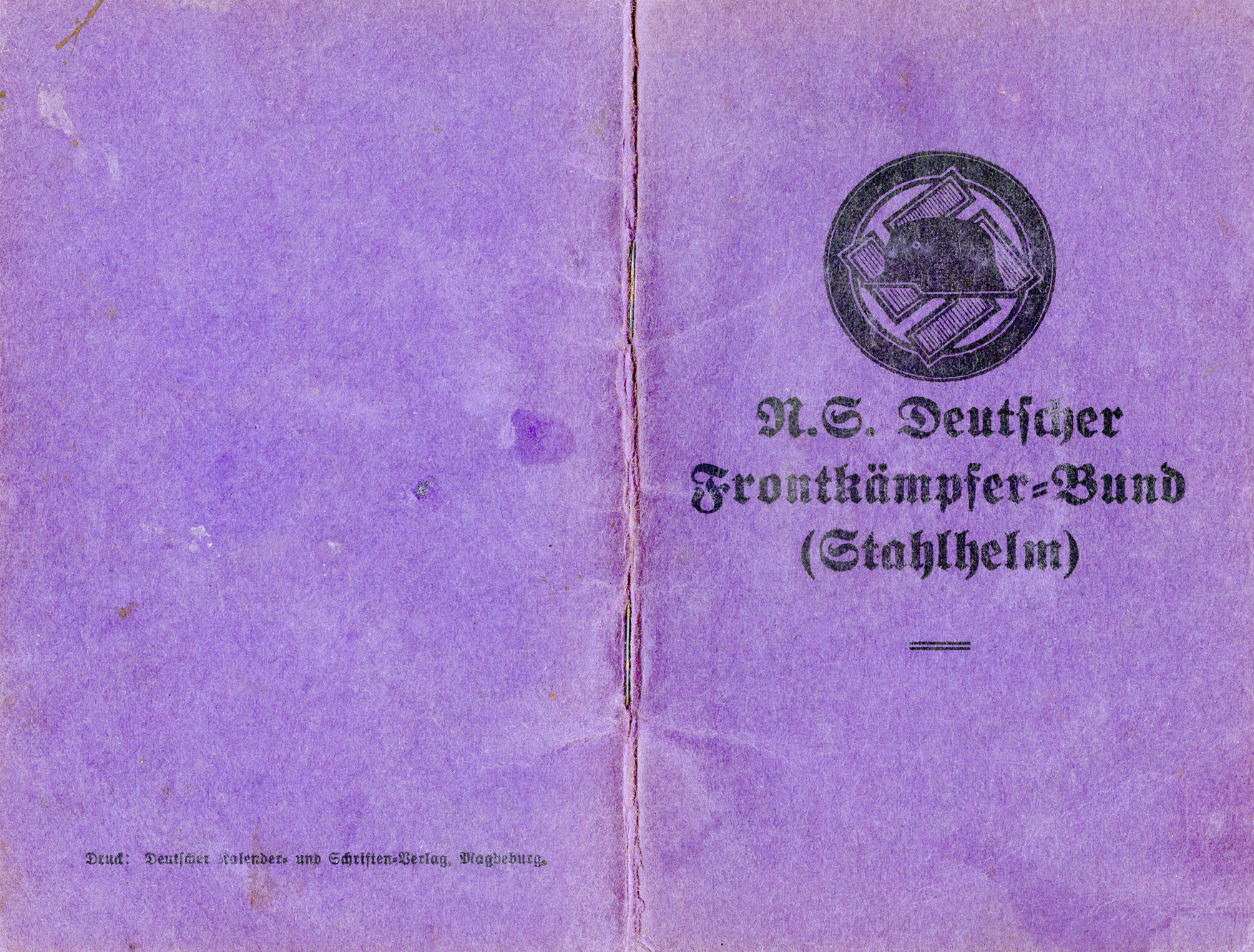
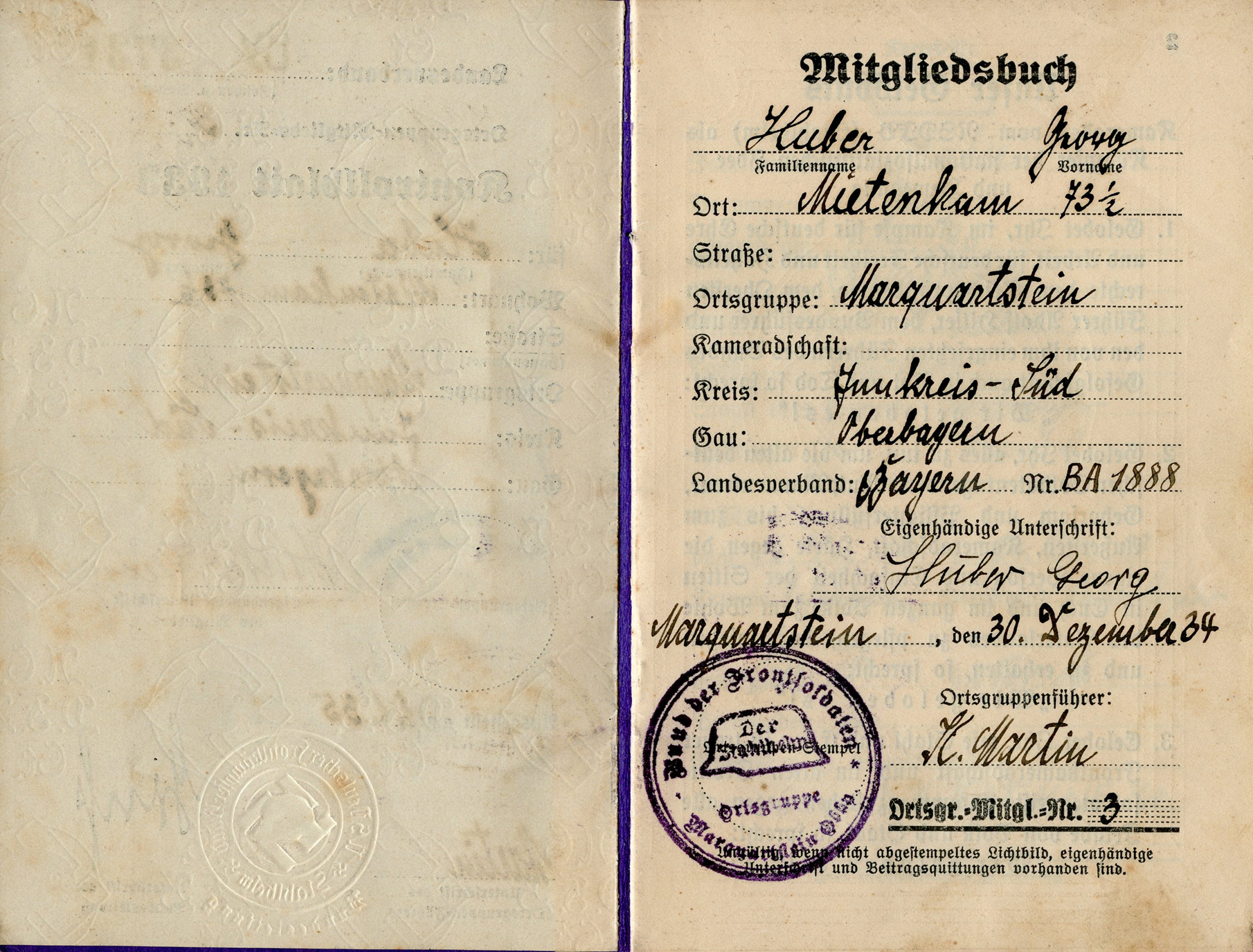
[Below: This was Germany's main veterans' organization, which merged with the National Socialists. This book is from 1935 and says:
' N.S Deutscher
Frontkämpfer=Bund
(Stahlhelm).'
N.S German
Front Fighter League
(Steel Helmet).]
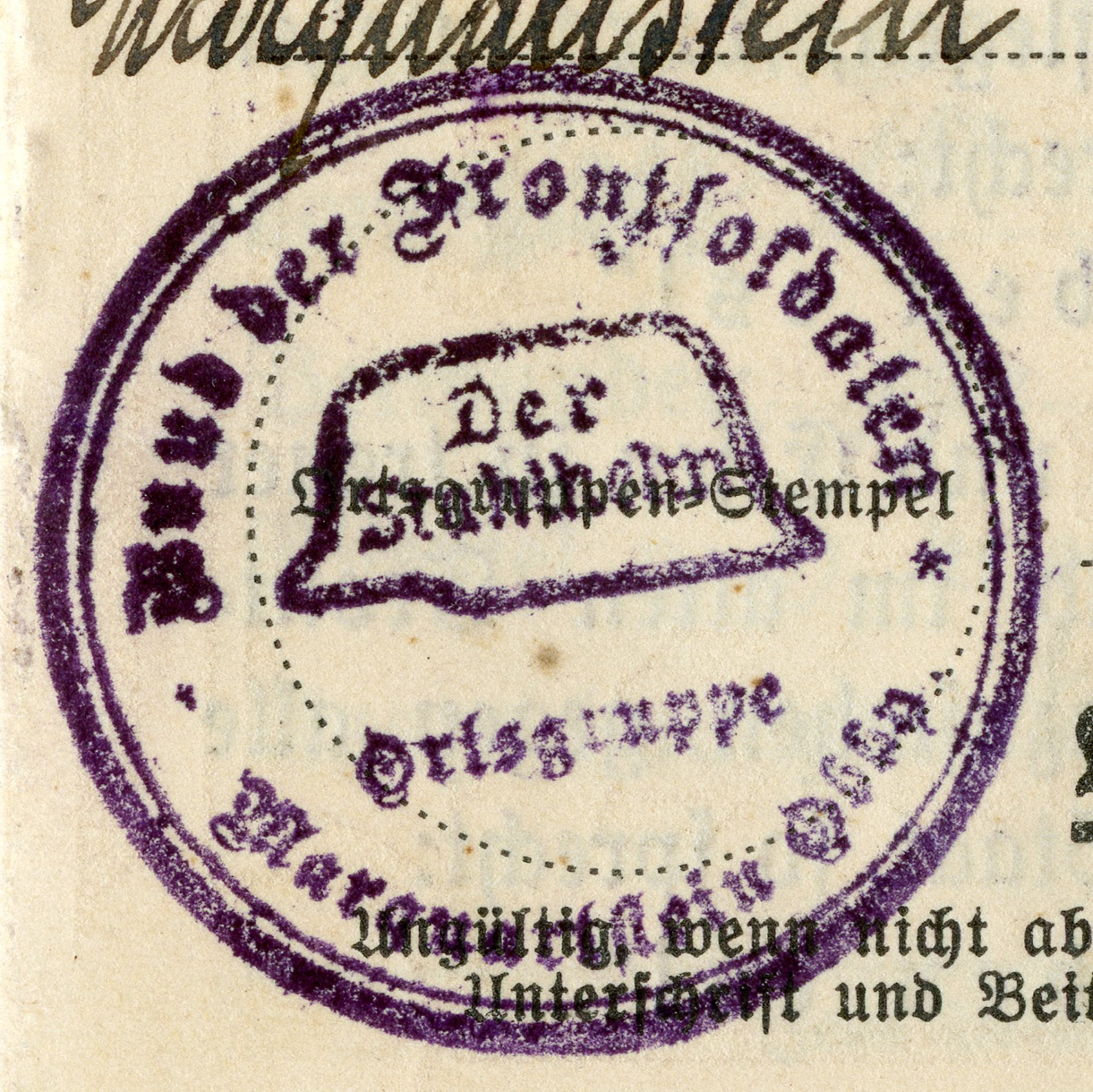
[Below: Close-up.]

[Below: Next page.]
[Below: Close-up.]
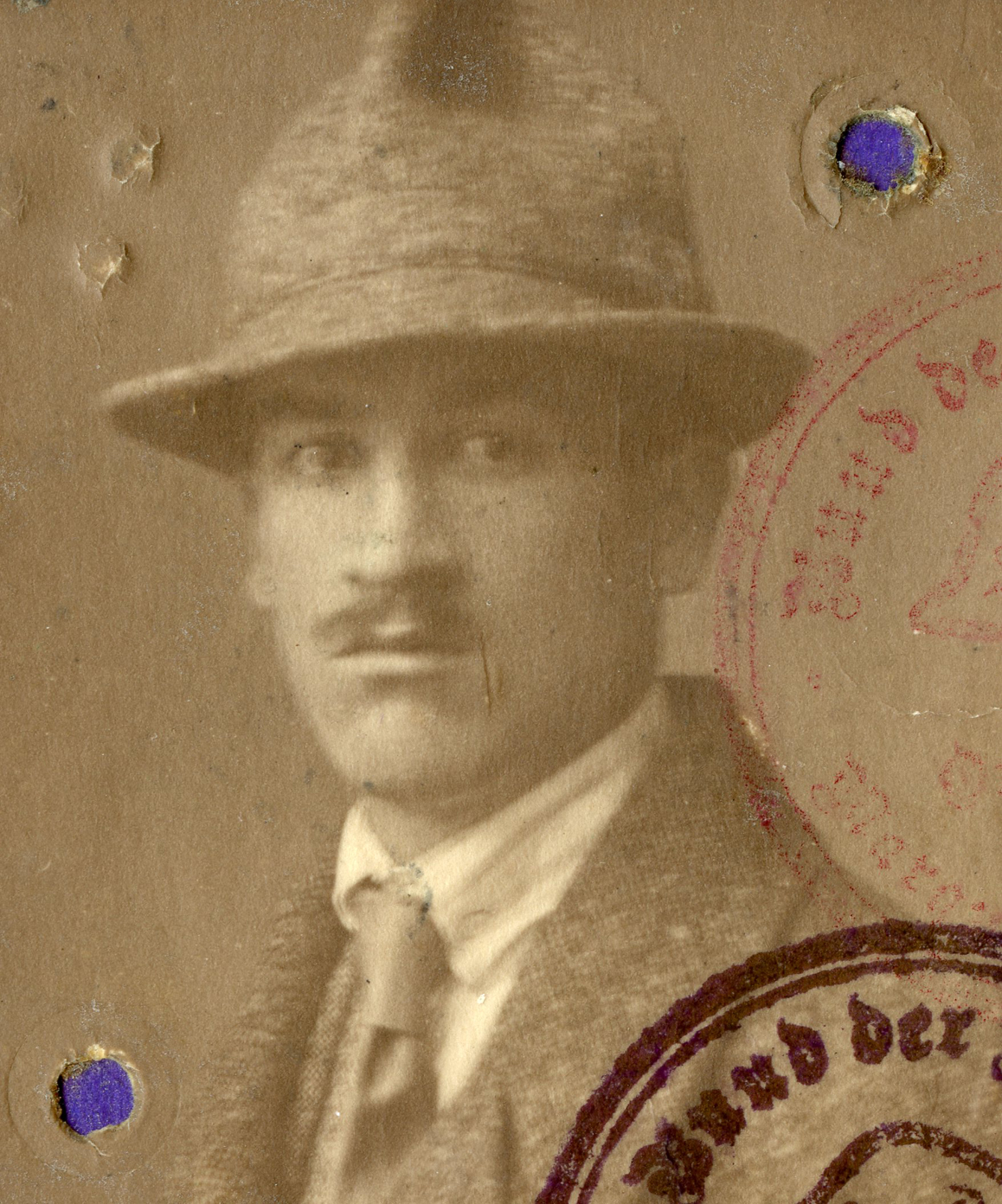
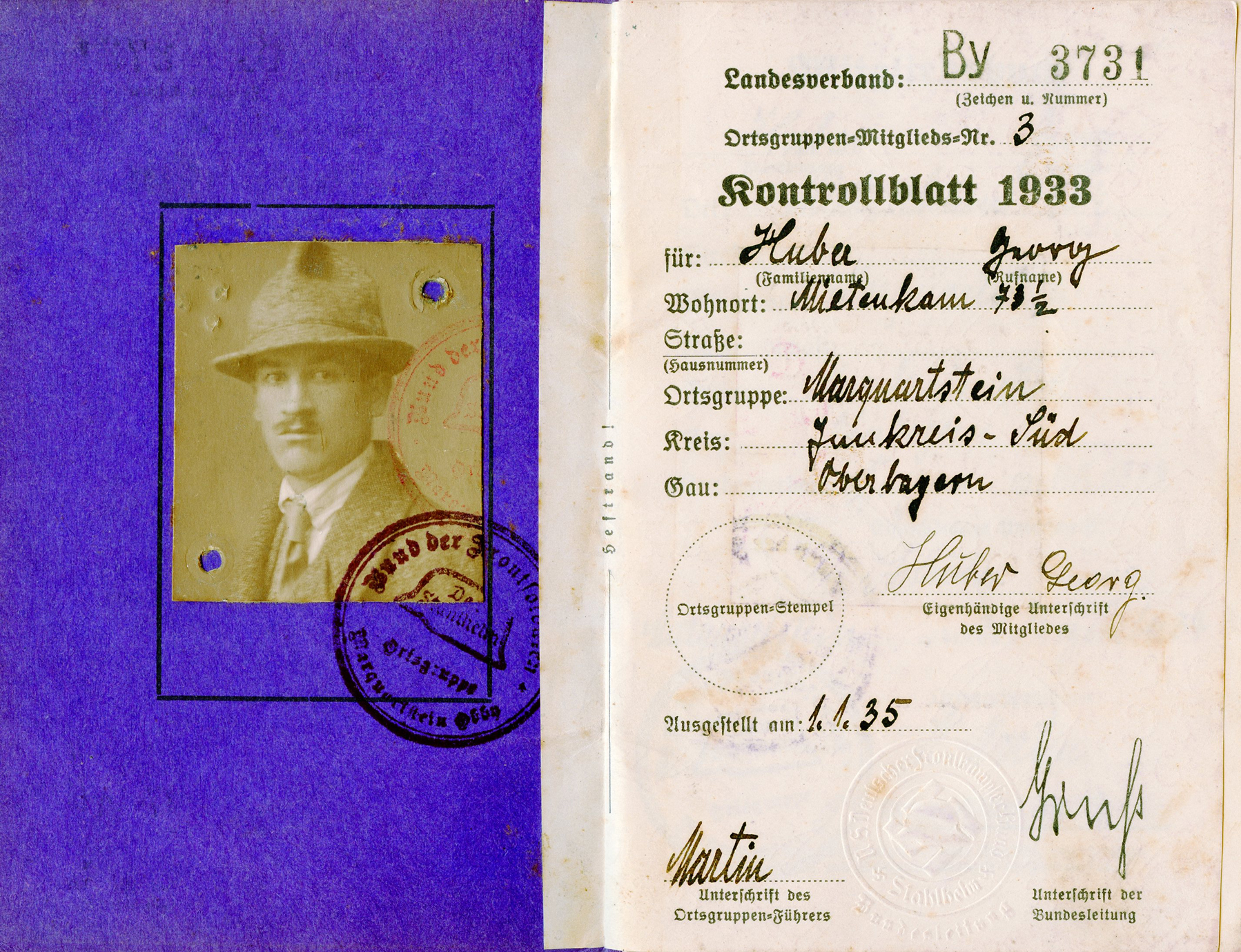
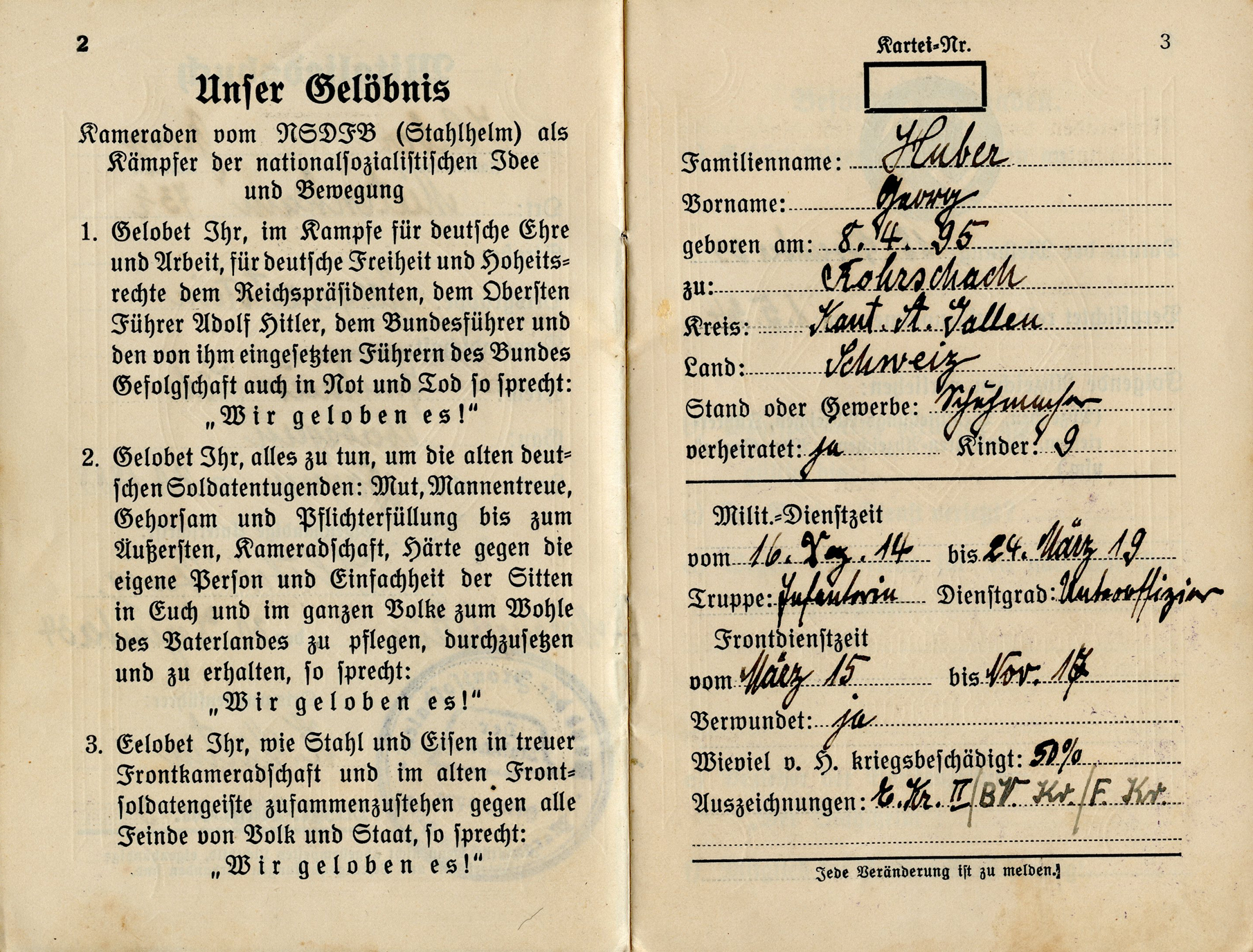
[Below: Next page. This was issued to Georg Huber from Bavaria.]
[Below: Close-up.]
[Below: Next page.]
[Below: Next page.]
[Below: Close-up.]

[Below: Next page.]
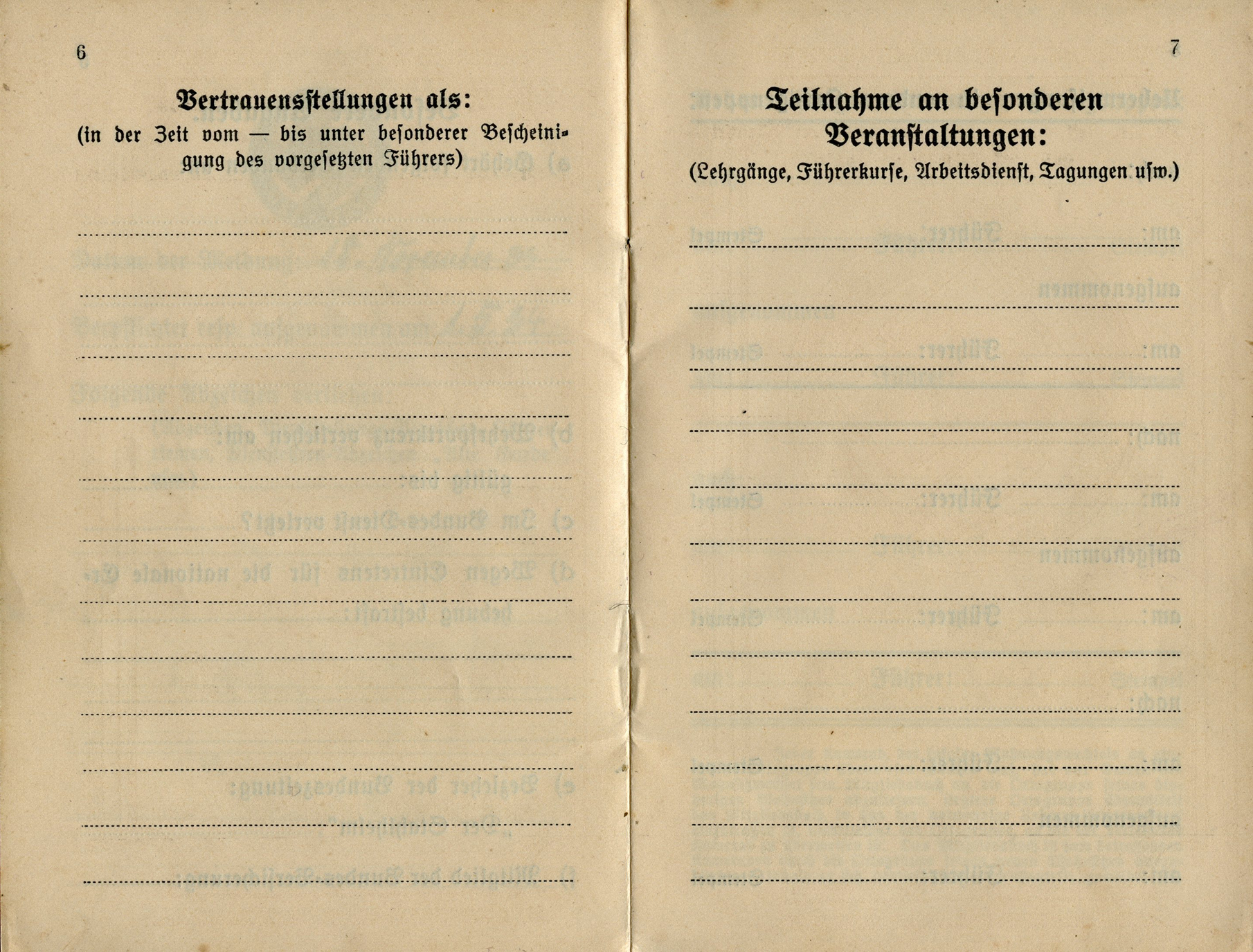
[Below: Next page.]
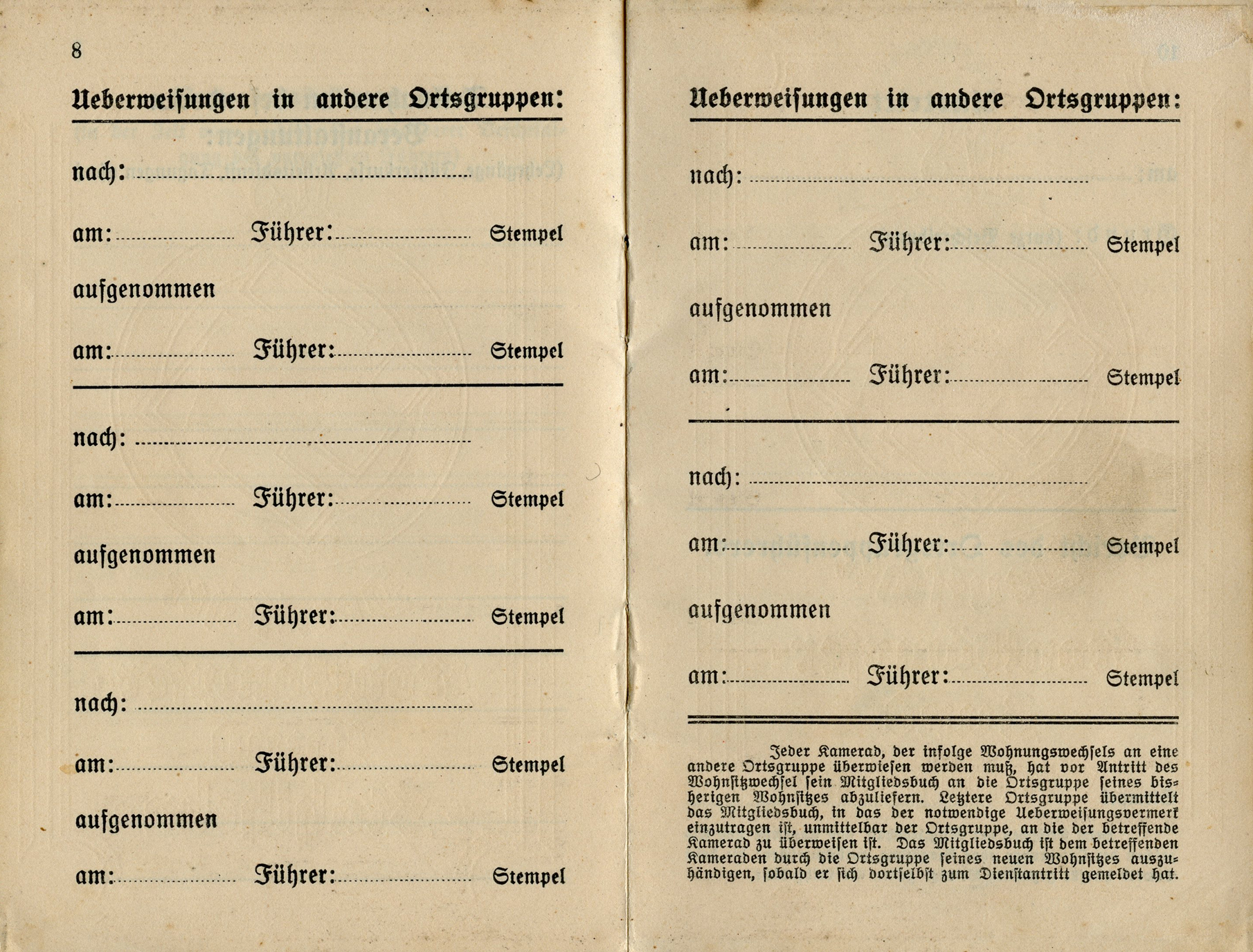
[Below: Next page.]
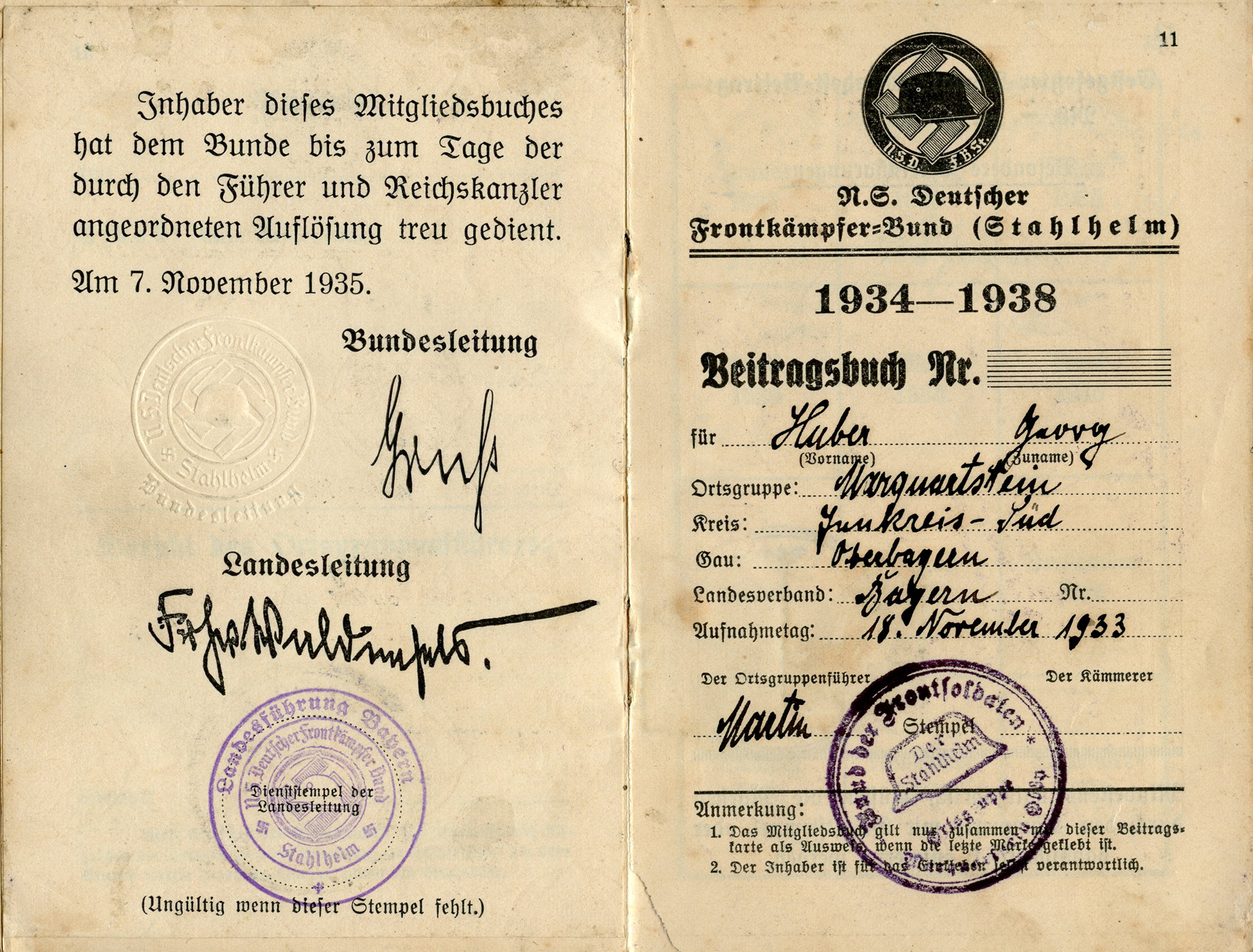
[Below: Next page.]
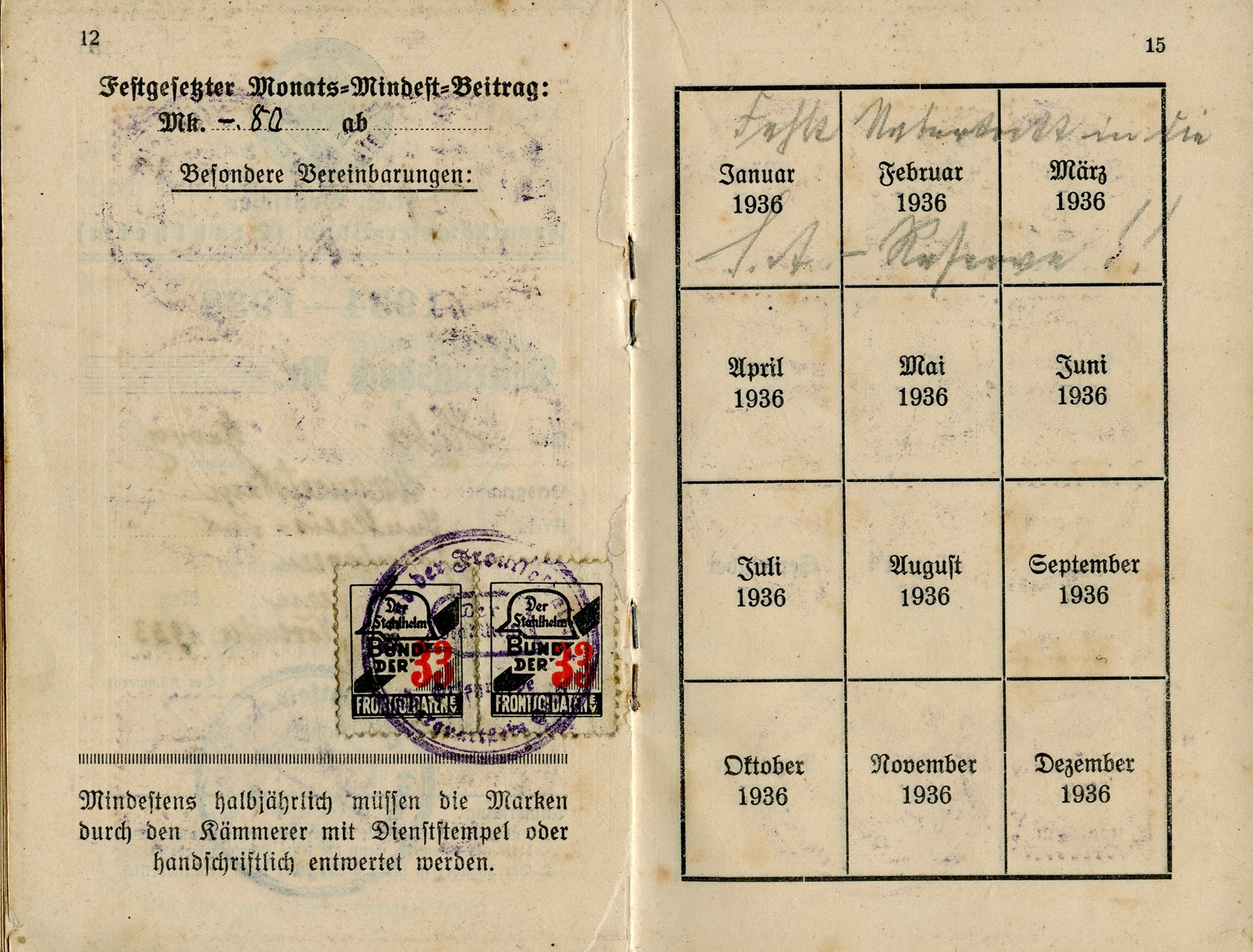
[Below: Close-up.]
[Below: Next page.]
[Below: Next page.]
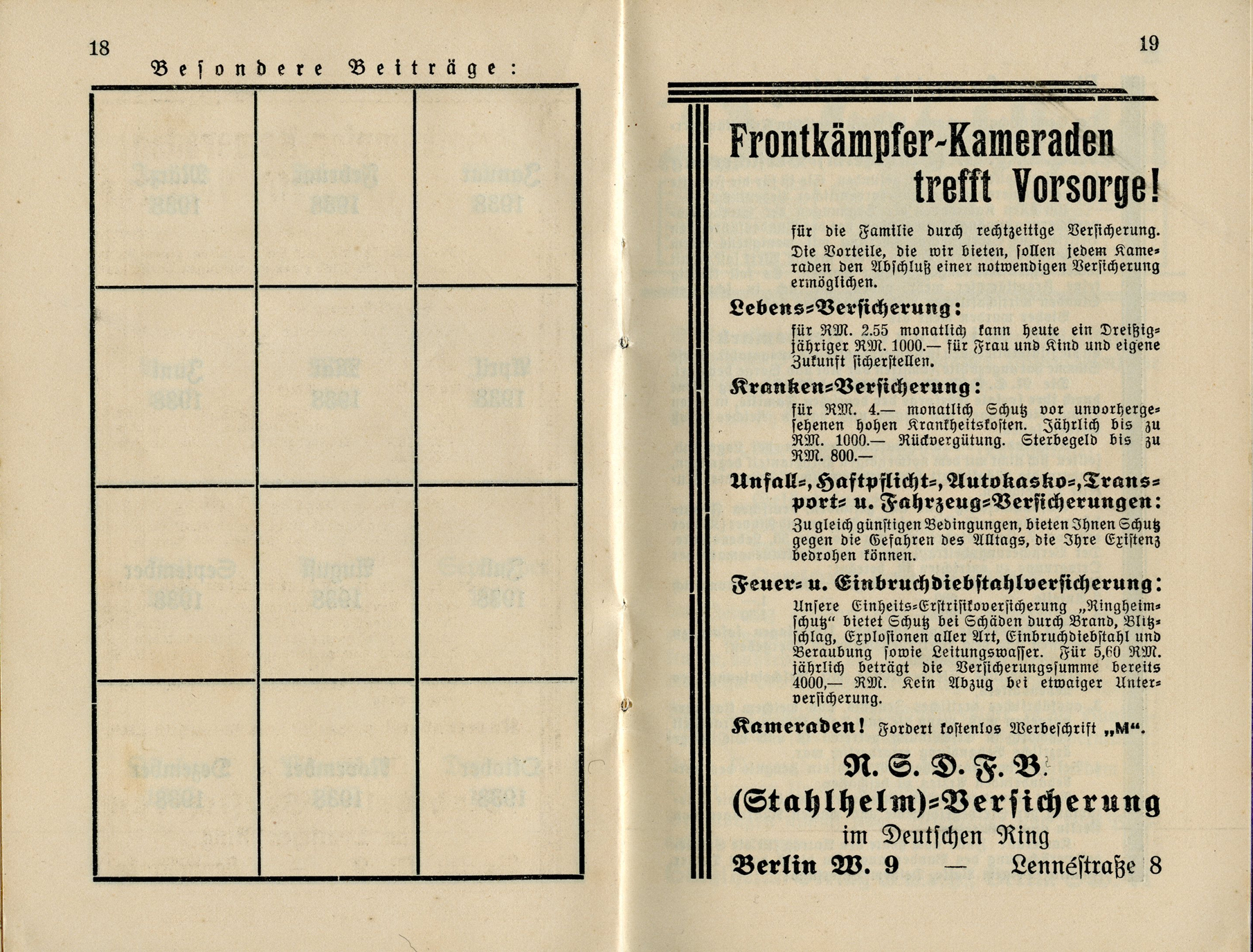
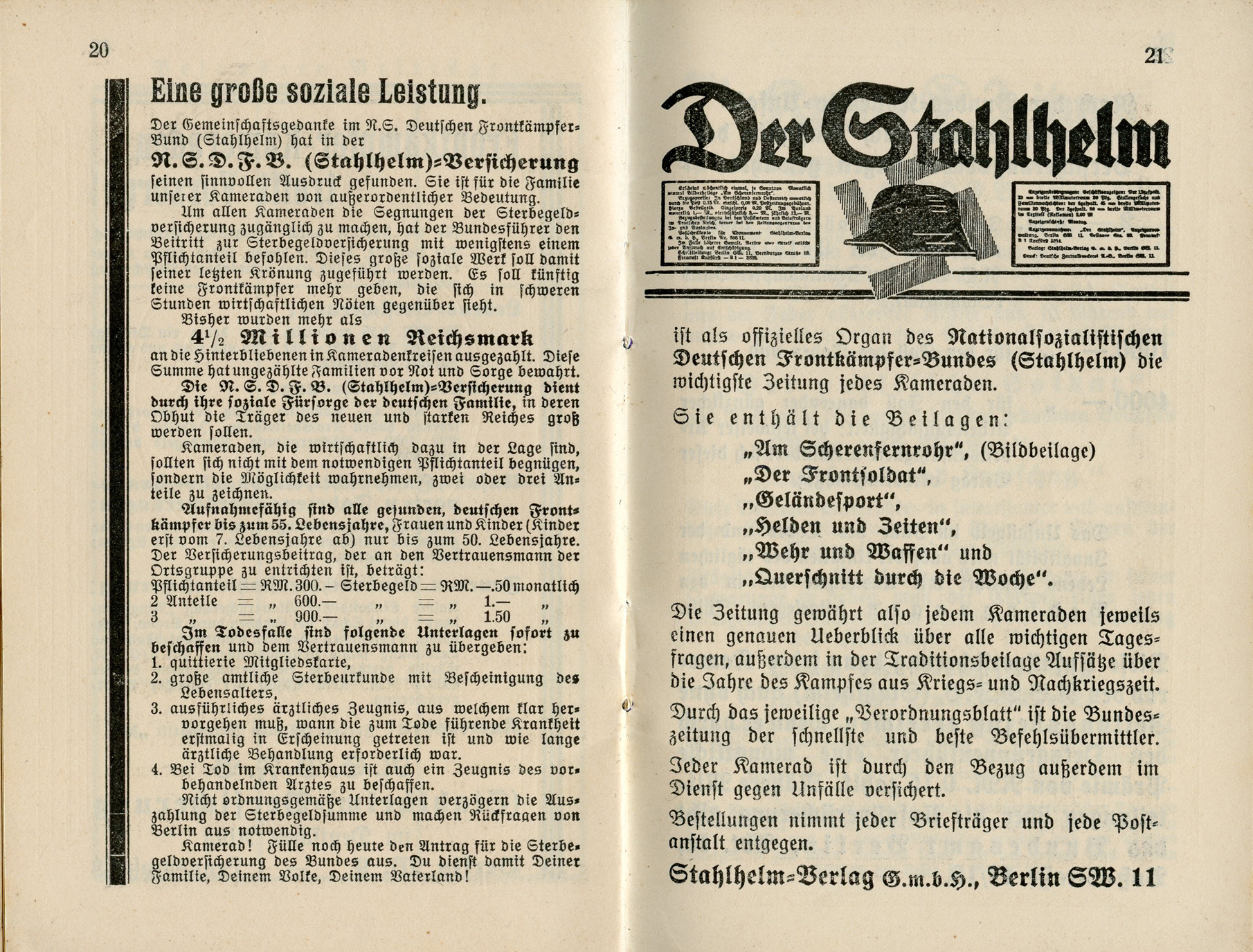
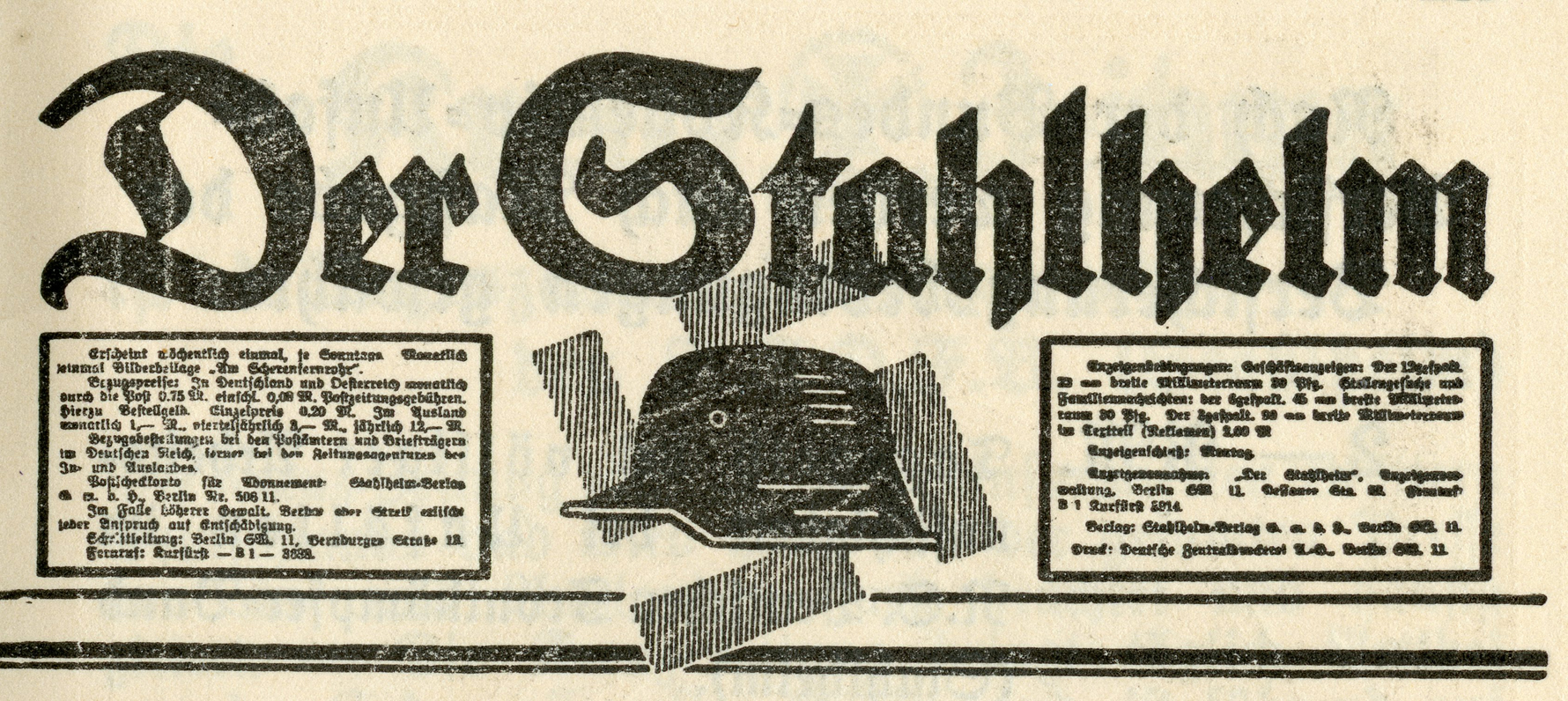
[Below: Next page. This is advertising the group's official newspaper called 'The Stahlhelm'.]
[Below: Close-up.]
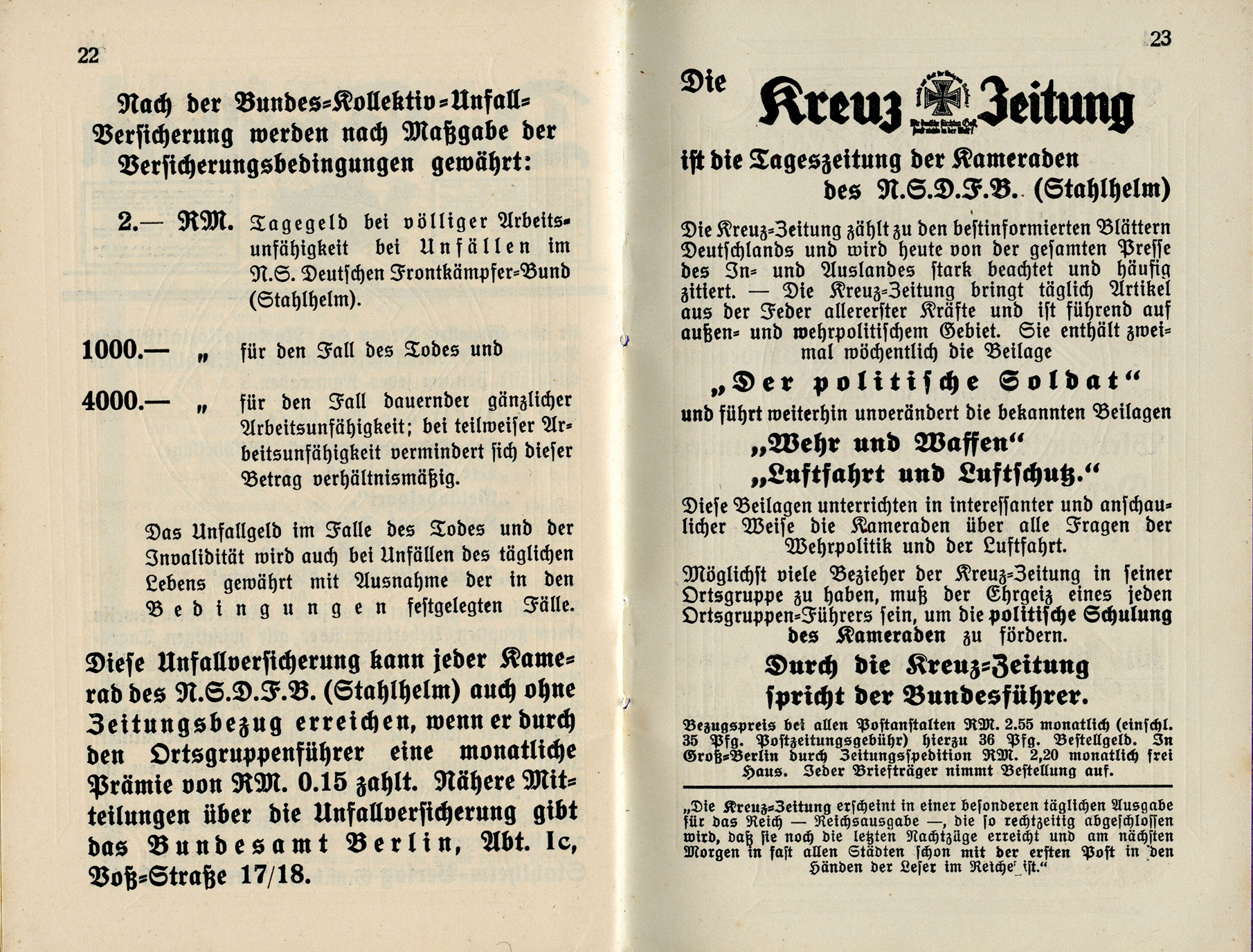
[Below: Next page. This is advertising another newspaper called 'Die Kreuz Zeitung' (The Cross Newspaper).]
[Below: Close-up.]
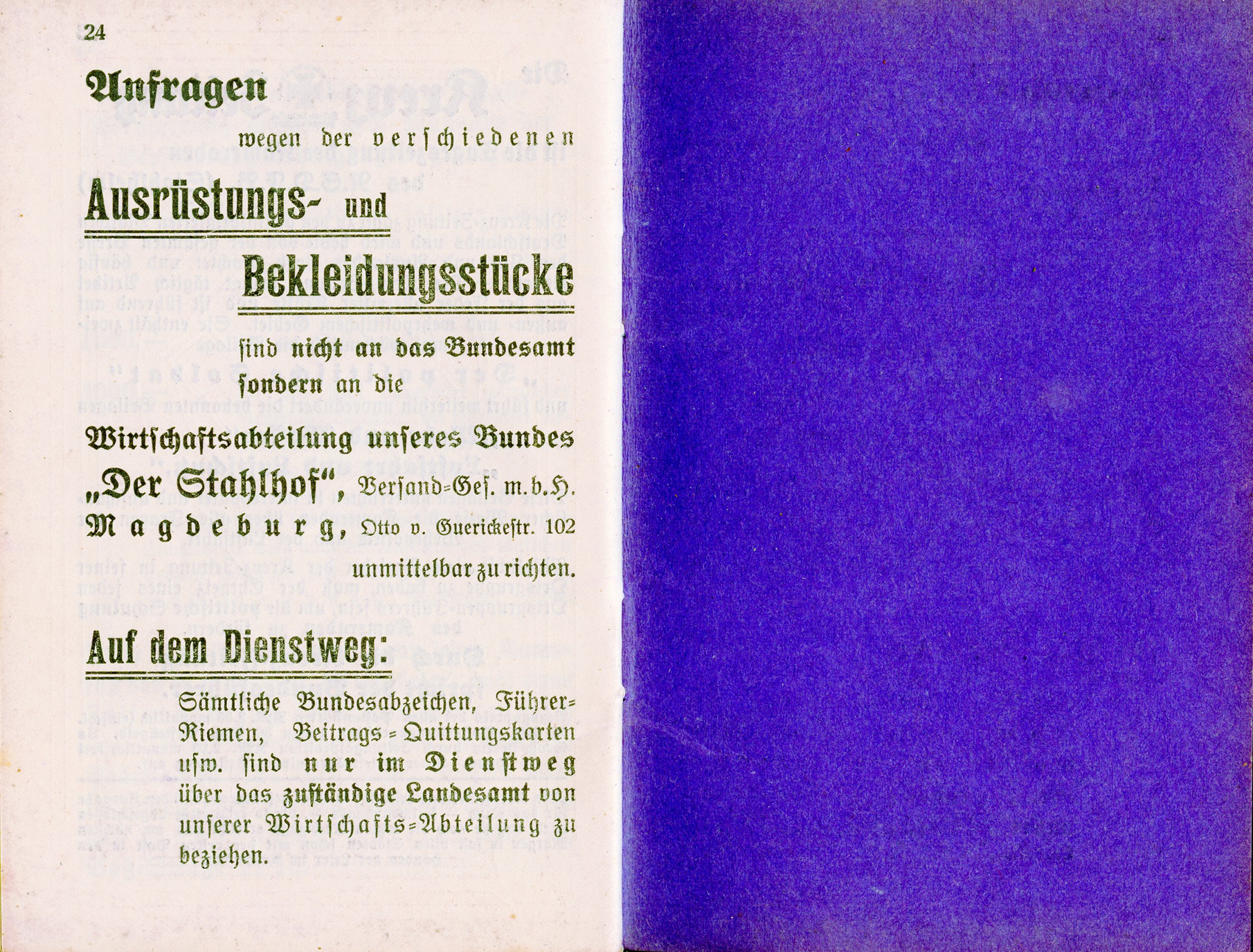
[Below: Next page.]

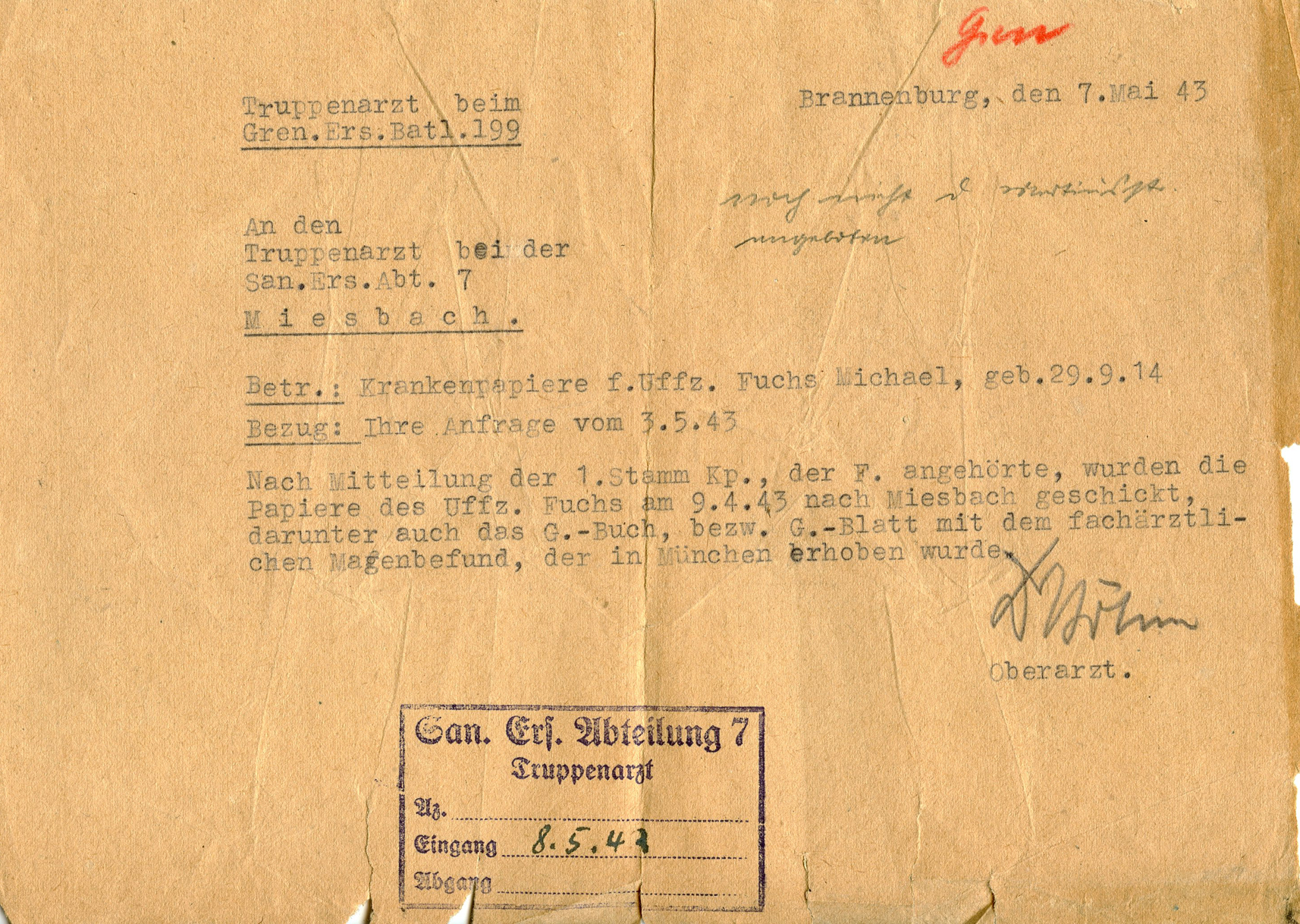
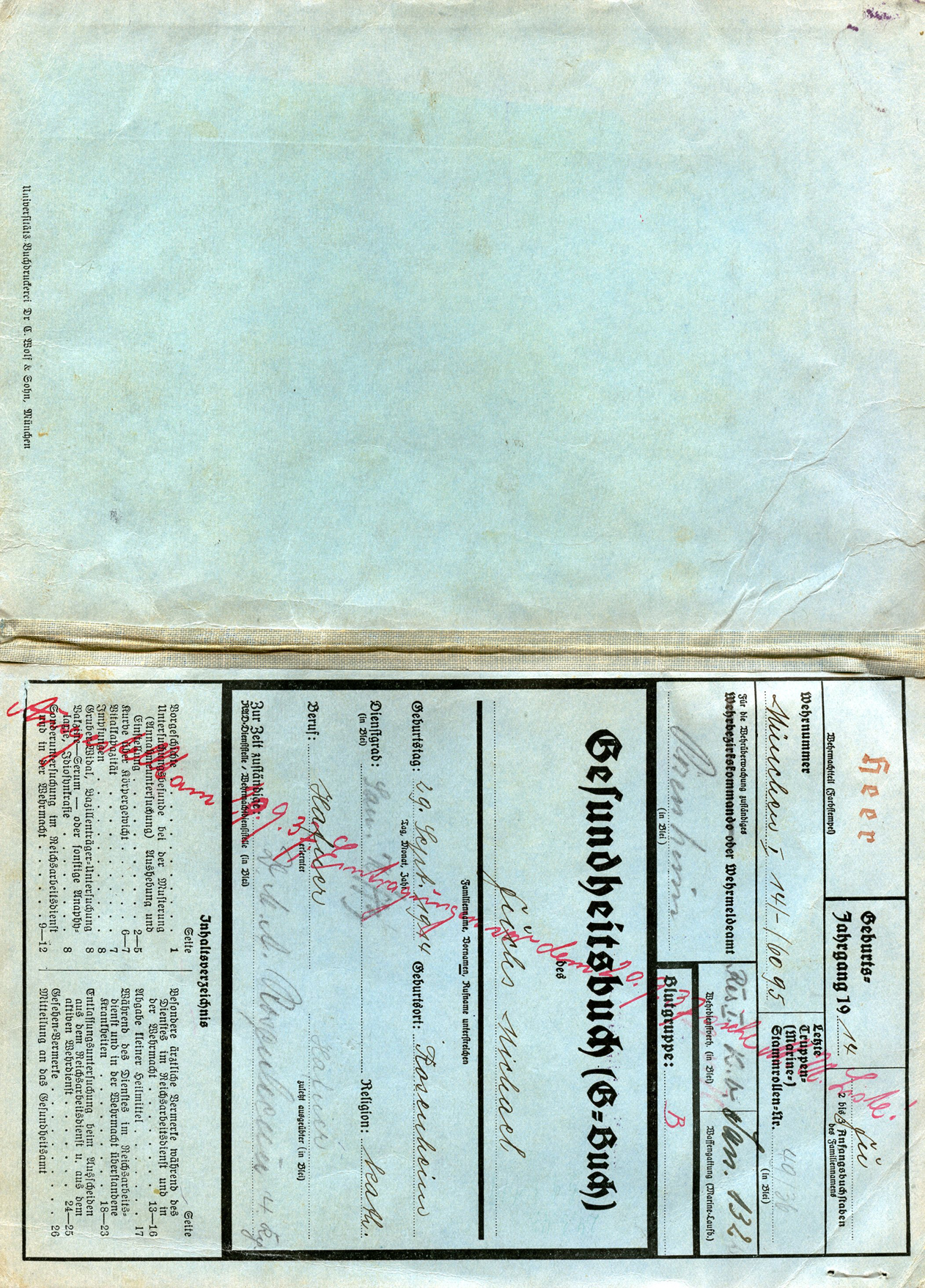
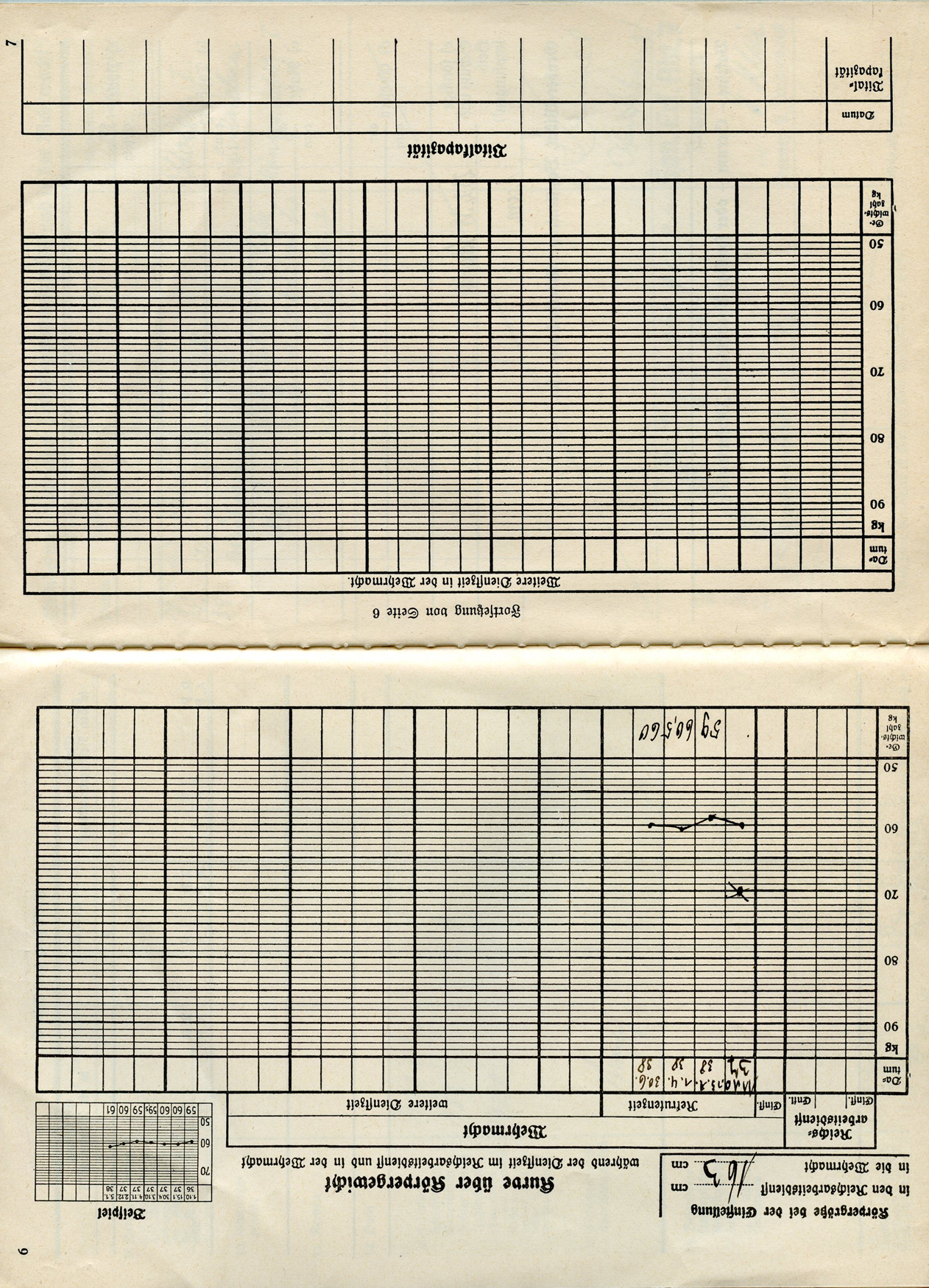
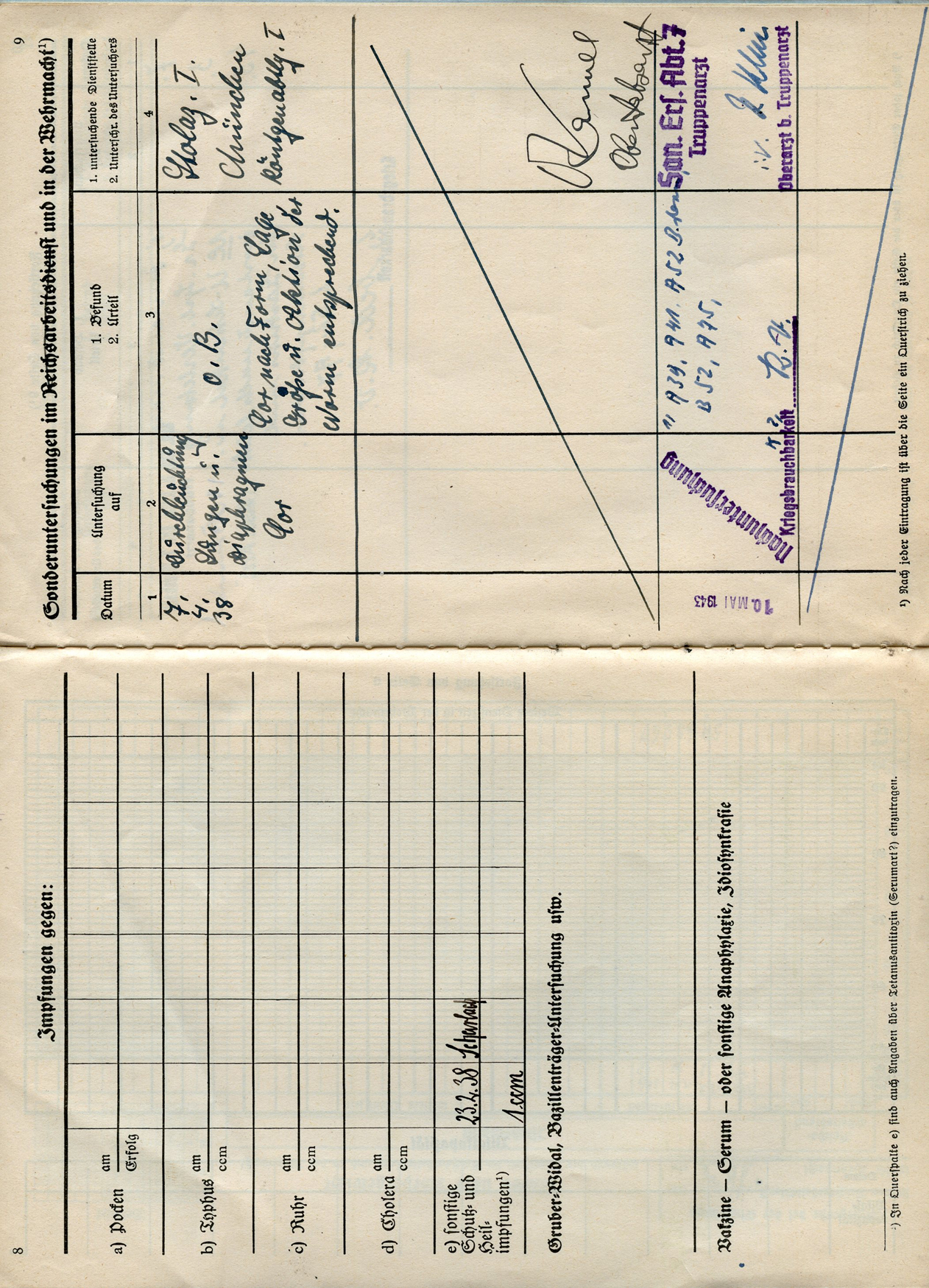
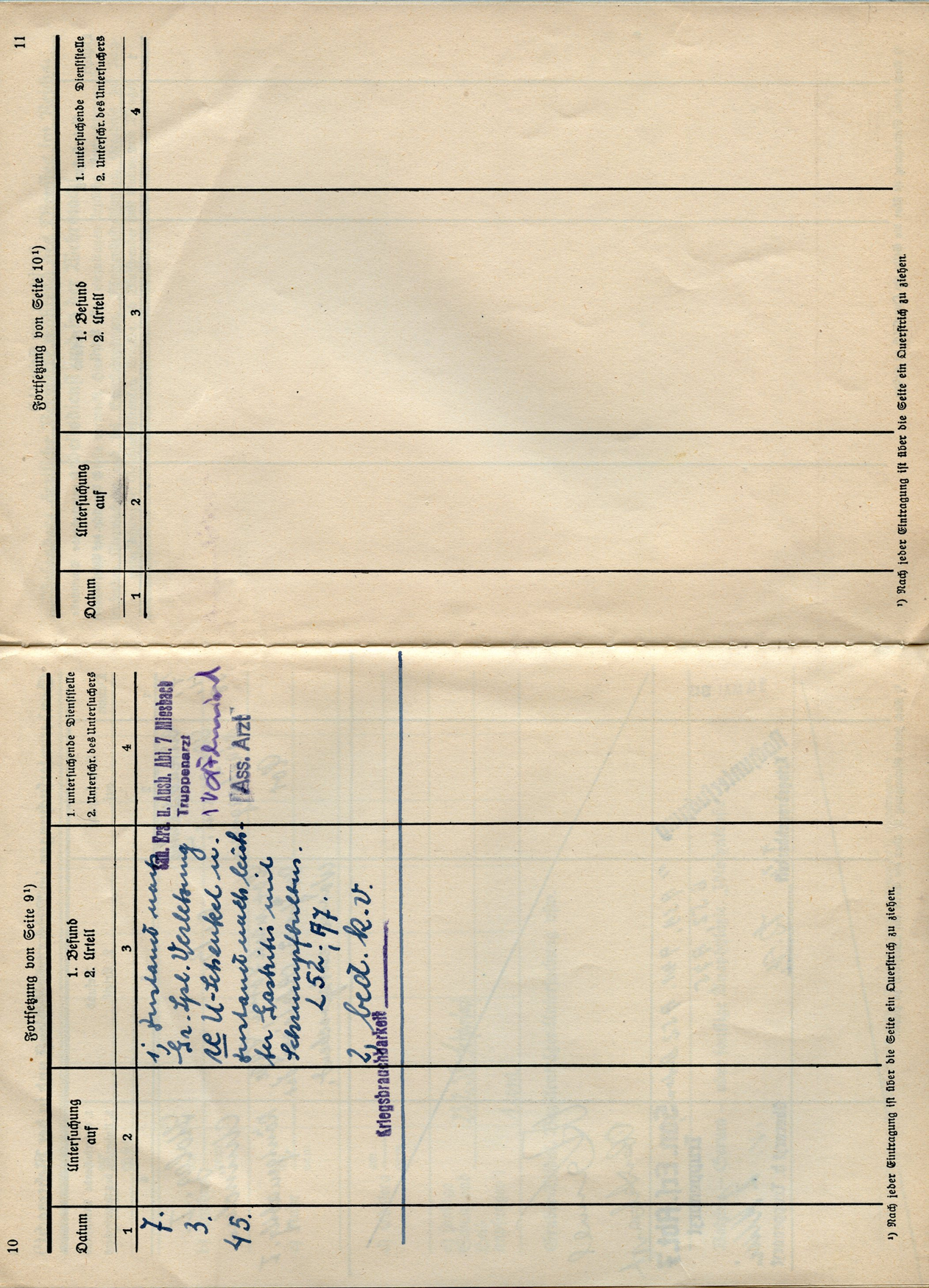
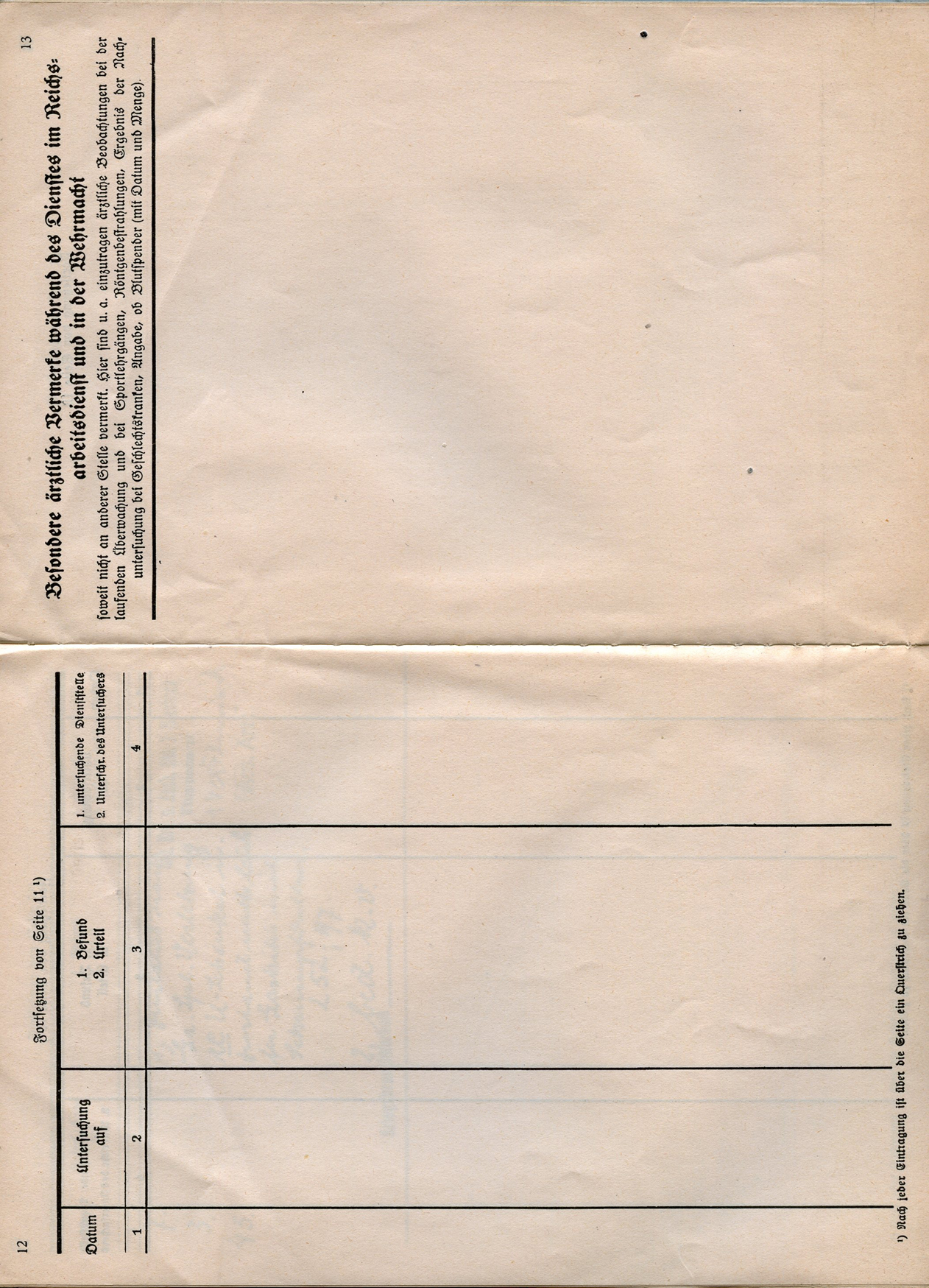
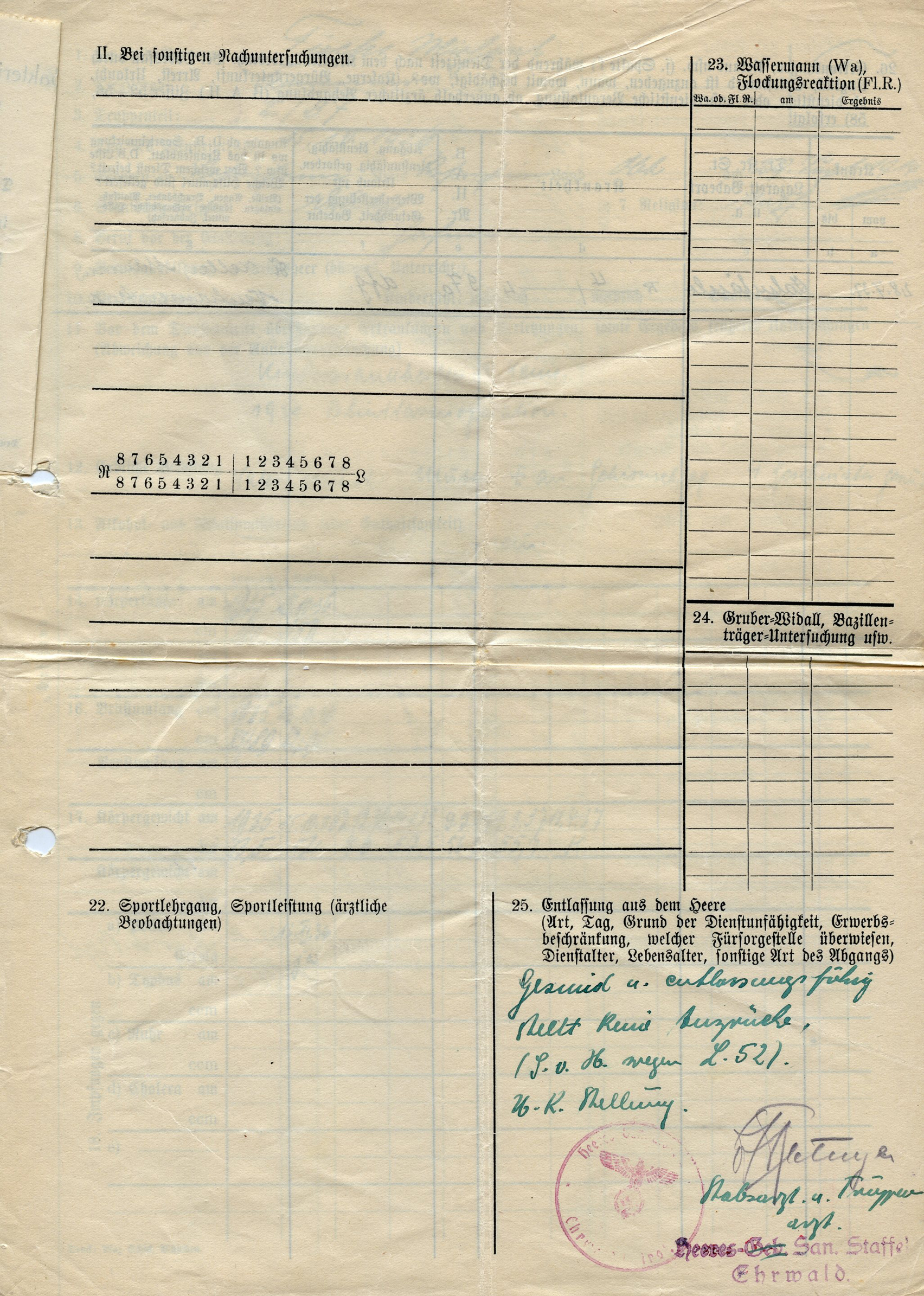
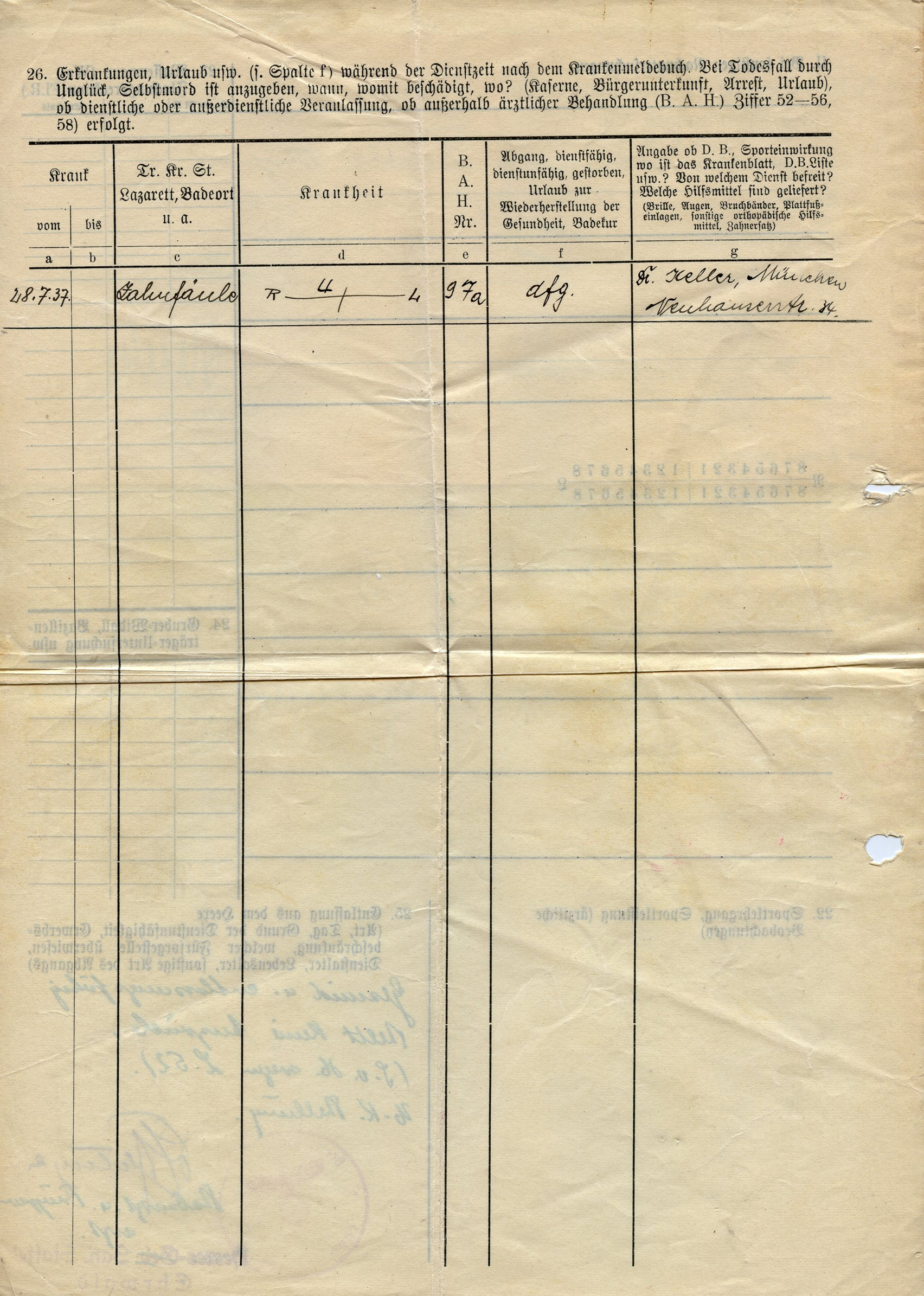
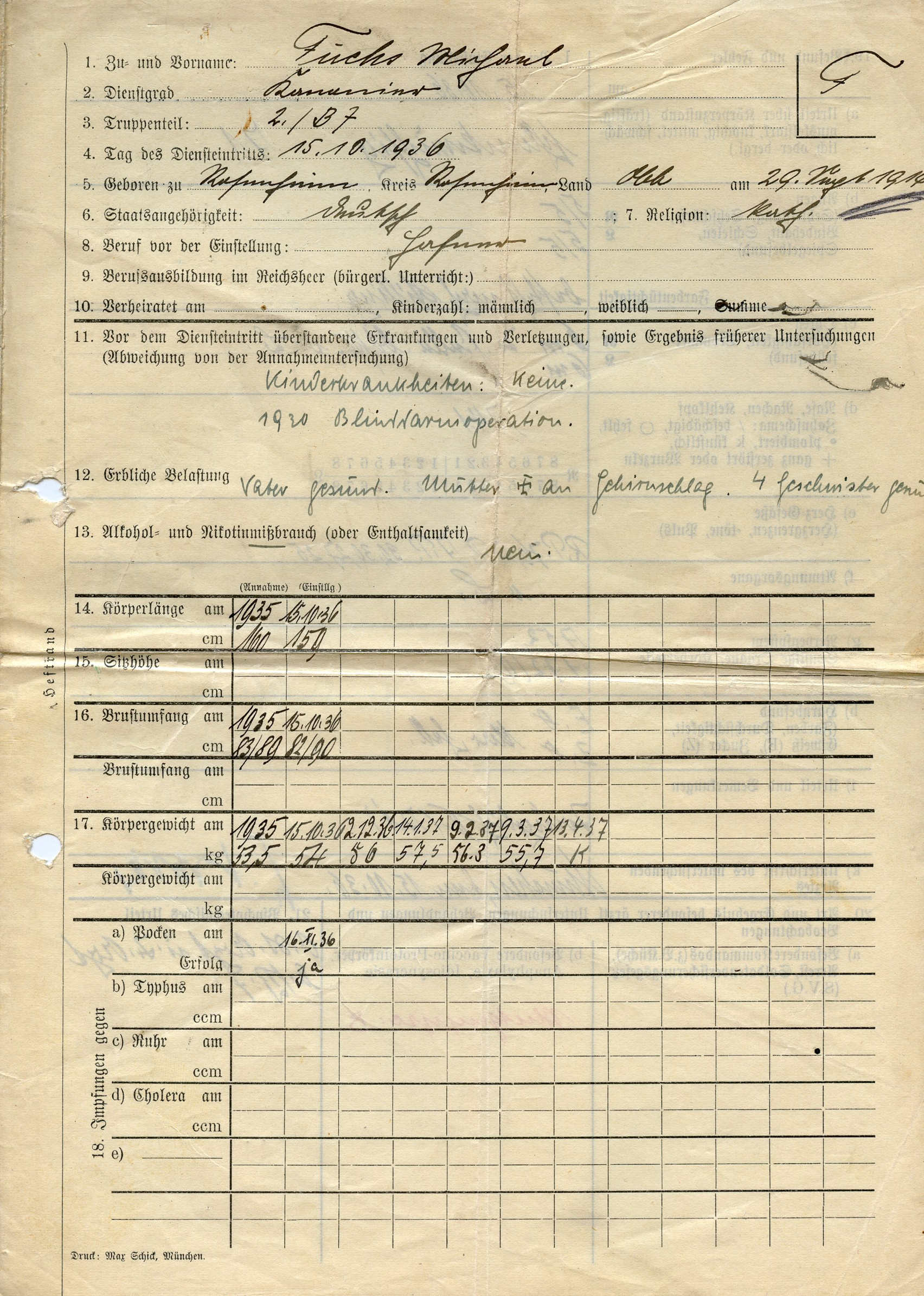
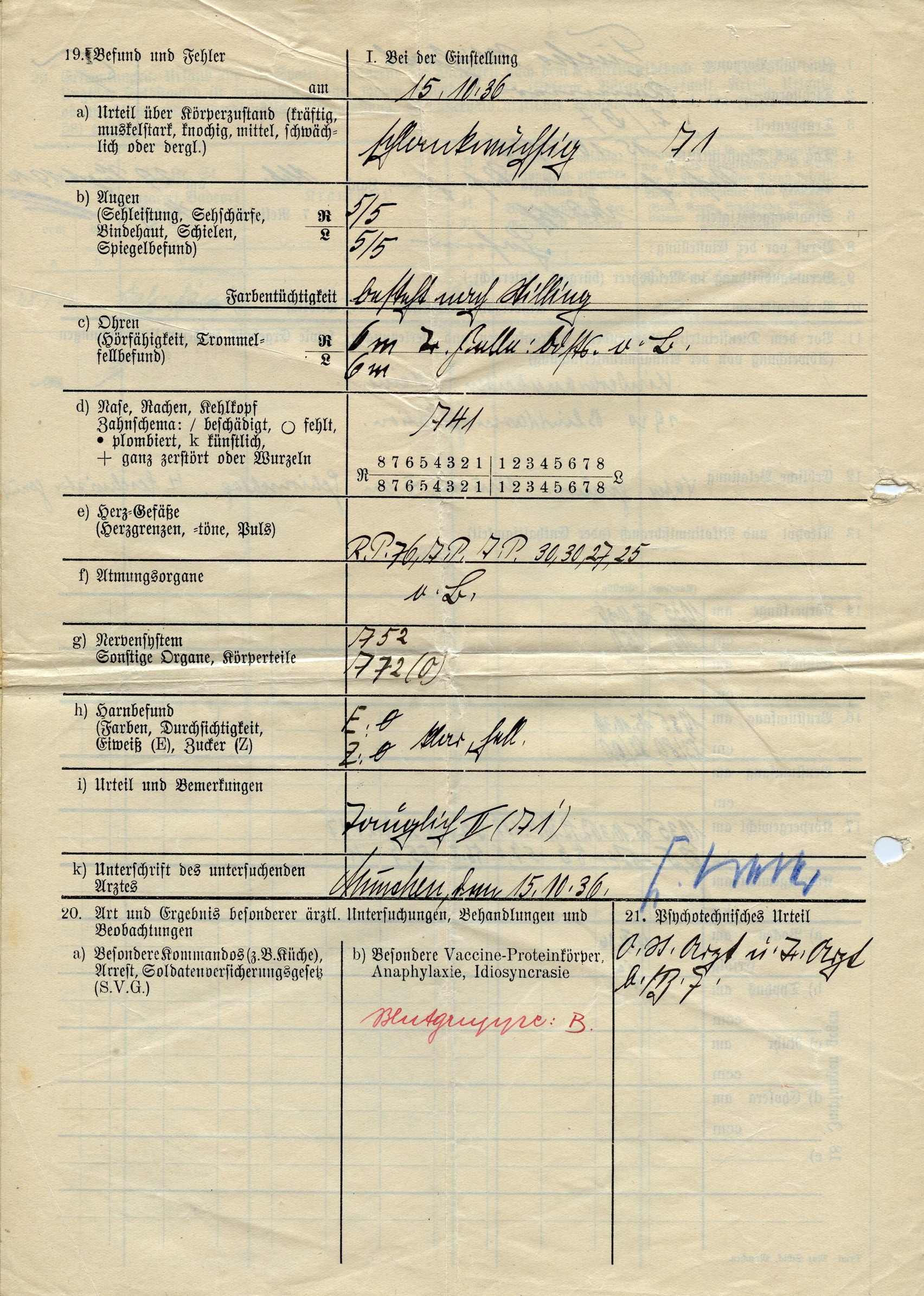
[Below: Here is something very special that I've never seen before. This is a Wehrmacht soldier's health file with his medical history. This was not given to the individual and belonged to the government. His name was Michael Fuchs, born September 29, 1914. He was 22 years old when this record begins in 1936. Included in this file are extensive medical tests, even including an x-ray. The dates range from 1936 - 1943. Back of booklet and cover.]
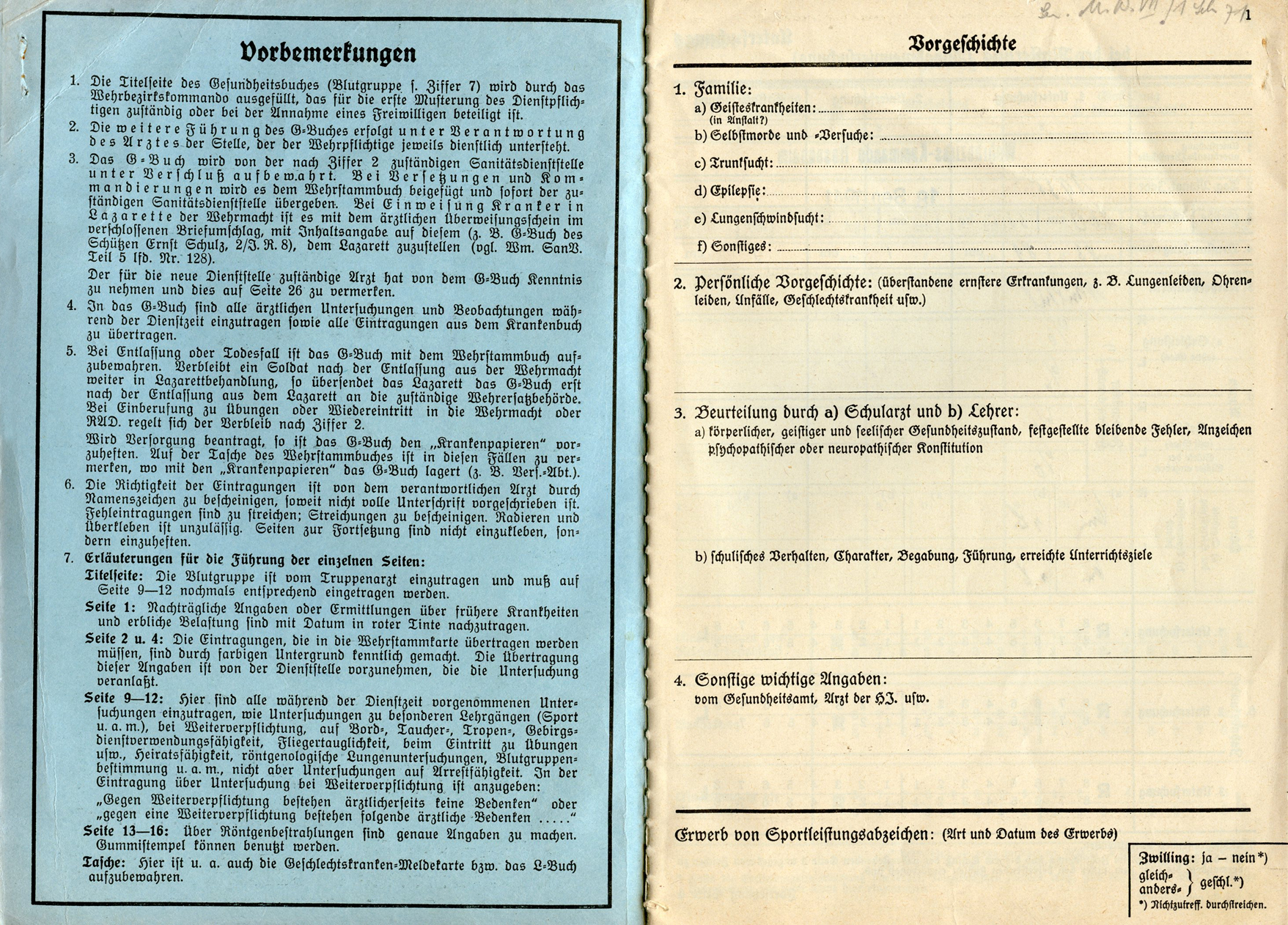
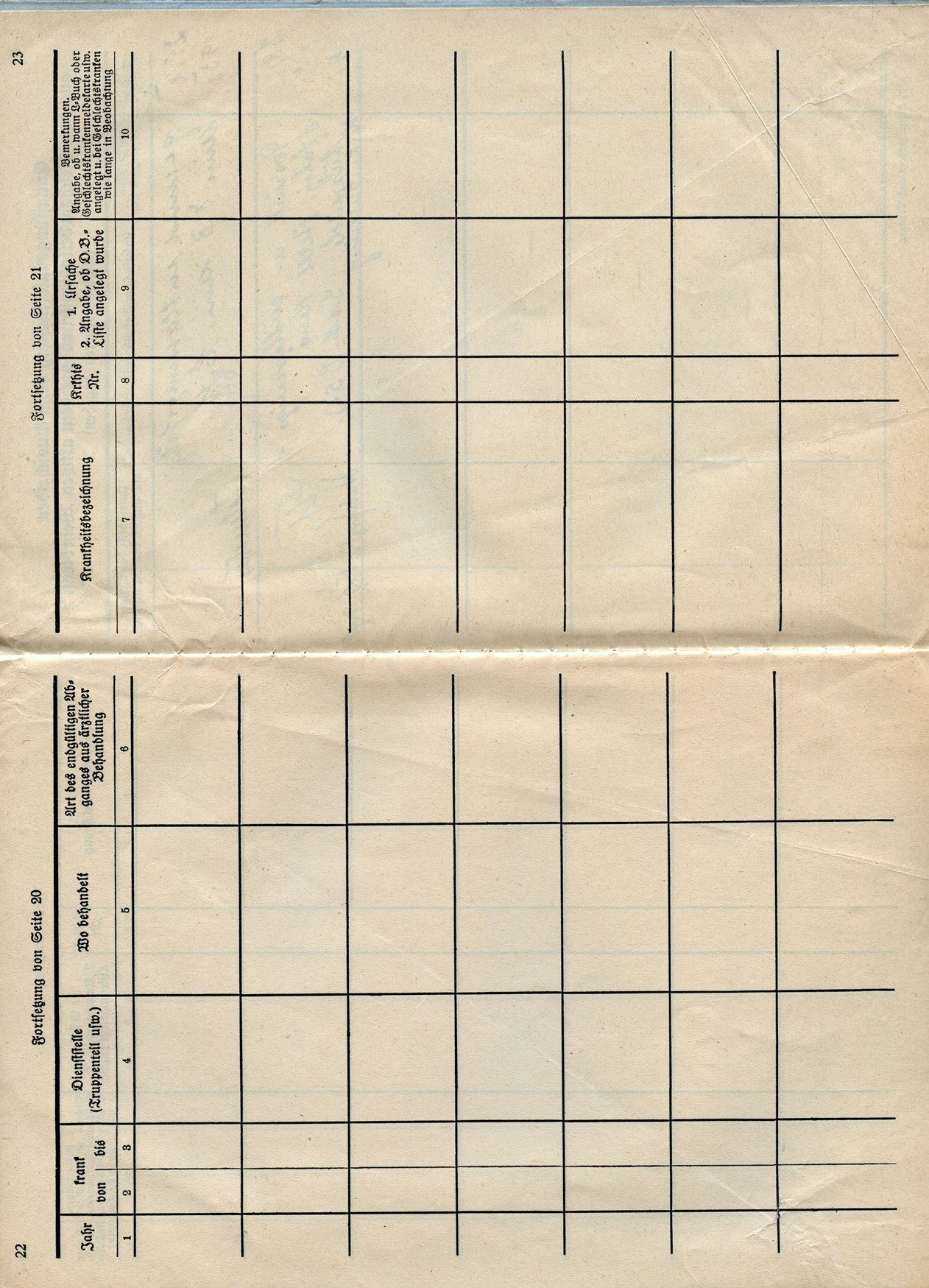
[Below: Pages within. This explains why this sort of thing is so rare. It says that 'The book is kept under lock and key' and 'when sick individuals are admitted to a Wehrmacht hospital, it is to be delivered to the hospital with a doctor referral form in a sealed envelope...']
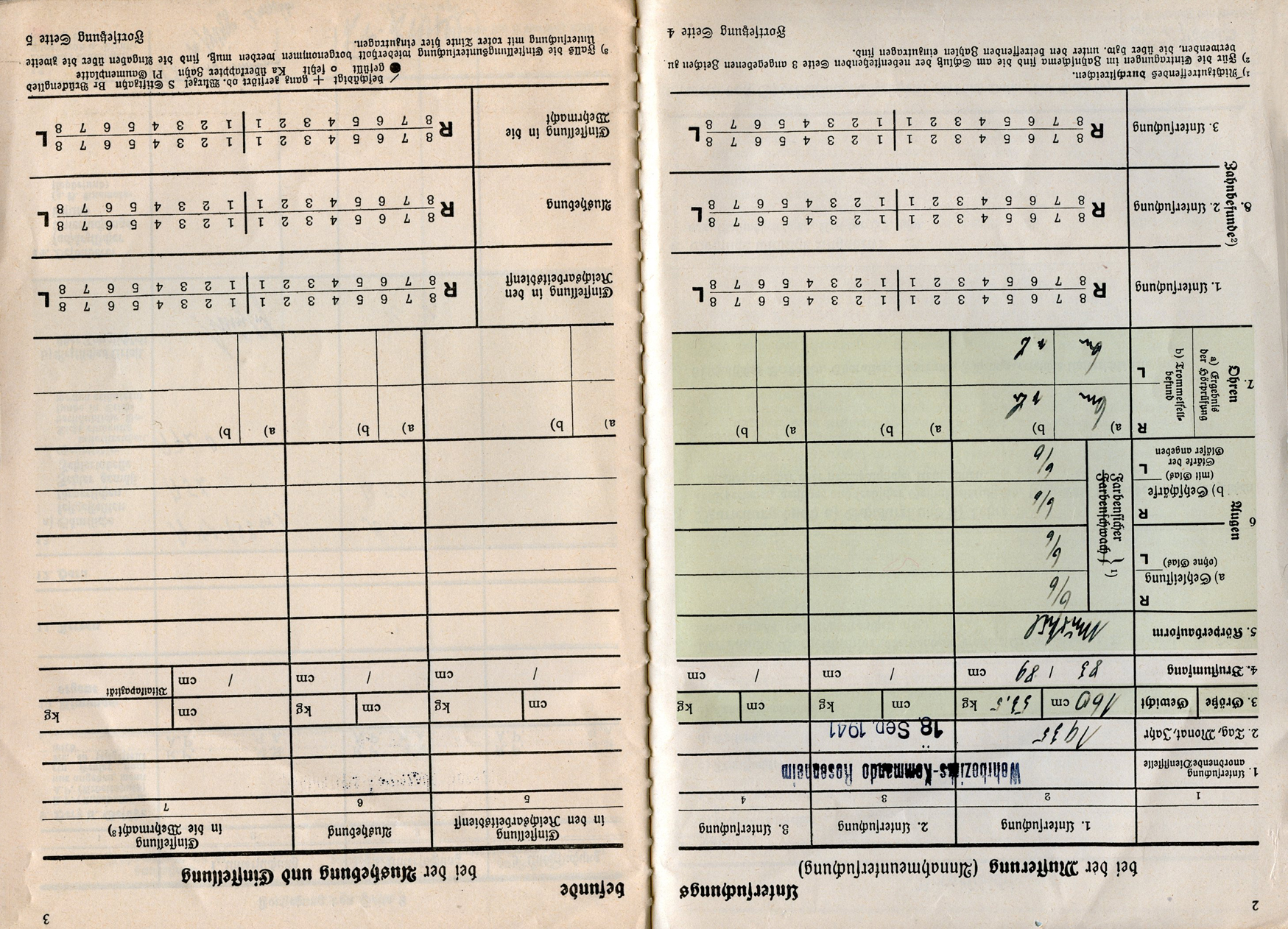
[Below: Pages within.]
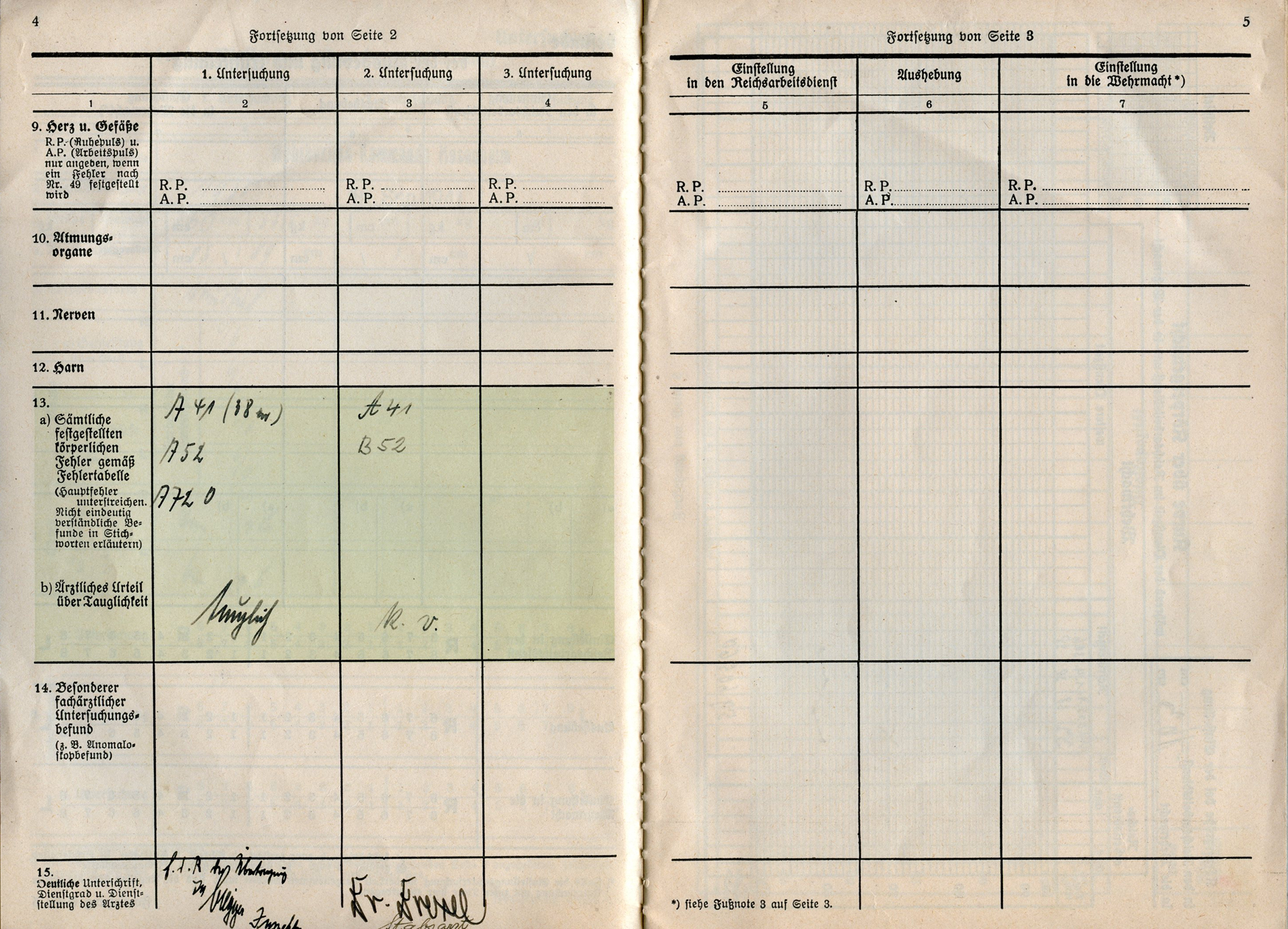
[Below: Pages within.]
[Below: Pages within.]
[Below: Pages within.]
[Below: Pages within.]
[Below: Pages within.]
[Below: Pages within.]
[Below: Pages within.]
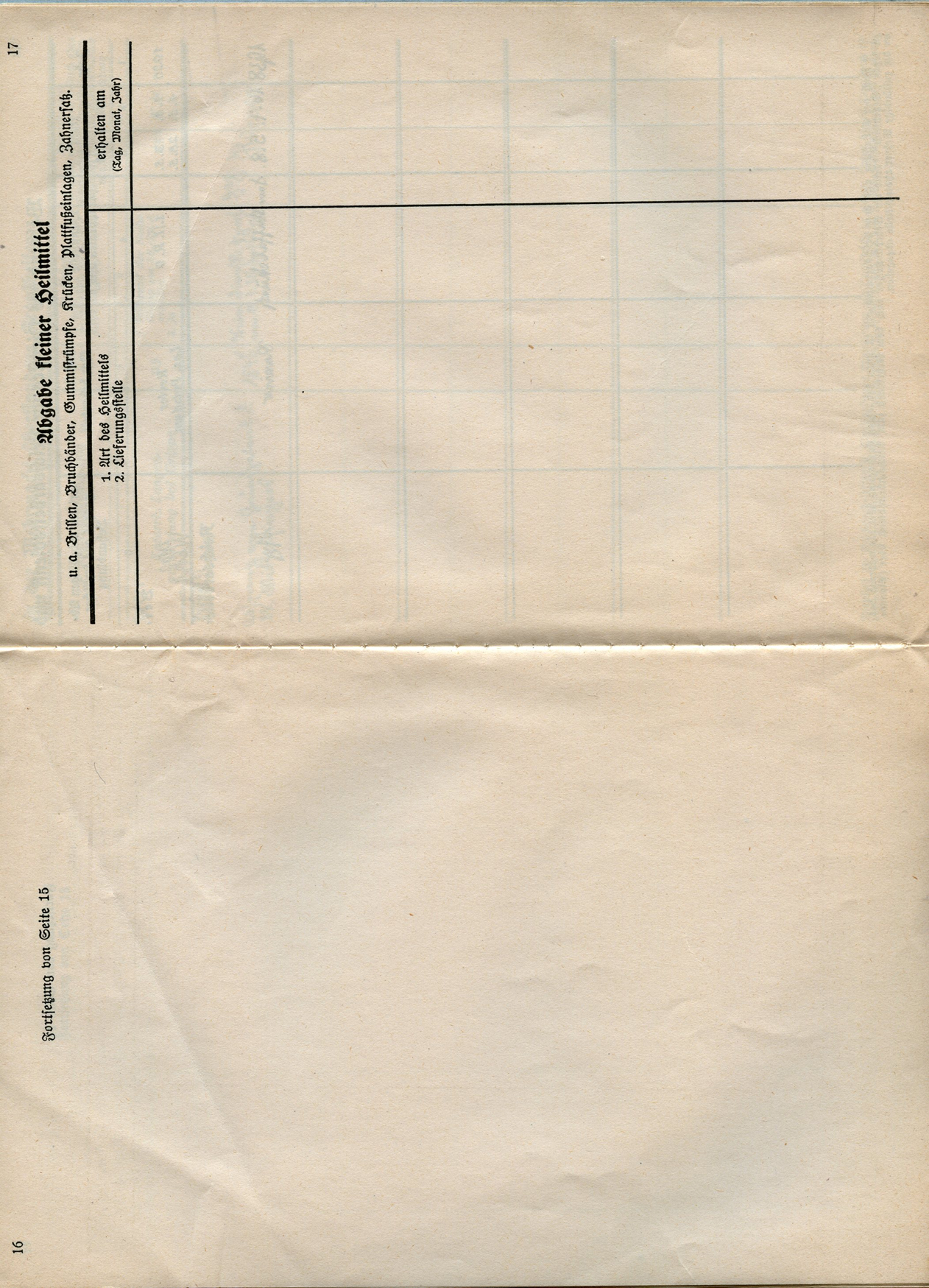
[Below: Pages within.]
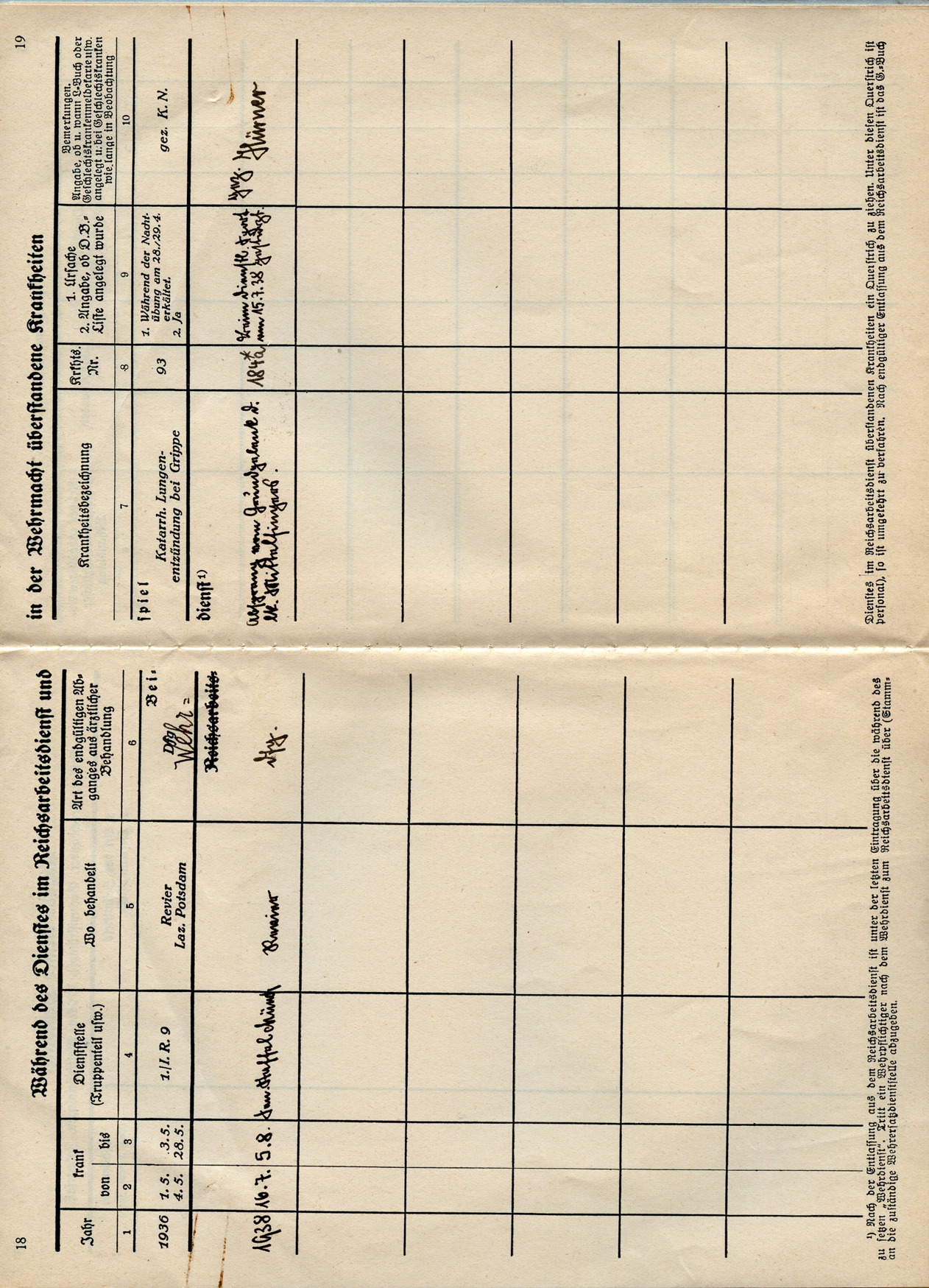
[Below: Pages within.]
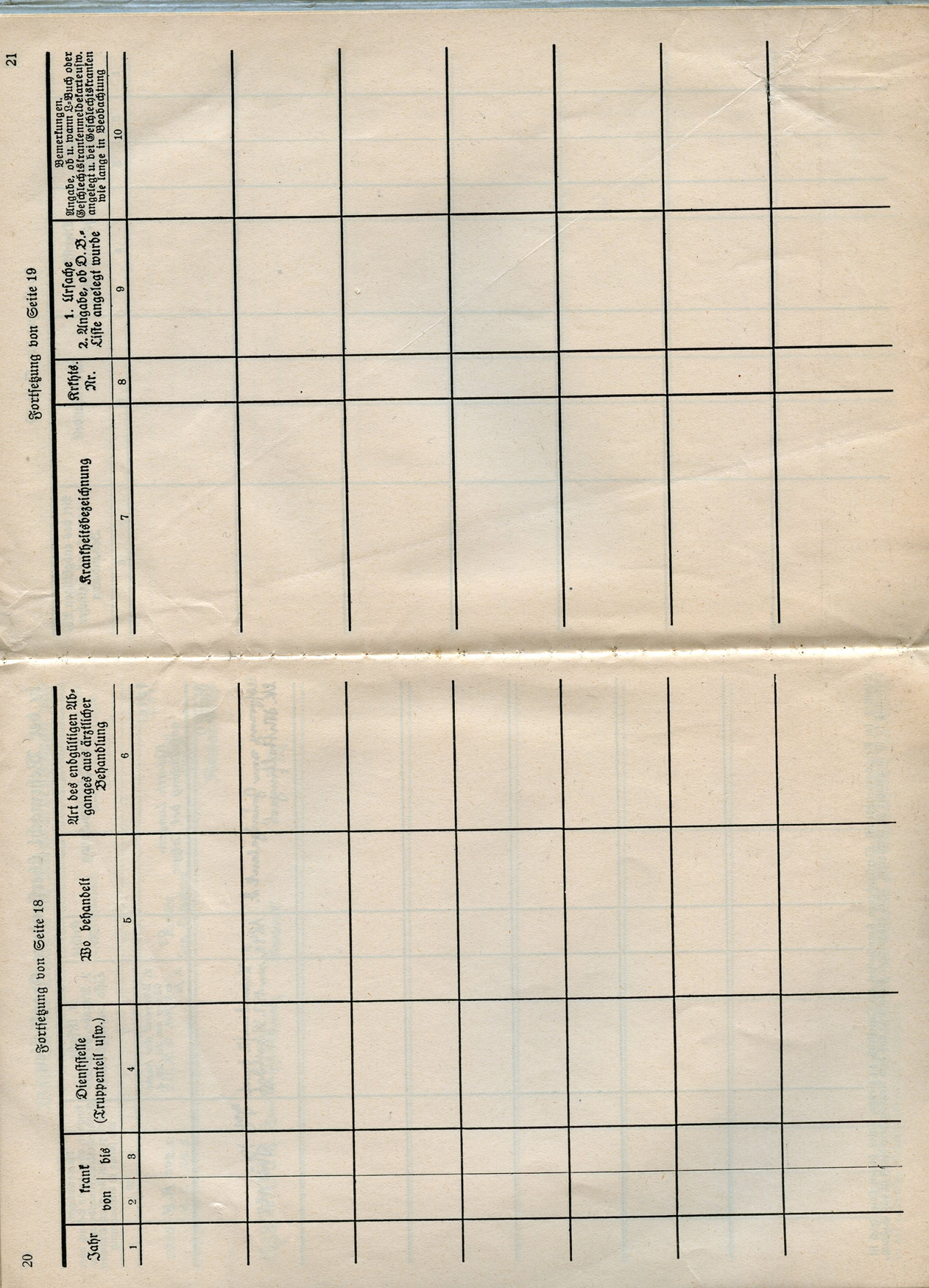
[Below: Pages within.]
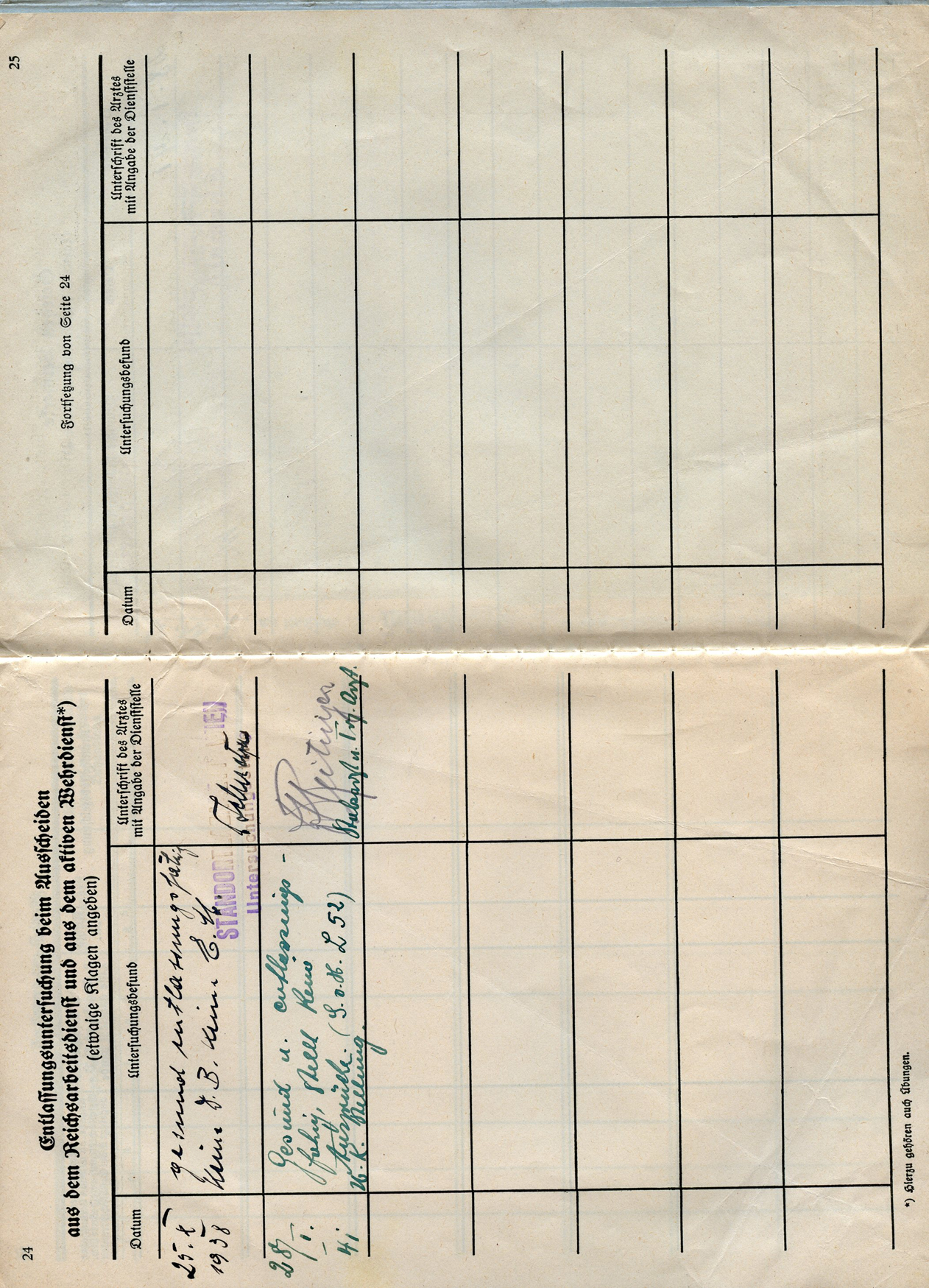
[Below: Pages within. This states that upon discharge from either the military of the Reich Labor Service (RAD) that he was healthy.]
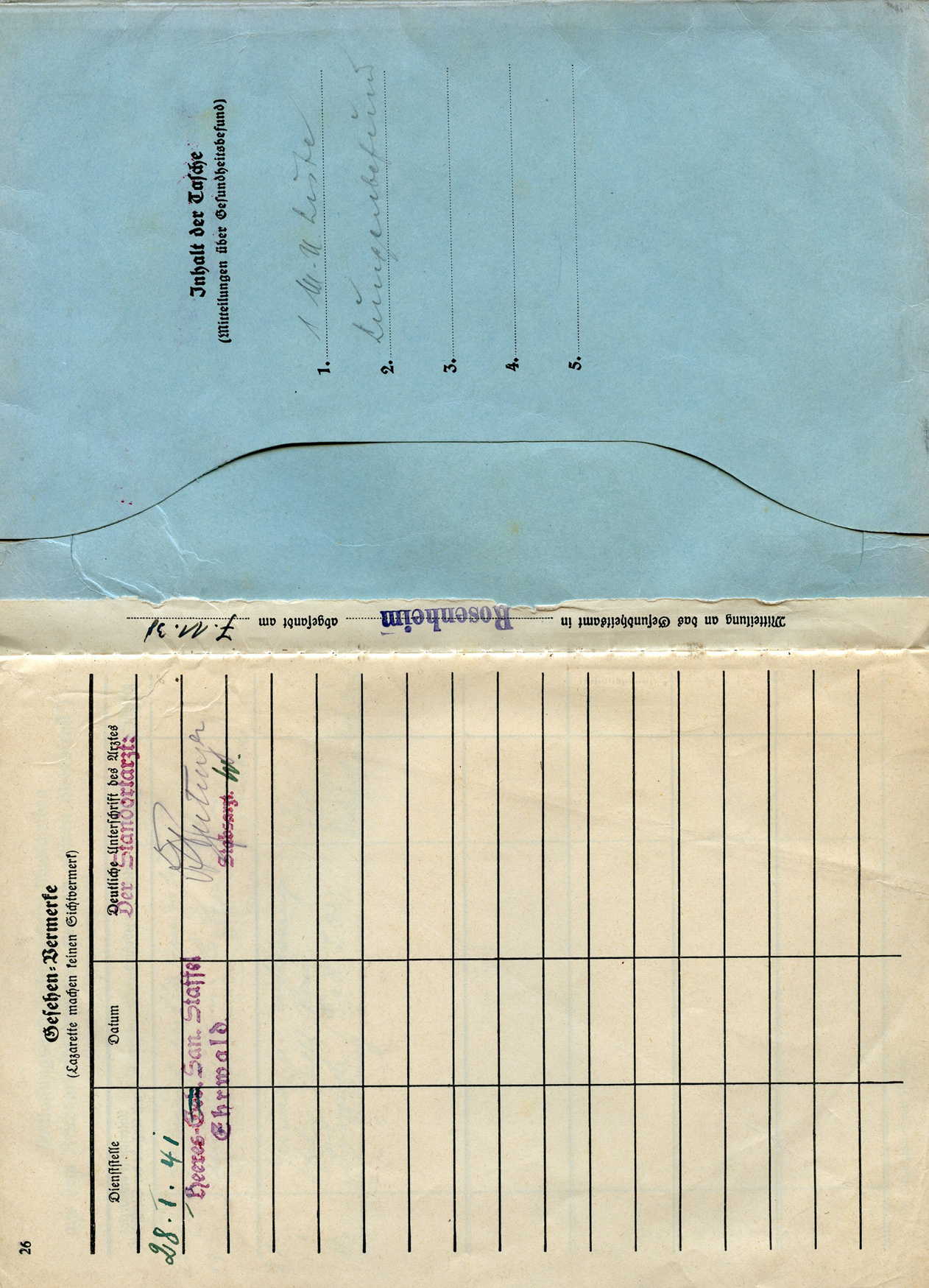
[Below: Pages within.]
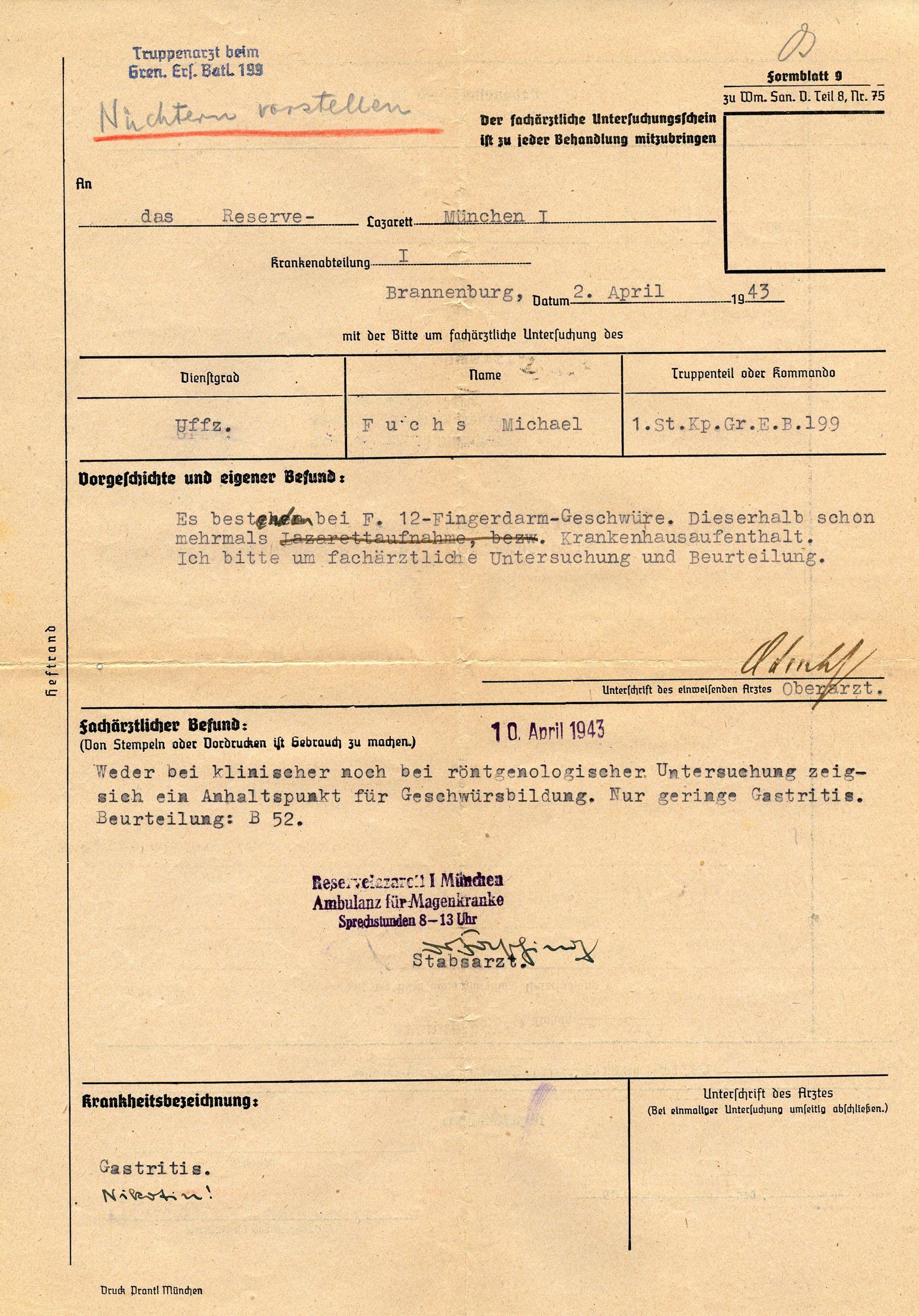
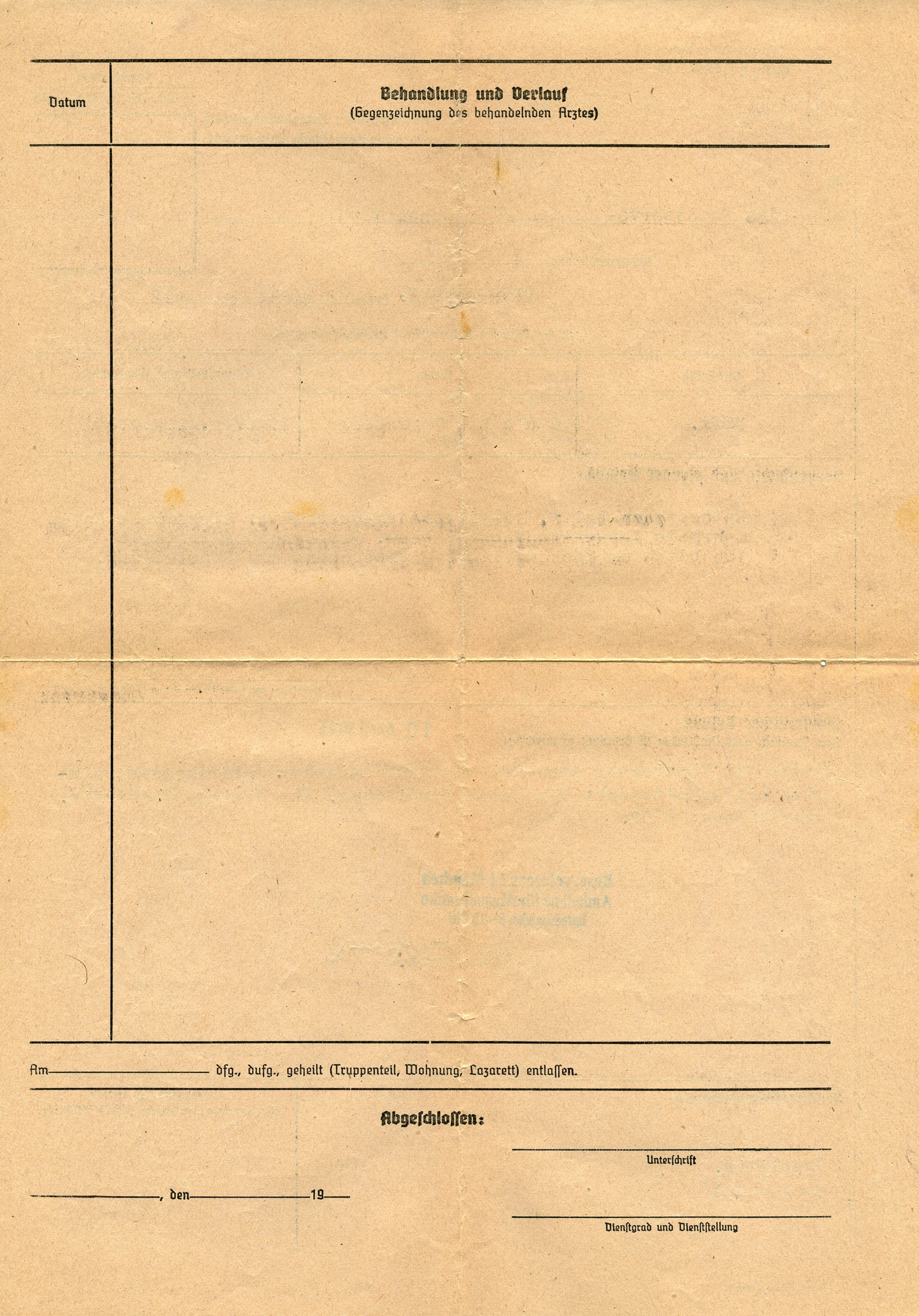
[Below: Document in pocket of booklet - side A. This document mentions that Fuchs had colon ulcers, which put him in the hospital a handful of times. Their finding here was gastritis and a handwritten 'Nicotine!'. Apparently nicotine can irritate your stomach/intestines.]
[Below: Document in pocket of booklet - side B.]
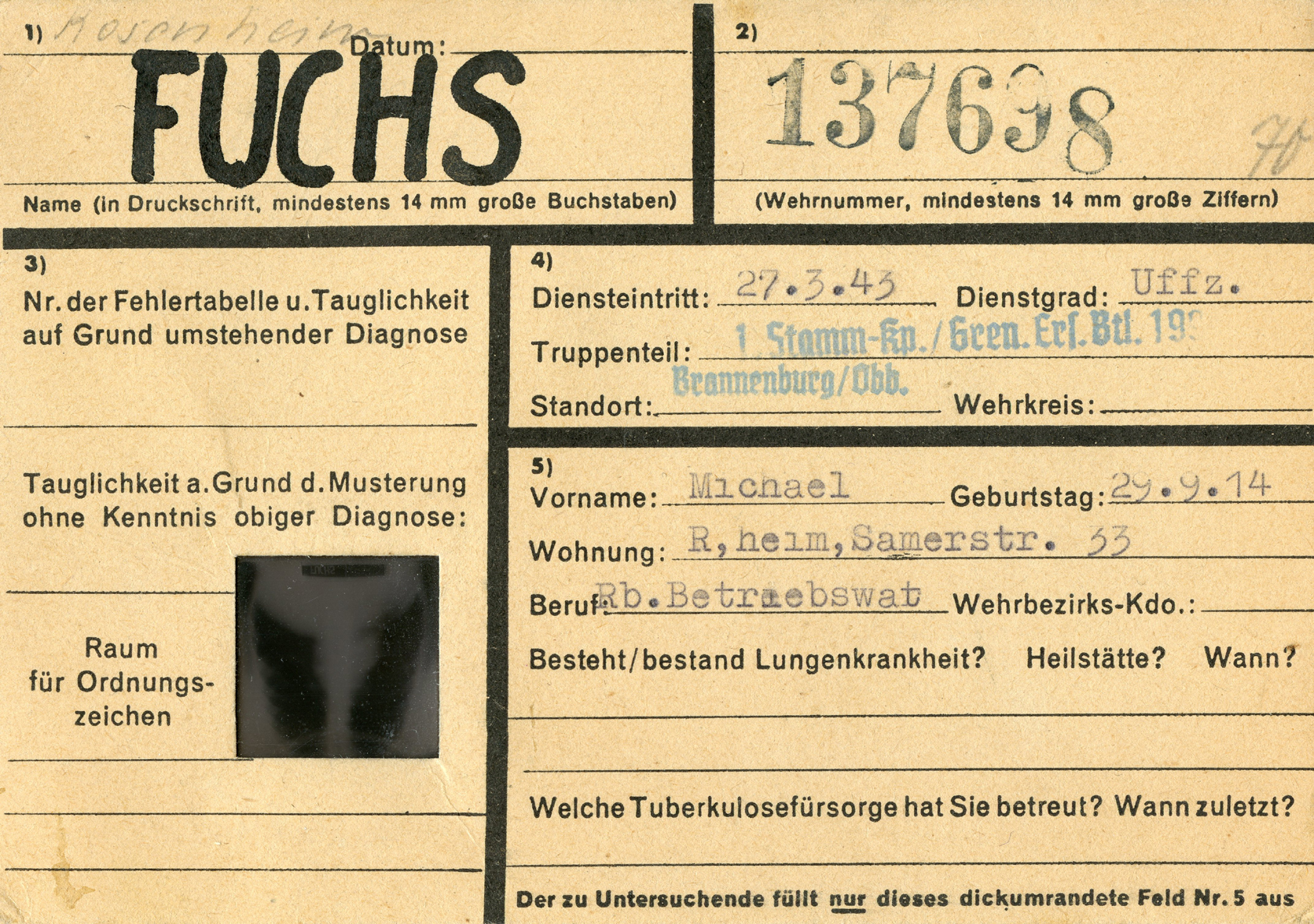
[Below: X-ray in pocket of booklet - side A. X-rays were discovered in 1895 by the German scientist Wilhelm Röntgen.]
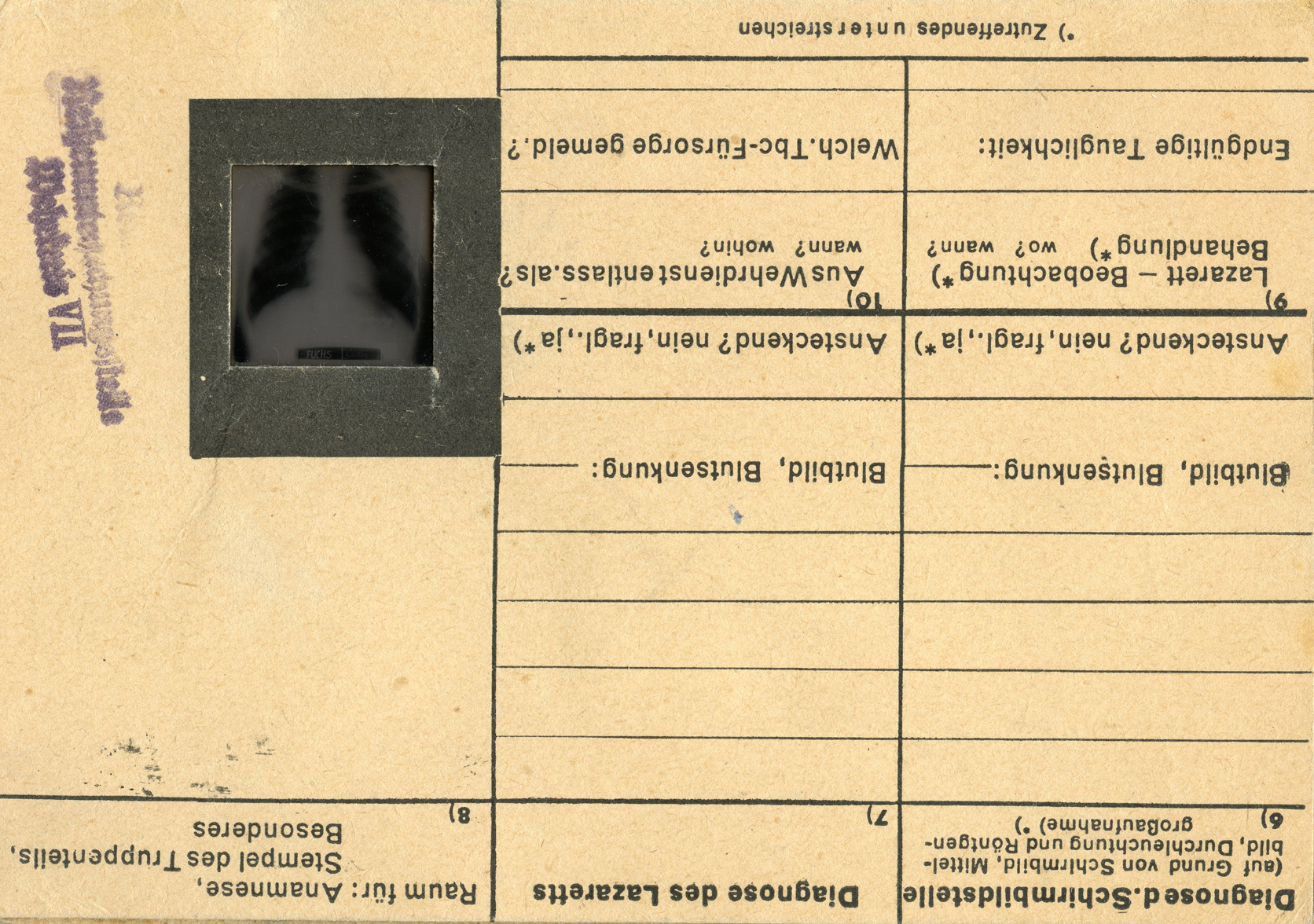
[Below: X-ray in pocket of booklet - side B.]
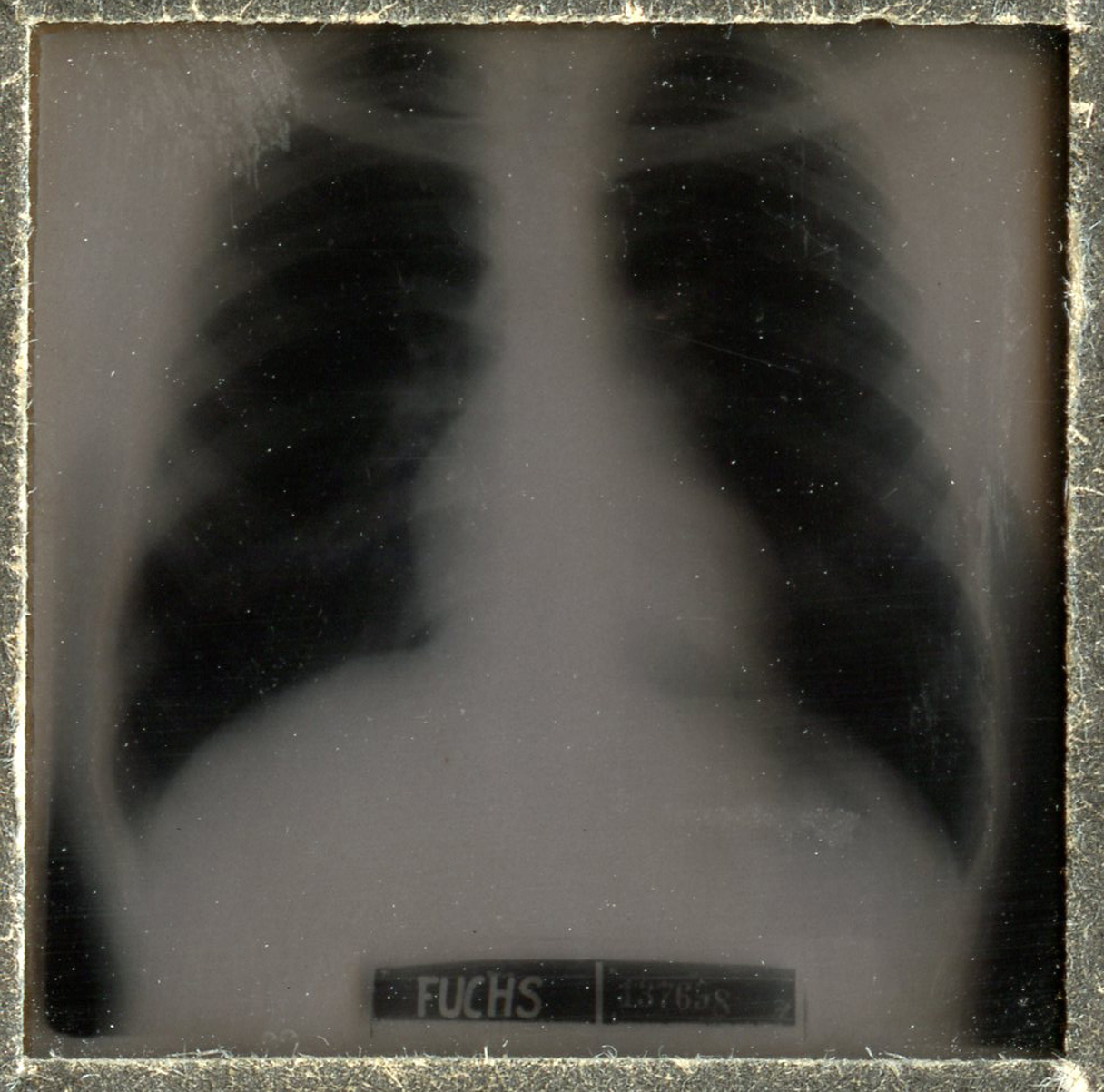
[Below: X-ray close-up.]
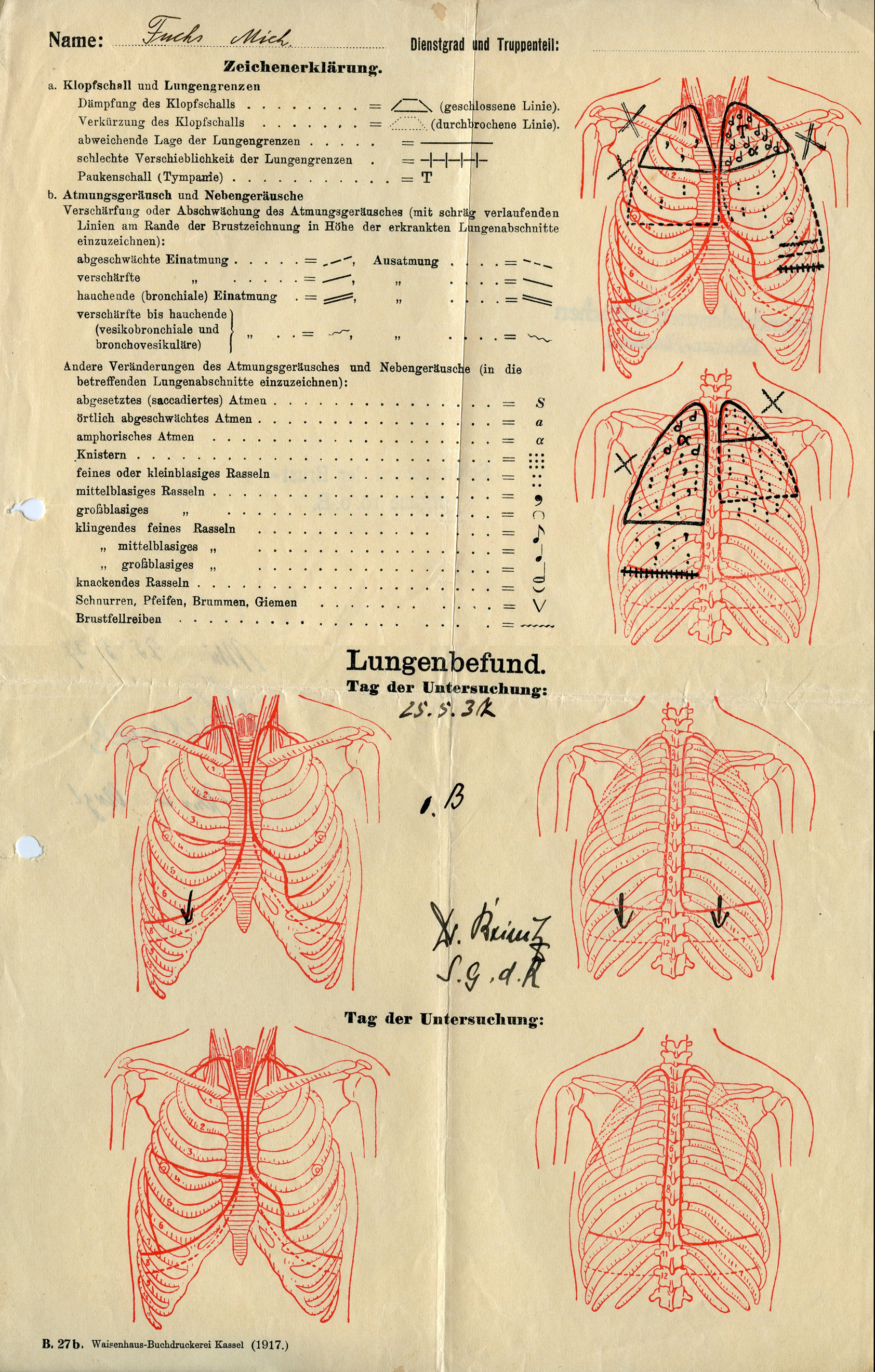
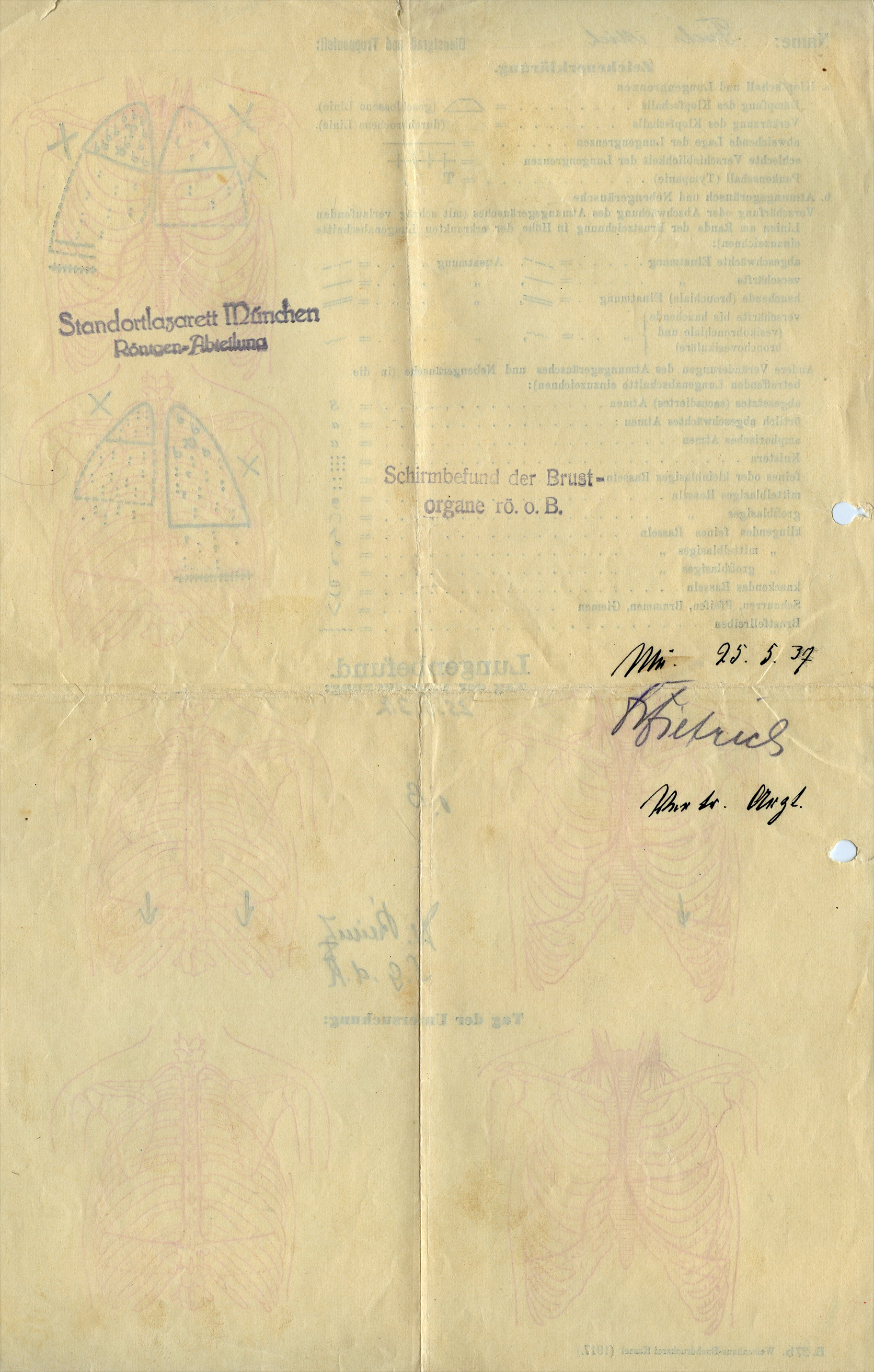
[Below: Diagram of injuries - side A. This diagram lists extensive lung problems/injuries. For example, our soldier, Michael Fuchs, didn't have full lung capacity and had a rattle, among other problems. But it must have went away and was fixed because he is still a soldier in 1943.]
[Below: Diagram of injuries - side B.]
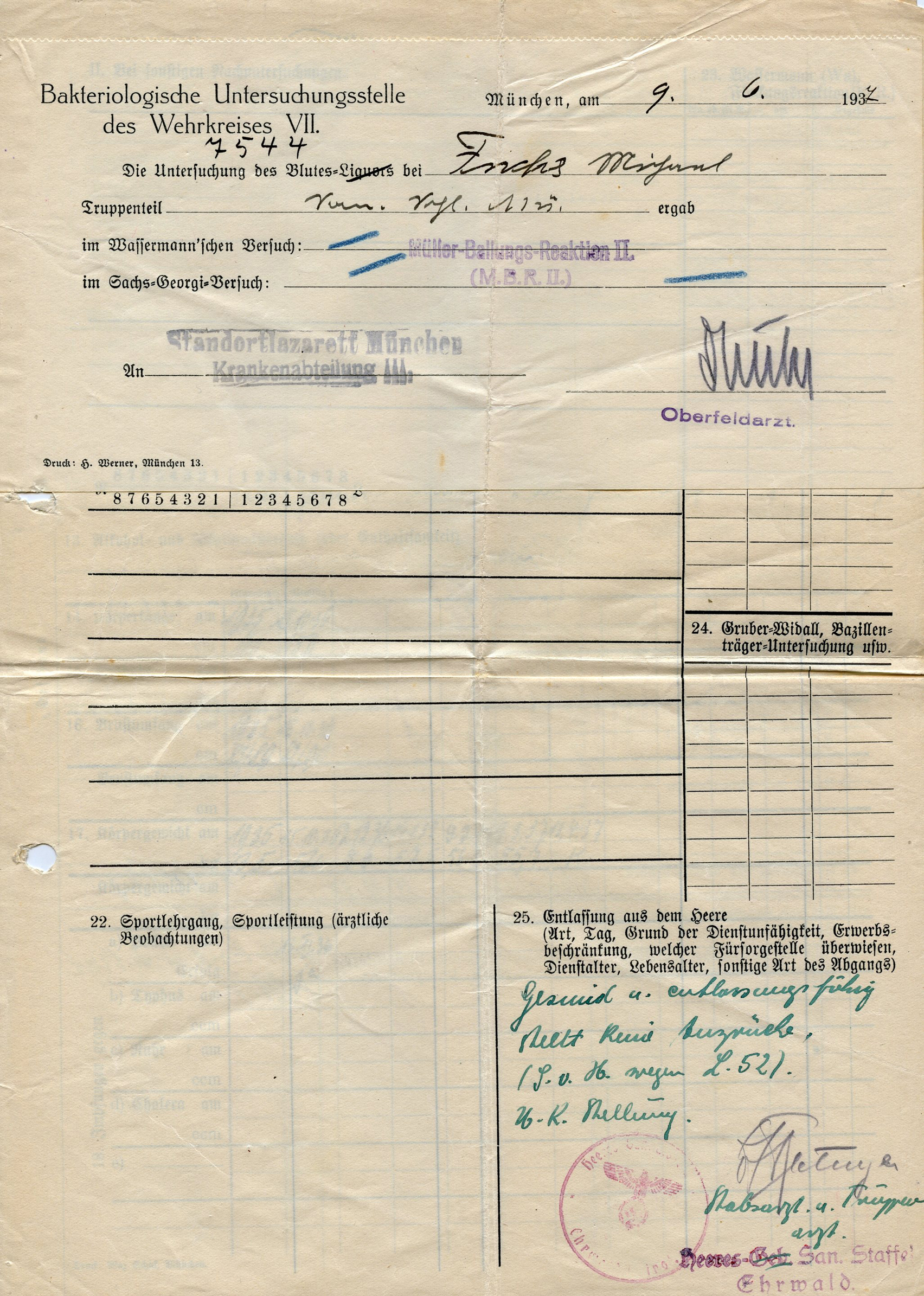
[Below: Document in pocket of booklet - Bakteriologische Untersuchungssstelle des Wehrkreises VII (Bacteriological Investigation Center of Military District VII). This is the results of an extensive physical done at a Munich military hospital, including blood, urine tests and a spinal tap! They even did a dental examiniation. The results were he was eligible for discharge. Page 1. ]
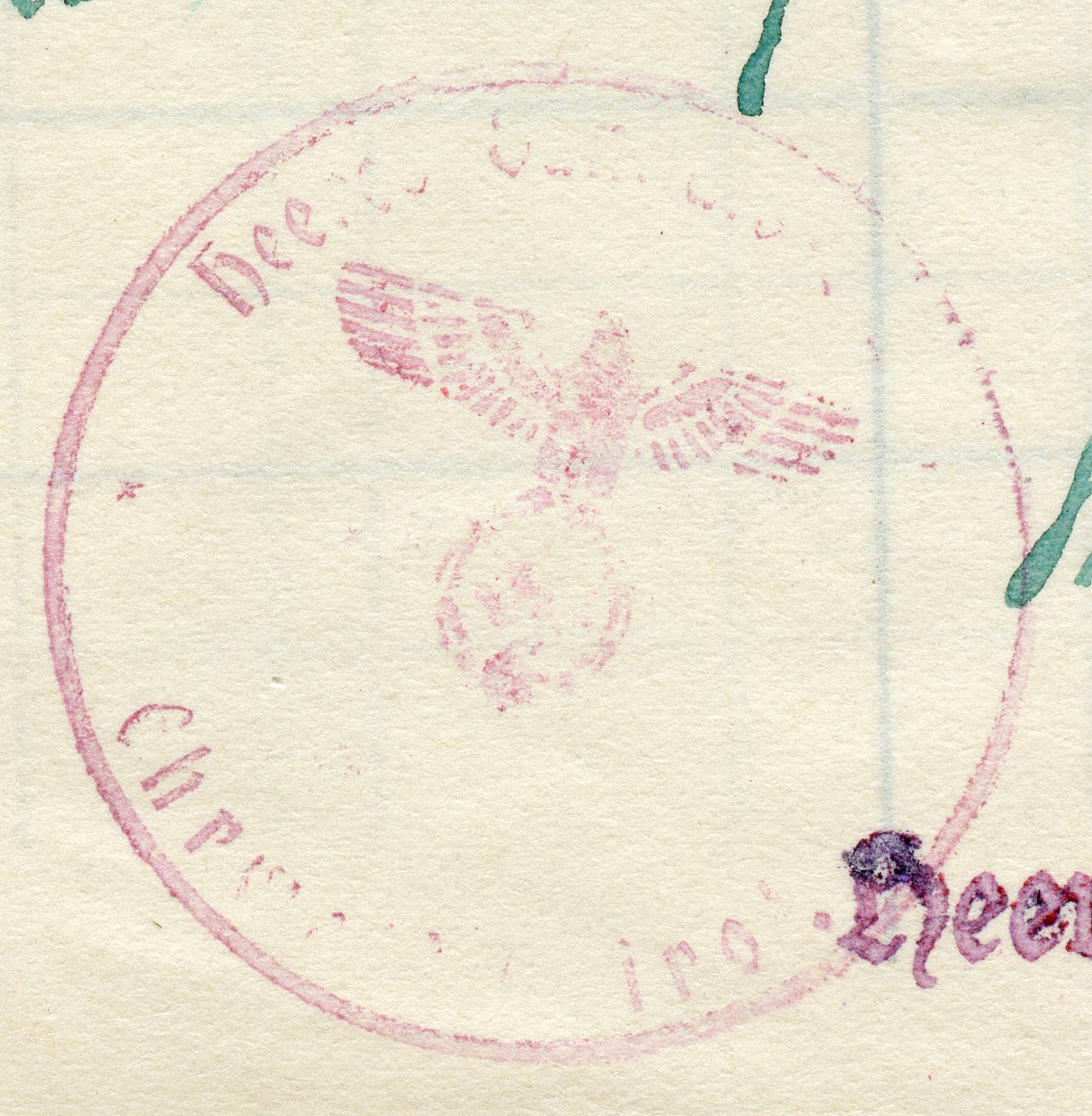
[Below: Close-up of ink stamp.]
[Below: Document in pocket of booklet - page 2.]
[Below: Document in pocket of booklet - page 3.]
[Below: Document in pocket of booklet - page 4.]
[Below: Document in pocket of booklet - page 5.]
[Below: Document in pocket of booklet.]
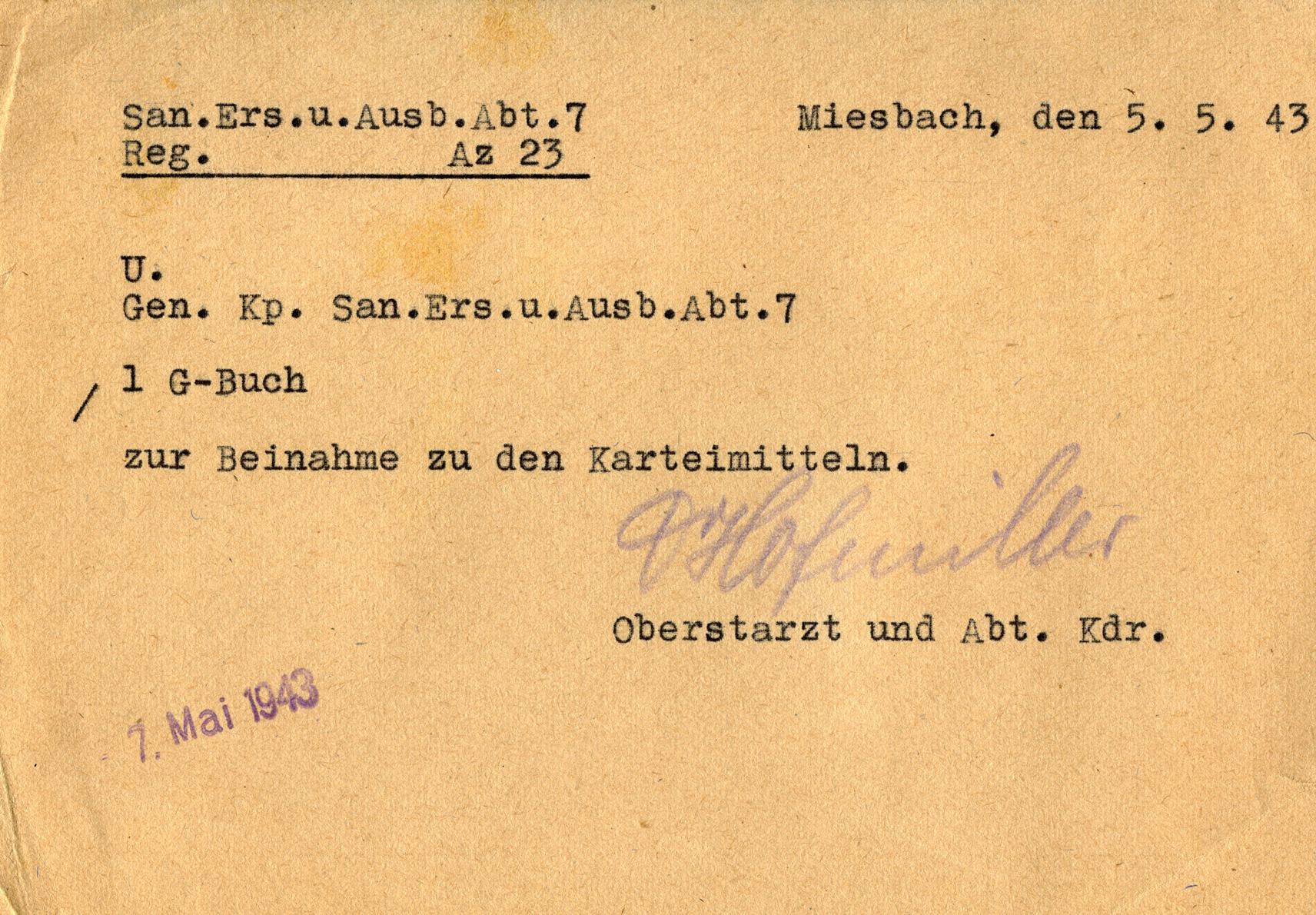
[Below: Document in pocket of booklet.]