
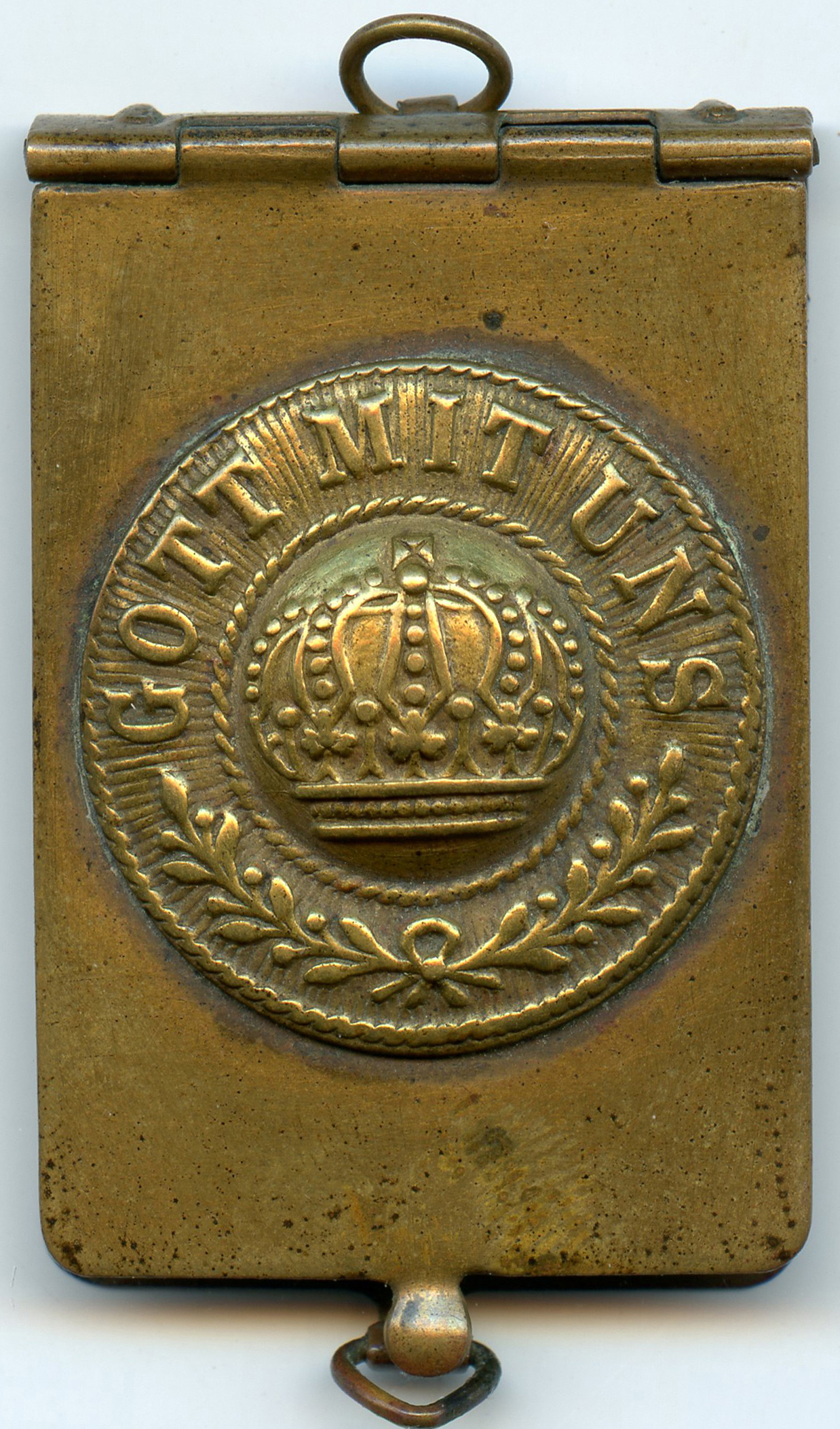
[Below: This is interesting. This is very small, about the size of a necklace pendant. It is brass and from WWI... let's investigate this further!]
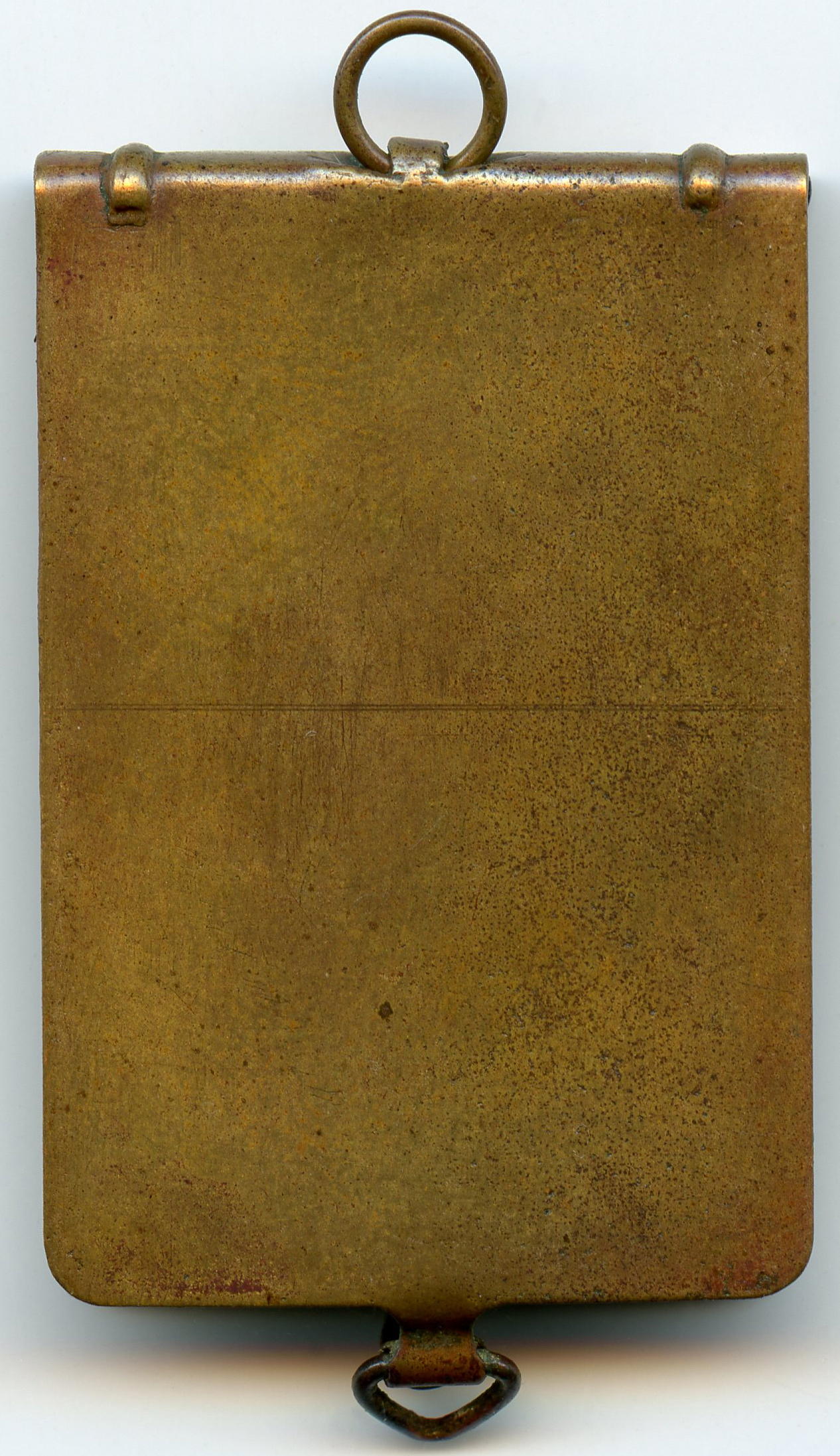
[Below: This is the reverse. I think this was worn as a necklace. But I wonder what the bottom ring was used for?]
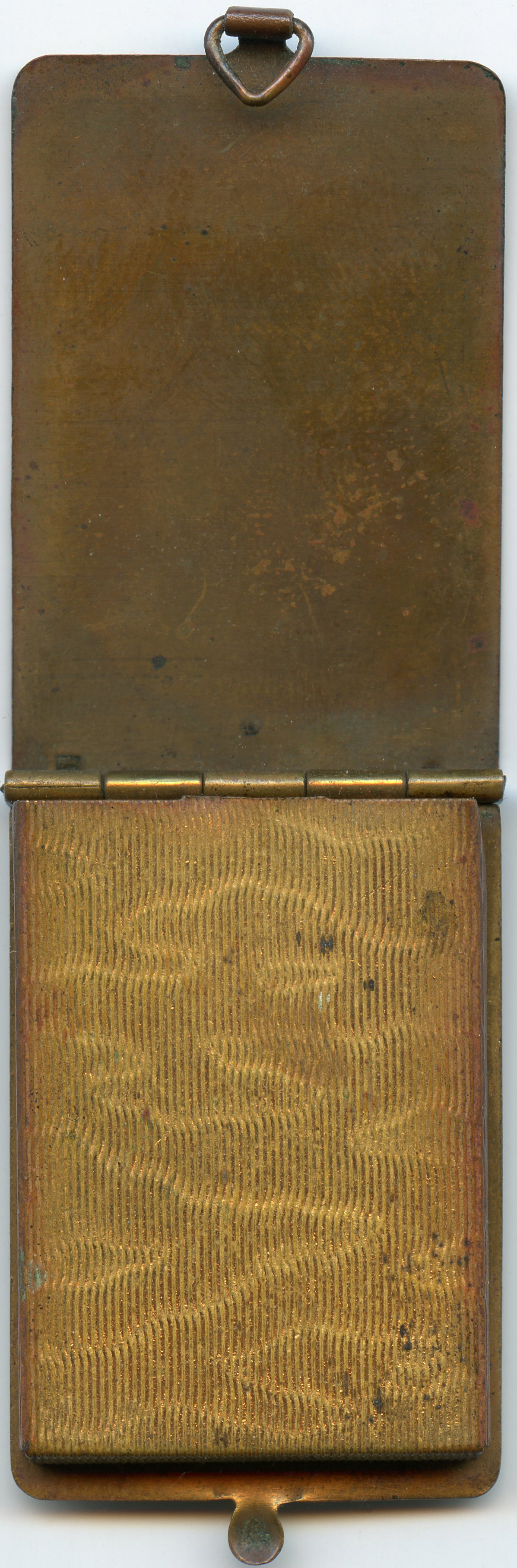
[Below: Opened up you see this little box. I wonder what's in it?]
[Below: TRENCH PORN!!! Haha... I imagine many soldiers looked at this and thought it was cool. 'Pose Plastique' is 'Pose plastique is a 19th-century theatrical and artistic term describing a type of living statue (tableau vivant) where lightly clothed or nude models held classical, static poses to resemble famous works'. Some soldiers had religious pendants, this guy had porn!]

[Below: Wow, this is cool. It is made entirely of fabric. It is about the size of a postcard.]
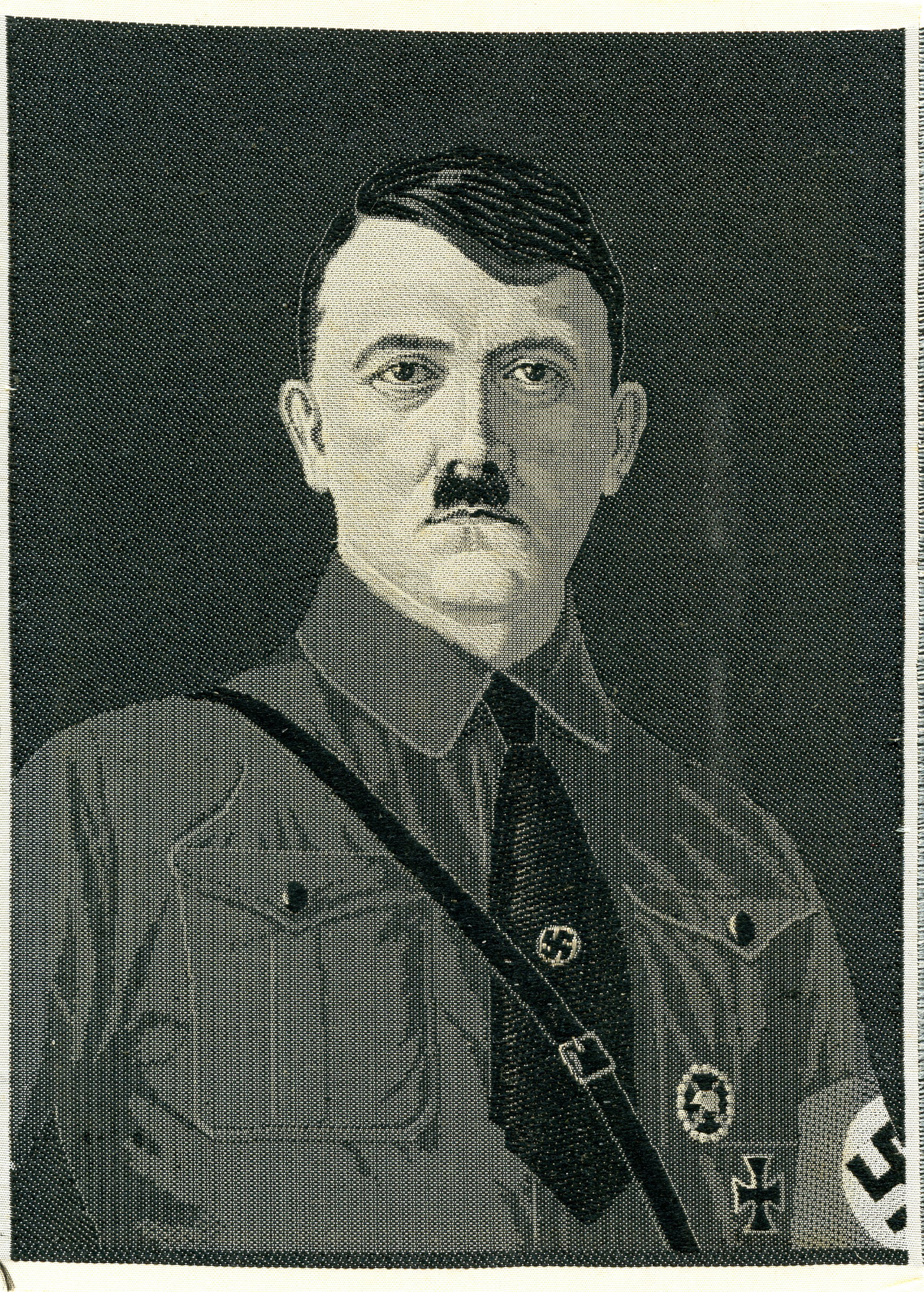
[Below: Reverse. This is backed in paper.]

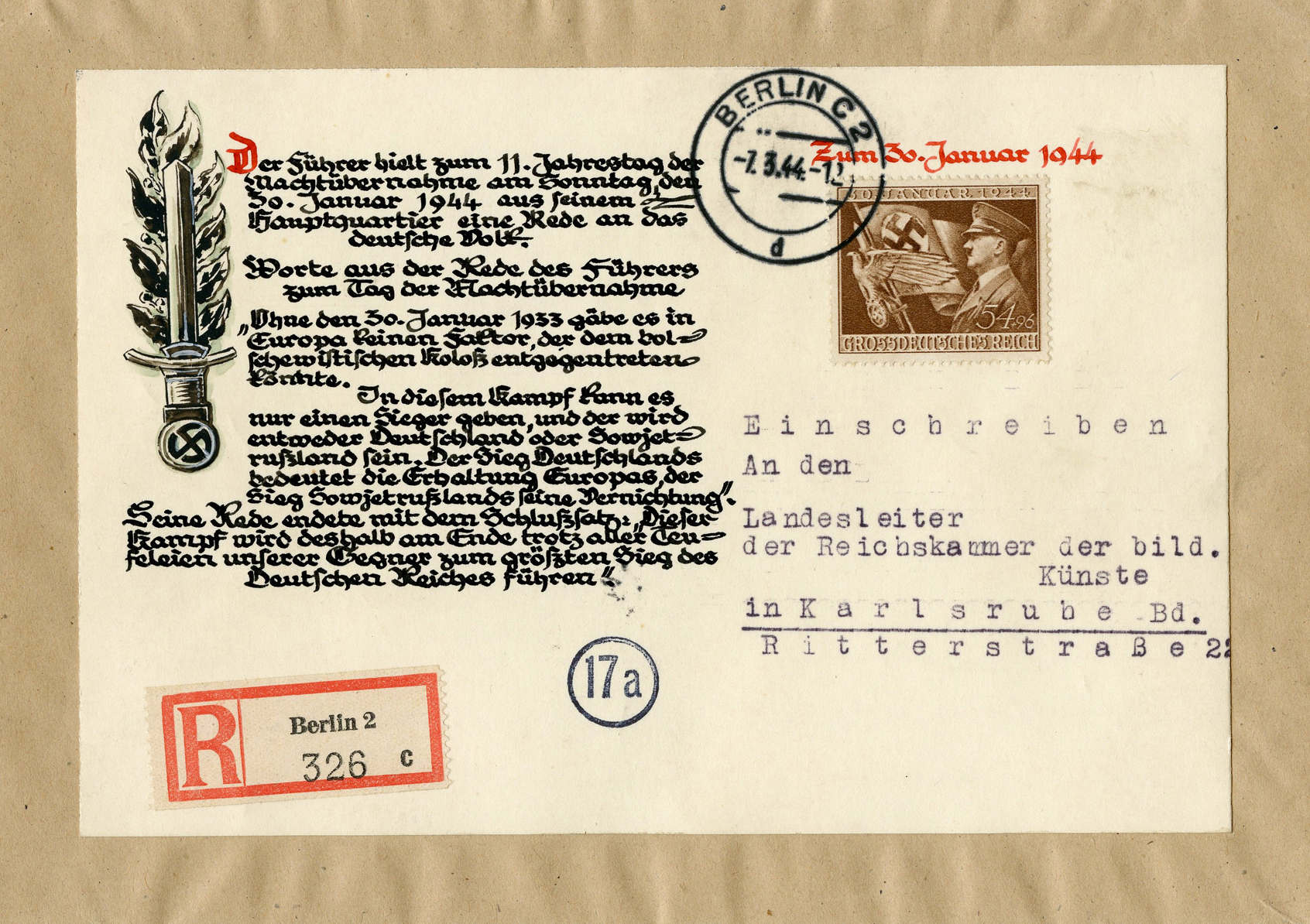
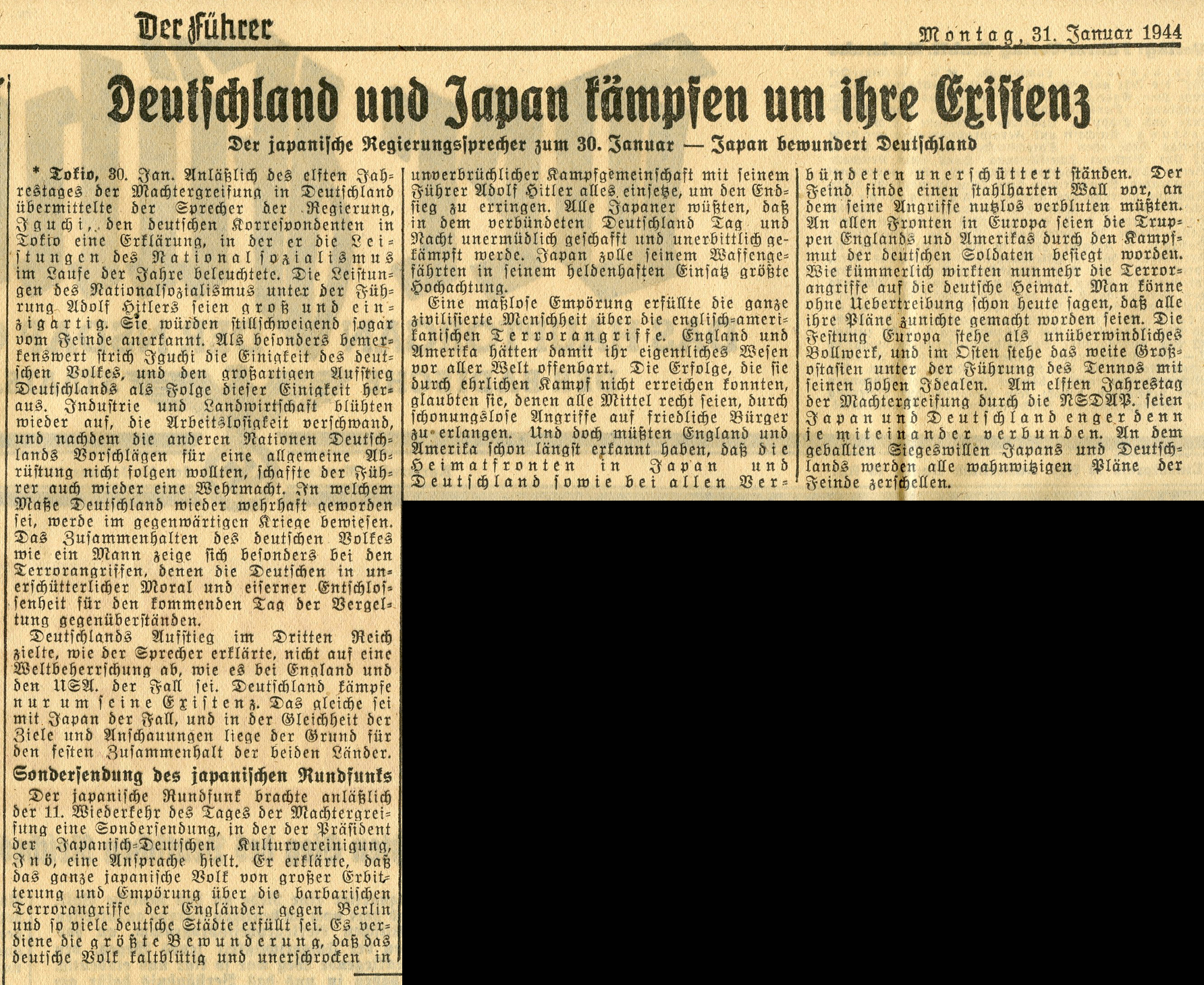
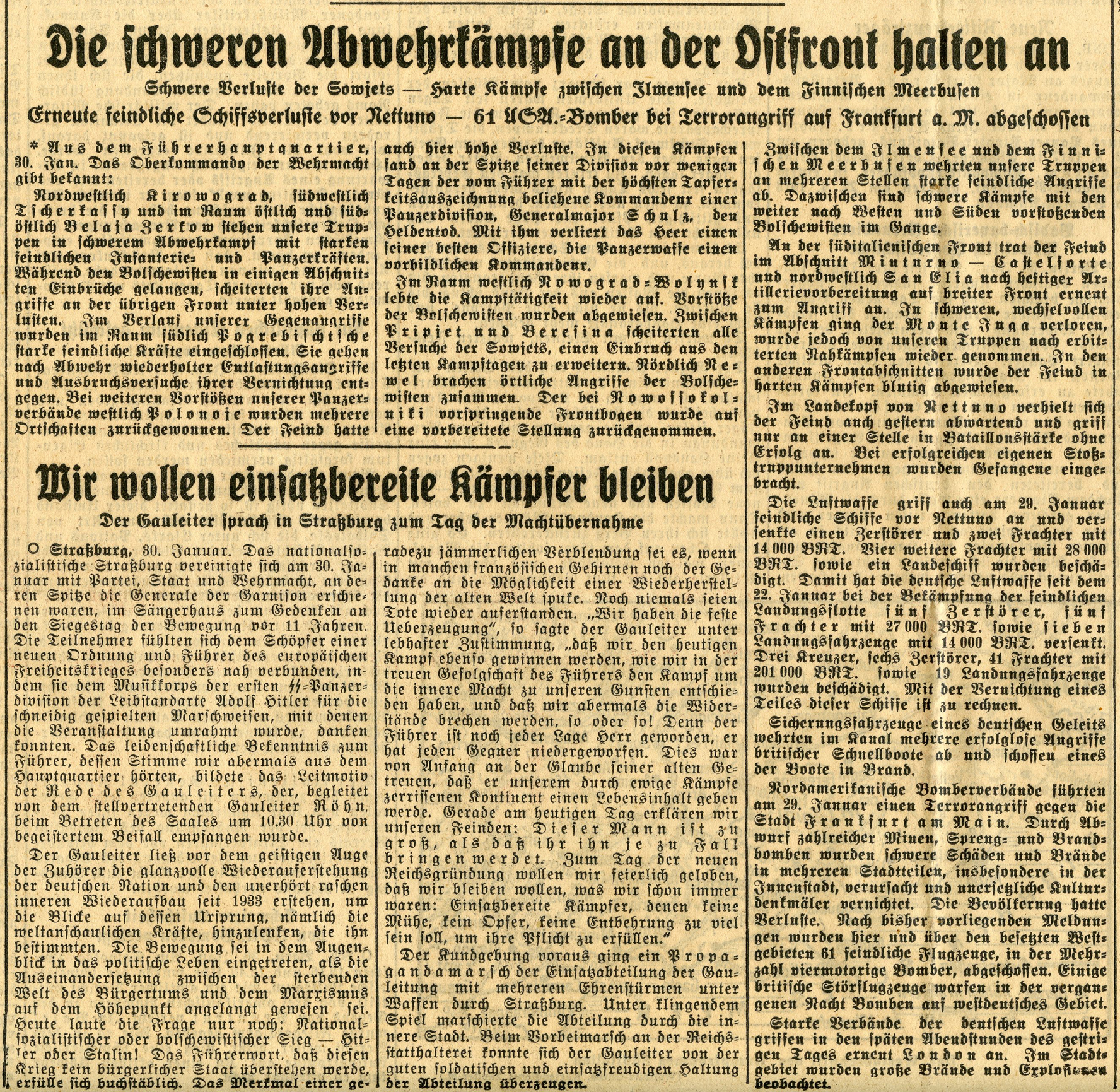
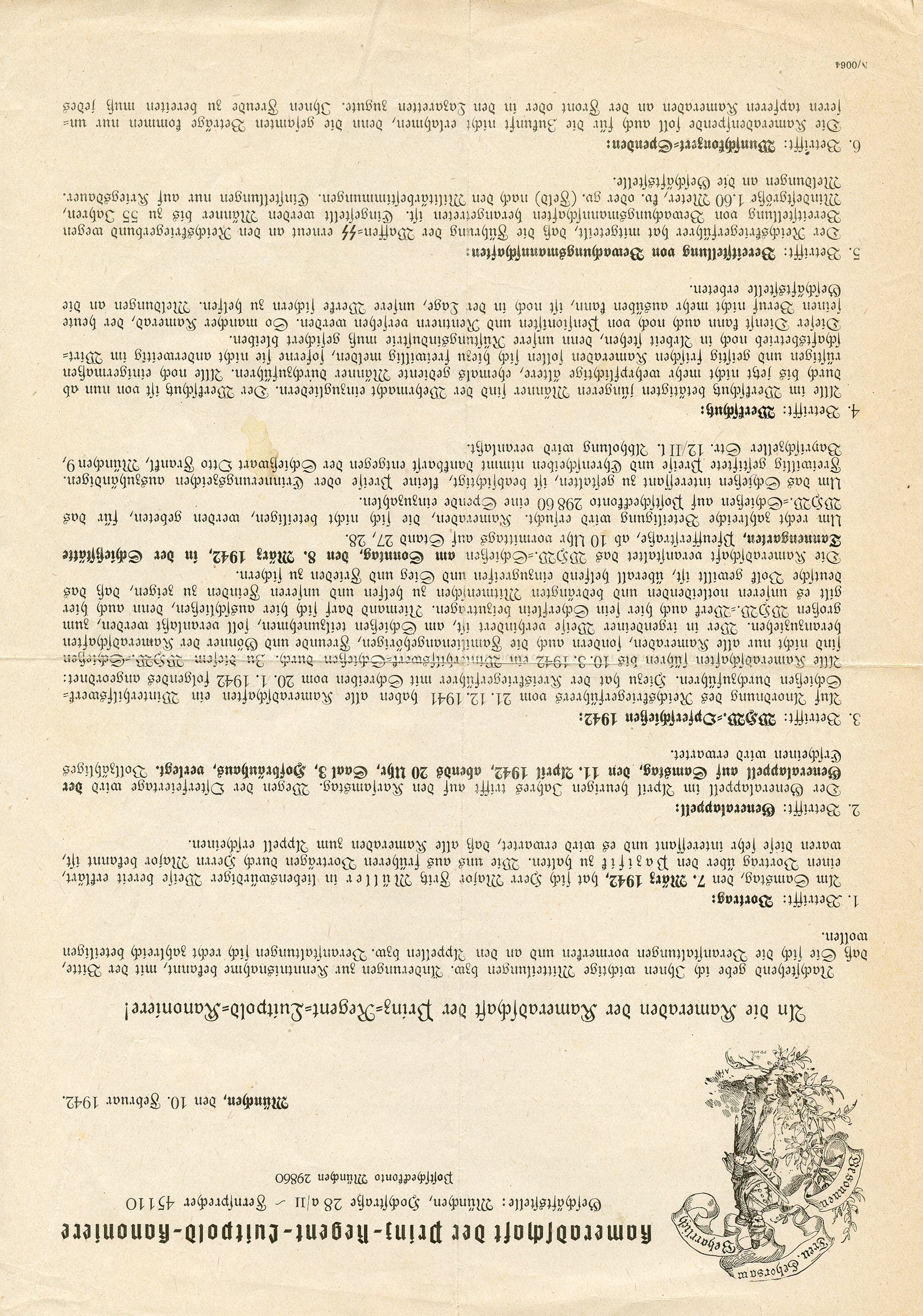
[Below: This letter, from a veterans' association, dated February 10, 1942, says:
'Comradeship of the Prince-Regent-Luitpold Cannoneers
Munich, February 10, 1942.
To the Comrades of the Comradeship of the Prince-Regent-Luitpold Cannoneers!
Below I am making known to you important announcements and changes for your information, with the request that you note the events and participate numerously in the roll calls and events.
1. Concerning: Lecture:
The general roll call in April of this year falls on Holy Saturday. Because of the Easter holidays, the general roll call is moved to Saturday, April 11, 1942, at 8:00 PM, Hall 3, Hofbräuhaus. Full attendance is expected.
3. Concerning: WHW.*-Charity Shooting 1942:
4. Concerning: Plant Security (Werkschutz):
5. Concerning: Provision of Guard Units:
6. Concerning: Request Concert Donations:
[Below: Close-up. Click to enlarge!]
[Below: Reverse of letter, continued:
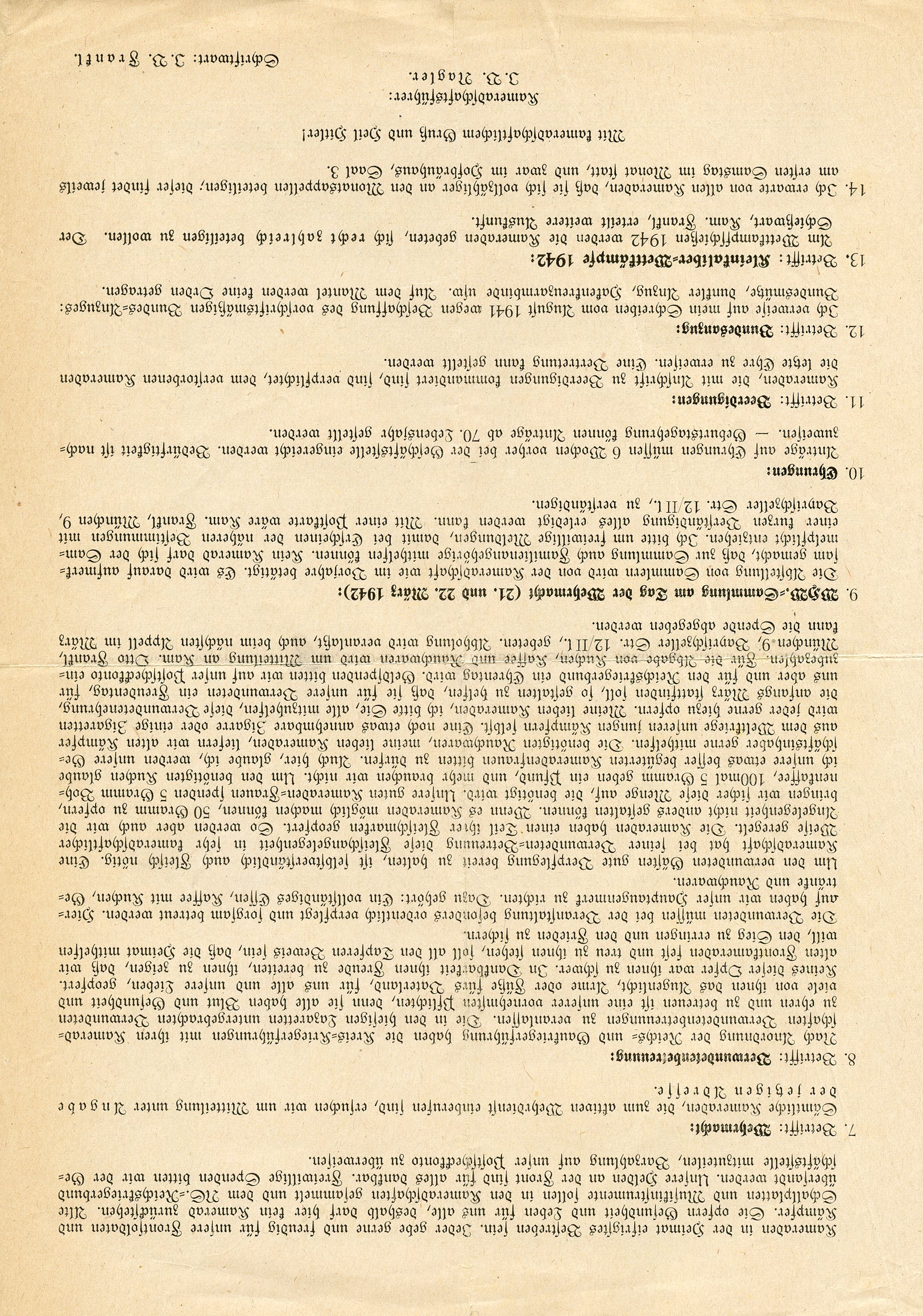
'...most earnest endeavor of every comrade at home. Let everyone give gladly and joyfully for our front-line soldiers and fighters. They sacrifice health and life for all of us, therefore no comrade here at home should lag behind. Old vinyl records and musical instruments should be collected in the comradeships and sent to the NS-Reichskriegerbund. Our heroes at the front are grateful for everything. We ask that voluntary donations be reported to the office or transferred as cash payments to our postal check account.
7. Concerning: Wehrmacht:
8. Concerning: Care for the Wounded (Verwundetenbetreuung):
The wounded must be especially well-fed and thoroughly cared for at the event. We must direct our main attention to this. This includes: a full meal, coffee with cake, drinks, and tobacco products.
In order to have good food ready for the wounded guests, meat is naturally also required. A comradeship has resolved this meat issue for wounded care in a very comradely manner. The comrades sacrificed a portion of their meat rations. We will not be able to arrange this matter any differently. If comrades make it possible to sacrifice 50 grams, we will bring together the amount needed. Our good comrade-wives are donating 5 grams of real coffee, 100 times 5 grams makes a pound, and we need more than that. I believe I may also ask our somewhat better-off comrade-wives for the required cake. Here too, I believe, our value-appreciating comrades will help out. We, the old veterans from the World War, will supply the required tobacco products ourselves. A still acceptable cigar or a few cigarettes will be gladly offered by every comrade for this purpose. My dear comrades, I ask you all to help arrange this tribute to the wounded, which is to take place at the beginning of March, so that it becomes a day of joy for our wounded, for us, and for the Reichskriegerbund. We ask that cash donations be paid into our postal check account. For the submission of cakes, coffee, and tobacco products, please notify Comrade Otto Frankl, Munich 9, Bayrischzeller Str. 12/III l. Pickup will be arranged, and donations can also be handed in at the next roll call in March.
9. WHW Collection on Wehrmacht Day (March 21 and 22, 1942):
10. Honors:
11. Concerning: Funerals:
12. Concerning: Association Uniform (Bundes-Anzug):
13. Concerning: Small-Caliber Competitions 1942:
14. I expect all comrades to participate fully in the monthly roll calls; these take place on the first Saturday of every month in the Hofbräuhaus, Hall 3.
With comradely greetings and Heil Hitler!
The Comradeship Leader:
Written by: J. V. Frankl.'
Office: Munich, Hochstraße 28 a/11 – Telephone 45110
Postal Check Account: Munich 29860
On Saturday, March 7, 1942, Major Fritz Müller has kindly agreed to give a lecture about the Pacific. As we know from previous lectures by the Major, these were very interesting and it is expected that all comrades appear for the roll call.
2. Concerning: General Roll Call:
By order of the Reichskriegerführer [Reich Veterans' Leader] from December 21, 1941, all comradeships must conduct a Winterhilfswerk [Winter Relief Organization] shooting. Regarding this, the Kreiskriegerführer [District Veterans' Leader] ordered the following in a letter dated January 20, 1942:
All comradeships shall carry out a Winter Relief charity shoot by March 15, 1942... For this WHW shooting, not only all comrades are to be drawn in, but also family members, friends, and patrons of the comradeships. Anyone who is prevented from participating in the shooting in any way shall be encouraged to contribute their share to this great WHW work... No one may exclude themselves here, for here it is a matter of helping our suffering and distressed fellow citizens and showing our enemies that the German people stand united, helping everywhere to secure victory and peace.
The comradeship is organizing the WHW shooting on Sunday, March 8, 1942, at the Tannengarten shooting range, Pfeuferstraße, from 10:00 AM onwards, Stand 27, 28.
Numerous participation is requested. Comrades who do not participate are asked to deposit a donation for the WHW shooting to Postal Check Account 29860.
In order to make the shooting interesting, it is intended to hand out small prizes or tokens of remembrance. Freely donated prizes and honorary targets will be gratefully accepted by the Shooting Master Otto Frankl, Munich 9, Bayrischzeller Str. 12/III. Pickup will be arranged.
Younger men working in plant security are to be integrated into the Wehrmacht. Plant security is from now on to be carried out until further notice by older, experienced men who are no longer subject to military service. All reasonably fit and mentally agile comrades should volunteer for this, provided they are not already employed in an active commercial operation, as our armaments industry must remain secured.
This service can also still be performed by pensioners and retirees. Many a comrade who can no longer practice his profession today is still in a position to help secure our values. Registrations are requested at the office.
The Reichskriegerführer has communicated that the leadership of the Waffen-SS has once again approached the Reichskriegerbund regarding the provision of guard units. Men up to 55 years of age, minimum height 1.60 meters, fit for military service (kv.) or fit for garrison duty in the field (gvd. Feld) according to military regulations, will be hired. Hiring is for the duration of the war only. Registrations at the office.
The comrade donations should not slacken in the future either, because the total amounts benefit only our brave comrades at the front or in the military hospitals. To bring them joy must be every....
Click to enlarge!]
All comrades who are called up for active military service are requested to notify us, providing their current address.
By order of the Reich and Gau leadership, the district veterans' organizations (Kreis-Kriegerführungen) and their comradeships have been instructed to arrange care for the wounded. To honor and care for the wounded housed in local military hospitals is one of our most noble duties, for they have all sacrificed blood and health—and many of them their eyesight, arms, or feet—for the Fatherland, for all of us, and for our loved ones. None of these sacrifices was too heavy for them. To bring them joy out of gratitude, to show them that we stand firmly and loyally by our old front-line comrades, shall be proof to all these brave men that the homeland is helping, wants to achieve victory, and wants to secure peace.
The deployment of collectors will be managed by the comradeship as it was last year. Attention is drawn to the fact that family members are also allowed to help with the collection. No comrade may evade the collection duty. I ask for voluntary registrations so that everything can be settled quickly when the detailed regulations appear. Comrade Frankl, Munich 9, Bayrischzeller Str. 12/III l., can be notified via postcard.
Applications for honors must be submitted to the office 6 weeks in advance. Need must be proven. Applications can be made from the age of 70 onwards for landmark birthdays.
Comrades who are assigned to funerals by notice are obliged to pay their last respects to the deceased comrade. A substitute can be provided.
I refer to my letter from August 1941 regarding the procurement of the regulation association uniform: association cap, dark suit, swastika armband, etc. No medals are worn on the overcoat.
Comrades are asked to participate heavily in the 1942 competitive shootings. The Shooting Master, Comrade Frankl, will provide further information.
J.V. Nagler
Click to enlarge!]