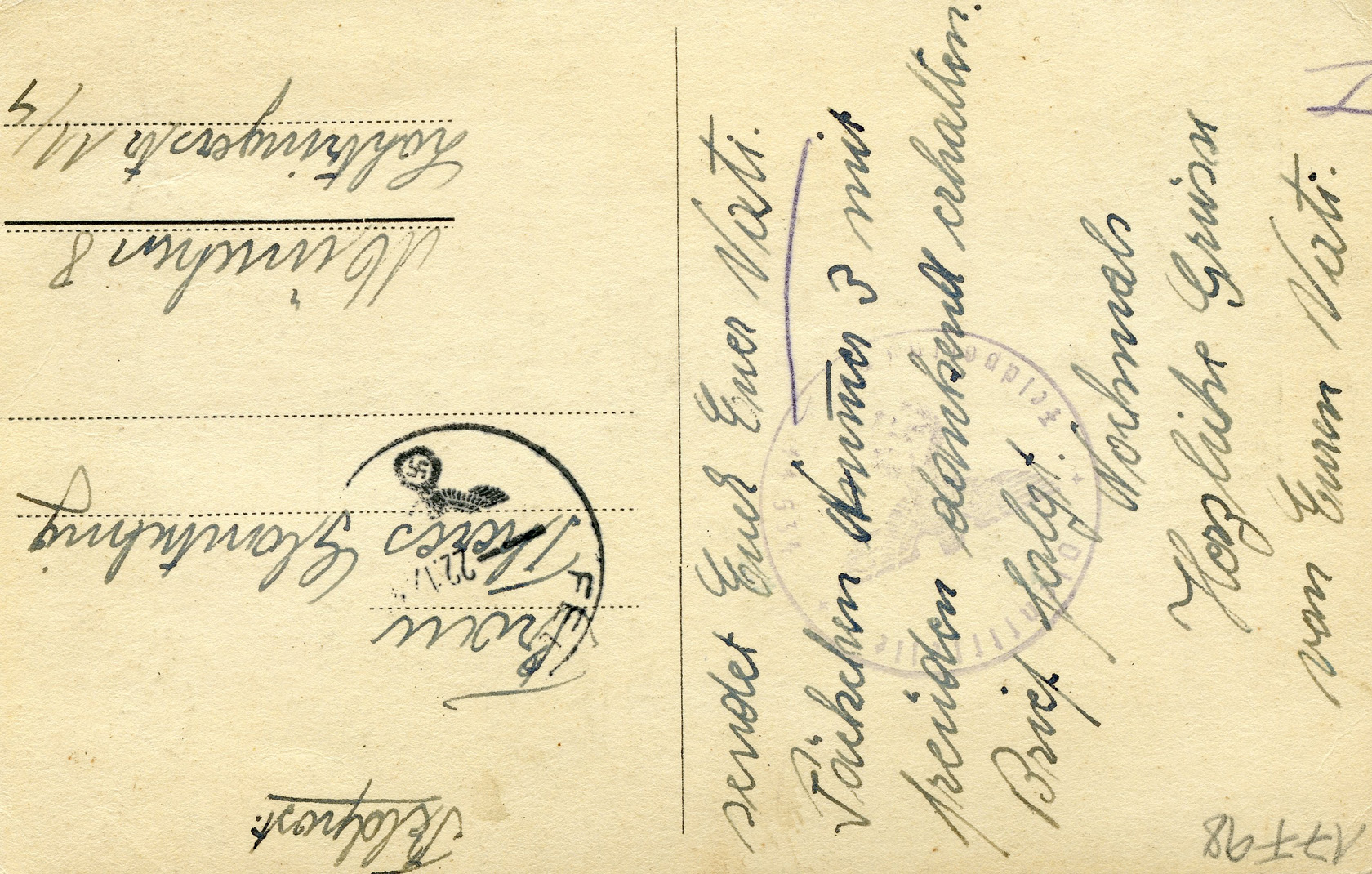
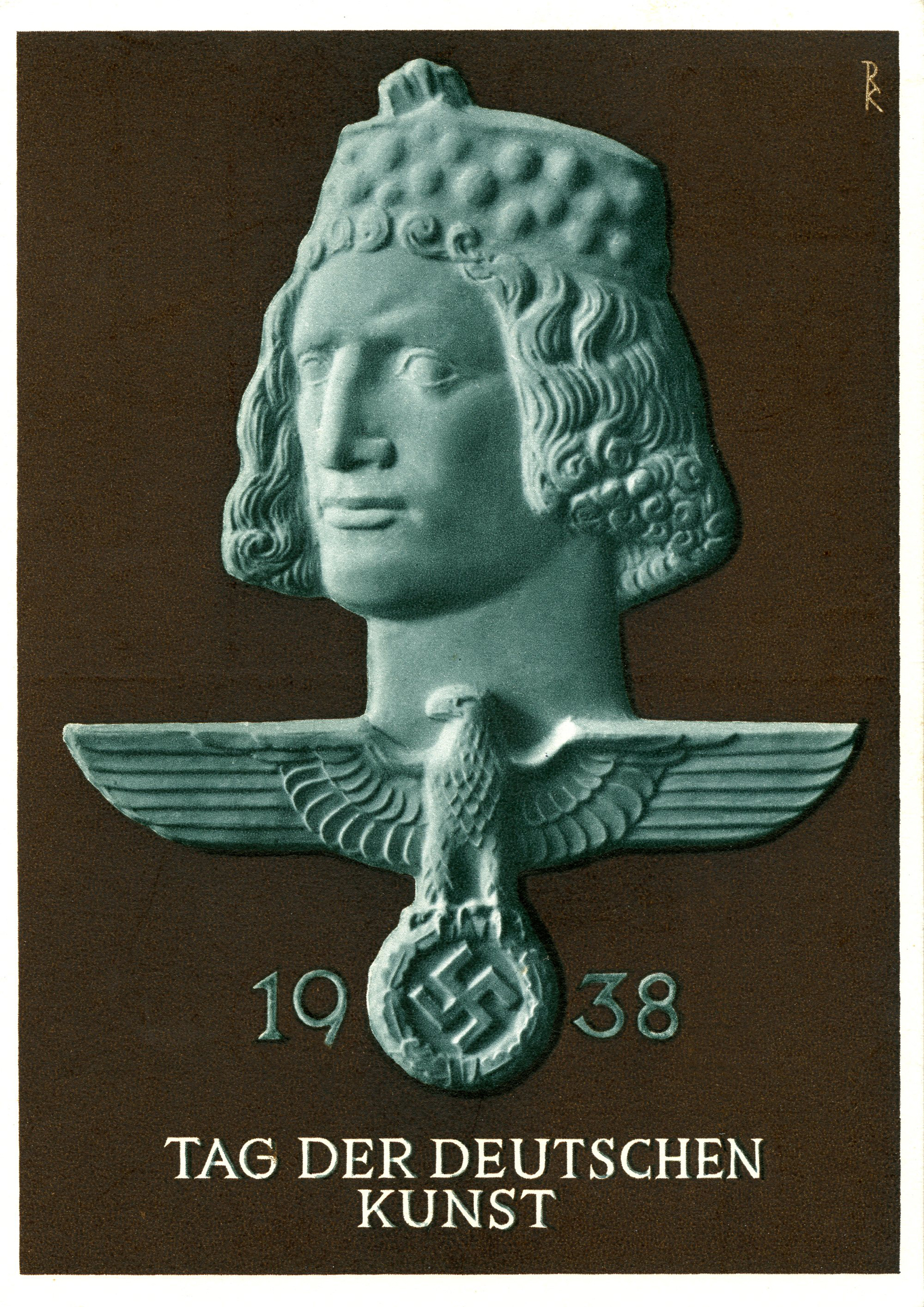
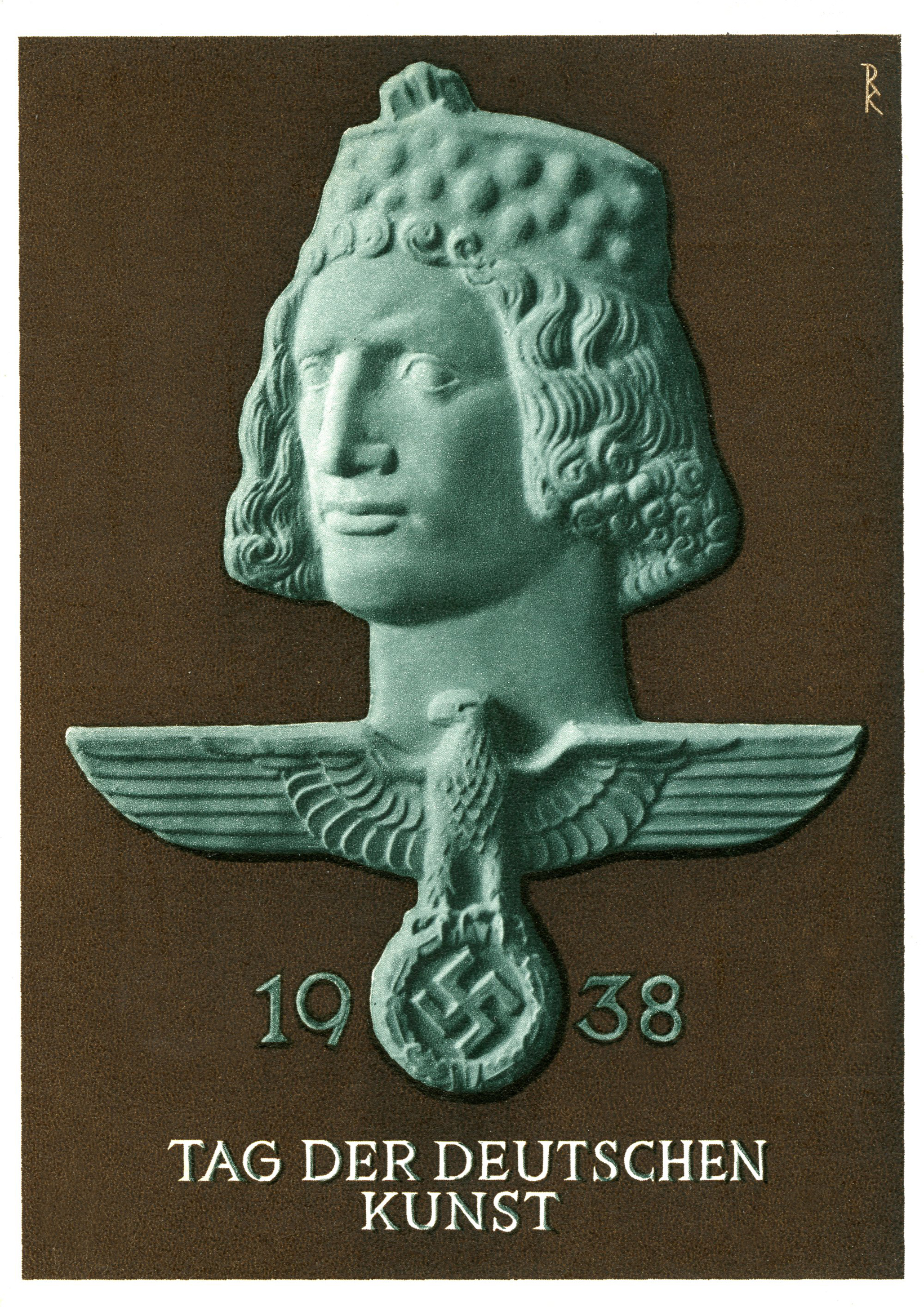
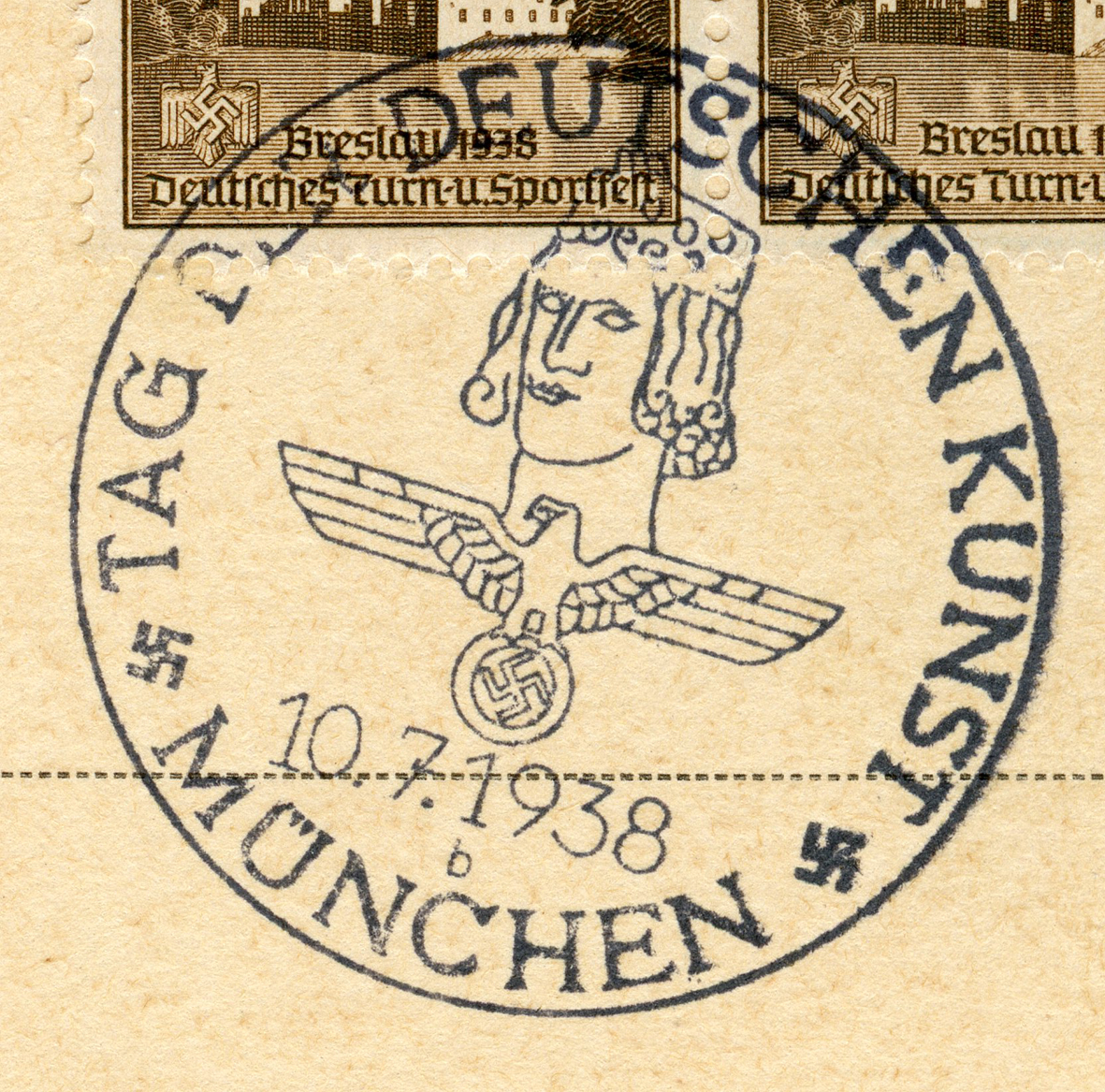
[Below: Day of German Art 1938.]
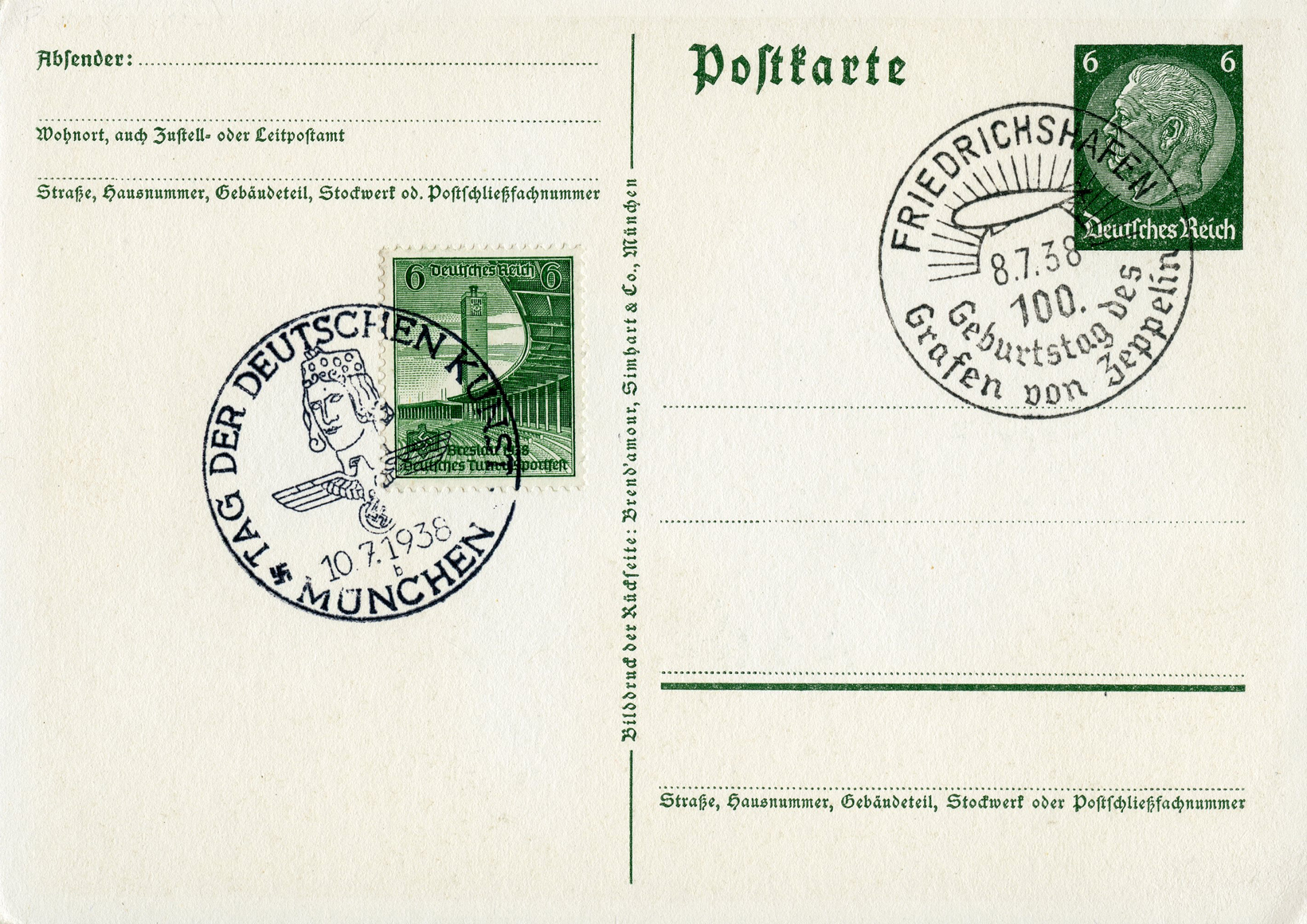
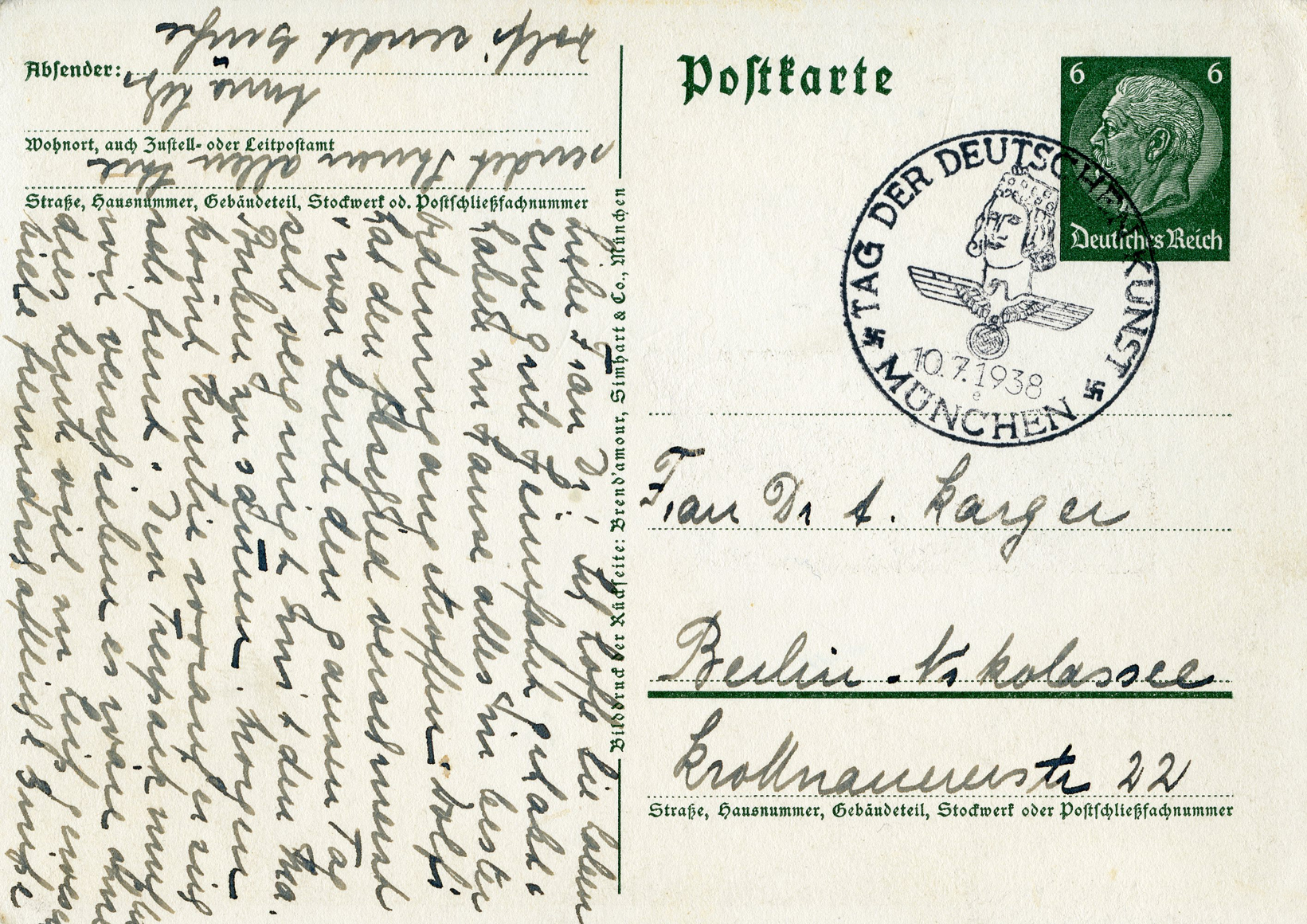
[Below: Reverse.]
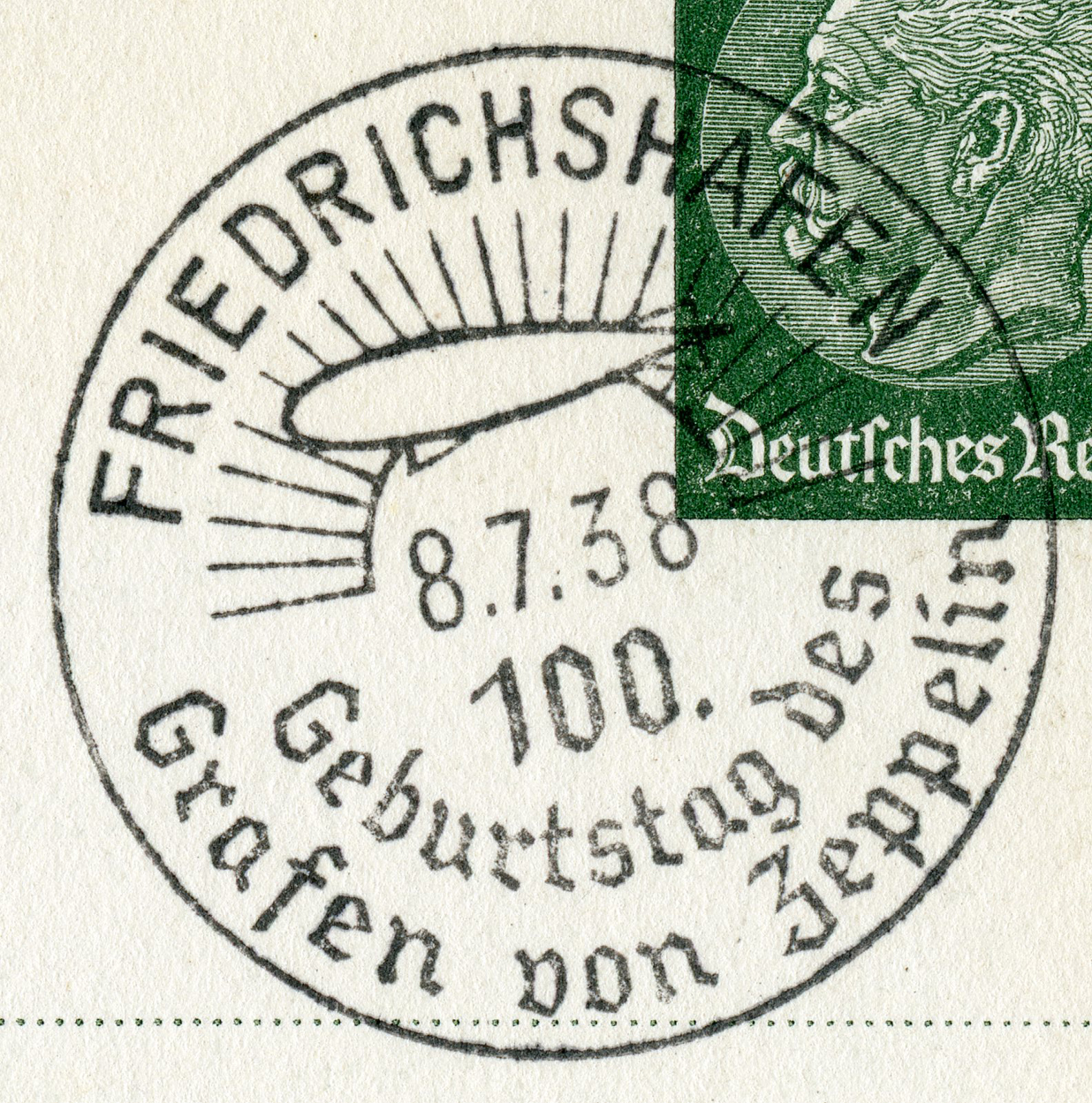
[Below: Close-up. An interesting Zeppelin postmark.]
[Below: Same postcard, different cancel.]
[Below: Reverse.]
[Below: Reverse.]
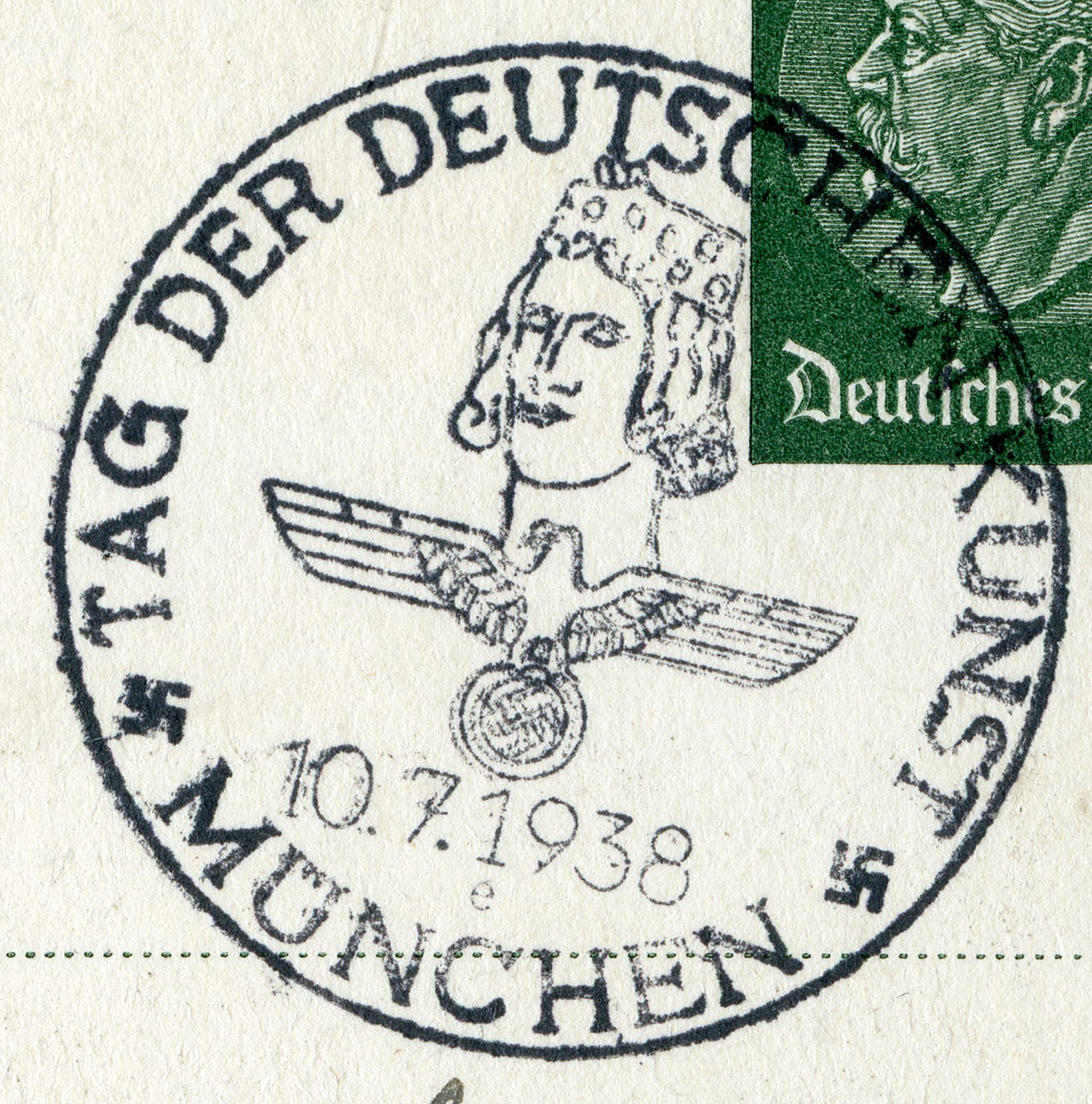
[Below: A better view of the cancel from another postcard.]

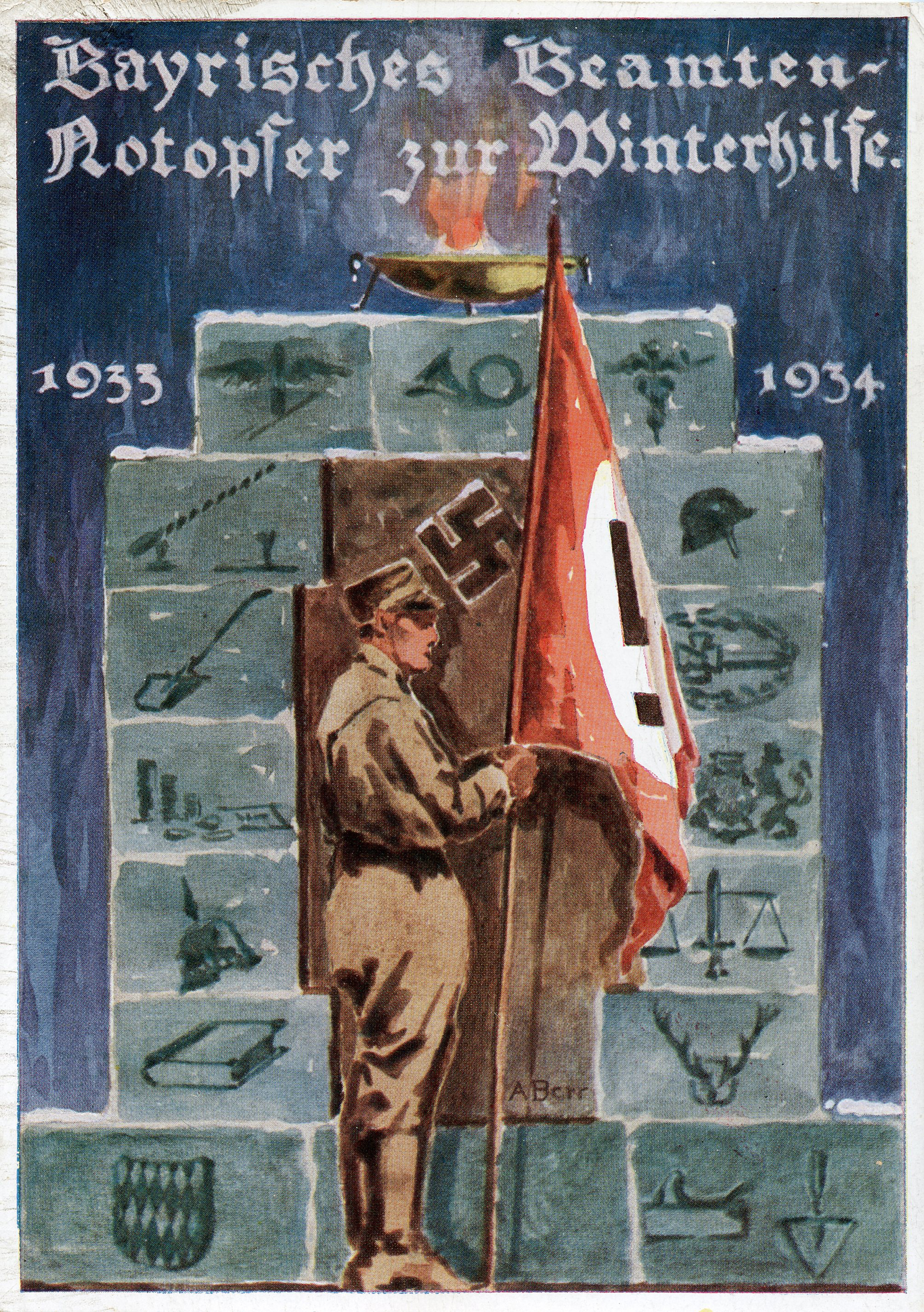
[Below: A cool postcard that says 'Bayrisches Beamten Notopfer zur Winterhilfe 1933 - 1934' (Bavarian Civil Servants' Emergency Donation for Winter Relief 1933 - 1934).]
[Below: Reverse.]
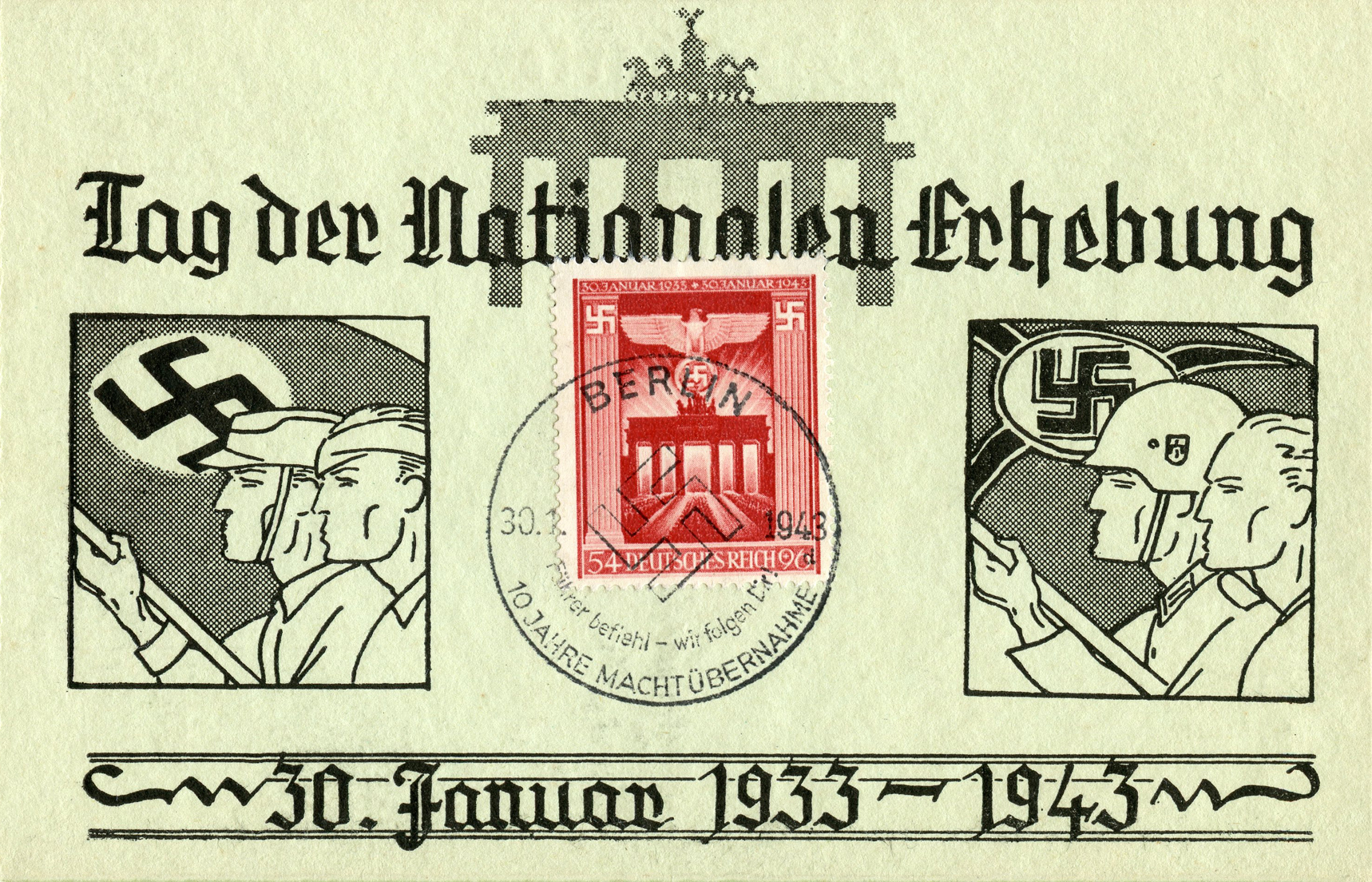
[Below: Another cool one. This is made of a think, strange type paper. It says: 'Tag der Nationalen Erhebung 30. Januar 1933 - 1943' (Day of National Uprising January 30, 1933–1943). I've seen another version of this postcard that is a different color.]
[Below: Reverse.]
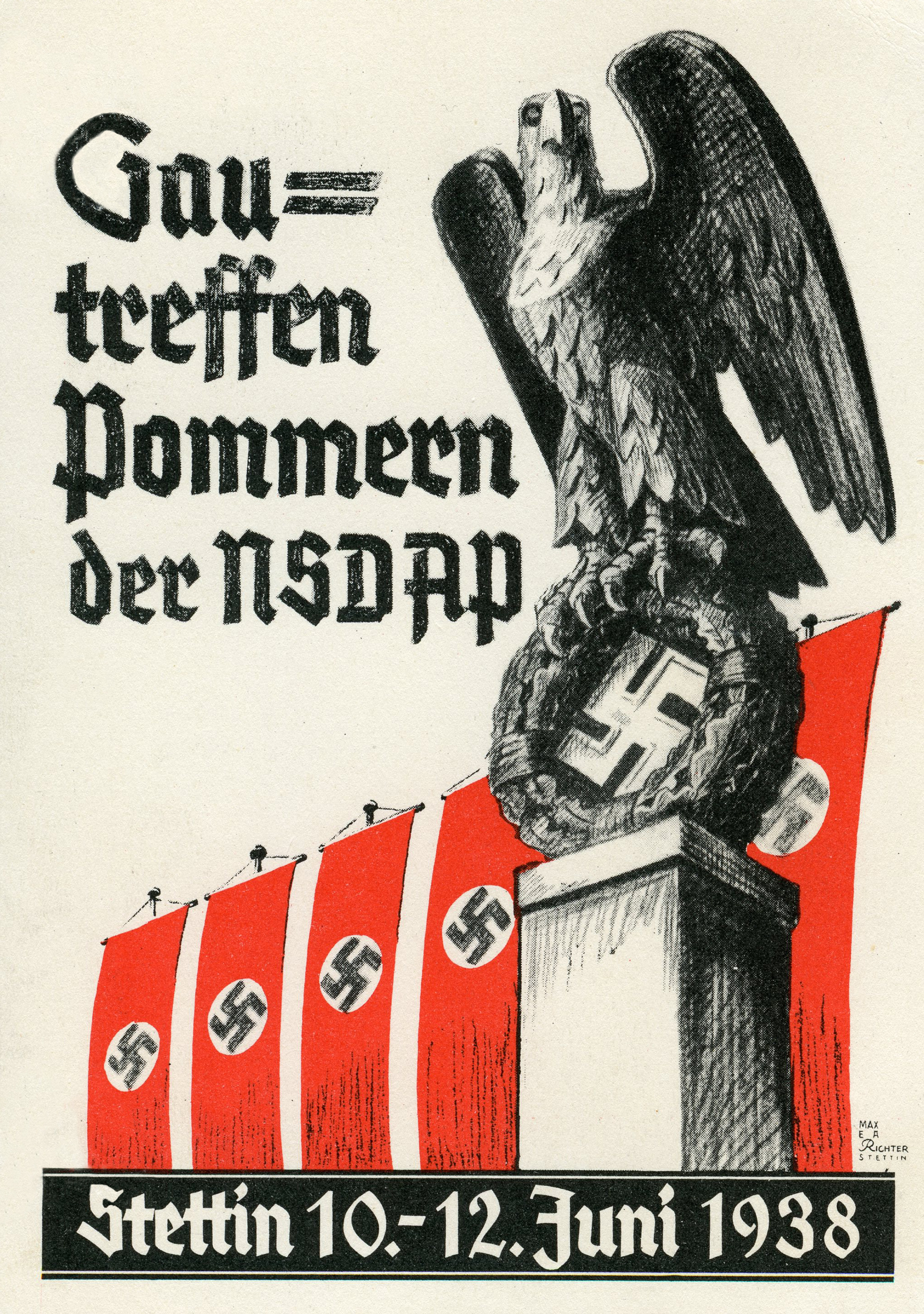
[Below: Some really eye-catching postcards on this page. This one says: 'Gau=treffen Pommern der NSDAP - Stettin 10.-12. Juni 1938' (Pomeranian Regional Meeting of the Nazi Party - Stettin, June 10-12, 1938).]
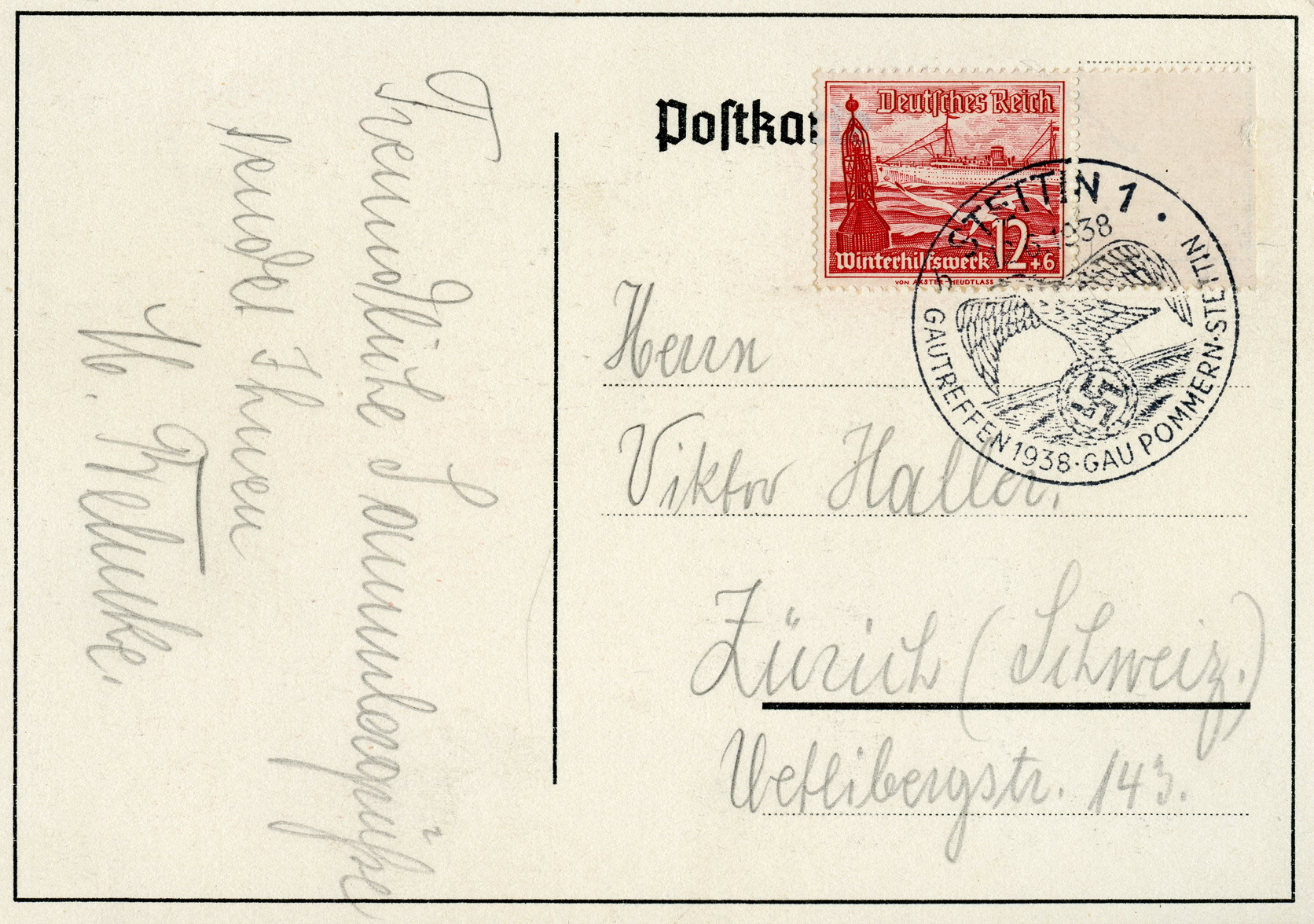
[Below: Reverse. A pretty rare cancel made just for this meeting.]
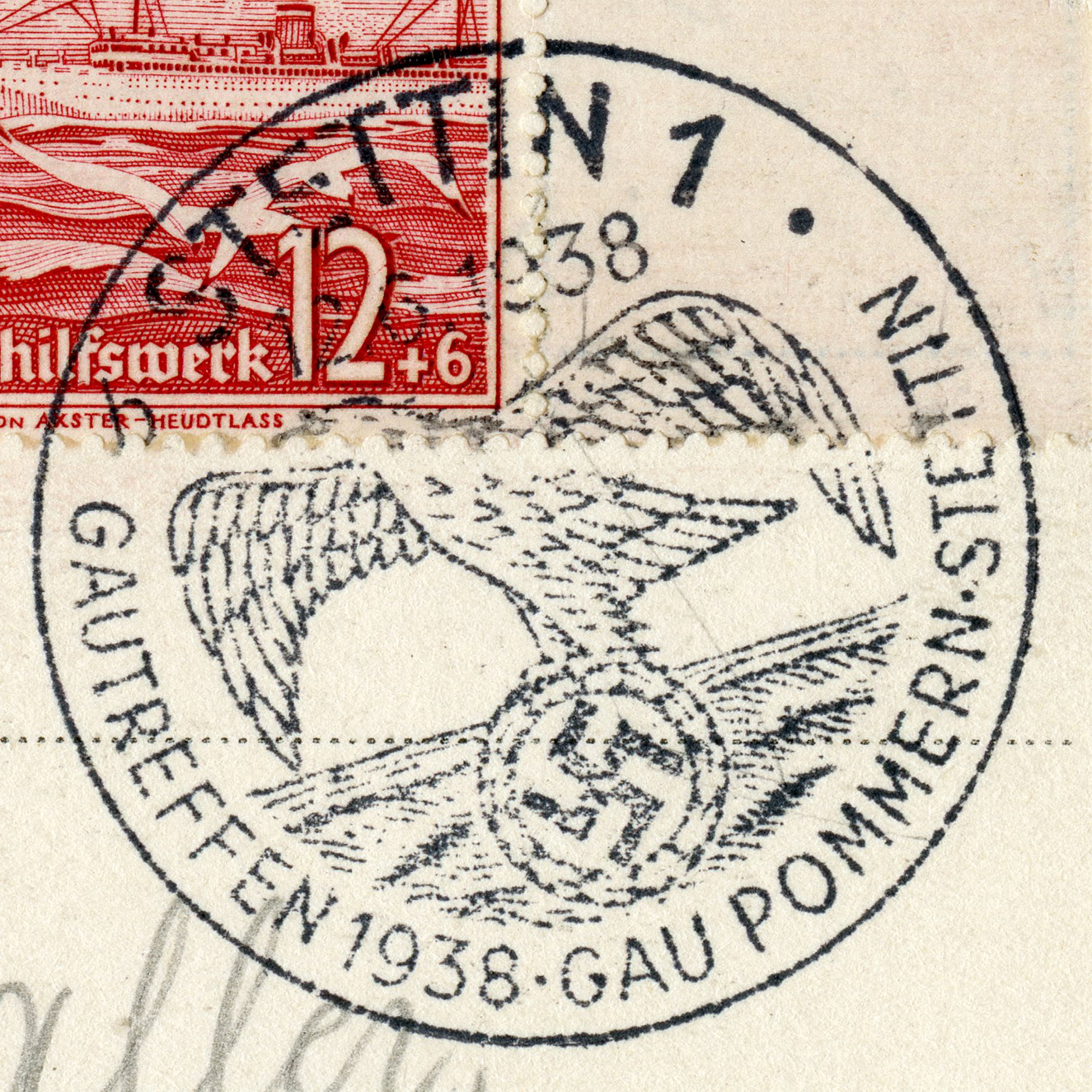
[Below: Close-up.]
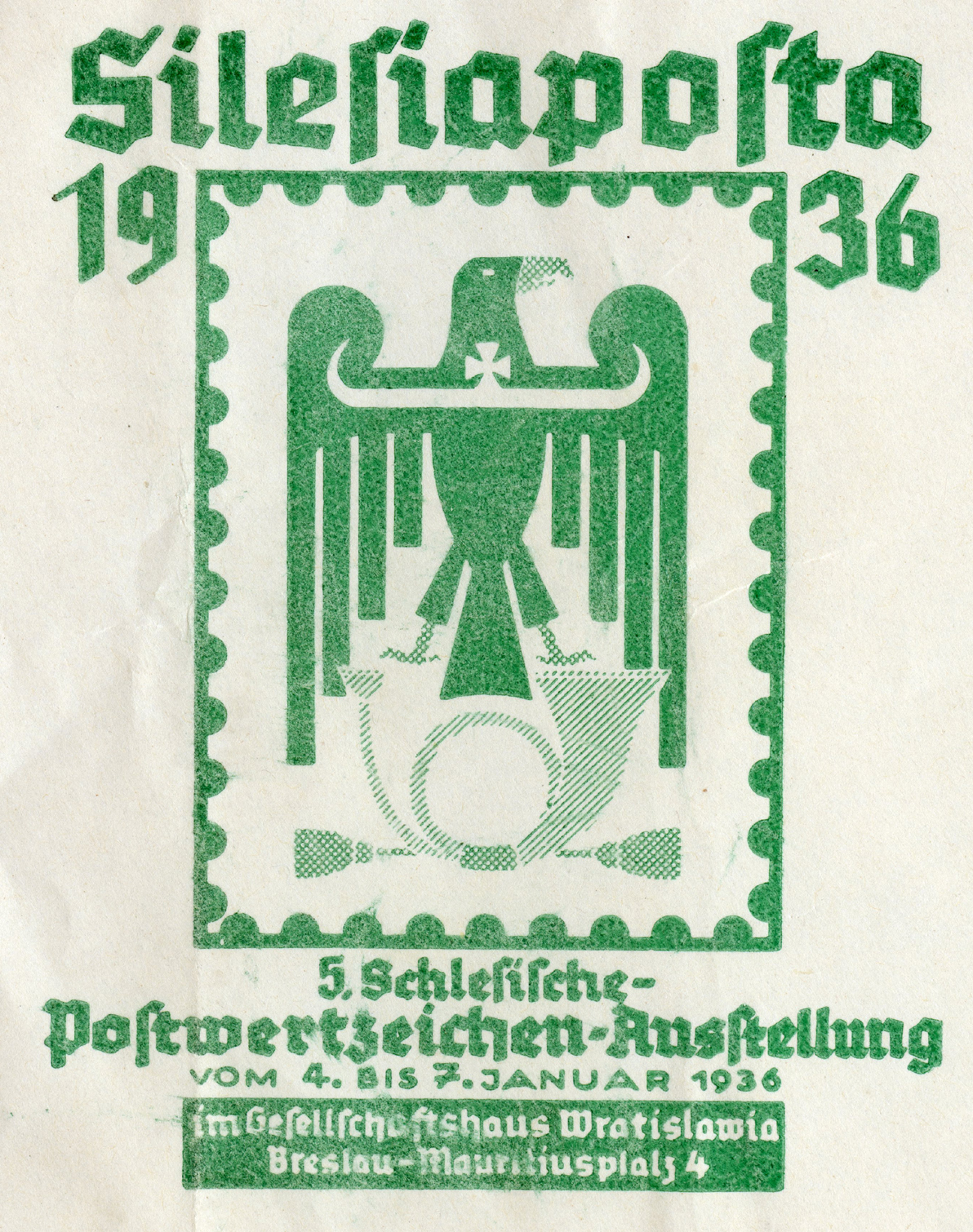
[Below: Here are a pair of very interesting envelopes honoring the lost German land of Silesia, stolen from Germany like so much more of its lands after WWI from the Versailles Treaty. They say:
'Silesiaposta 1936
5. Schlesische-Postwertzeichen-Ausstellung
vom 4. BIS 7. JANUAR 1936.
im Gesellschaftshaus Wratislawia
Breslau - Mauritiusplaz 4'
(Silesia Post 1936
5th Silesian Postage Stamp Exhibition
from January 4 to 7, 1936
at the Wratislawia Community Center
Breslau - Mauritiusplaz 4)]
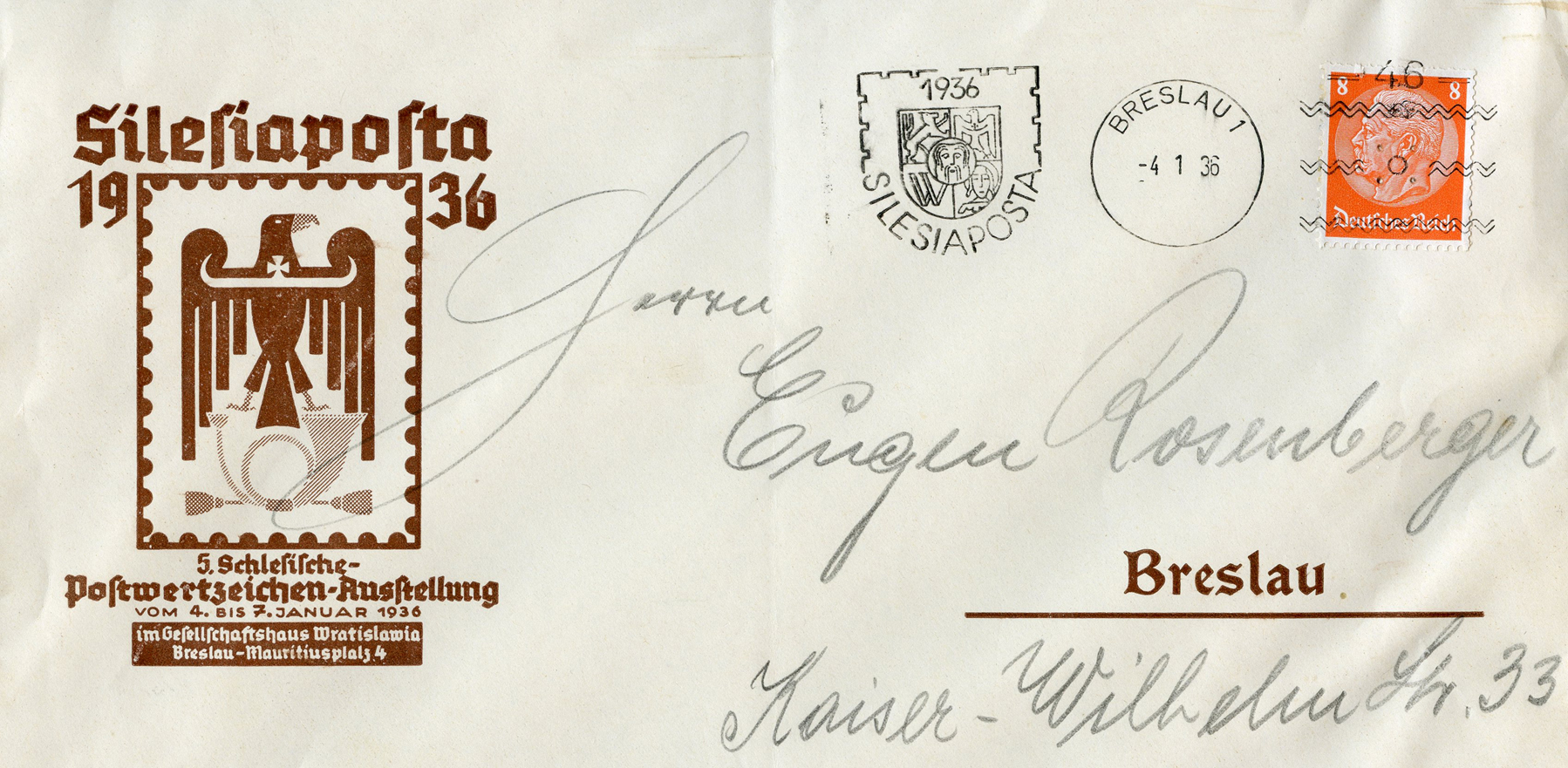
[Below: Close-up.]
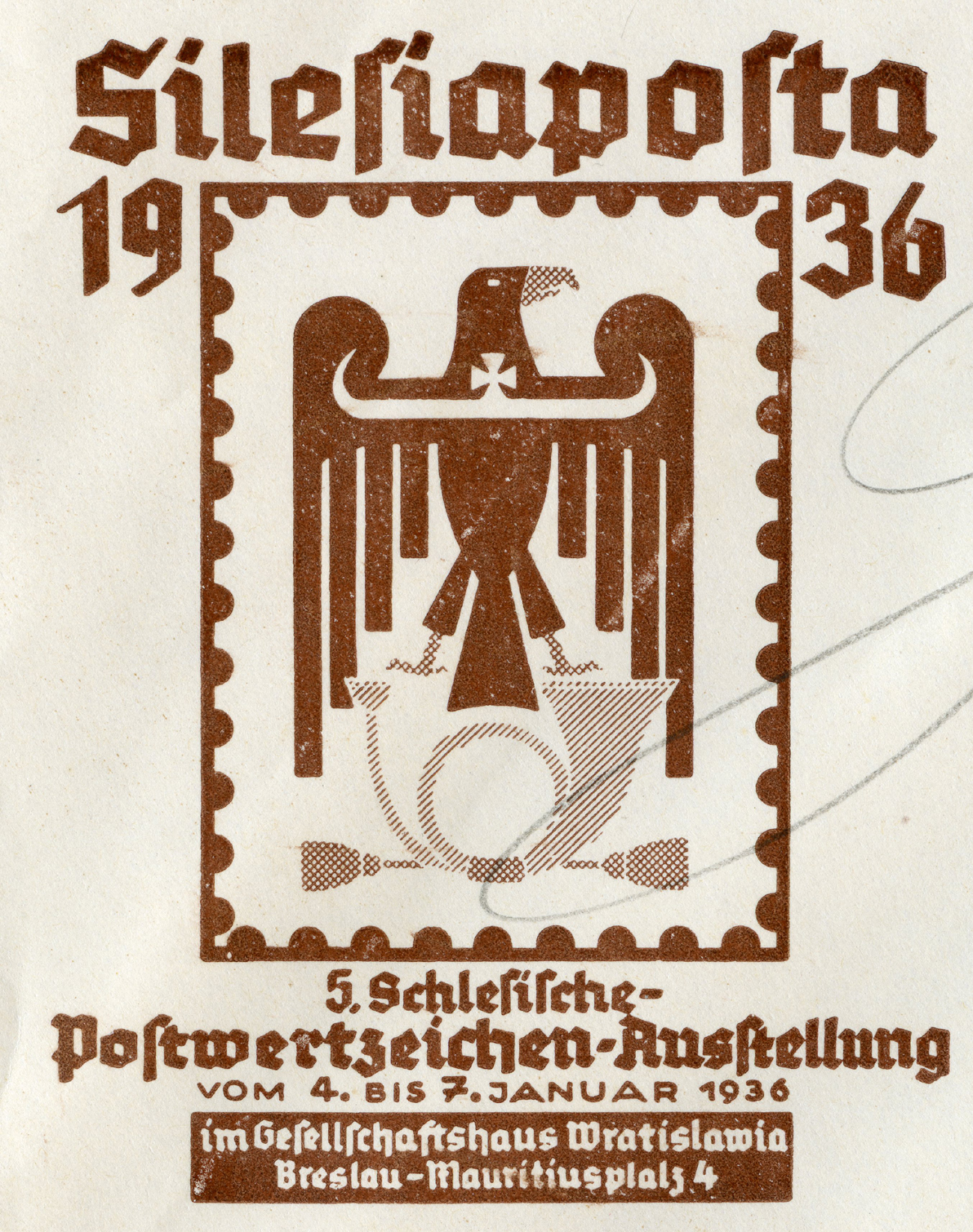
[Below: Close-up.]
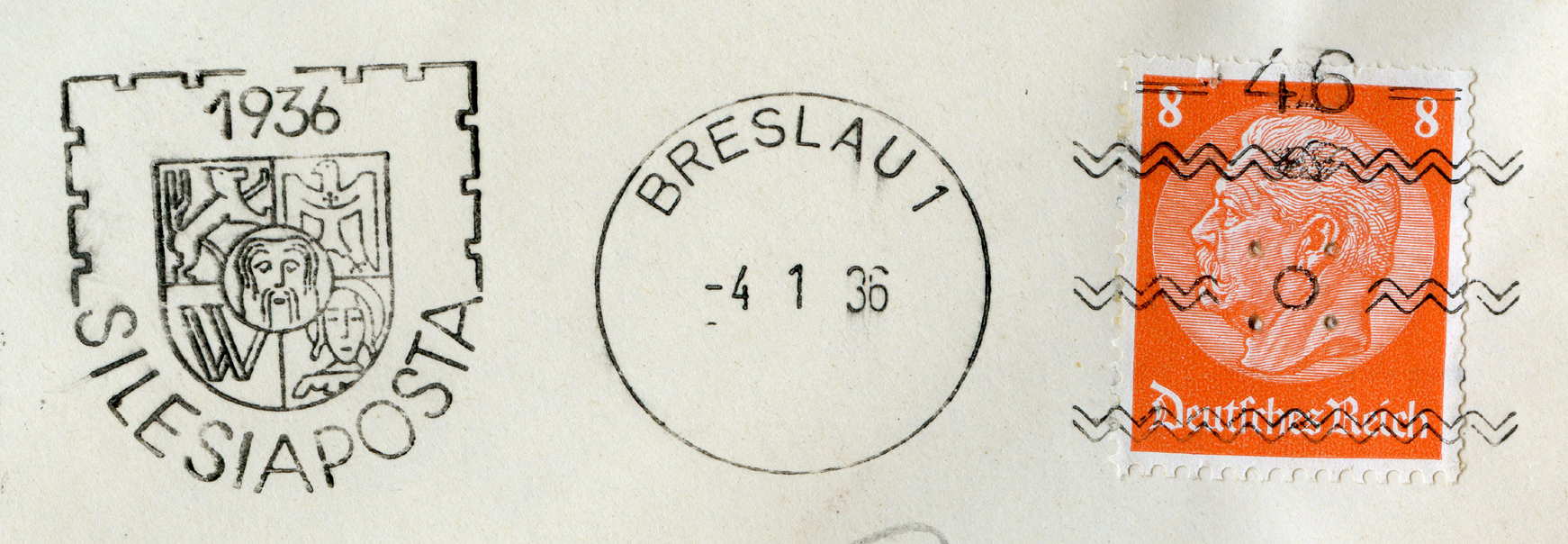
[Below: Sent to a different address -- Adolf Hitler Street, with a different cancel as well.]
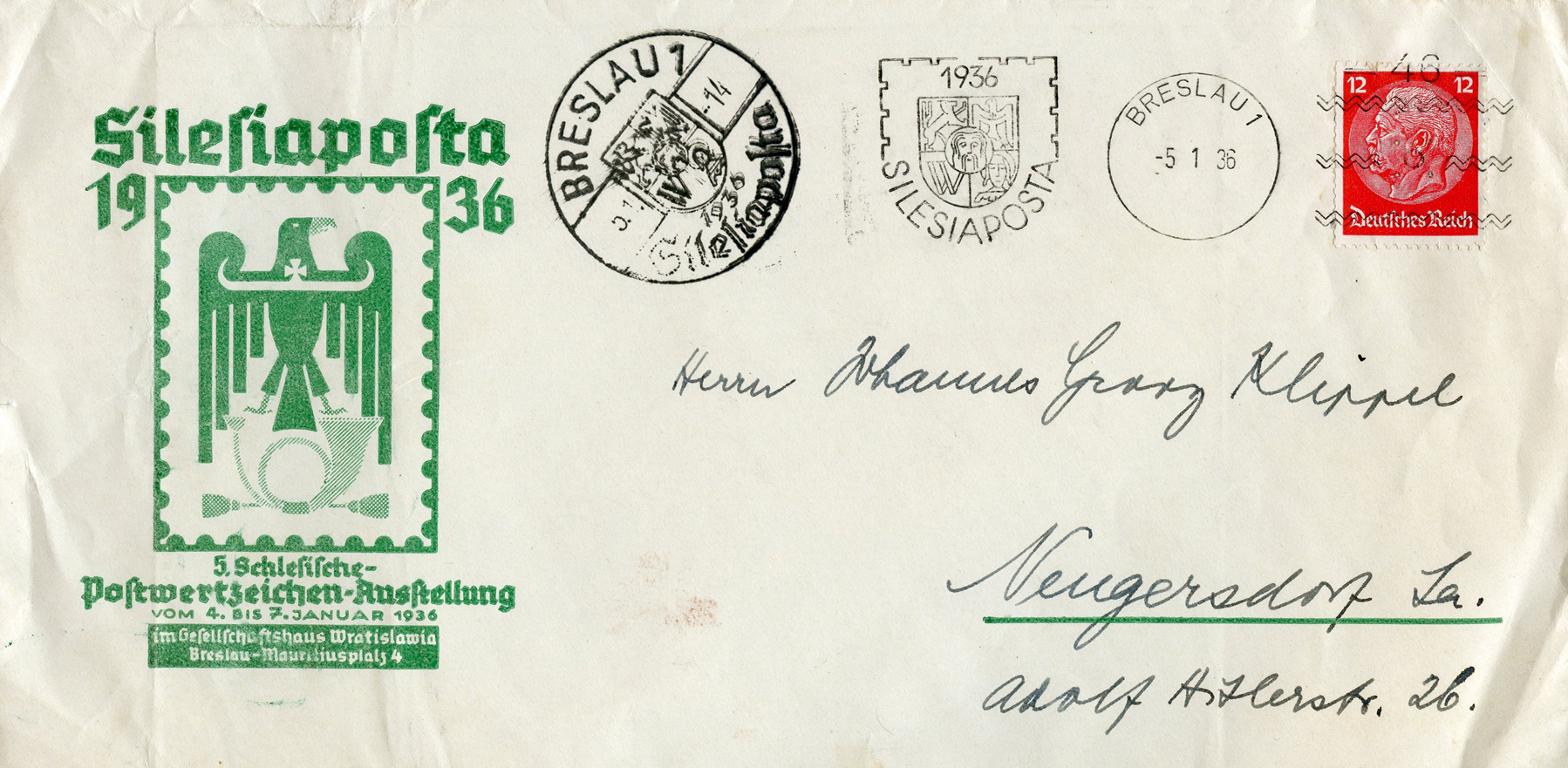
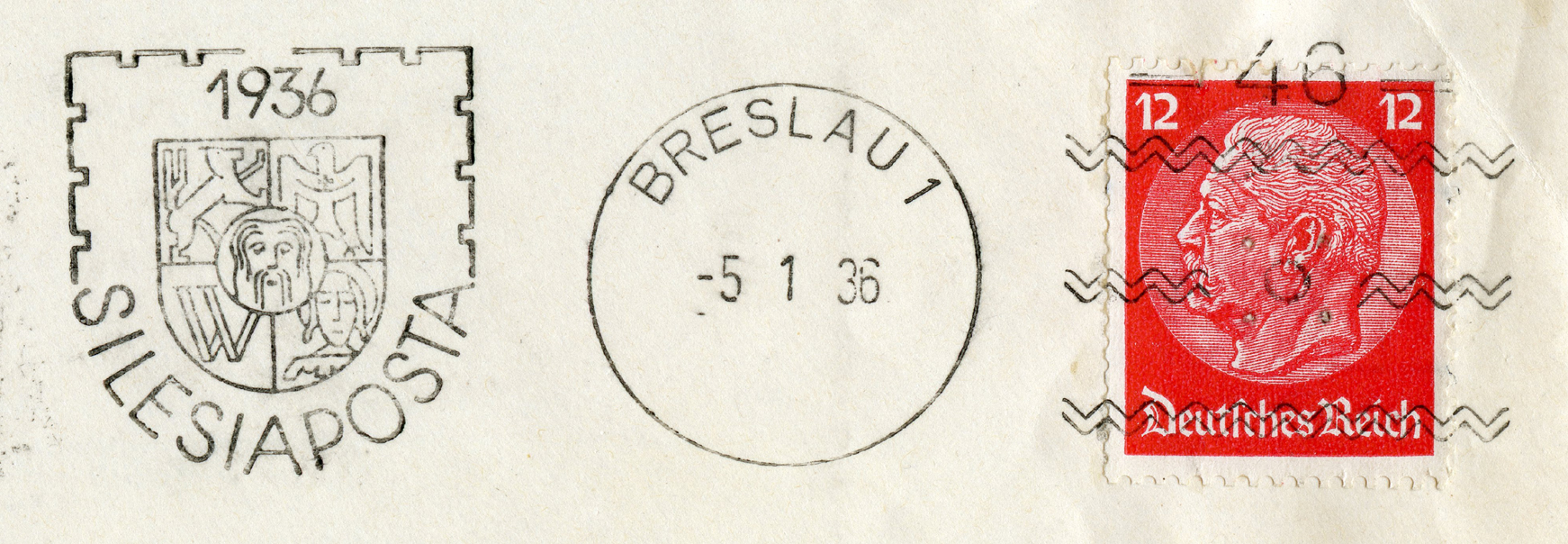
[Below: Close-up.]
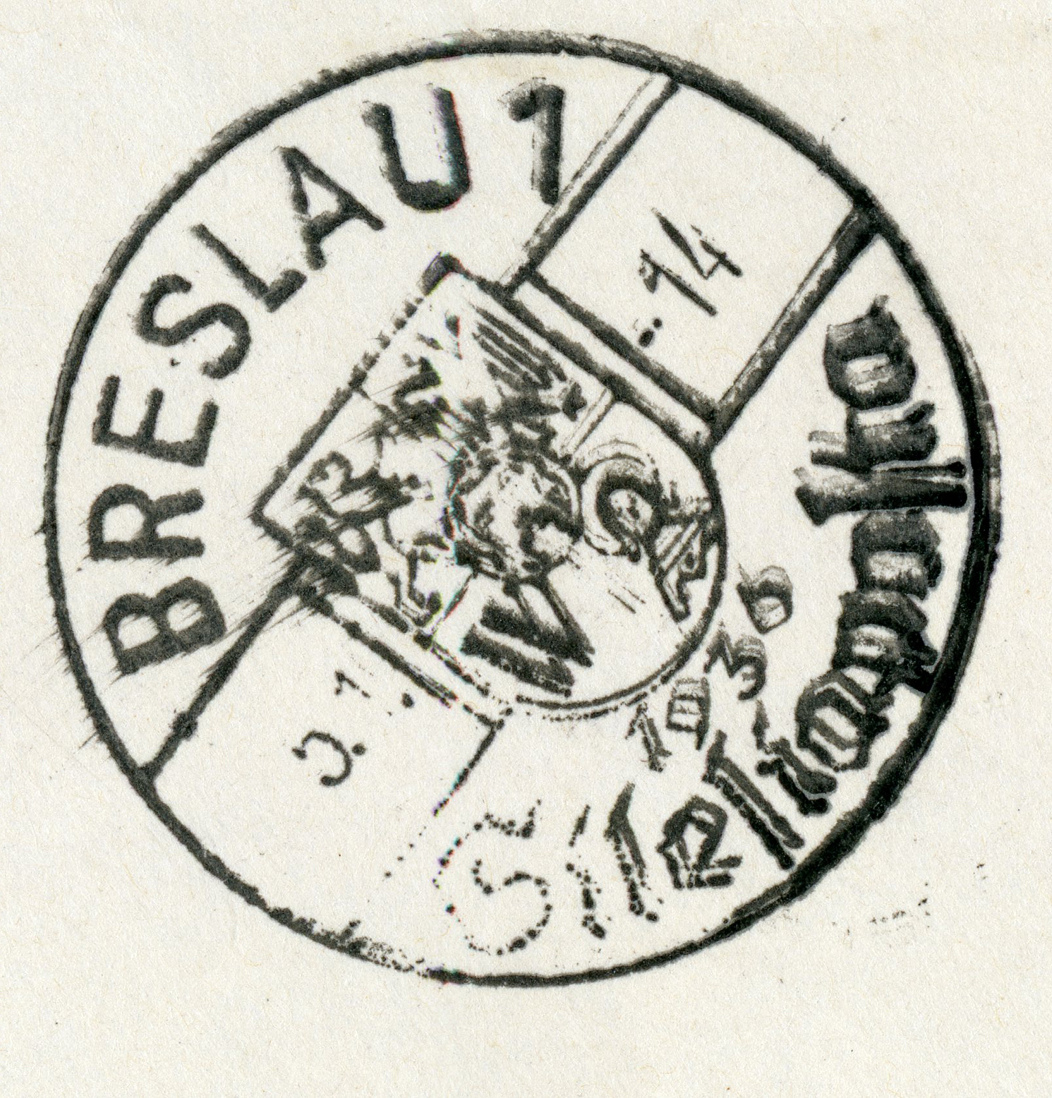
[Below: Close-up.]
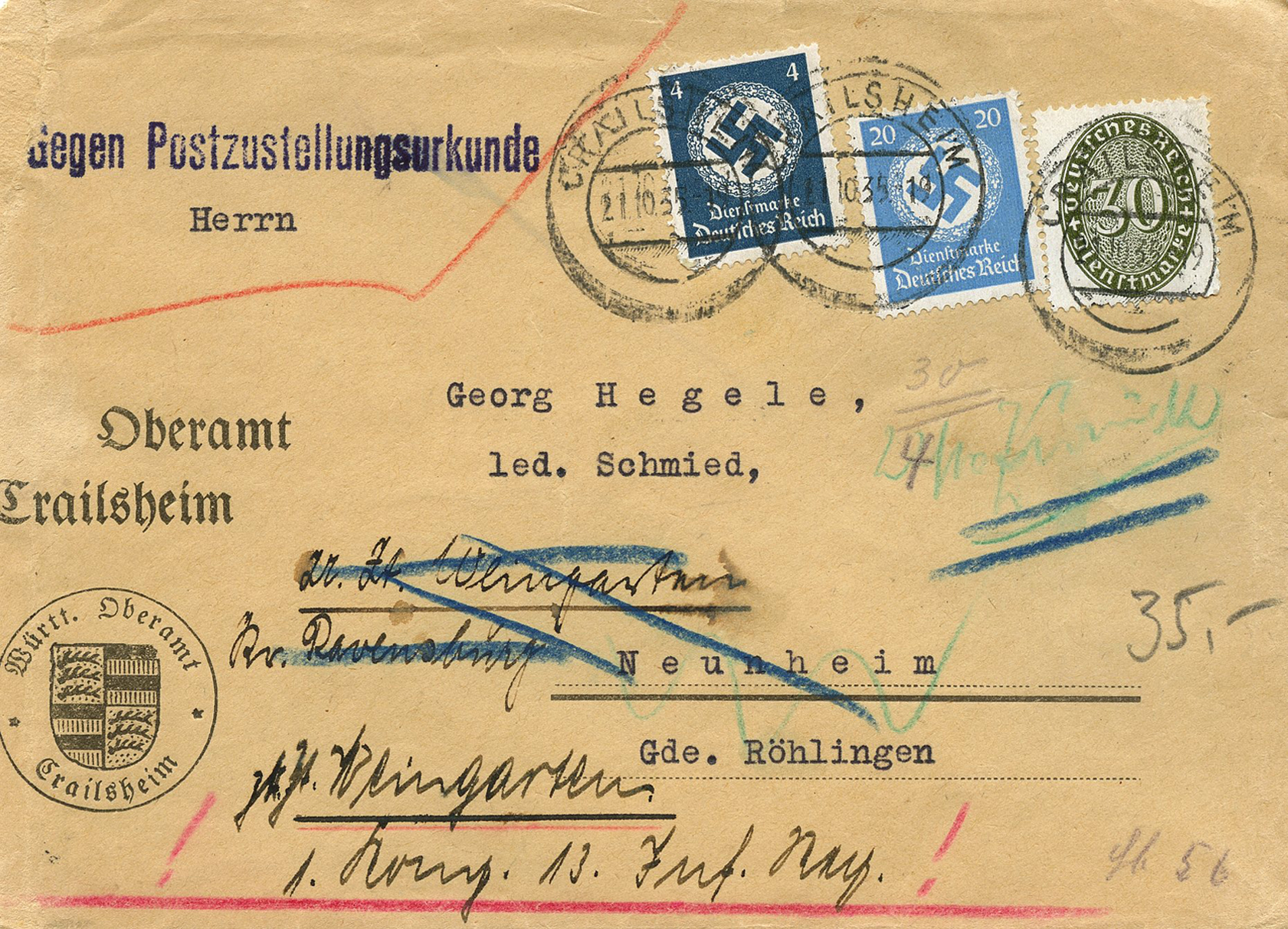
[Below: This is an official government envelope sent 'Gegen Postzustellungsurkunde', or certified. It is from Crailsheim, a town in the German state of Baden-Württemberg. It is postmarked on October 21, 1935 and uses two official Third Reich stamps and one older imperial stamps, which were being phased out.]
[Below: Reverse.]
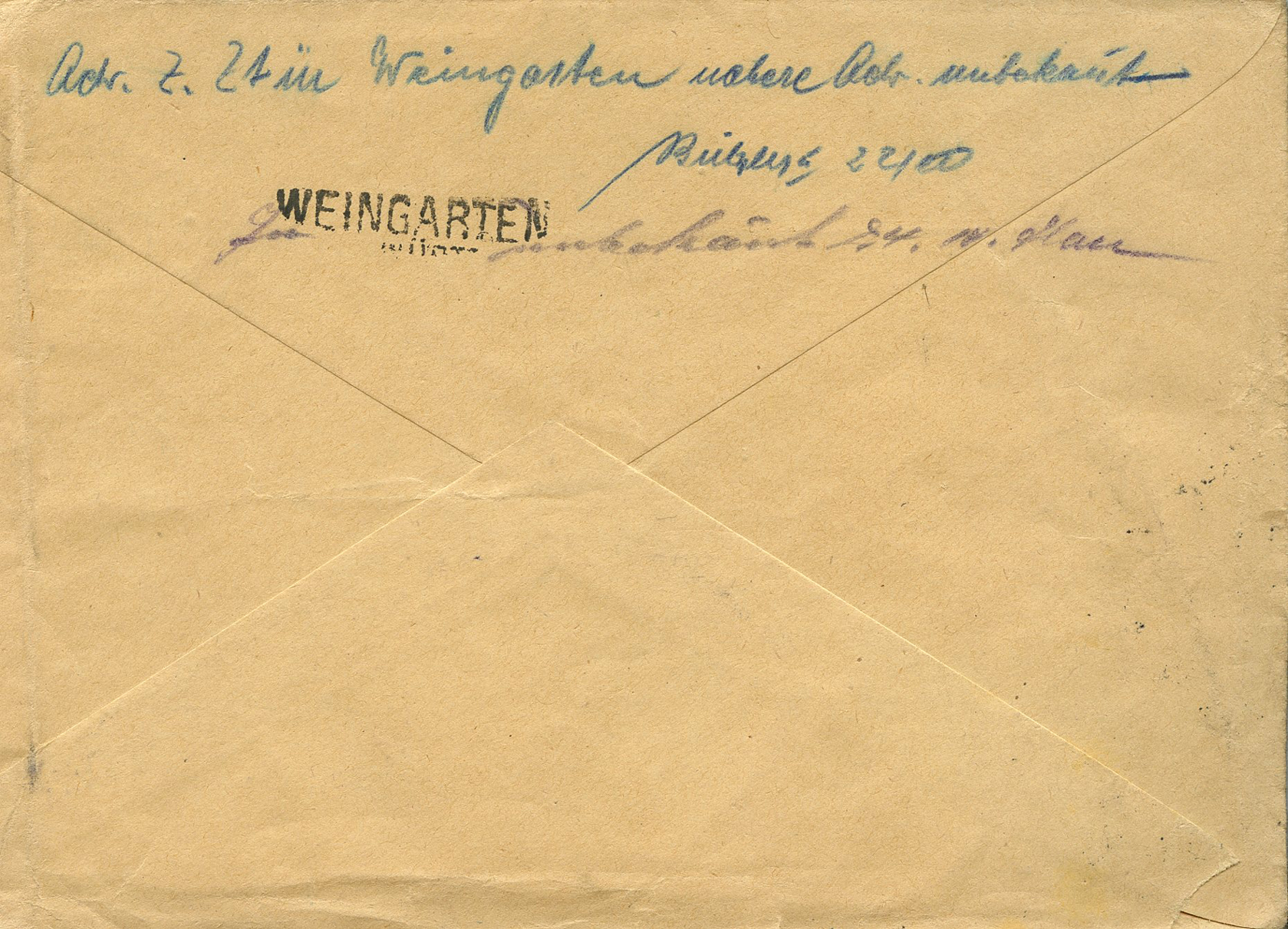
[Below: This is a government envelope from Württemberg sent June 16, 1941 from Hohenstadt (March). It was sent from 'Amtsgericht Hohenstadt' (Hohenstadt District Court) with a 'Anbei Zustellungs=urkunde' (enclosed certificate of delivery). You'll notice it lacks any postage stamps, note the words 'Frei durch Ablösung Reich' (free thoughout the Reich). It seems they had a problem sending it to the recipient and penciled in a lager (camp) address, but then crossed that out for whatever reason. Also note in the upper middle/right the numbers and a name and initials, these are receival dates and the names of postal employees. You'll also see a big arrow with the letters beneath it in the lower left hand corner. It looks like 'ZK', this could stand for 'zurück', meaning 'return', since they couldn't find the addressee. Now let's look at the reverse...]

[Below: Reverse. Now this is interesting. Yes, this is the reverse of the envelope above. It has been reused in Berlin of all places and sent over a year later. It has a beautiful arrangement of stamps and was sent registered (the big red R stamp in the upper left hand corner).]
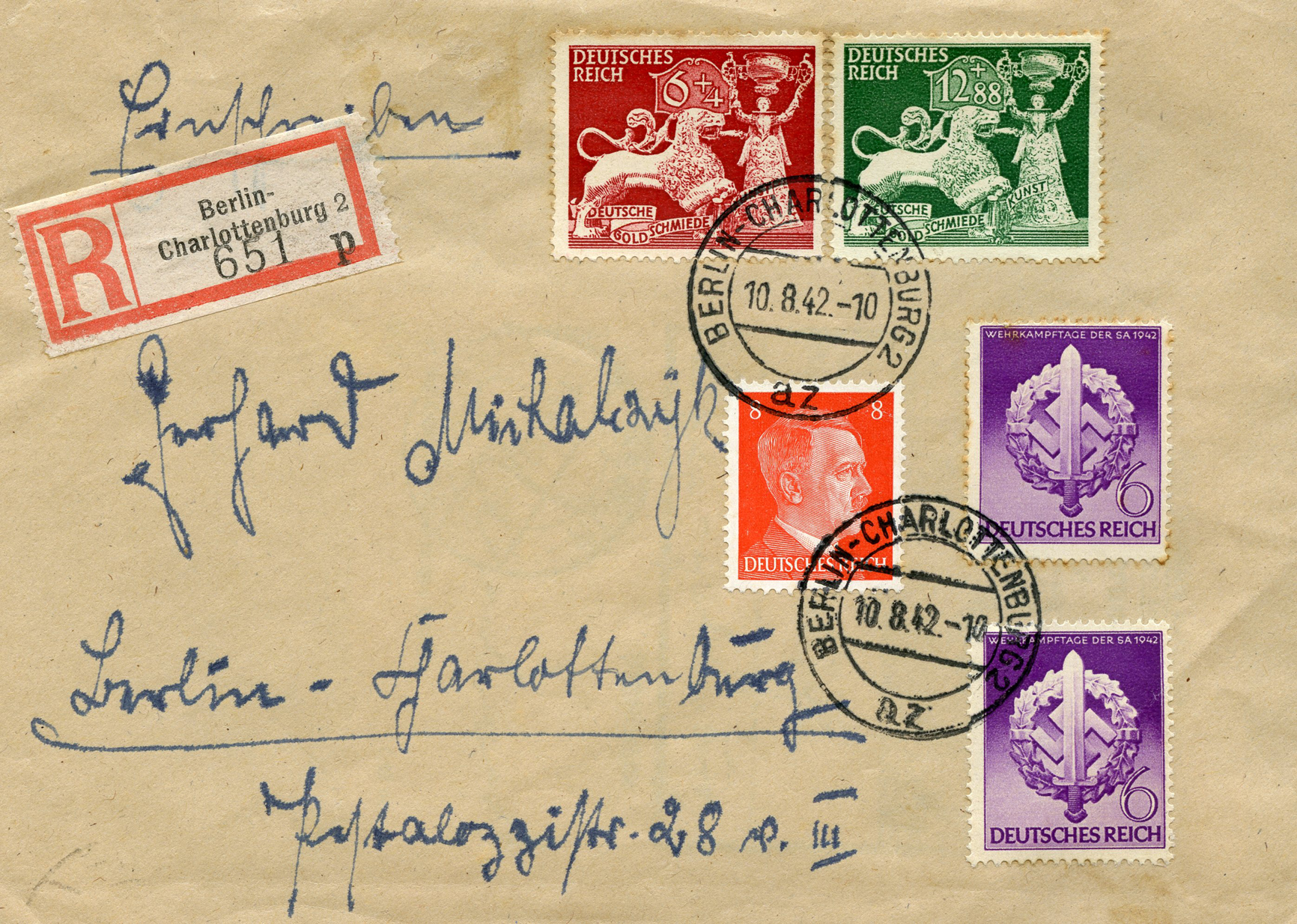
[Below: This is a very rare postcard. It says: 'Wien 1939 - 20.-27. August - Studenten Spiele' (Vienna 1939 - August 20-27 - Student Games).]
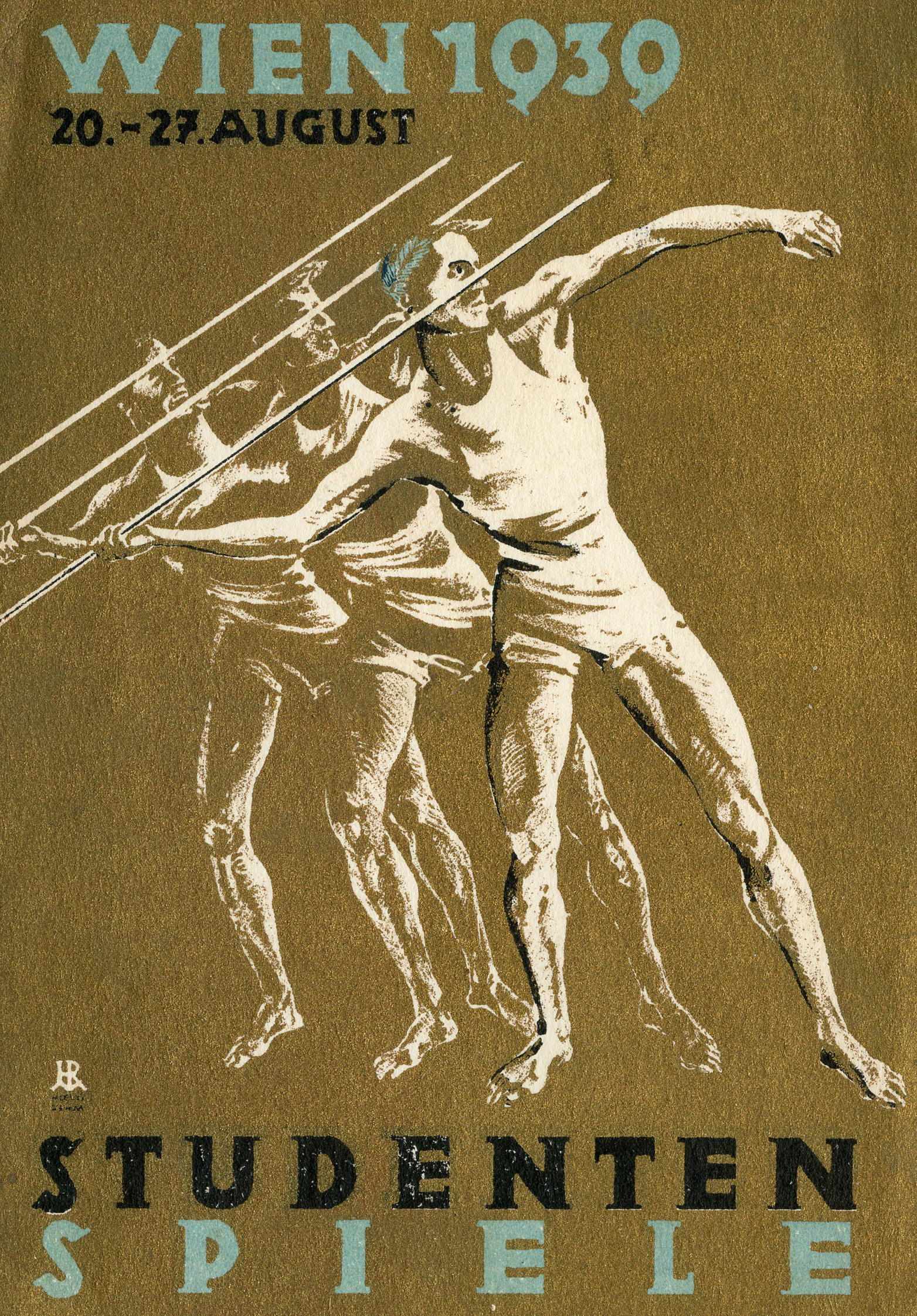
[Below: Reverse. Wow, check out the cancel, sometimes you can look at something and know it is rare, this is the case here. This eagle is a special one used by the National Socialist German Students' League.]
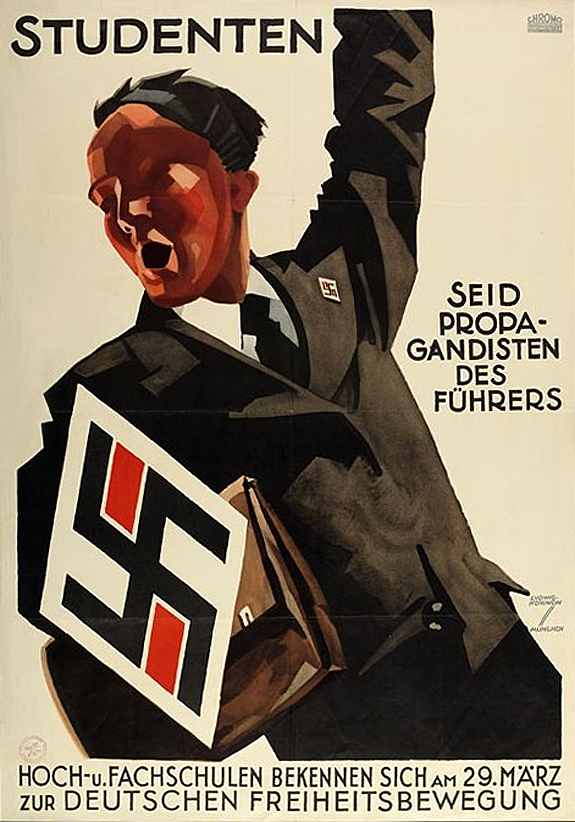
[Below: National Socialist German Students' League poster. It says: 'Seid Propagandisten des Führers' (Be Propagandists of the Führer).]
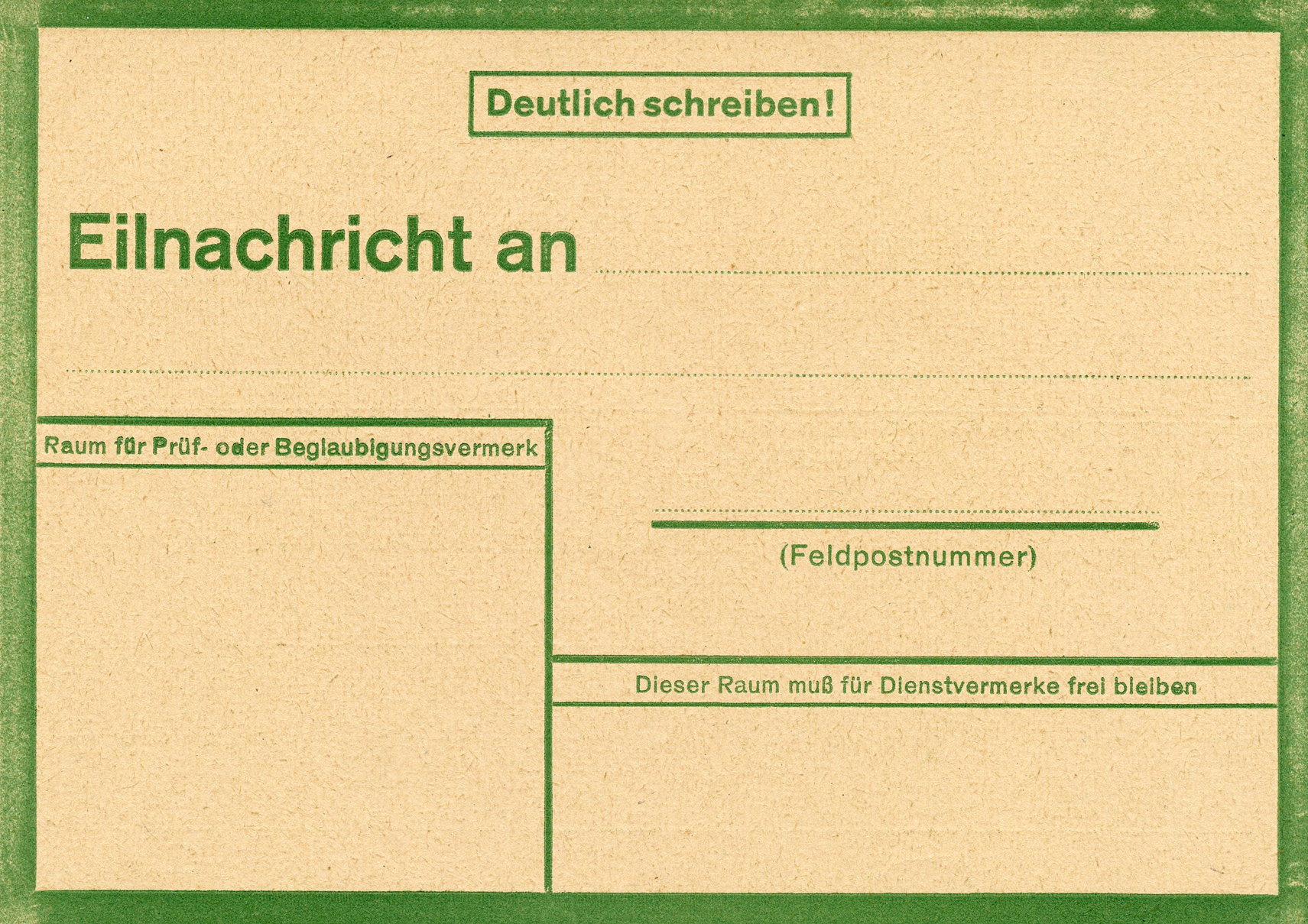
[Below: A rare series of postcards from the final days of the Third Reich. These were released for both soldiers and civilians for the purpose of telling others you are still alive, and inquiring about house addresses. Basically these were for bombed out areas. They are rarely encountered, so for whatever reason not many were saved. Let's look at the first card, it says:
'Deutlich schreiben!
Eilnachricht an
Raum für Prüf- oder Beglaubigungsvermerk
(Feldpostnummer)
Dieser Raum muß für Dienstvermerke frei bleiben'
(Write clearly!
Urgent message to
Space for verification or certification note
(Field Post Number)
This space must be left free for official notes).]
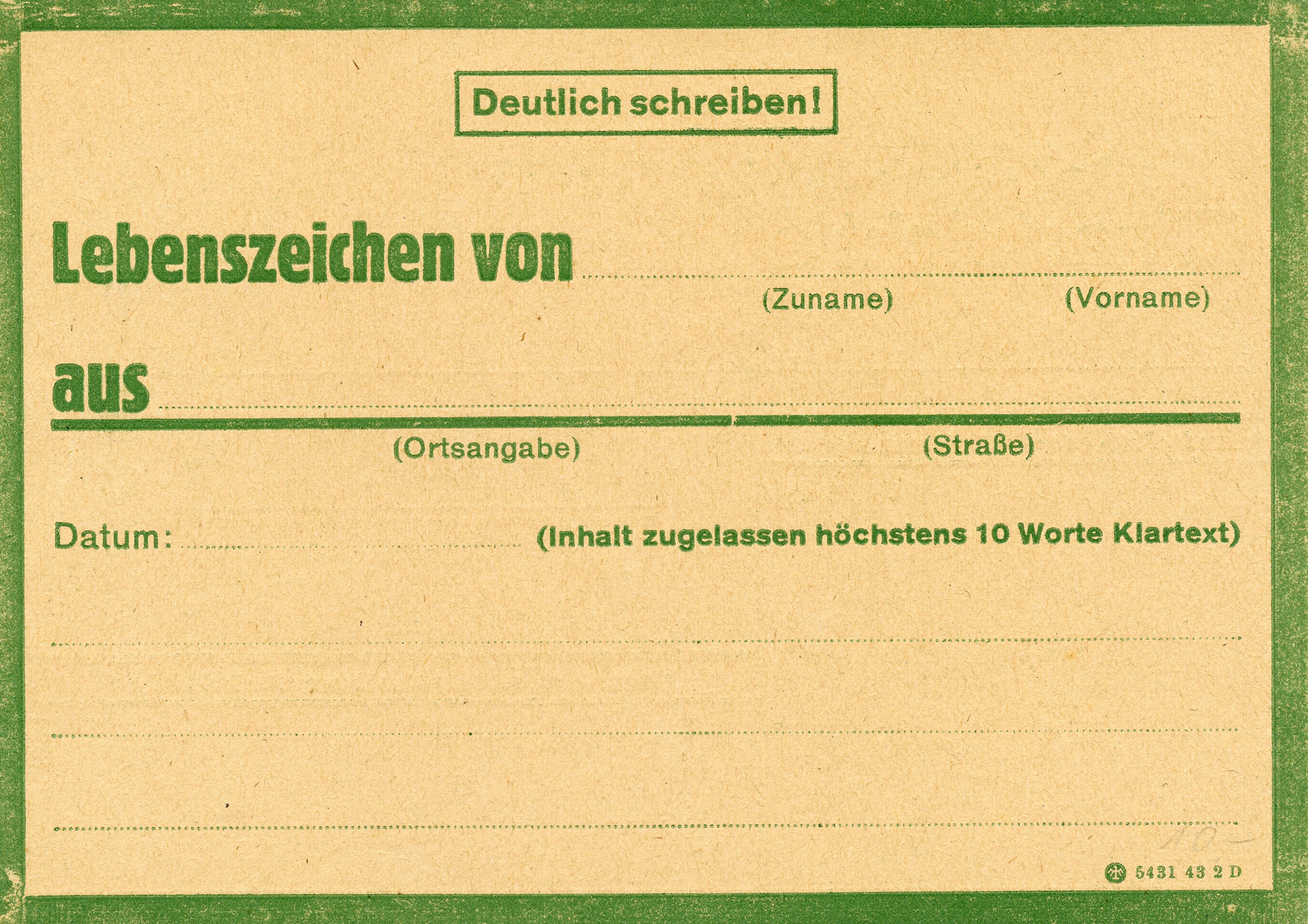
[Below: Reverse. This says:
'Deutlich schreiben!
Lebenszeichen von
Inhalt zugelassen höchstens 10 worte Klartext'
(Write clearly!
Signs of life from
Content allowed: no more than 10 words of plain text).]
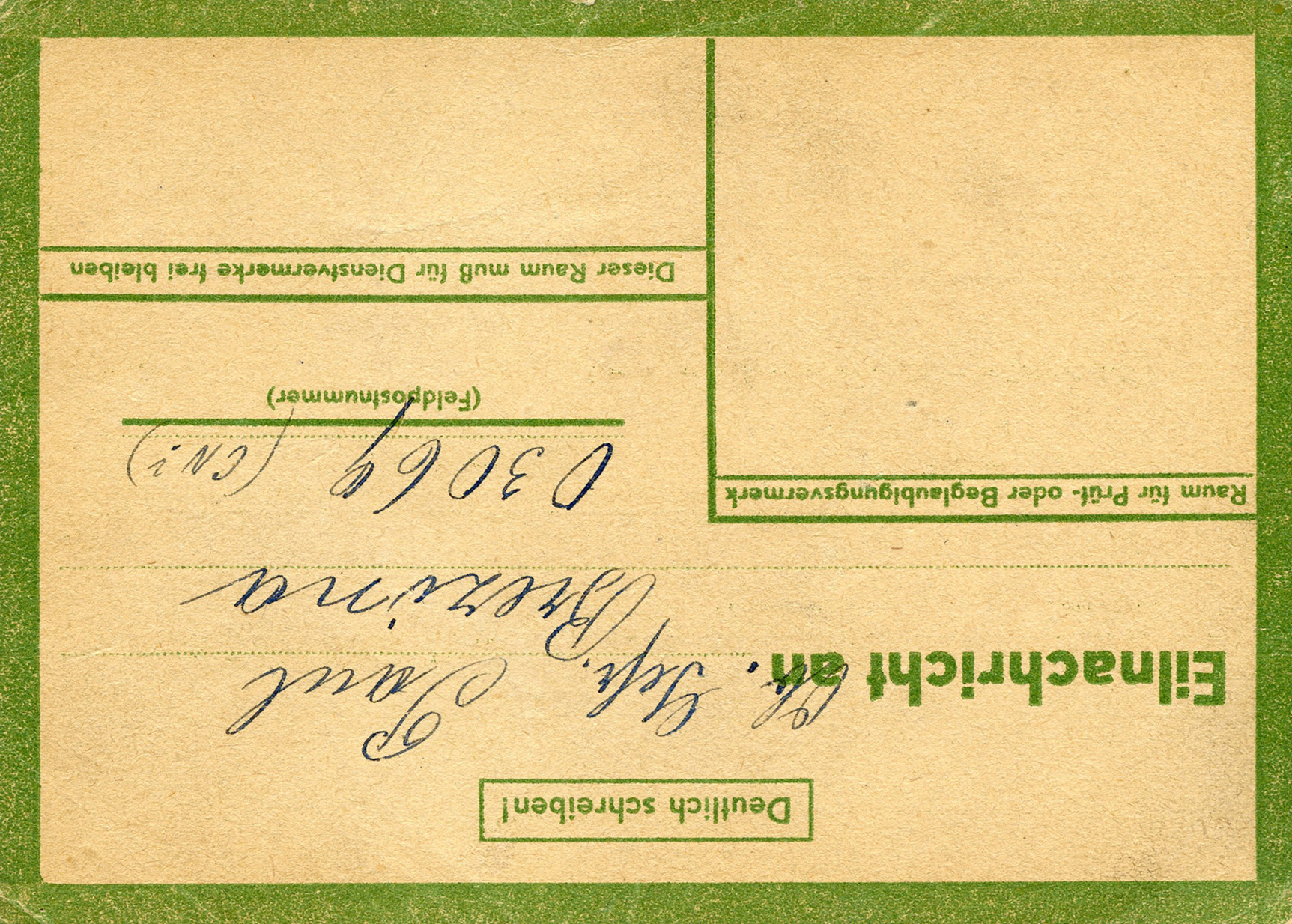
[Below: Used version and slightly different color of green.]
[Below: Reverse.]
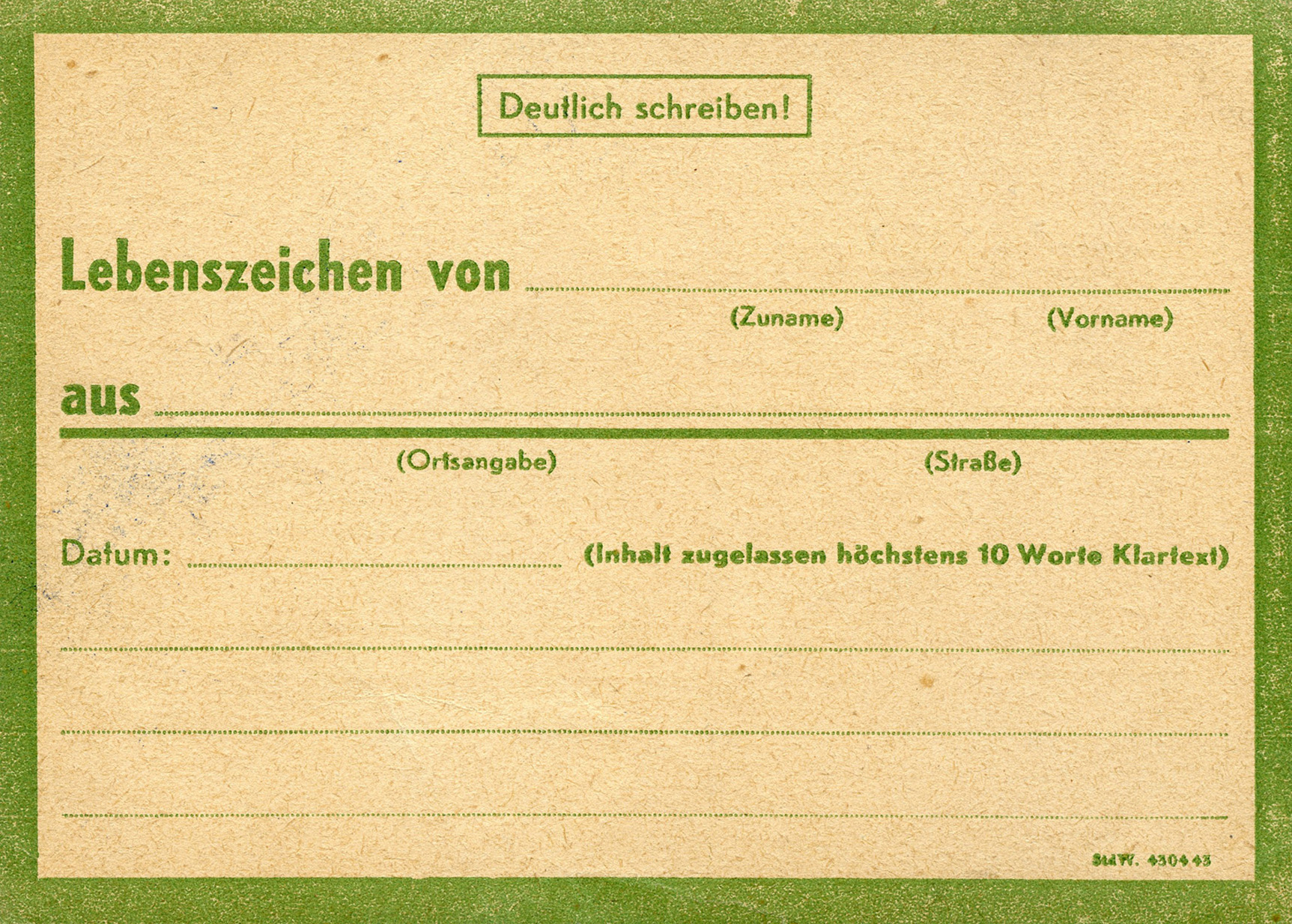
[Below: This postcard's text is the same as the green postcard above, minus the spot to write a Feldpost number.]
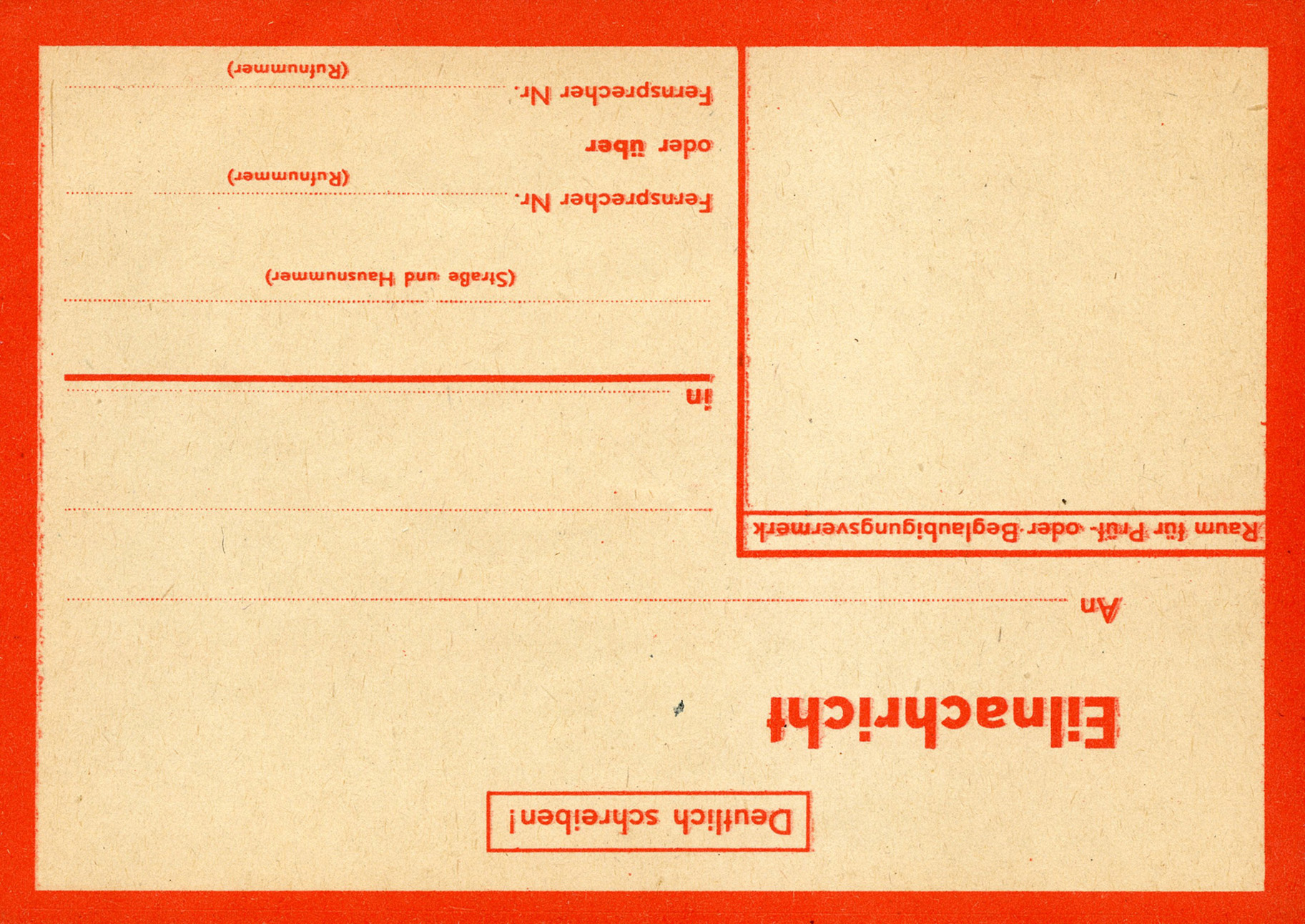
[Below: Reverse.]
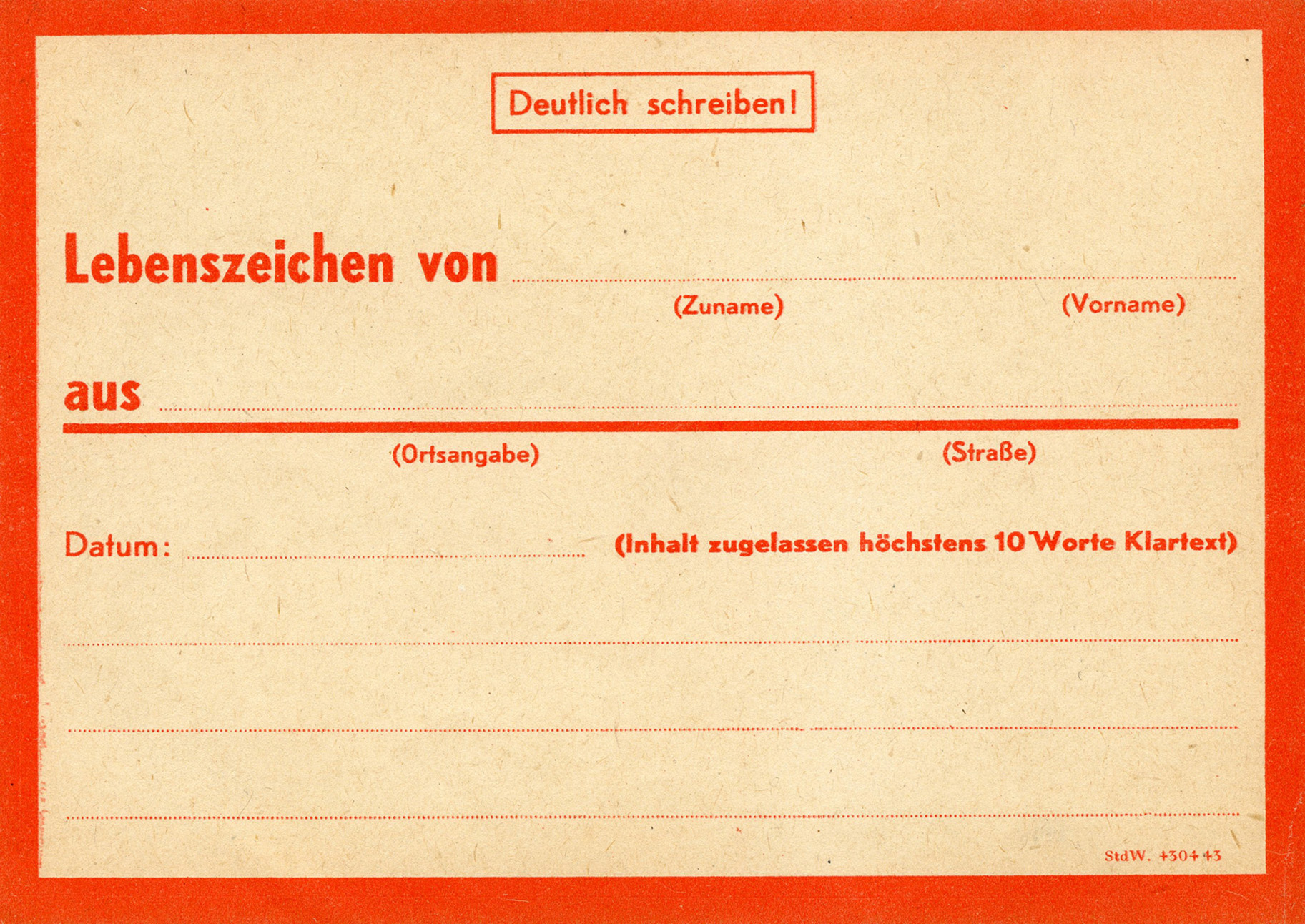
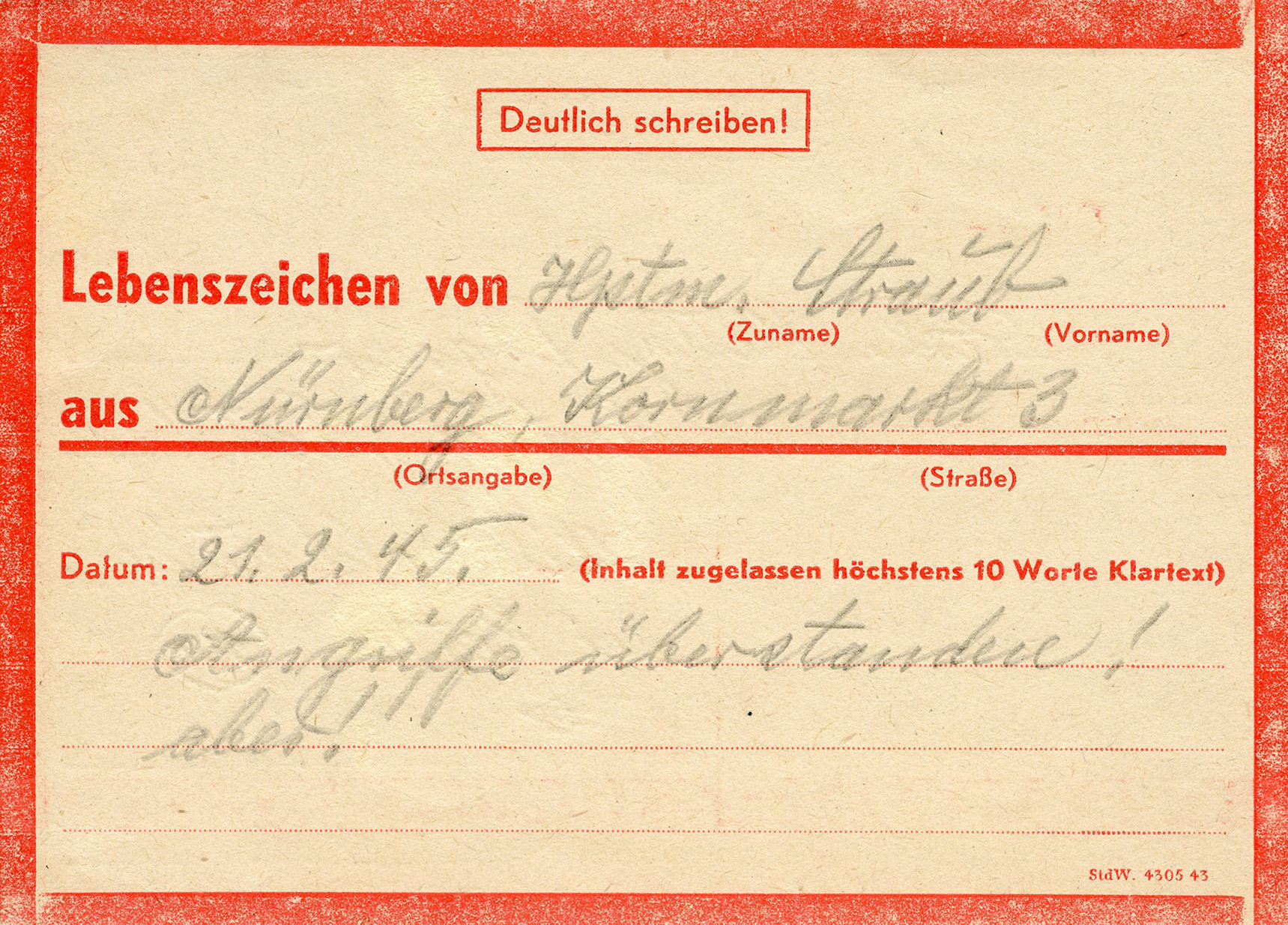
[Below: This postcard is basically the same as above, except it is used. Also note the red border is very low quality compared to that above.]
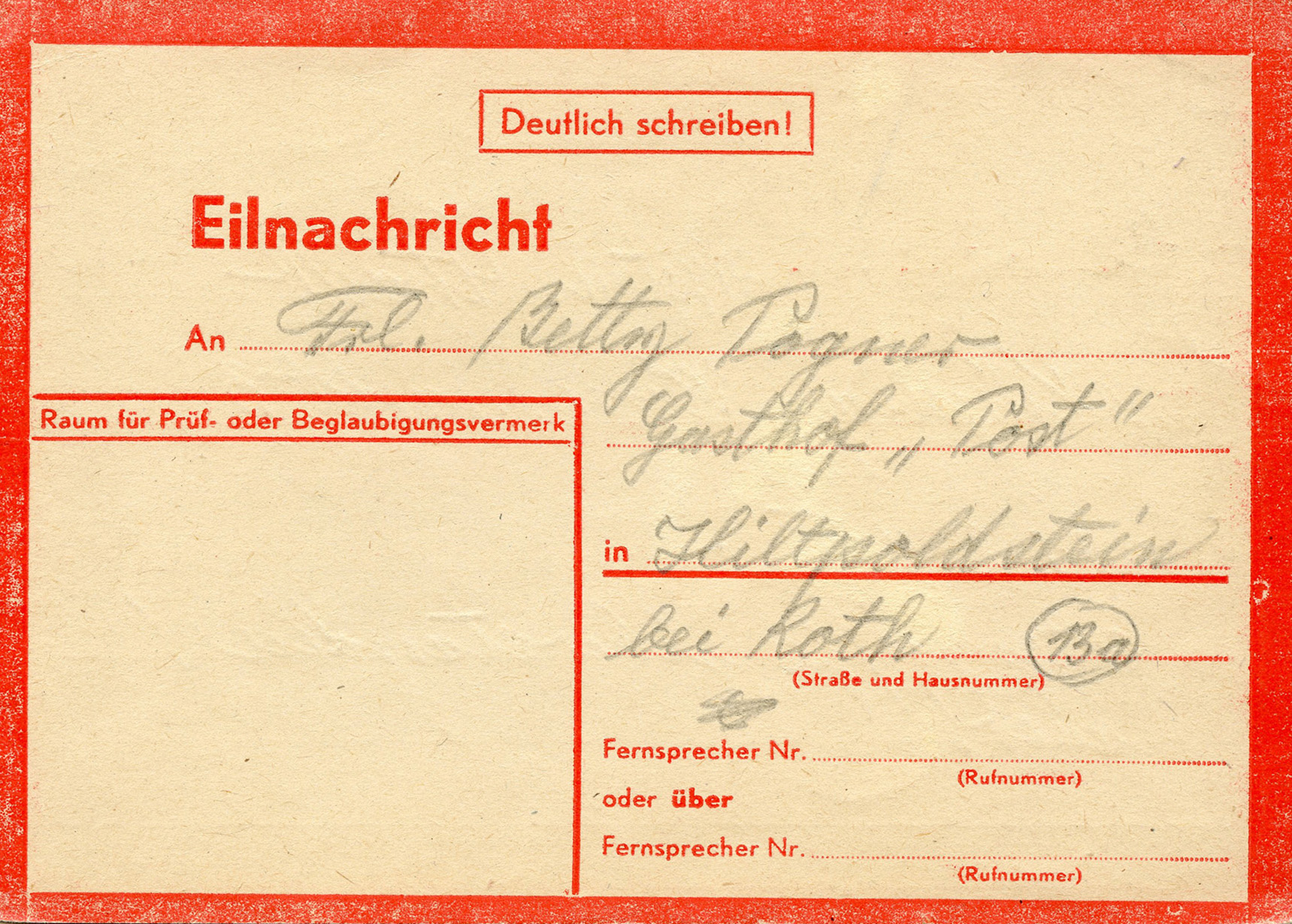
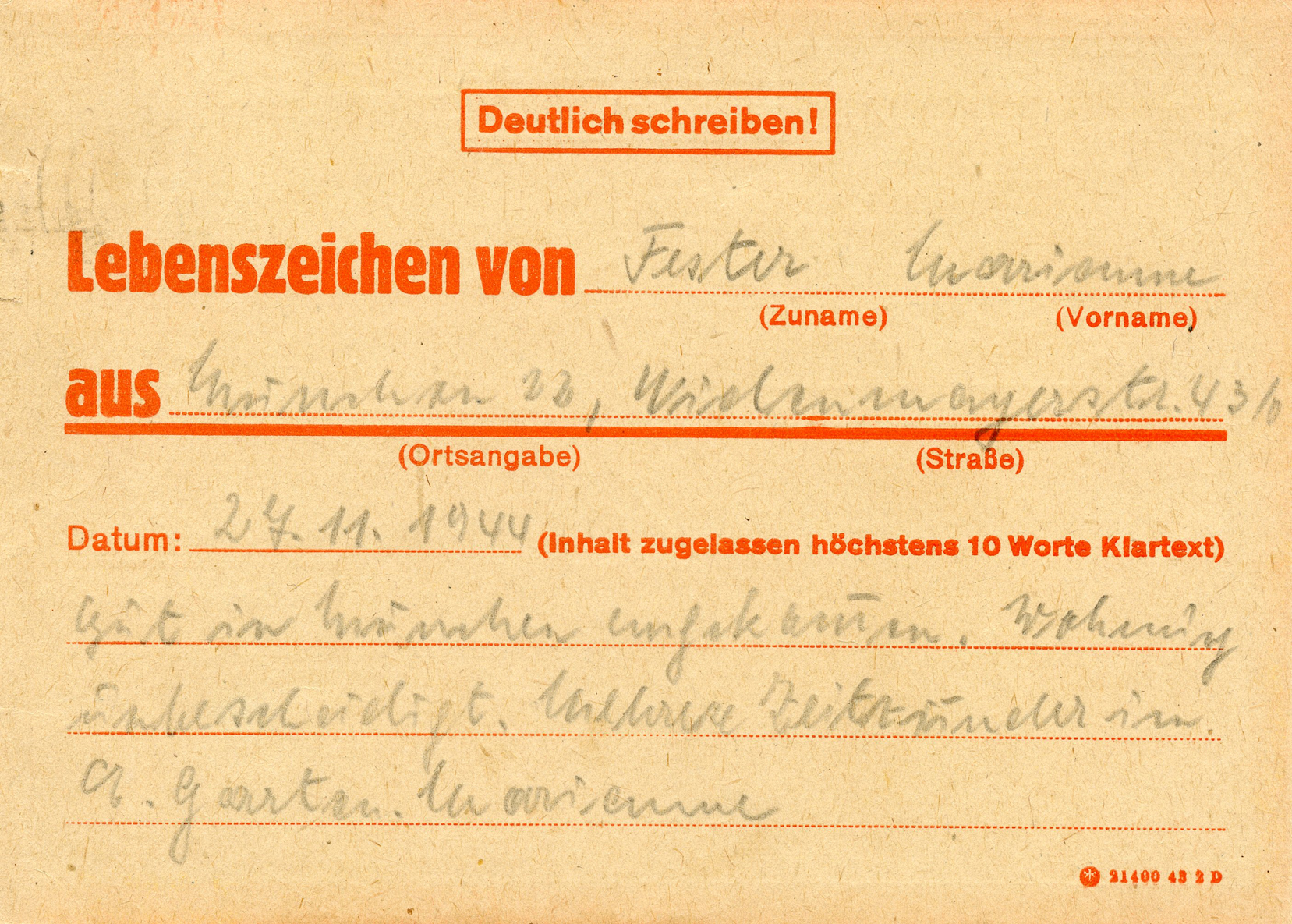
[Below: Reverse. The words 'Angriffe überstandere!' (Survived attacks!)...]
[Below: Another used example.]
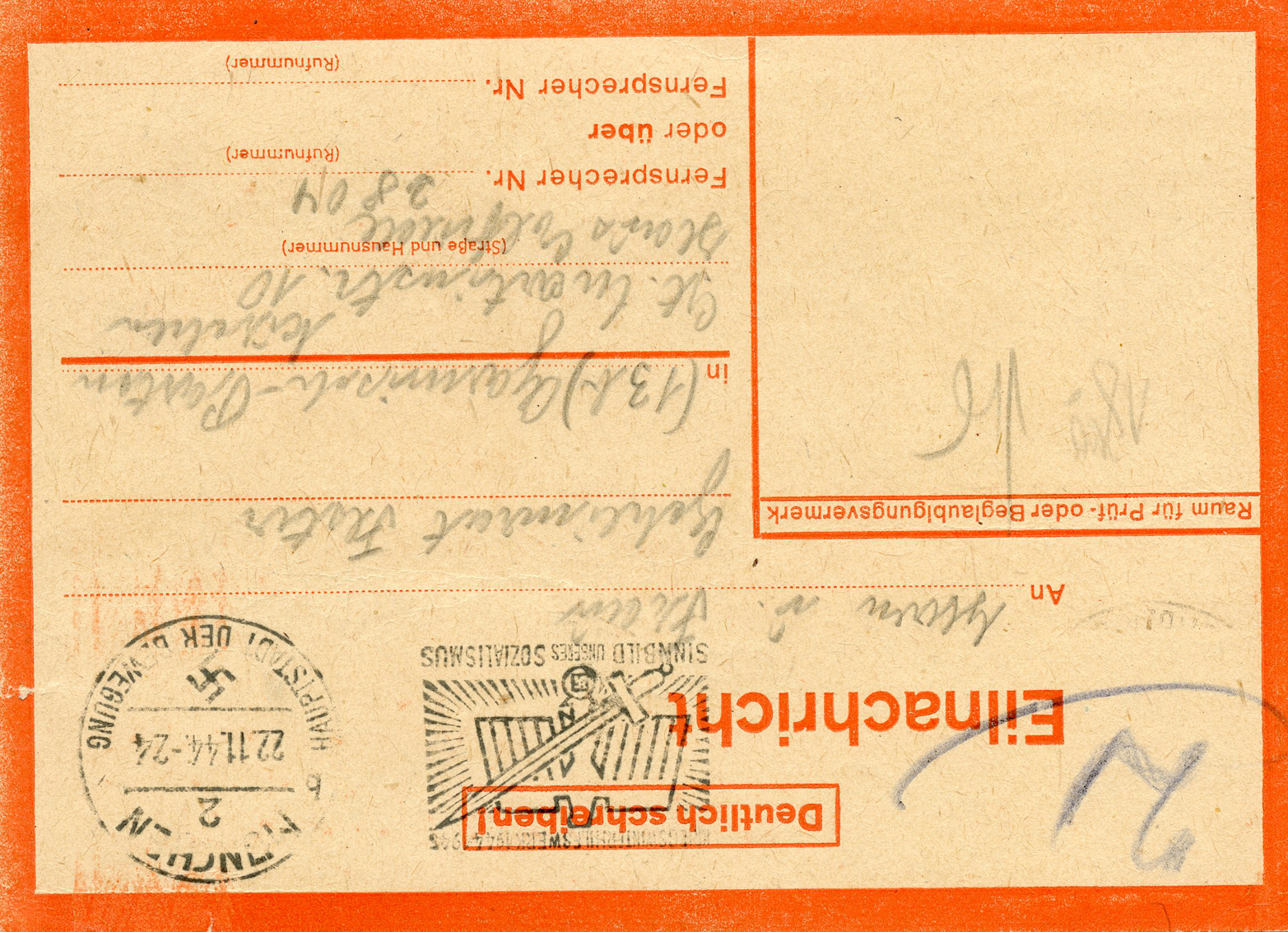
[Below: Reverse.]
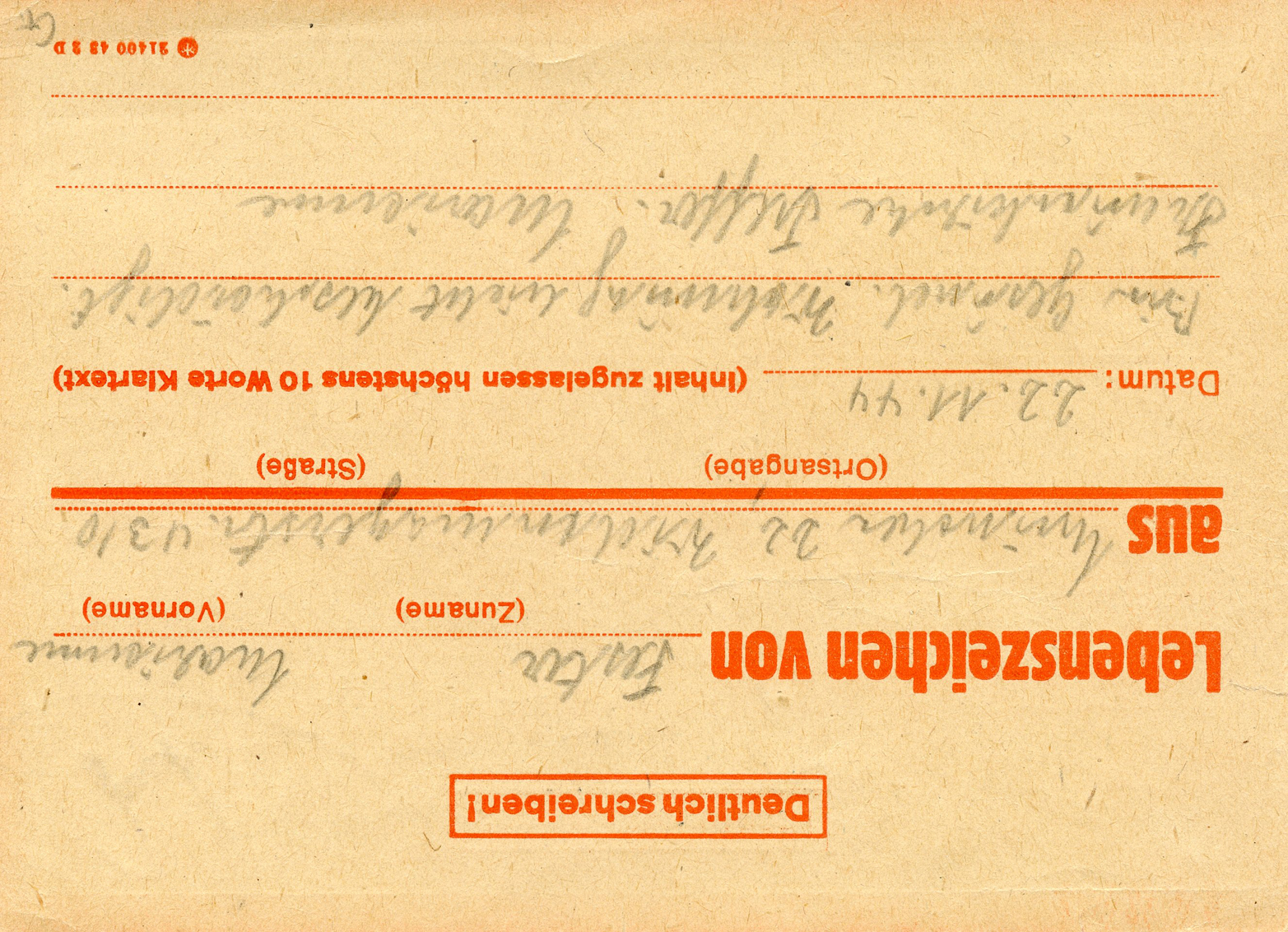
[Below: Another used example, filled out by the same person as above.]
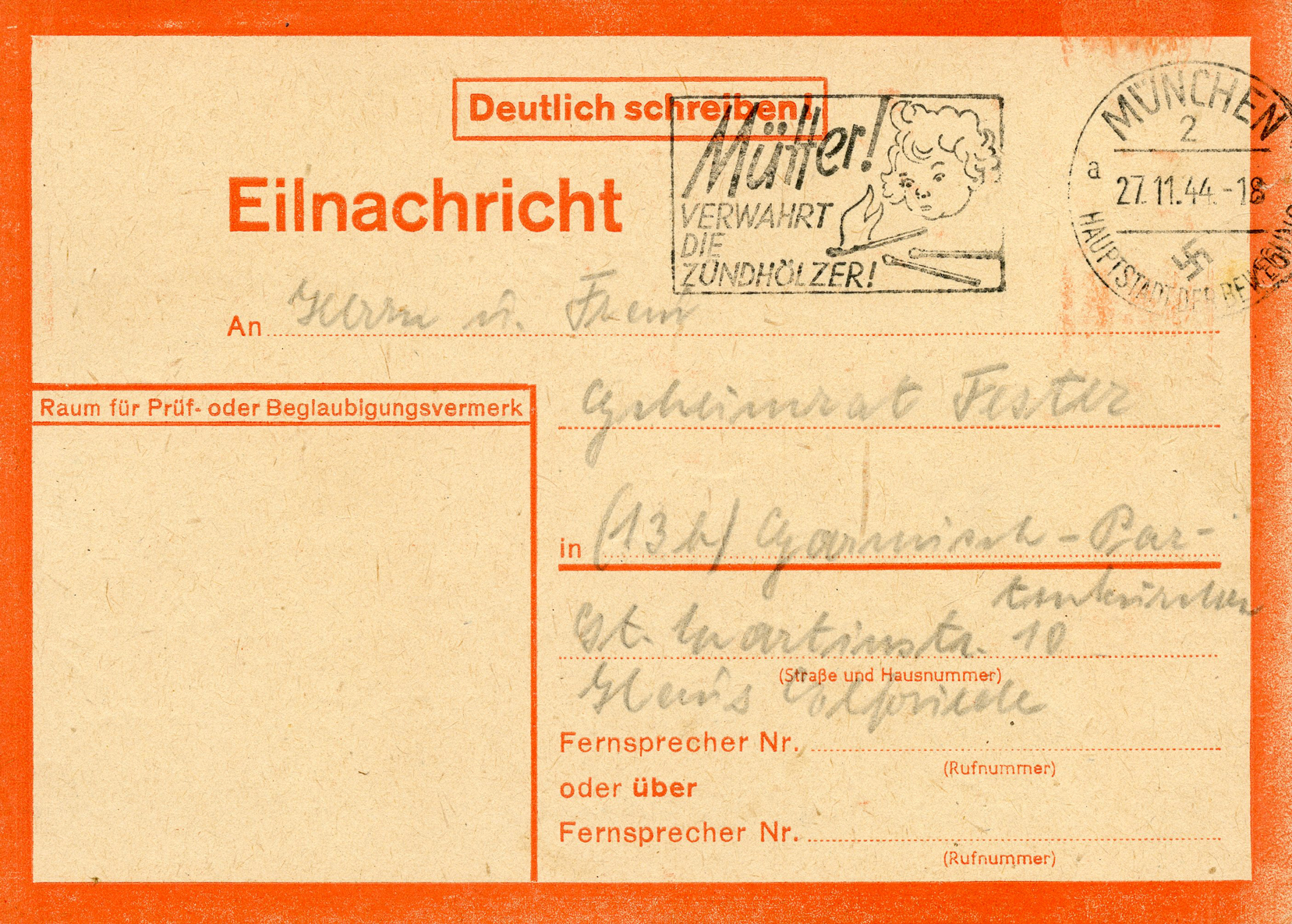
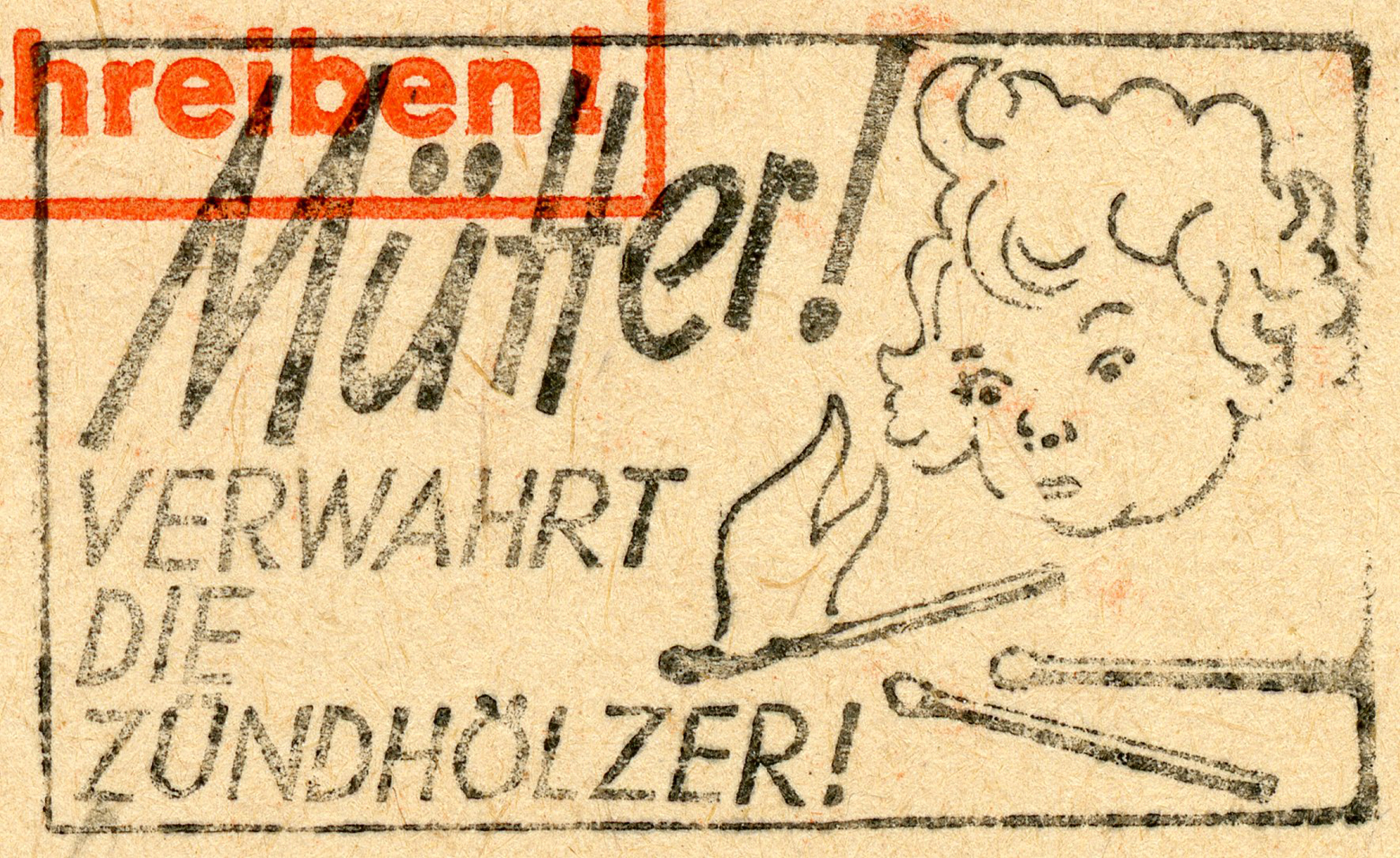
[Below: Close-up. This says: 'Mothers! - Keep the matches safely hidden/stored!']
[Below: Reverse.]
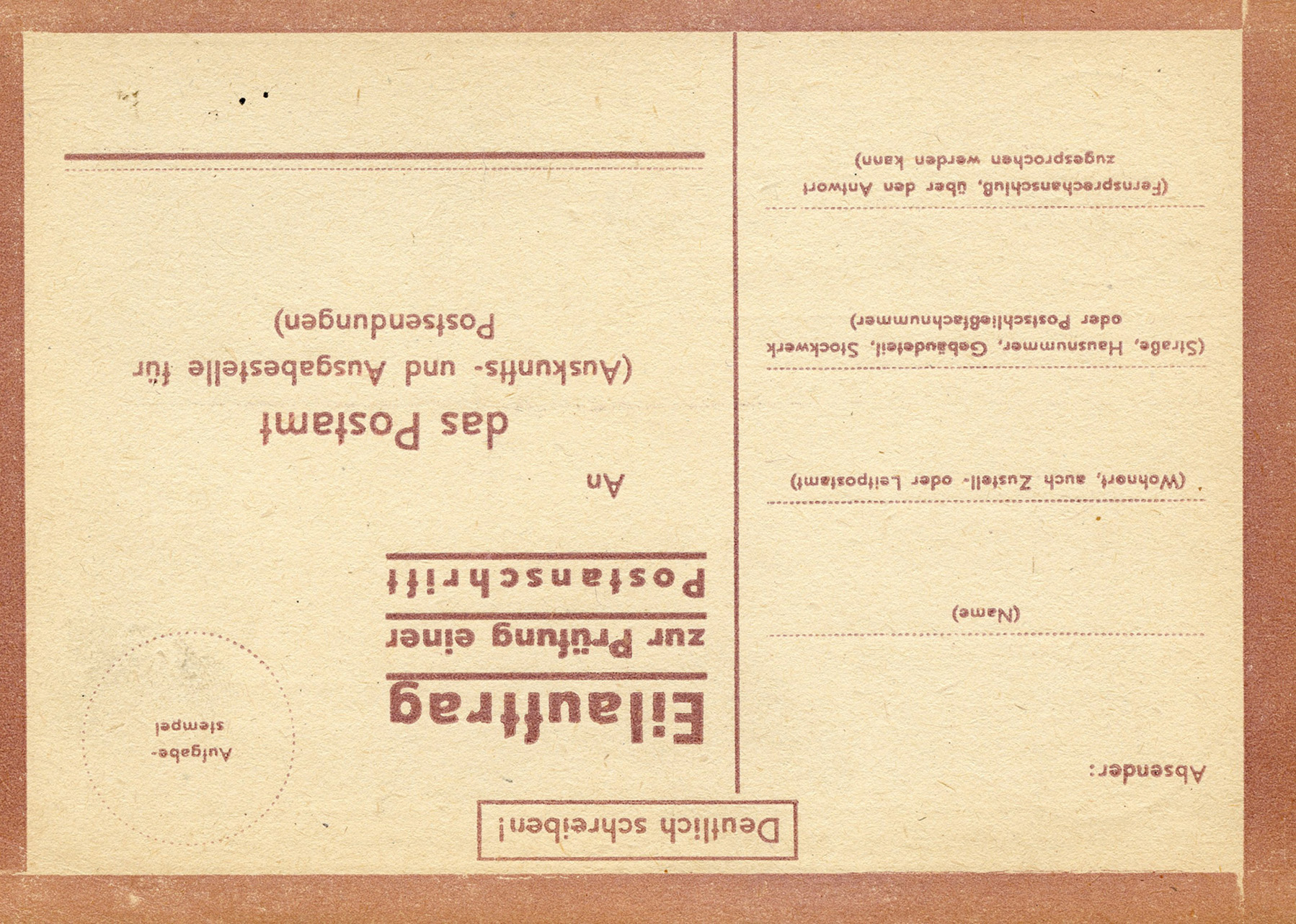
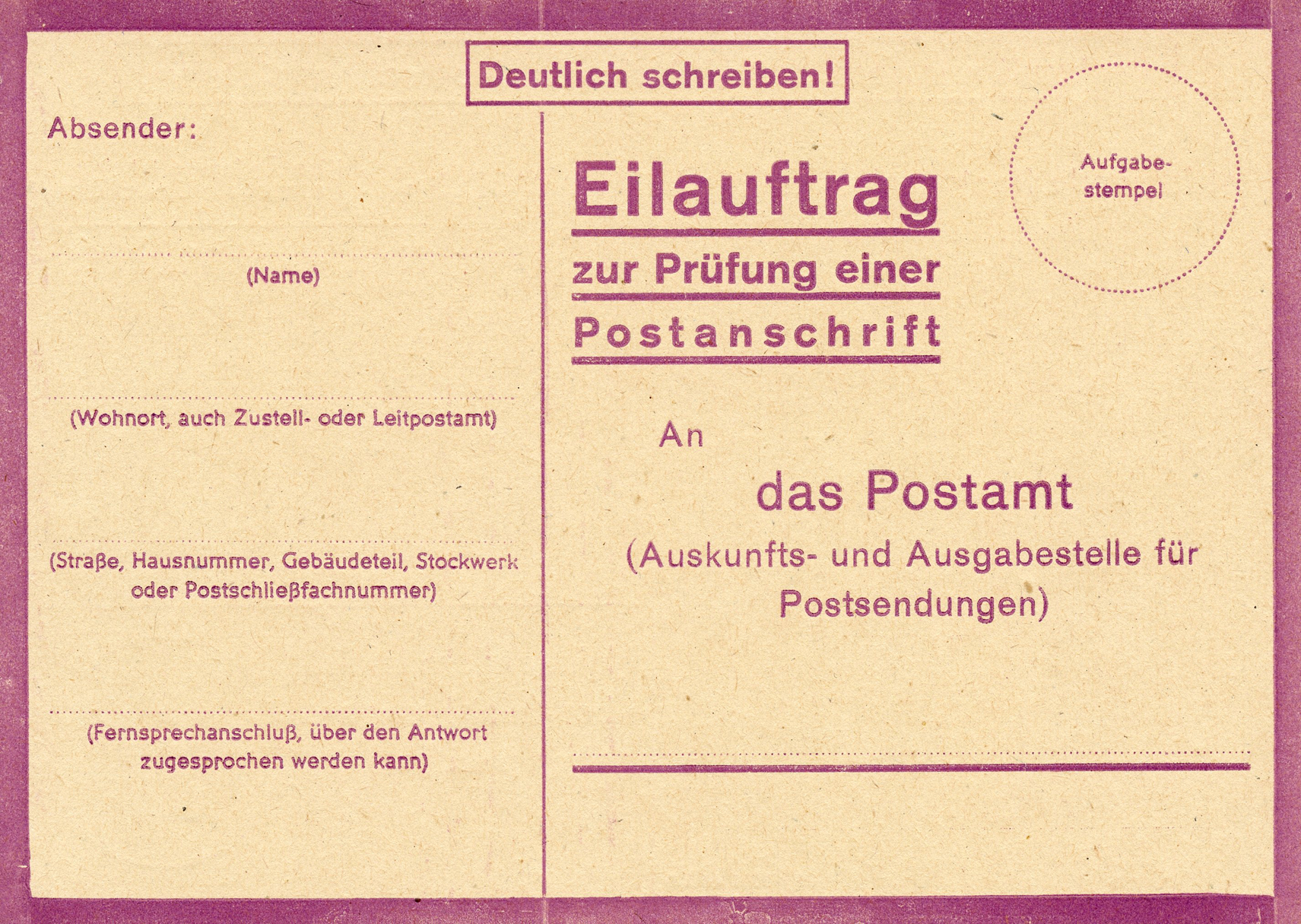
[Below: This one is for a different use. It says:
'Eilauftrag
zur Prüfung einer
Postanschrift
An
das Postamt
(Auskunfts- und Ausgabestelle für
Postsendungen'
Urgent order
to verify a
postal address
To
the post office
(information and issuing office for
postal items.]
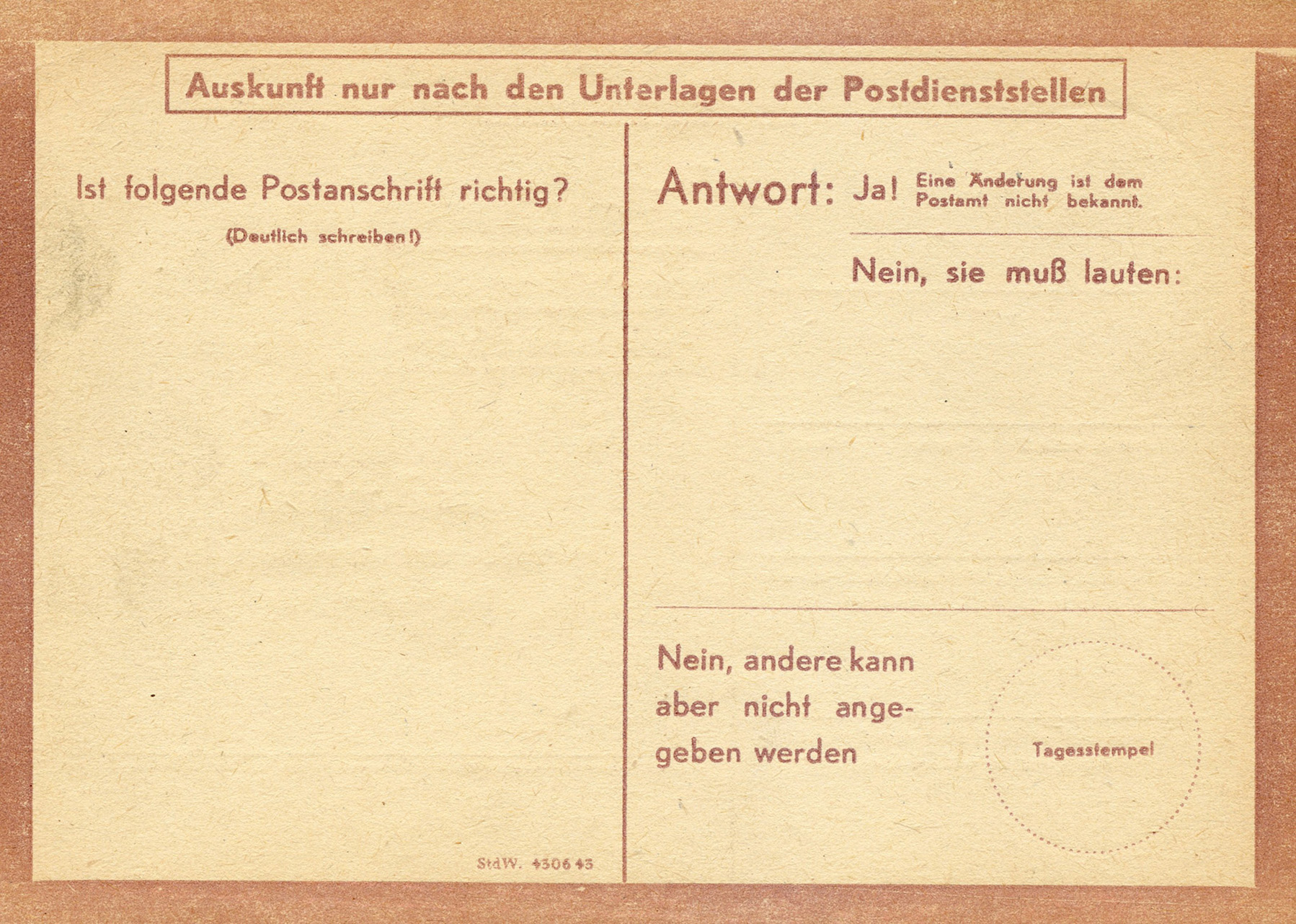
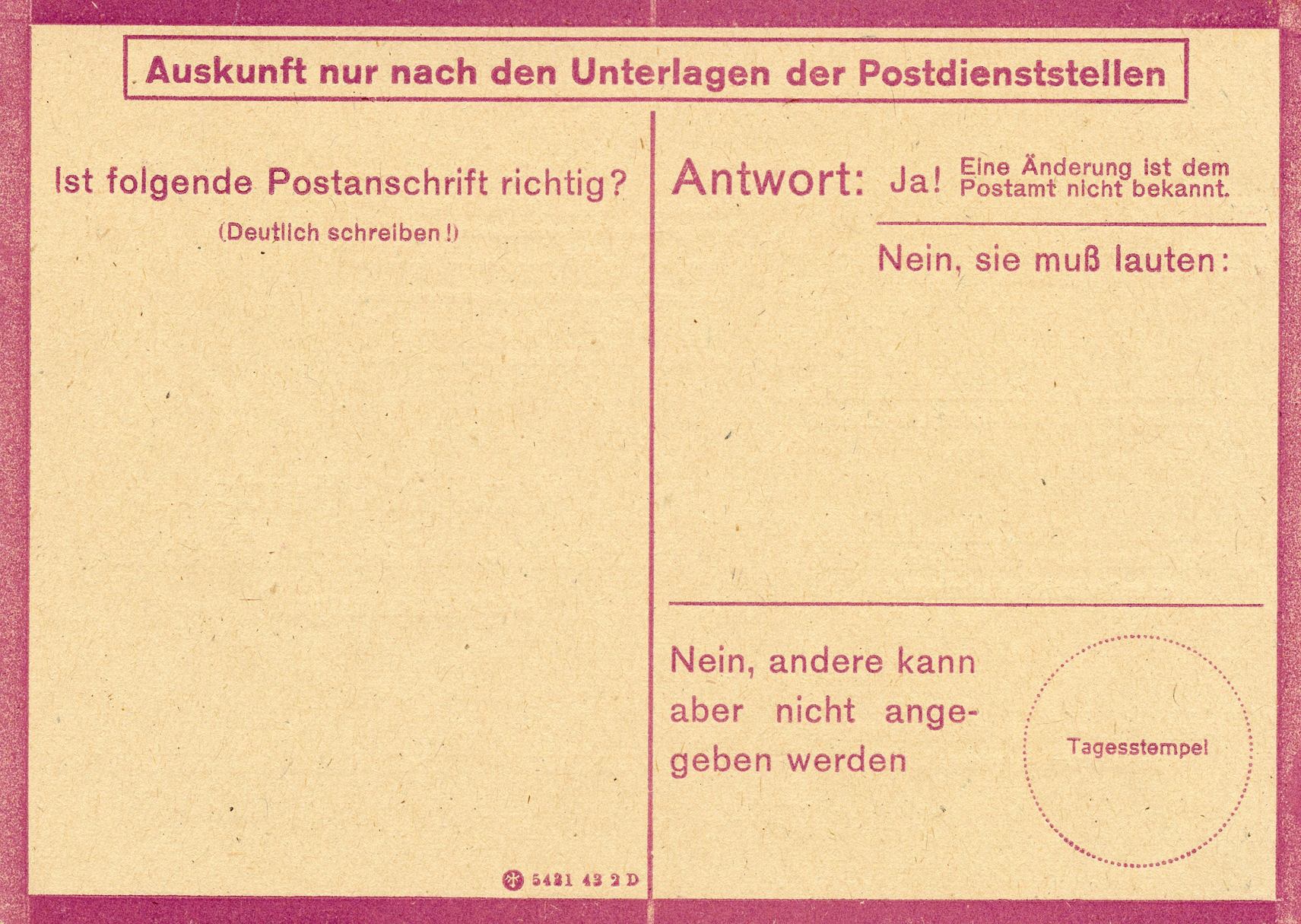
[Below: Reverse. This says:
Auskunft nur nach Unterlagen der Postdienststellen
Ist folgende Postanschrift richtig?
(Deutlich Schreiben)
Antwort: Ja! Eine Änderung ist dem
Postamt nicht bekannt.
Nein, sie muß lauten:
Nein, andere kann
aber nicht angegeben werden
(Information only available from postal records
Is the following mailing address correct?
(Write clearly)
Answer: Yes! The post office is not aware of any changes.
No, it must read:
No, but other information cannot be provided).]
[Below: Purple version. This has the same text as that above.]
[Below: Reverse.]
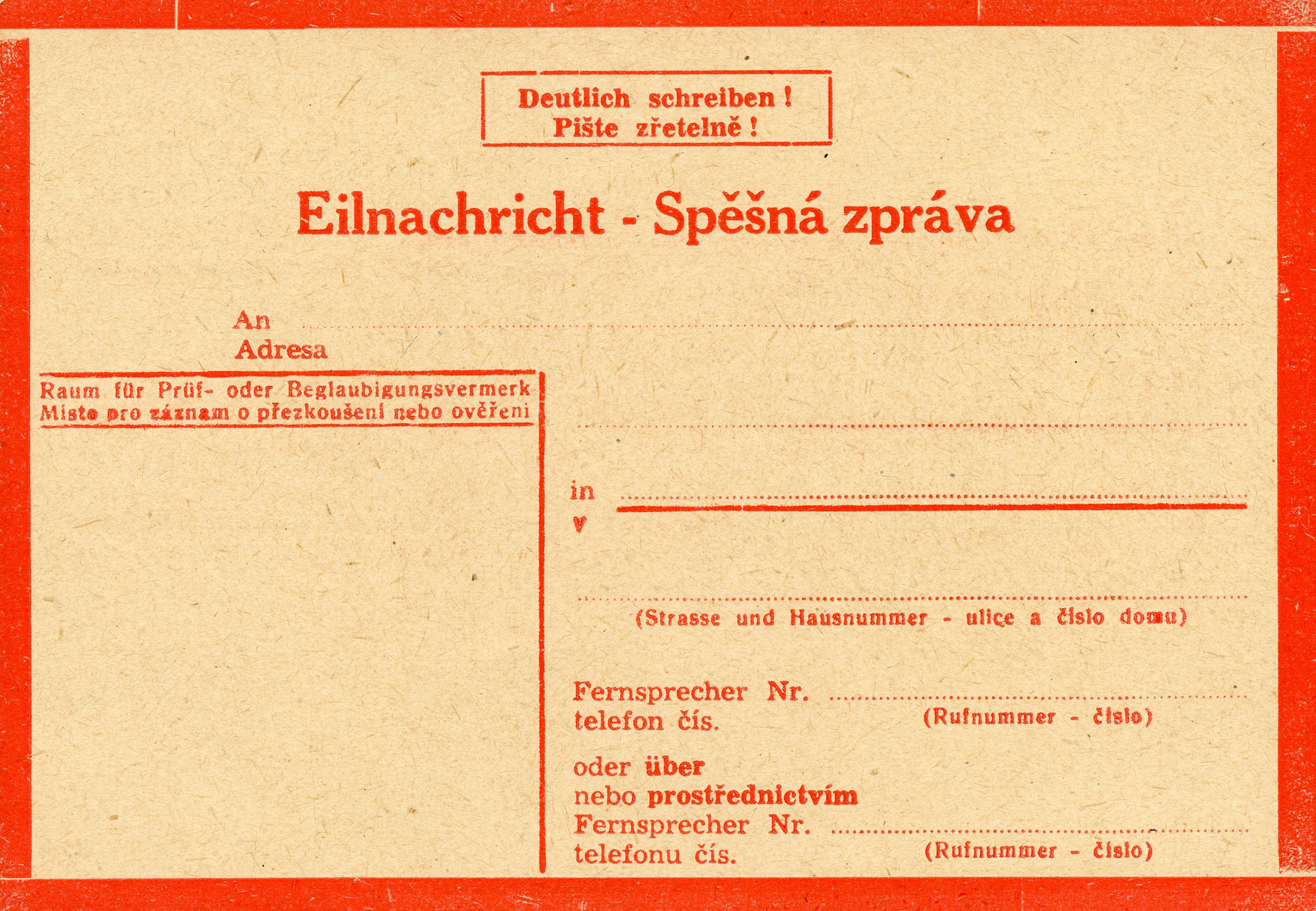
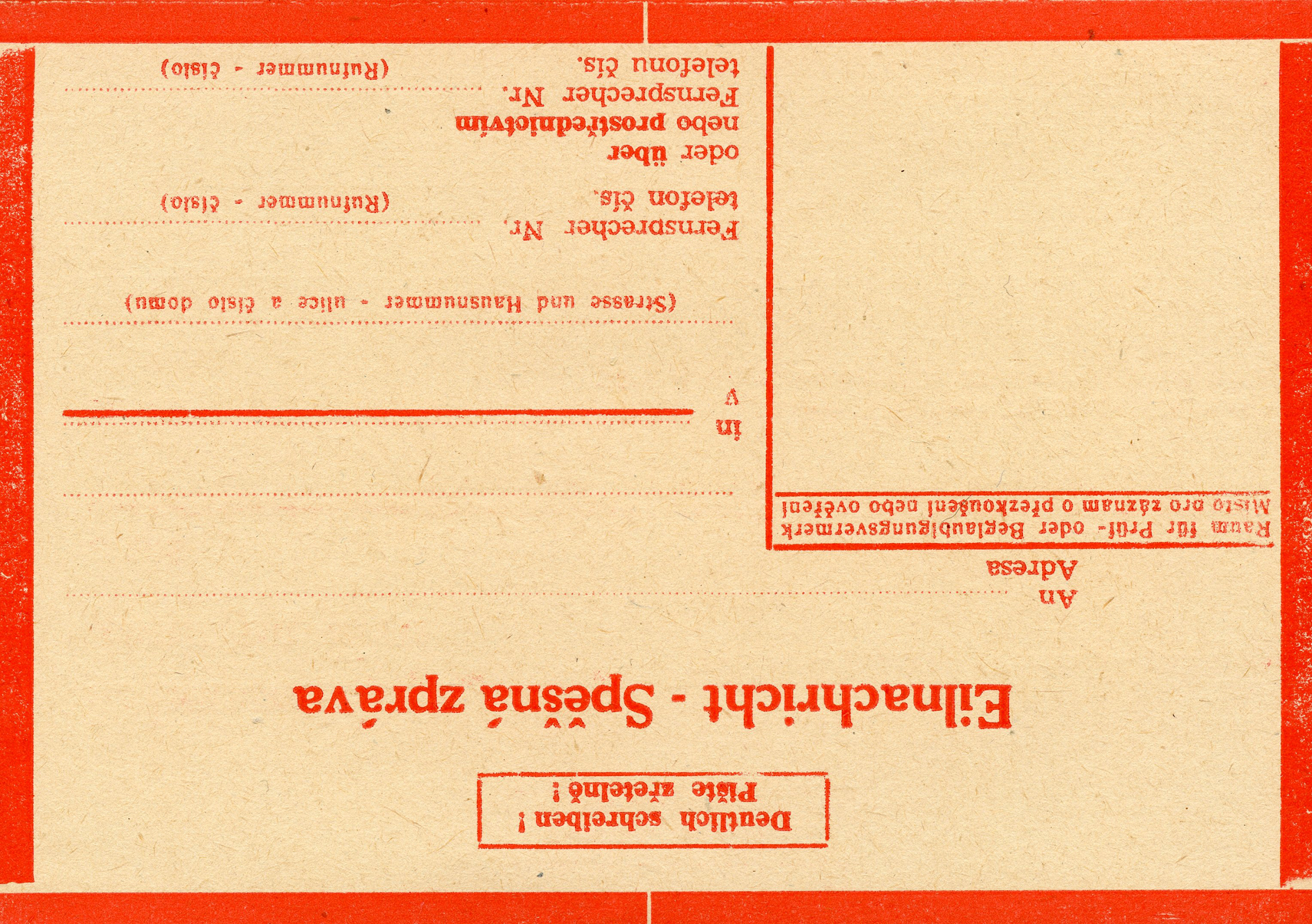
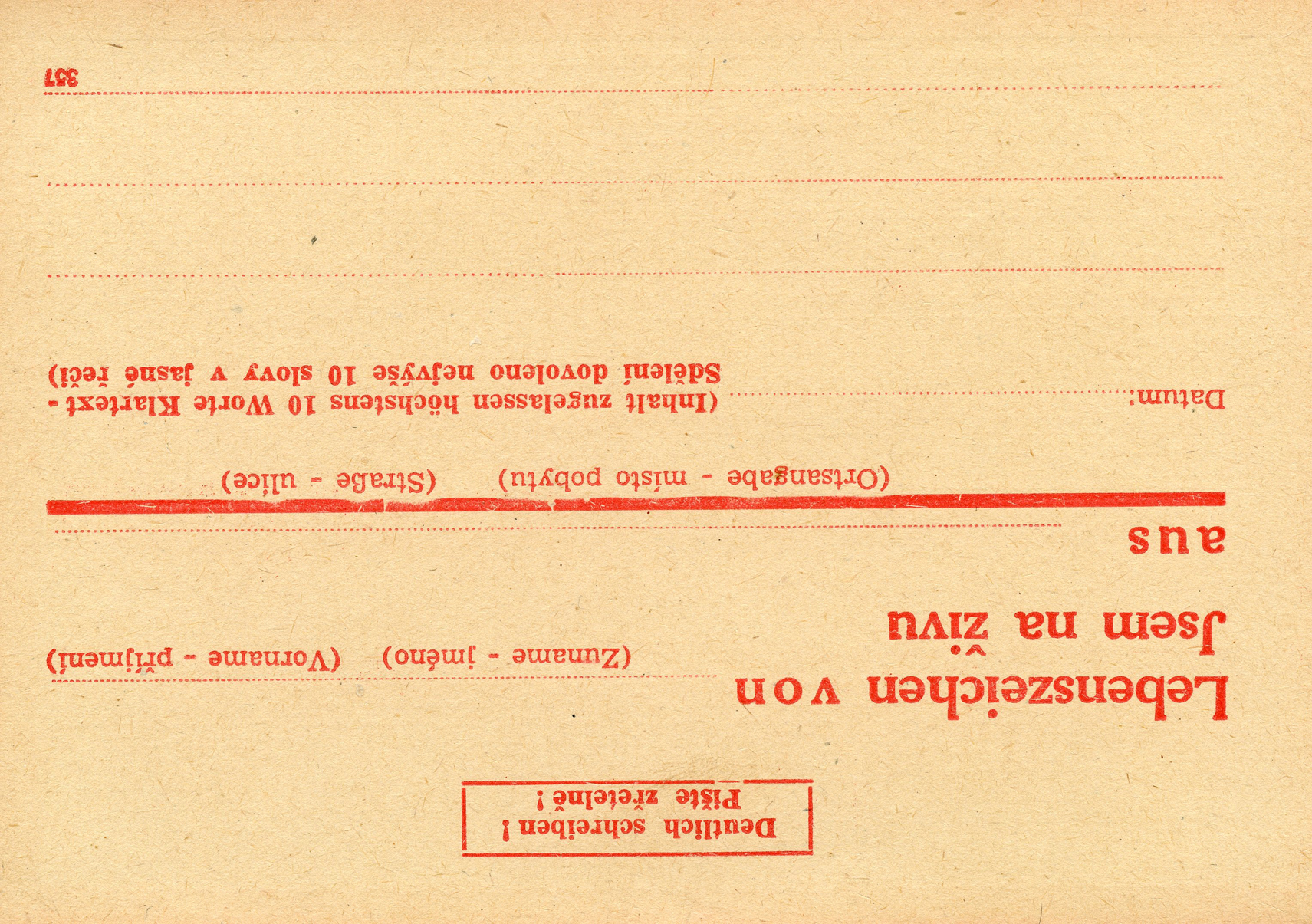
[Below: Rarer than the German versions above, this one is in Czech (Bohemia und Moravia).]
[Below: Reverse.]
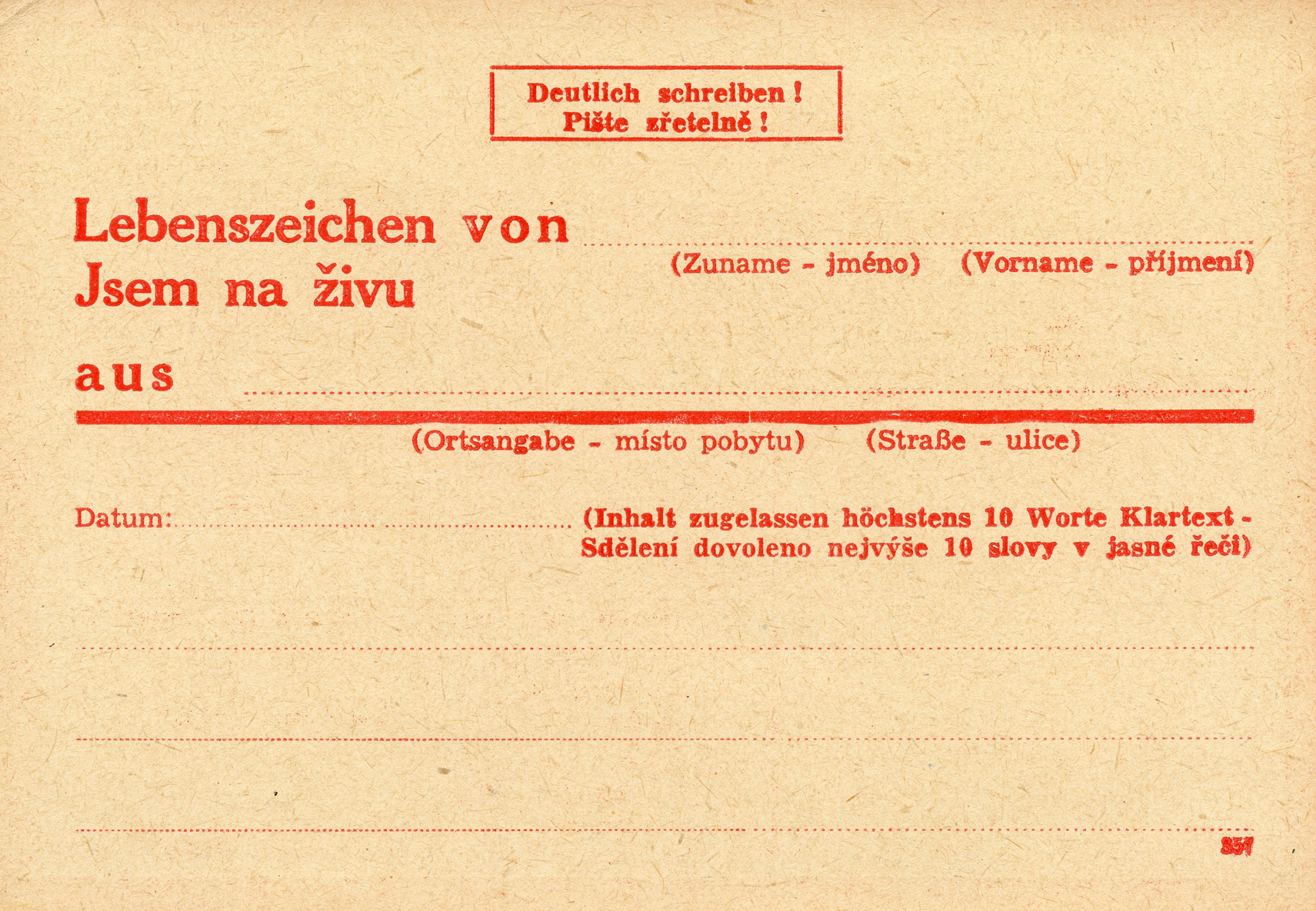
[Below: Another red Czech version, but with differences in the printing lines on the red border. The font also didn't bleed as bad as the one above.]
[Below: Reverse.]
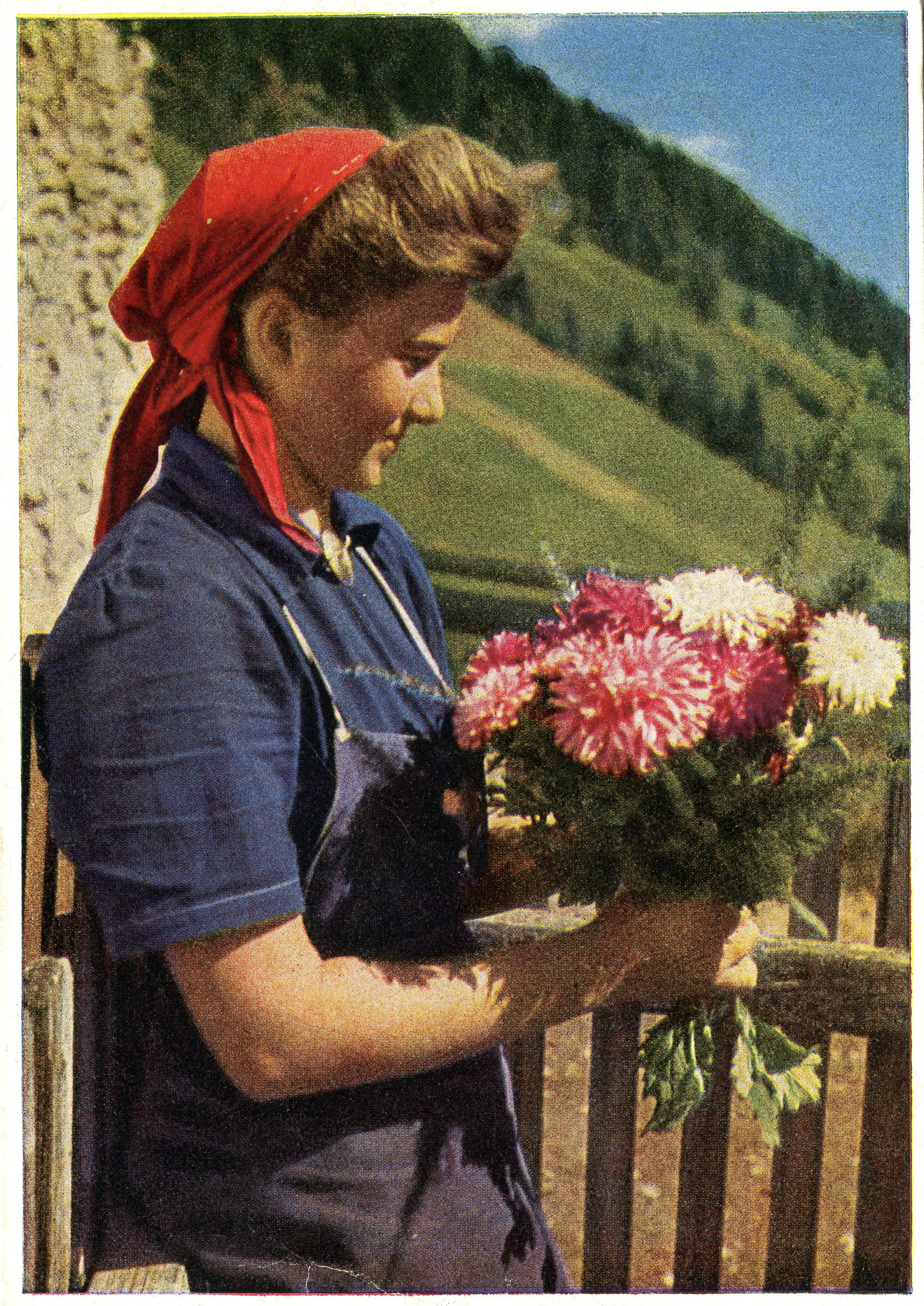
[Below: This is by a famous photographer named Hans Retzlaff that took up photography after losing his job during the Great Depression.]
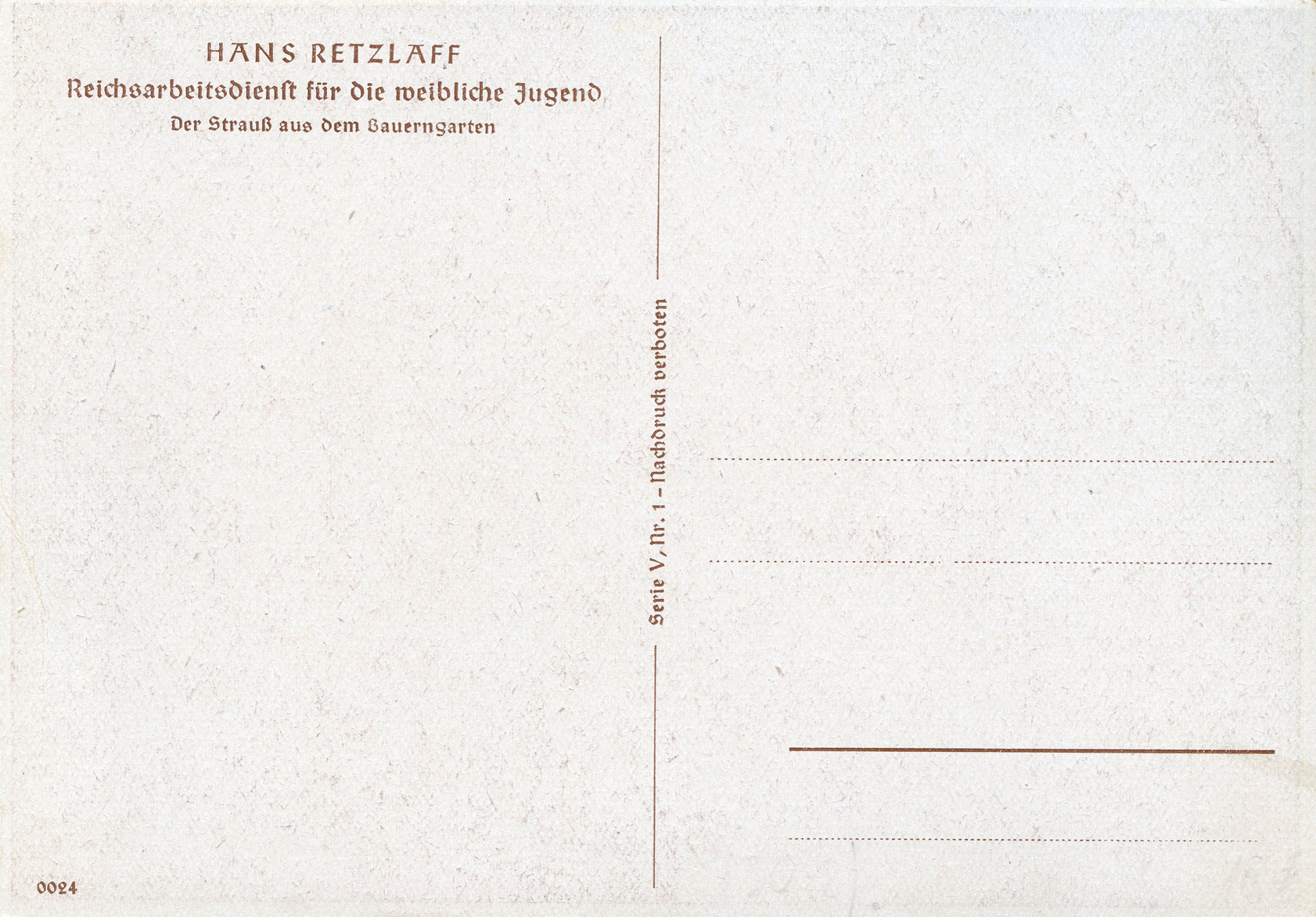
[Below: Reverse. This says:
'Hans Retzlaff
Reichsarbeitsdienst für die
weibliche Jugend
Der Strauß aus dem Bauergarten'
(Hans Retzlaff
Reich Labor Service for Women
The Bouquet from the Farmer's Garden).]
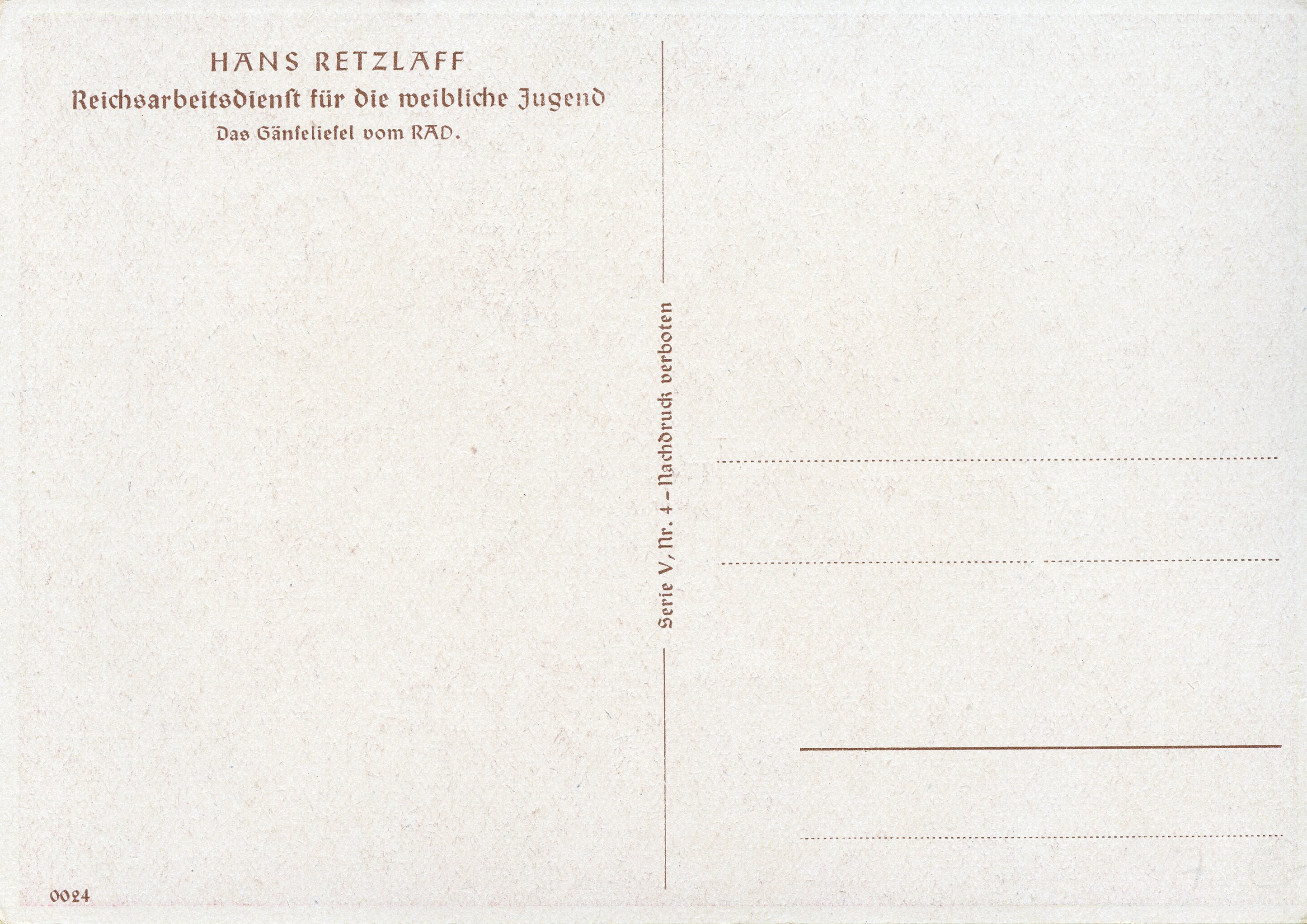
[Below: This is another postcard with photography by Hans Retzlaff.]
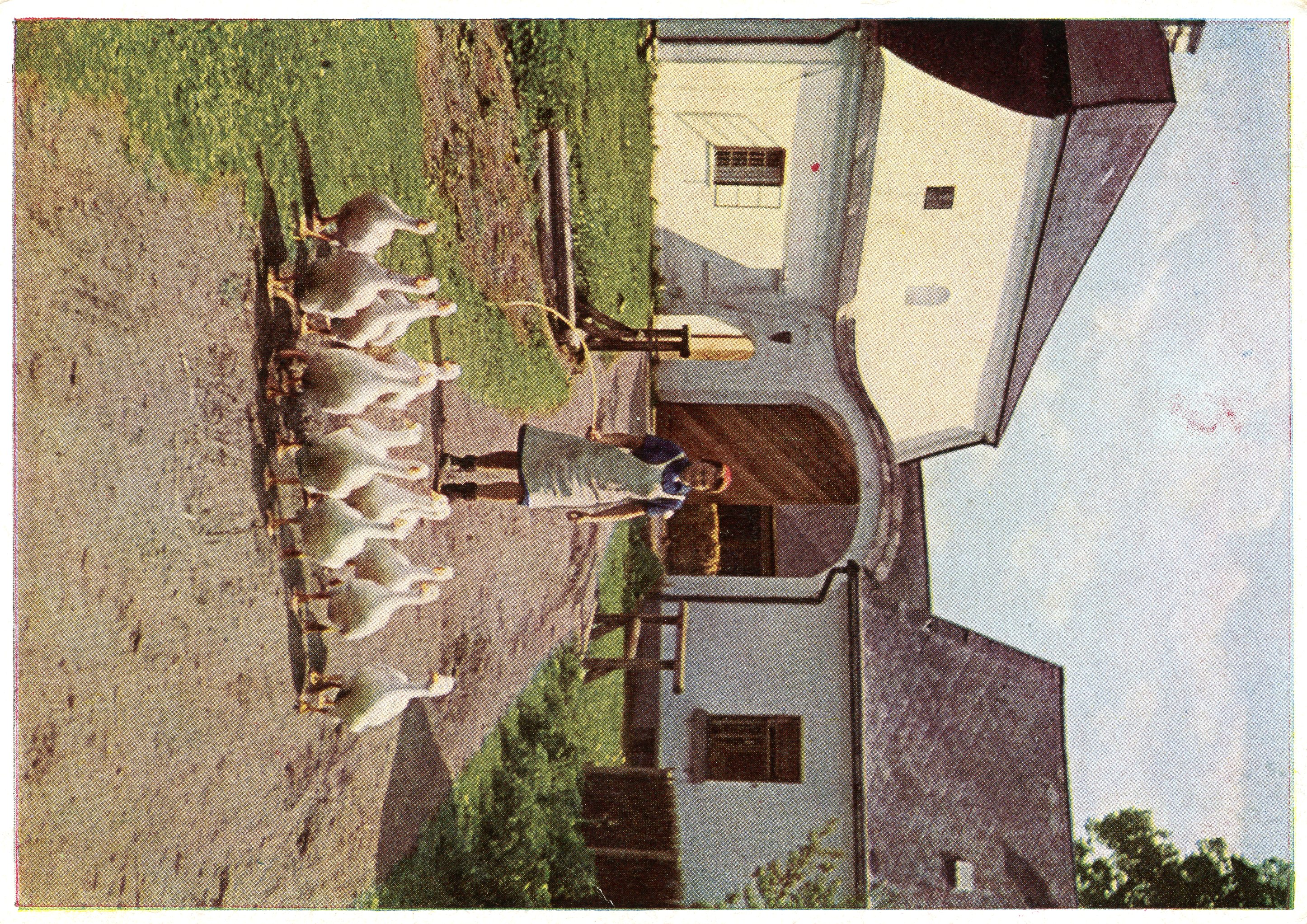
[Below: Reverse. This says:
'Hans Retzlaff
Reichsarbeitsdienst für die
weibliche Jugend
Das Gänseliesel vom RAD'
(Hans Retzlaff
Reich Labor Service for Female Youth
The Goose Girl from the RAD).]
[Below: This is a neat painting called 'Musizierende Arbeitsmaiden' (Musical Work Maidens), by Max Josef Wechsler from Munich. He died at the end of the war in 1945.]
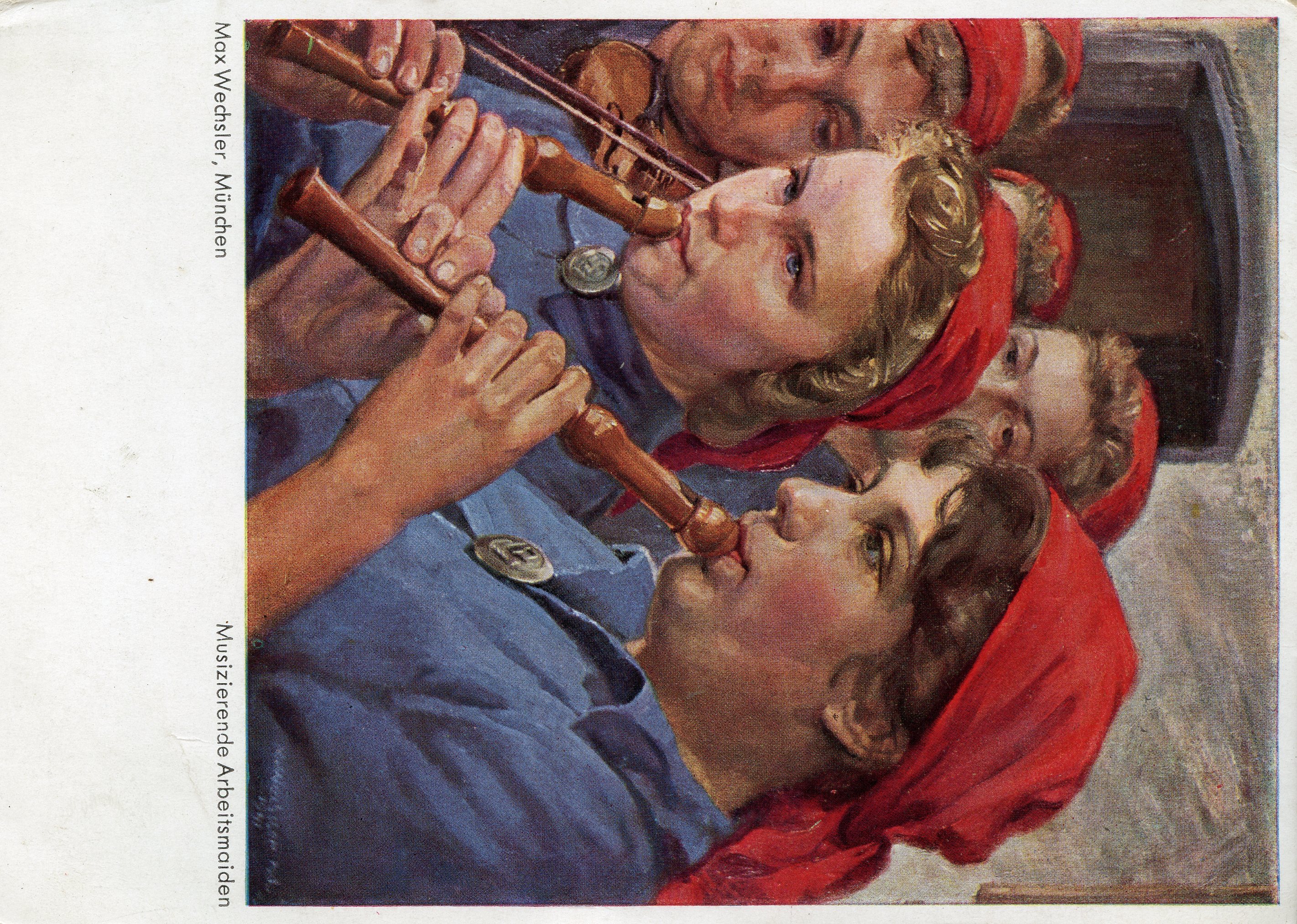
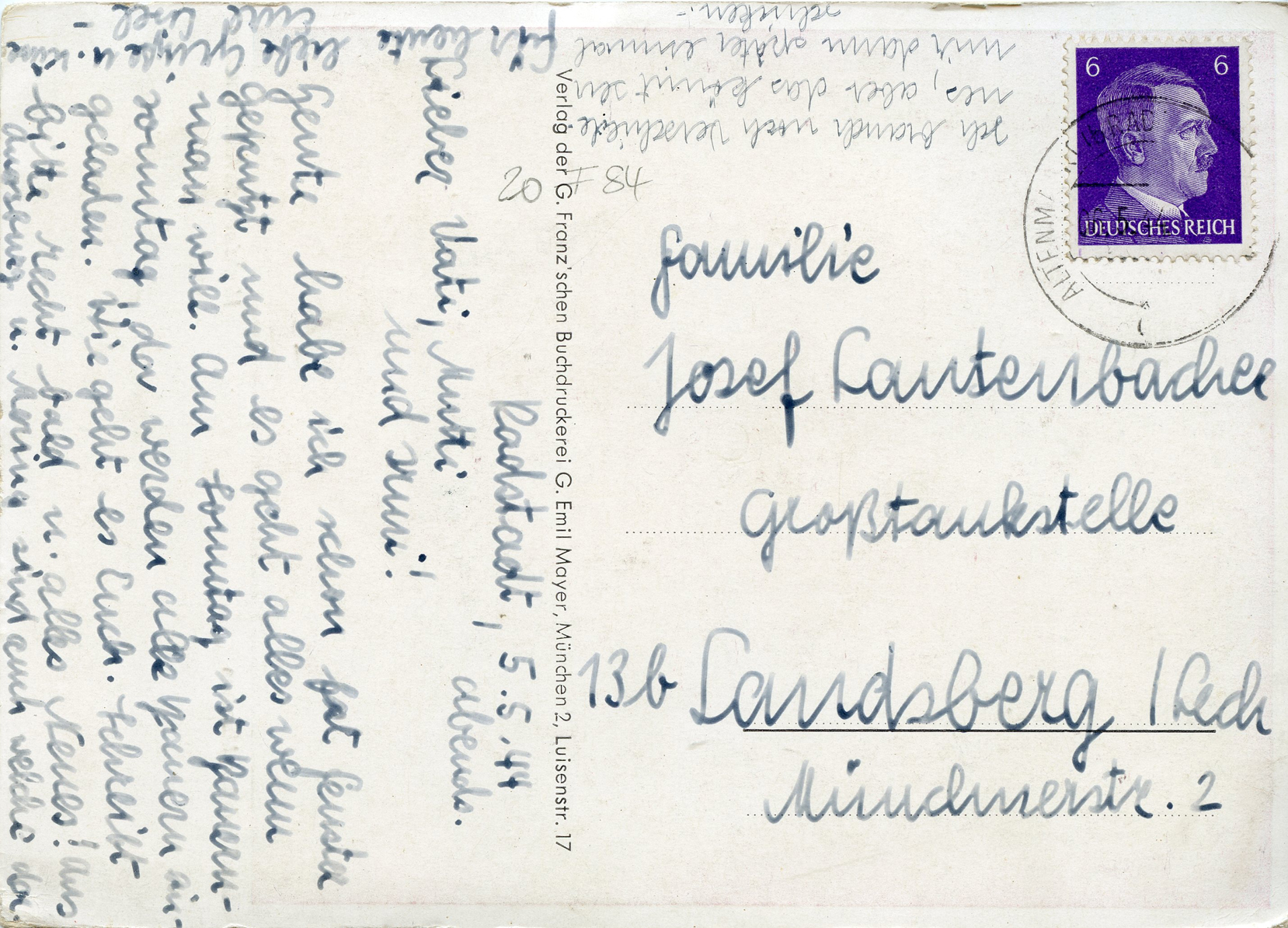
[Below: Reverse. This was canceled in Radstadt-Altenmarkt (Austria), a ski resort in a small town in Salzburg, on May 6, 1944.]
[Below: This is a commemorative envelope, which says:
'Einigung der deutschen Staaten in ein Kaiserreich durch Kaiser Wilhelm I und Kanzlei Otto von Bismark'
(Unification of the German States into an empire by Kaiser Wilhelm I and the chancellery of Otto von Bismarck).
This was sent to New York from Hamburg on January 18, 1936 (this was sent on the 65th anniversary).]
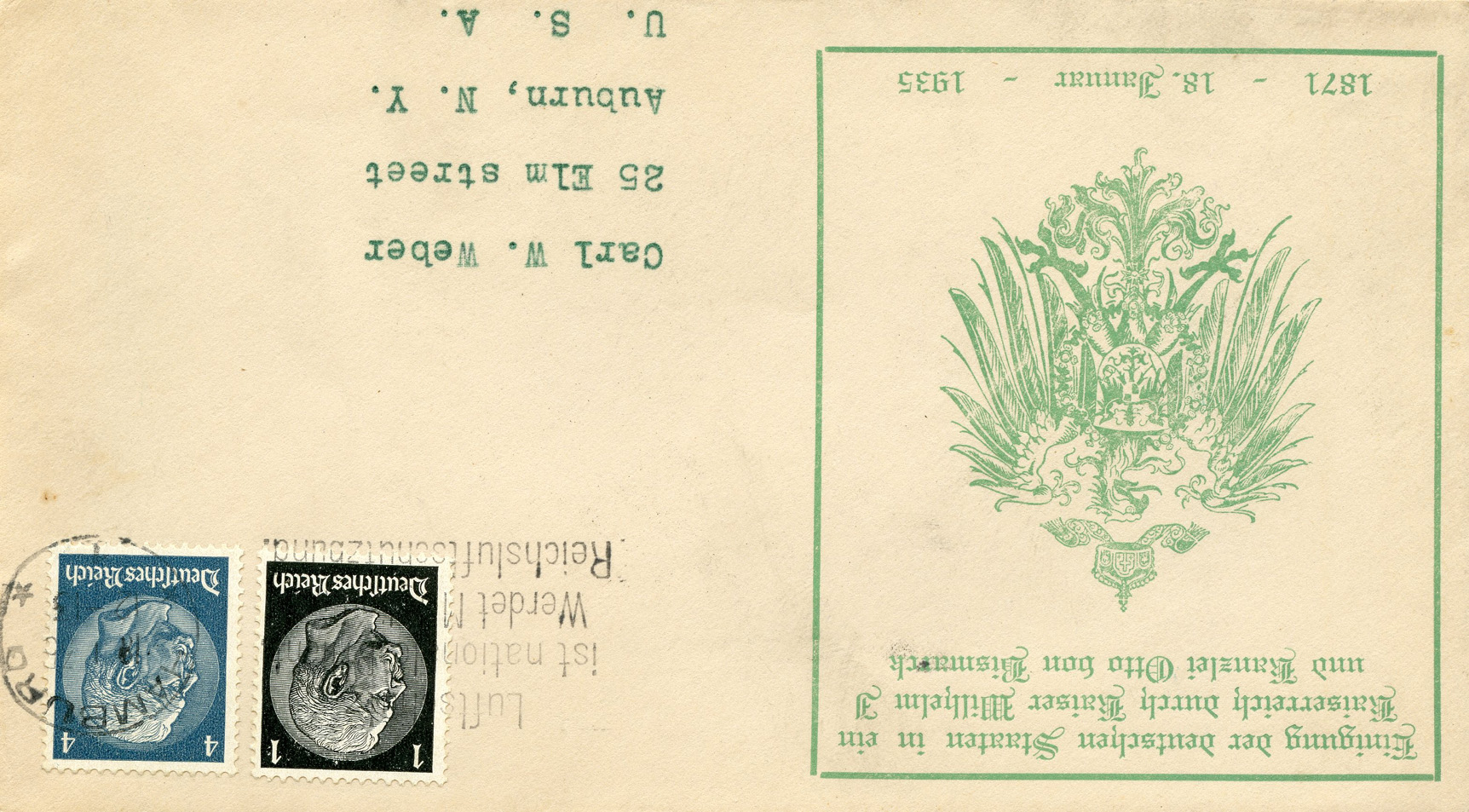
[Below: Reverse. An American return address. So we can presume Mr. Homer Hubbard traveled to Hamburg and sent this to a friend or associate in New York, probably a fellow collector.]
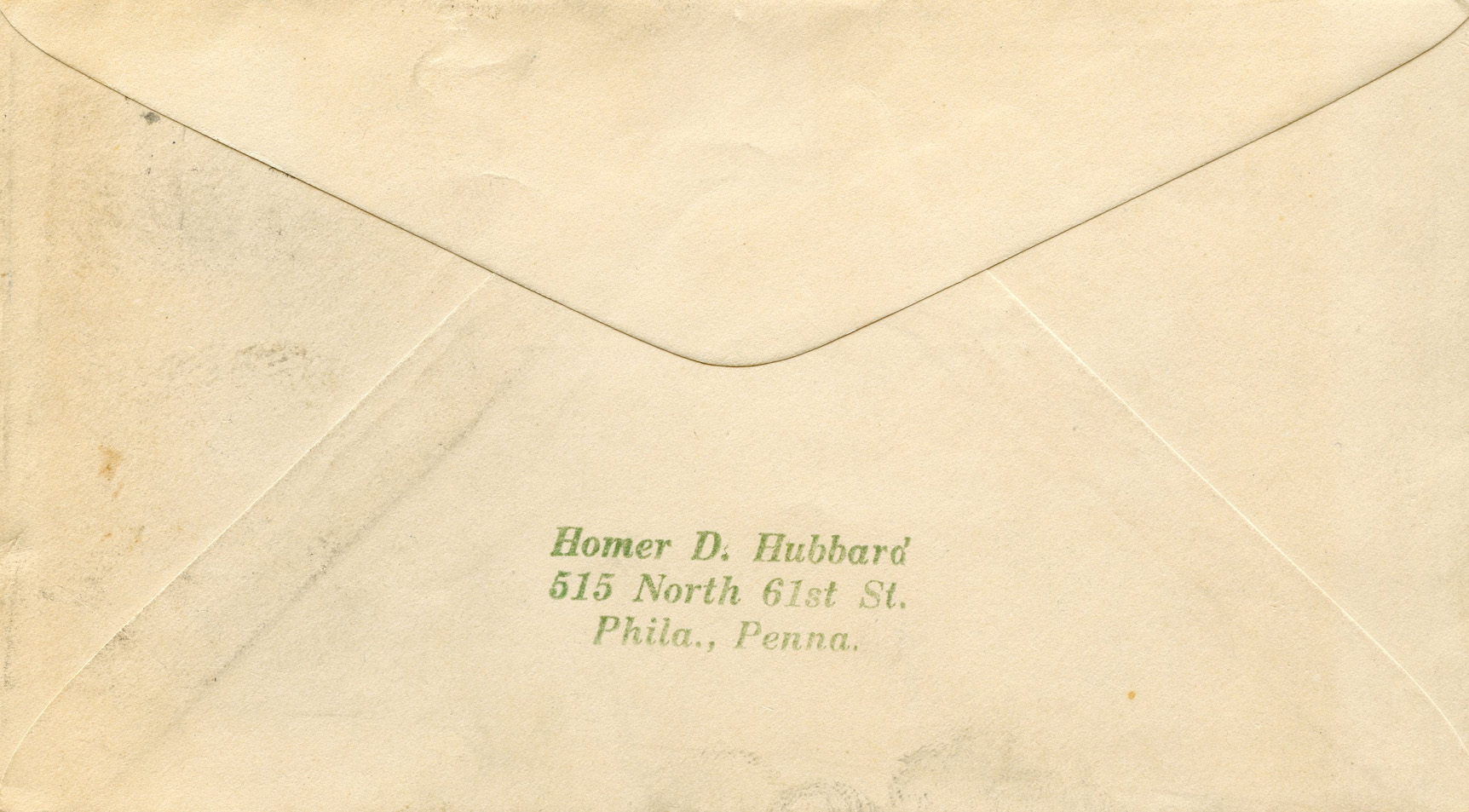
[Below: This pair of stamps are known as a se-tenants, which means when stamps of two different designs are connected. This normally didn't happen, usually it was only found from books of stamps, so it is uncommon, but not rare, used on envelopes. This also shows a nice pair of WHW (Winterhilfswerk) cancels from December 19, 1937. The reverse is blank.]
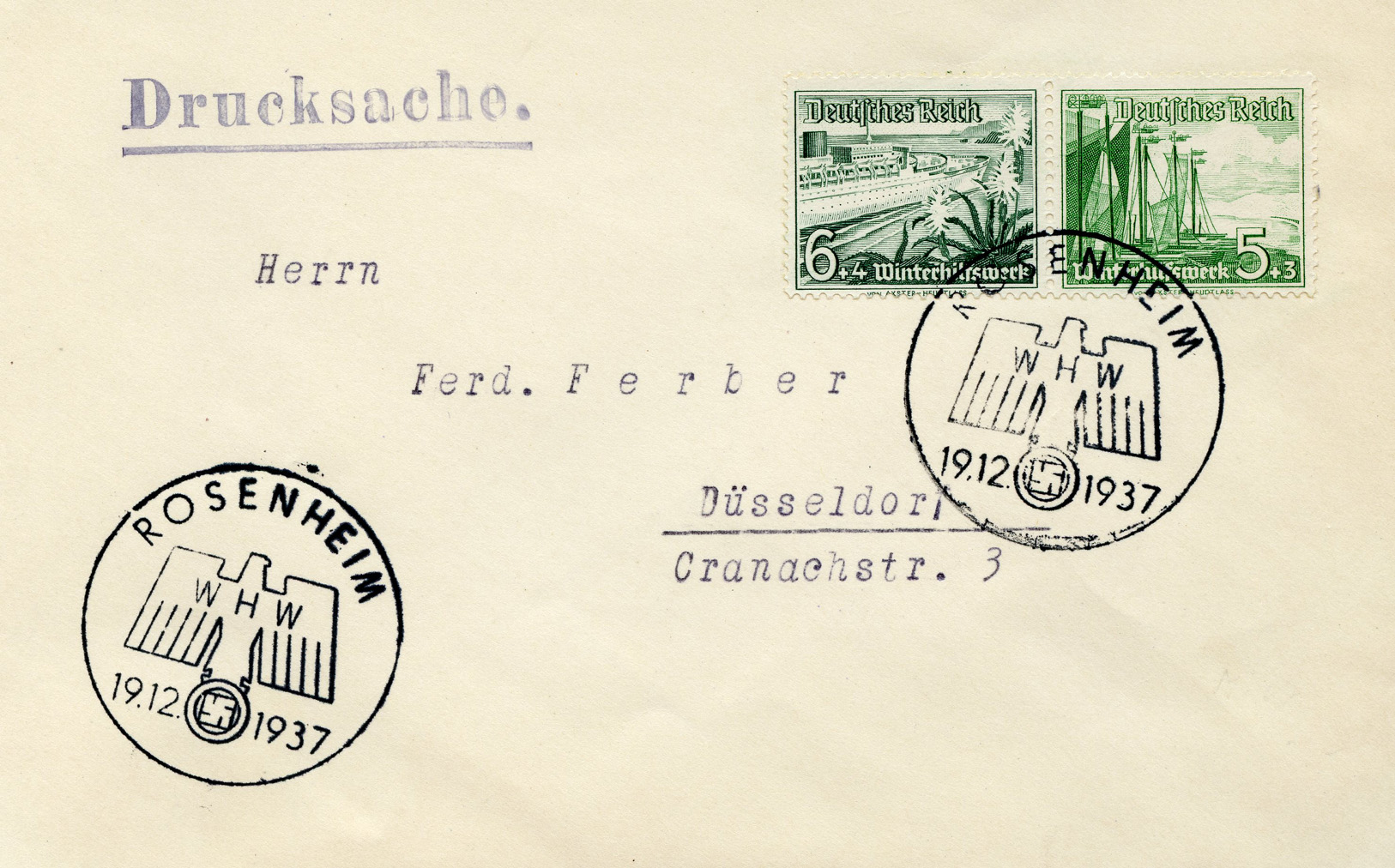
[Below: Close-up.]
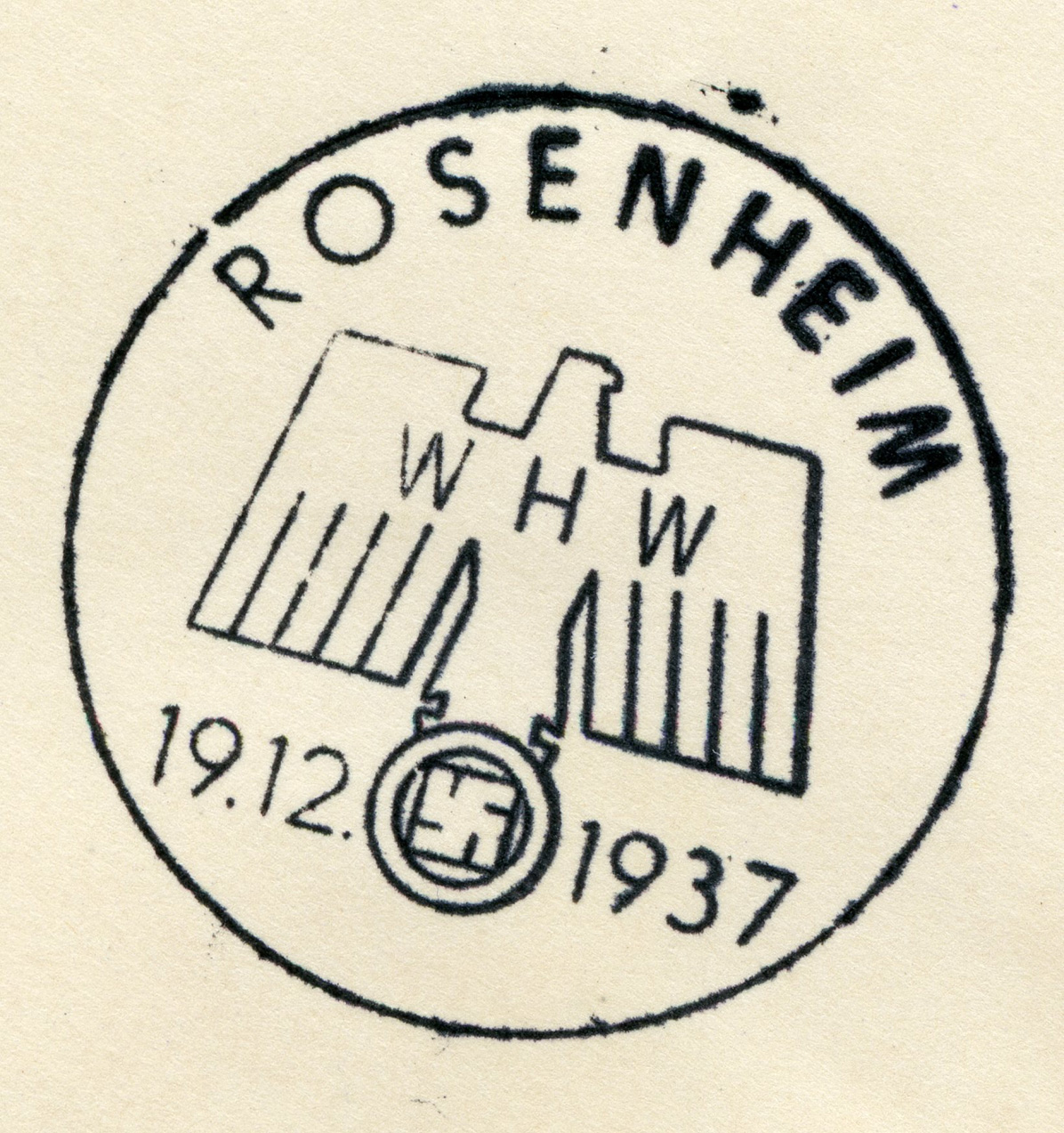
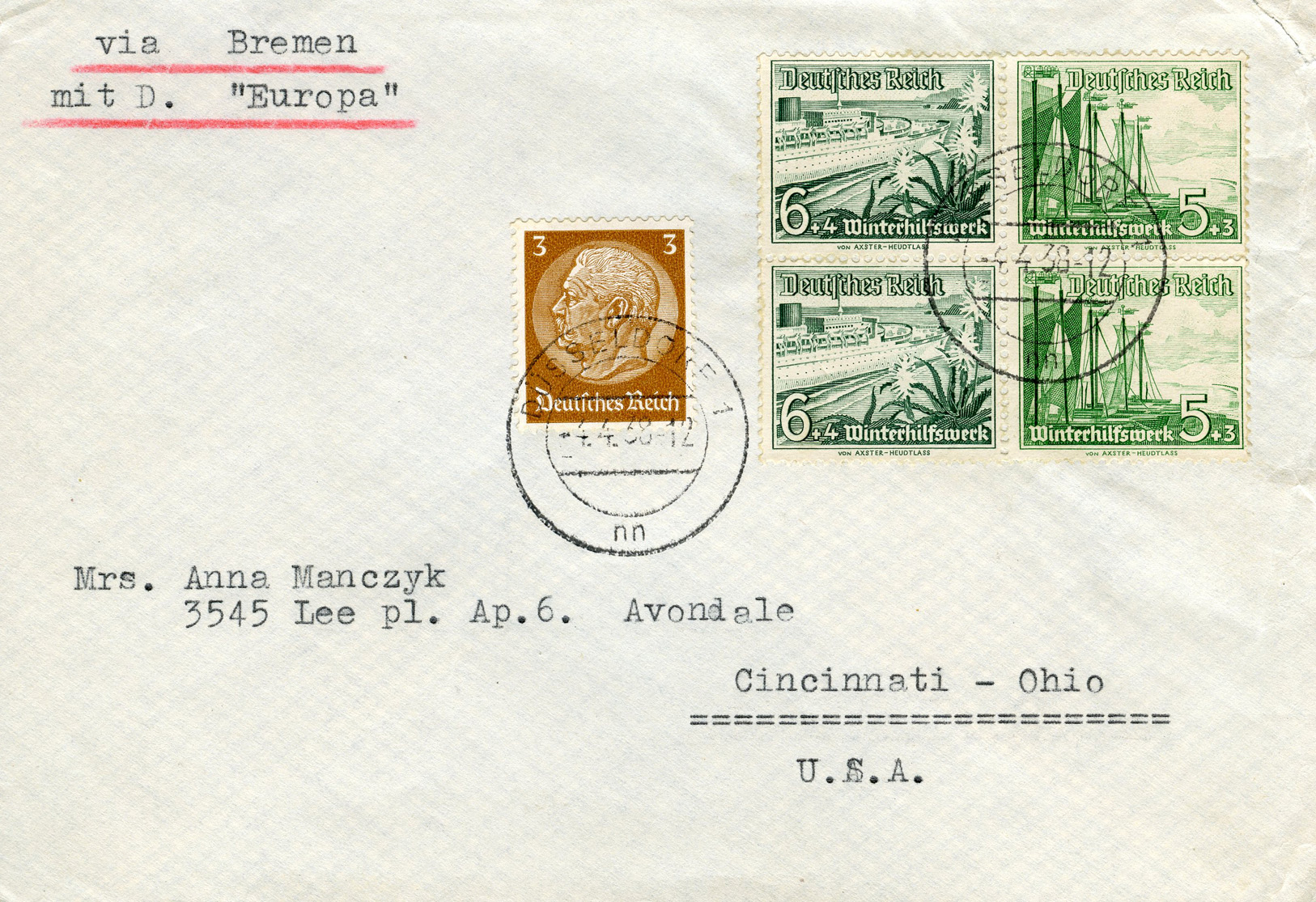
[Below: This has a block of se-tenant stamps, like the pair used above, canceled on April 4, 1938. This was sent to the USA, via a port in Bremen, on the German ocean liner the SS Europa, a beloved passenger ship known for its sleek design and speed. The reverse is blank.]
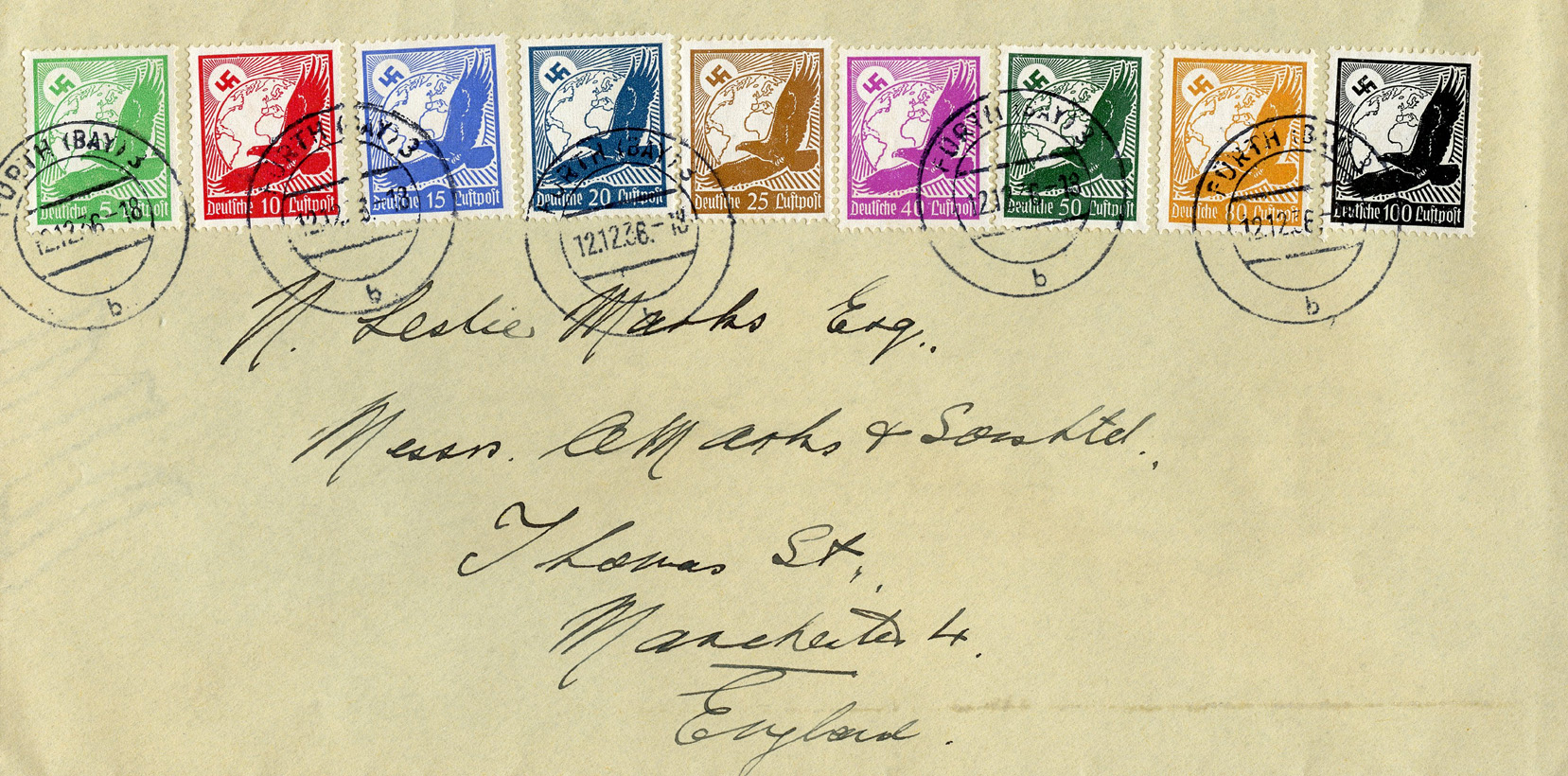
[Below: This has every single German airmail postage stamp, obviously done by a collector, sent on December 12, 1936 from Fürth (Bavaria), to Manchester England.]
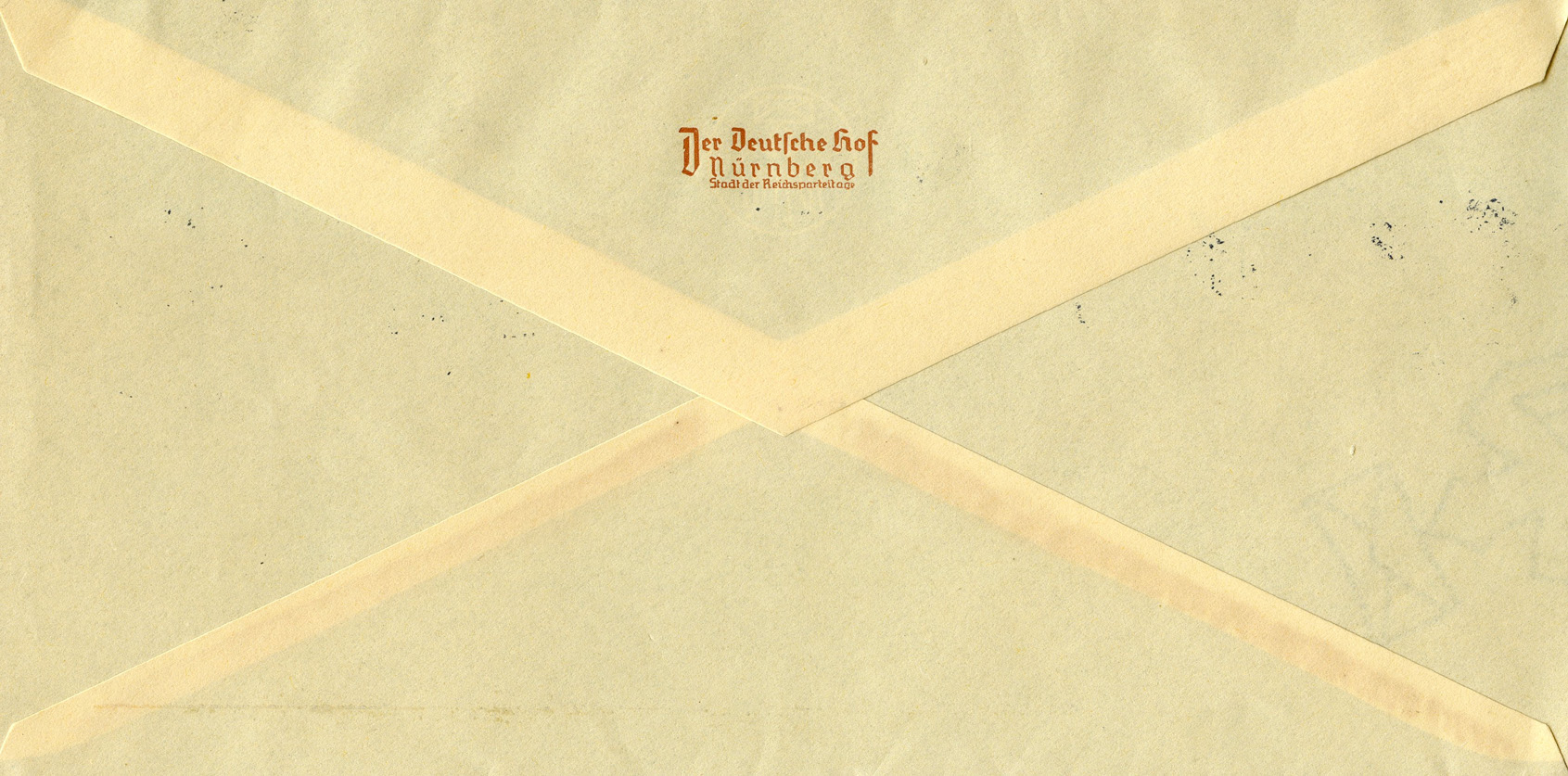
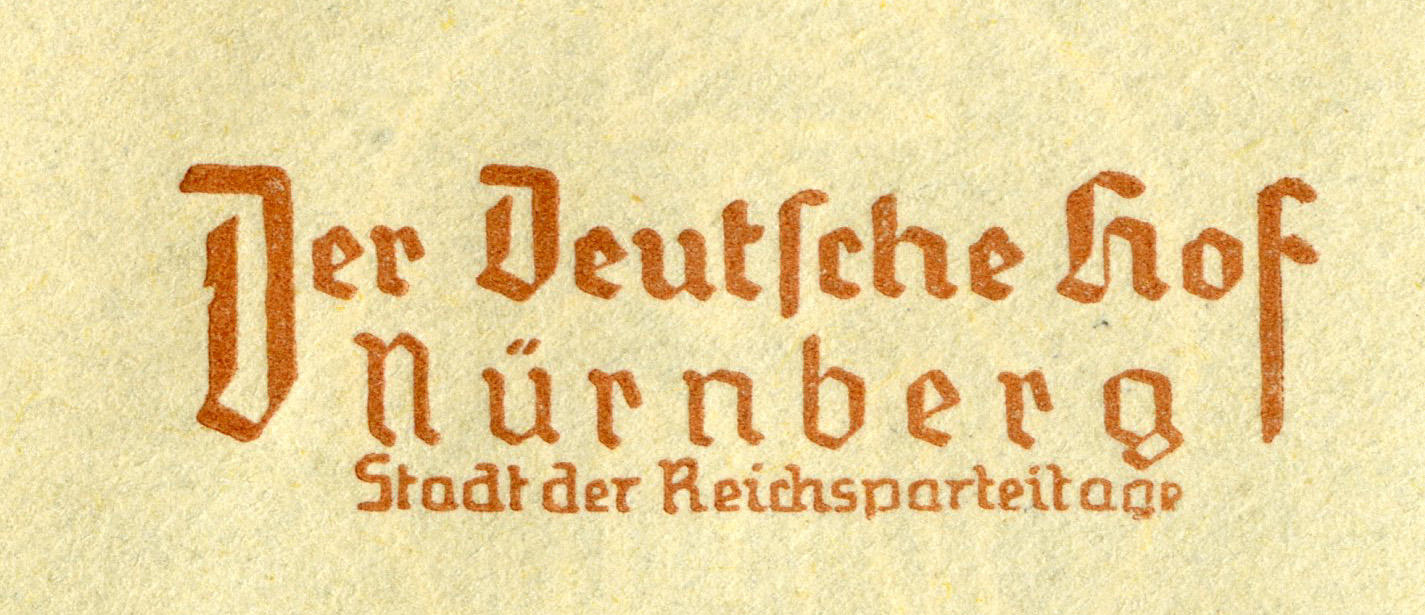
[Below: Reverse. This is from the 'Der Deutsche Hof' in Nuremberg and proclaims it is the state of the Reich Party Day. The Deutsche Hof was a special hotel where Adolf Hitler would stay during his time in the city, a practice that began in the earliest days of the Party. The period advertisements boasted the hotel was 'das Haus des Führers in Nürnberg' (The House of the Führer in Nuremberg). There are also a number of photographs showing Adolf Hitler reviewing his troops from the front of the hotel. Lastly, even the hotel's own silver service pieces were marked with a swastika and wreath.]
[Below: Close-up.]
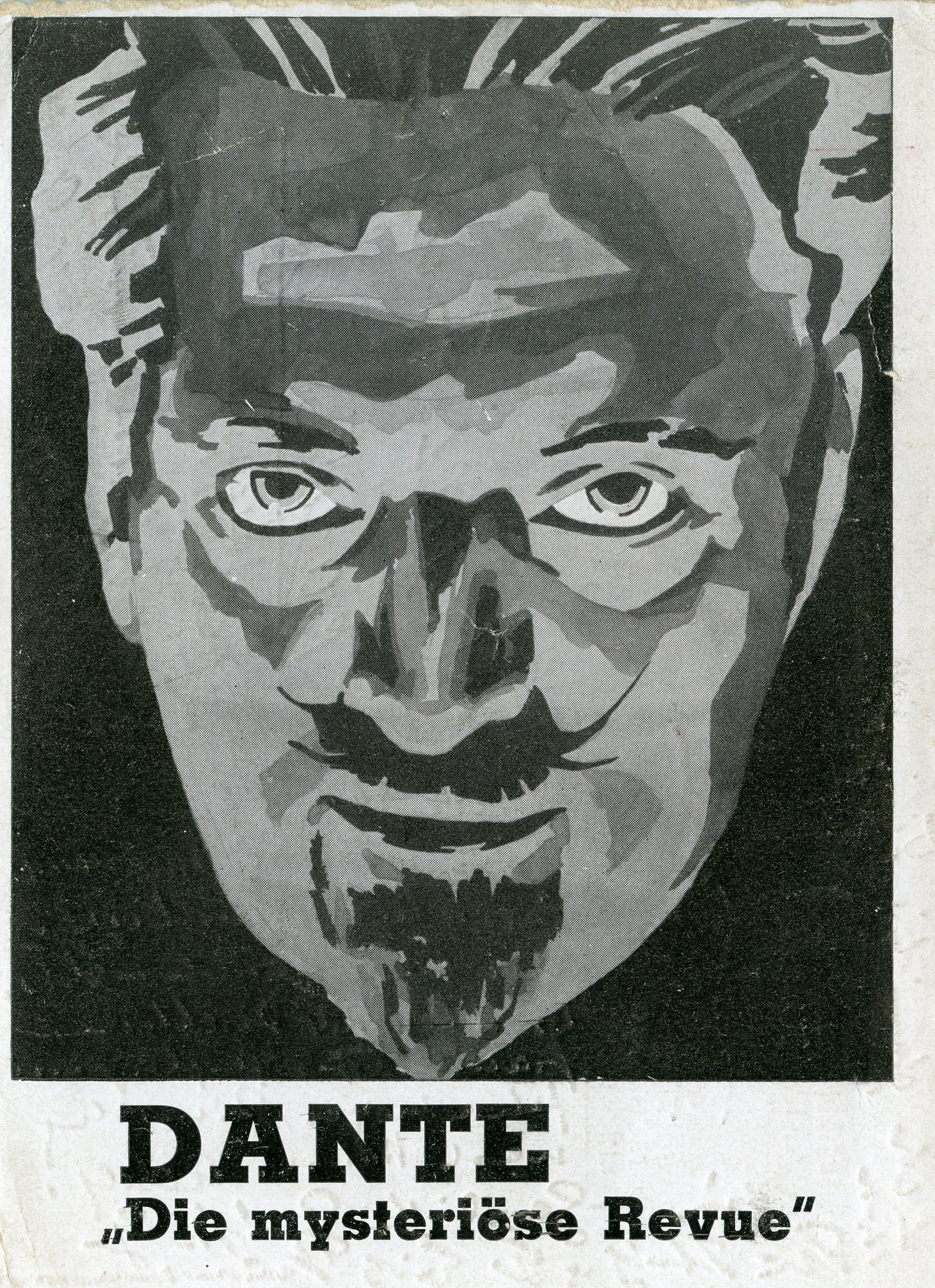
[Below: This striking postcard says 'Dante Die mysteriöse Revue' (Dante The Mysterious Revue). Let's scroll down and learn more about this...]
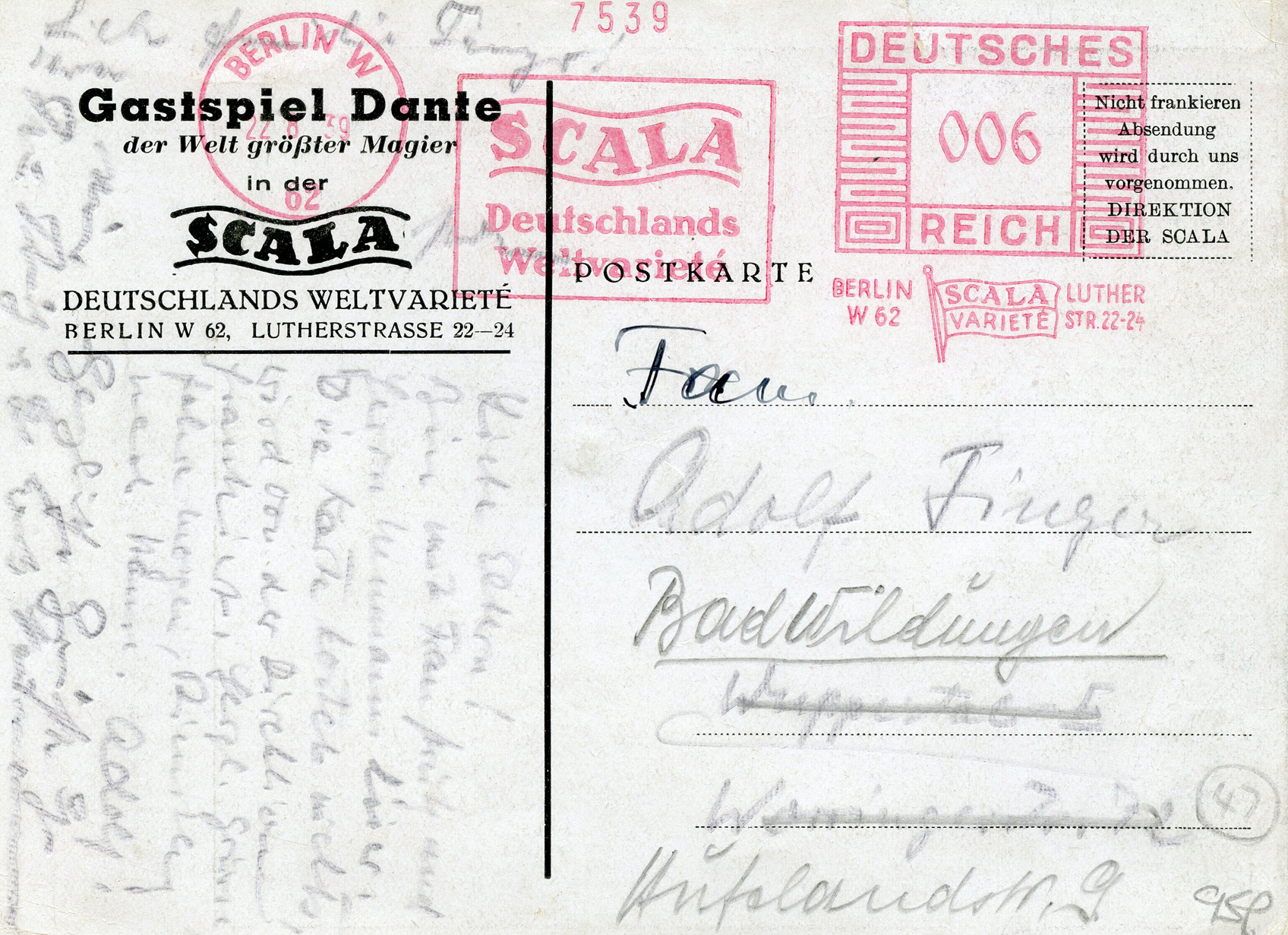
[Below: Okay, we see this was canceled using a machine cancel (meter mail) on May 7, 1939 in Berlin. It says:
'Gastspiel Dante der Welt größter Magier in der Scala - Deutschlands Weltvarieté'
(Guest performance of Dante, the World's Greatest Magician, at La Scala -
Germany's world-class variety theater).]
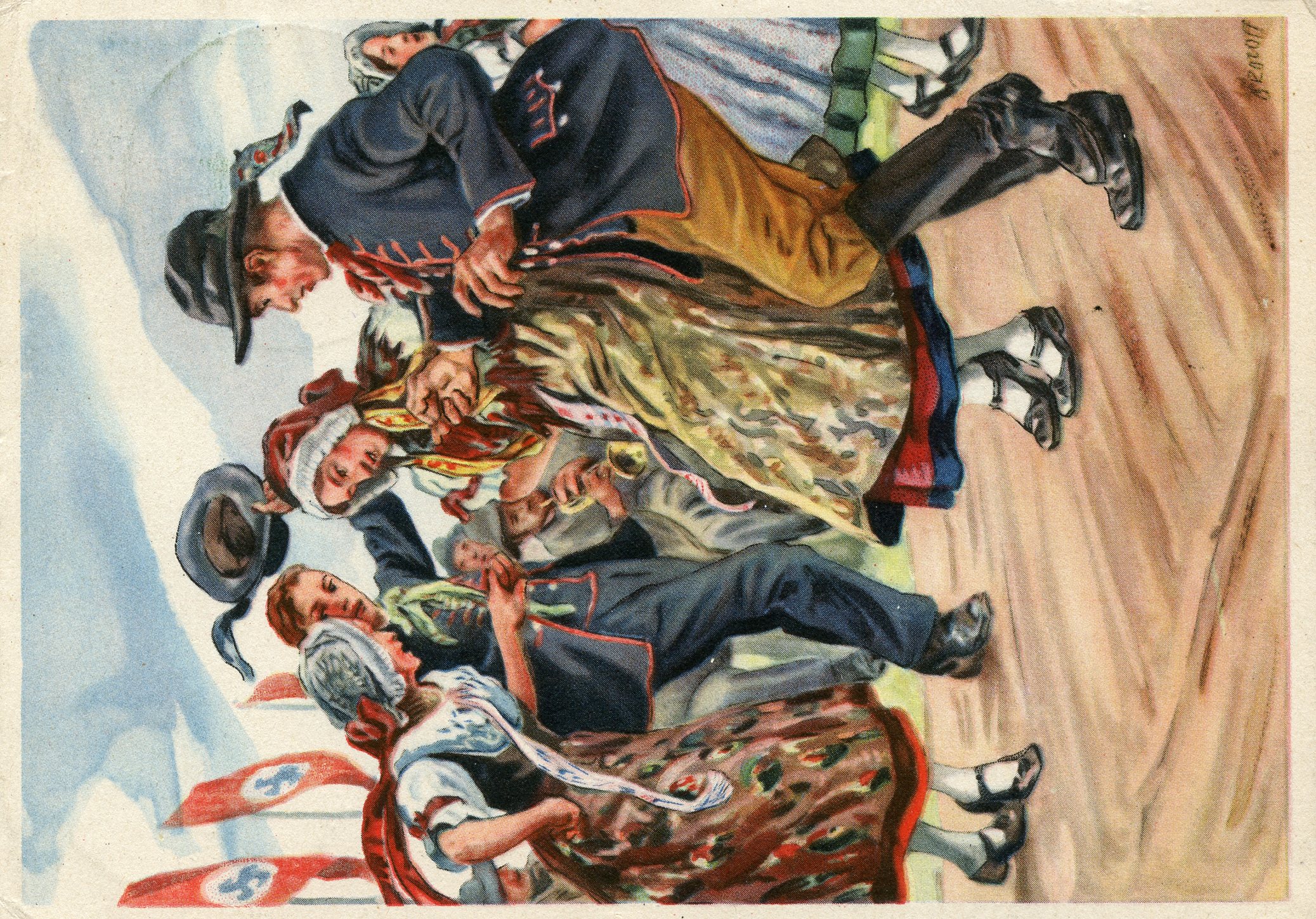
[Below: I'm not much of a dancer, but this is something I could get into. What you don't see in this painting are the buckets of beer.]
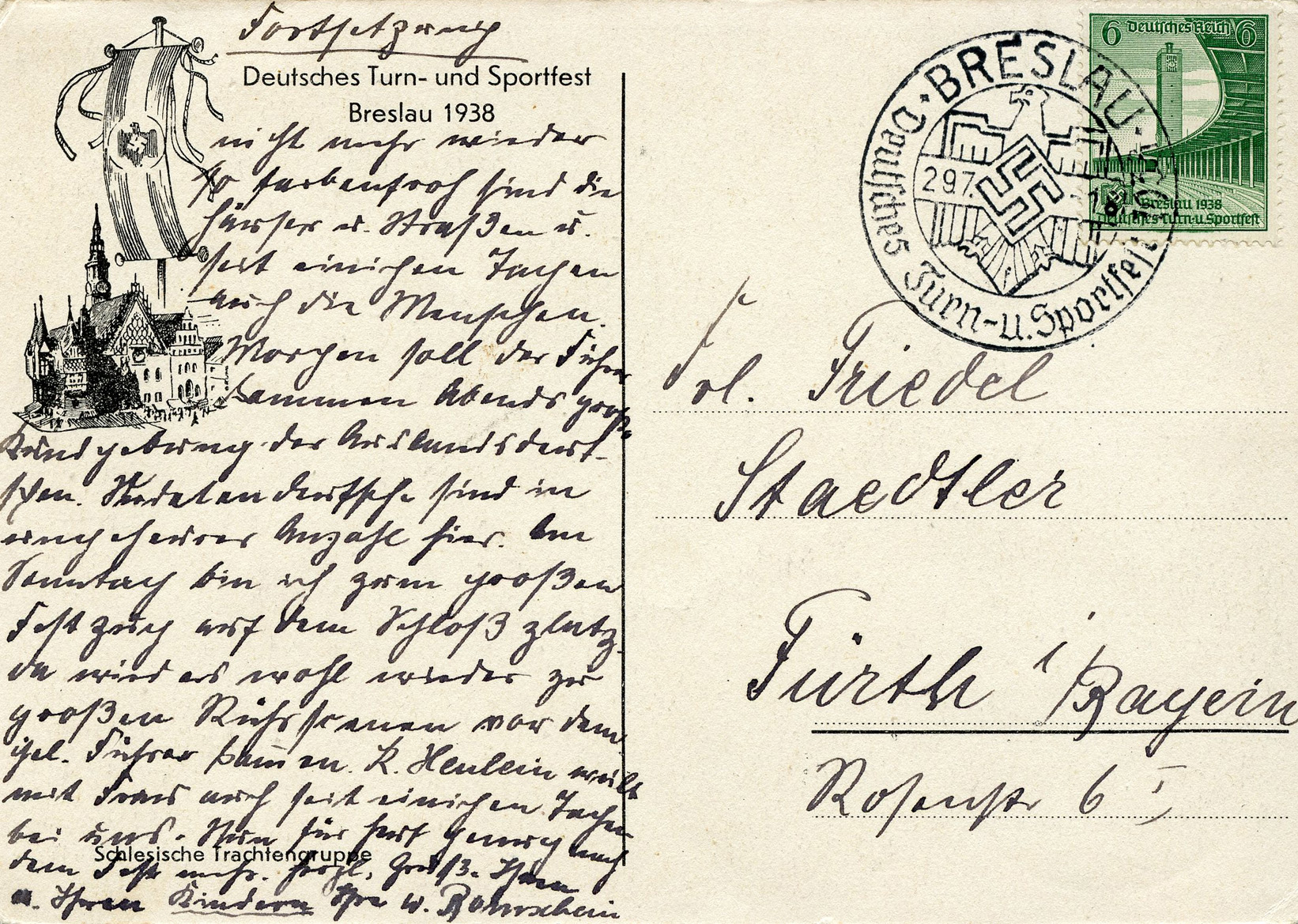
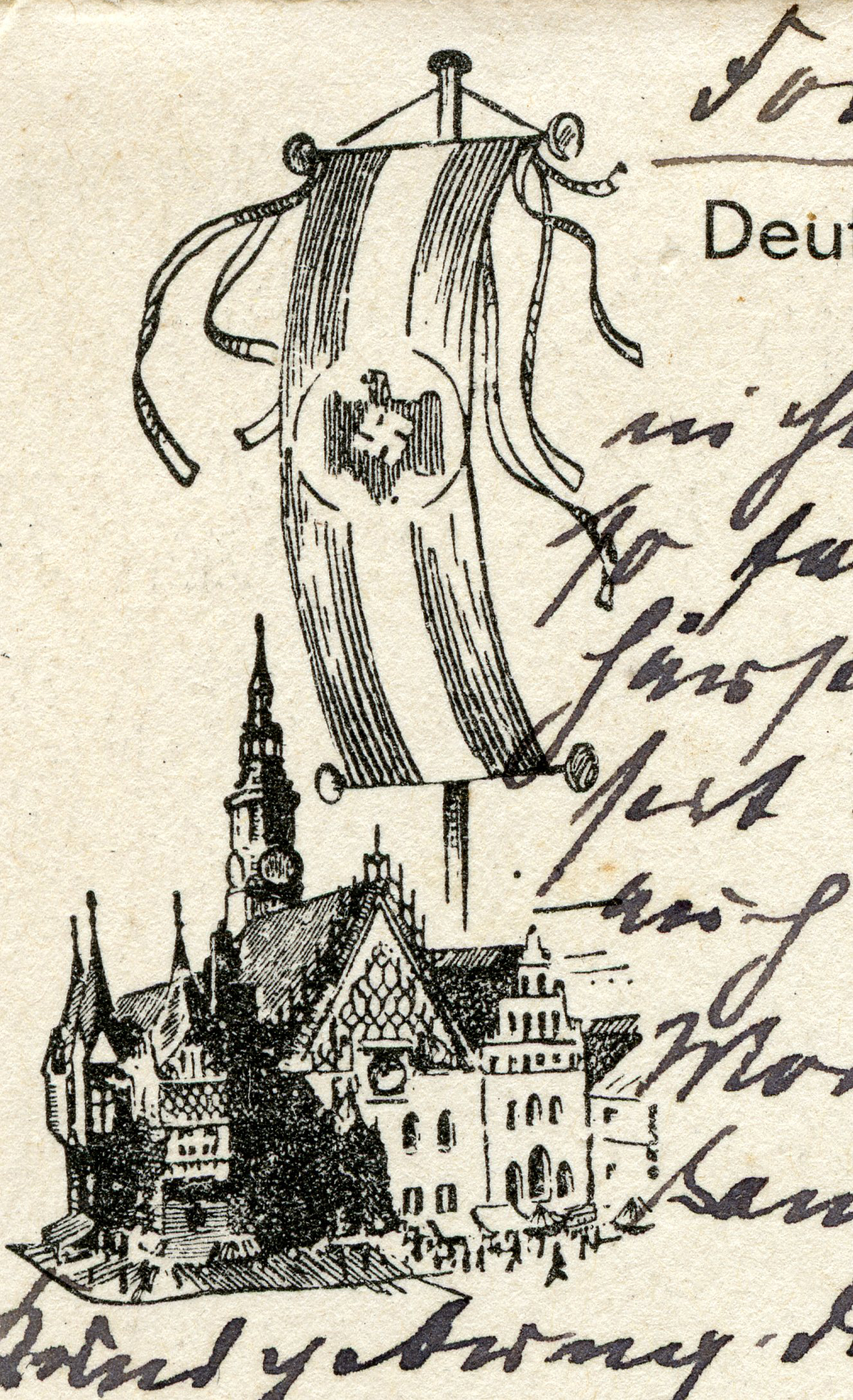
[Below: Here we see that this postcard was produced for the 'Deutsches Turn-und Sportfest' (German Gymnastics and Sports Festival). I'm guessing the dancing on the front of this postcard represented a celebration for the sporting event? The event cancel shows a date of July 29, (1938), and if you look carefully the postage stamp itself is for the event.]
[Below: Close-up.]
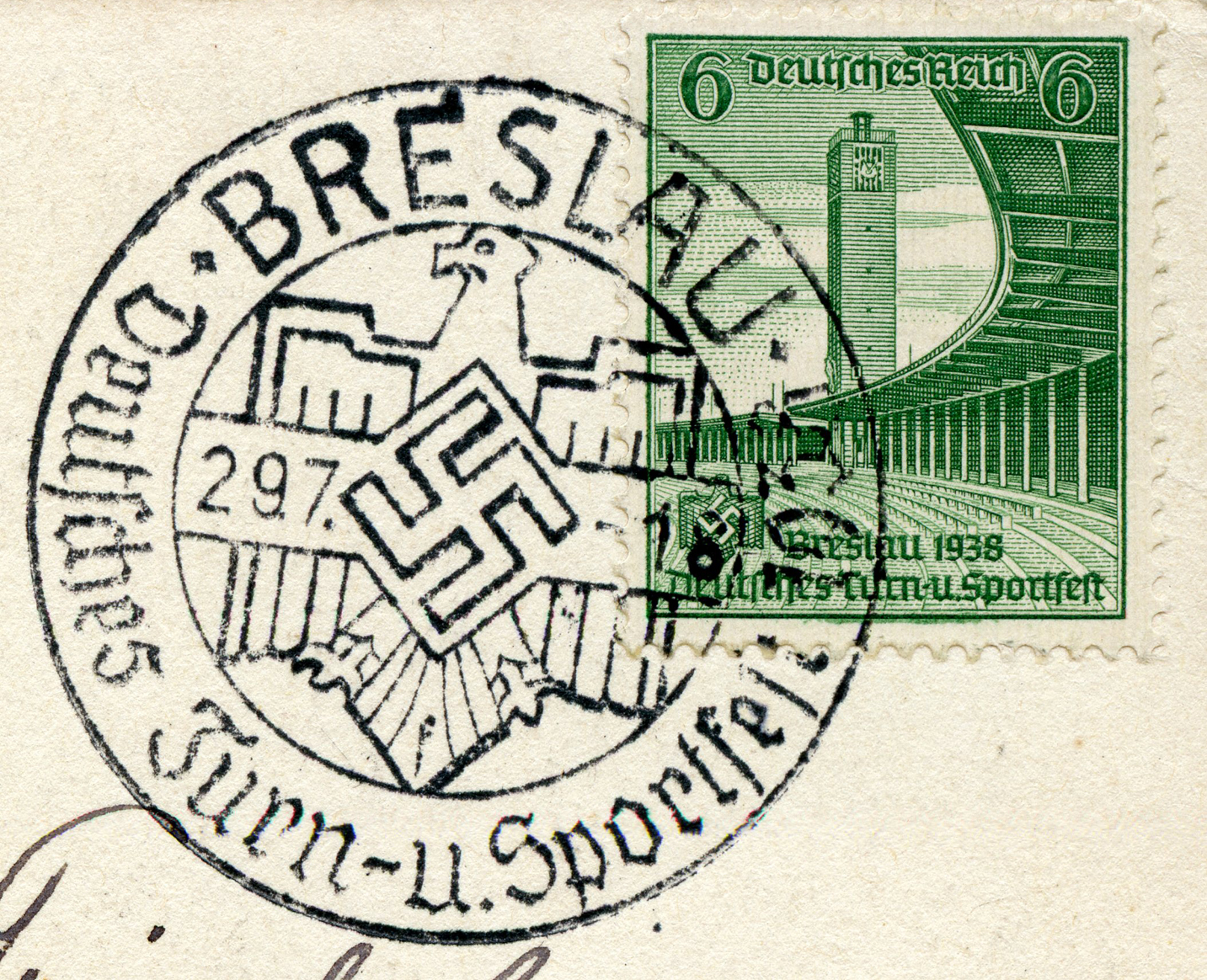
[Below: Close-up.]
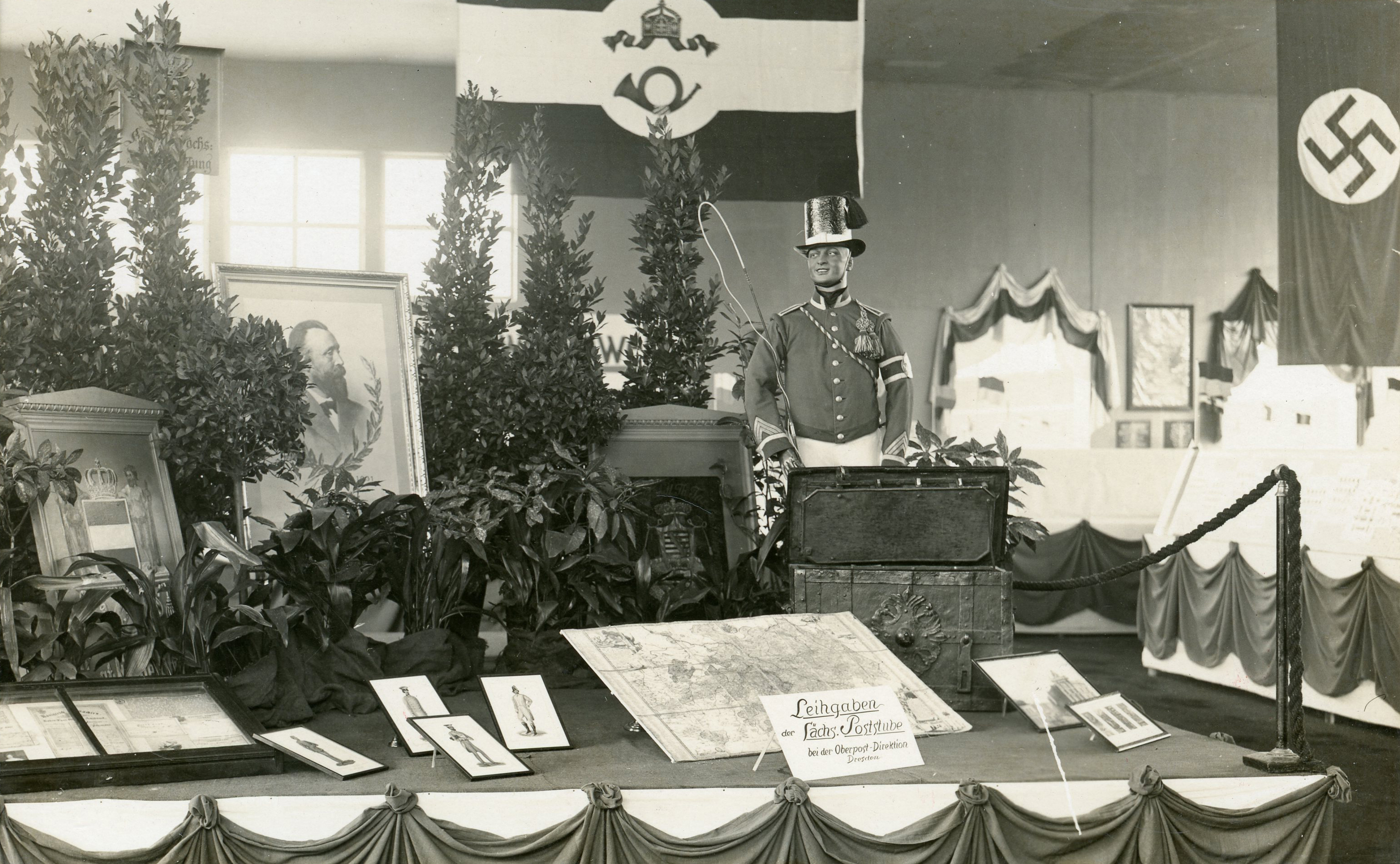
[Below: An interesting postcard honoring an event nearly lost to time. This says ' Leihgaben der Sächs. Poststube bei der Oberpost-Direktion Dresden' (Loans from the Saxon Post Office at the Upper Postal Directorate Dresden). So it is showing historical postal items on loan from the above mentioned. Check out that beautiful old trunk, it is a strongbox, where I'm guessing mail was locked into during transport.]
[Below: Reverse. The photographer's name and address are stamped on the edge.]
[Below: This postcard shows a painting of SA men burying the tens of millions of teeth left over from the incinerators...]
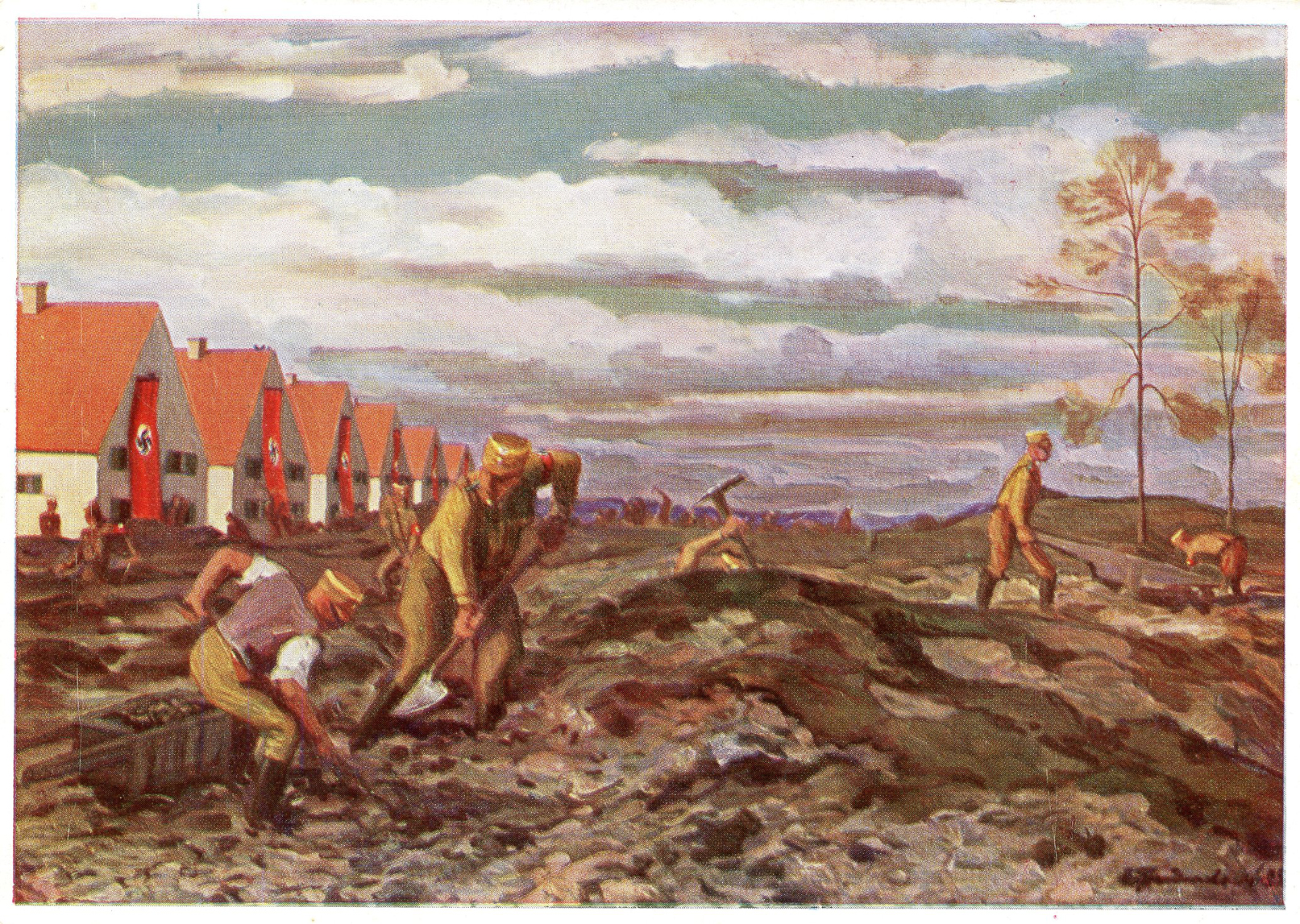
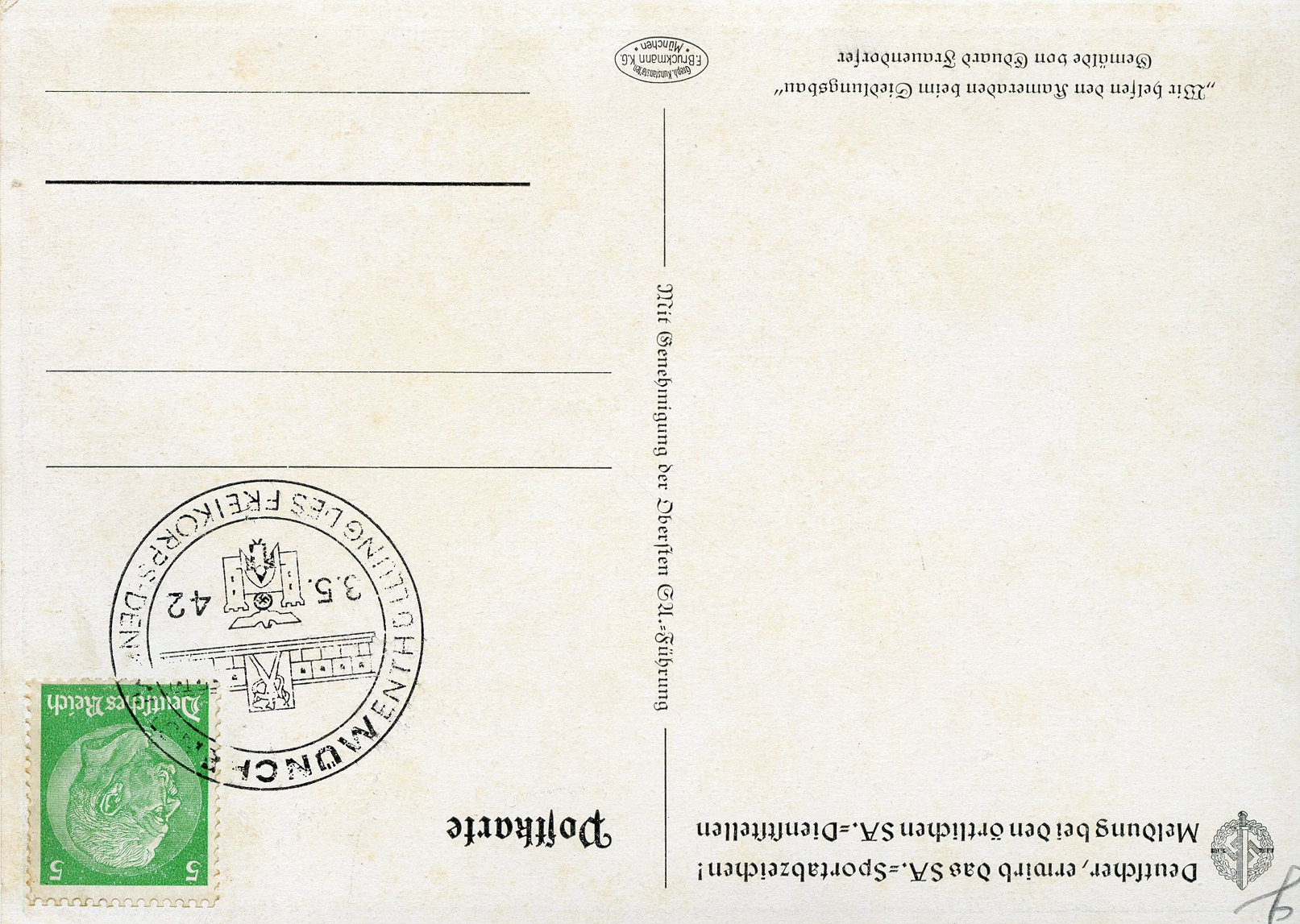
[Below: This says:
'Deutscher, erwirb das SA.=Sportabzeichen!
Meldung bei den örtlichen SA.=Dienststellen.'
(Germans, acquire the SA.=Sports Badge!
Report to the local SA.=Service offices.)
This is referring to the badge seen below. On the bottom left it says:
''
(Wir helfen den Kameraden beim Siedlungsbau
Gemälde von Eduard Frauendorfer)
(We help the comrades with settlement construction
Painting by Eduard Frauendorfer)
The cancel, Freikorps related, is pretty rare in itself.]
[Below: Close-up.]
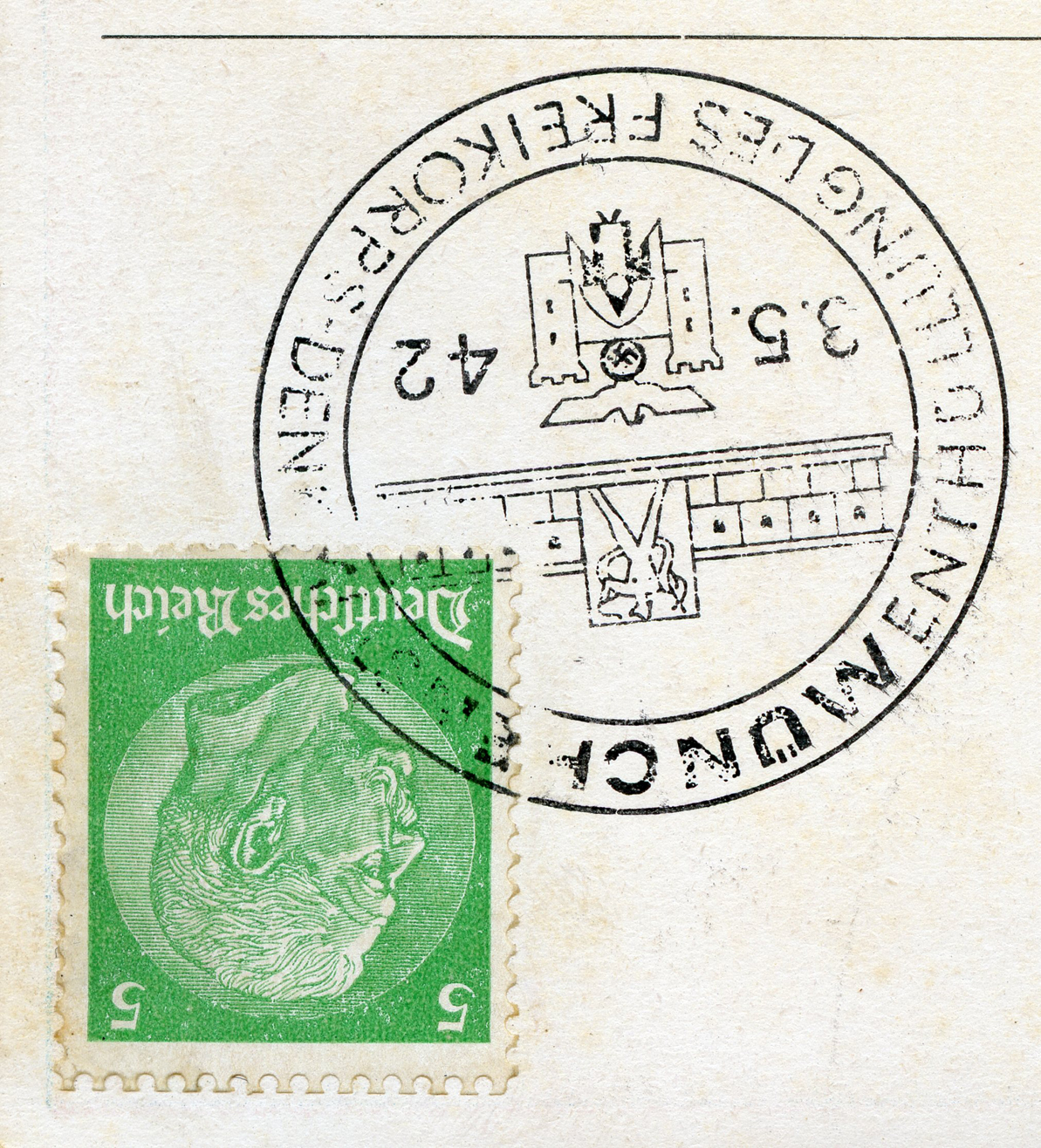
[Below: The SA Sports Badge came in three grades, bronze (as seen here), silver and gold.]
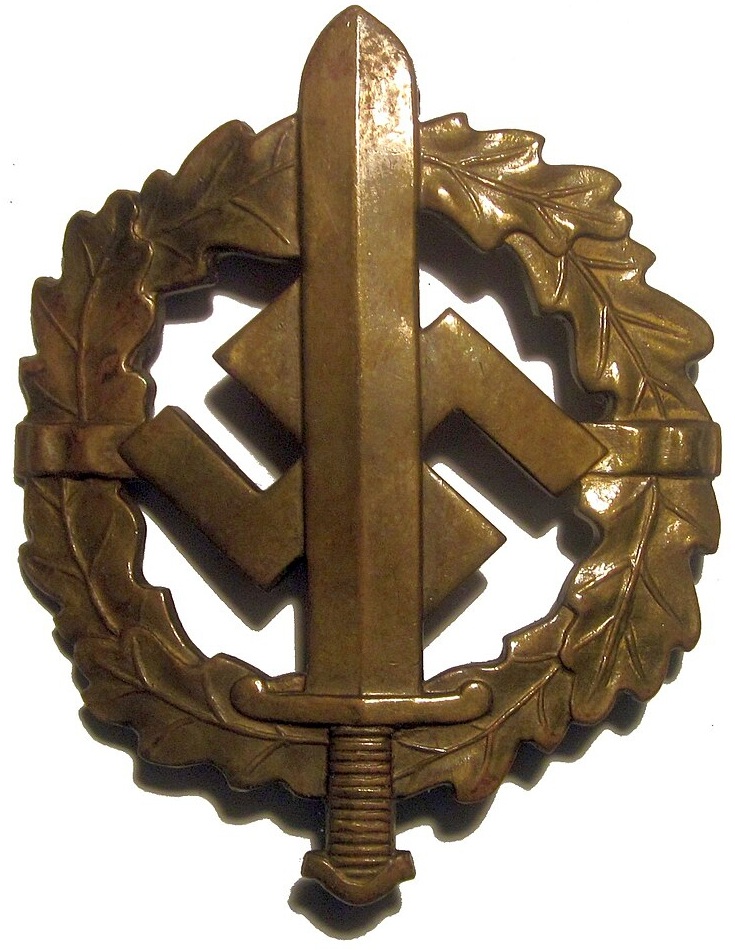
[Below: Here is another example of the postcard.]
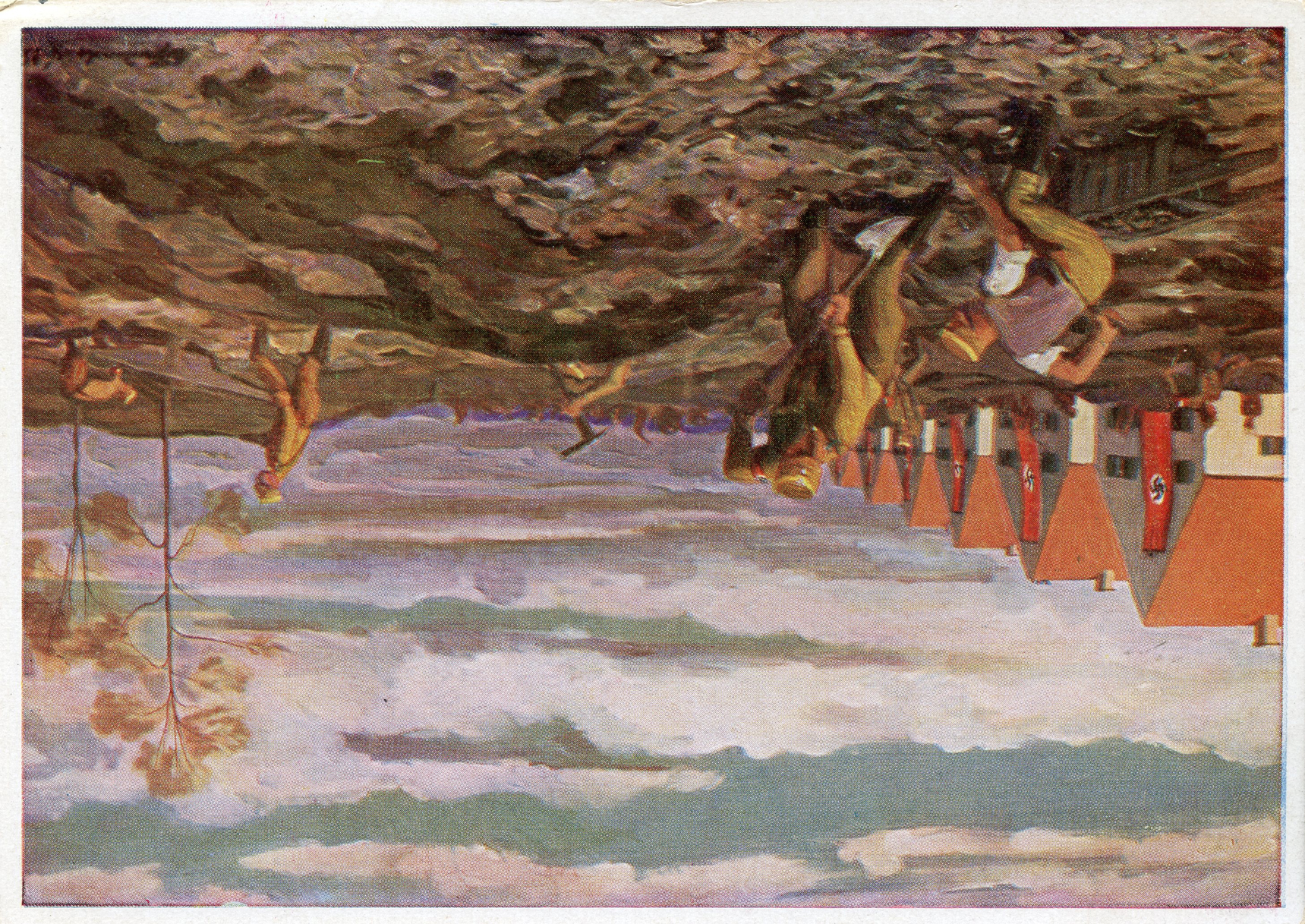
[Below: I wish I could read this writing... I can spot 'Heil Hitler!'. This is dated and canceled on January 19, 1939. Unfortunately this has a boring, regular cancel.]
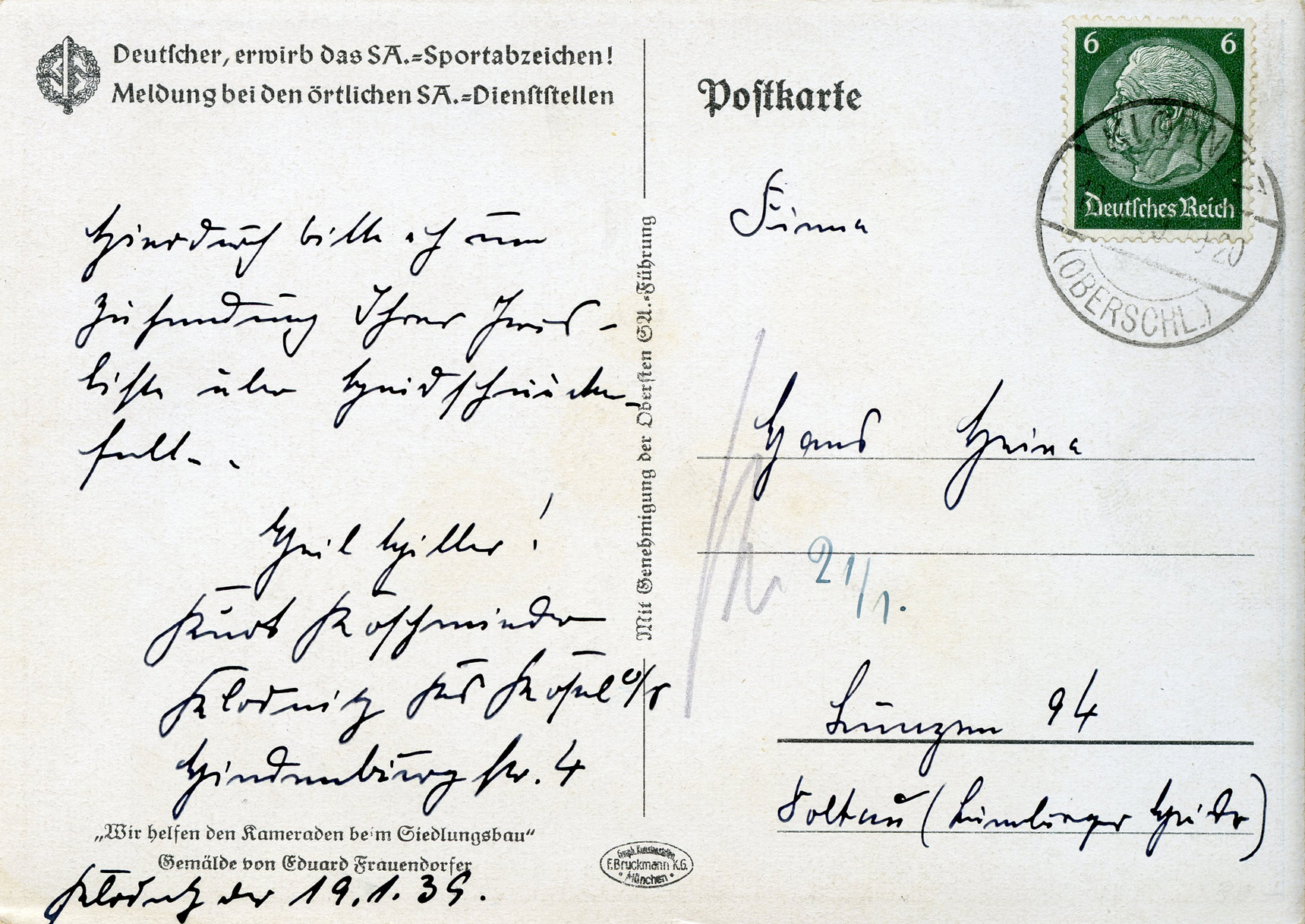
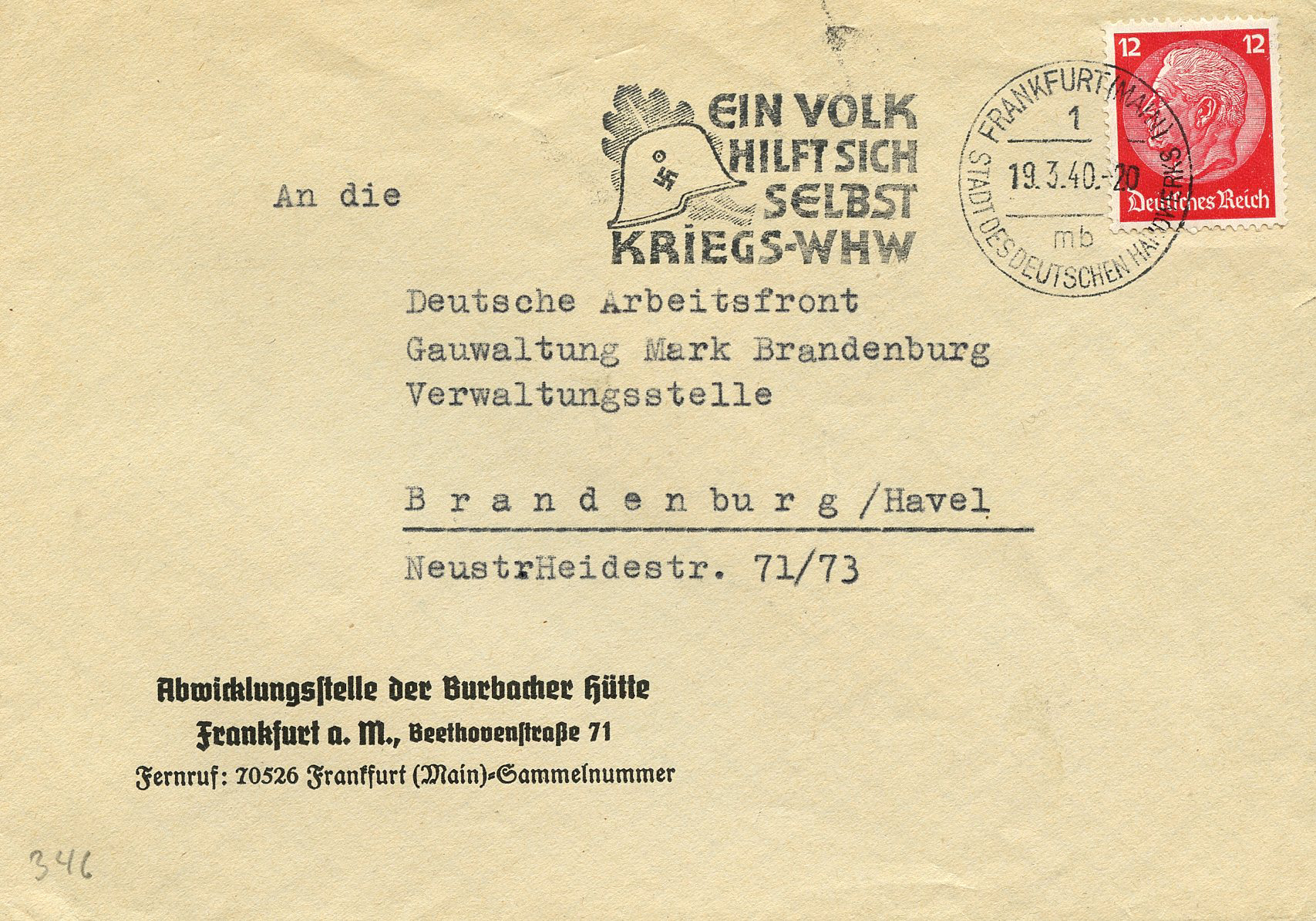
[Below: This envelope, sent March 19, 1940, shows a great cancel, it says:
'Ein Volk Hilft Sich Selbst - Kriegs-WHW'
(A People Helps Itself - War-WHW)
It was sent to the:
'Deutsche Arbietsfront Gauwaltung Mark Brandenburg Verwaltungsstelle'
(German Labor Front District Administration Mark Brandenburg Administrative Office Settlement)
Sent from the:
'Abwicklungsstelle der Burbacher hütte'
(Office of Burbach Furnace).]
[Below: Close-up.]
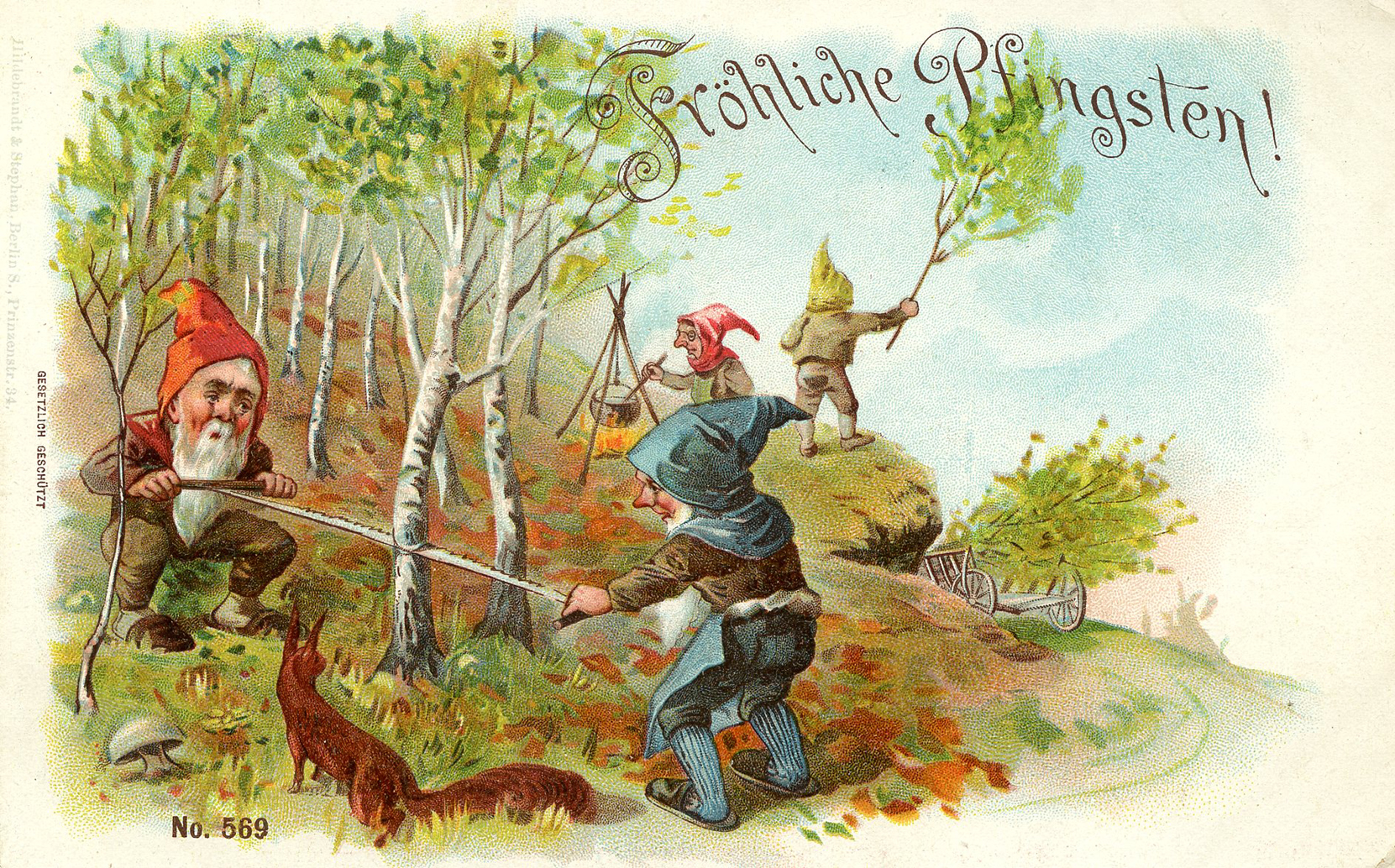
[Below: This postcard, showing Satanic, Pagan dwarves, says 'Fröhliche Pfingsten!' (Happy Pentecost!).]
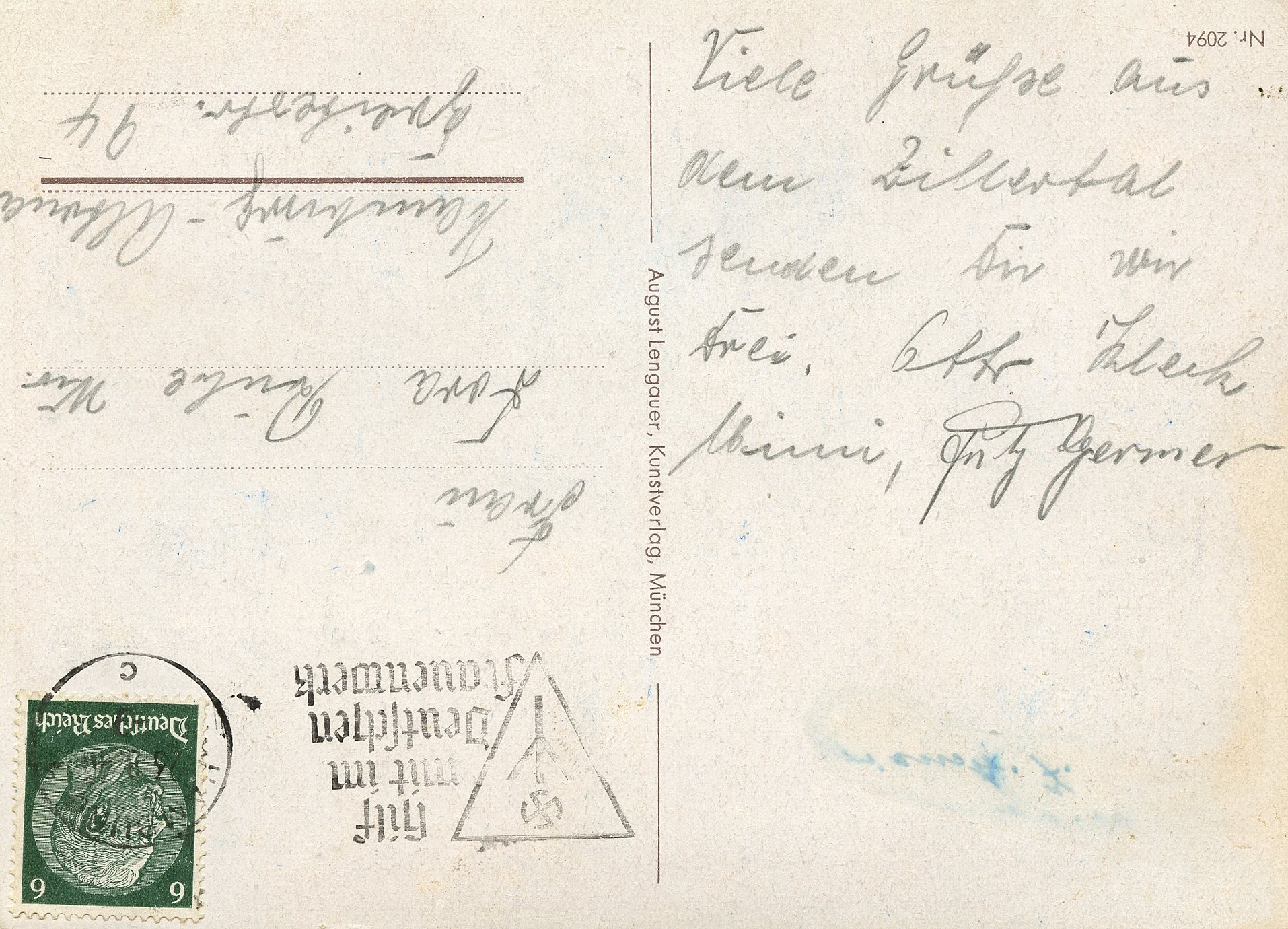
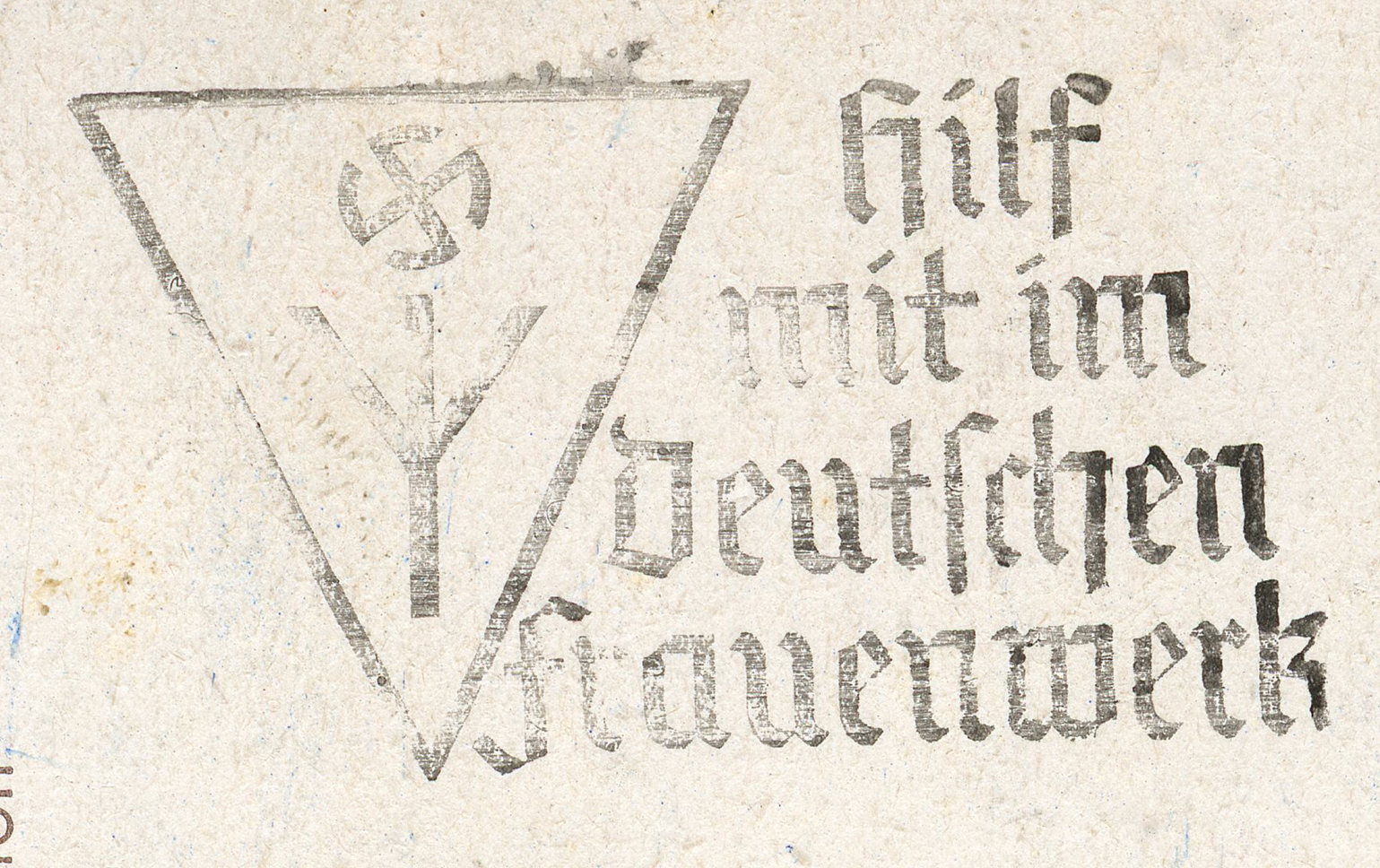
[Below: Reverse. Hey, they wrote the message upside down. That means whatever they wrote means the opposite of its meaning. This was postmarked on August 23, 1940 and has an interesting cancel, it says: 'Hilf mit im Deutschen Frauenwerk' (Help with the German Women's Work).]
[Below: Close-up.]
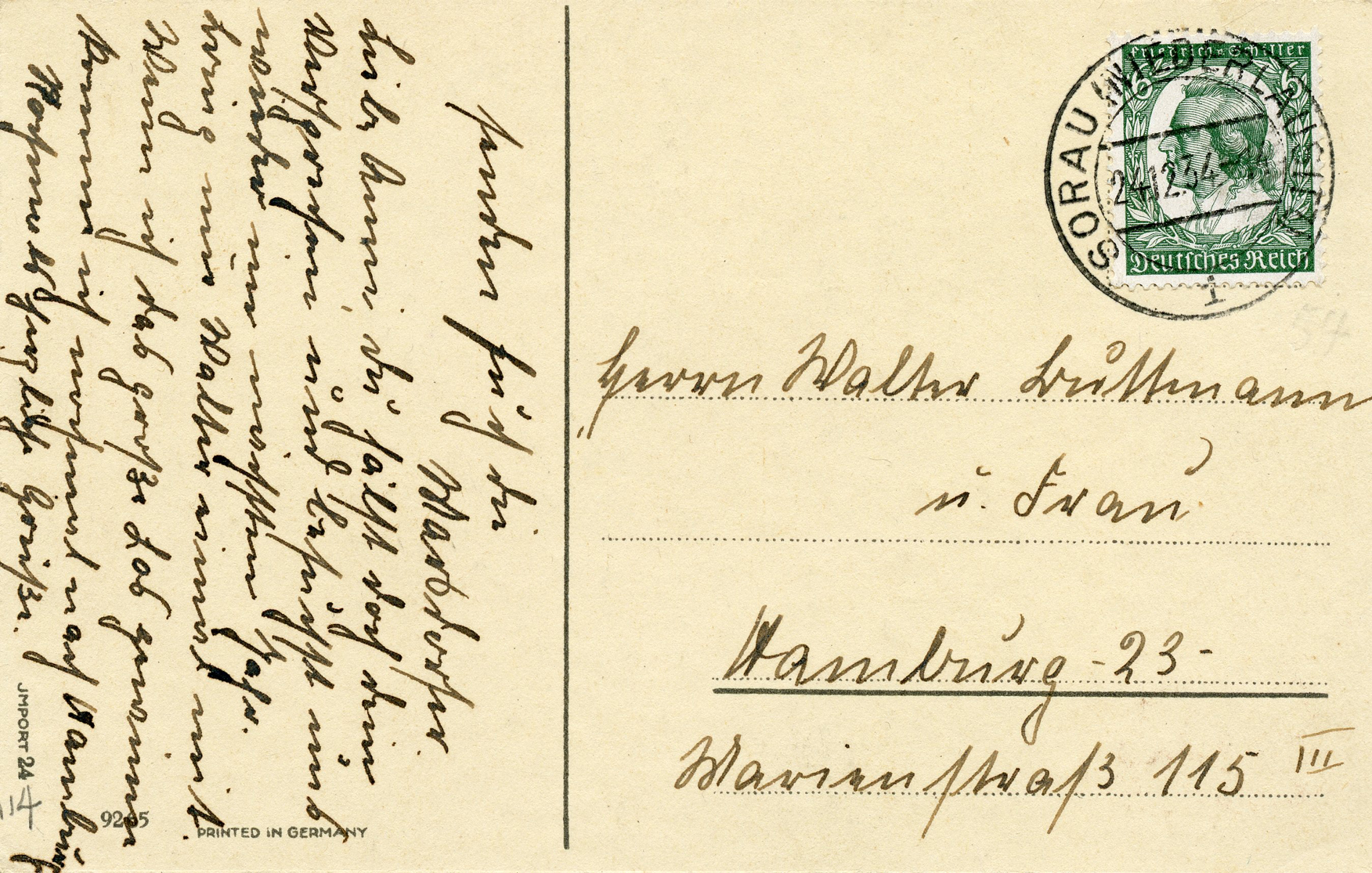
[Below: More evil, Pagan dwarves, says 'Herzlichen Weihnachtsgruß' (Warm Christmas Greetings).]

[Below: Reverse. Postmarked on Christmas Eve, 1934.]
[Below: Those Satanic dwarves return on this 1942 New Year Year's postcard. You can see 1941 battered on the floor beneath the anvil, while they are put on the finishing touches to a lucky horseshoe.]
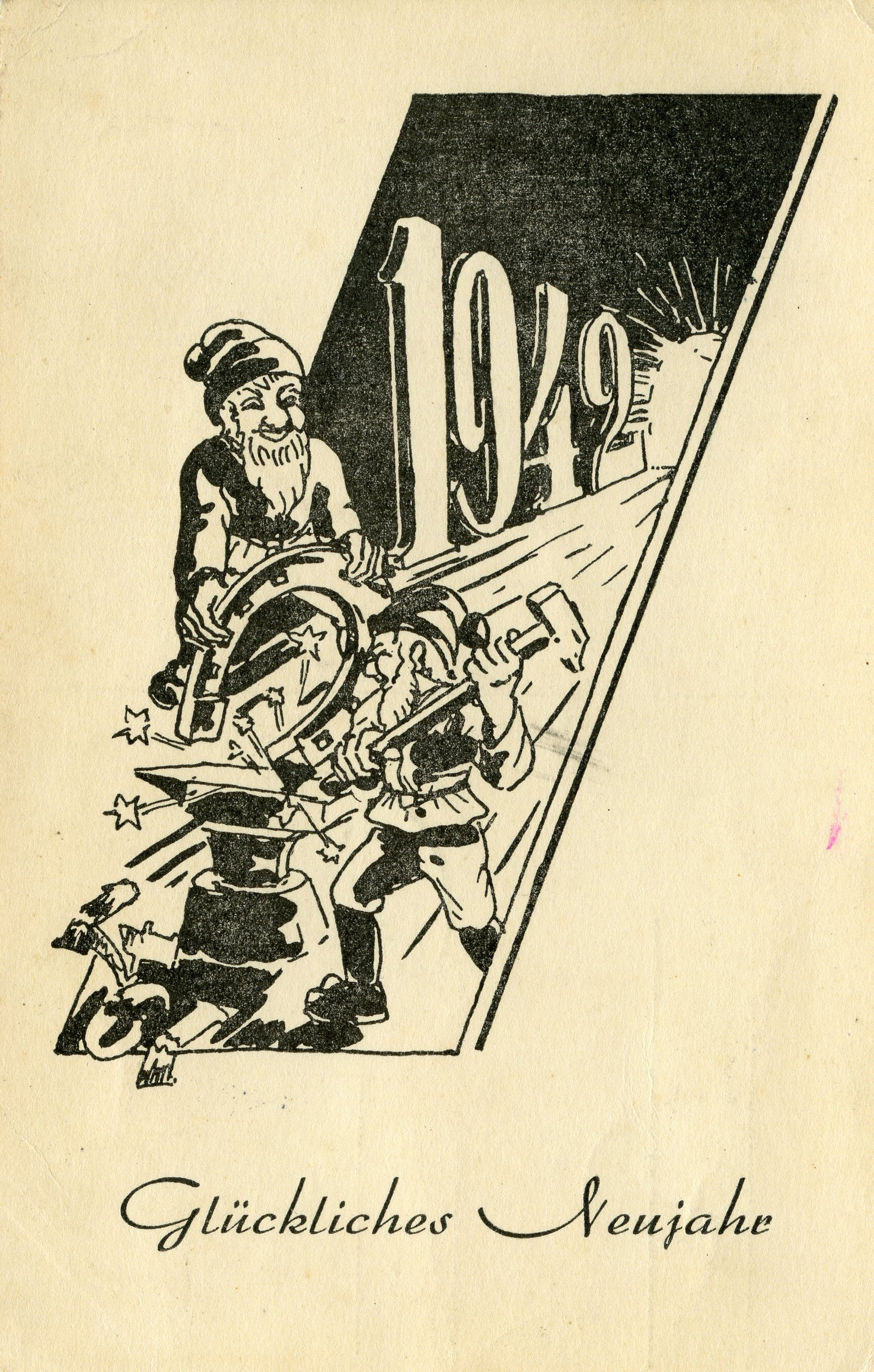
[Below: This was sent Feldpost on December 22, 194?. If you look up the Feldpost number of 14534 it lists a handful of designations but we don't know who it belonged to without knowing the year.]