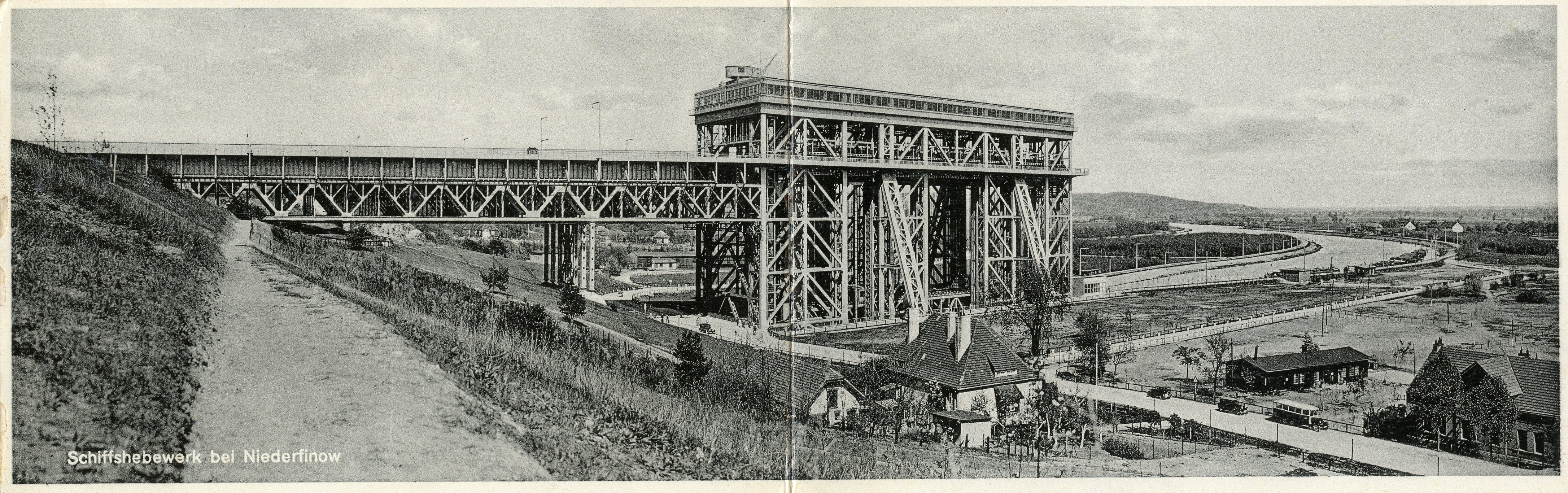
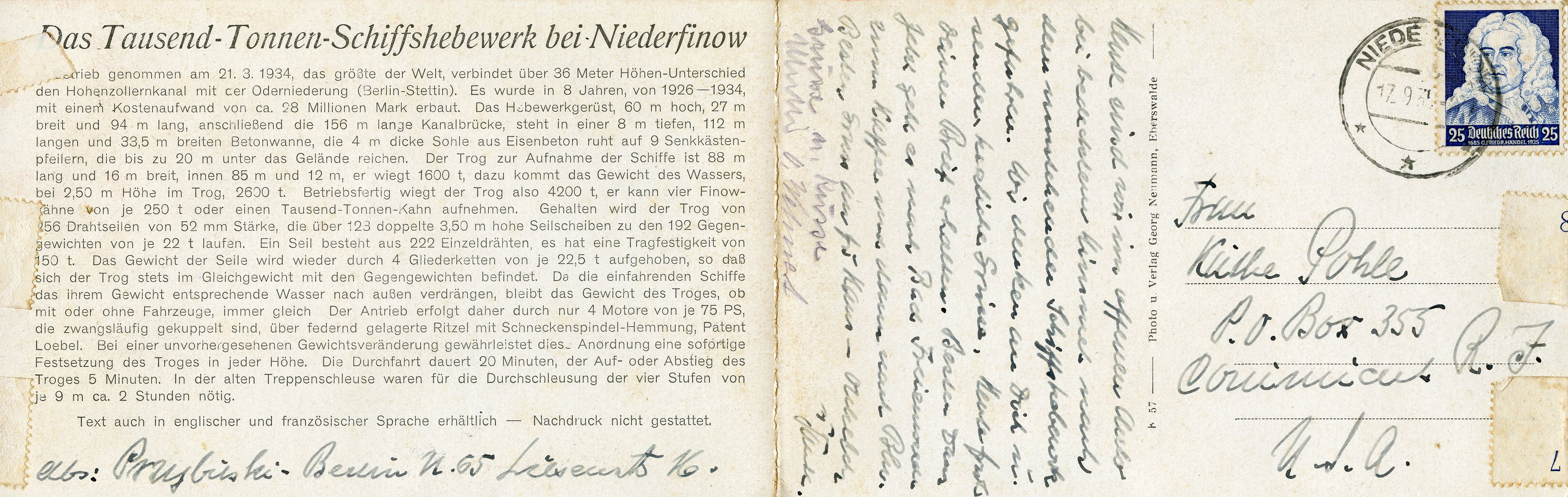
[Below: Here is another example of the superhuman achievements of the German people under National Socialism. This double-wide postcard shows the 'Schiffshebewerk bei Niederfinow' (Ship lift near Niederfinow), a spectacular achievement of engineering.]
[Below: Reverse. This was sent from Niederfinow to Connecticut, USA, in September 12, 1934. The left side contains a highly detailed technical description of the Niederfinow Boat Lift, which had just opened earlier that year. The text says:
'The Thousand-Ton Boat Lift near Niederfinow"Put into operation on March 21, 1934, the largest in the world, connects across a 36-meter elevation difference the Hohenzollern Canal with the Oder river valley (Berlin–Stettin). It was built in 9 years, from 1926–1934, with a cost of approximately 28 million Marks. The lift structure is 60 m high, 27 m wide, and 94 m long, connecting to a 156 m long canal bridge, which rests on 3 pillars 112 m long and 3,5 m wide at the trough trough-bed. The 4 m thick floor made of reinforced concrete rests on 9 caissons reaching up to 20 m under the ground surface. The trough for holding ships is 85 m long and 12 m wide, with a water depth of 2.5 m. It weighs 1,600 tons, plus the weight of the water, which at a 2.5 m depth in the trough is 2,600 tons. Operating weight of the trough is therefore 4,200 tons; it can handle ships with a capacity of up to 1,000 tons or one thousand-ton ship.
The trough is supported by 256 wire ropes with a thickness of 52 mm, which run over 128 double rope sheaves to the 192 counterweights of 20 tons each. Every single rope consists of 422 individual wires, has a load capacity of 250 tons. The weight of the ropes is in turn balanced by 4 link chains of 22.5 tons each, so that the trough is always in equilibrium with the counterweights. Since ships entering the trough displace an amount of water equal to their own weight, the weight of the trough remains identical, whether empty or carrying ships.
The drive is powered by only 4 motors of 75 HP each, which are forcibly coupled and run via spring-mounted pinions with worm gear locking, Patent Loebell. In the event of an unforeseen weight change, this arrangement guarantees an immediate lock of the trough at any height. The transit takes 20 minutes, the ascent or descent of the trough 5 minutes. In the old flight of locks, lock transit for the four stages took approx. 2 hours.'
The text written on the postcard says:
'Today we took an open-top car ride to the world-famous boat lift. We thought of you often. Today your dear letter arrived. Thank you very much. Tomorrow Franz is going back to Berlin. Best wishes to everyone from Klara, Mutti, and Walter.'
I asked AI if this was a big deal on a worldwide scale?
'Yes, it was a massive deal. In 1934, the opening of the Niederfinow Boat Lift was celebrated globally as a monumental triumph of modern civil engineering.
Here is why it captured the world's attention at the time:
1. It Was a "World Record" Engineering Marvel
As the printed text on the postcard proudly boasts, it was the largest boat lift in the world when it opened. Raising massive 1,000-ton cargo barges up a vertical cliff of 36 meters (nearly 120 feet) in one single, smooth lift was unprecedented. The structural steel frame alone was a wonder of precision manufacturing.
2. A Massive Leap in Transportation Speed
Before the lift was built, ships had to travel through a "flight of locks"—a staircase-like series of four traditional water locks.
The old way: Took up to 2 hours of grueling, manual water-level adjustments.
The new lift: Cut that time down to just 20 minutes (with the actual vertical movement taking only 5 minutes).
This completely revolutionized the supply chain between the industrial hubs of Berlin and the major seaport of Stettin (now Szczecin, Poland).
3. It Attracted Early "Industrial Tourism"
The handwritten message on your postcard is perfect proof of its status. The sender mentions taking an "open-top car ride" just to go look at it. The lift became an immediate tourist attraction. Hundreds of thousands of people traveled out to the countryside just to watch this gigantic, 4,200-ton bathtub quietly glide up and down the steel scaffolding.
4. It Was Built to Last (And Still Works!)
The ultimate testament to how well it was built is its longevity. The lift survived World War II undamaged and remained in continuous daily service for nearly 90 years, operating exactly as described on your postcard.
Because modern commercial river barges eventually grew too large for its 85-meter trough, a brand-new, even larger elevator was built right next to it and opened in 2022. However, the original 1934 lift you see on your postcard is so reliable that it is still kept operational today as a historical monument and a backup!']
[Below: This postcard, postmarked in Vienna on January 22, 1942, advertises the 'Wiener Messe' (Vienna Trade Fair), which ran from March 8-15, 1942. Nothing too exciting, but let's look at the reverse.]
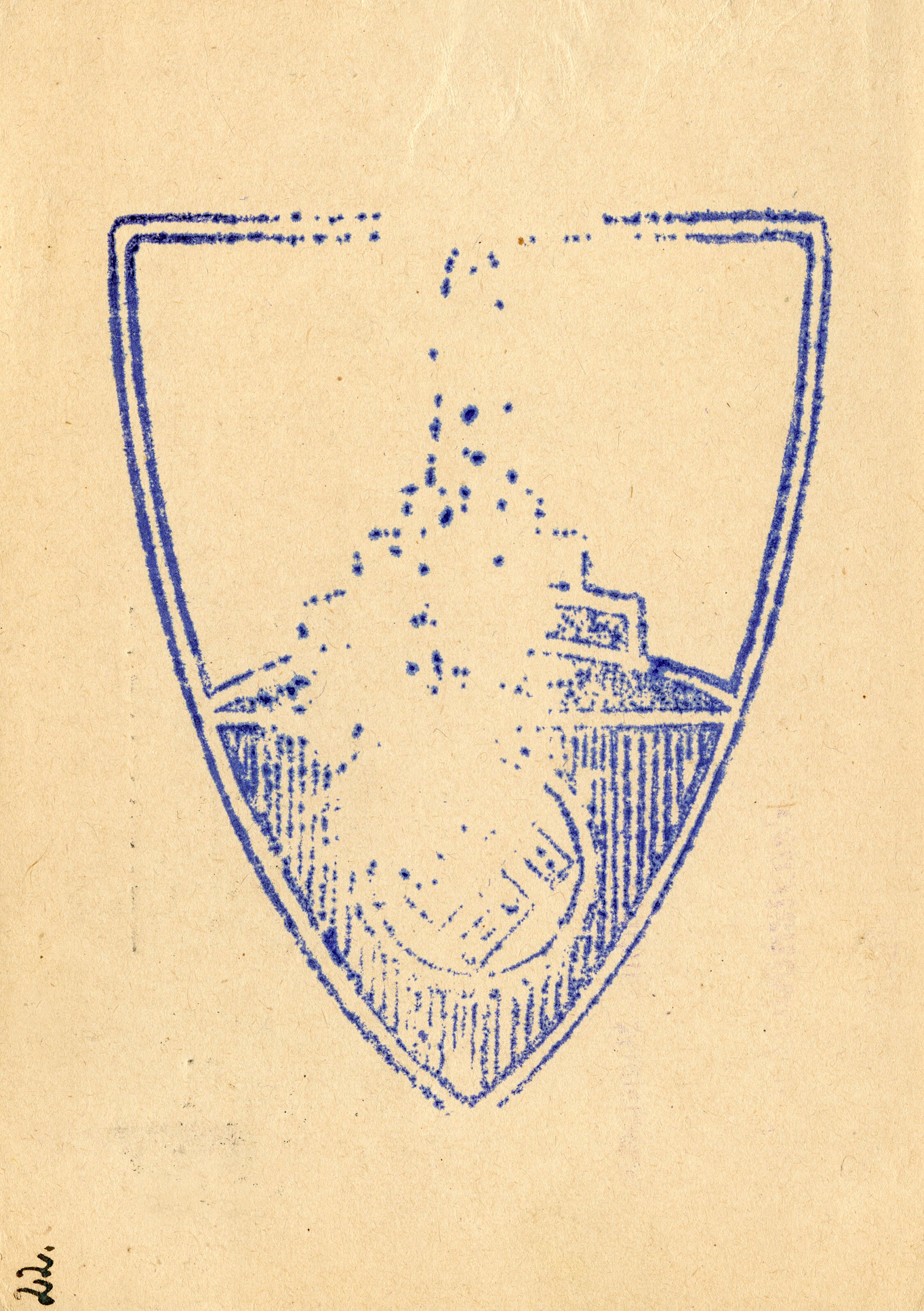
[Below: Reverse. Wow, now this is an ink stamp! This thing covers almost the entire length of the postcard. The stamper used must have been huge. Unfortunately the ink stamp is very poor. This is the symbol of the Nationalsozialistischer Reichskriegerbund, a veterans' organization.]
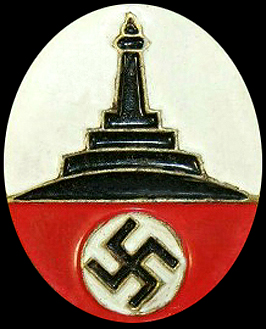
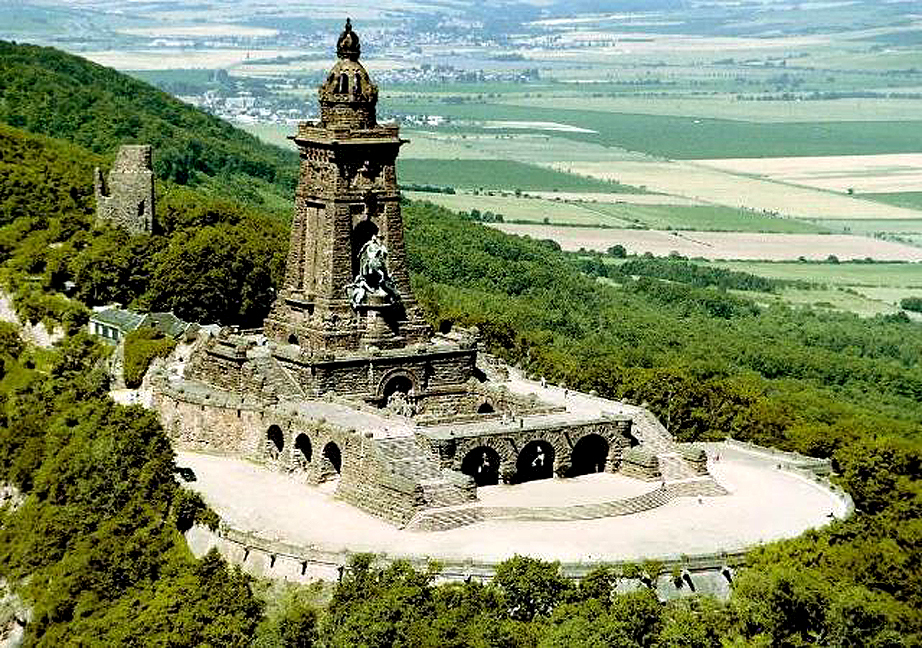
[Below: Here is the symbol of the Nationalsozialistischer Reichskriegerbund (National Socialist Reich Veterans Association). This shows the Kyffhäuser Monument.]
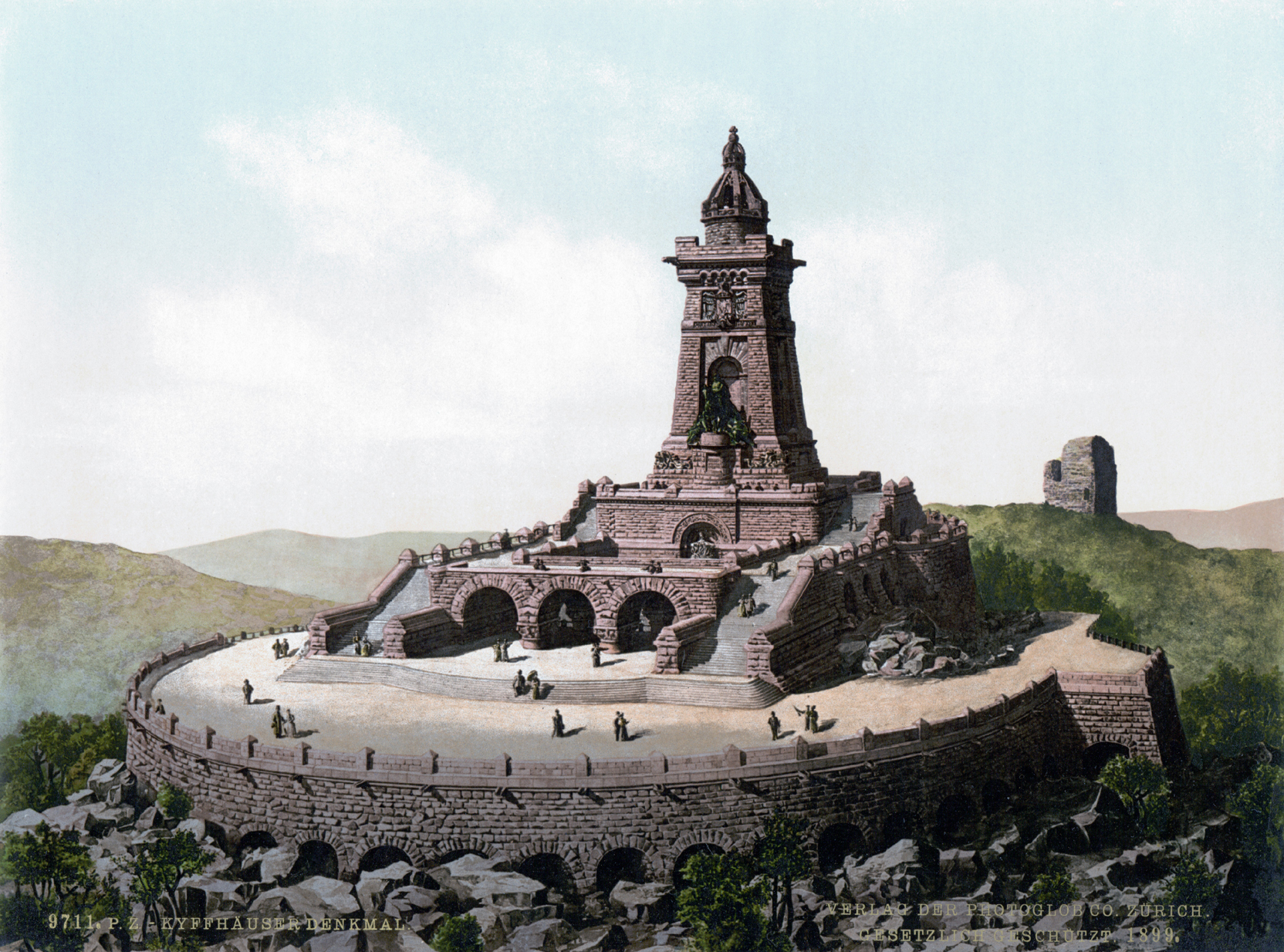
[Below: Here is an art piece of the Kyffhäuser monument, officially called the Kaiser Wilhelm Monument on the Kyffhäuser (the Kyffhäuser is a small hill range in central Germany), built in 1890–1896 by Bruno Schmitz and Emil Hundrieser.]
[Below: The Kyffhäuser Monument still stands today.]
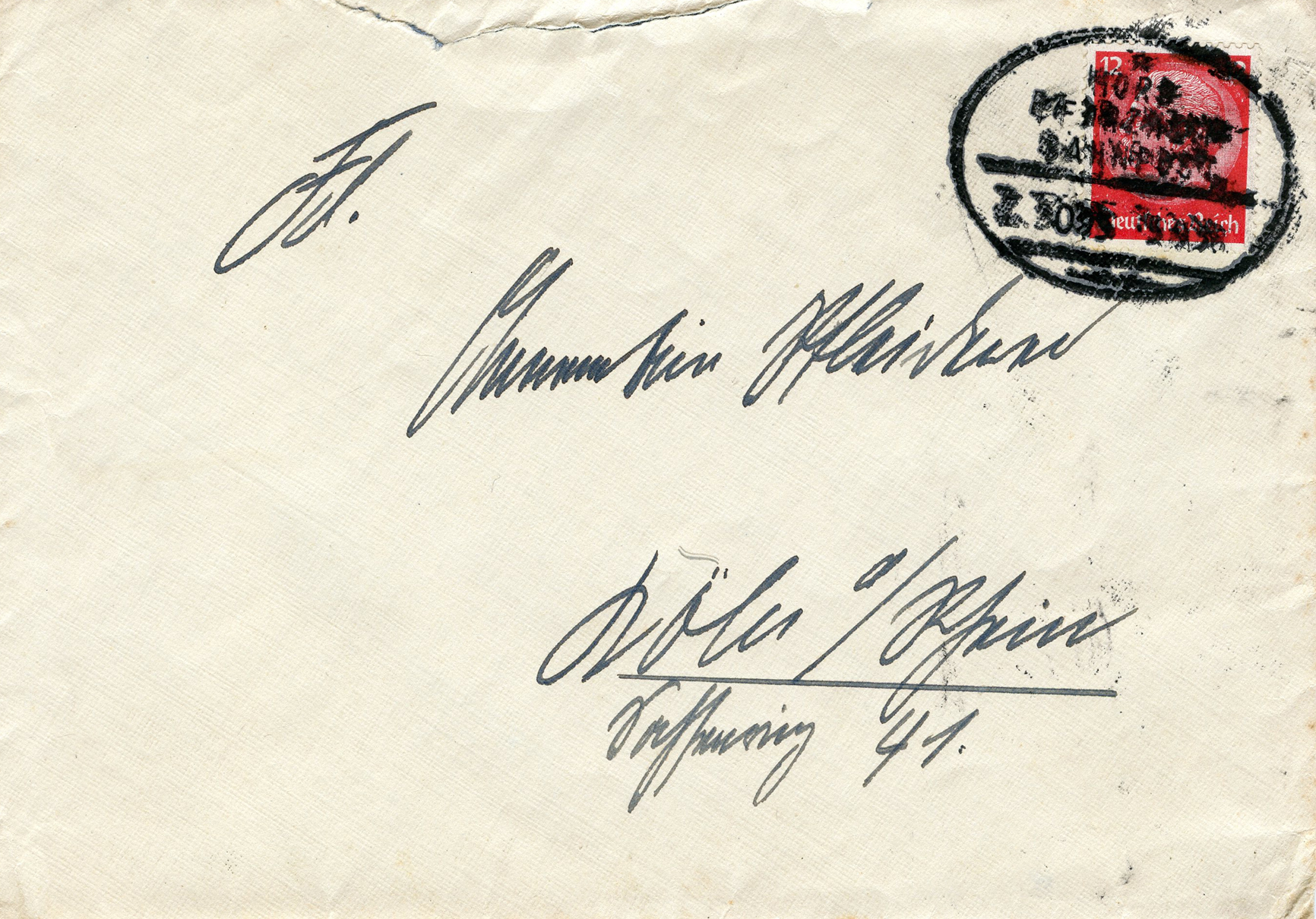
[Below: This has a terrible oval train cancel... but the reverse makes up for it!]
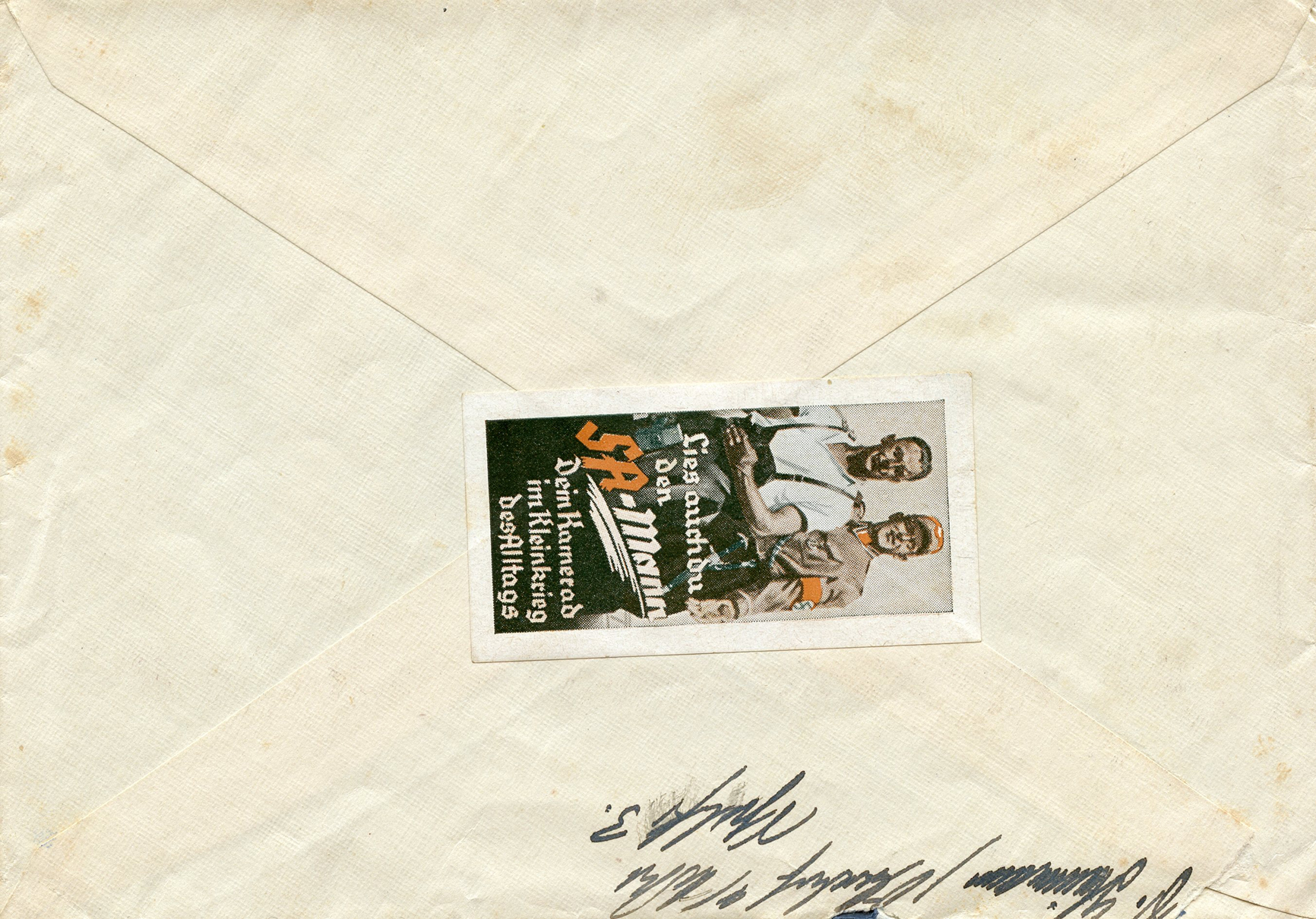
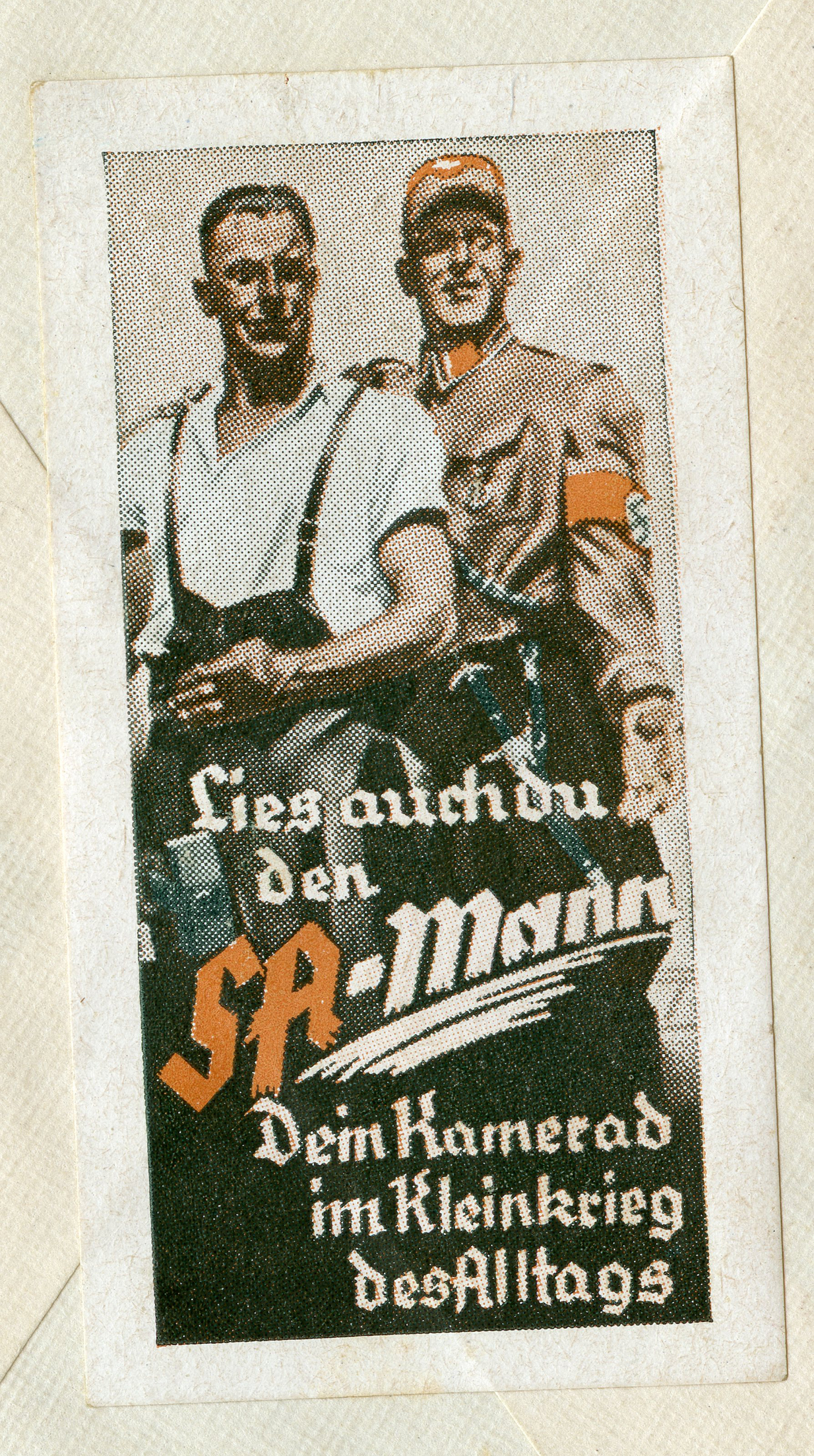
[Below: Check out this rare propaganda stamp. It is from circa 1938, designed by poster artist Ludwig Hohlwein. It features a worker and an SA (Sturmabteilung/Brownshirt) soldier standing together. It says:
'You too should read 'The SA-Mann' —
Your companion in the everyday struggle.'
'Der SA-Mann' was an official weekly newspaper published by the NSDAP between 1928 and 1939.]
[Below: Close-up.]
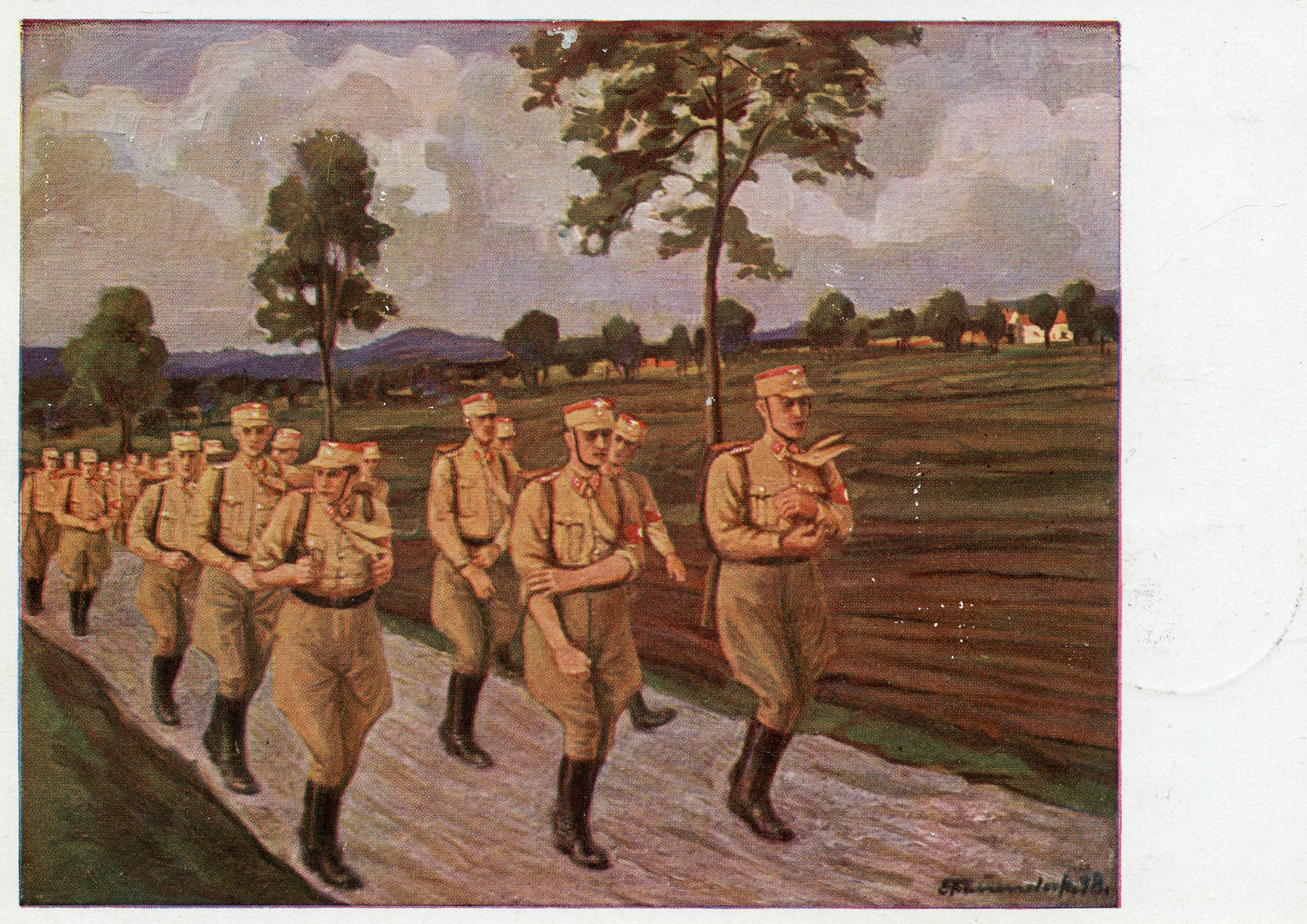
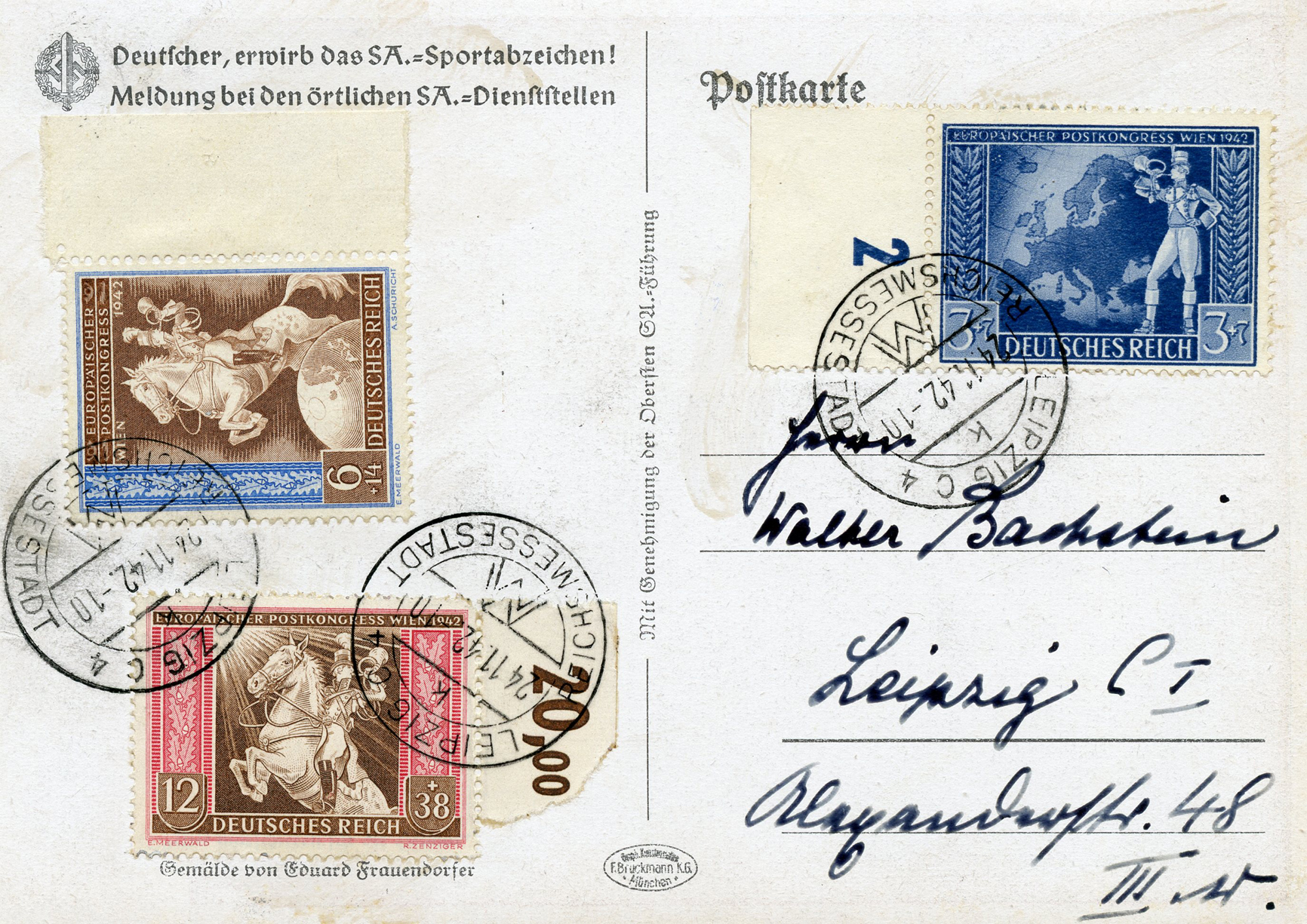
[Below: The reverse of this postcard says 'Deutscher, erwirb das SA.-Sportabzeichen! Meldung bei den örtlichen SA.-Dienststellen' (German, acquire the SA Sports Badge! Report to the local SA offices). Painting by Eduard Frauendorfer. It is postmarked November 24, 1942.]
[Below: Reverse.]
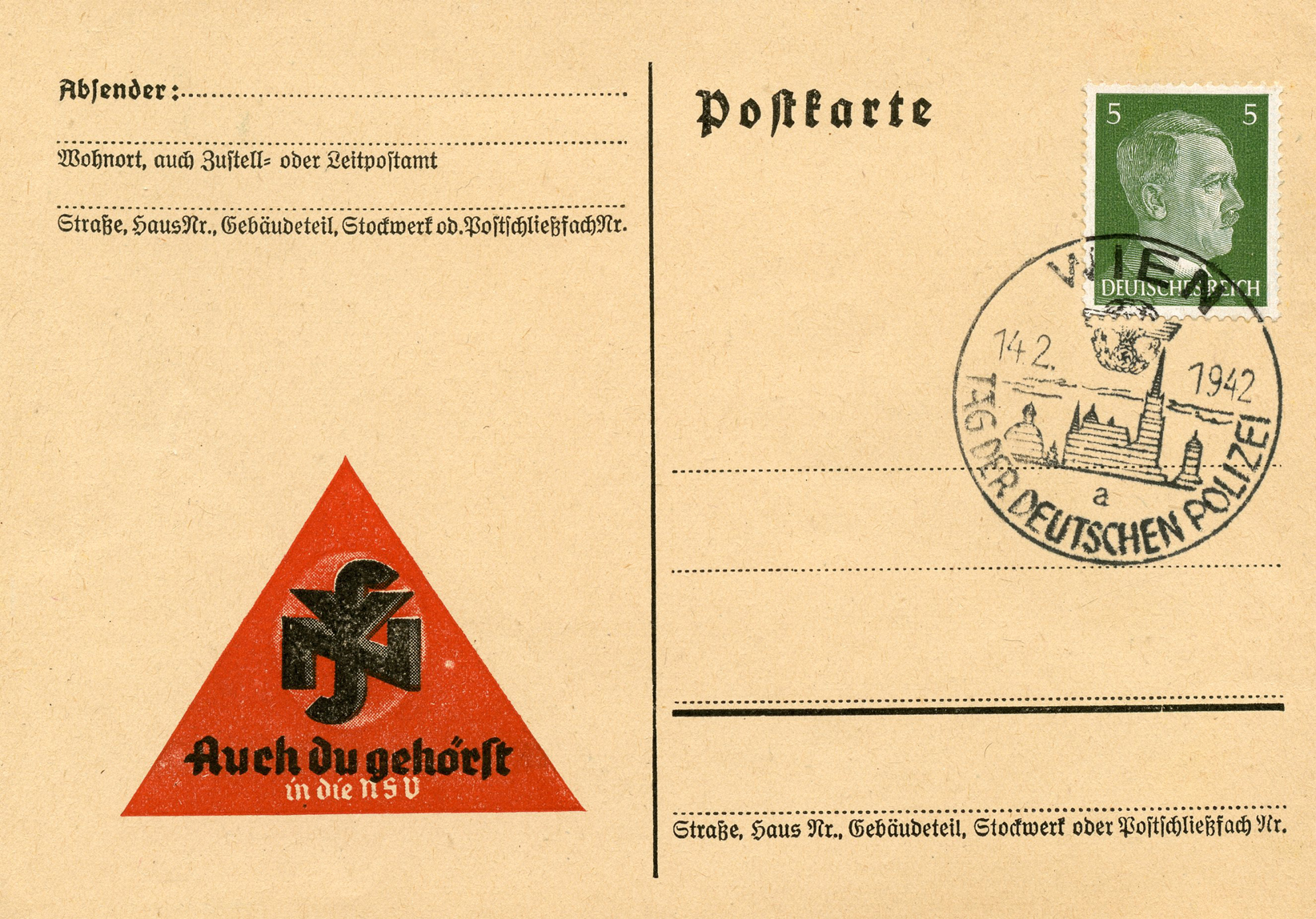
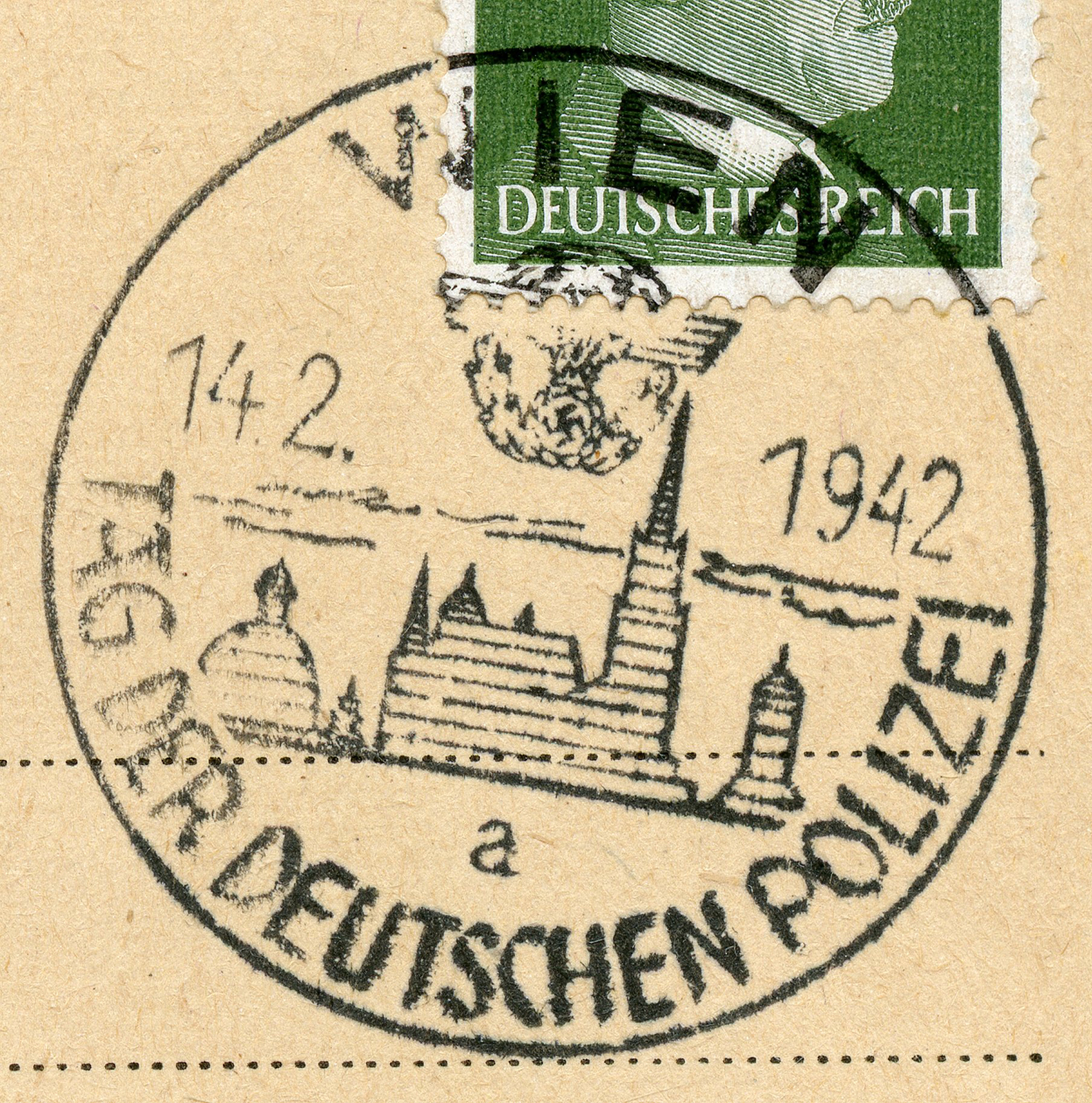
[Below: Below are three postcards from the 'The Nationalsozialistische Volkswohlfahrt' (NSV - 'National Socialist People's Welfare'), a social welfare organization. Postmarked February 14, 1942 for the Day of German Police.]
[Below: Close-up.]
[Below: Close-up of a fairly scarce cancel.]
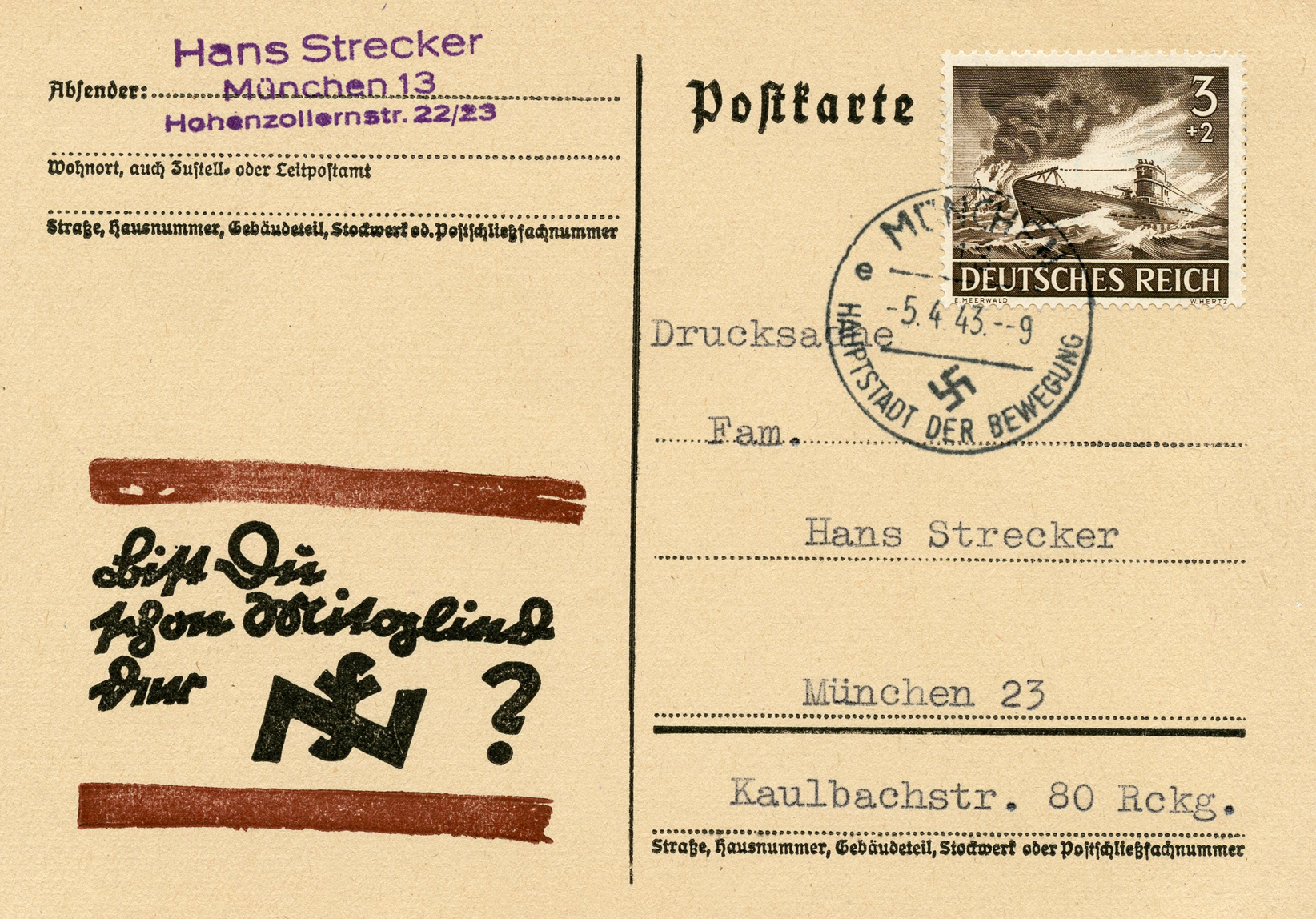
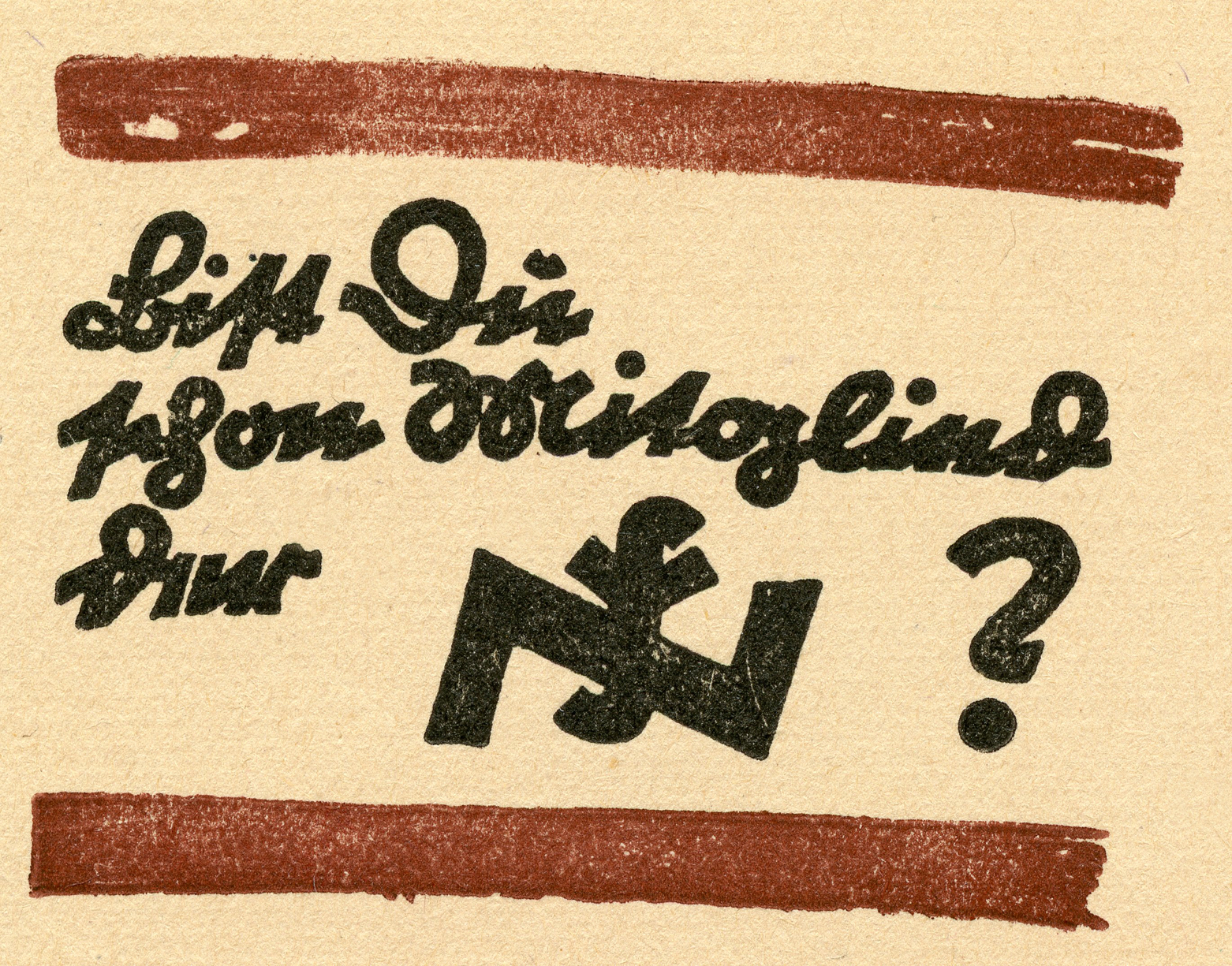
[Below: Another NSV postcard, this says: 'Bist Du schon Mitglied der NSV?' (Are you already a member of the NSV?)]
[Below: Close-up.]
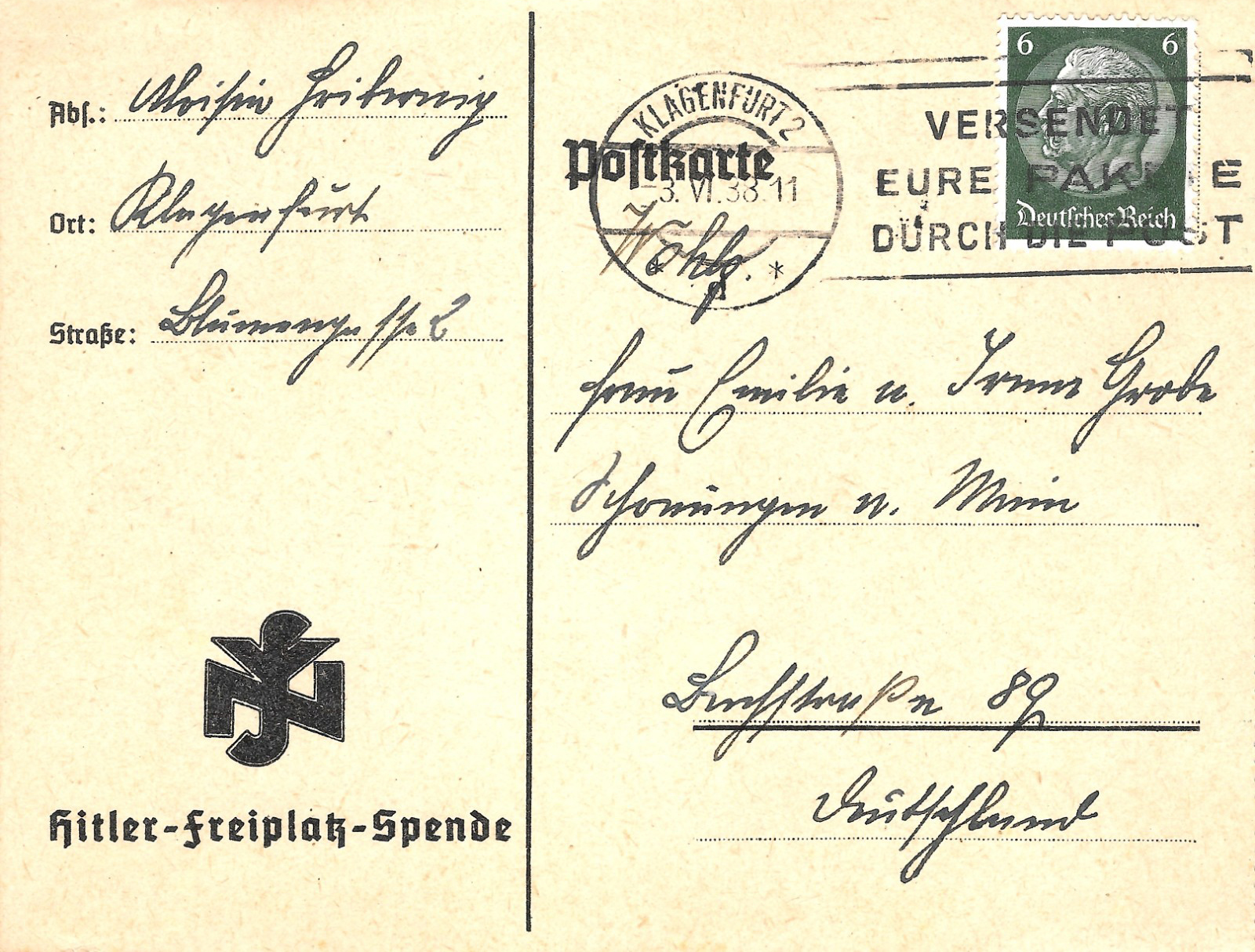
[Below: Another NSV postcard.]
[Below: Reverse.]
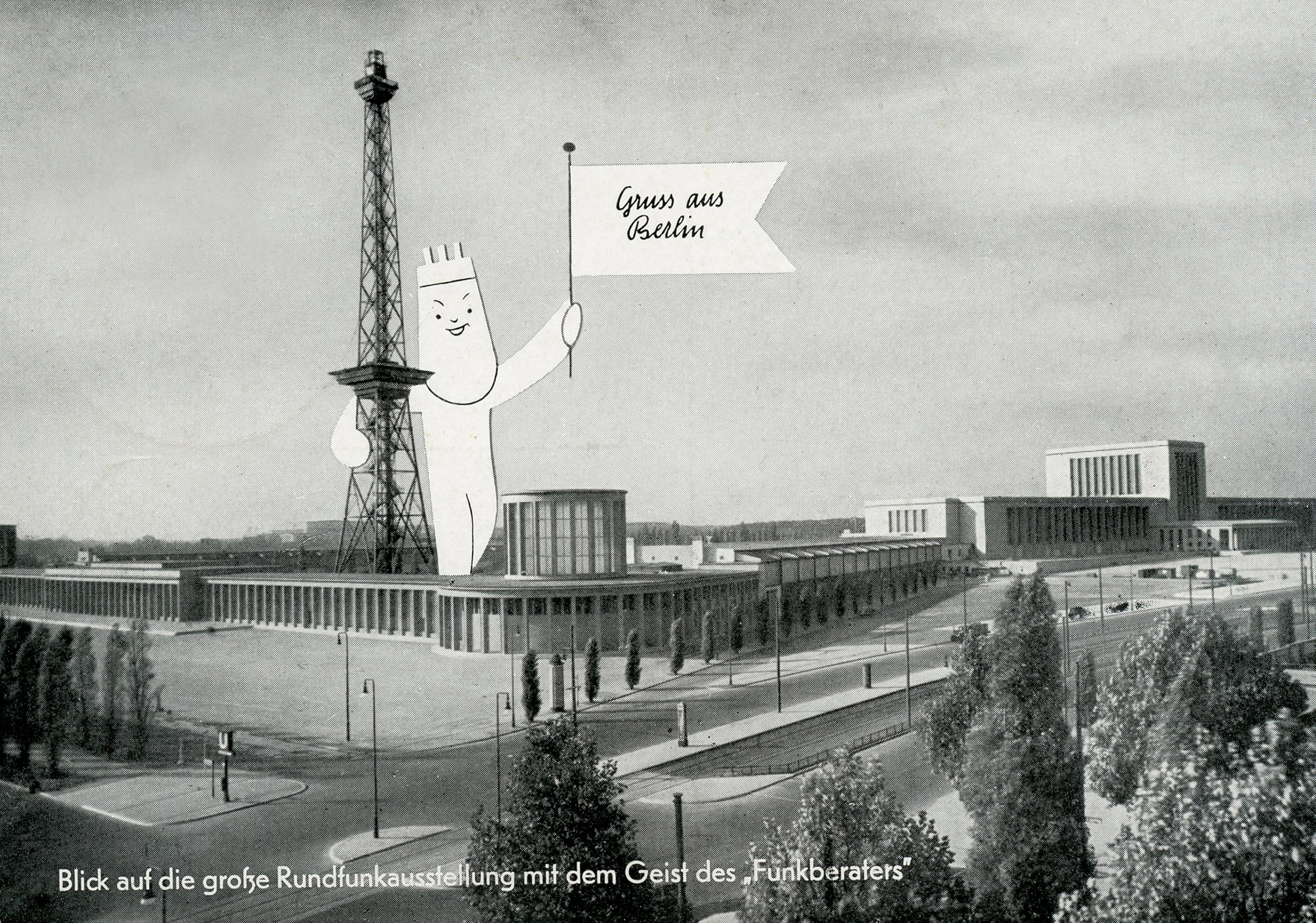
[Below: This says 'Greetings from Berlin' and 'View of the Great Radio Exhibition with the spirit of the 'Radio Advisor''. The postcard captures the Berliner Funkturm (Berlin Radio Tower) and the surrounding exhibition grounds during a historical radio broadcasting exhibition. The cartoon character integrated next to the tower is the 'Funkberater' (Radio Advisor/Consultant), serving as a friendly mascot for the event.]
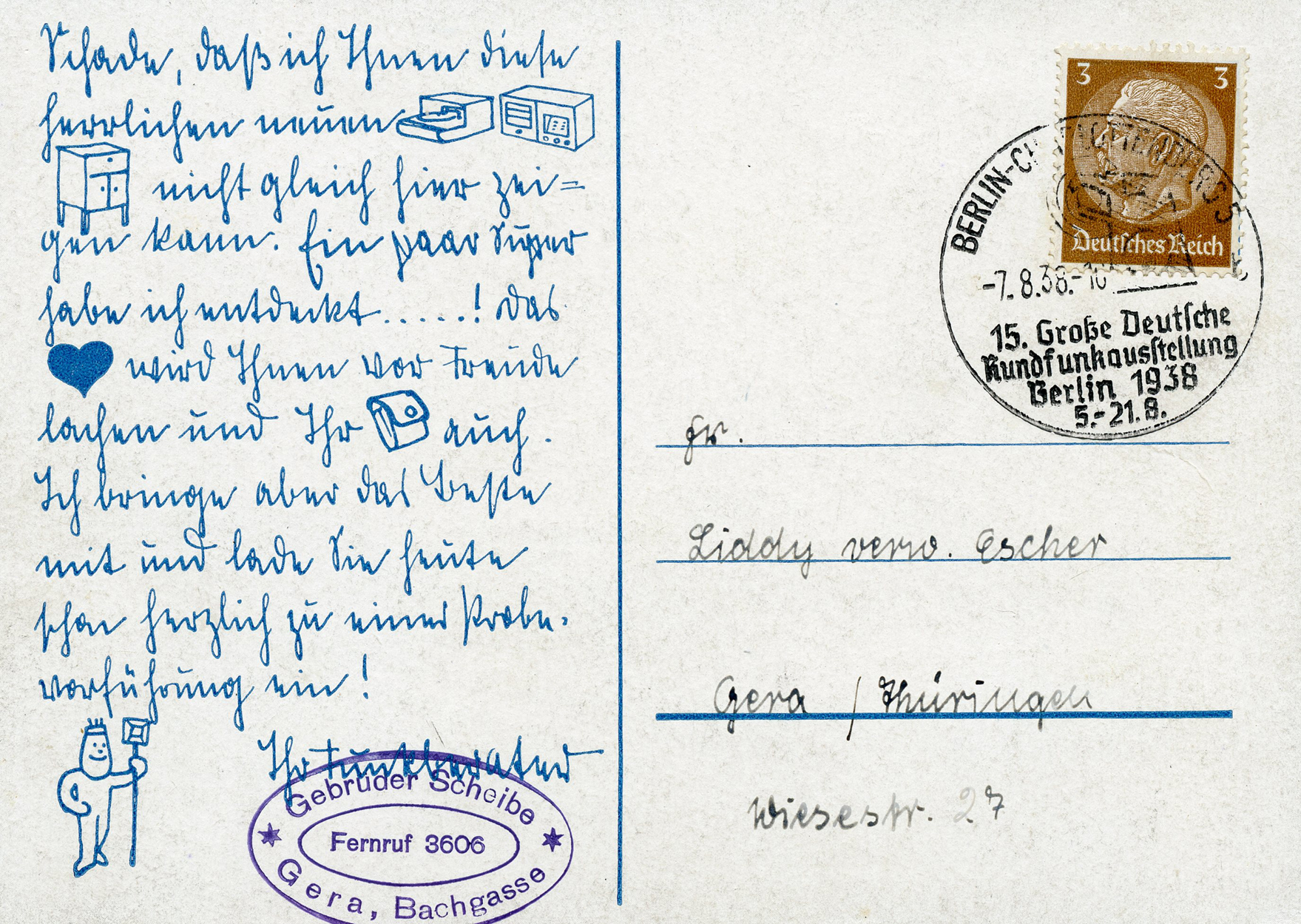
[Below: This says:
'Too bad that I cannot immediately show you these wonderful new (appliances/radios) right here. I have discovered a few superb ones.....!
That (heart/love) will make your mouth and your (purse/wallet) water with joy.
However, I am bringing the best one along and warmly invite you already today to a sample performance!
Your Funkberater (Radio Advisor)'.]
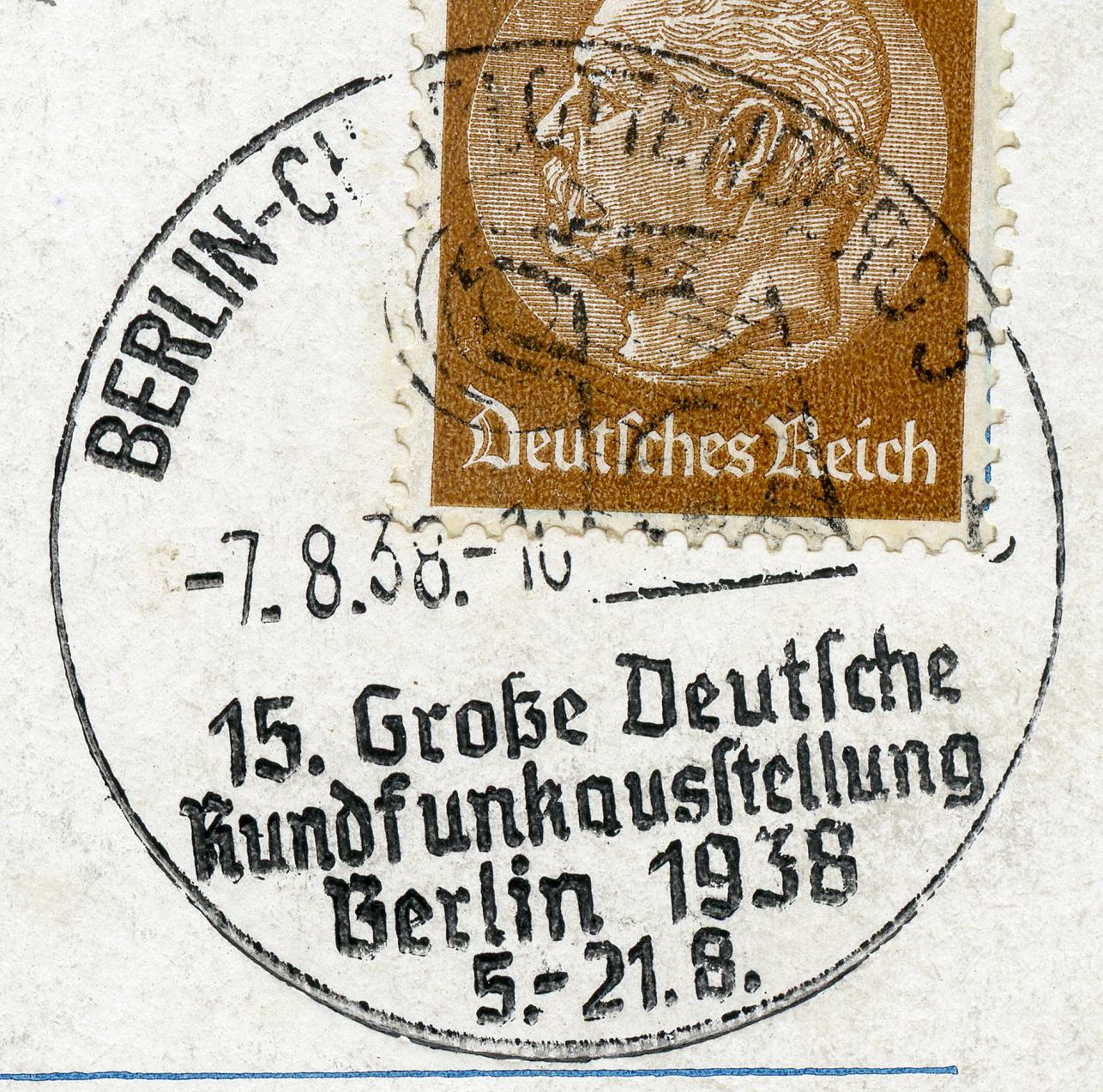
[Below: Close-up of cancel, postmarked August 7, 1938.]
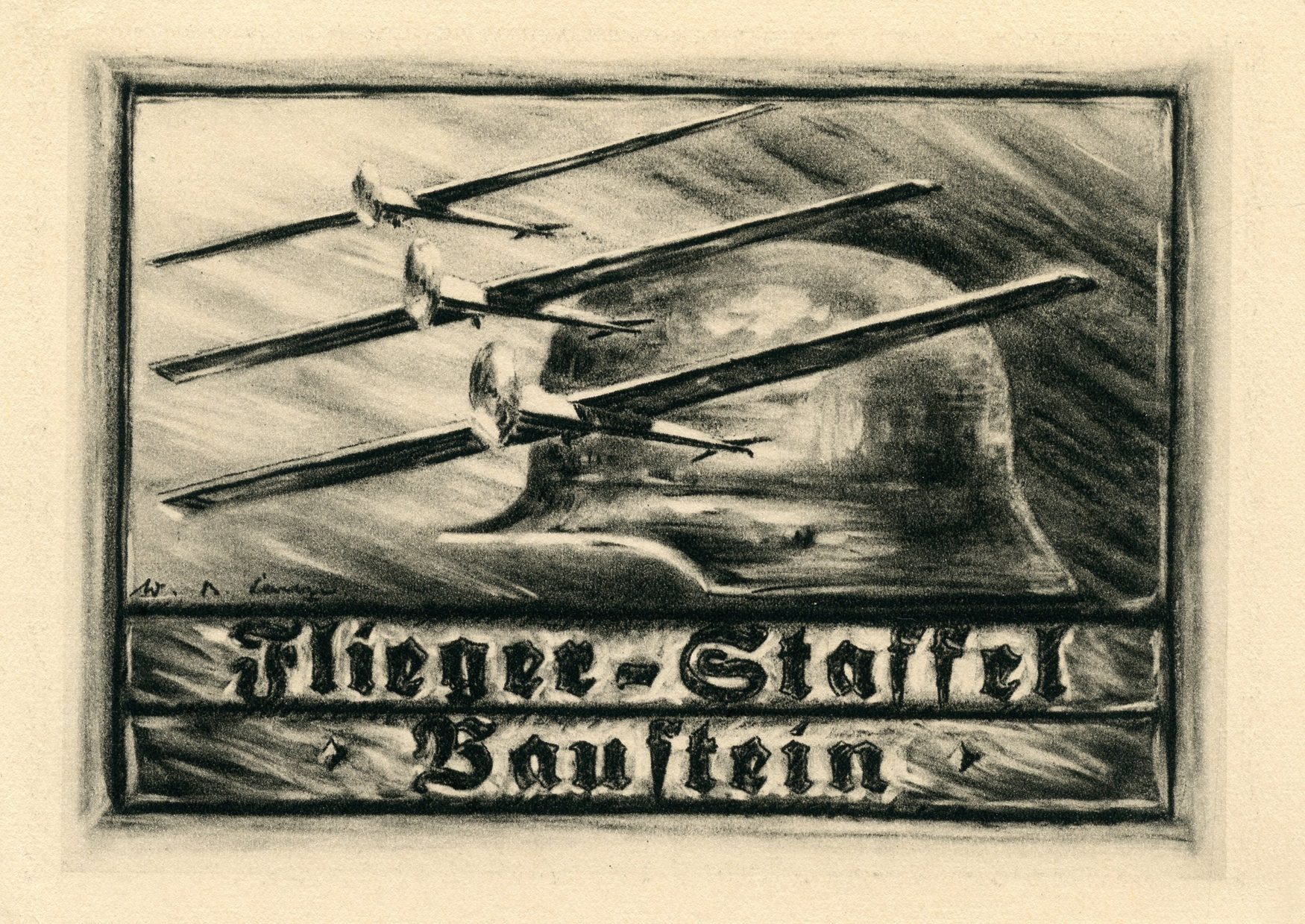
[Below: This beauty says 'Air Squadron Contribution'.]
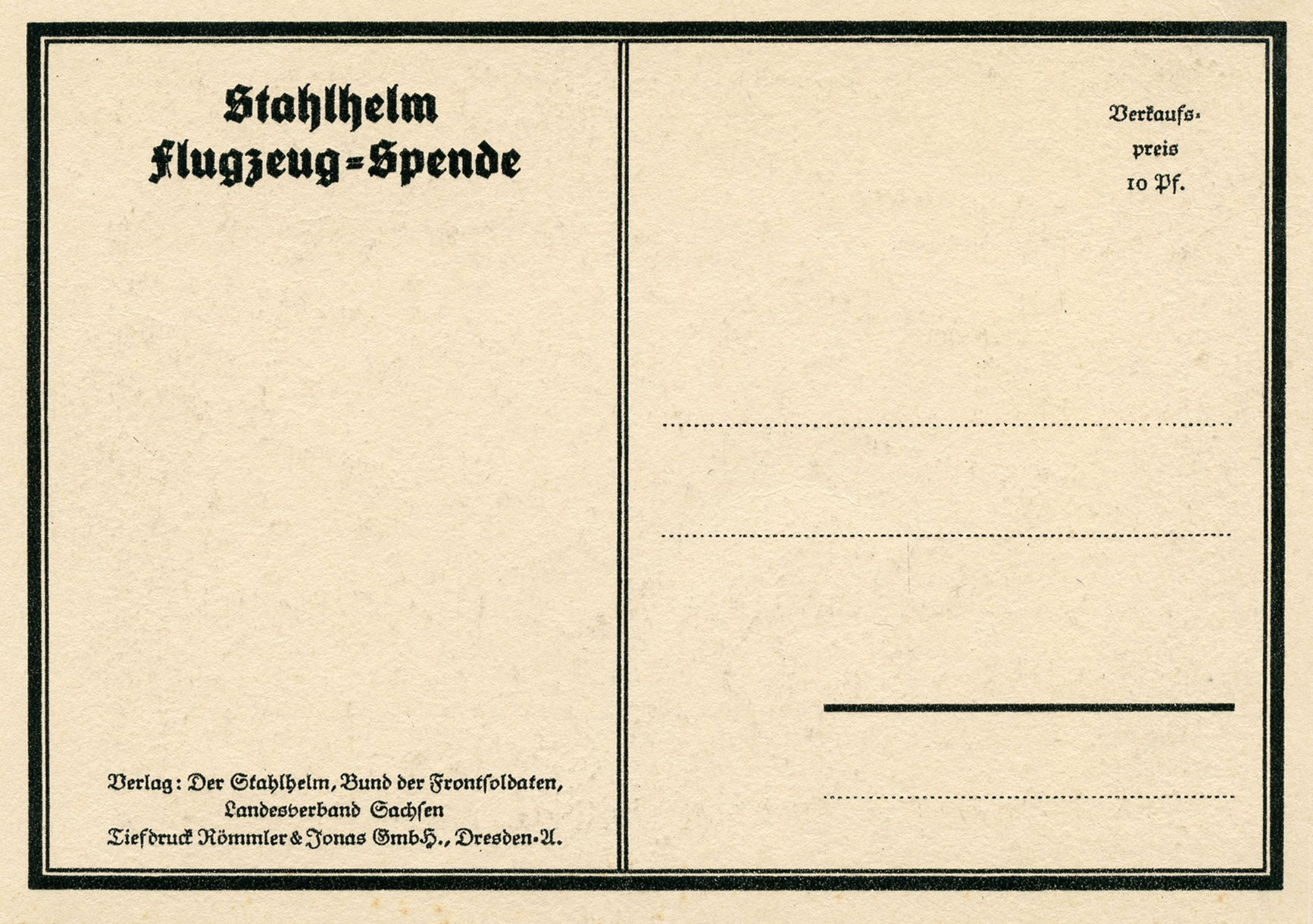
[Below: Reverse.]
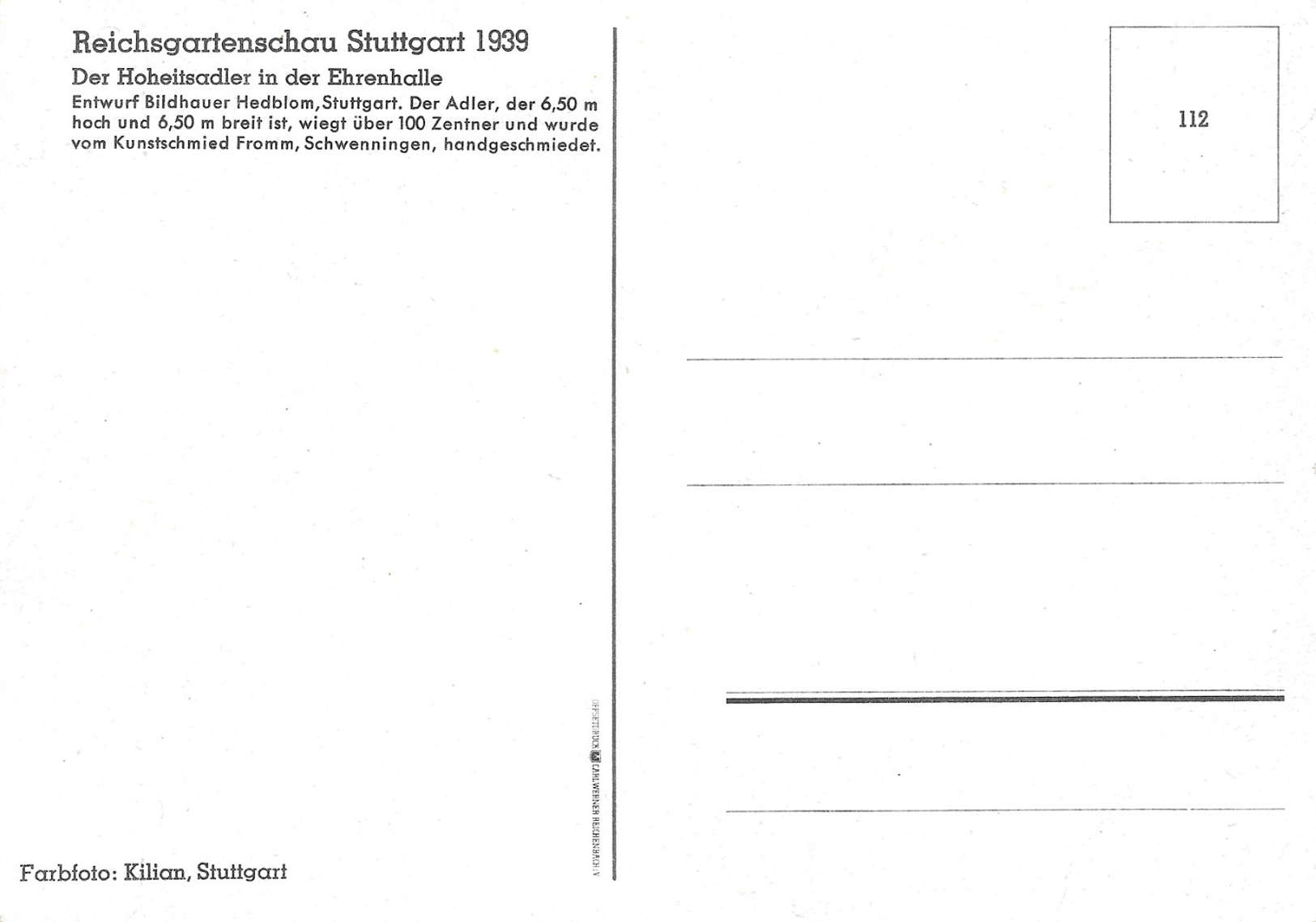
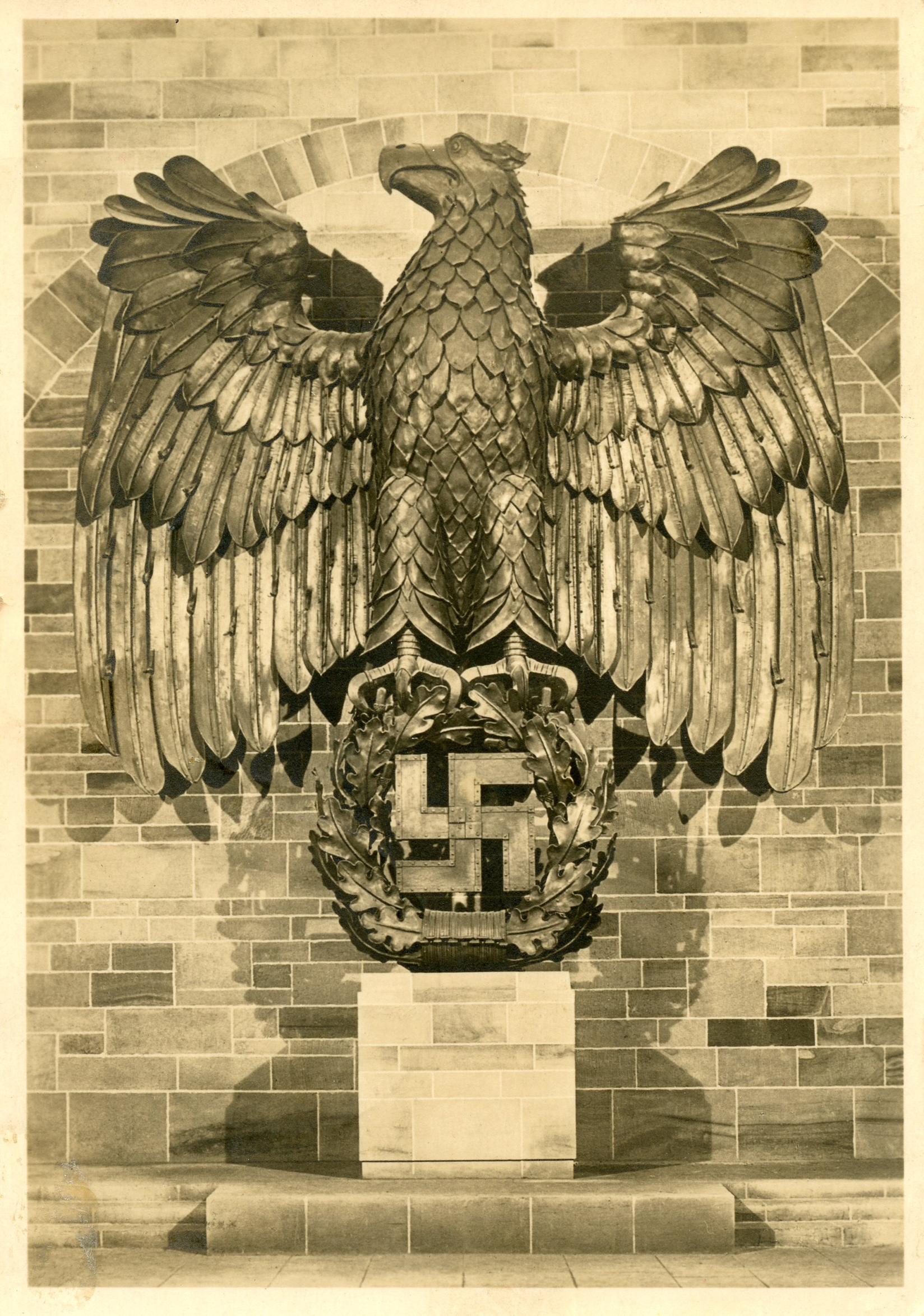
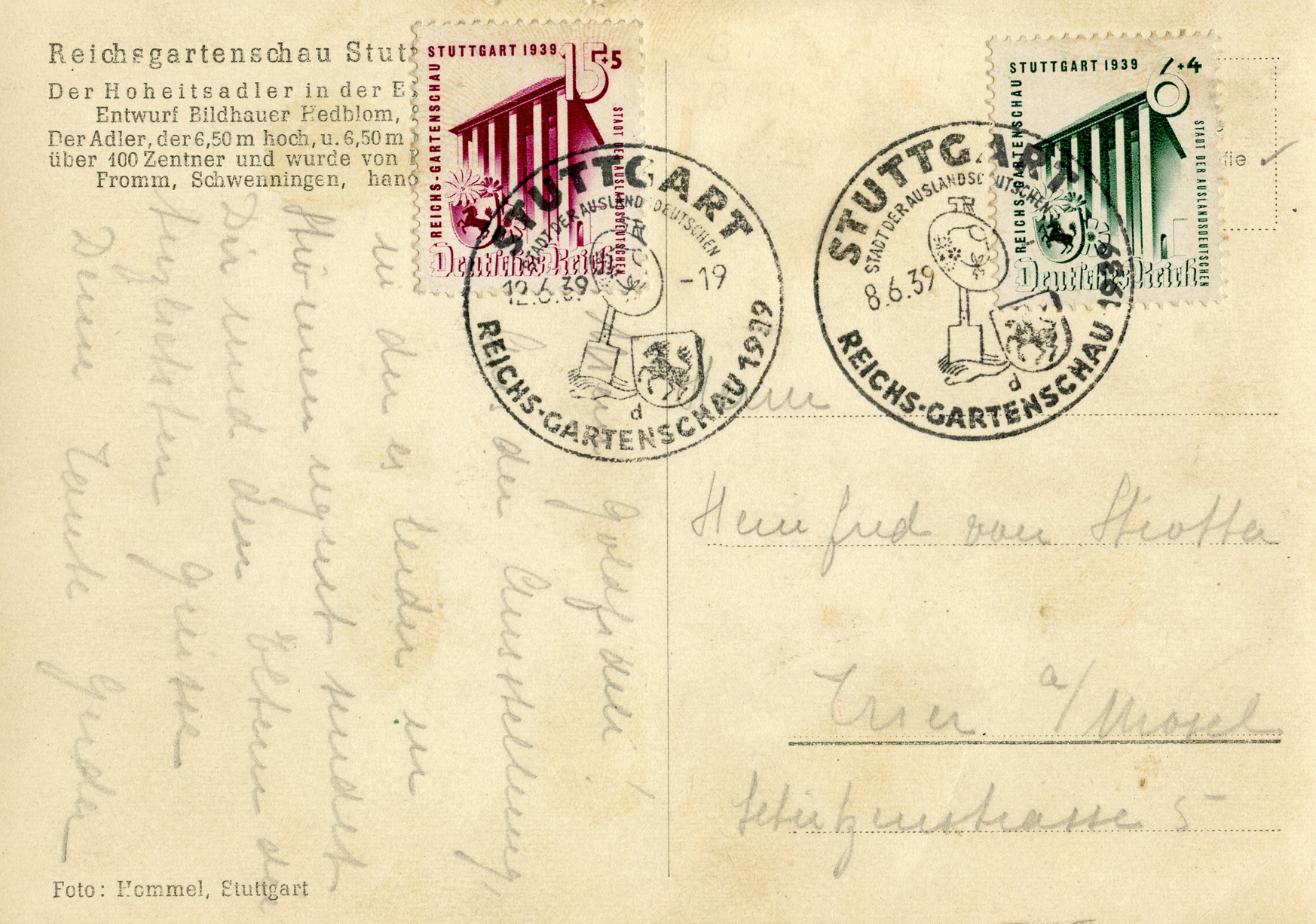
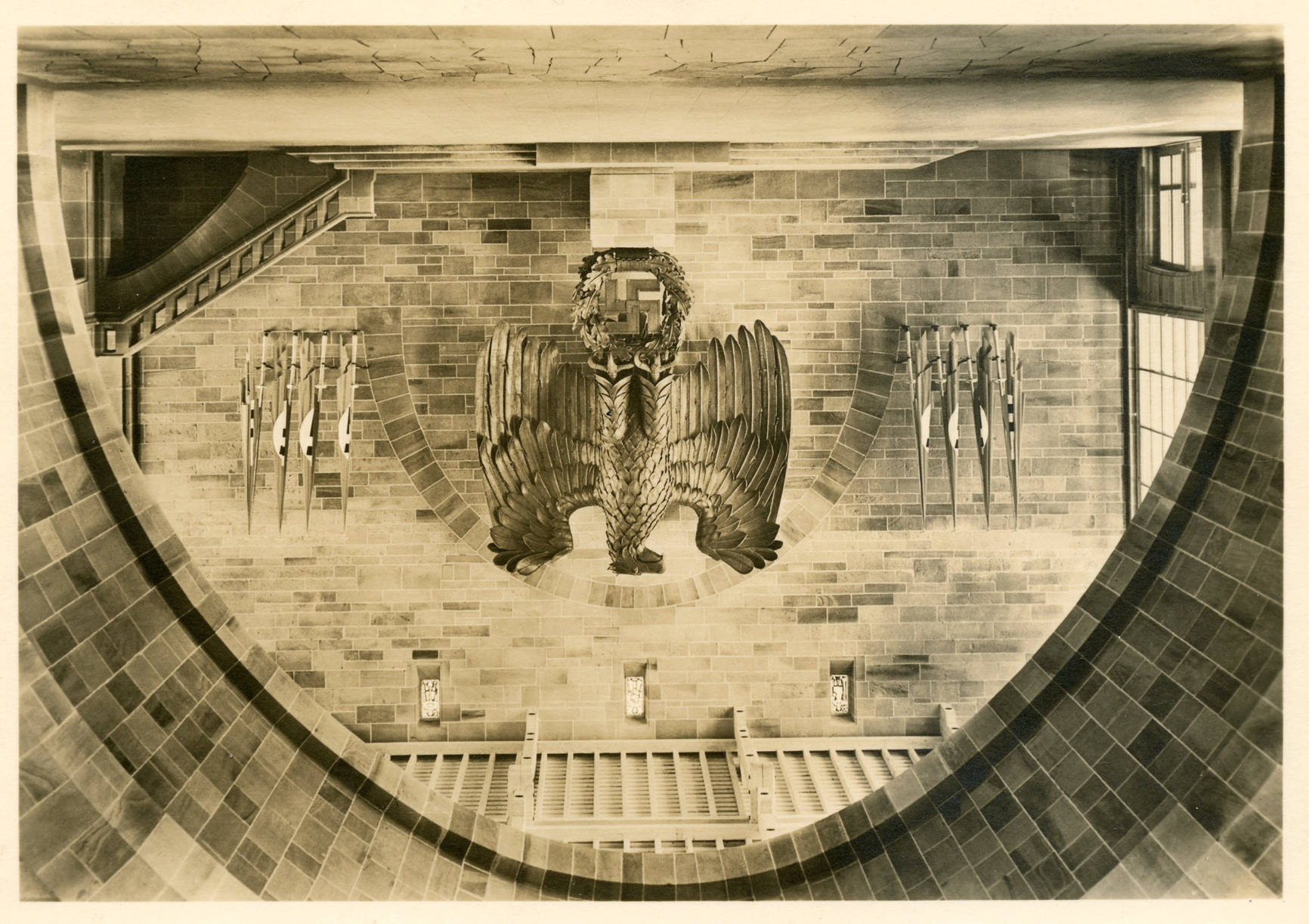
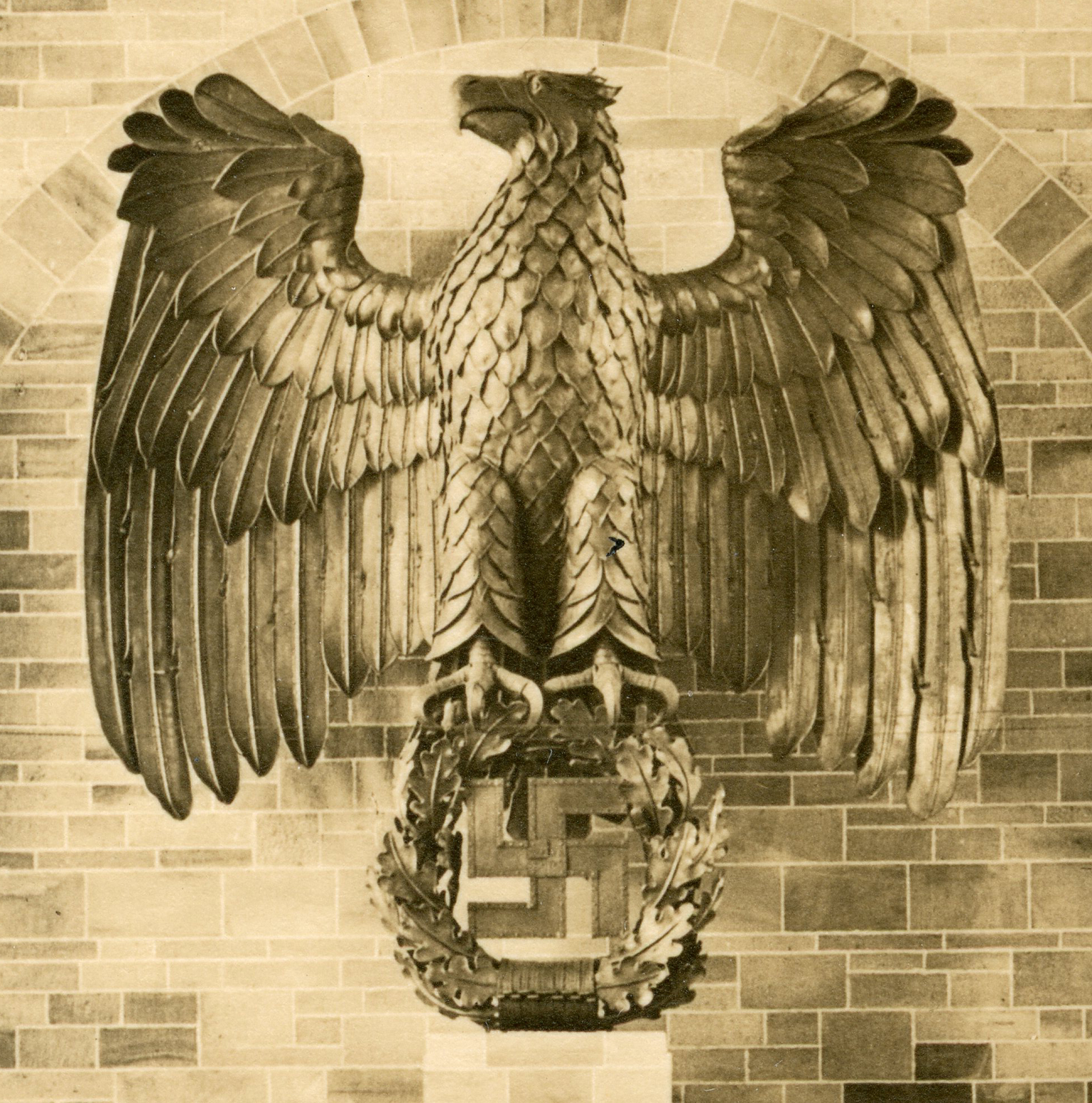
[Below: The following three postcards show one of the most beautiful and powerful eagles of the Third Reich. These postcards were released to promote the Reich Garden Show.]
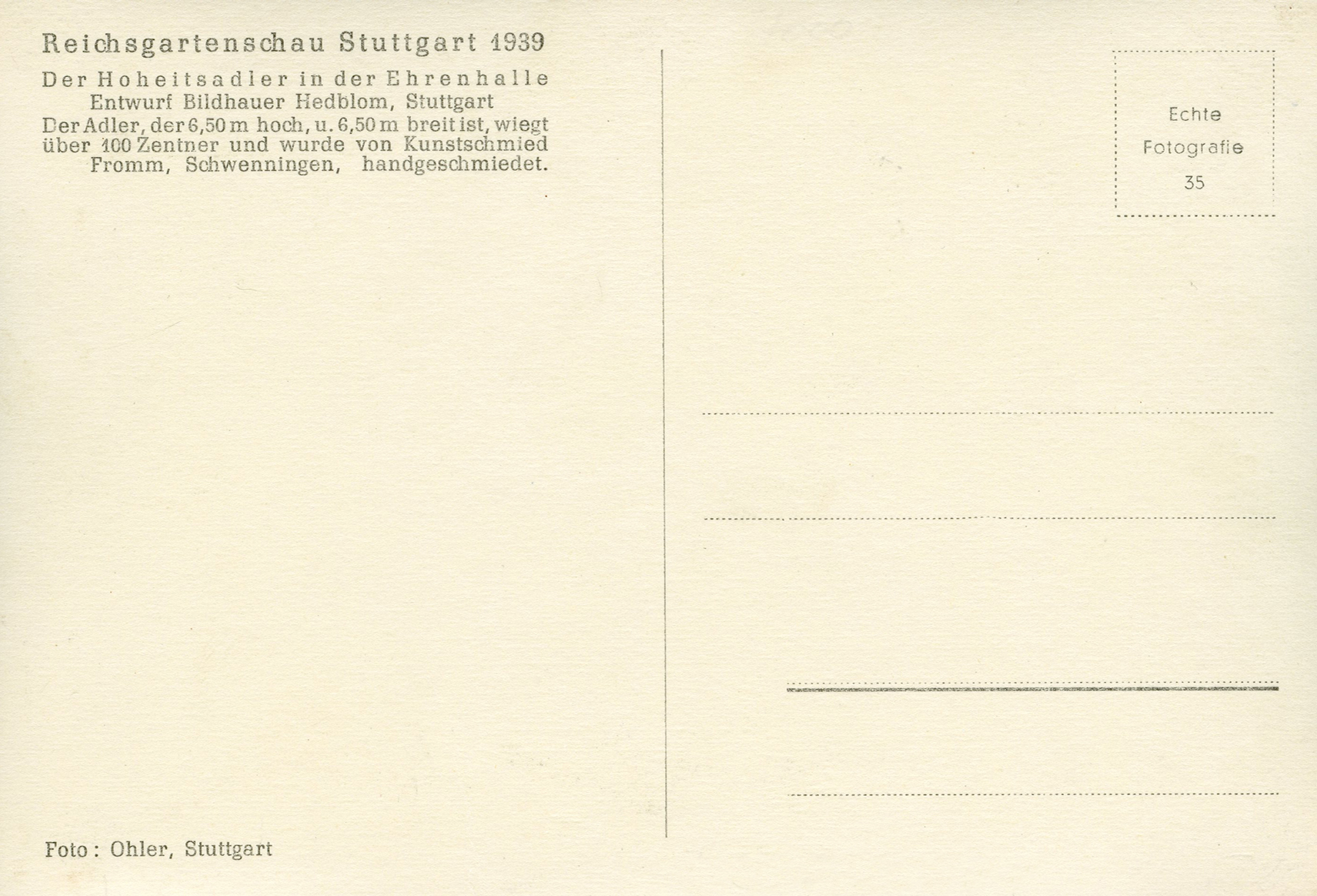
[Below: Reverse. It says: 'Reich Garden Show Stuttgart 1939 / The National Emblem (Eagle) in the Hall of Honor. Designed by sculptor Hedblom, Stuttgart.
21 feet tall?!?! This must have been awe-inspiring.]
[Below: It just gets more and more impressive. Keep in mind that this eagle is made from many different pieces of metal...]
[Below: Reverse. The cancels here are advertising the Reich Garden Show, postmarked June 12, 1939.]
[Below: WOW! From this perspective the eagle looks even grander. Just look at how big it is compared to the doors or the flags.]
[Below: Close-up.]
[Below: Reverse.]


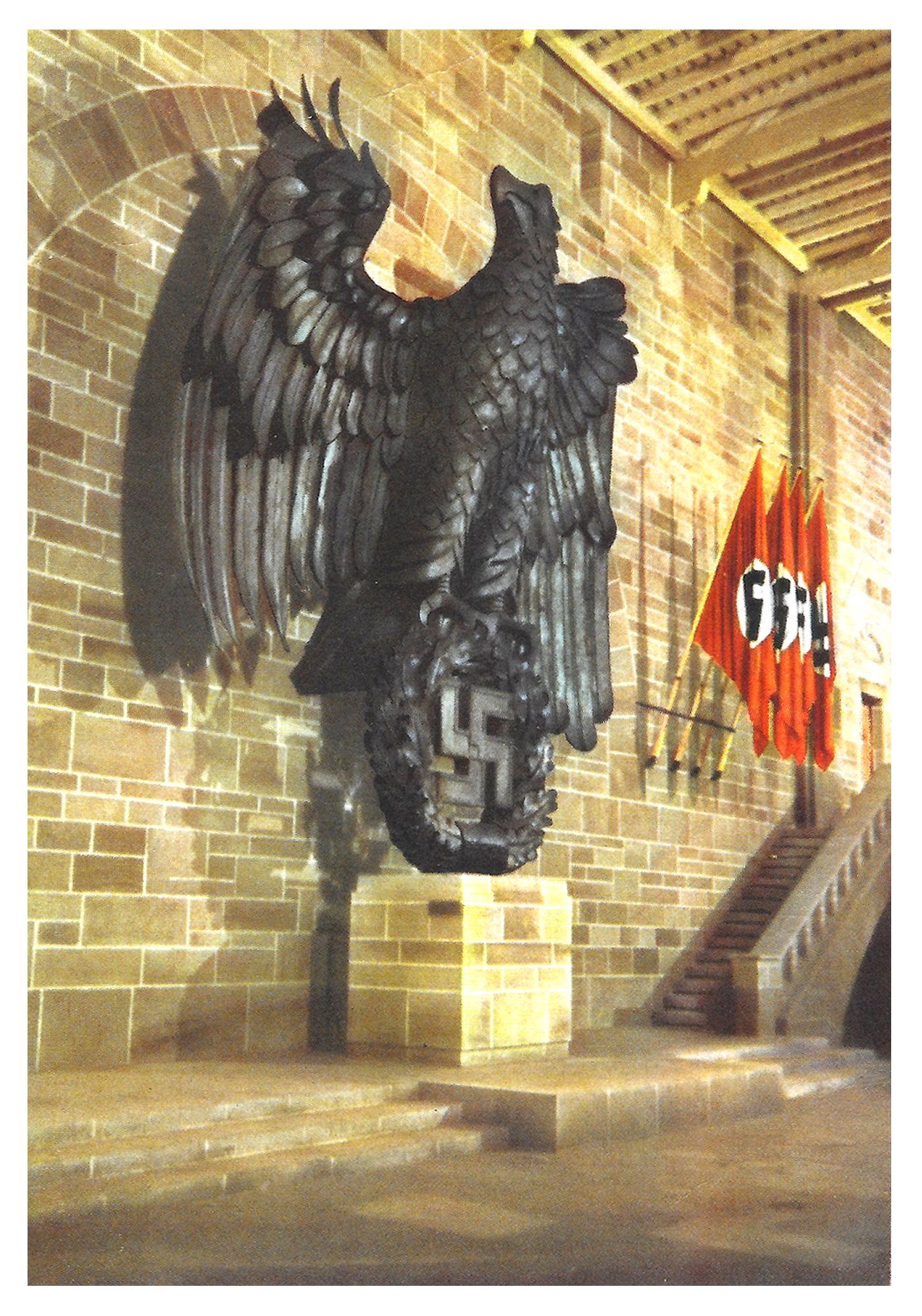
The eagle, which is 6.50 meters (approx. 21.3 feet) high and 6.50 meters wide, weighs over 100 Zentner (approx. 5 metric tons/11,000 lbs) and was hand-forged by the artistic blacksmith Fromm, Schwenningen.'