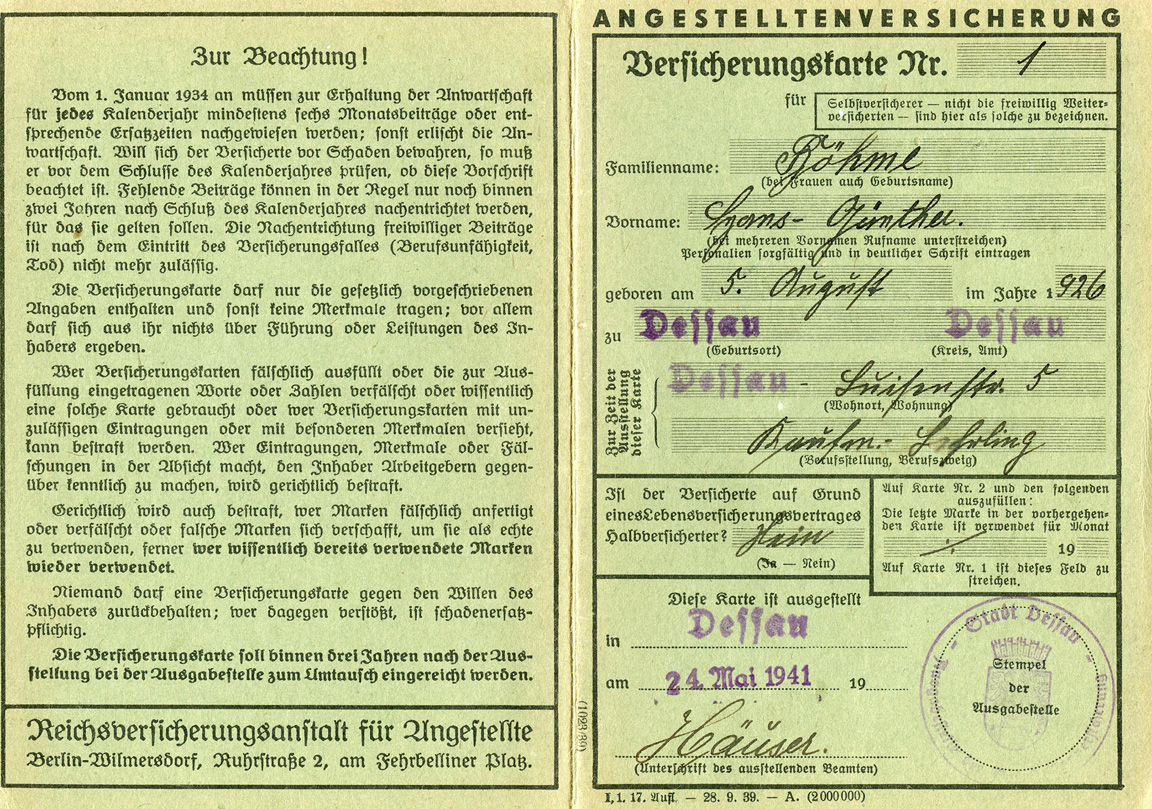
[Below: An uncommon item (with tax stamps), you would think there would be many of these around, but there is not. It says:
'Angestellten Versicherung'.
(Employee Insurance).
This is from 1941. Click to see within.]
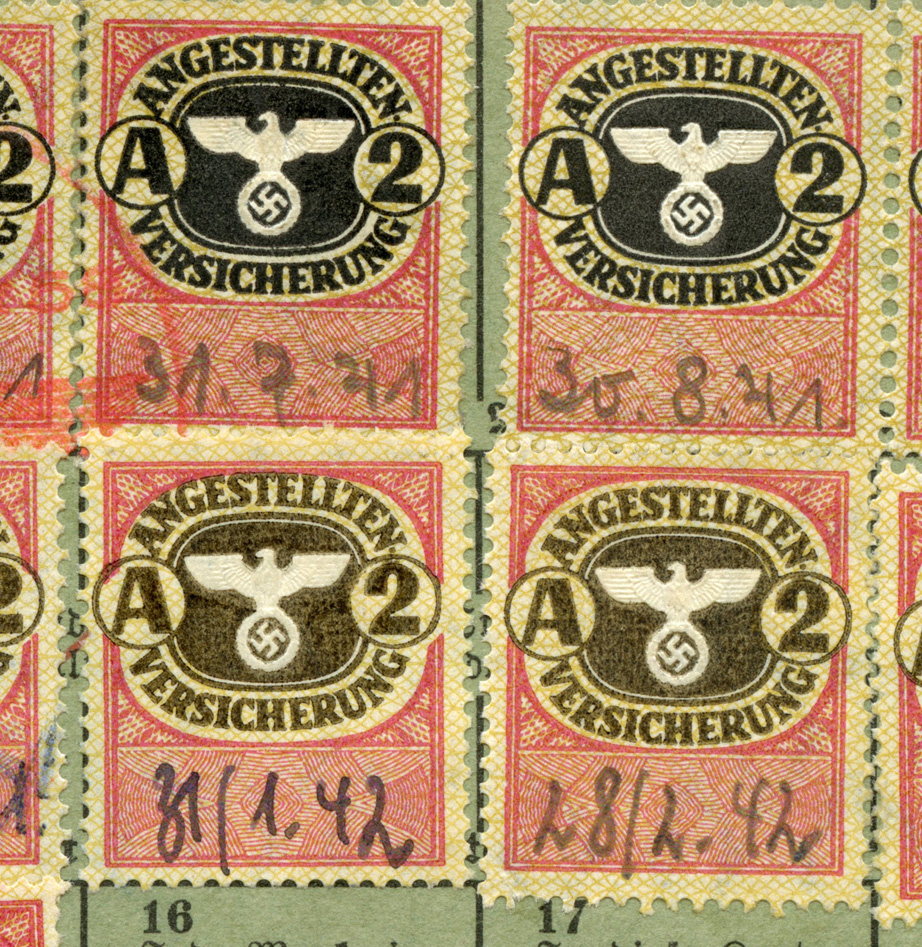
[Below: An example of the tax stamps within.]

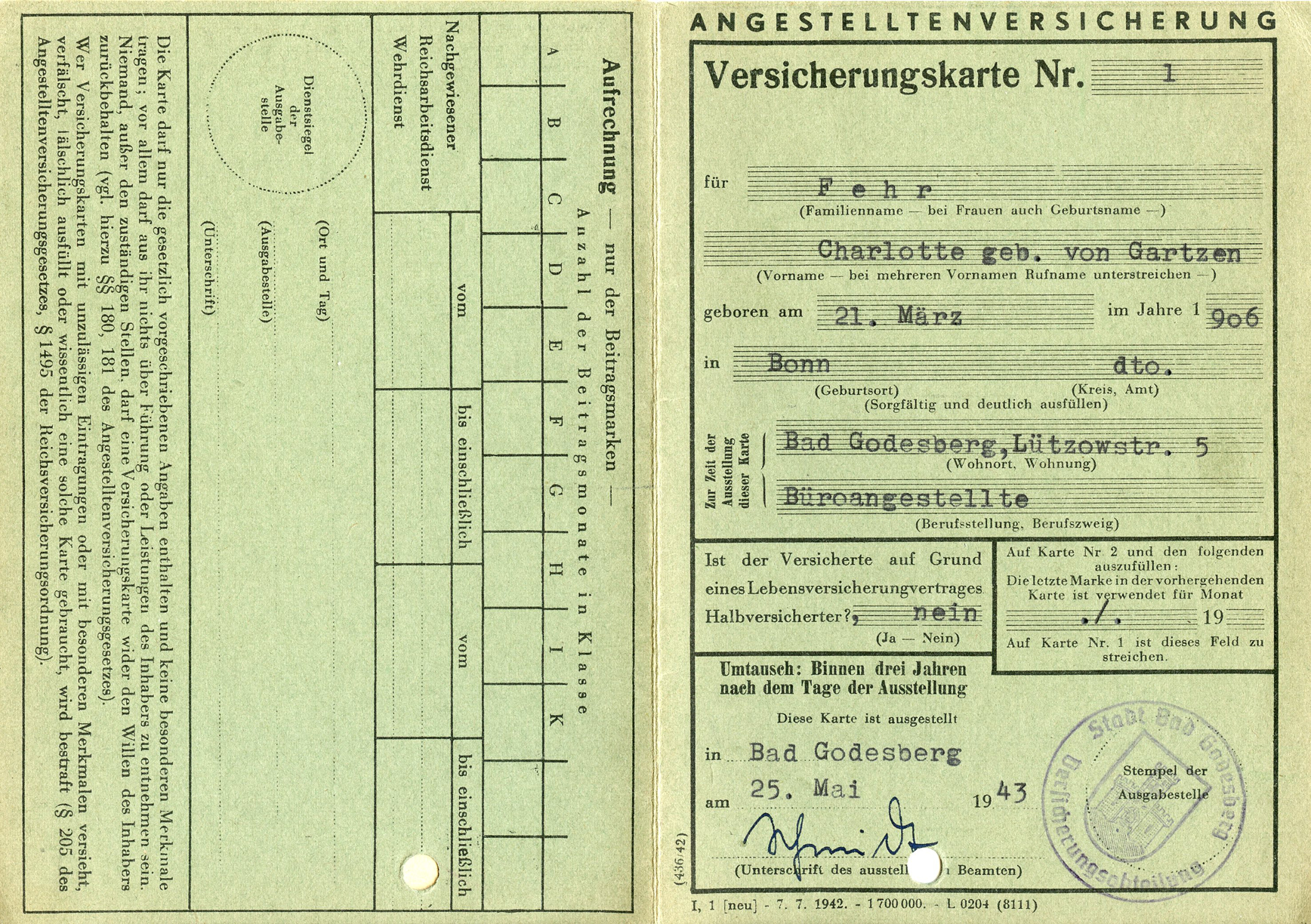
[Below: Here is another employee insurance card, but from 1943.]
[Below: Close-up.]
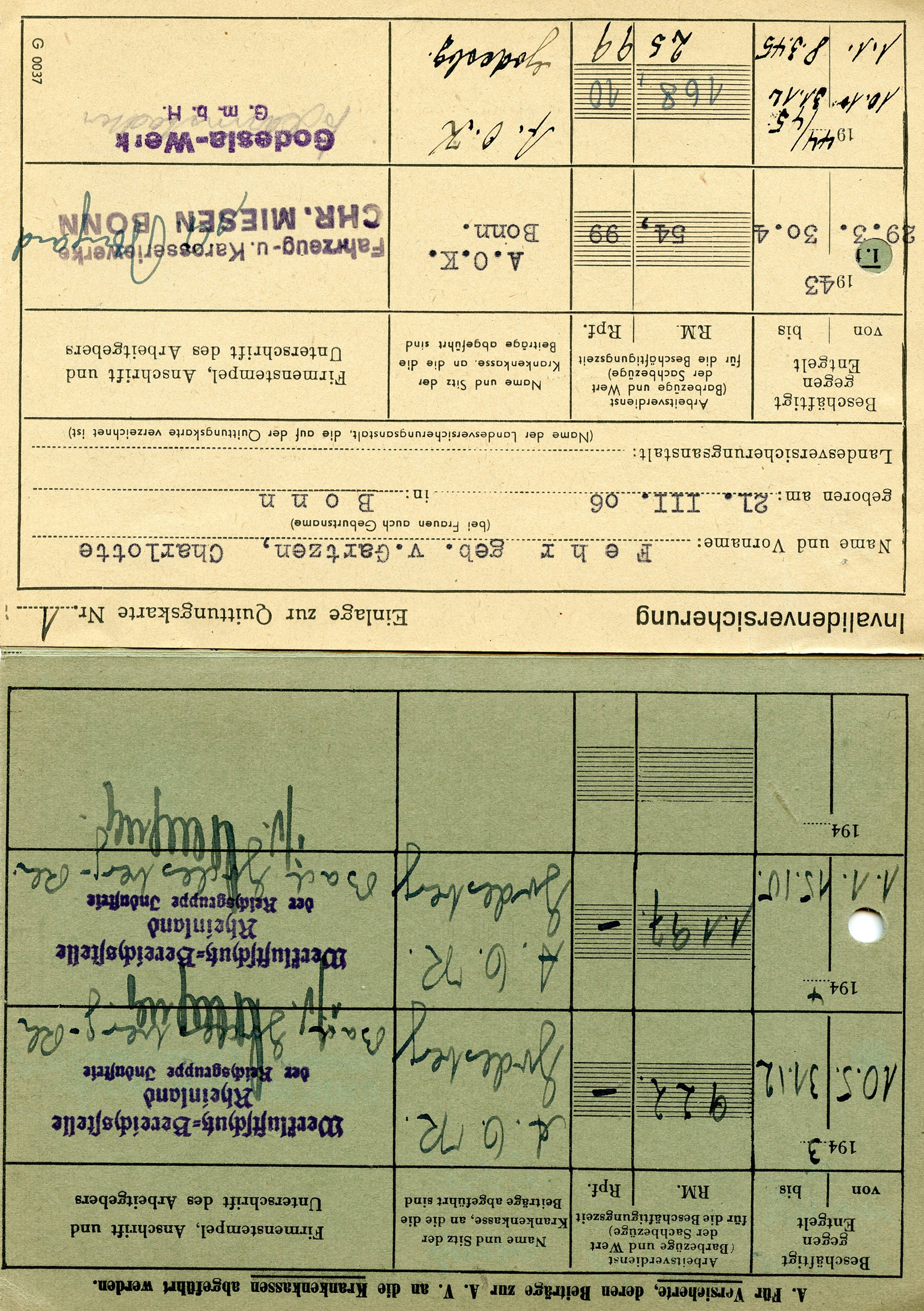
[Below: Inside. The tan-colored bottom half is a paper pasted in the book.]
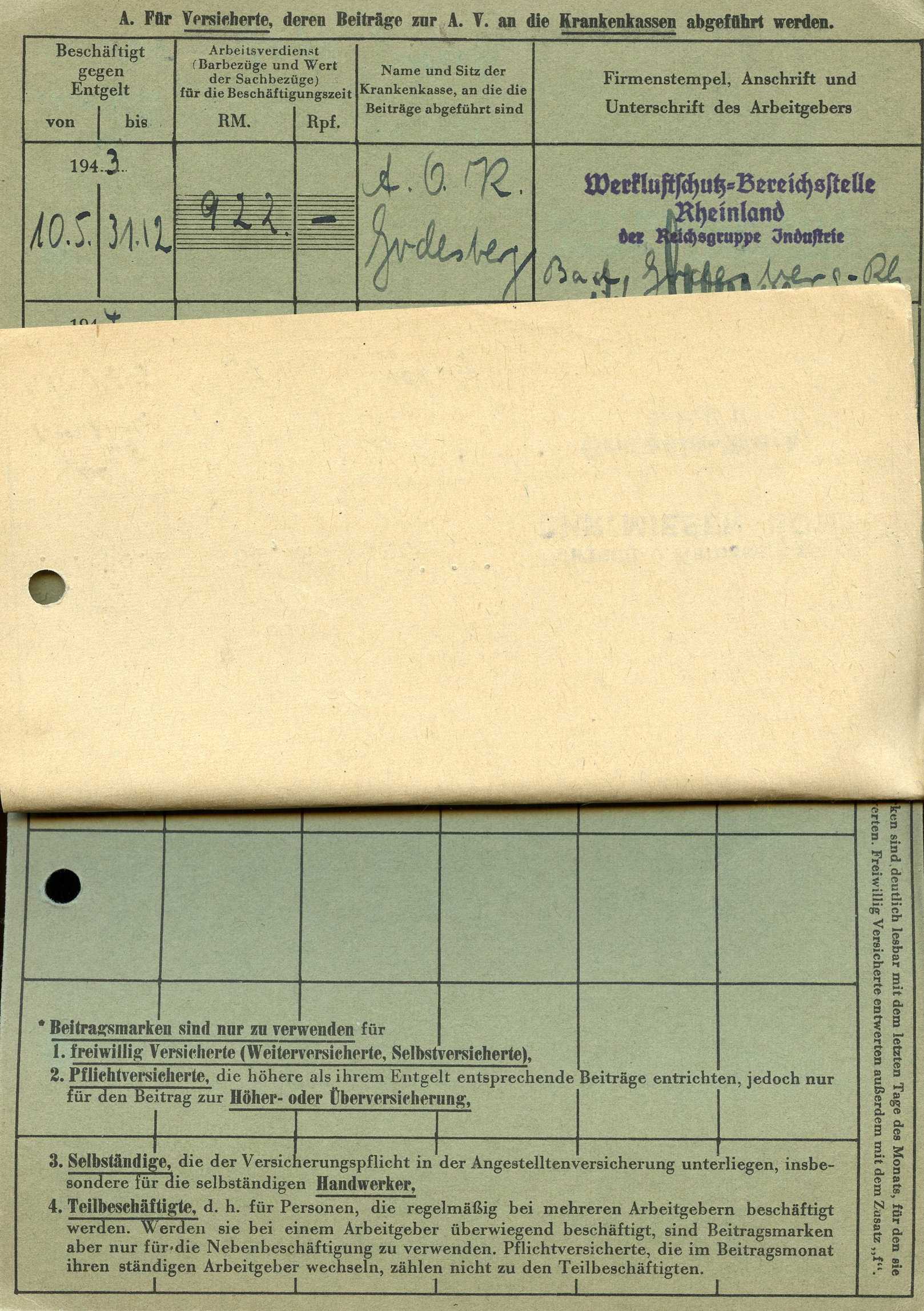
[Below: Paper lifted up.]
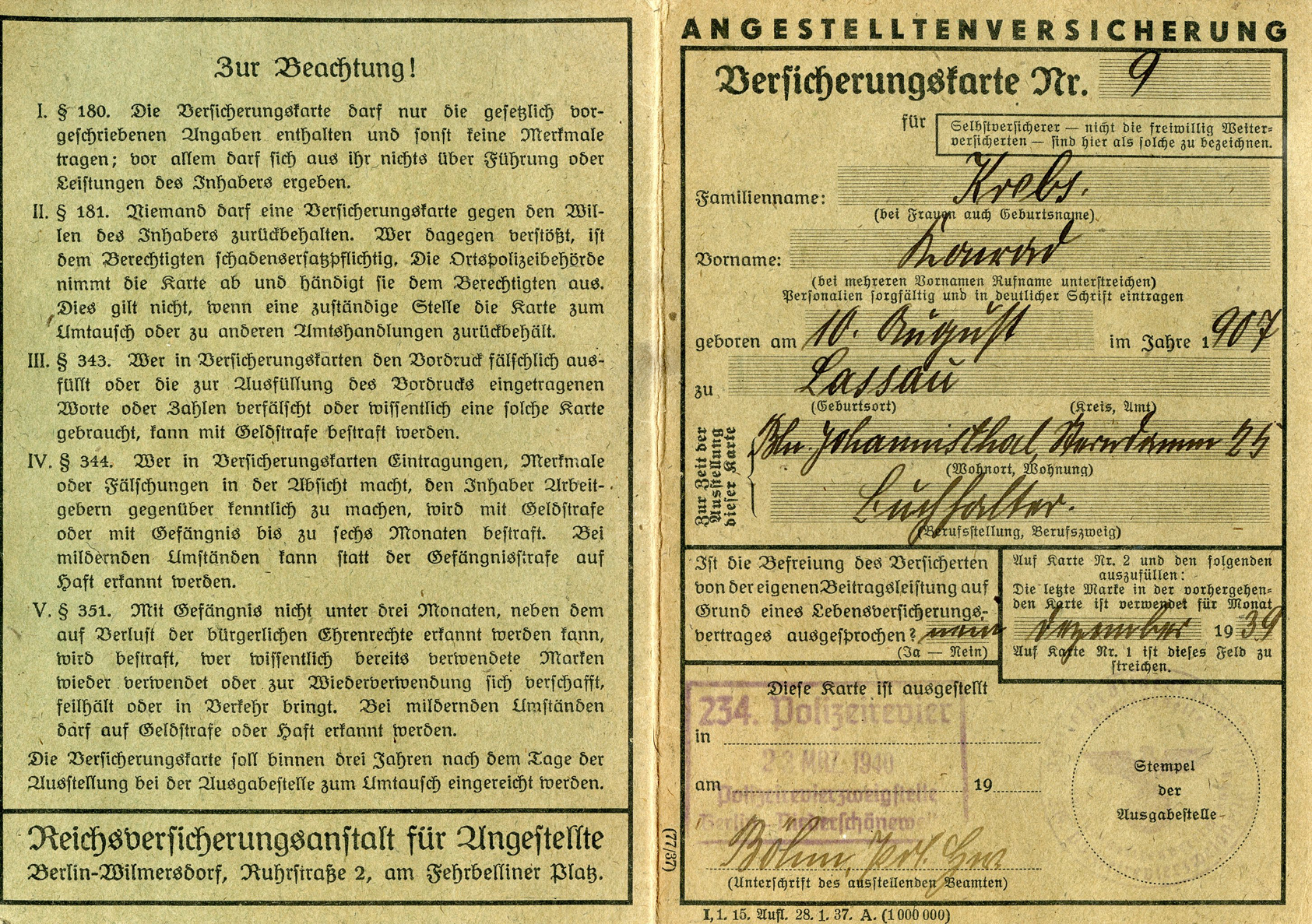
[Below: And another employee insurance card, but from 1939.]
[Below: Reverse.]
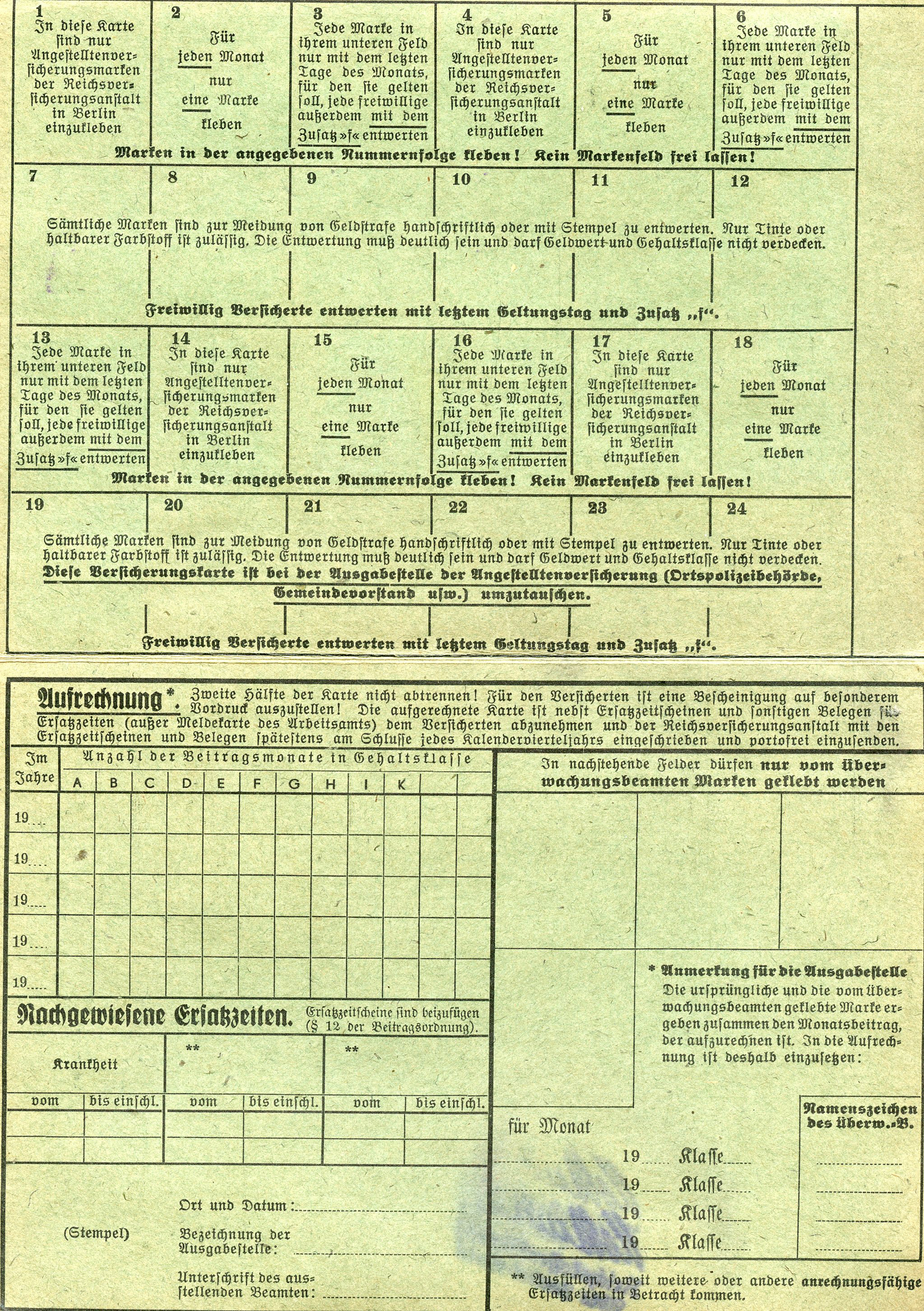
[Below: And lastly, another employee insurance card, but from 1941.]
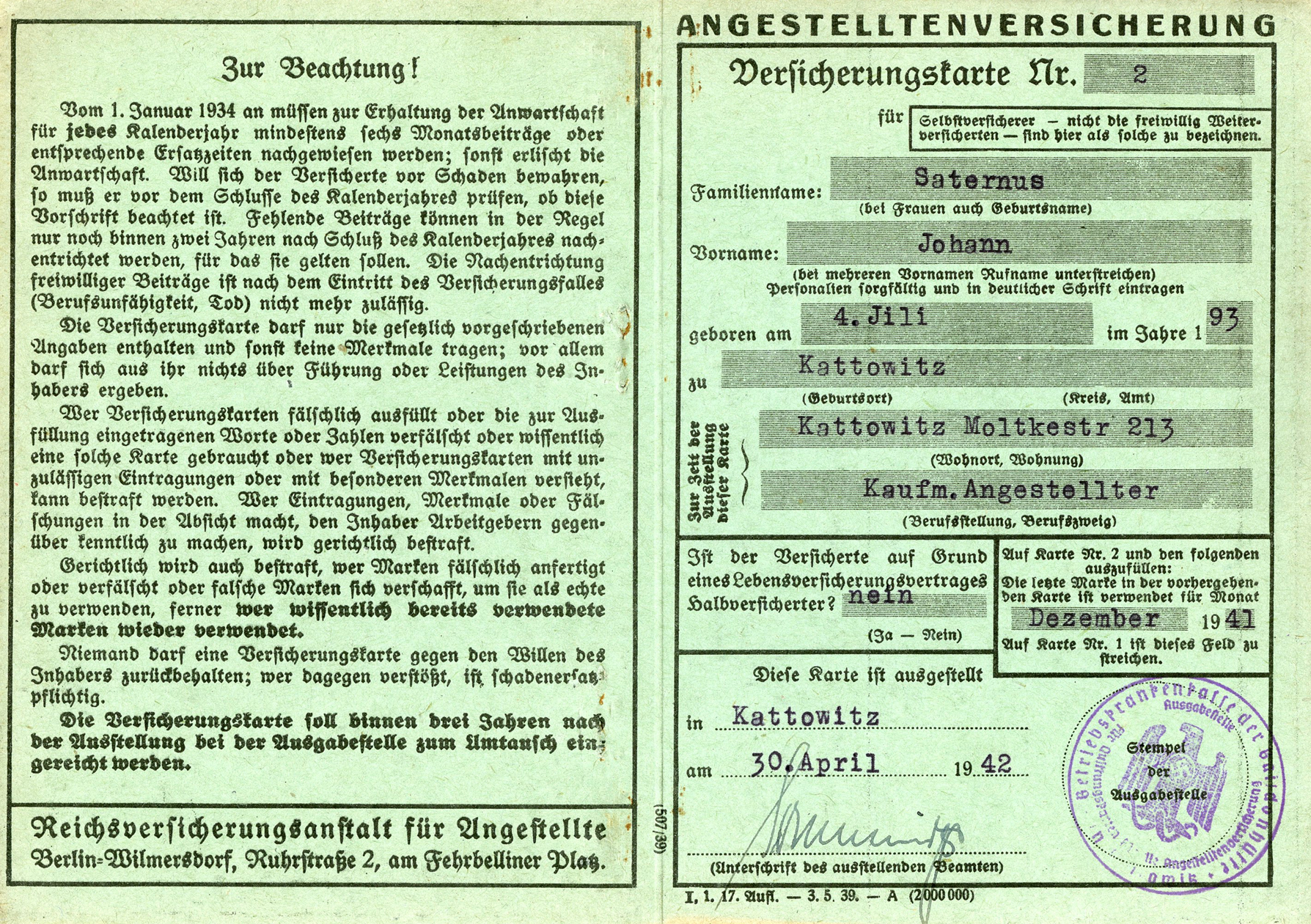
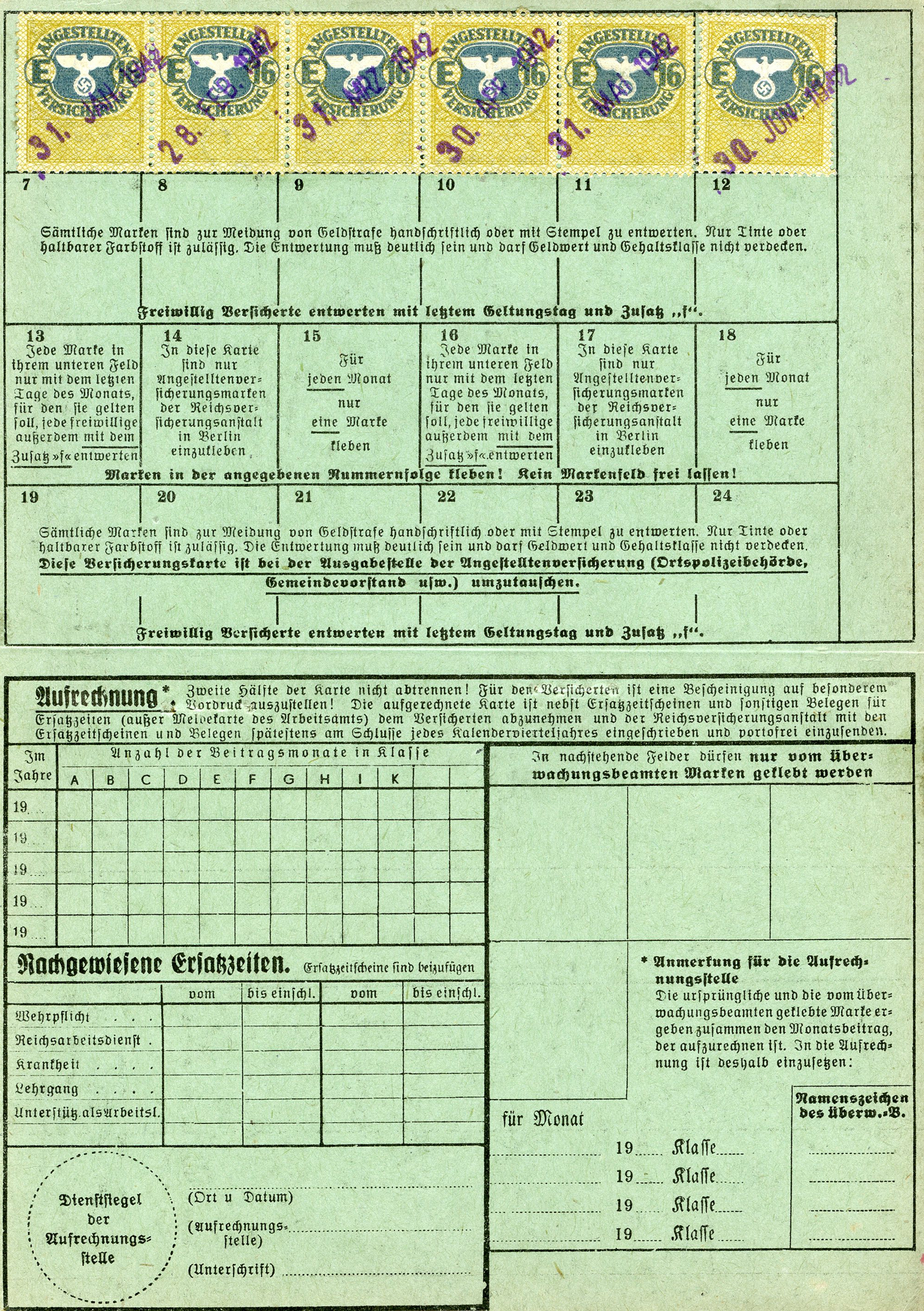
[Below: Reverse.]
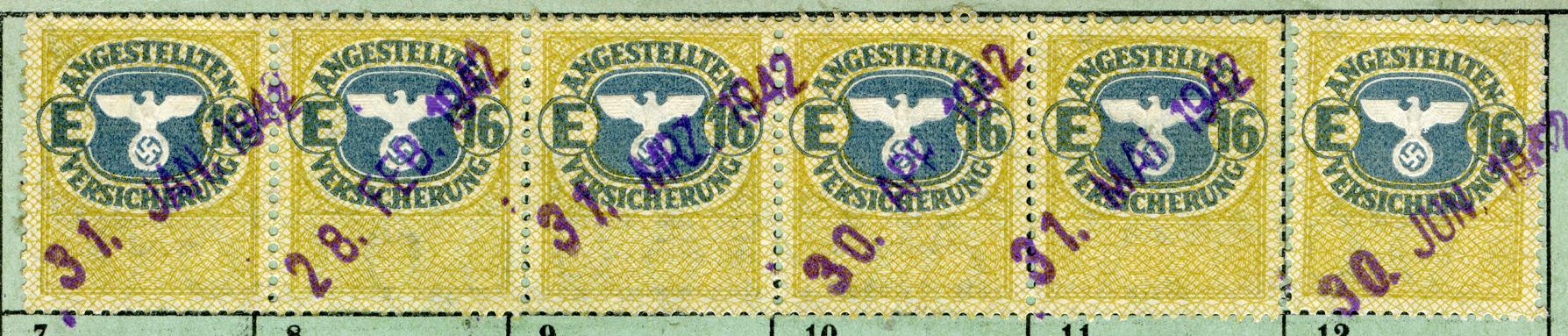
[Below: Close-up.]
[Below: This is a blank Red Cross identification card made of oilskin. It says:
'Wehrmacht des Deutschen Reiches - Truppenteil -
Personalausweis -
[...]
wird ausschließlich im Sanitätsdienst -
Er ist berechtigt, das Genfer Abzeichen (gestempelte weiße
Armbinde mit rotem Kreuz) zu tragen und steht unter dem Schutz
der Artikle 9, 12, und 13 des Genfer Abkommens vom
27.7.1929.'.
(Wehrmacht of the German Reich - Troop Unit
- Identity Card -
[...]
is carried out exclusively in the medical service -
He is entitled to wear the Geneva Badge (stamped white
armband with a red cross) and is protected by
Articles 9, 12, and 13 of the Geneva Convention of
July 27, 1929).]

[Below: The reverse is blank.]

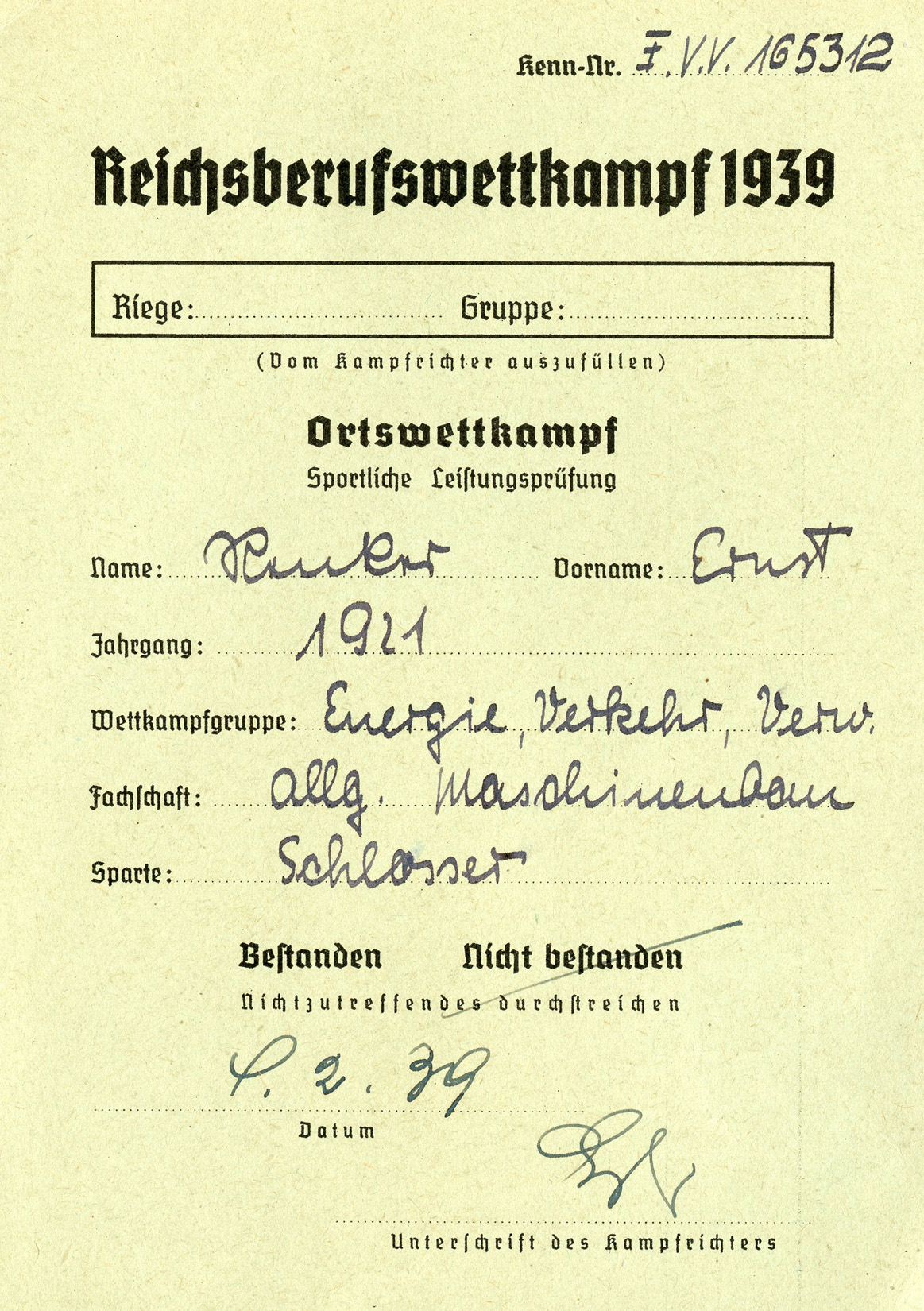
[Below: This is a sports card. It says:
'Reichsberufswettkampf 1939 Ortswettkampf'.
(Reich Vocational Competition 1939 Local competition)]
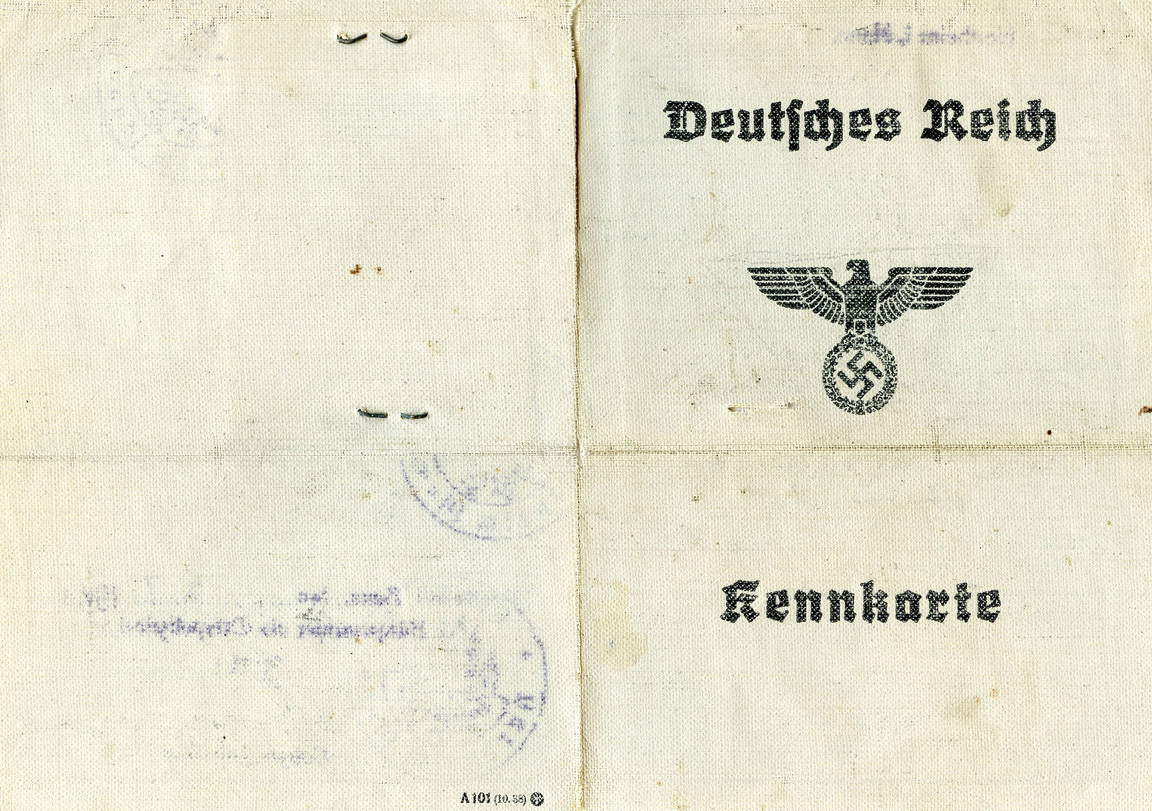
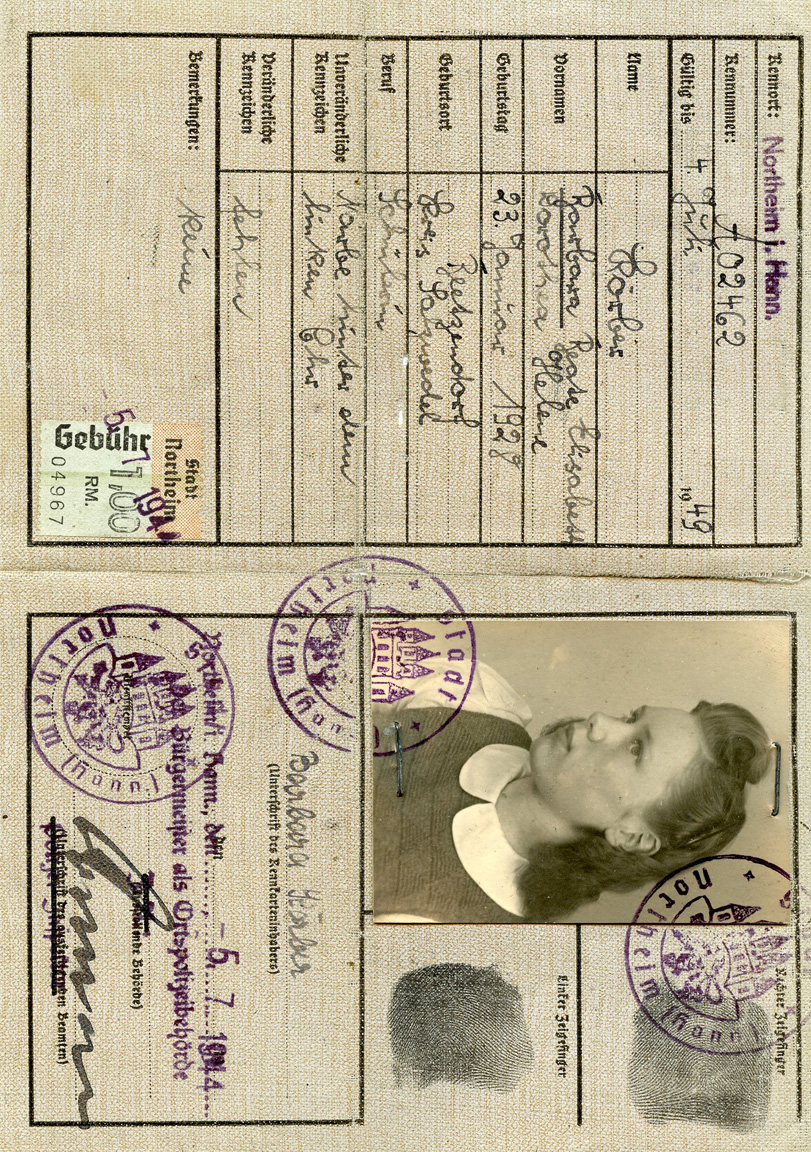
[Below: This is a 'Kennkarte' (Identity Card) from 1944. Click to see more.]
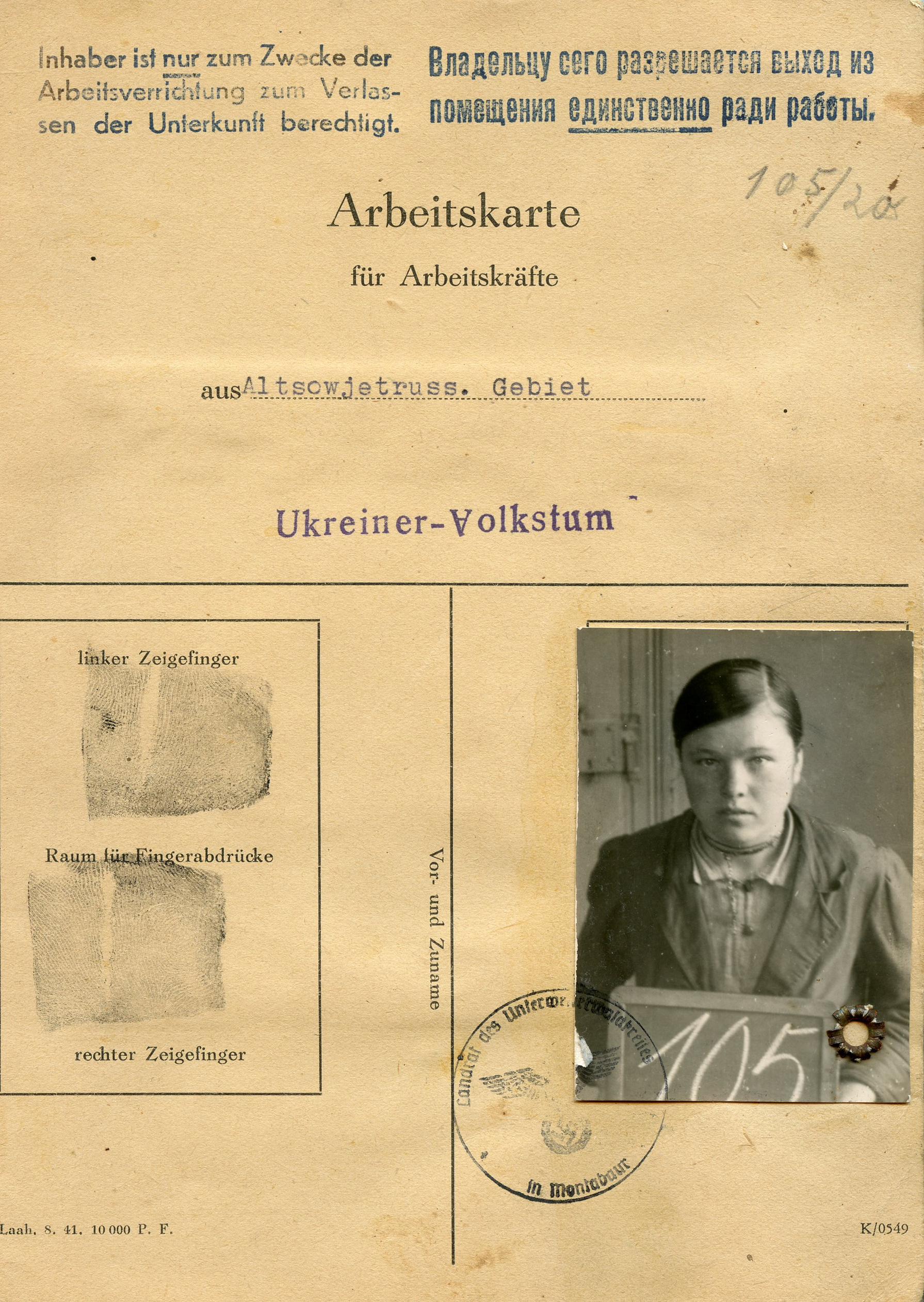
[Below: This is a rare, unusually large work permit (in German and Cyrillic) for a Ukrainian girl named Frasina Palamtschuk. She was born on January 16, 1925 (she was 17 at the time) in Sabariwka (Zabarivka), a village in Ukraine. At the top it says: 'The owner is only authorized to leave the accomodation for the purpose of performing work.' In the center it says 'Work card for workers from Old Soviet Russia'.]
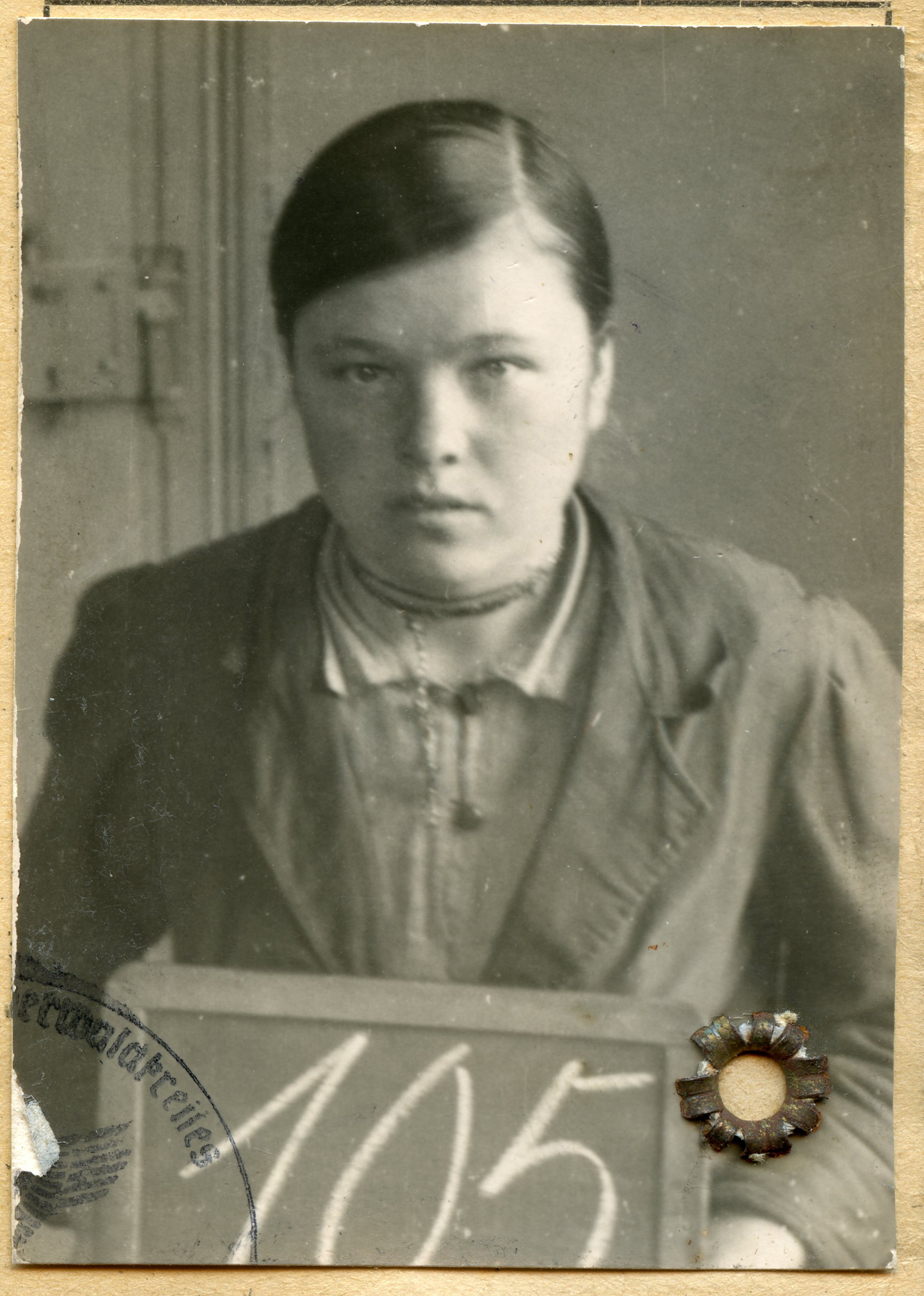
[Below: Close-up of Frasina Palamtschuk.]
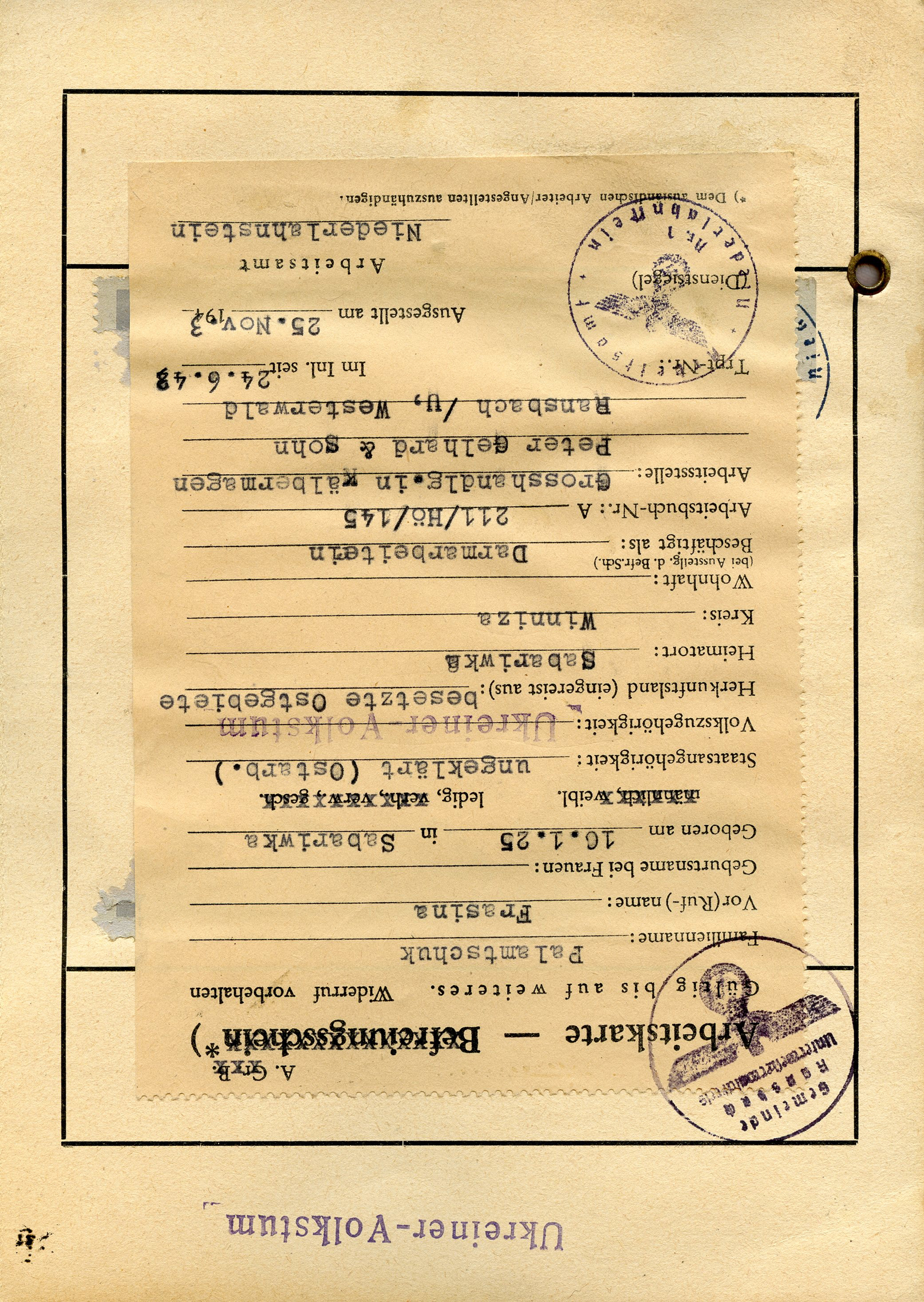
[Below: Reverse of work permit. A paper has been glued over another entry. You can see some sort of odd-looking grey stamps, unfortunately it is impossible to look under the paper without tearing it, but whatever stamps these are I have never seen their like before. Anyway, here is more information, including that she worked for a wholesaler named 'Peter Gelhard & Sohn', in the town of Ransbach, in the region of Westerwald, Germany. The card was issued on November 25, 1943.]
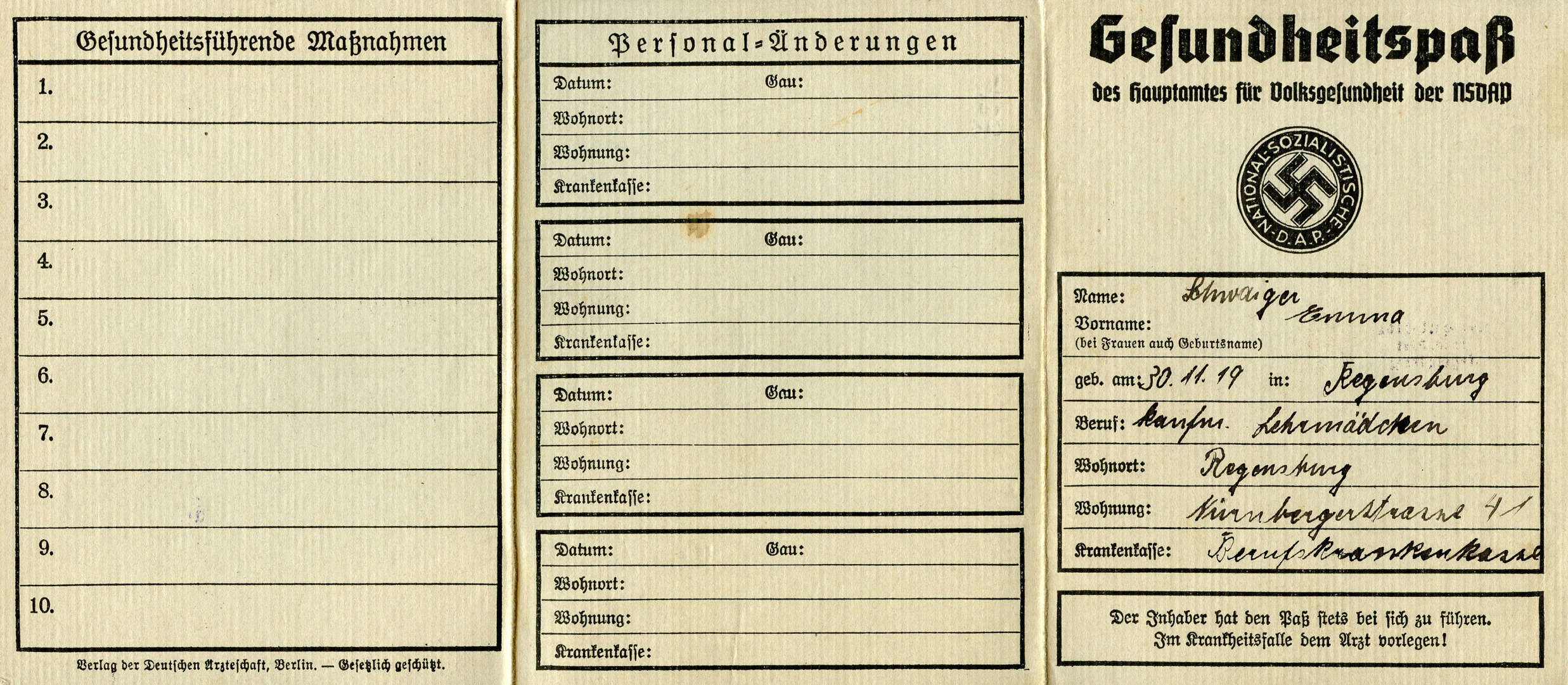
[Below: This is pretty neat, I've never seen one of these before. It's from 1938 and is an NSDAP health pass. In the USA (and probably elsewhere) the word 'Gesundheit' is said after someone sneezes. Strange how it stuck, probably from early days. Anyway, this says:
'Gesundheitspaß
des Hauptamtes für Volksgesundheit der NSDAP
Der Inhaber hat den Paß Stets bei sich zu führen.
Im Krankheitssalle dem Arzt vorlegen!'
(Health Passport
of the Main Office for Public Health of the NSDAP
The holder must carry the pass with them at all times.
Present it to the doctor in the hospital!).]
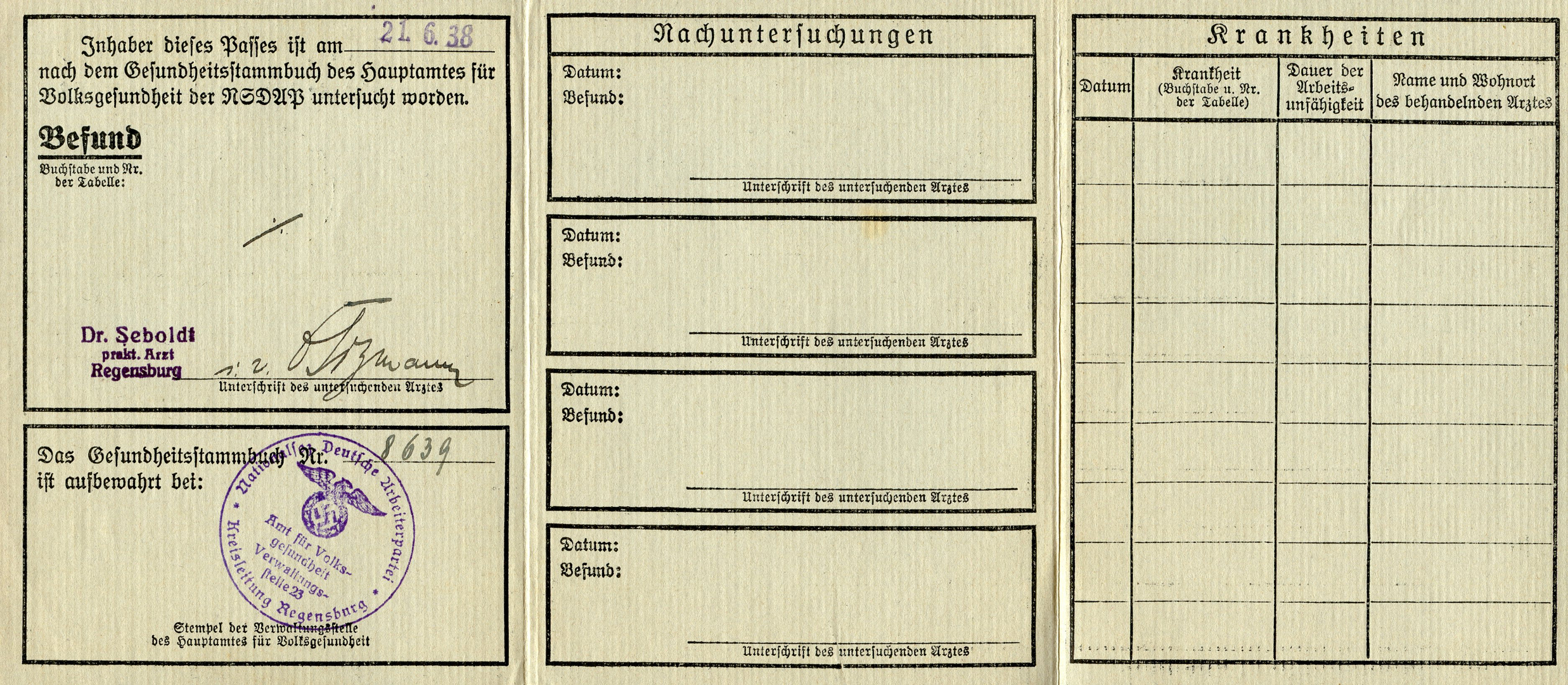
[Below: Reverse.]
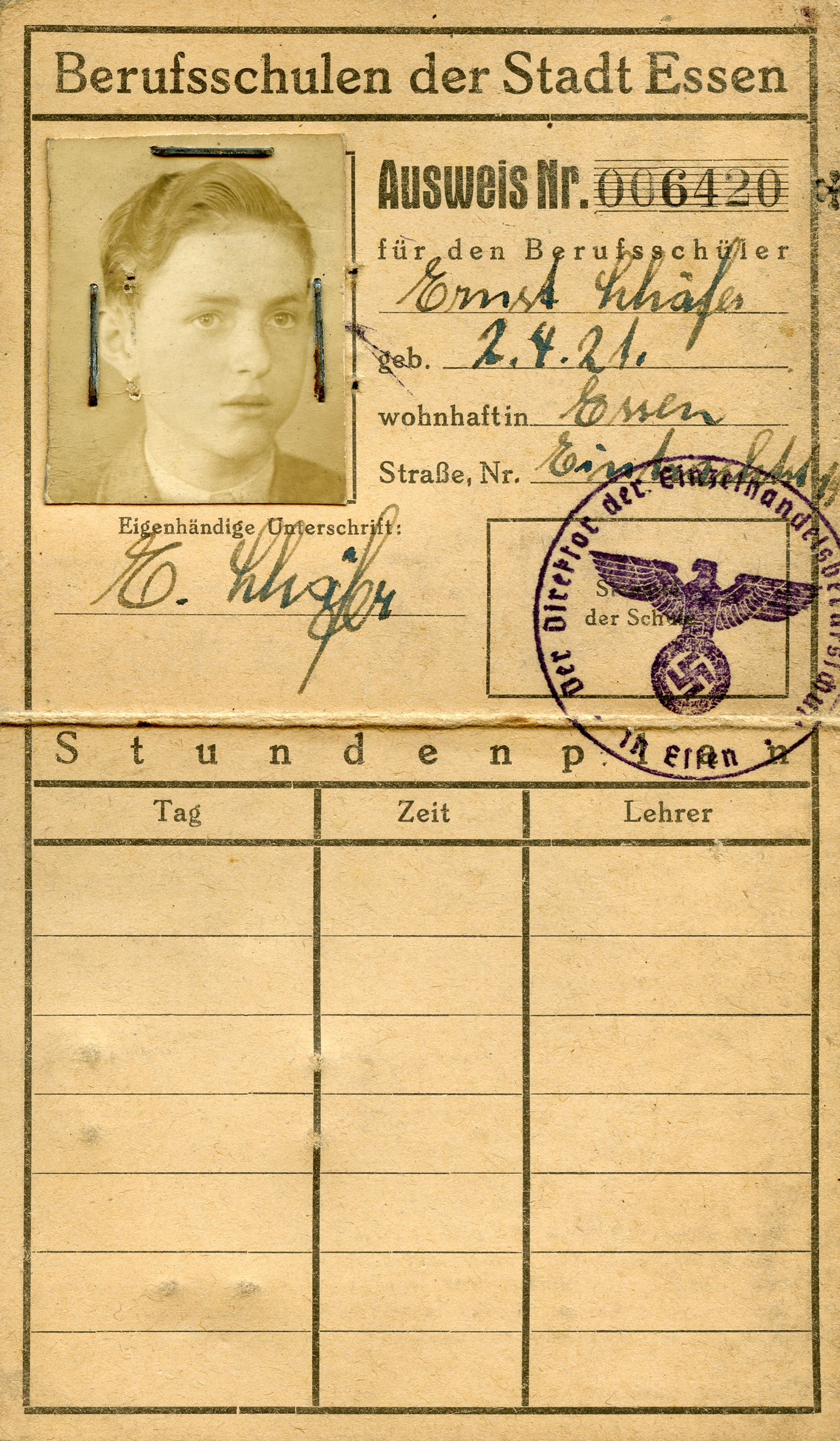
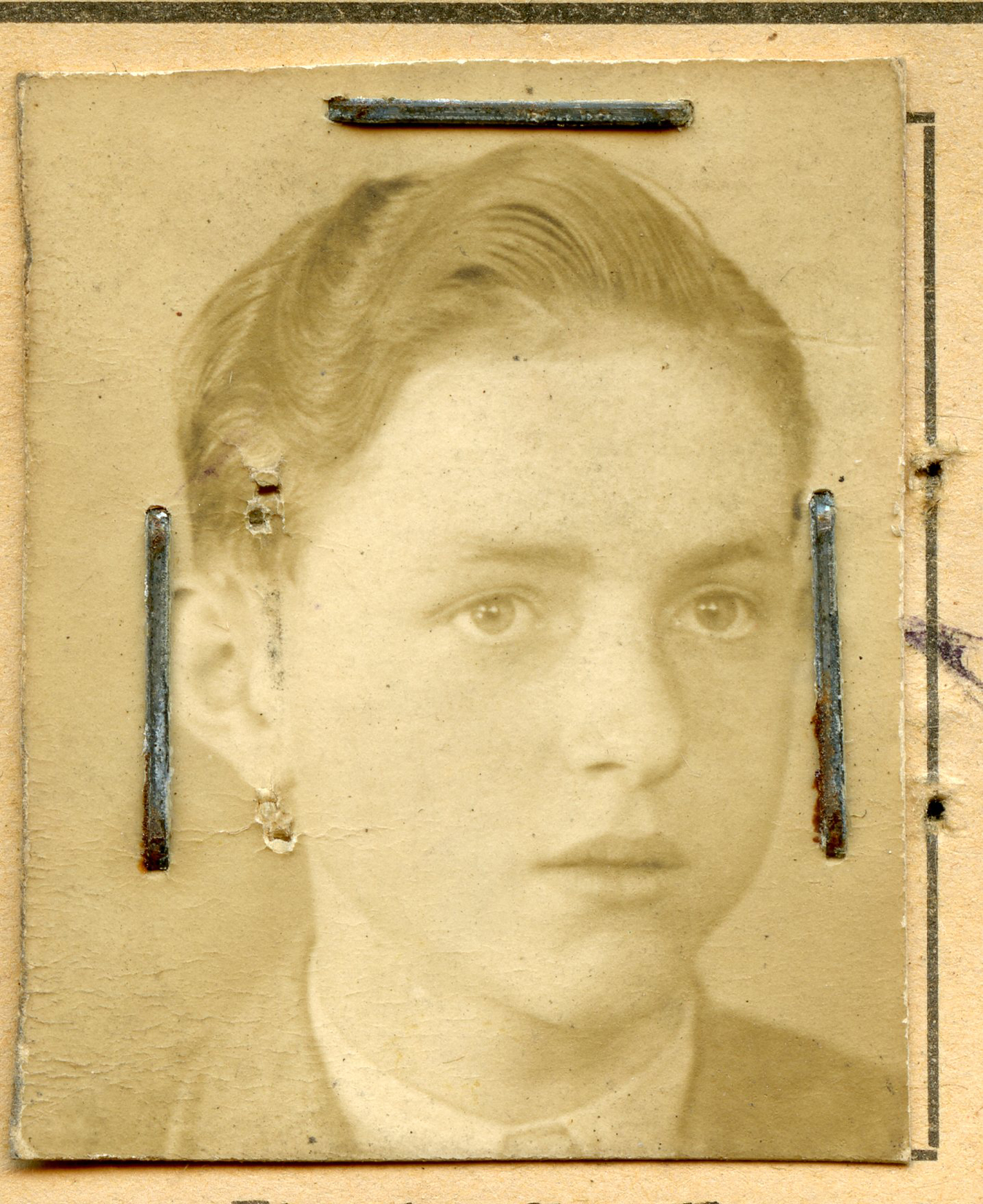
[Below: What a handsome lad. This says: 'Berufsschulen der Stadt Essen' (Vocational schools in the city of Essen).]
[Below: Close-up.]
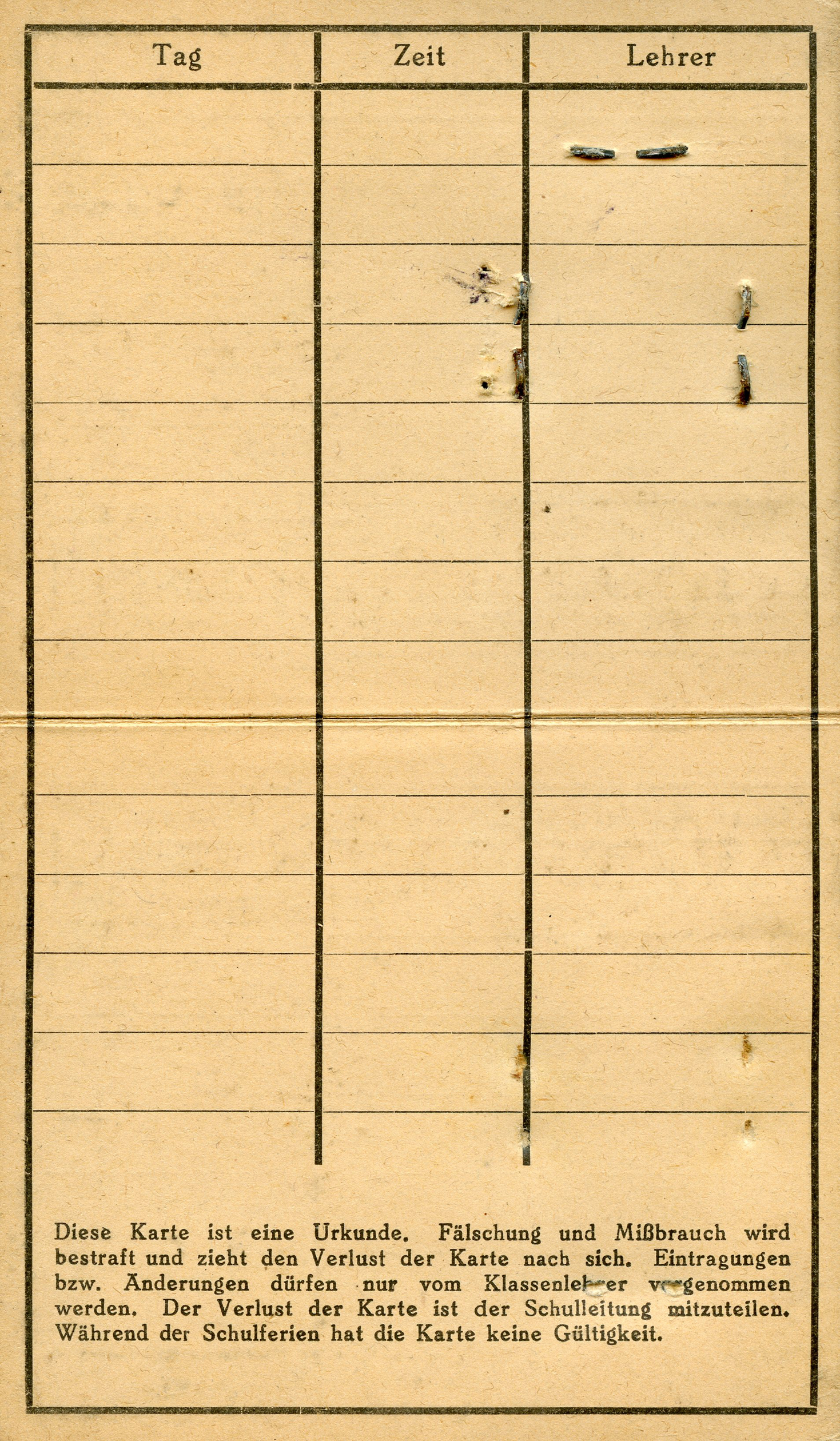
[Below: Reverse. The bottom says:
'This card is a document. Forgery and misuse will be punishedm and will result in the loss of the card. Entries or changes may only be made by the class teacher. The loss of the card must be reported to the school administration. The card is not valid during school holidays.']
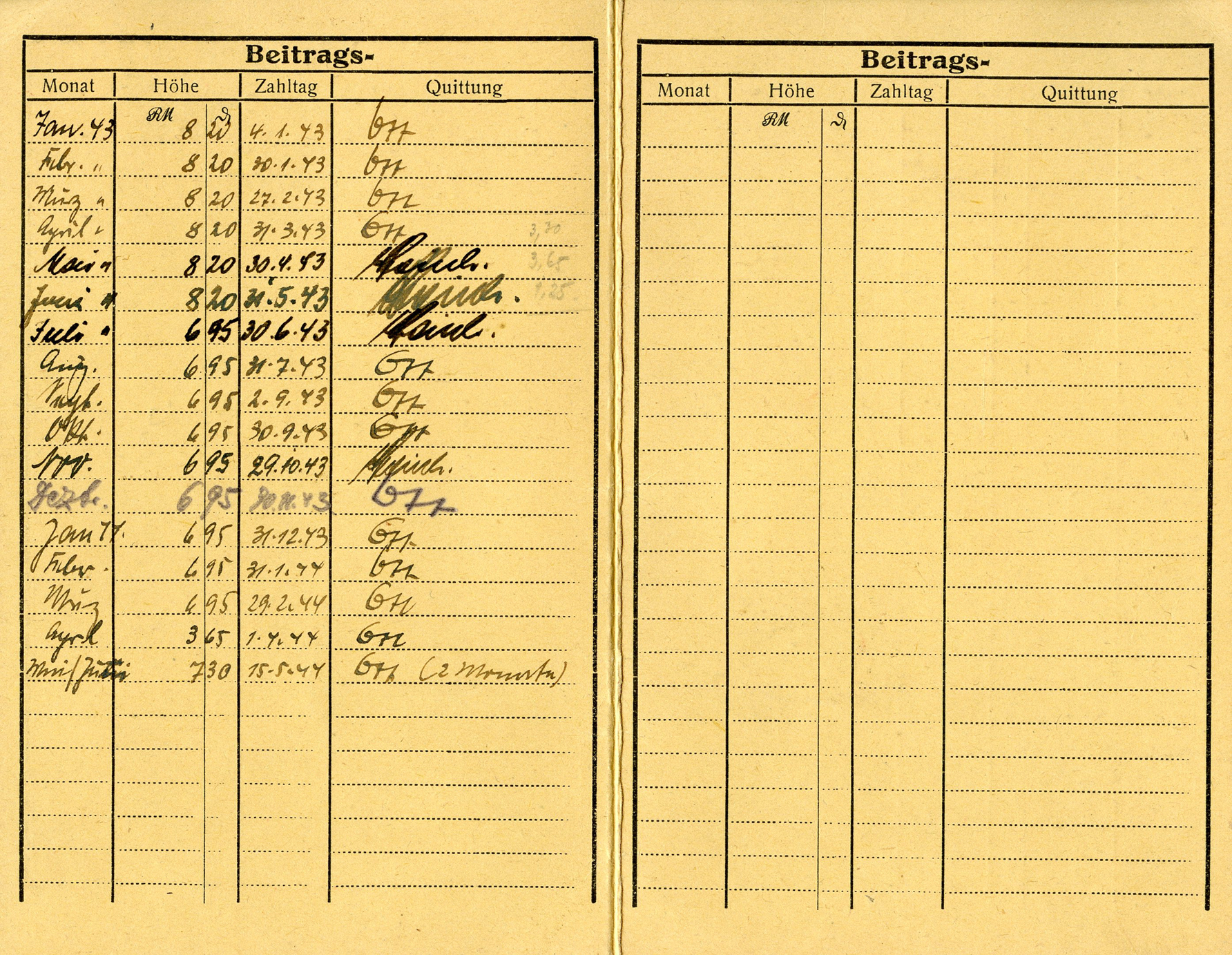
[Below: This card says 'German Civil Servants' Health Insurance Company'.
In the middle it says 'Contribution Receipt List for' and on the left it also says 'Contribution'.]
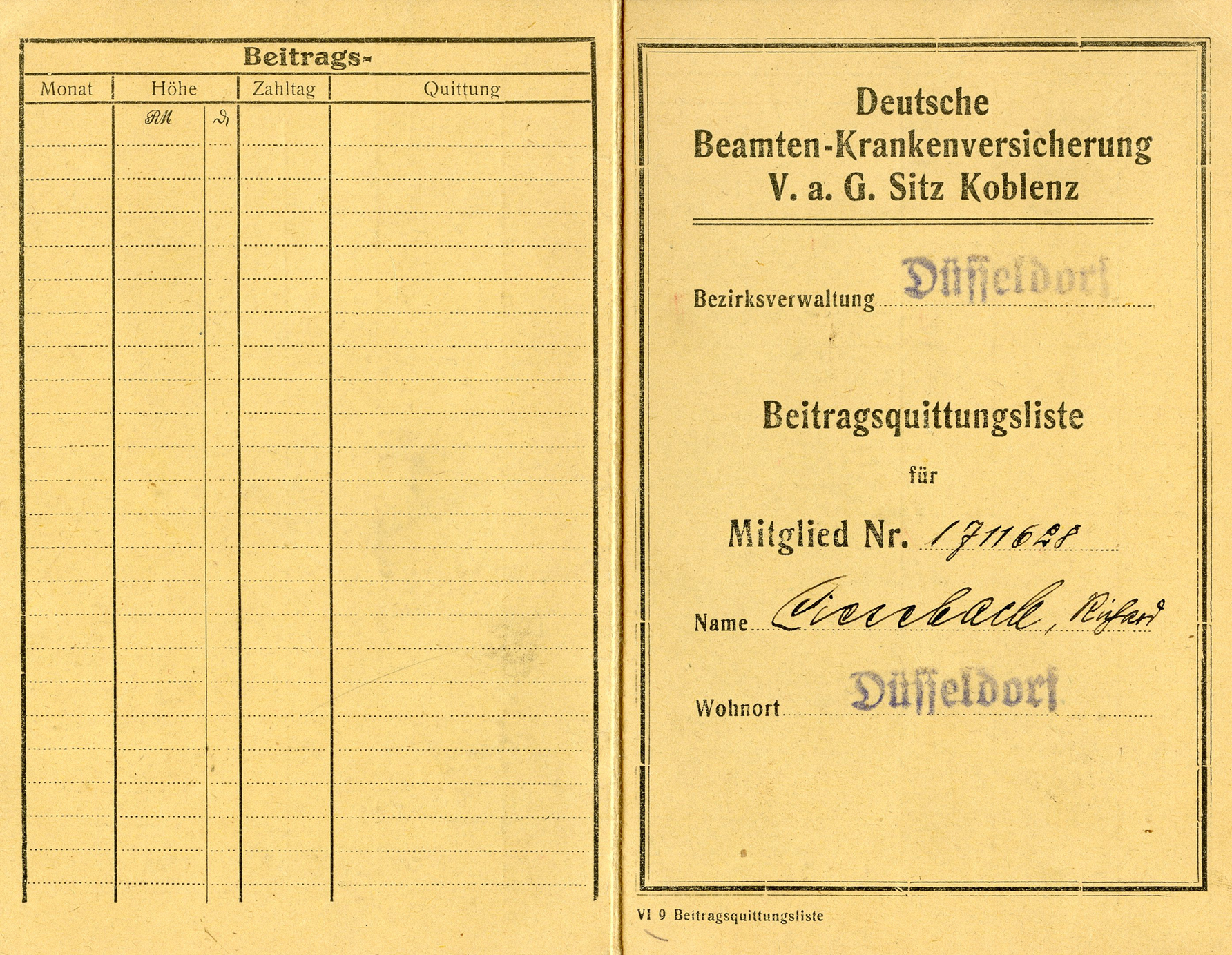
[Below: Inside. This shows the book was active between January 4, 1943 until May 15, 1944.]
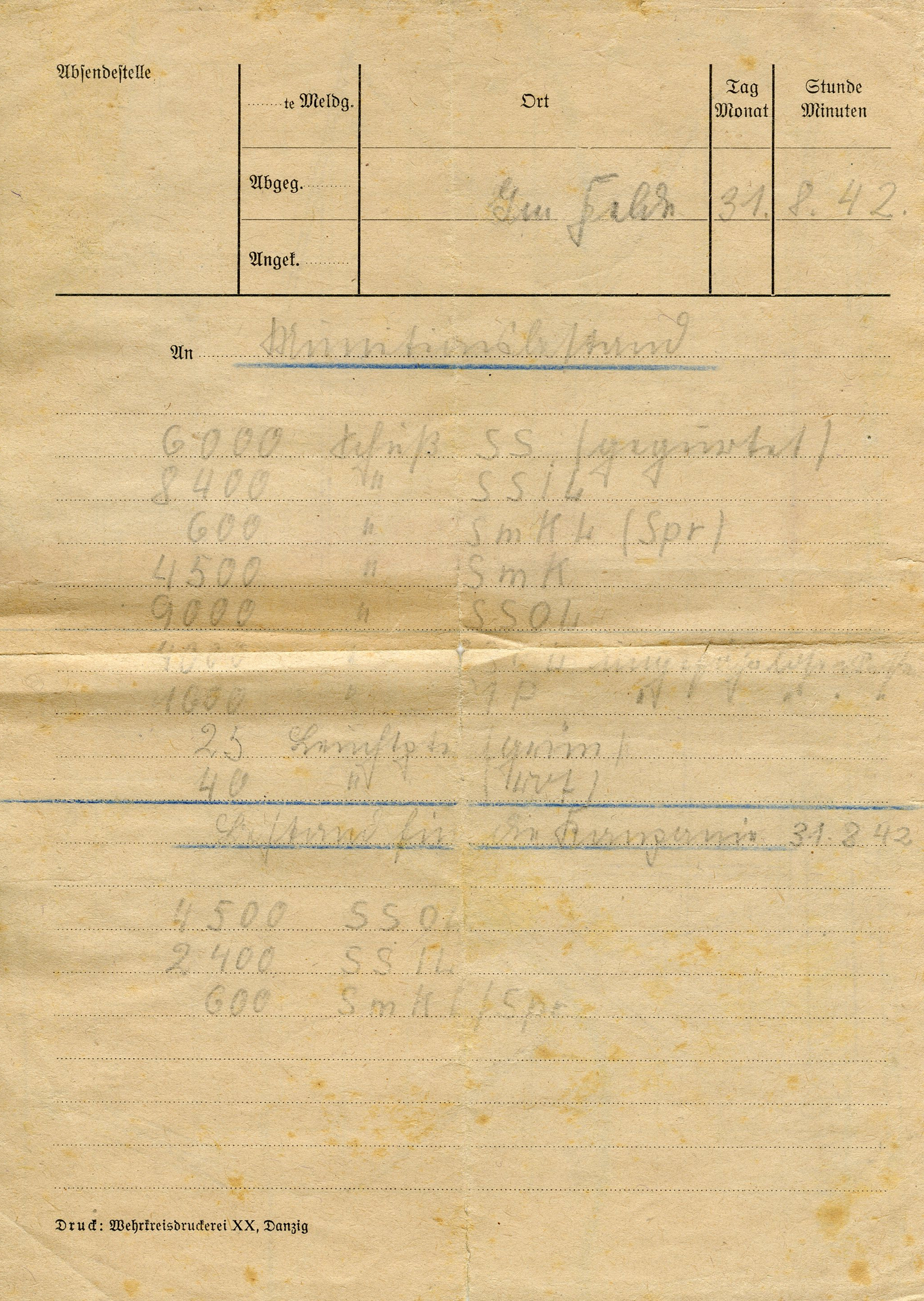
[Below: Now here is a mystery... I got this in a stack of various WWII military papers and identification cards. But what is it? Most of it is written in Sütterlin Script 'absendestelle' means something like 'sending place' and it also has places for dates and times. On the bottom it says 'Druck: Wehrkreisdruckerei XX, Danzig' (Print: Military District Printing House 20, Danzig). On the back is a hand-drawn map.]
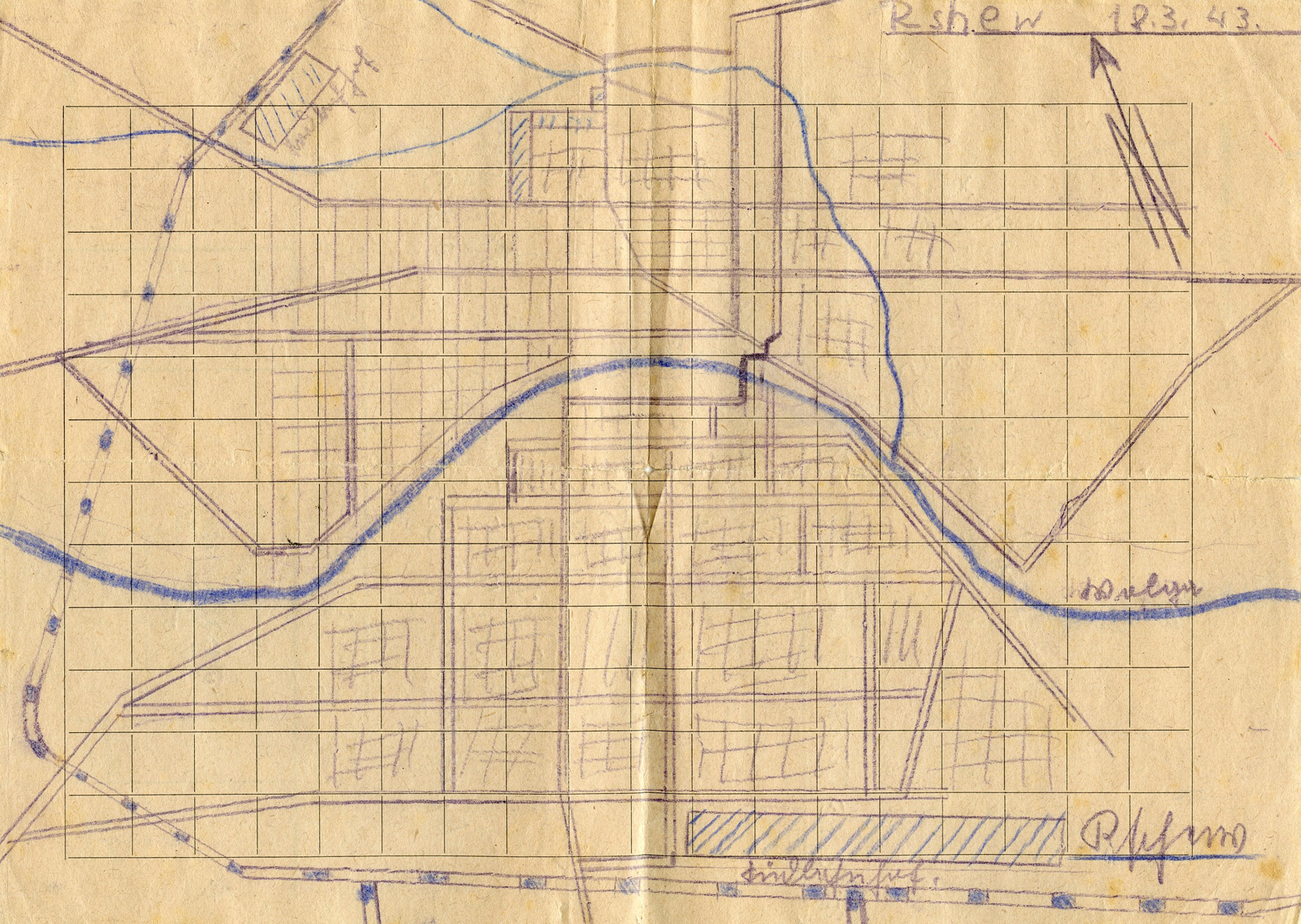
[Below: Reverse. Map. I don't think we'll ever know what it is, unfortunately.]