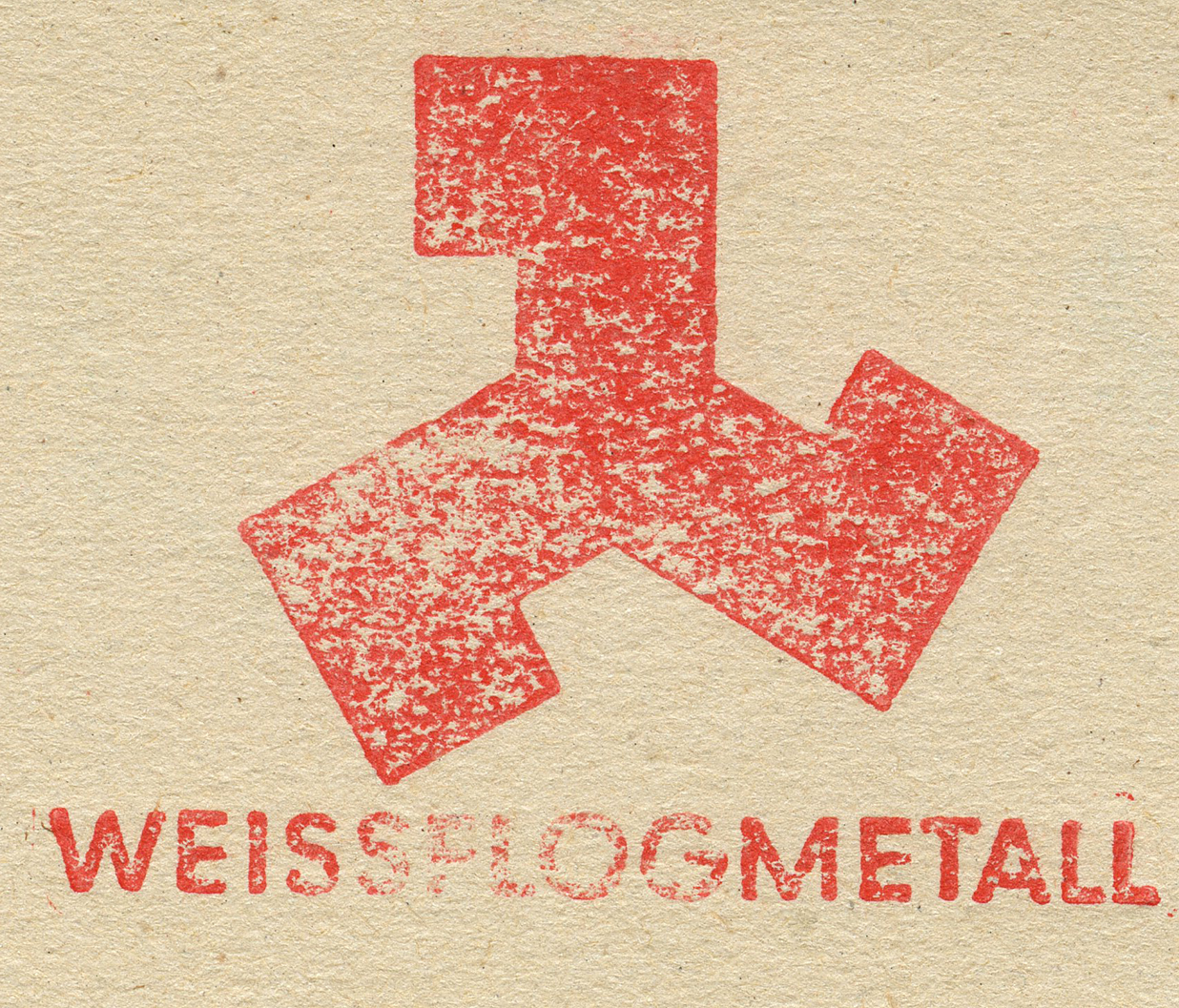
[Below: Wow, what a strange swastika... looking into this company a little further, I learned that 'Weissflog Metall was a prominent metal goods factory located in Gera, Germany. the company heavily produced materials for the Nazi war effort during the 1930s and 1940s, and its owner -- Fritz Georg Meyerweissflog -- was a registered district economic advisor for the NSDAP... after WWII, the company's assets were seized and the factory was incorporated into a Soviet Corporation.' Disgusting thieves, stealing everything in Germany after the war. I wonder if they still use this symbol? I think we know that answer though, don't we? This was postmarked on March 9, 1943.]
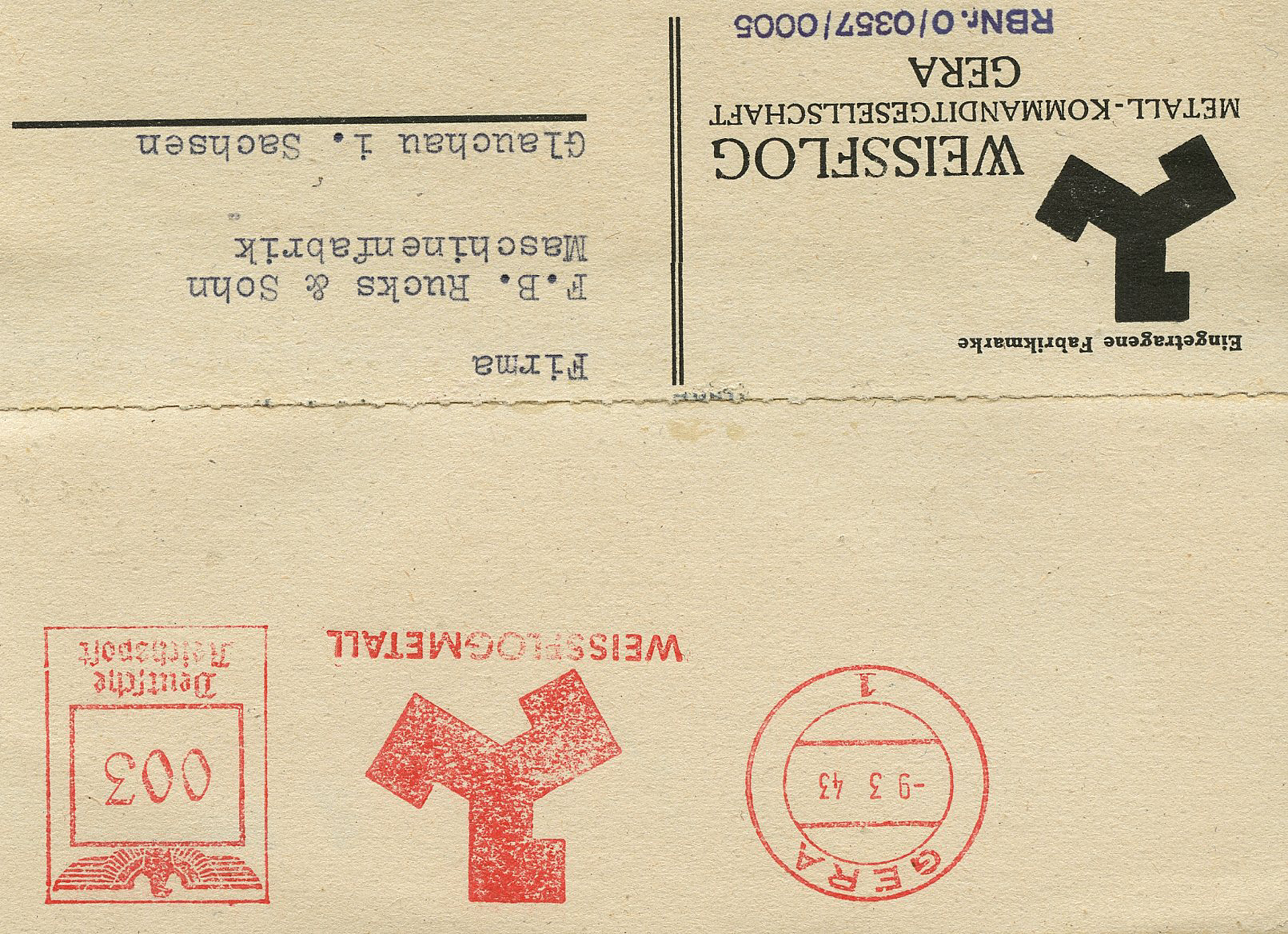
[Below: Close-up.]
[Below: Close-up.]
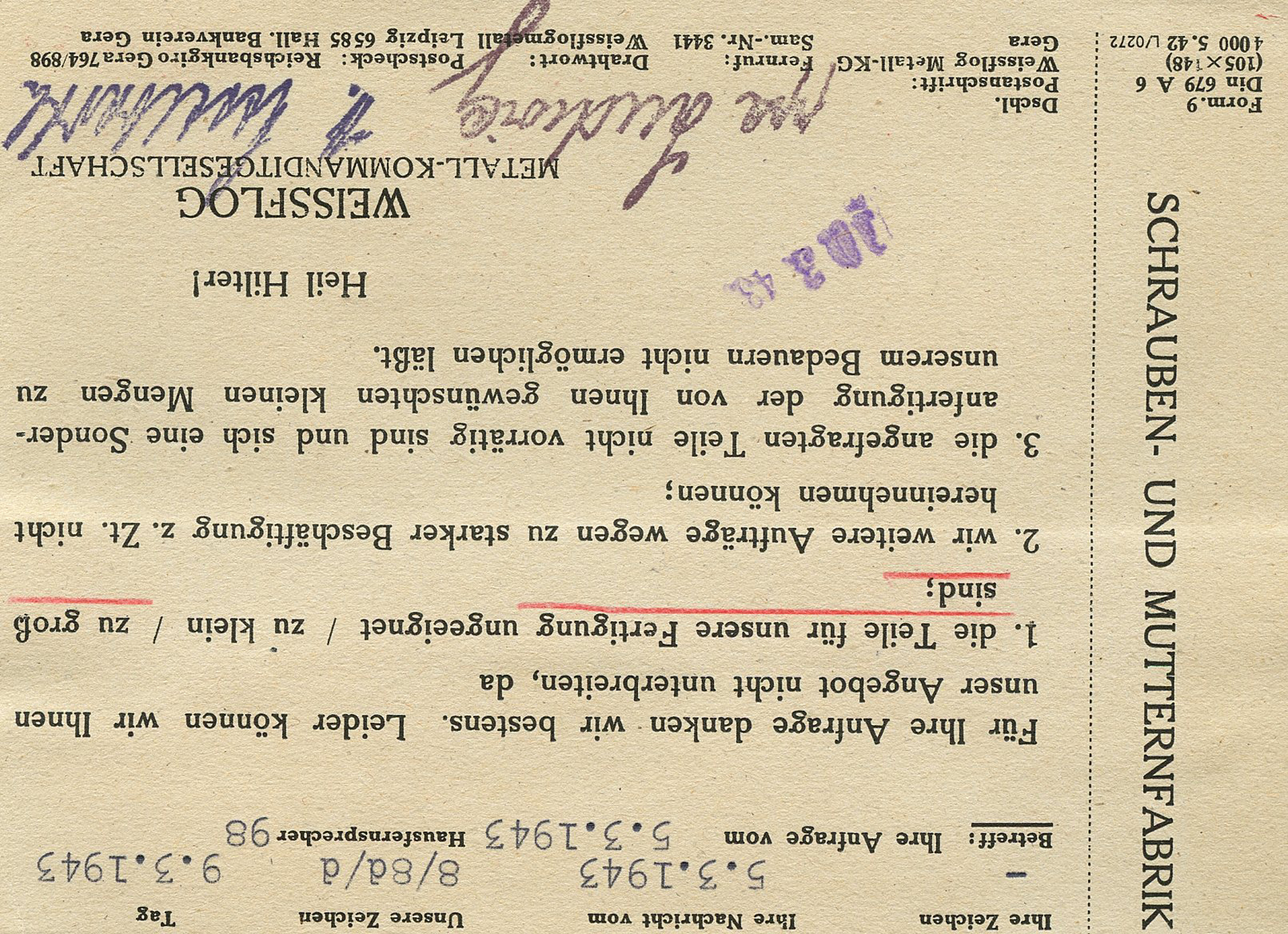
[Below: Reverse. This says:
' Thank you very much for your inquiry. Unfortunately, we cannot submit our offer to you because
1. the parts are unsuitable / too small / too large for our production;
2. we are currently unable to accept any further orders due to excessive workload;
3. the requested parts are not in stock, and we regret that a special production of the small quantities you requested is not possible.
Heil Hitler!']

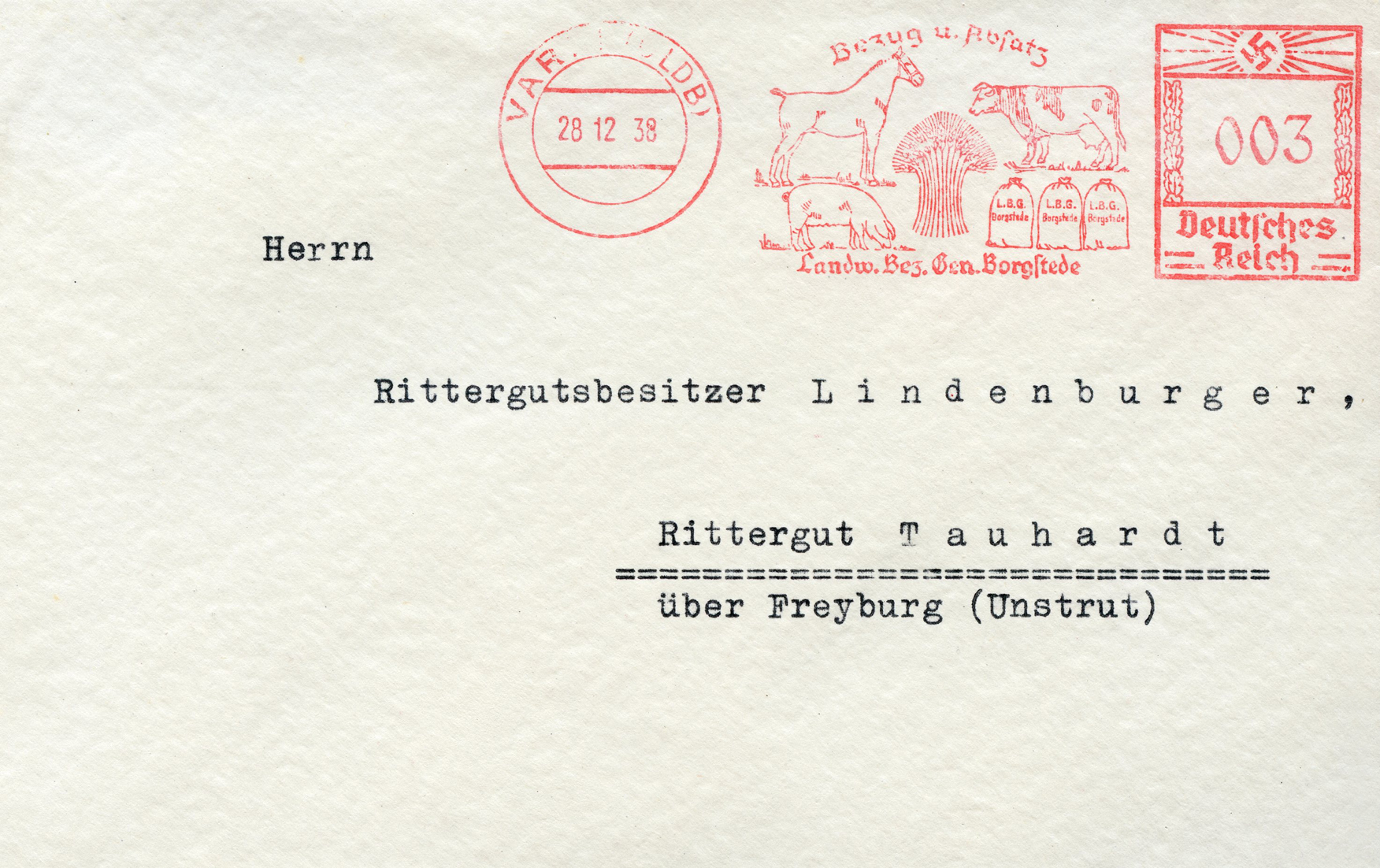
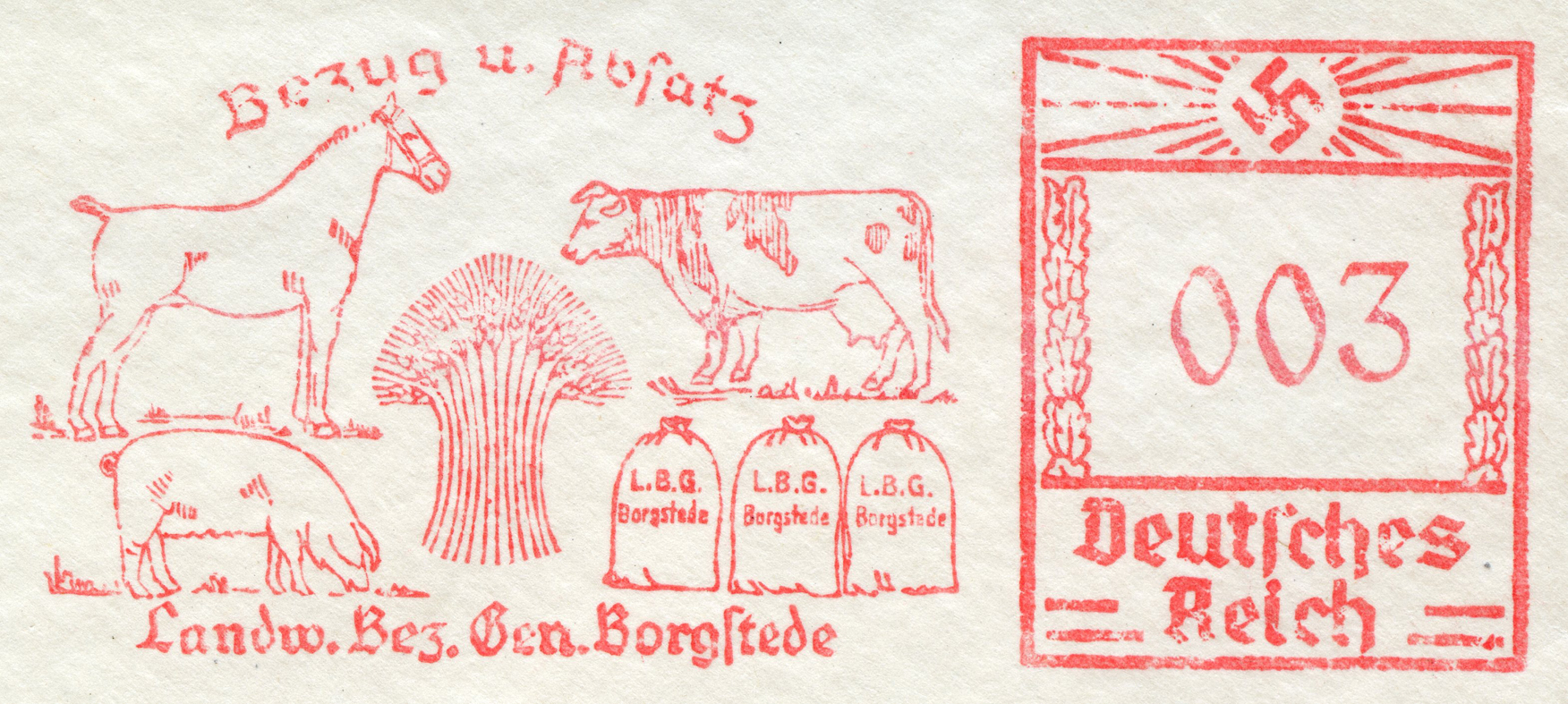
[Below: This was sent to the Lindenburger Manor Owner from the Borgstede District Agricultural Office, postmarked December 28, 1938.]
[Below: Close-up.]
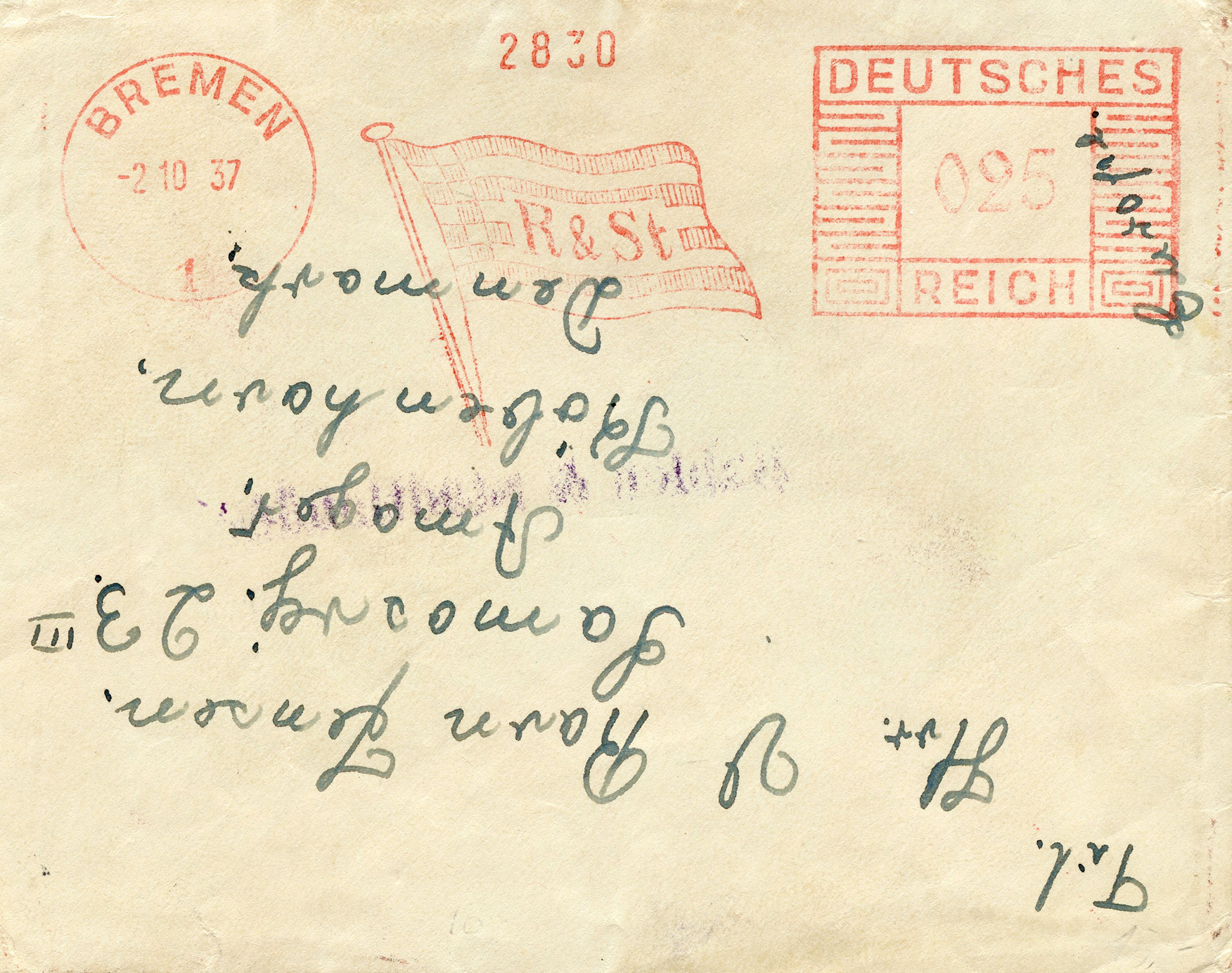
[Below: This was canceled upside down and sent to Denmark from Bremen October 2, 1937.]
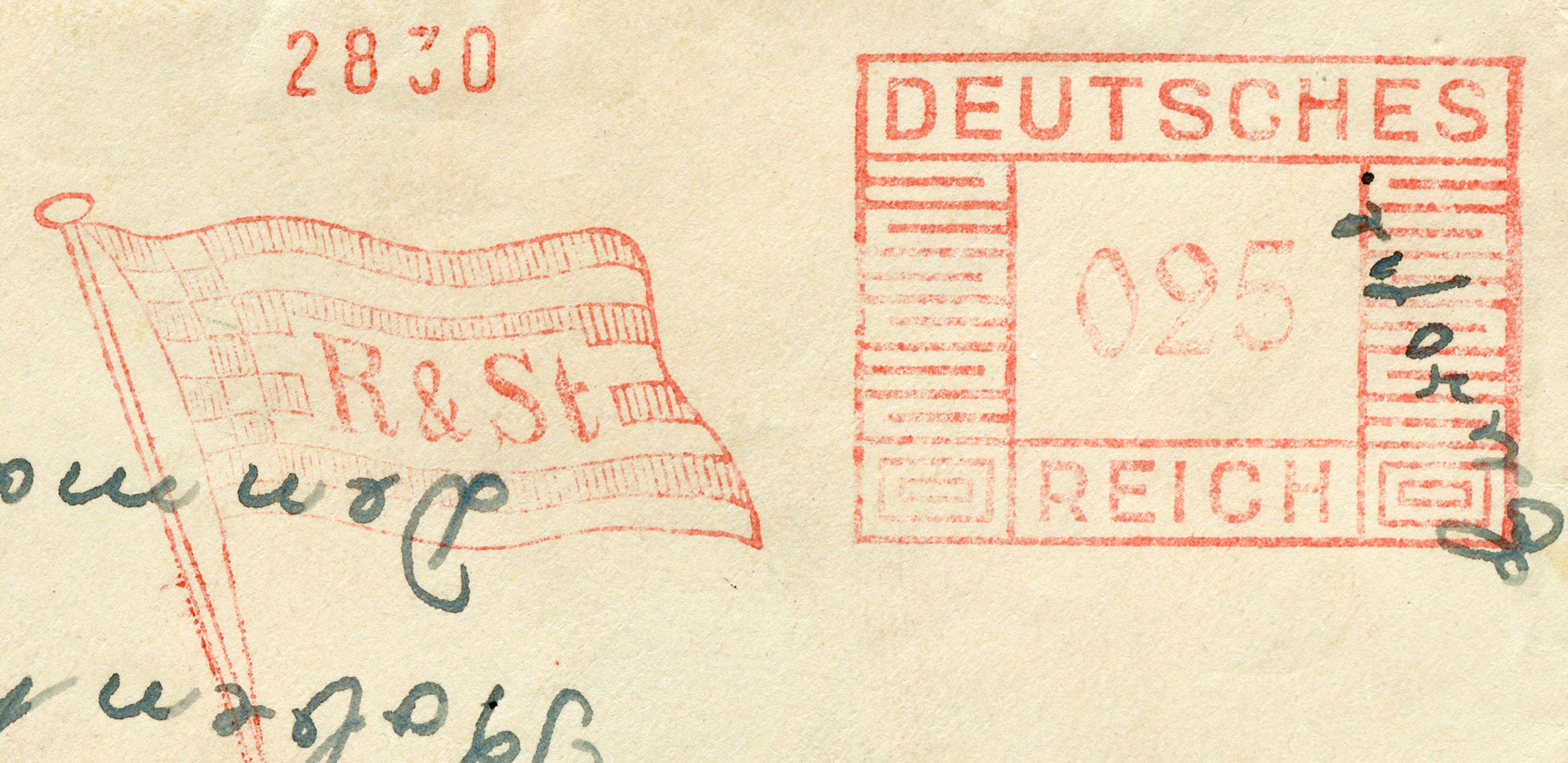
[Below: Close-up.]
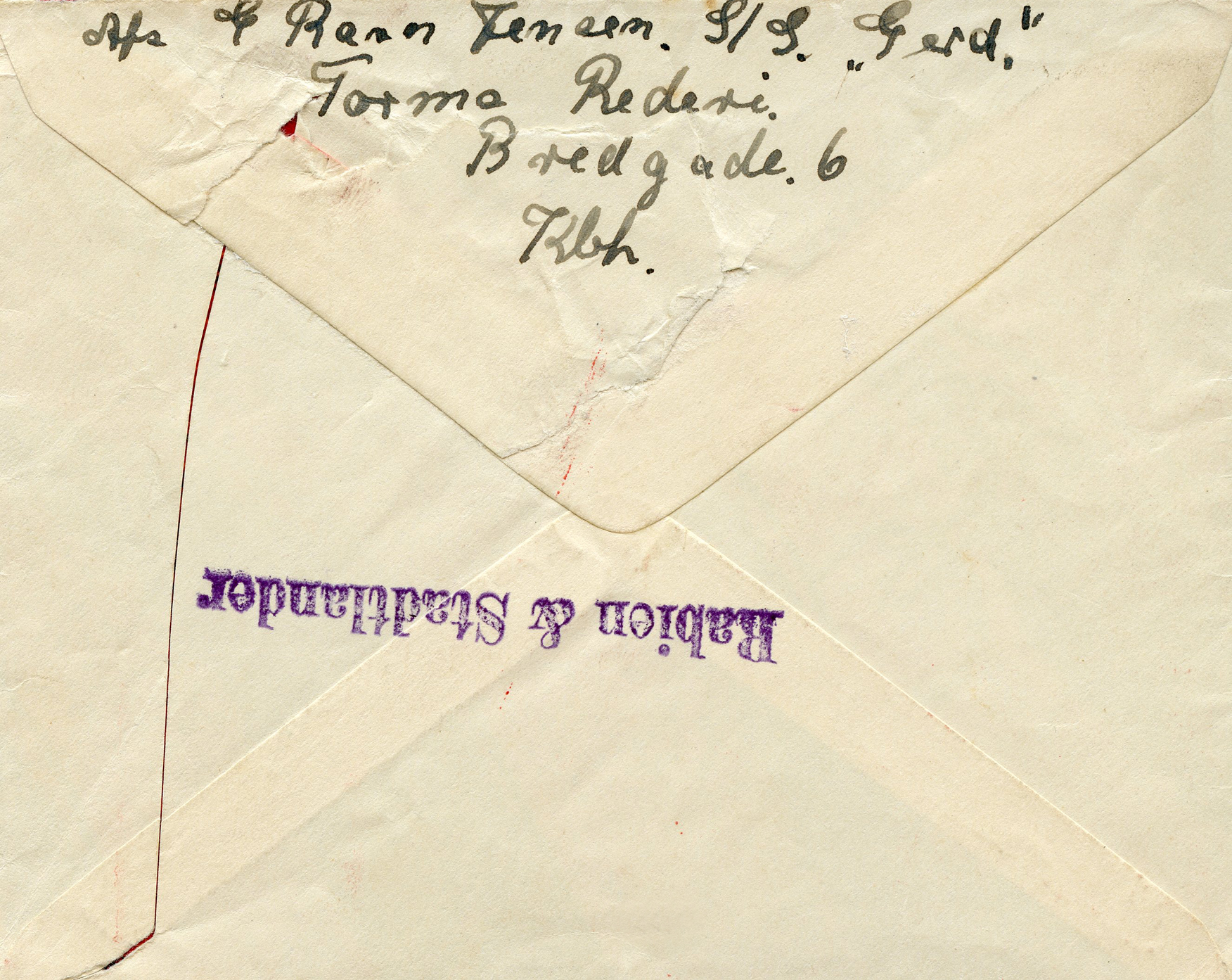
[Below: Close-up.]
[Below: Hydra, now this is cool. This is a capacitor manufacturer that still exists today (and still uses the hydra graphic seen here). 'Hydra produces more than 20 million capacitors per year with two production facilities.'
Furthermore we learn:
'Mass Production: In the 1930s and during the war, Hydra-Werke mass-produced early electrolytic and "paper-in-oil" capacitors, which drastically reduced the size and cost of electronic circuits compared to older, liquid-based models.
Wartime Factories: As the demand for military communications—like radar and radios—soared, Hydra expanded, opening new factories in Berlin and Freiberg in 1939, and two more in Berlin by 1941.
Destruction: Toward the end of the conflict in 1945, the Hydra-Werke facilities in Berlin were completely destroyed by Allied bombing campaigns and combat.'
This was postmarked on July 2, 1943.]
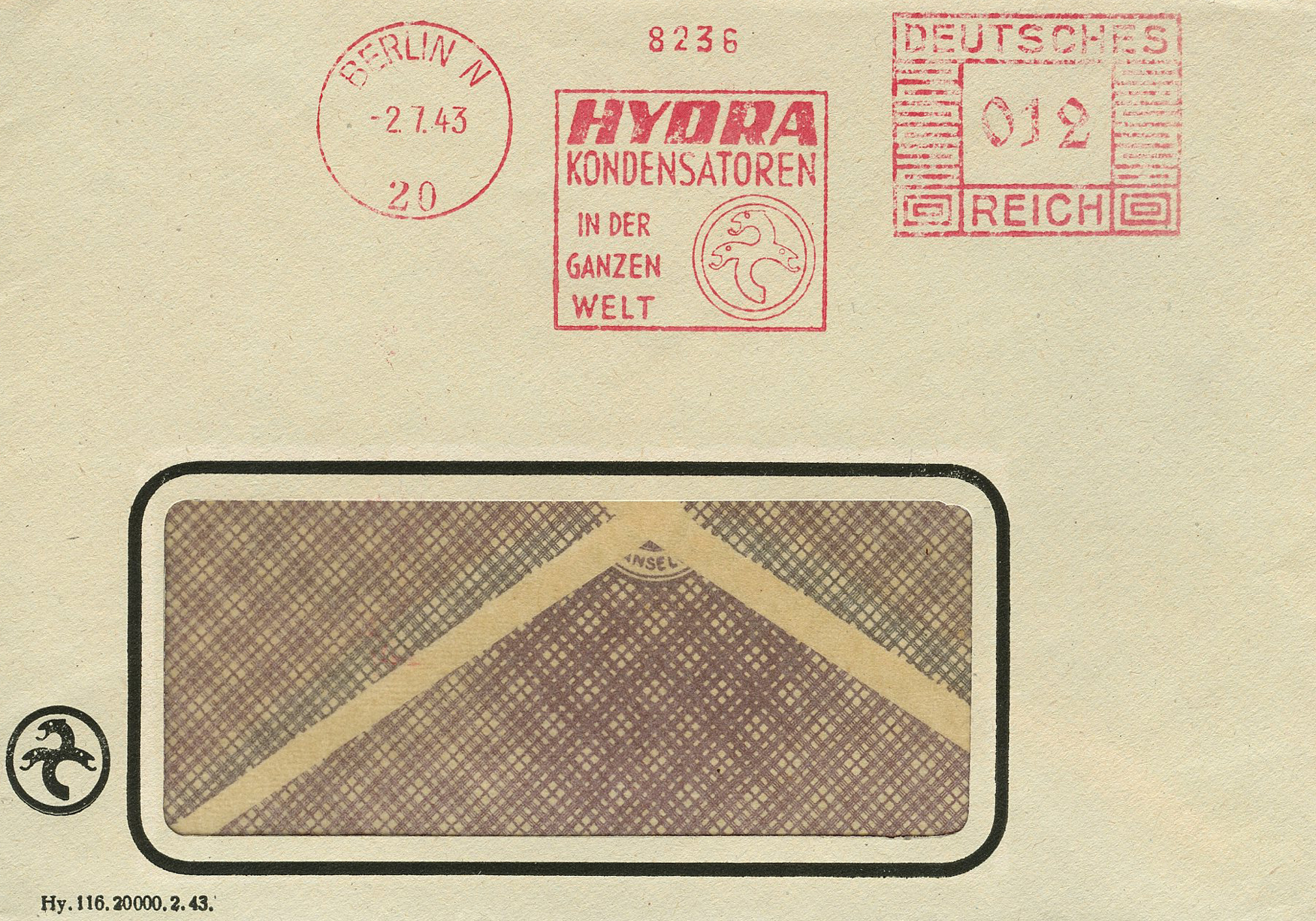
[Below: Close-up.]

[Below: Close-up.]
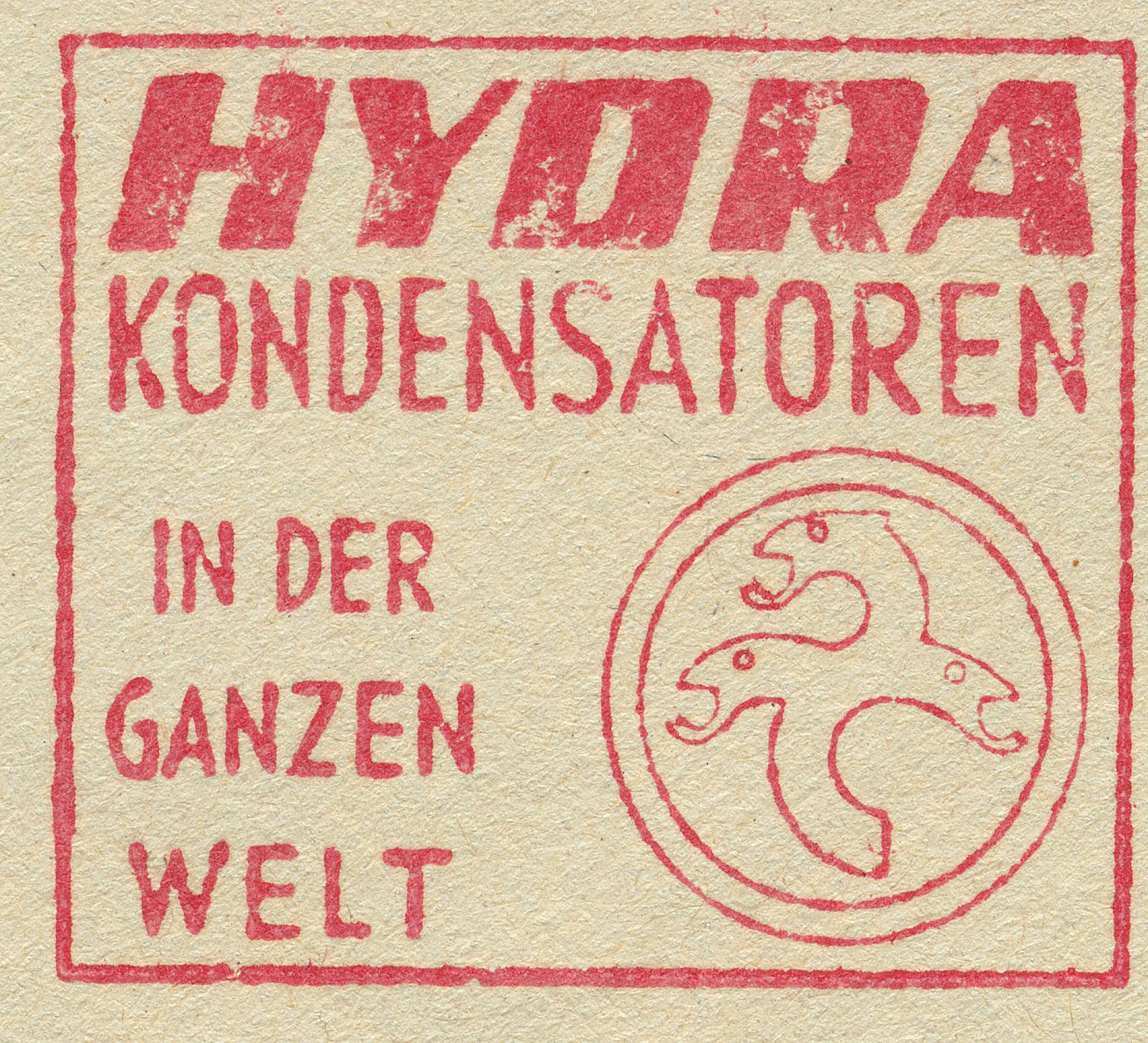
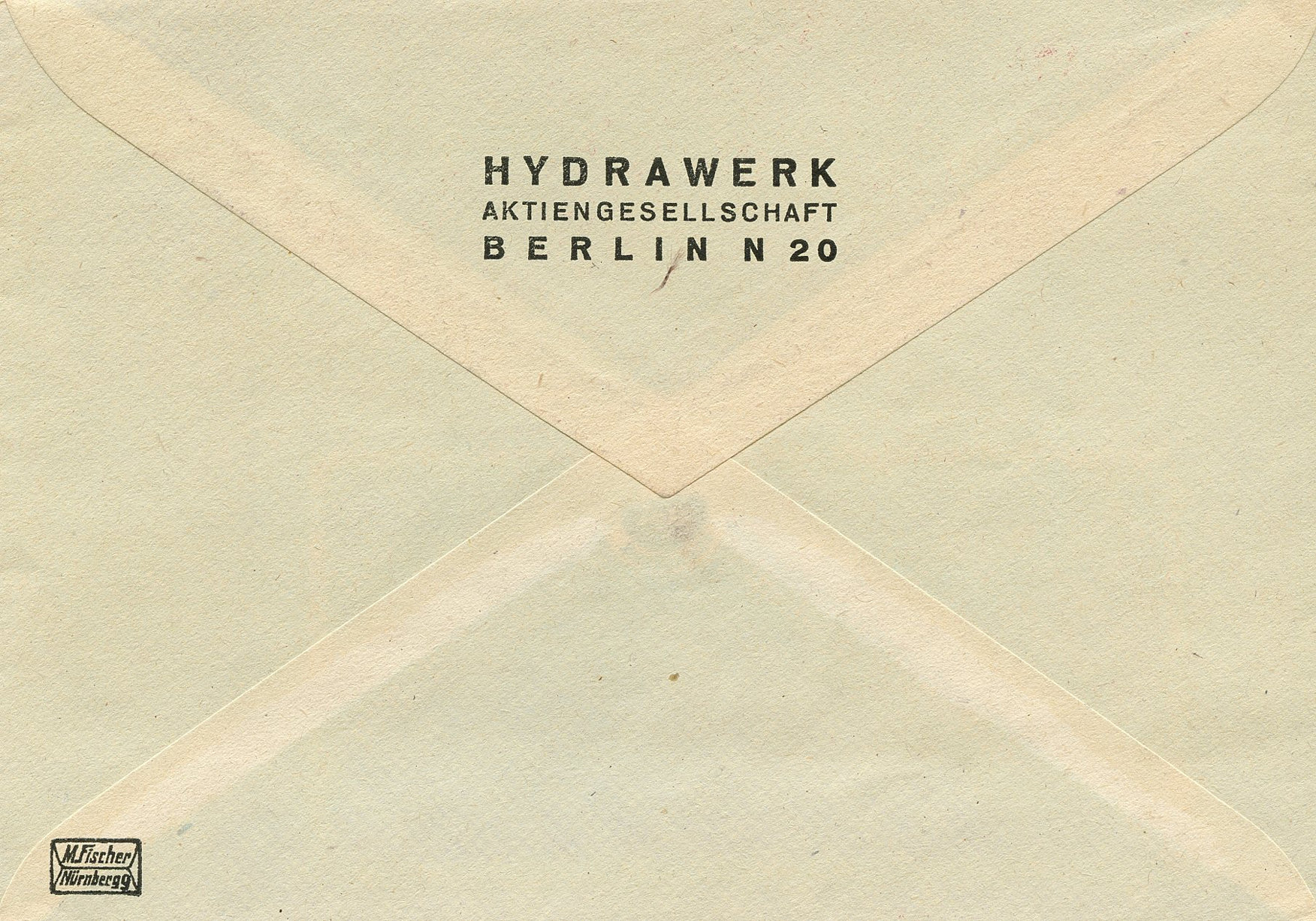
[Below: Reverse.]
[Below: This was sent from the 'Pomeranian General Landscape Directorate' from Stettin, postmarked March 15, 1937.]
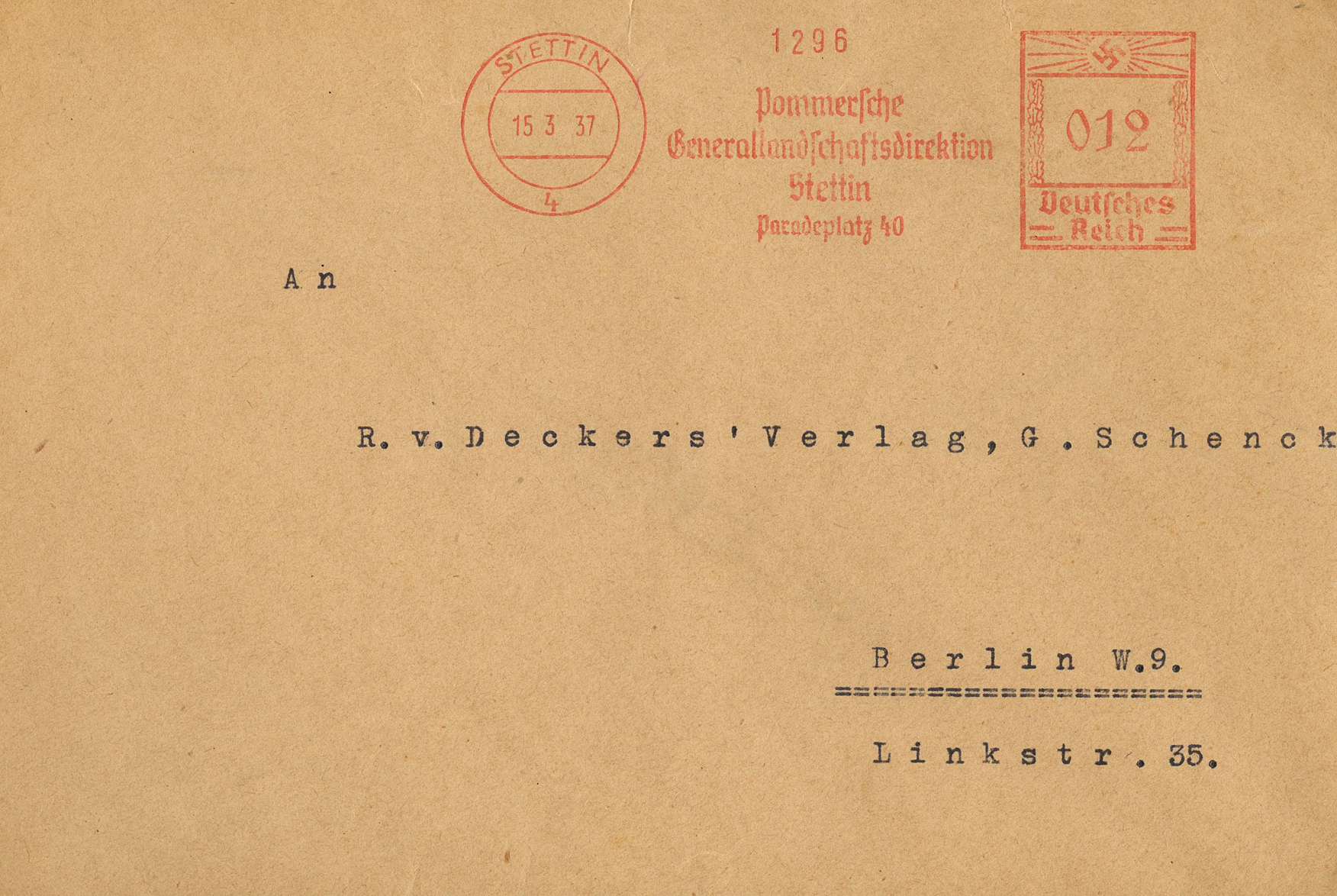
[Below: Close-up.]
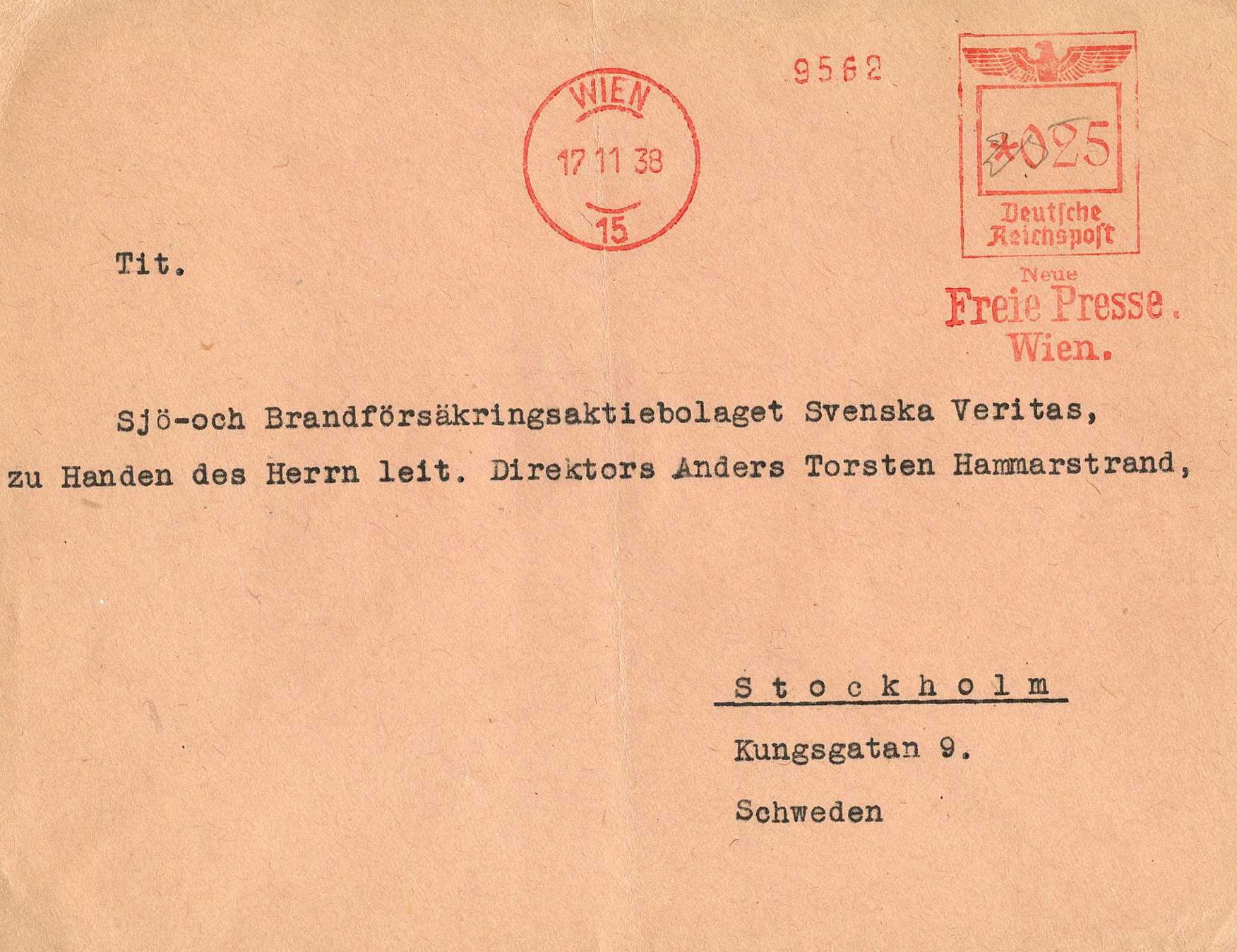
[Below: Wow, what an address. This says: 'Swedish Truth Marine and Fire Insurance Company, to the attention of Mr. Anders Torsten Hammarstrand, Managing Director'. This was sent from the 'Neue Freie Press' in Vienna, postmarked November 17, 1938.]
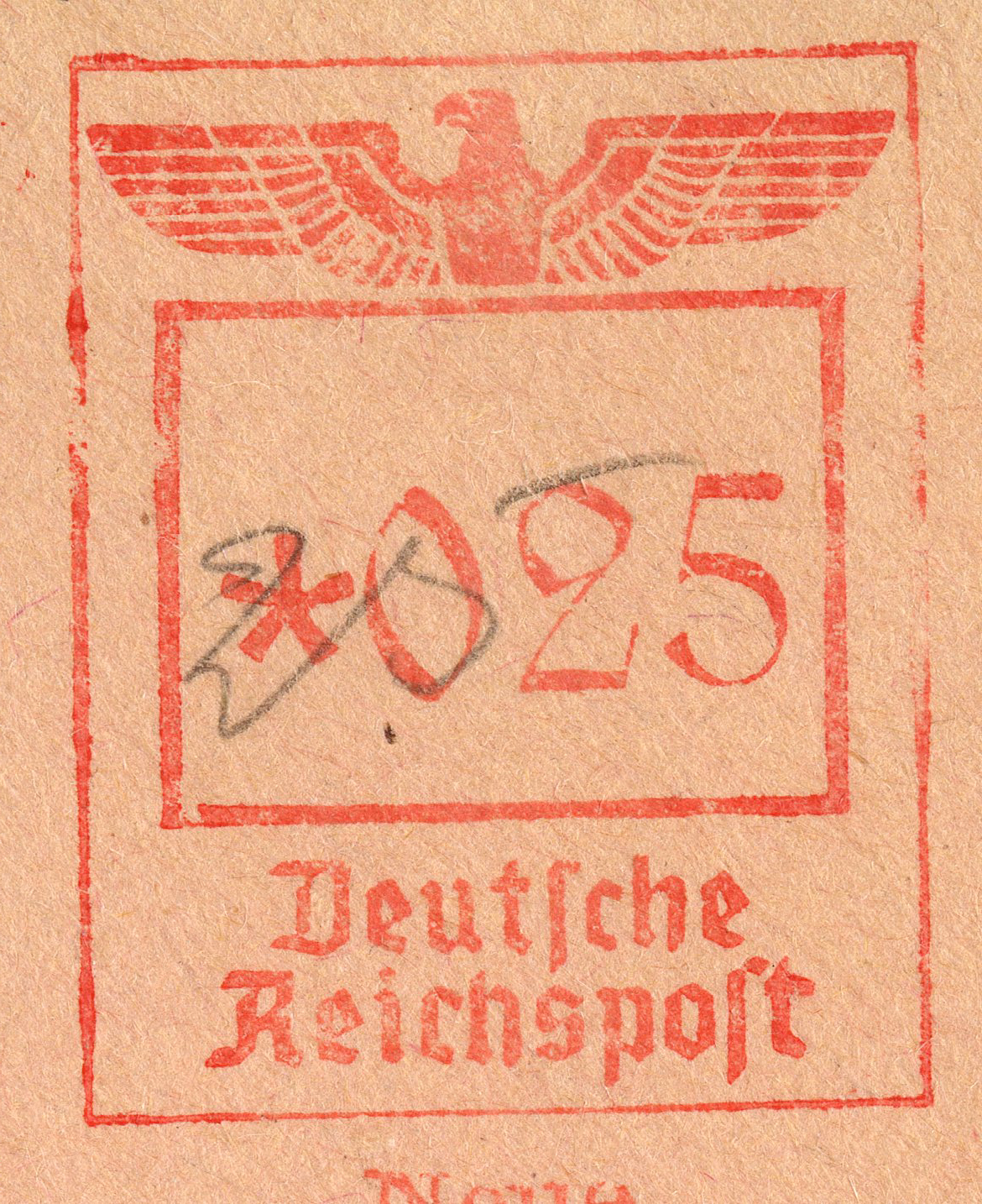
[Below: Close-up.]
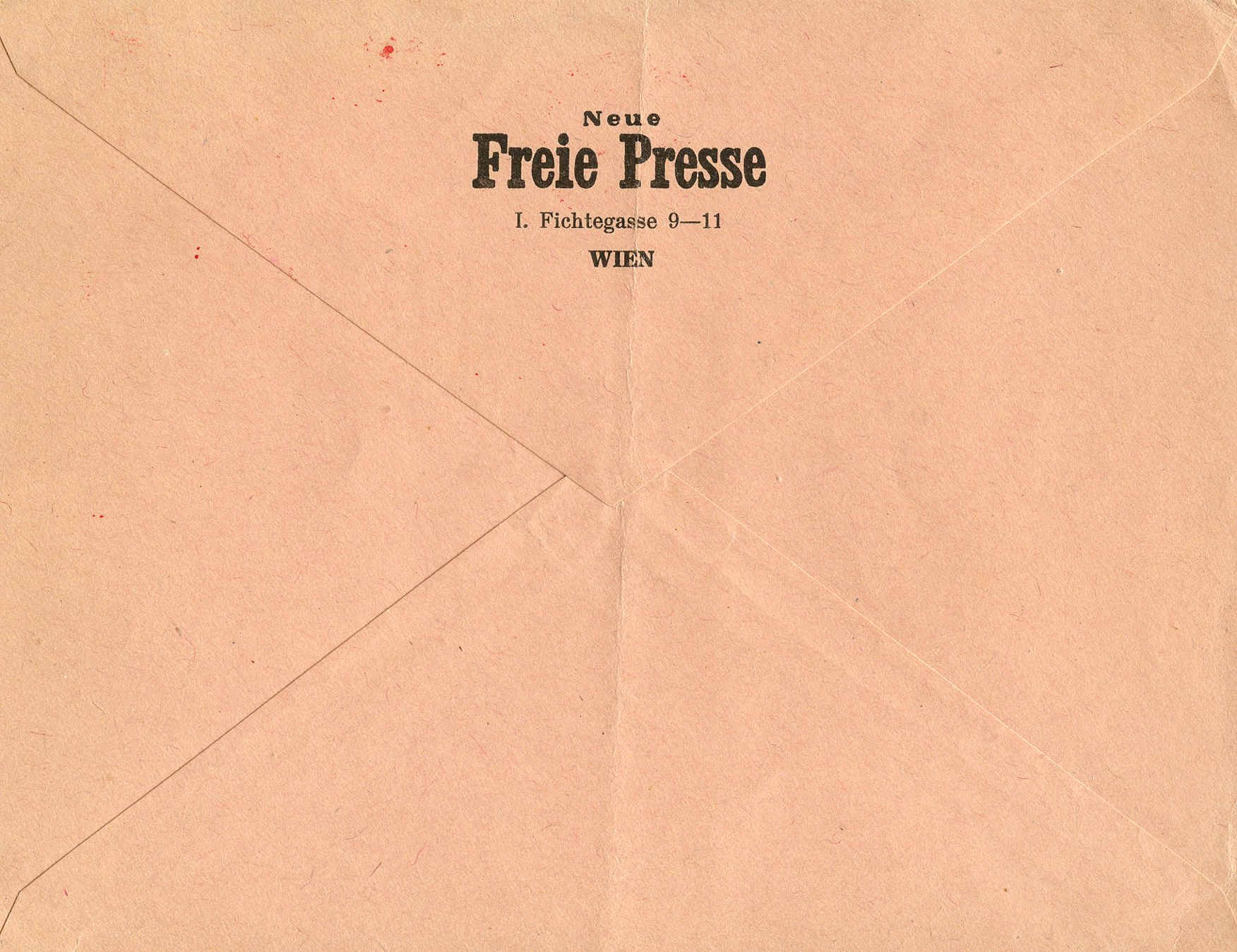
[Below: Reverse.]
[Below: This was sent from the Mayor of Erlangan, postmarked November 15, 1937.]
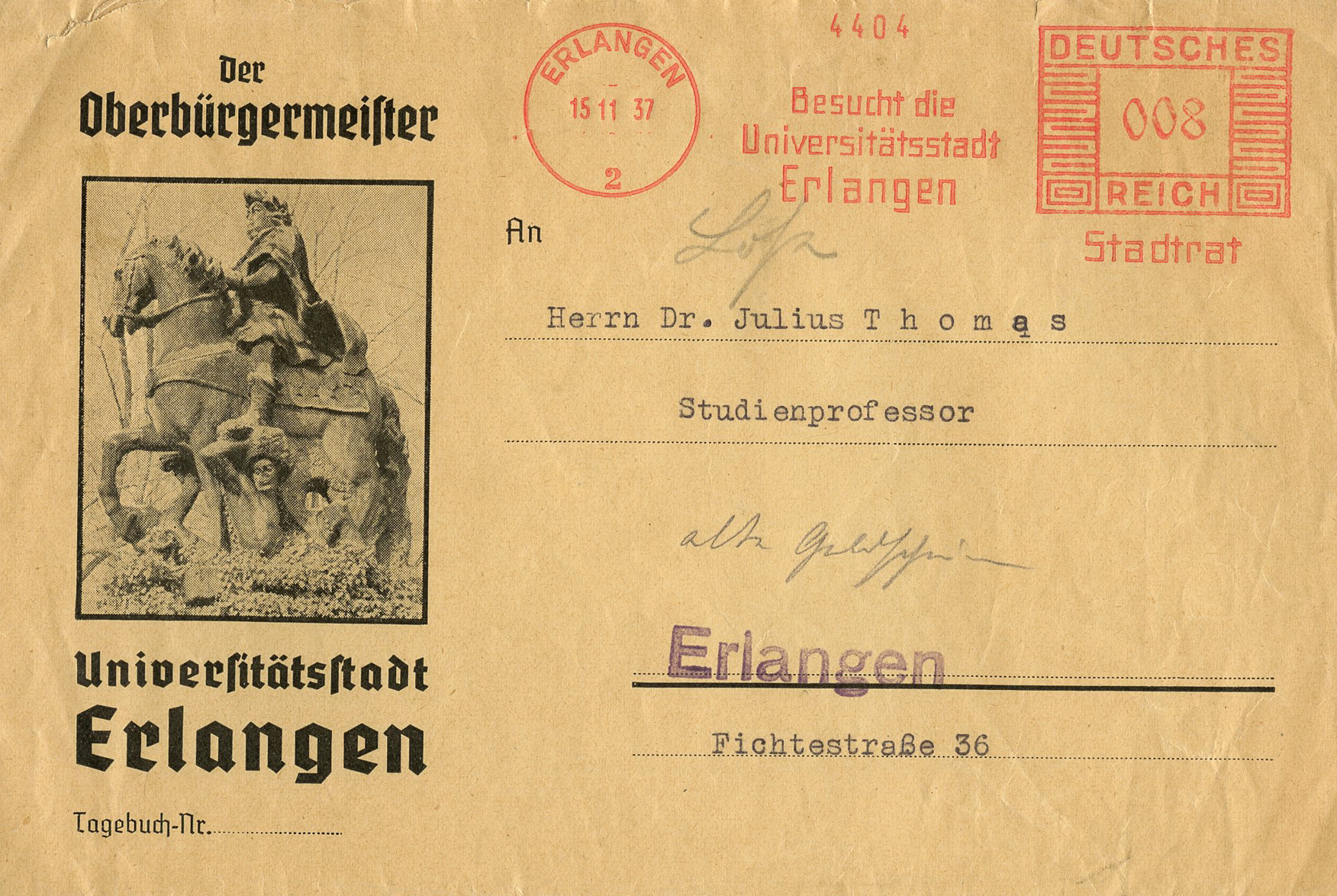
[Below: Close-up.]
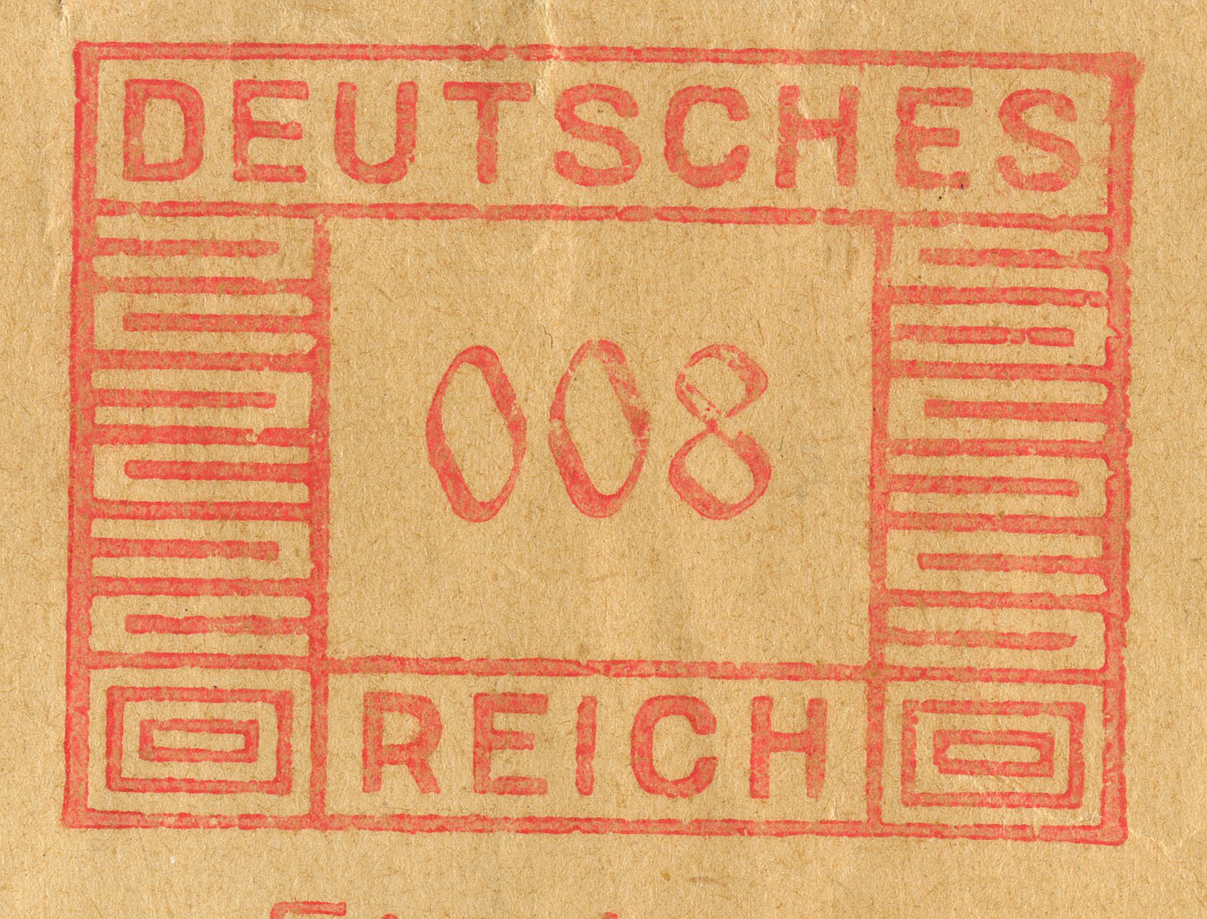
[Below: Reverse. This says:
'Erlangen, the Huguenot city in Franconia
Besides Potsdam, the most interesting Baroque townscape in Germany from the late 17th and early 18th centuries" (A. E. Brinkmann: "German Urban Architecture in the Past"). Sights: Margrave's Palace, Palace Garden with Orangery, Huguenot Fountain and stone Margrave (view from the front), former noble palaces, both town halls. Magnificently situated rock cellars at the foot of the castle hill.
Erlangen is only 17 km from Nuremberg, and is therefore also called "the university town at the gates of Nuremberg". The university has highly important scientific institutes with extensive collections. Its facilities are modern, and its clinics enjoy a world reputation
Although home to a thriving major industry, Erlangen has by no means become an "industrial city." It remains a quiet and pleasant place to live and spend time. Extensive construction activity has significantly expanded the city in recent years. Particularly noteworthy is the comprehensive housing development that has resulted in the creation of a model suburban settlement. A self-contained village of 300 houses has sprung up just outside Erlangen's gates, recognized as an exemplary project throughout Germany.
Erlangen has always been considered the main gateway for hikes into Franconian Switzerland. Today, its tourism has reached unprecedented proportions. The former Freemasons' Lodge "Lebanon to the 3 Cedars," the only lodge in the world preserved with its complete original furnishings and open to the public, is a major attraction for hundreds of thousands of domestic and international visitors.
Information and brochures: Erlangen Tourist Office, Town Hall']
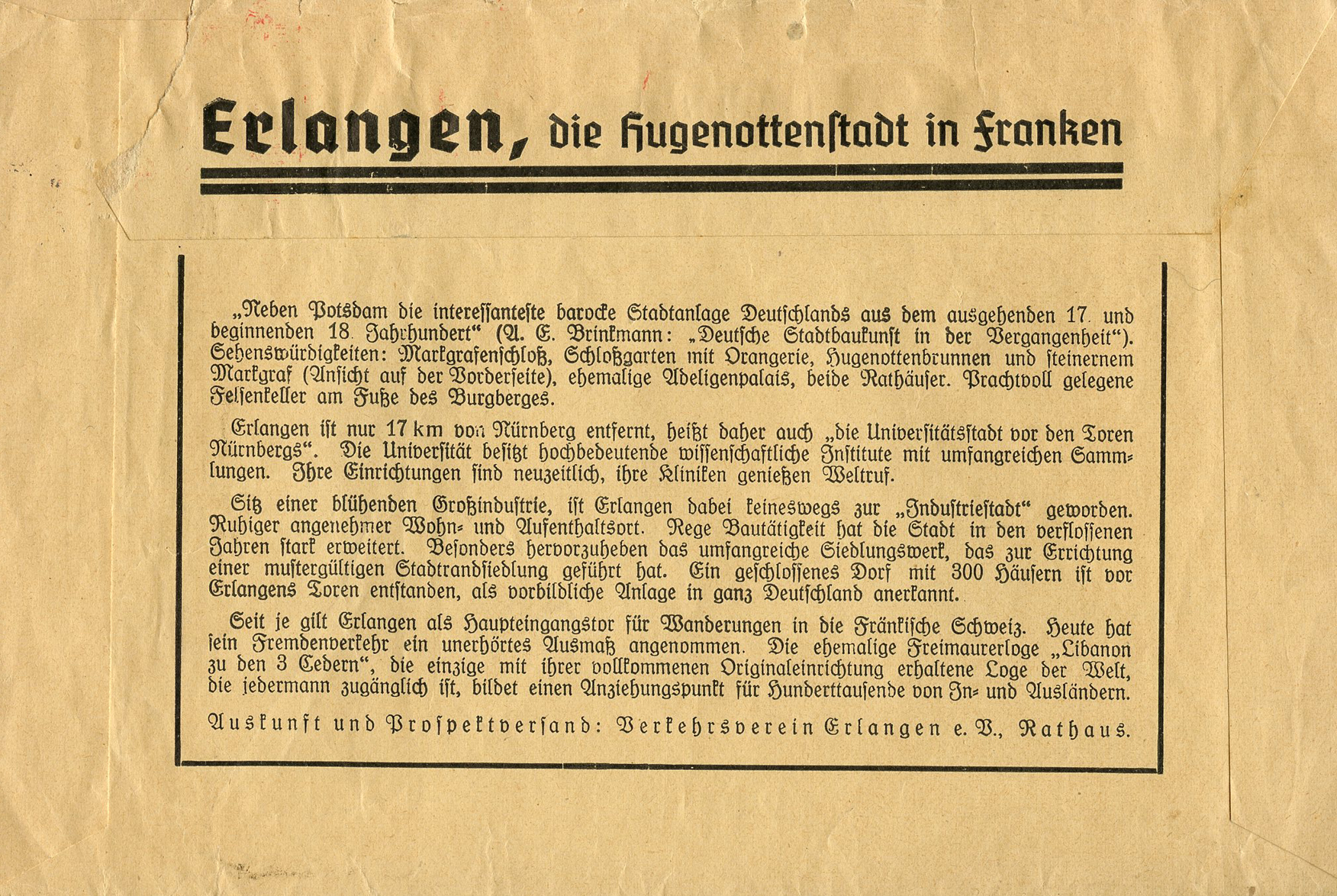
[Below: This was sent to the Military District Command in Meissen, from the Hille-Werke (Hille Factory), a machine and tool company, postmarked on December 30, 1940. The reverse is blank.]
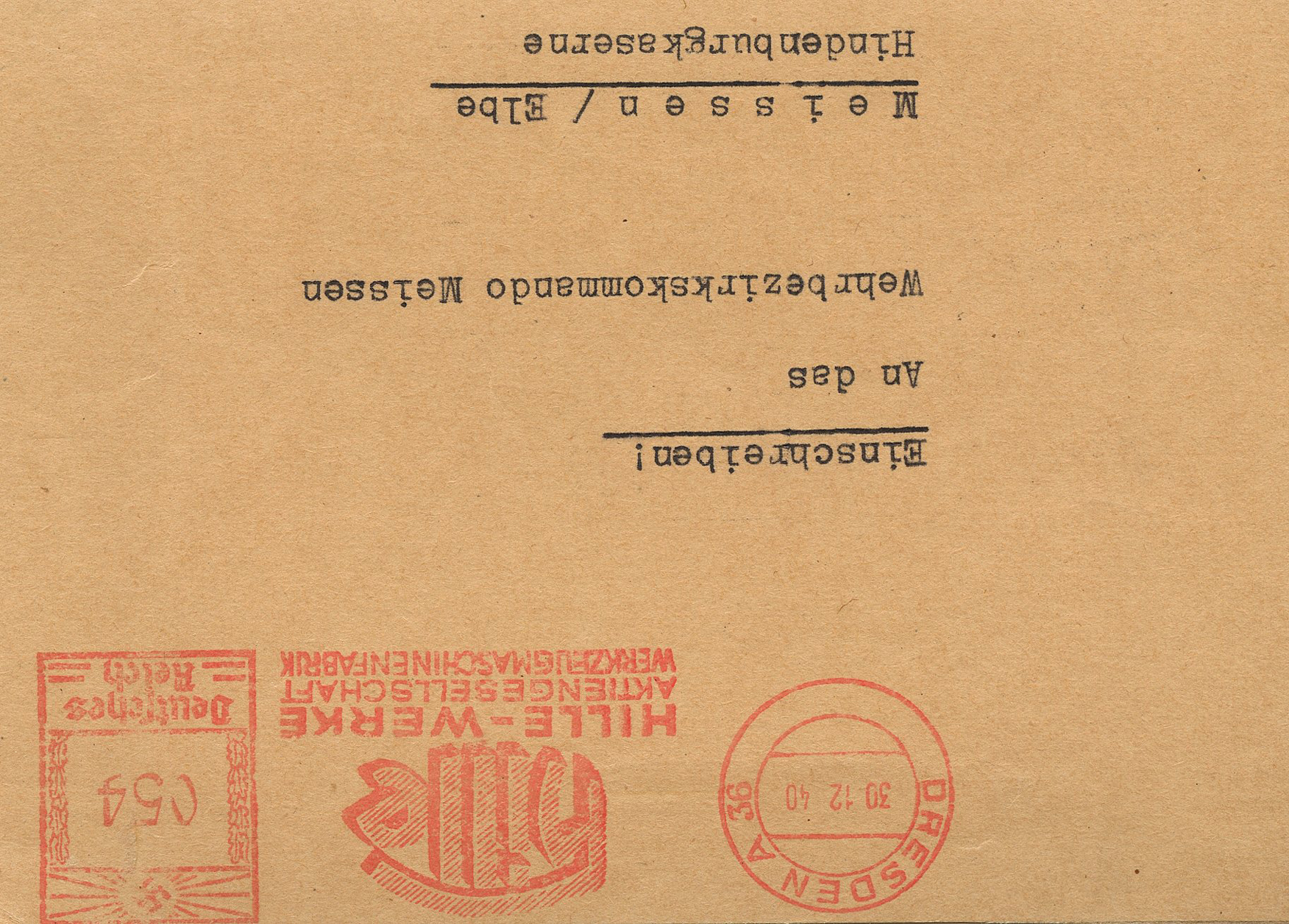
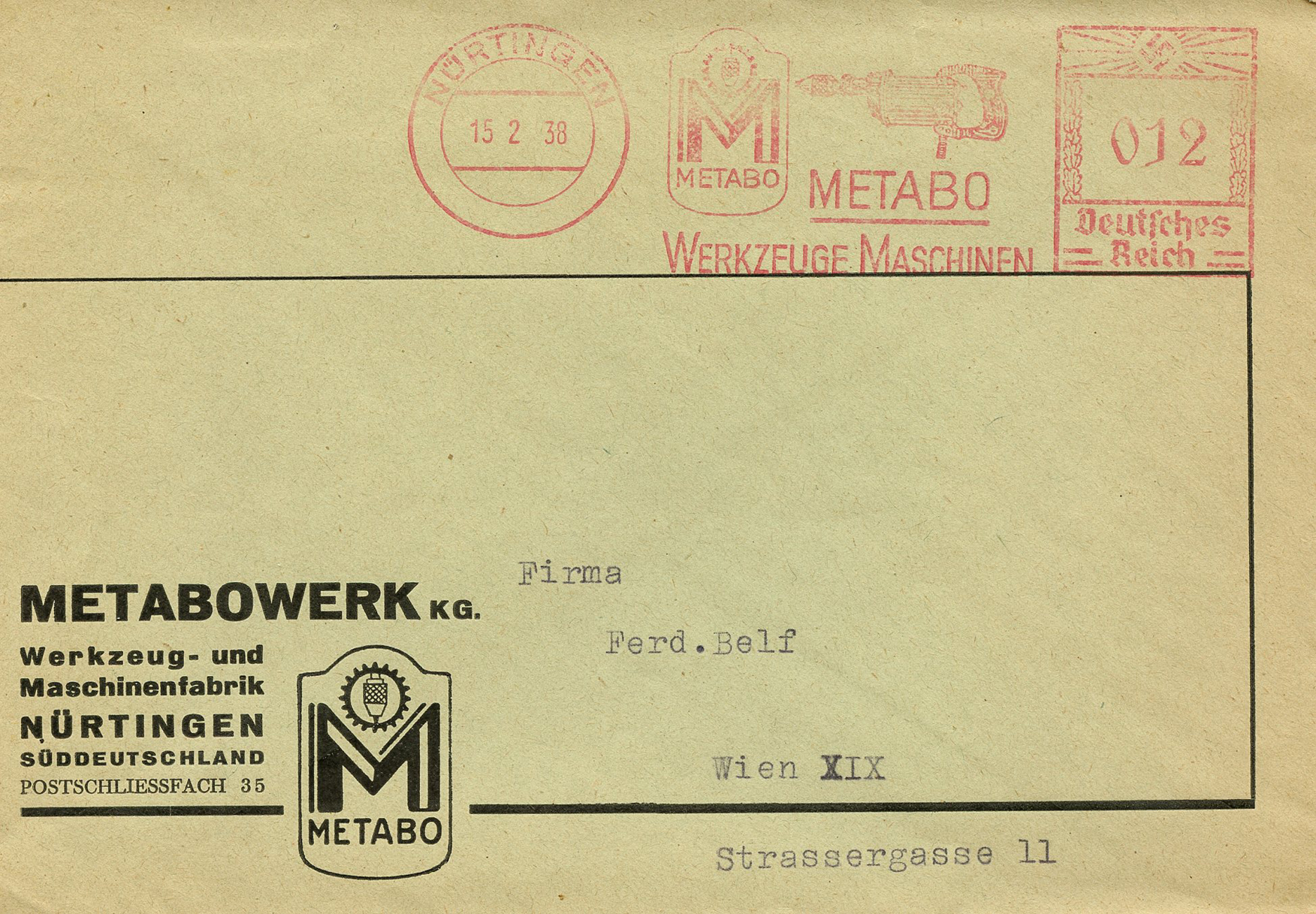
[Below: This was sent by Metabowerk, a tool and machine factory, postmarked on February 15, 1938. The reverse is blank.]
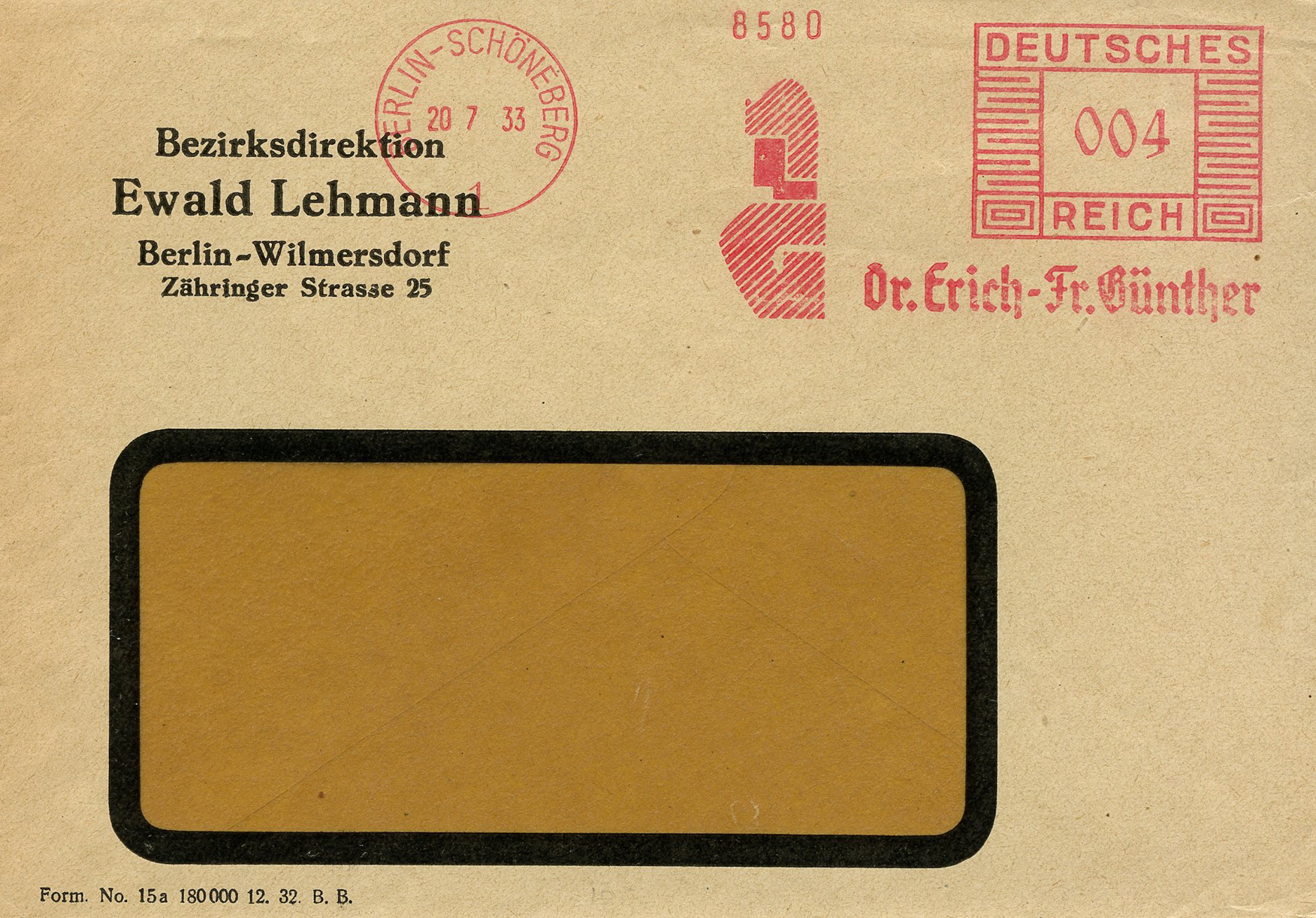
[Below: This was sent from the 'District Directorate - Ewald Lehmann', postmarked on July 20, 1933. The reverse is blank.]
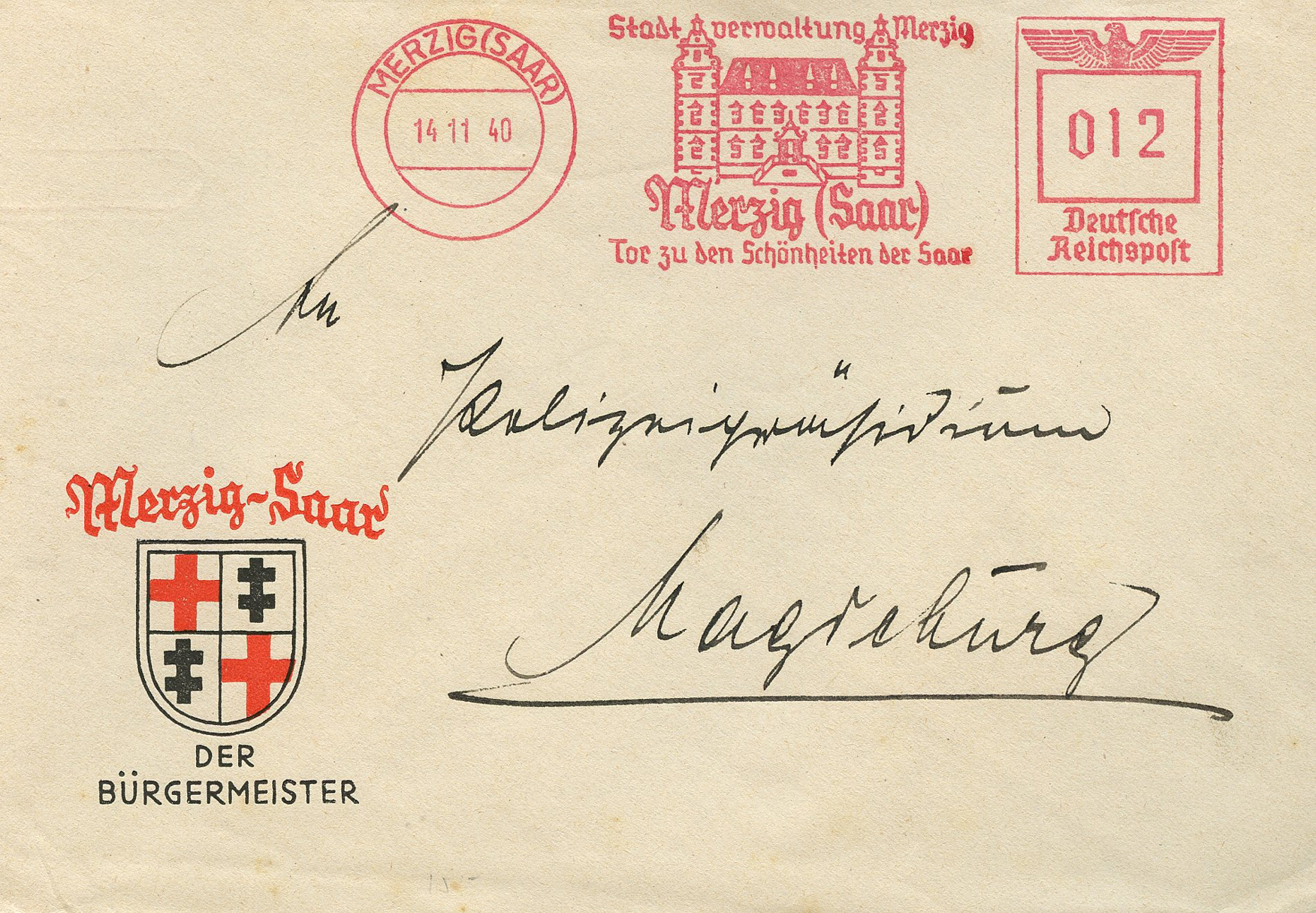
[Below: This was sent from the Mayor of Merzig-Saar to the Madgeburg Police Headquaters, postmarked on November 14, 1940. the cancel says 'Merzig (Saar) - Gateway to the Beauties of the Saar']
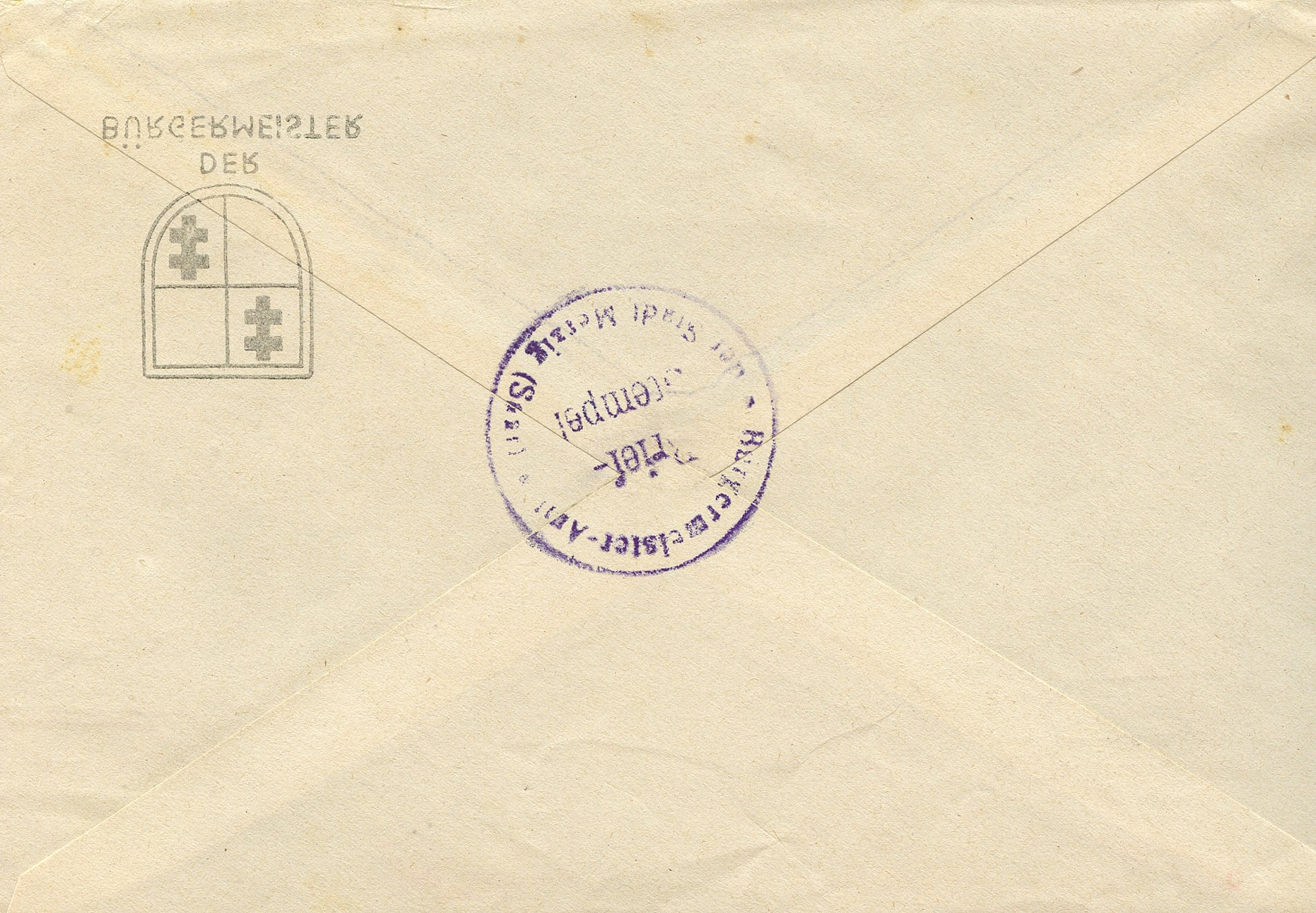
[Below: Reverse.]
[Below: Front/reverse. This is from the Chairman of the 'Main Association of the German Brewing Industry', postmarked on December 1, 1942.]
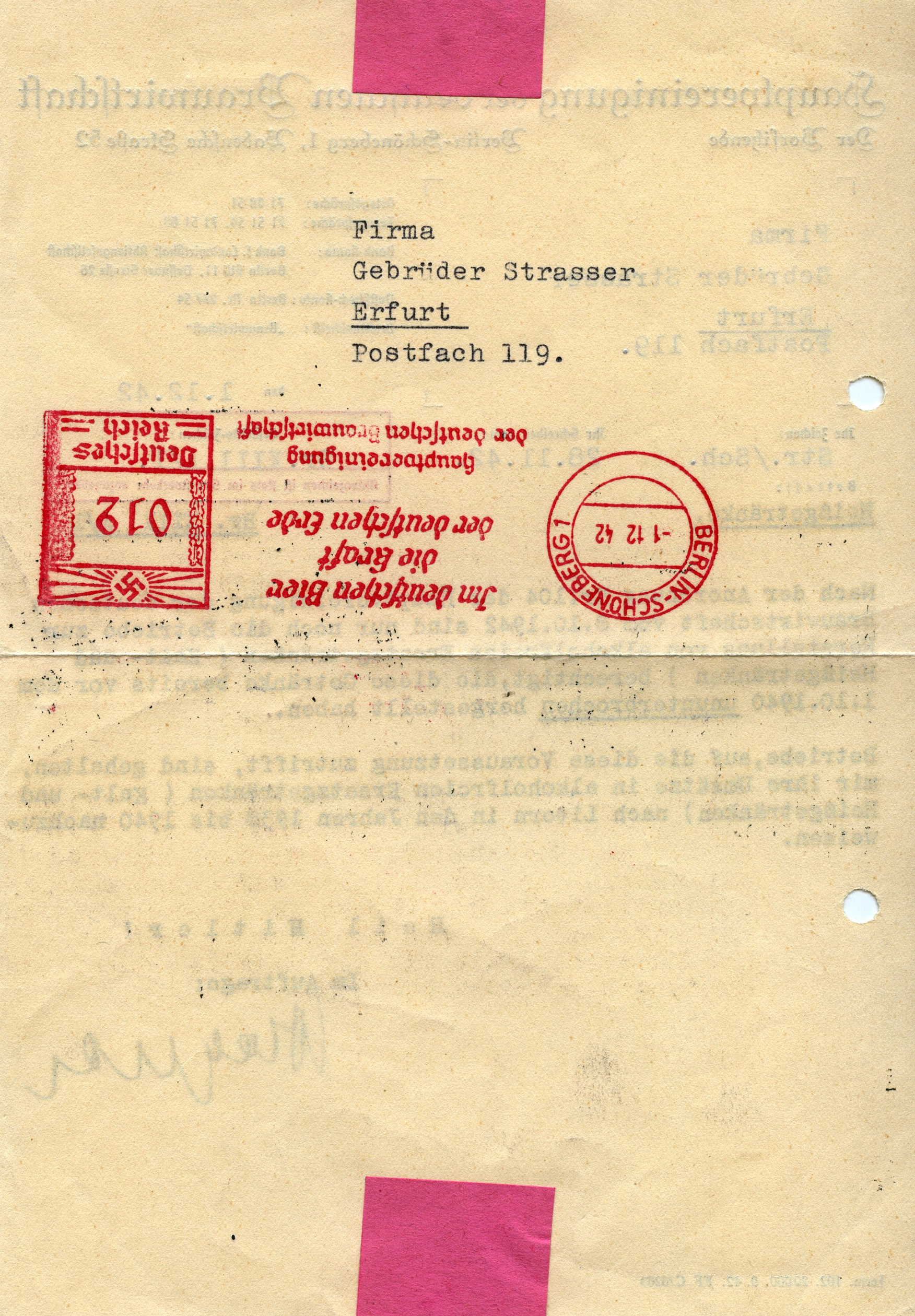
[Below: Close-up.]
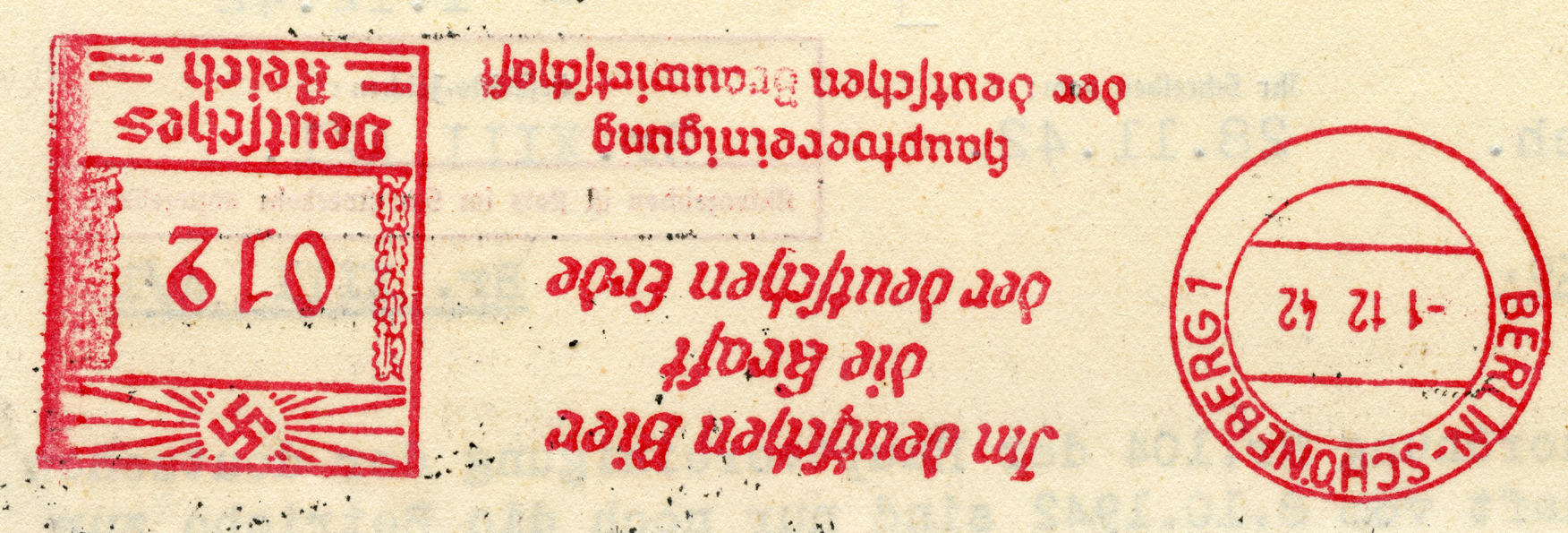
[Below: Inside.]
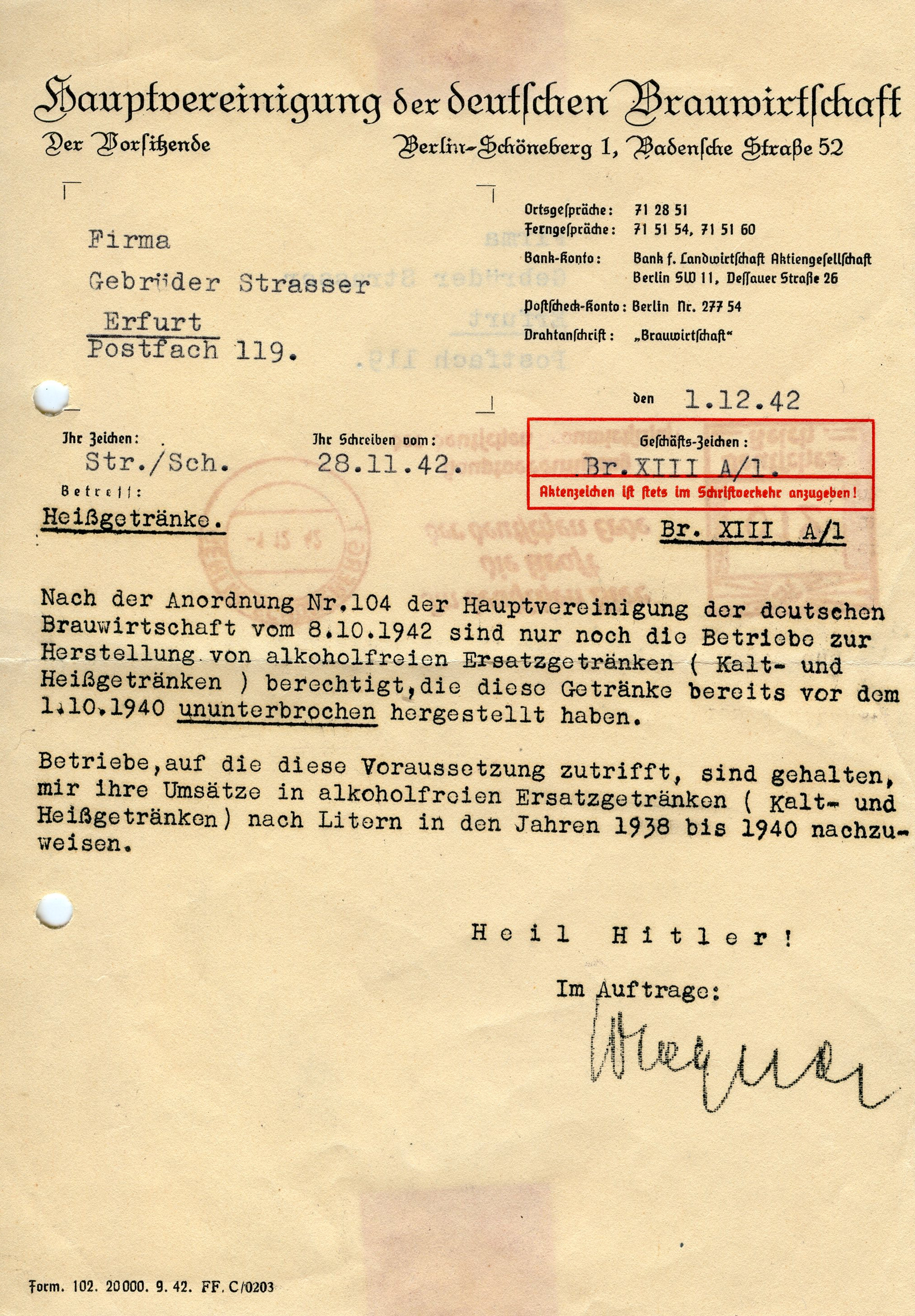
[Below: This was sent from an iron-steel foundry, postmarked on February 7, 1944.]
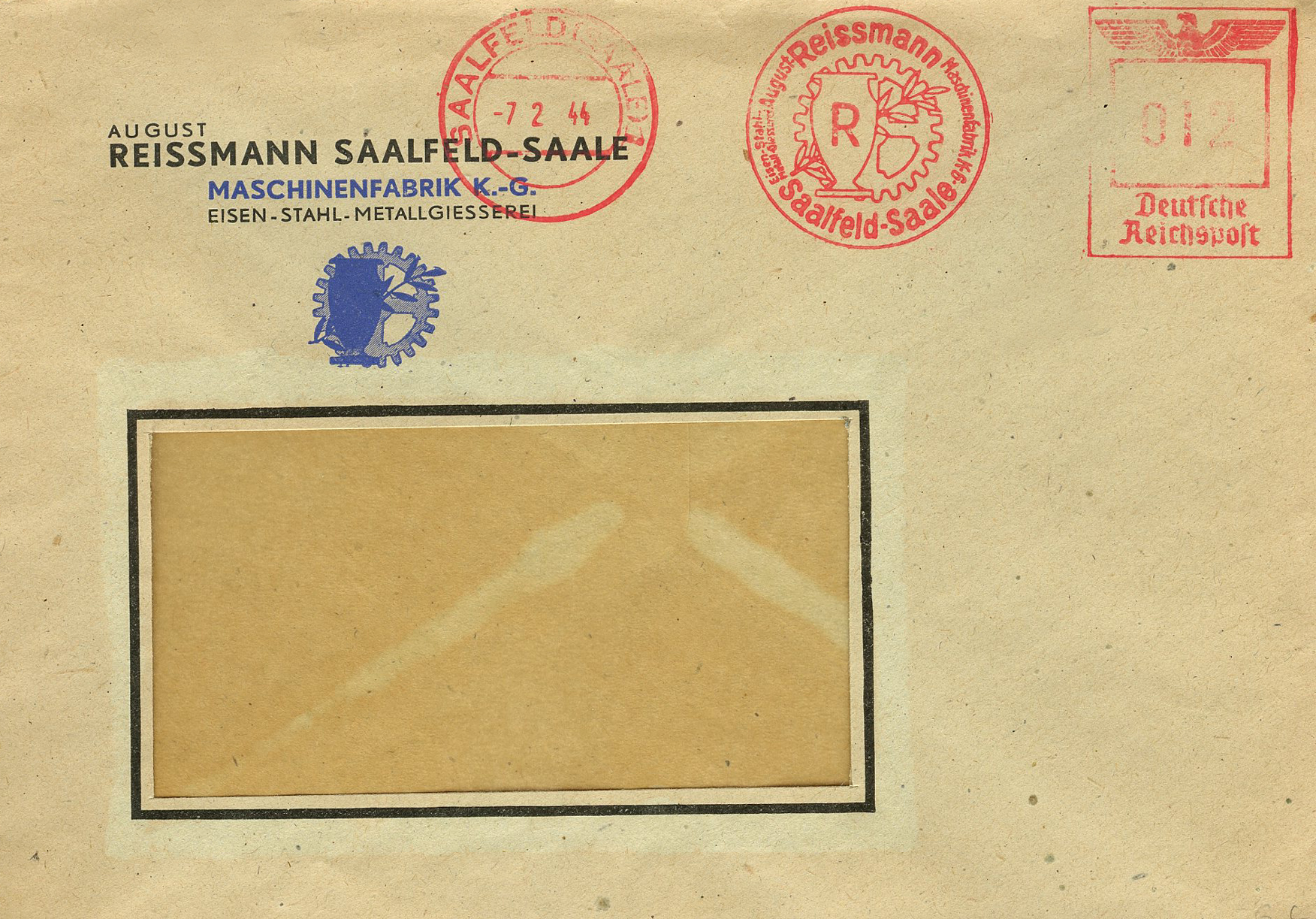
[Below: Close-up.]
[Below: Close-up.]
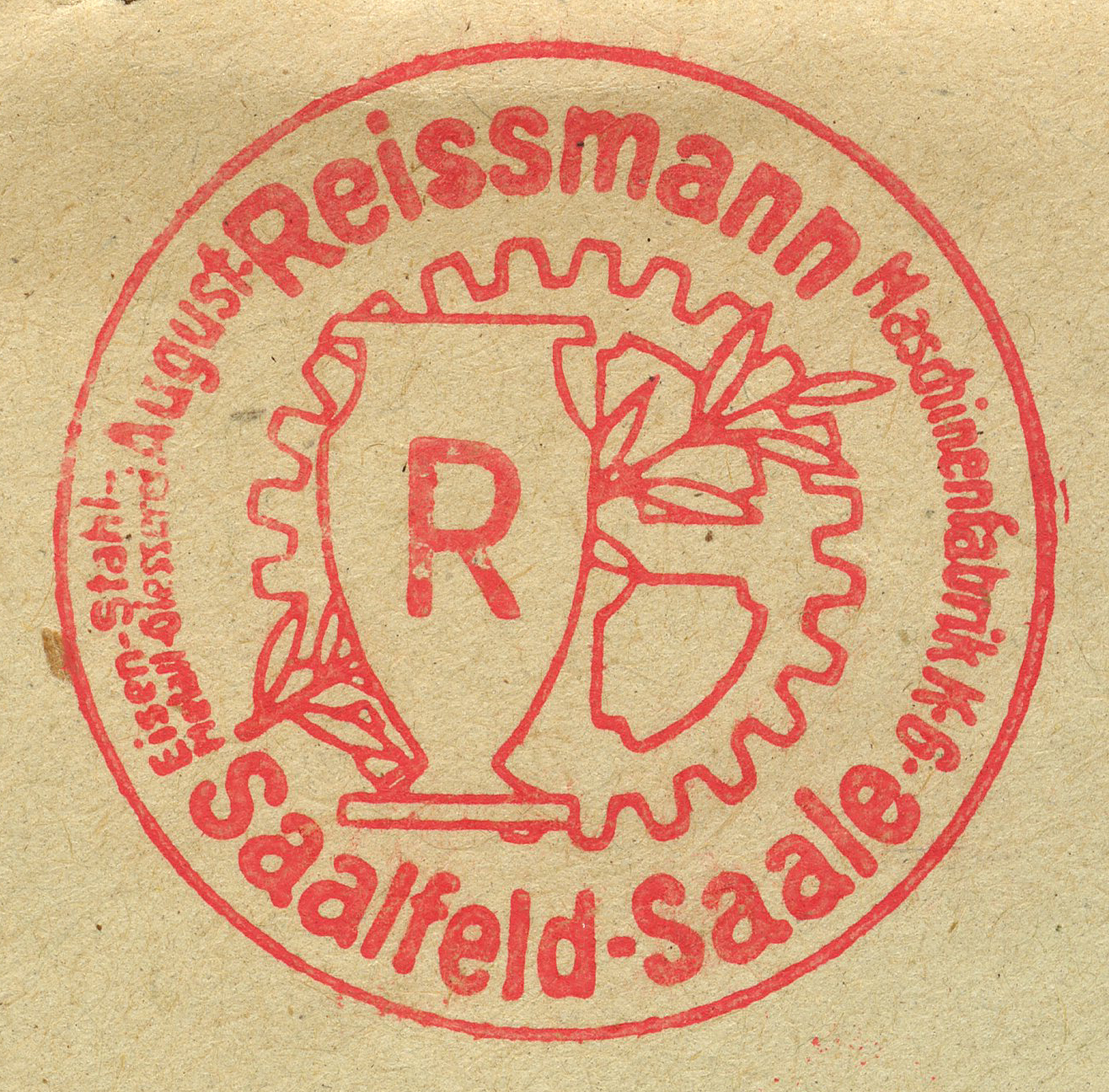
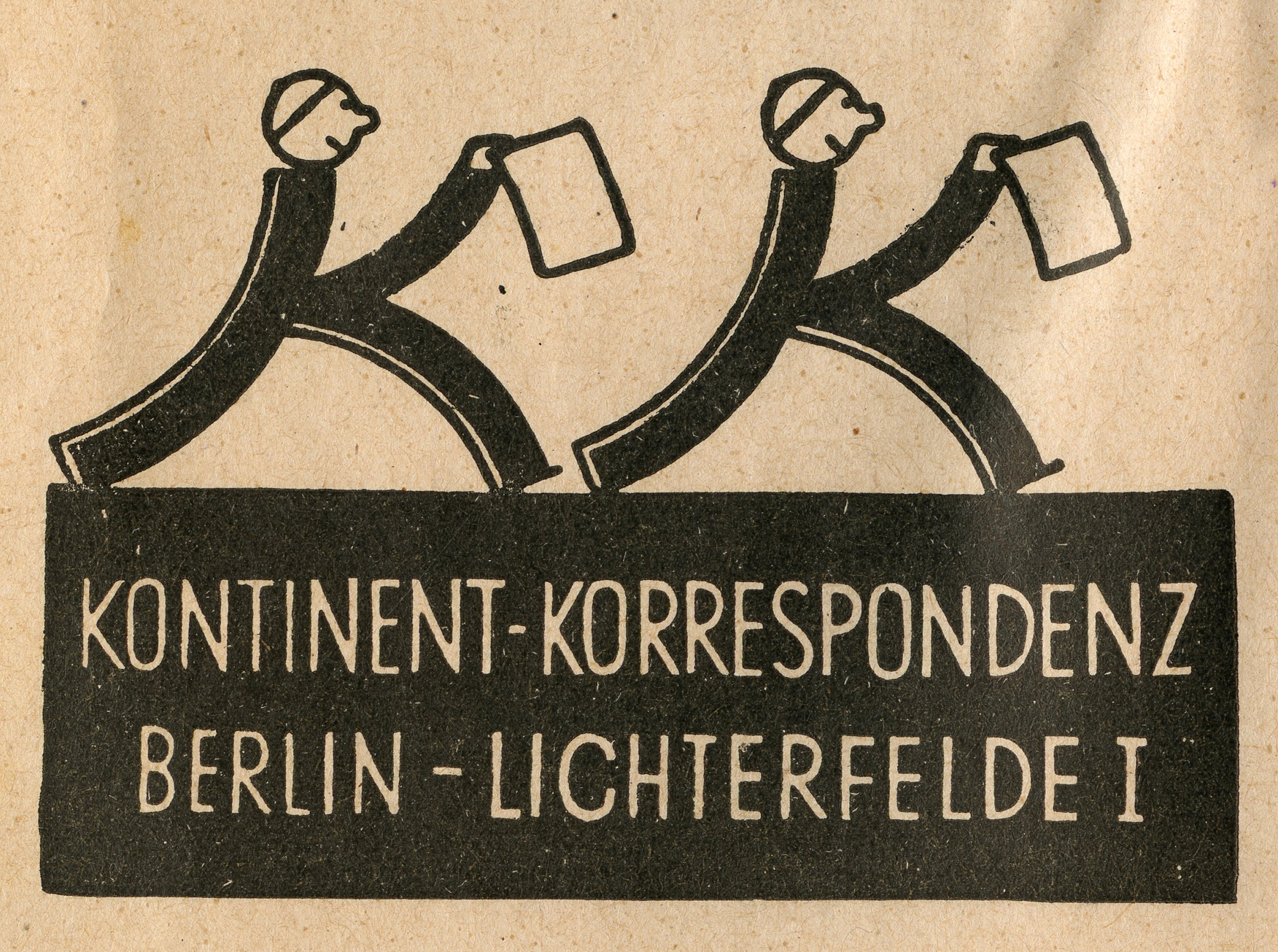
[Below: This was sent from Continent Correspondence, with 'Urgent newspaper delivery' to Riga Ceramic Works, postmarked on December 13, 1943.]
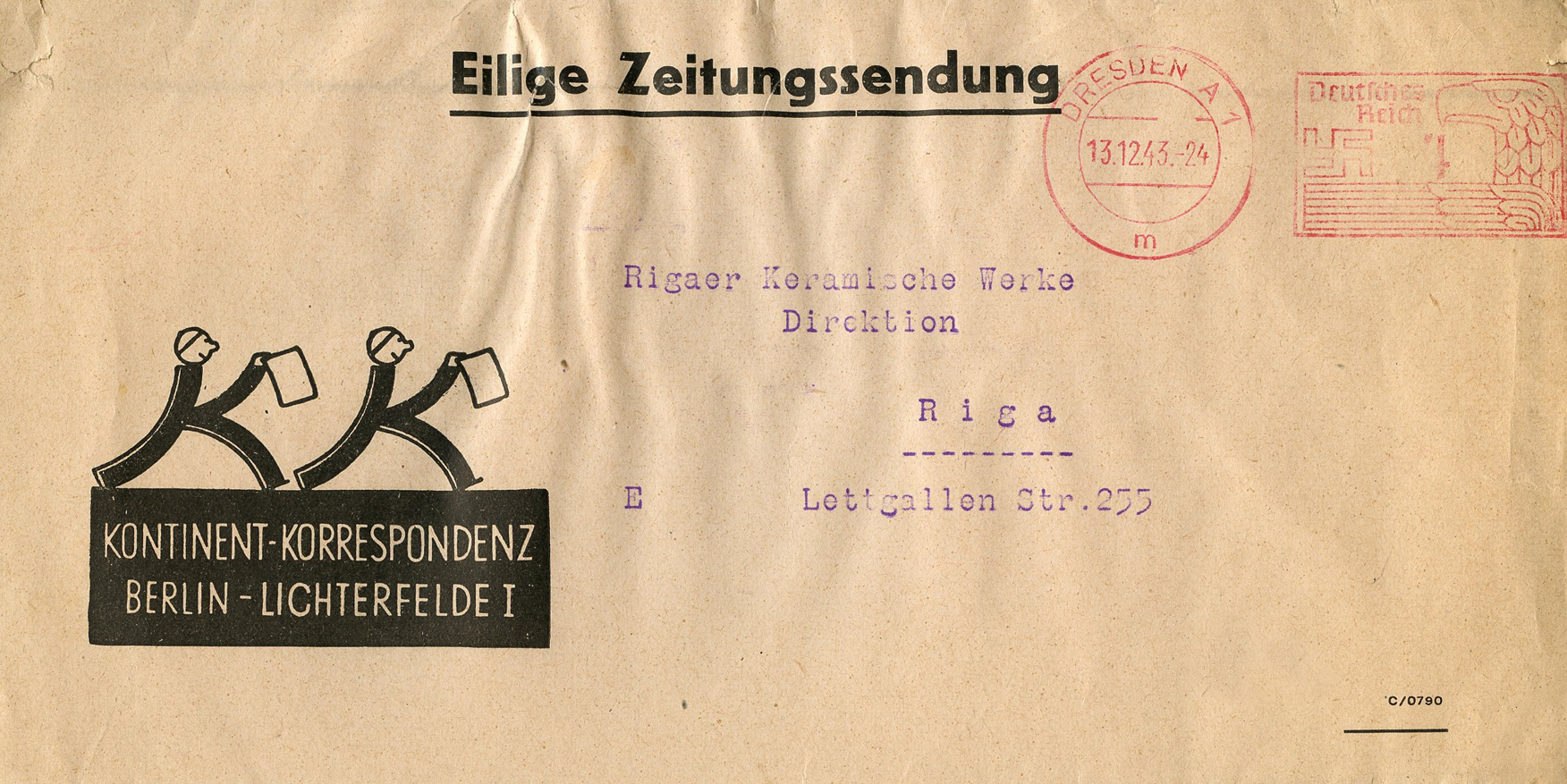
[Below: Close-up.]
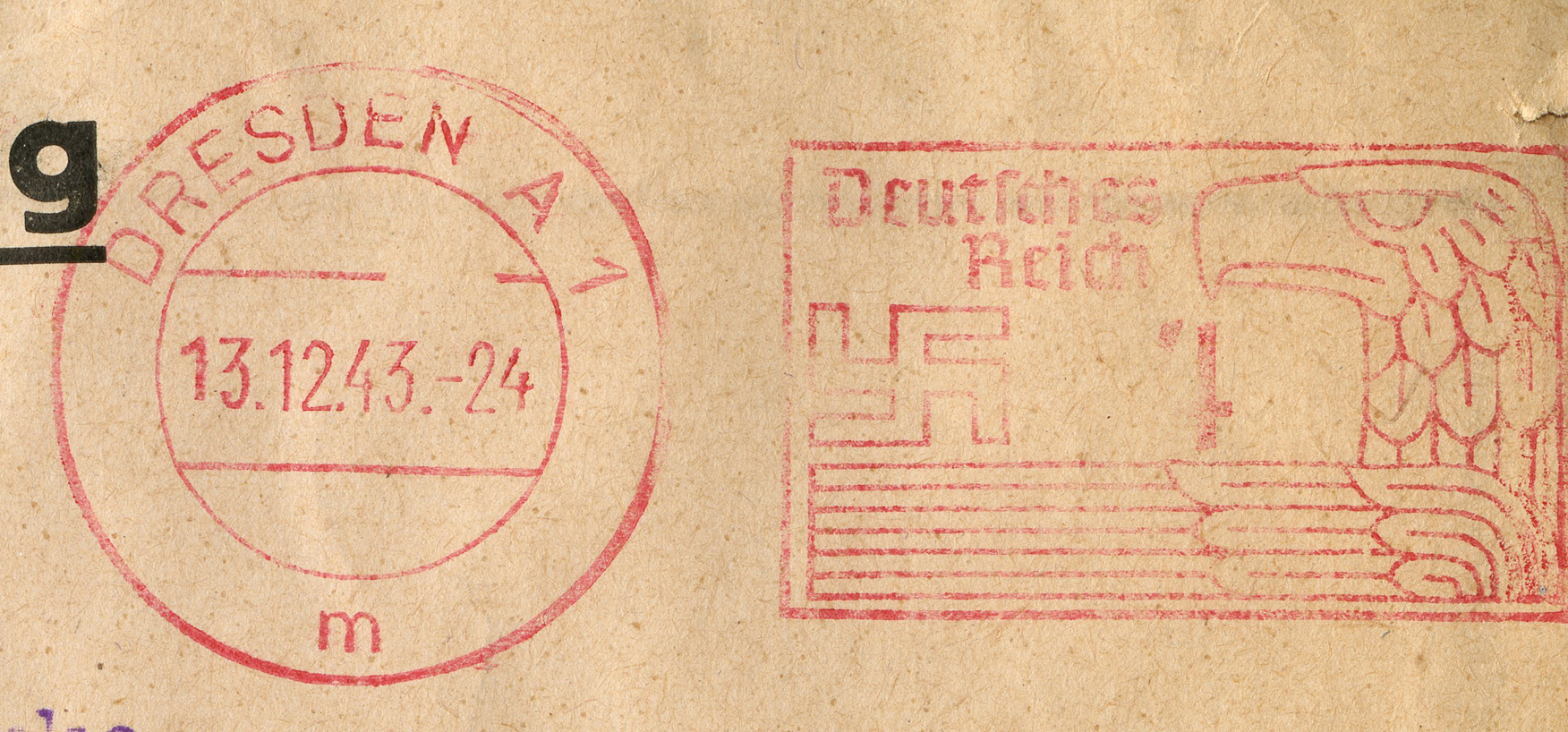
[Below: Close-up.]
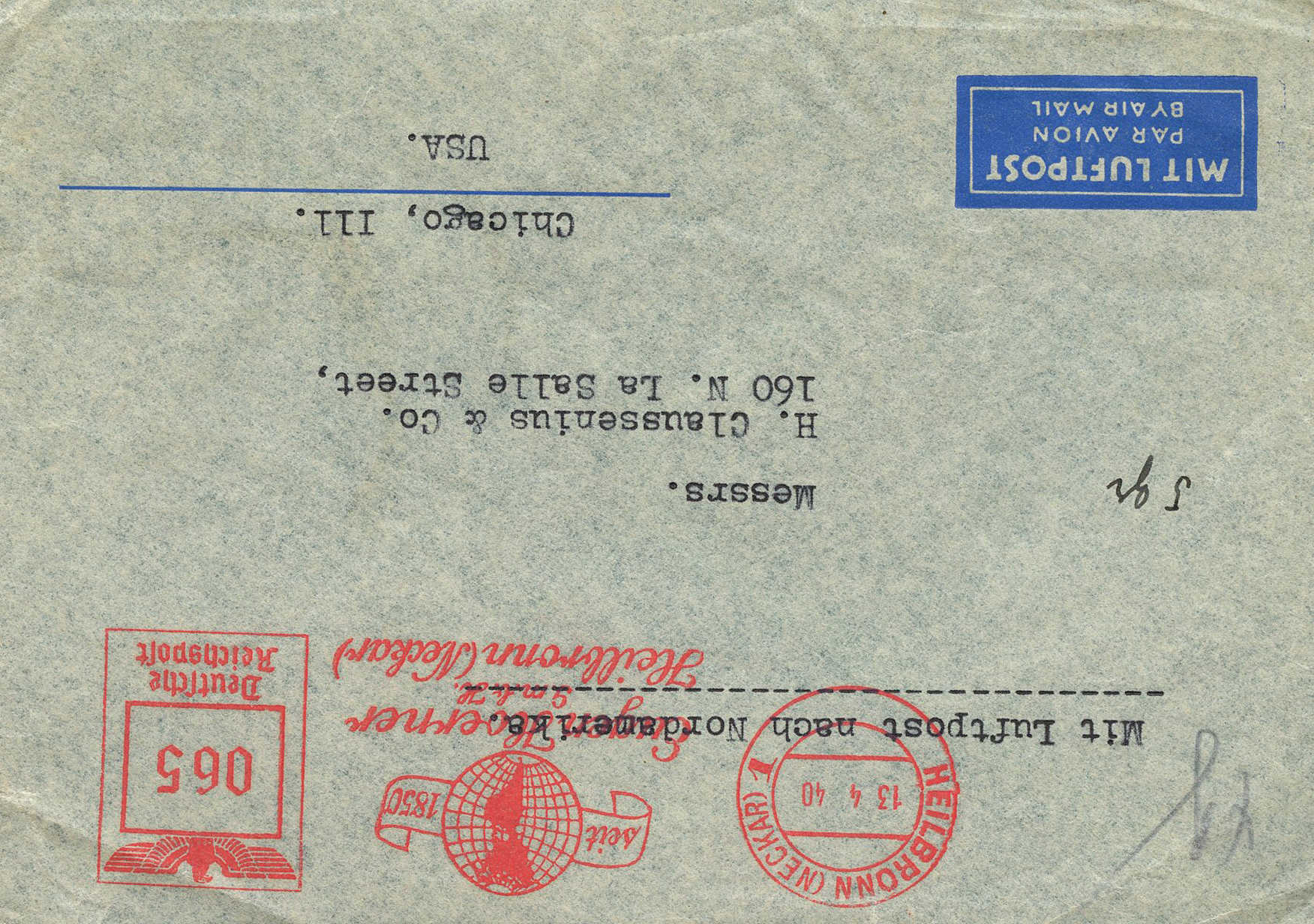
[Below: This was sent airmail to Chicago, USA, postmarked on April 13, 1940.]
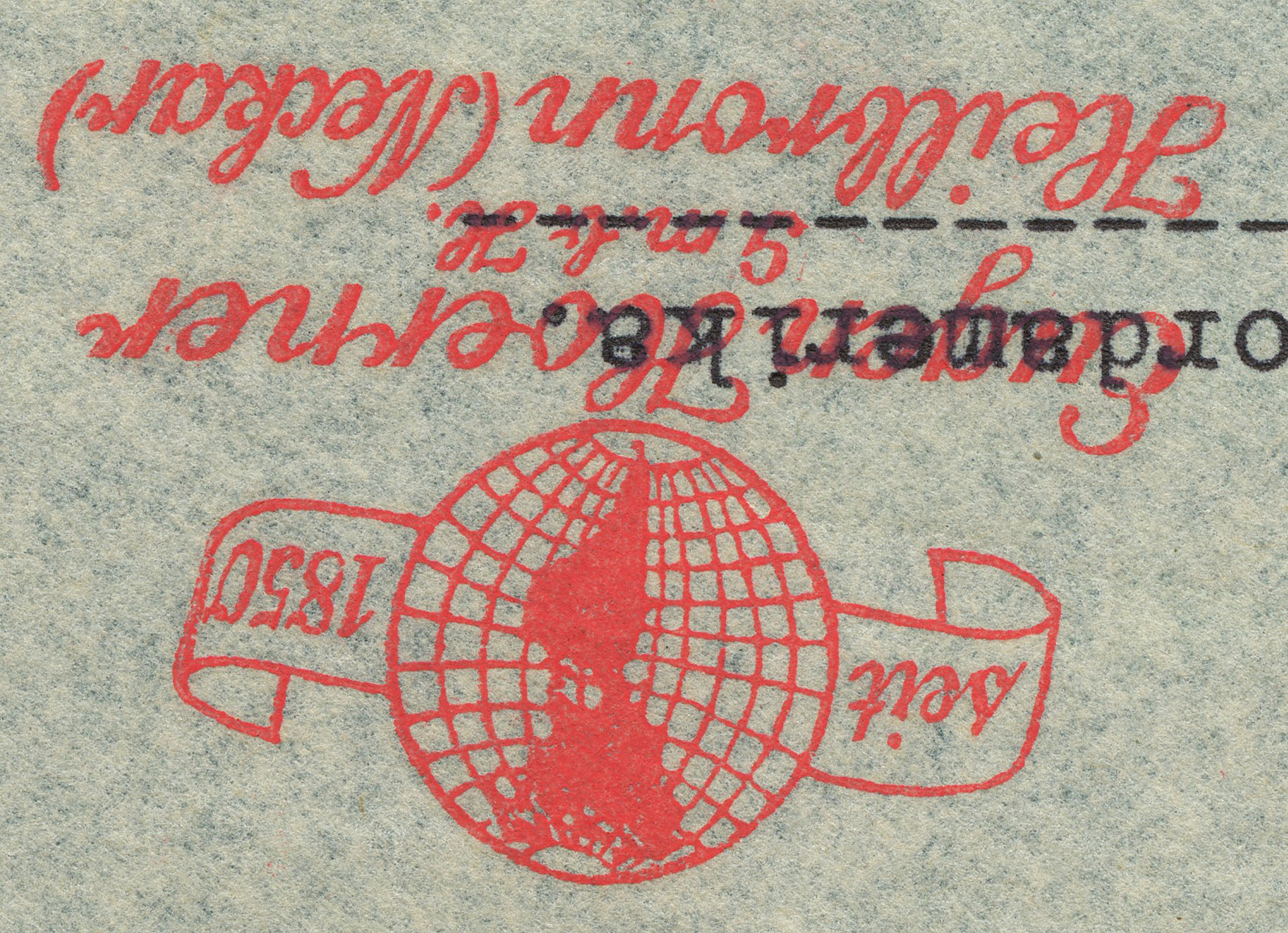
[Below: Close-up.]
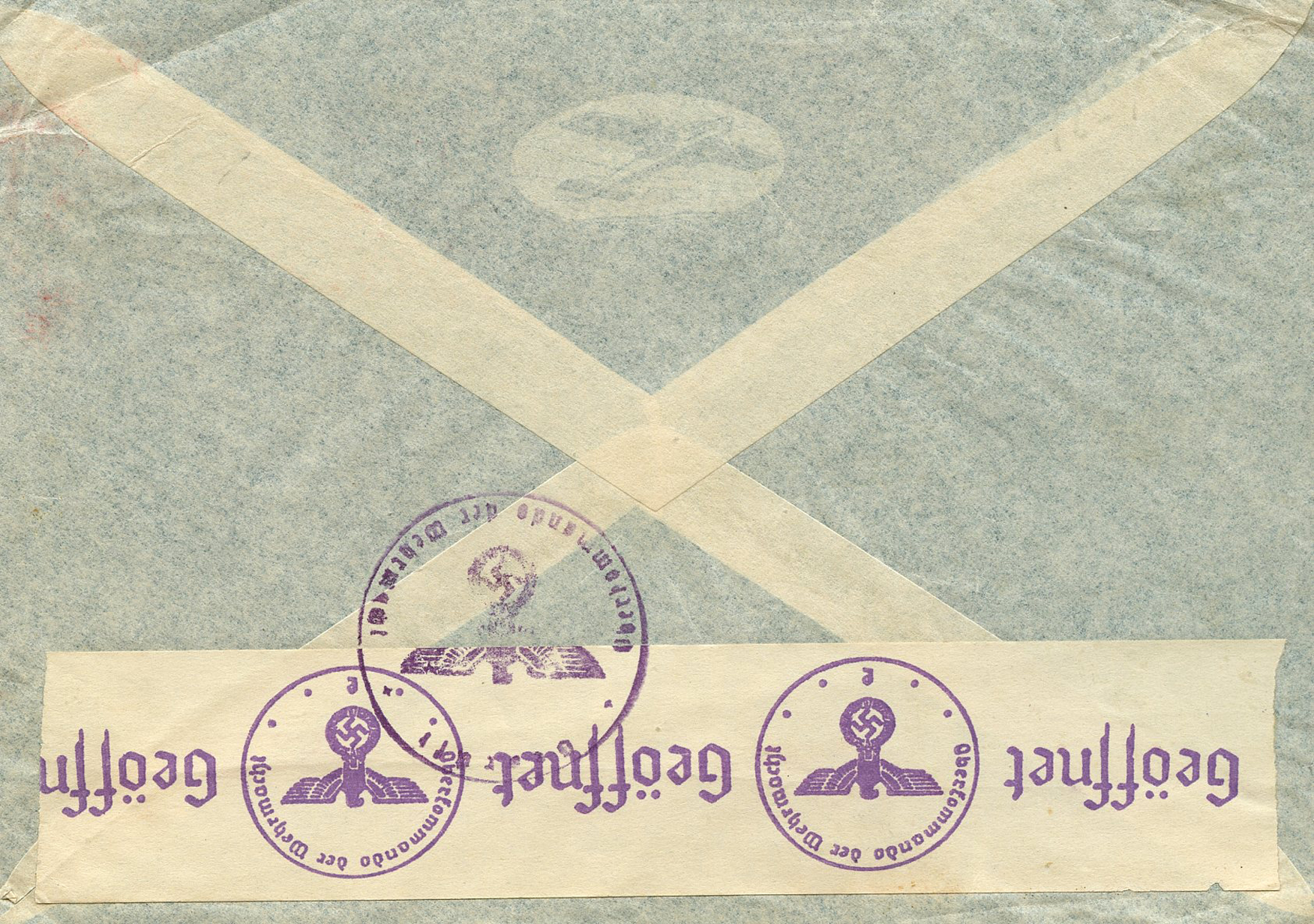
[Below: Reverse.]
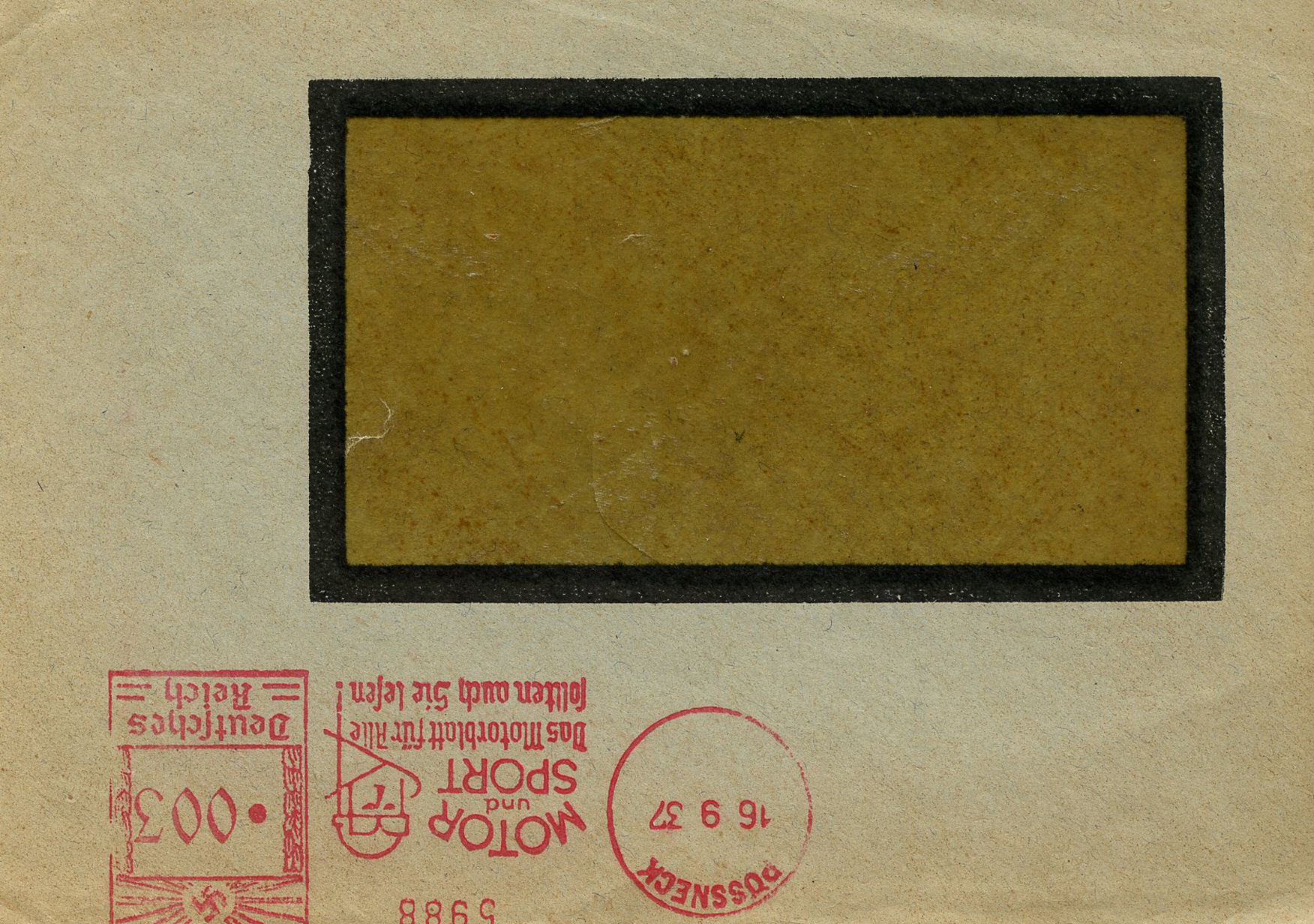
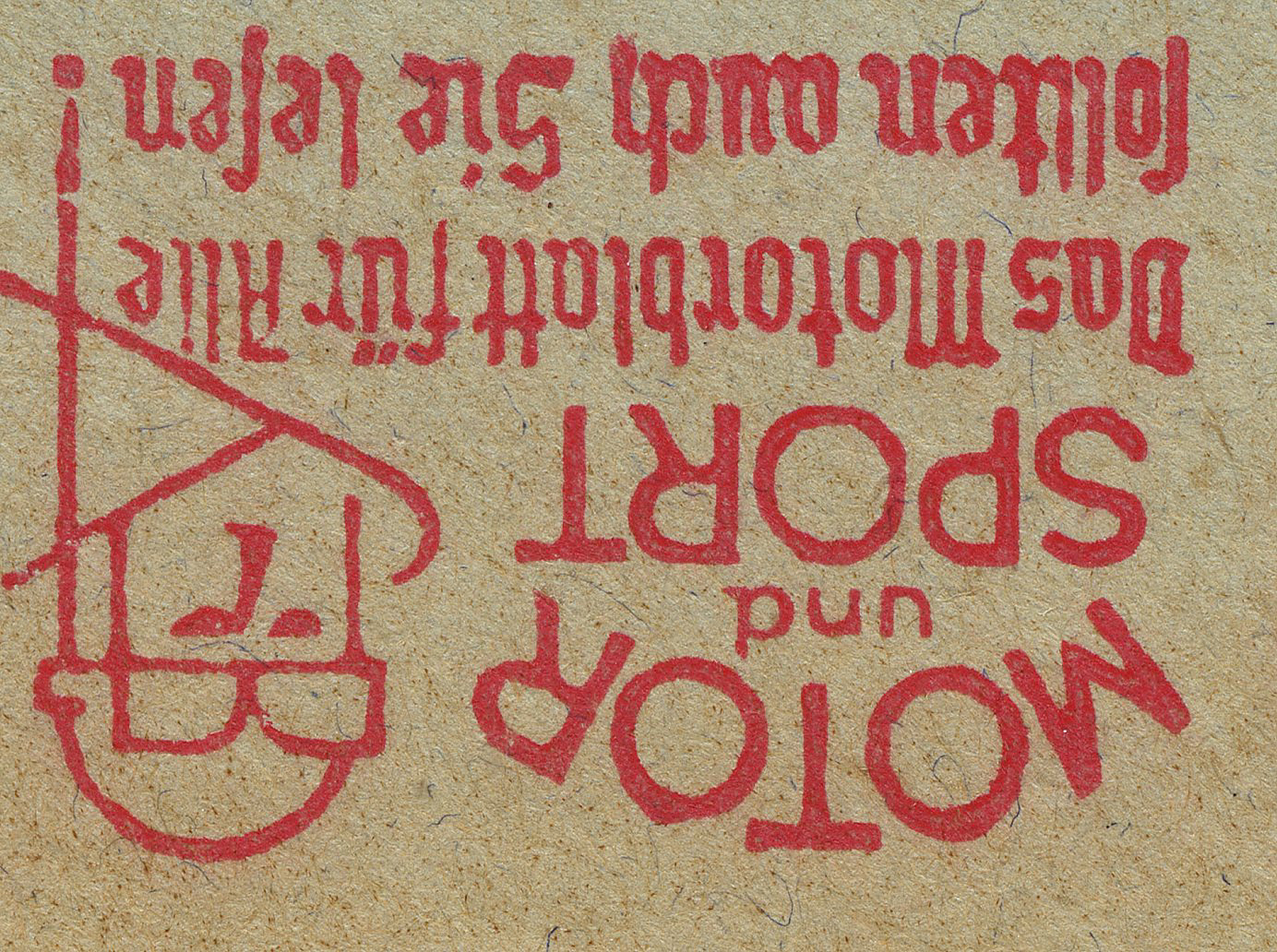
[Below: This is sent from 'Motor and Sport - The motoring magazine for everyone - you should read it too!', postmarked September 16, 1937.]
[Below: Close-up.]
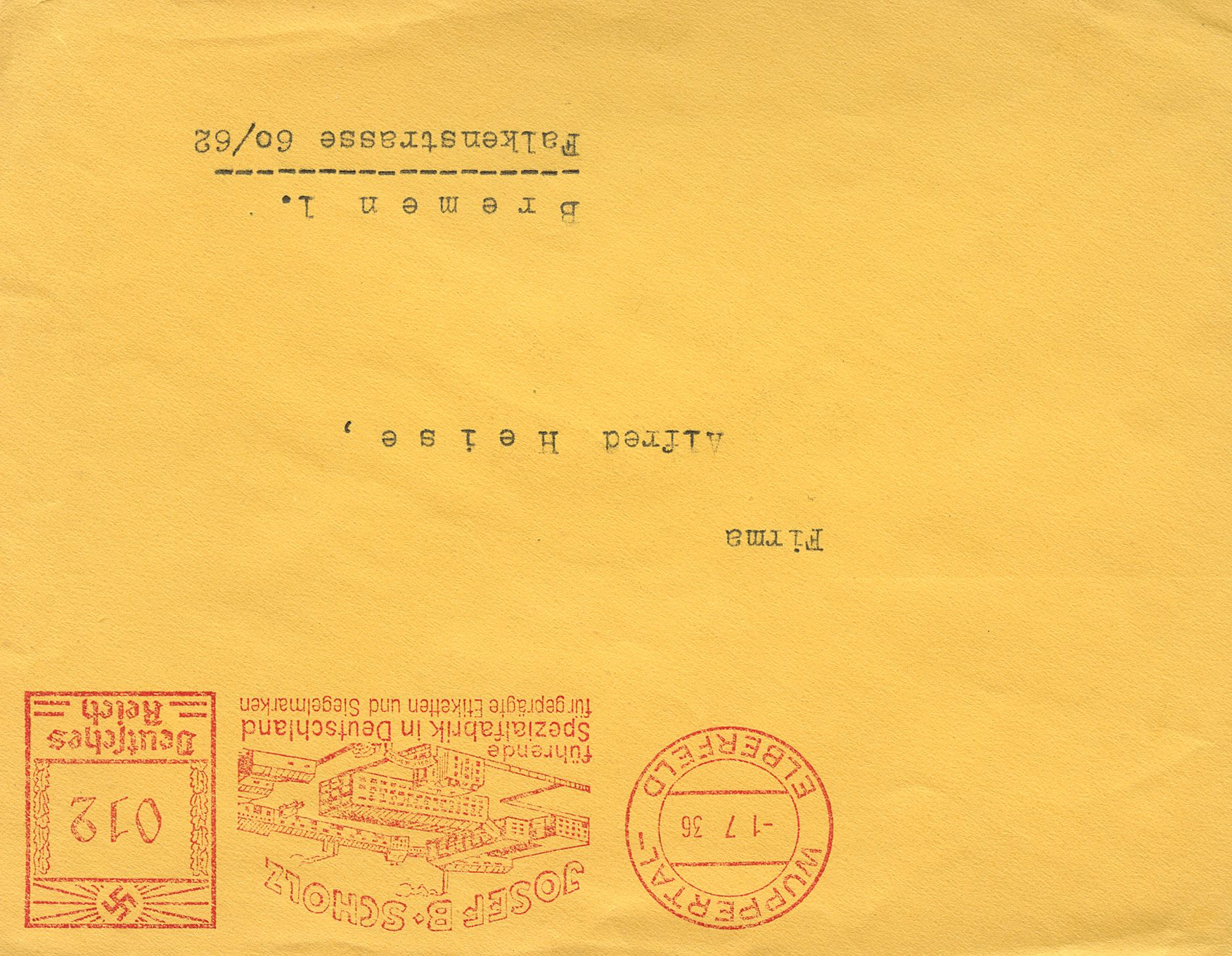
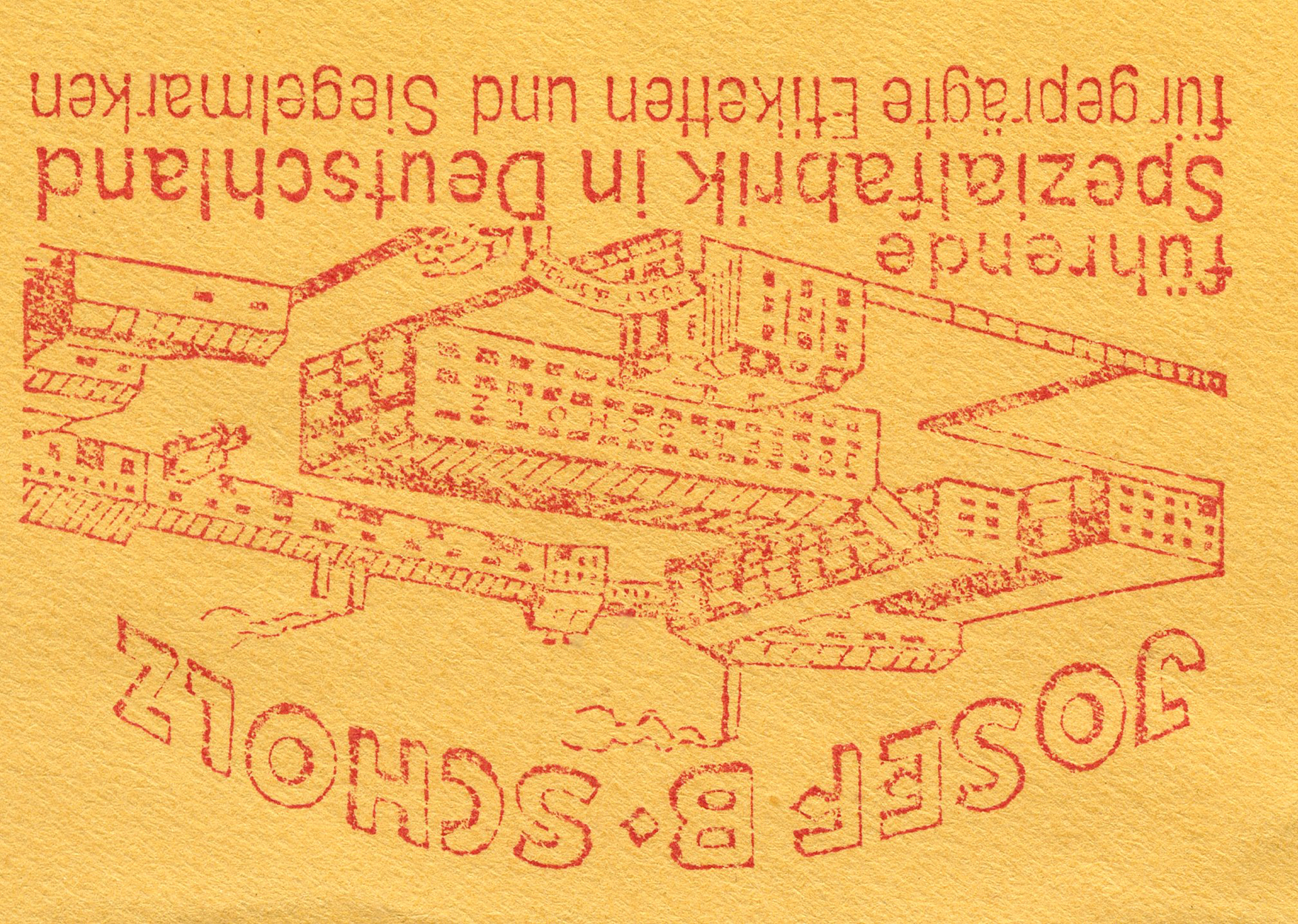
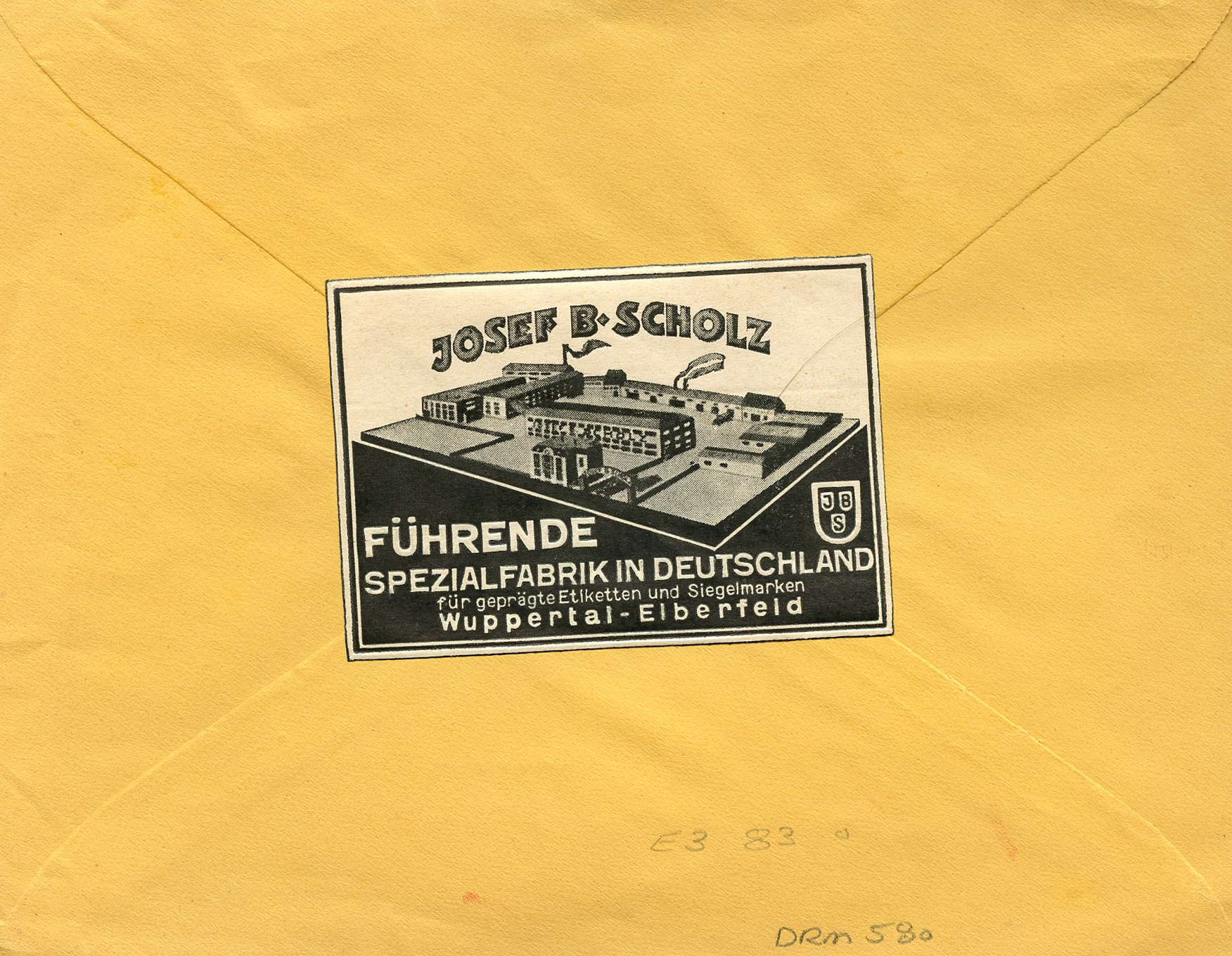
[Below: This is sent from 'JOSEF B. SCHOLZ - Leading specialist factory in Germany for embossed labels and seals', postmarked July 1, 1936.]
[Below: Close-up.]
[Below: Reverse.]
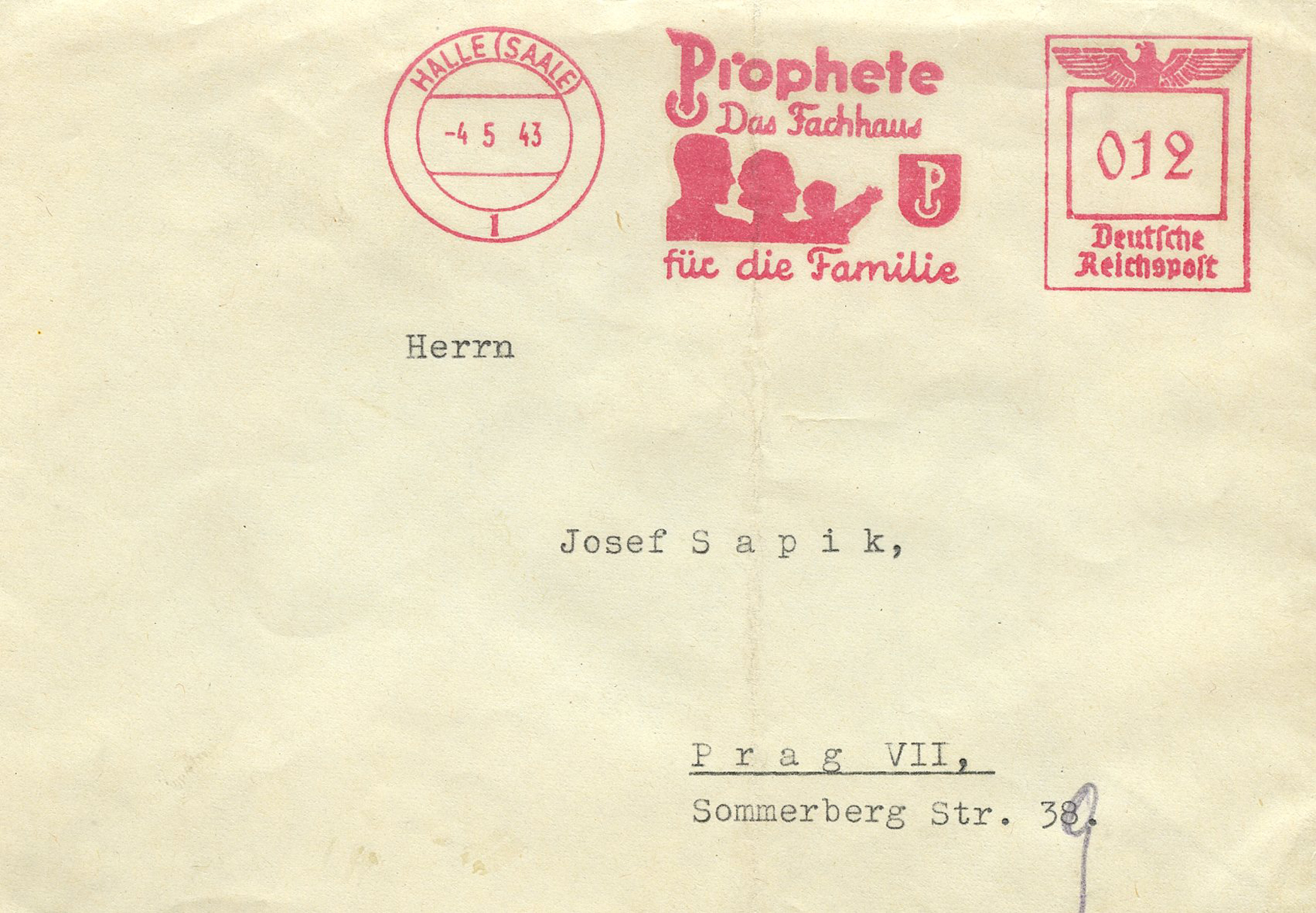
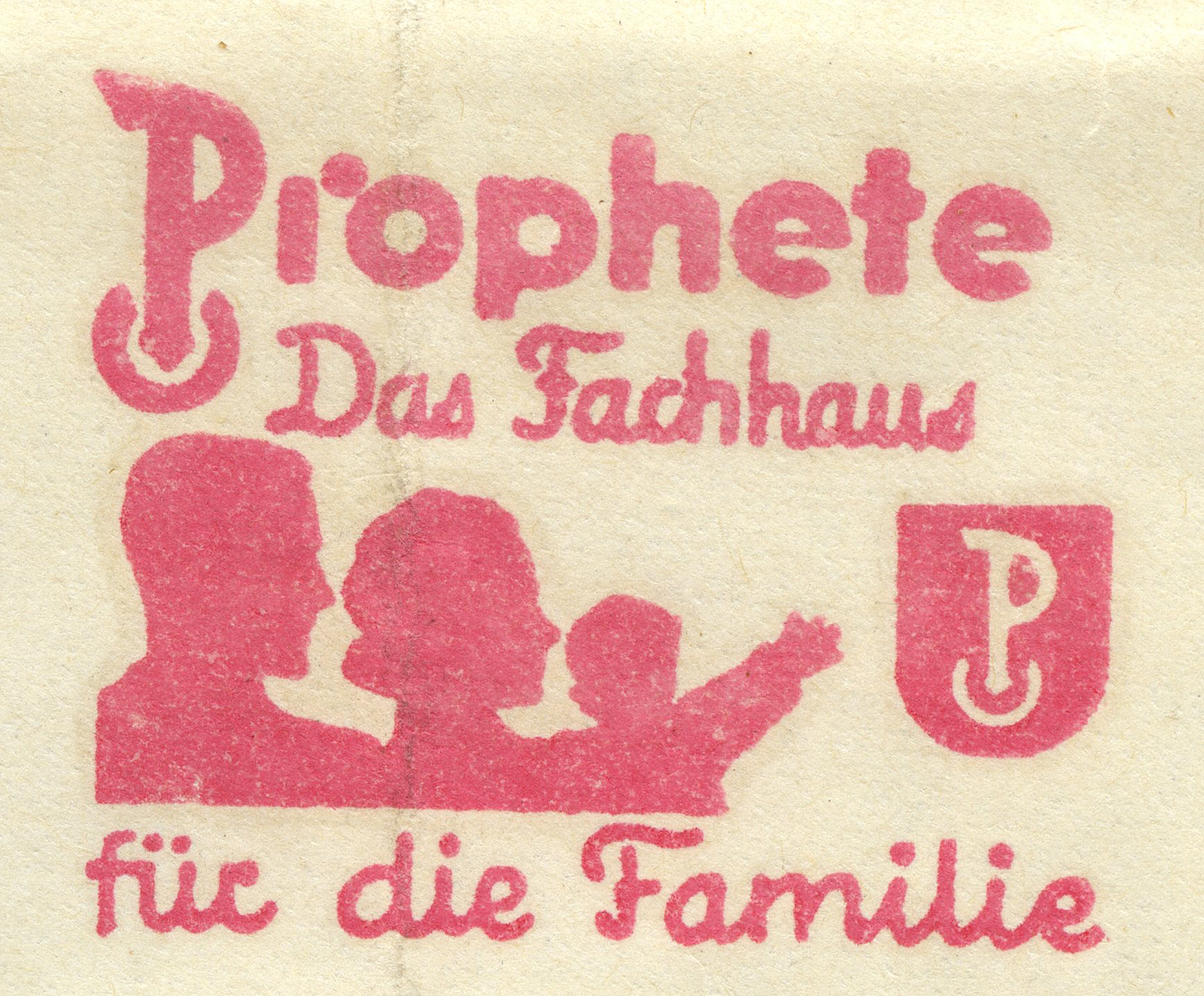
[Below: This is interesting. It says 'Prophete das Fachhaus für die familie' (Prophete – the specialist store for the family), postmarked May 4, 1943.]
[Below: Close-up.]
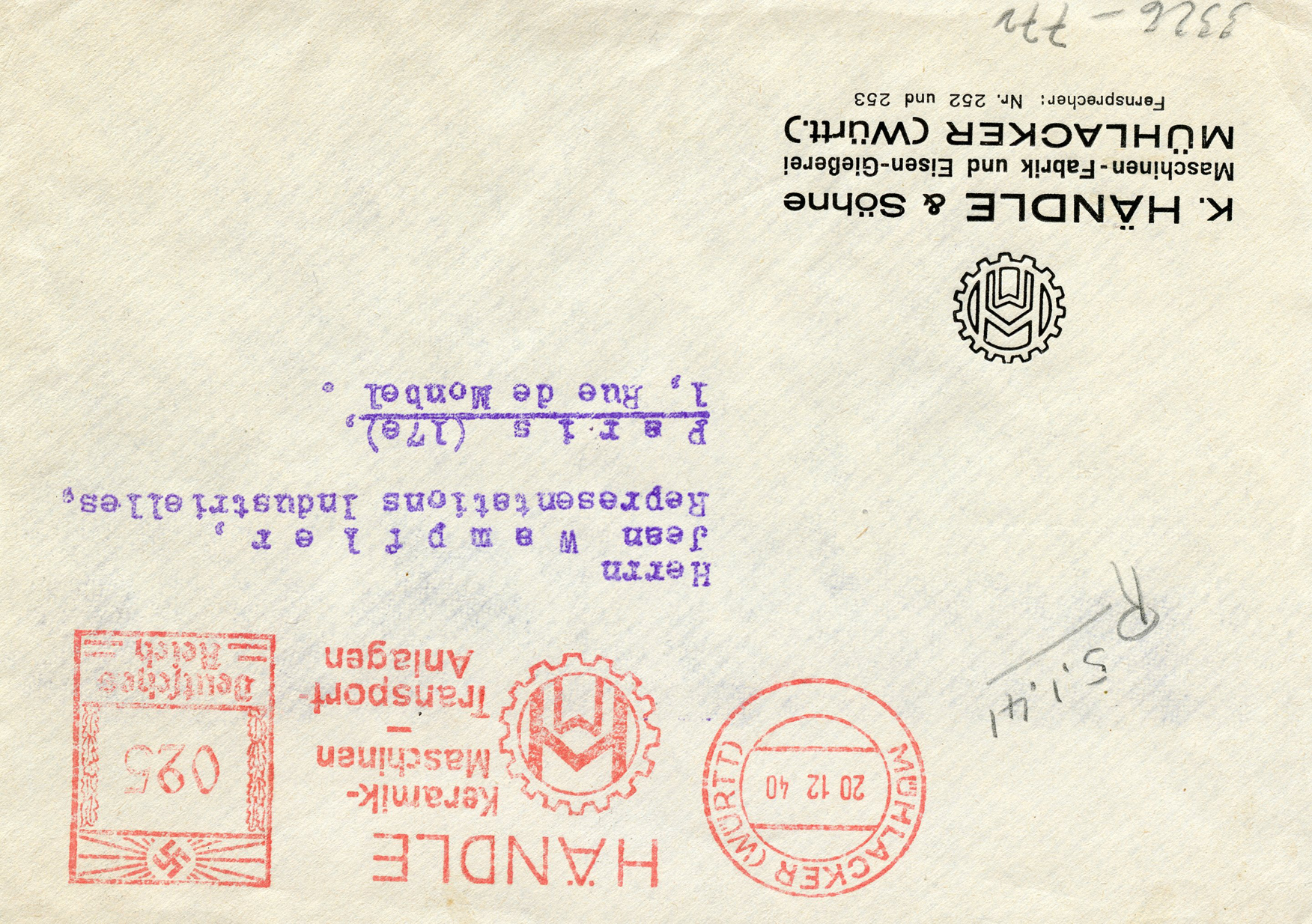
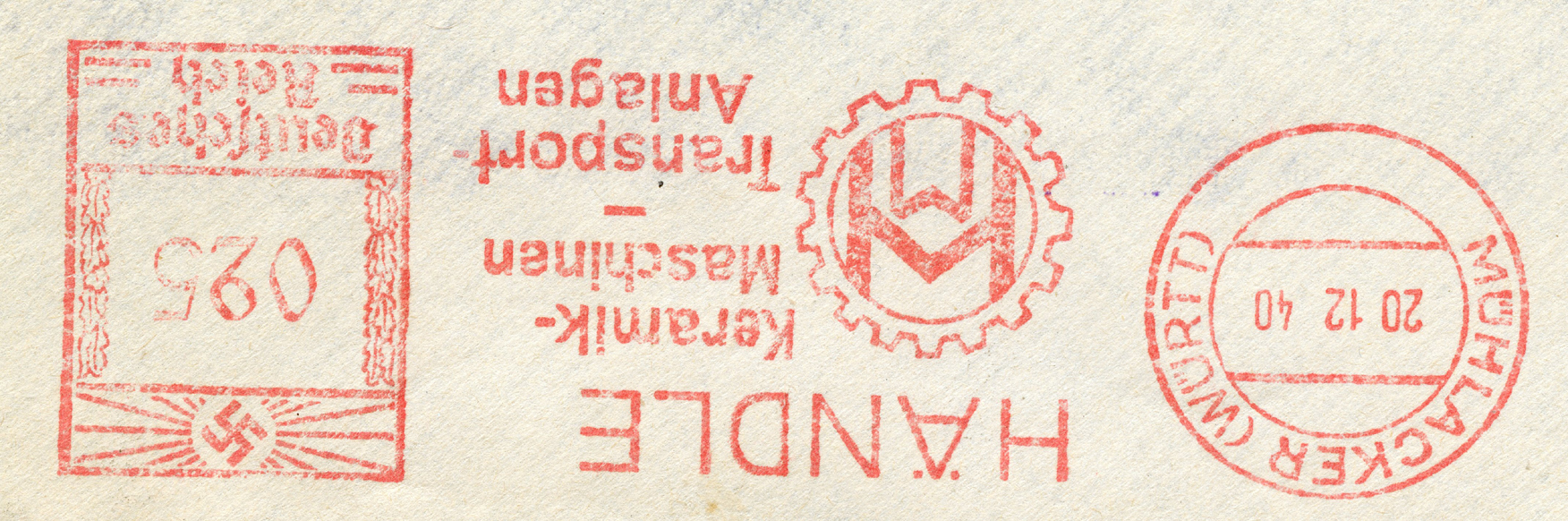
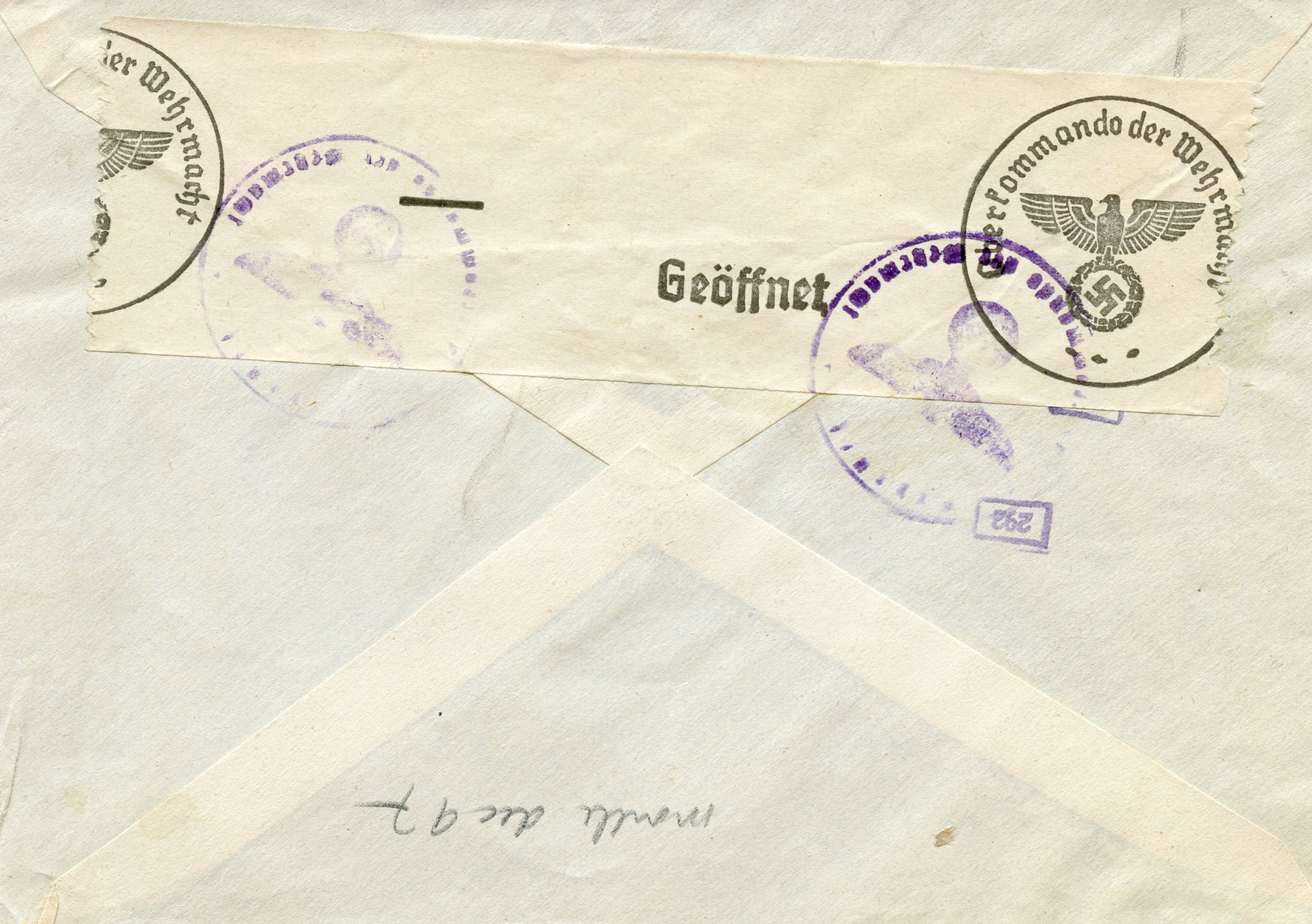
[Below: Here are three envelopes sent during the war internationally, thus were censored. This is from a machine factory and iron foundry, postmarked December 20, 1940.]
[Below: Close-up.]
[Below: Reverse.]
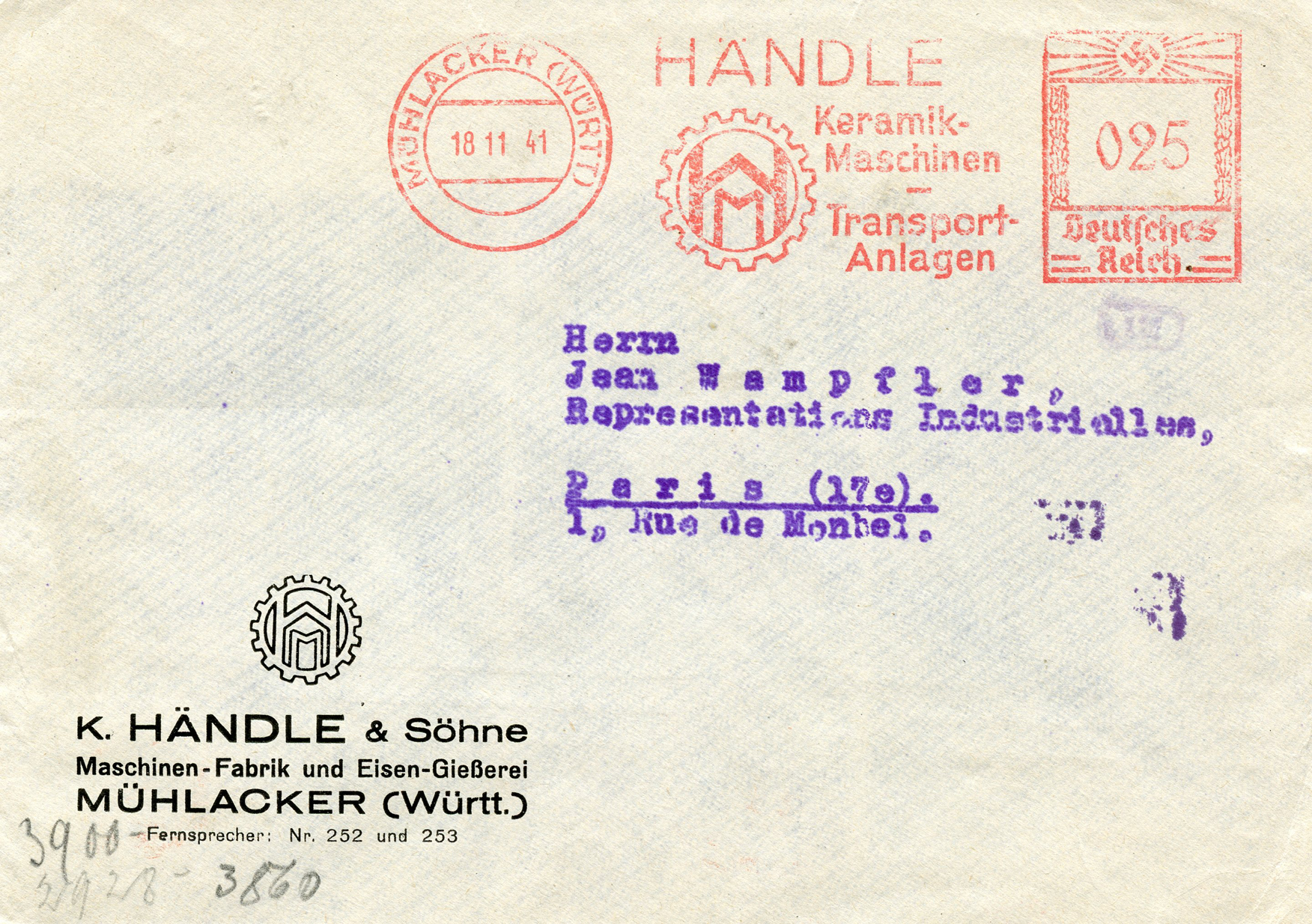
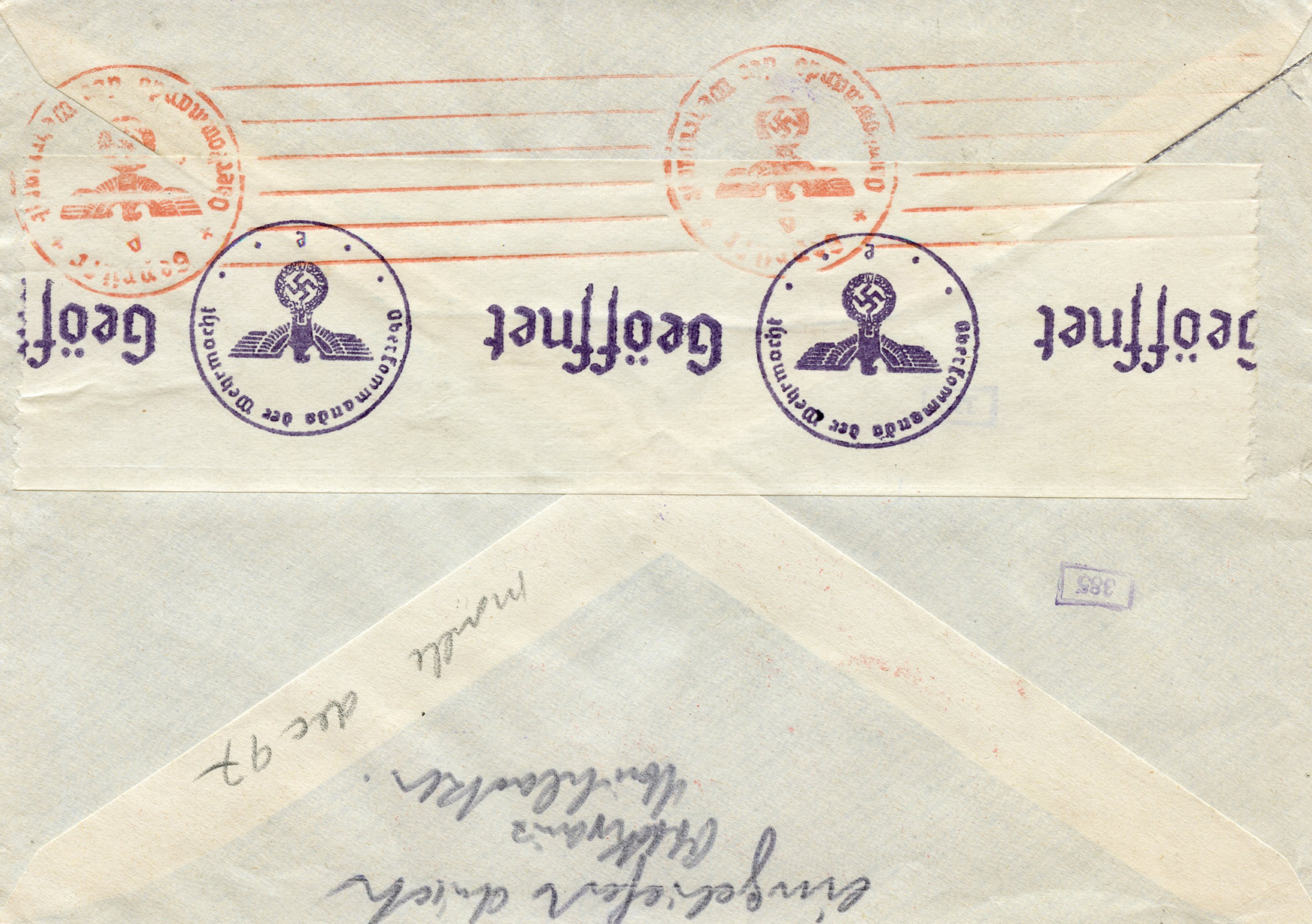
[Below: This is postmarked November 18, 1941.]
[Below: Reverse.]
[Below: This is postmarked November 19, 1941.]
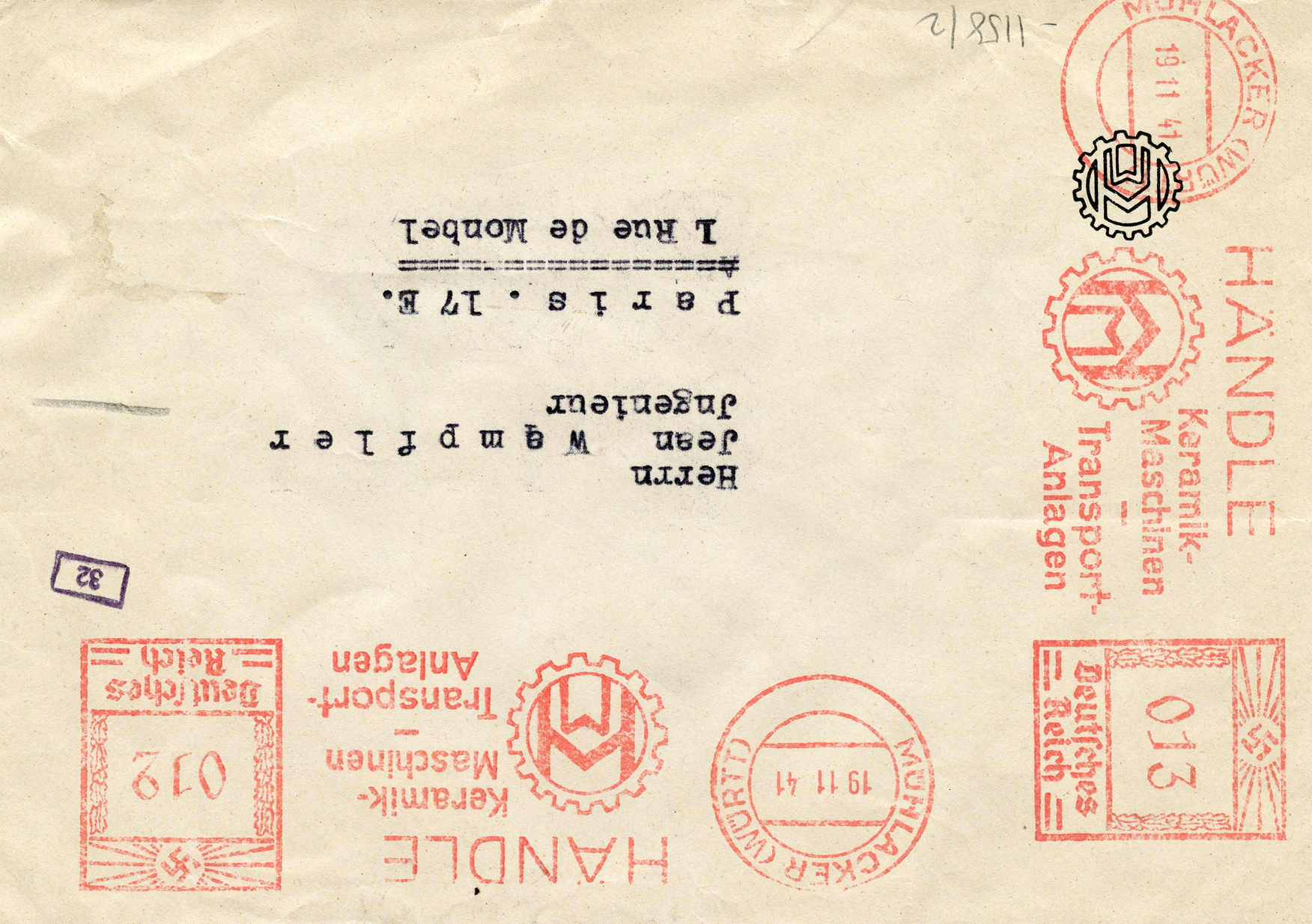
[Below: Reverse.]
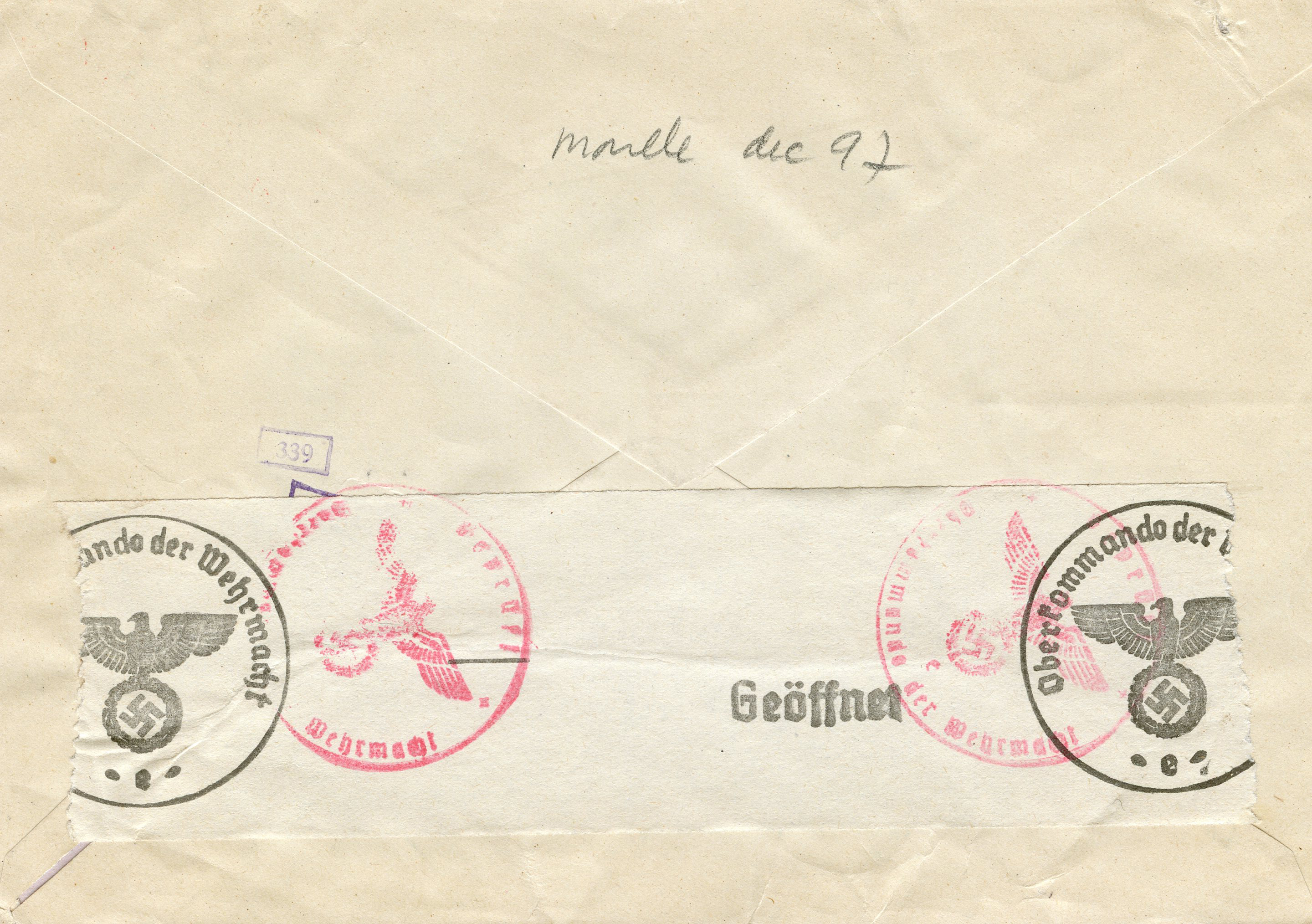
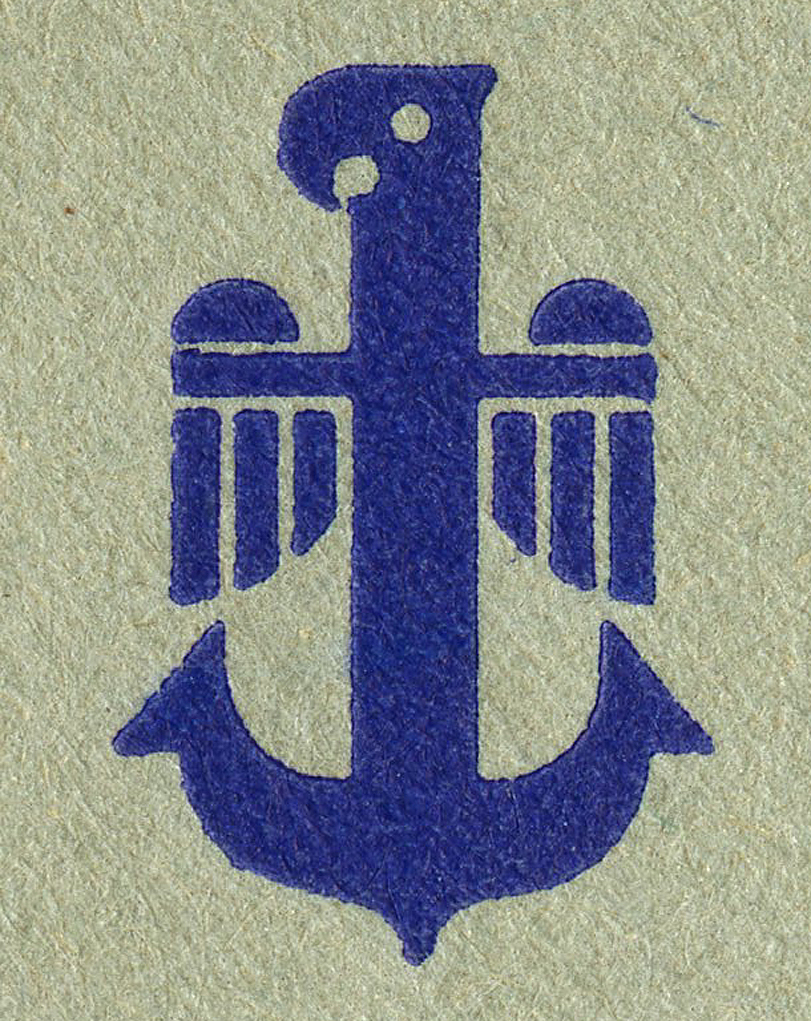
[Below: One of the strangest little eagles of the Third Reich, this is from a 'printing ink fabrics', dated August 8, 1942.]
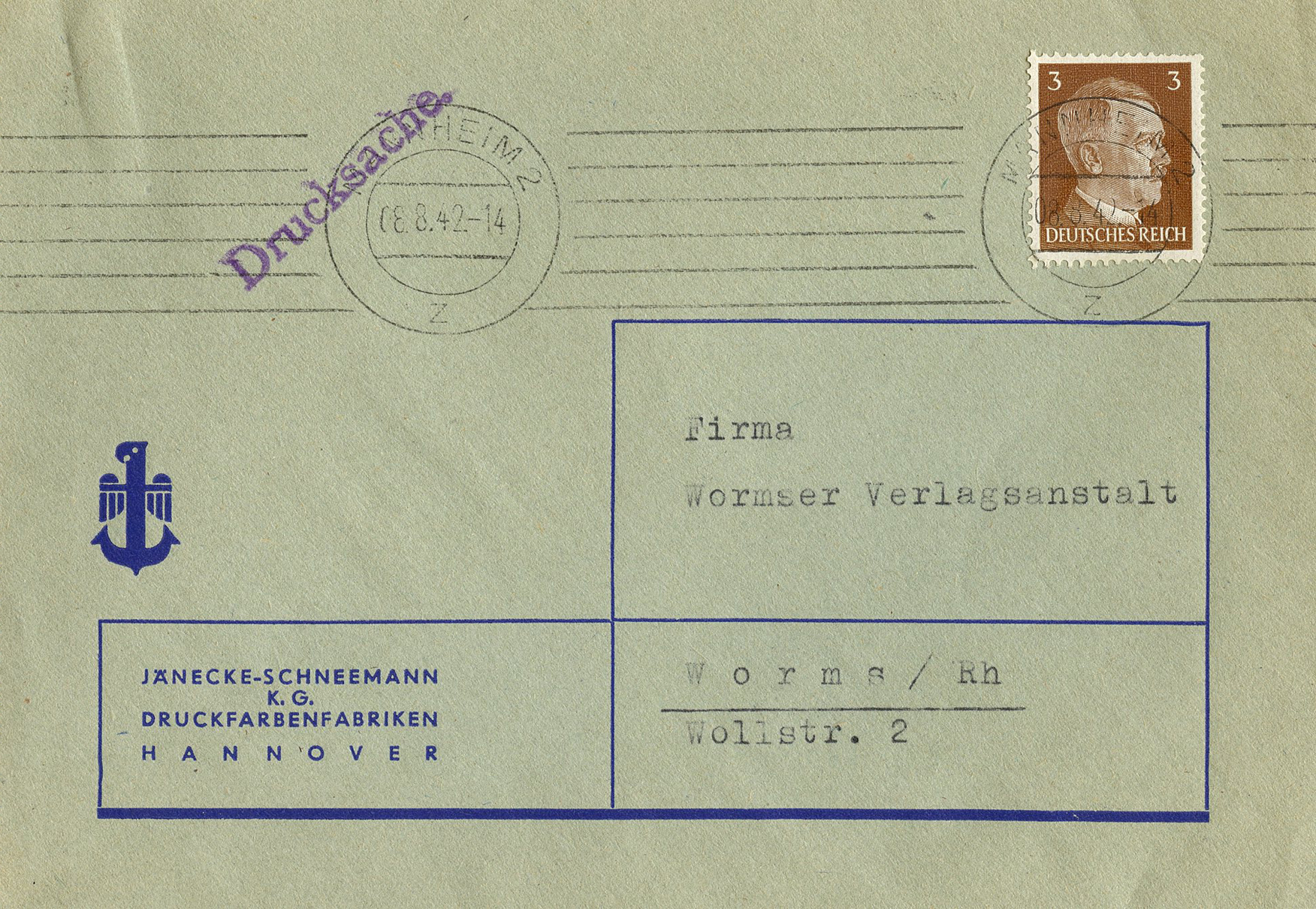
[Below: Close-up.]
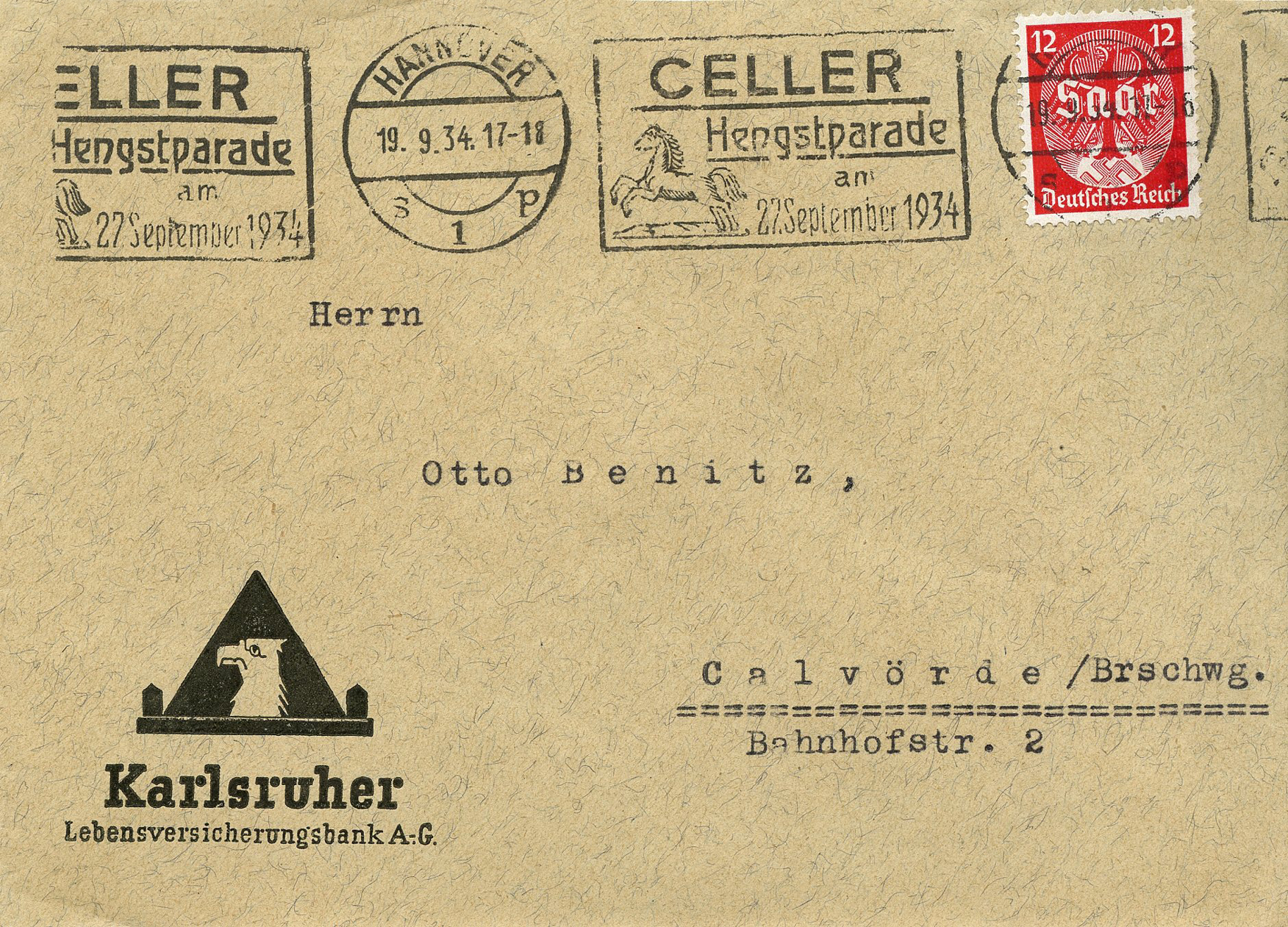
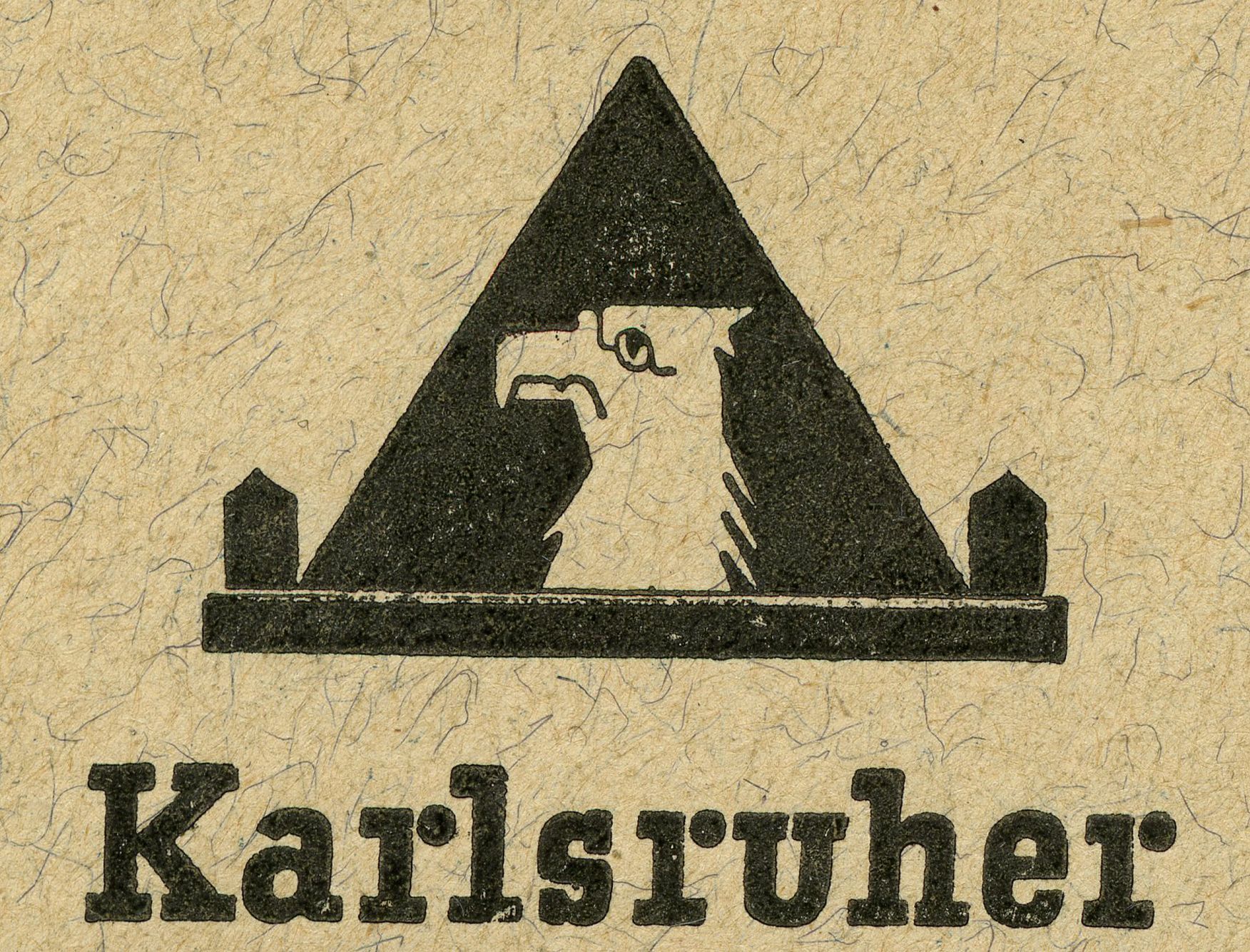
[Below: Now here is a STRONG eagle! This eagle is cool, but looks kinda confused. Postmarked September 19, 1934]
[Below: Close-up.]
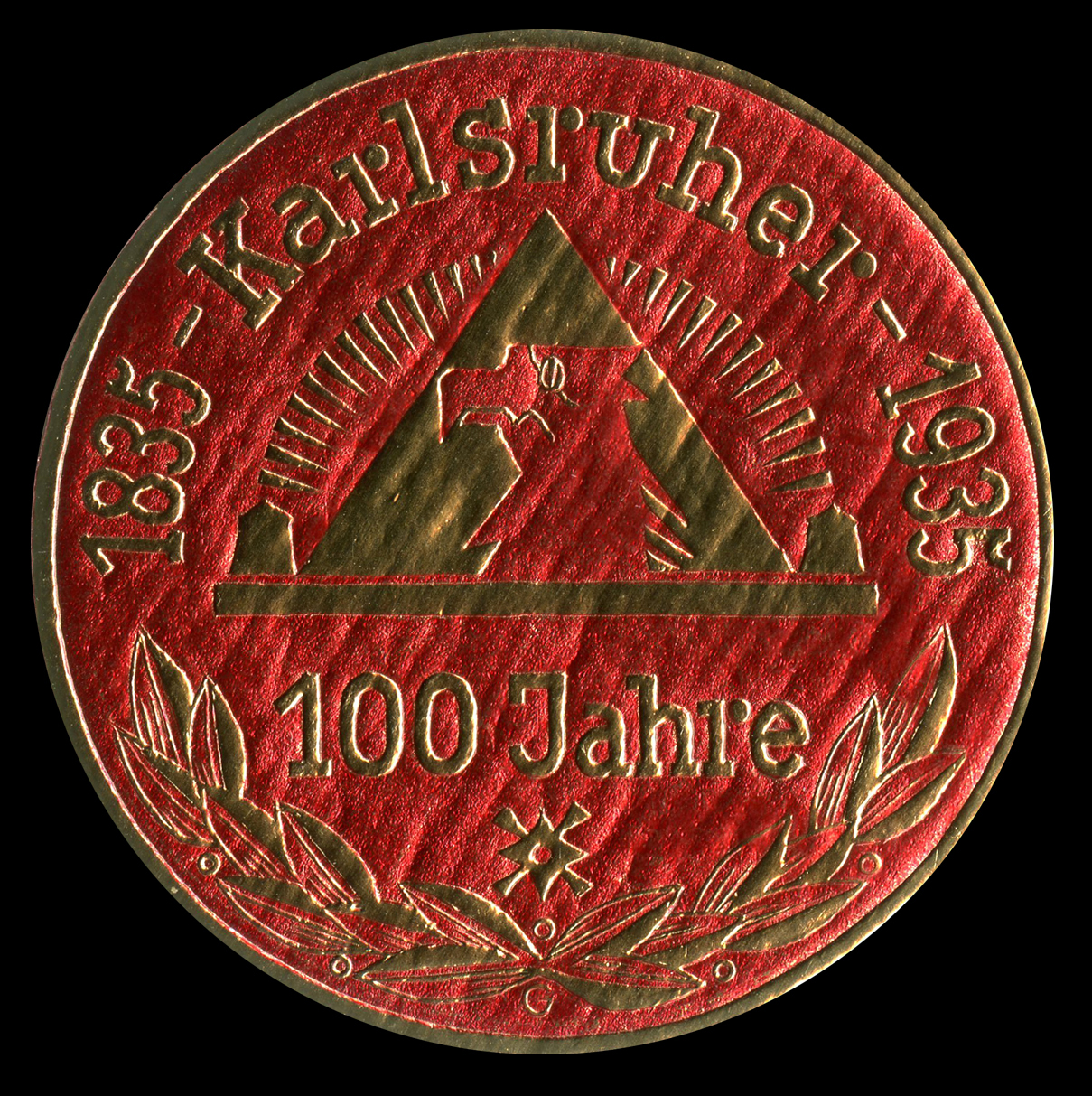
[Below: I found this little advertising stamp from the same company.]
[Below: This is postmarked March 15, 1944.]
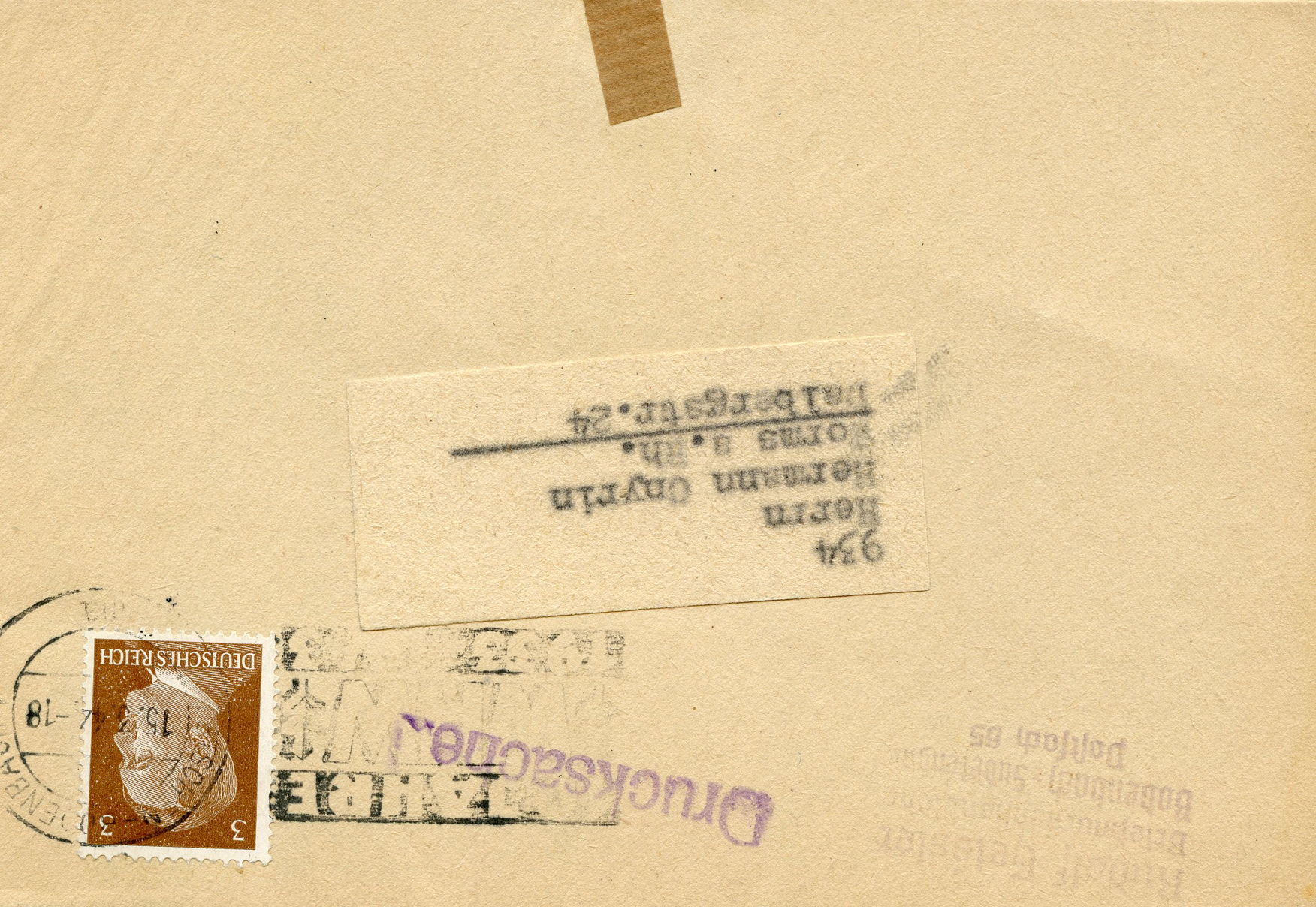
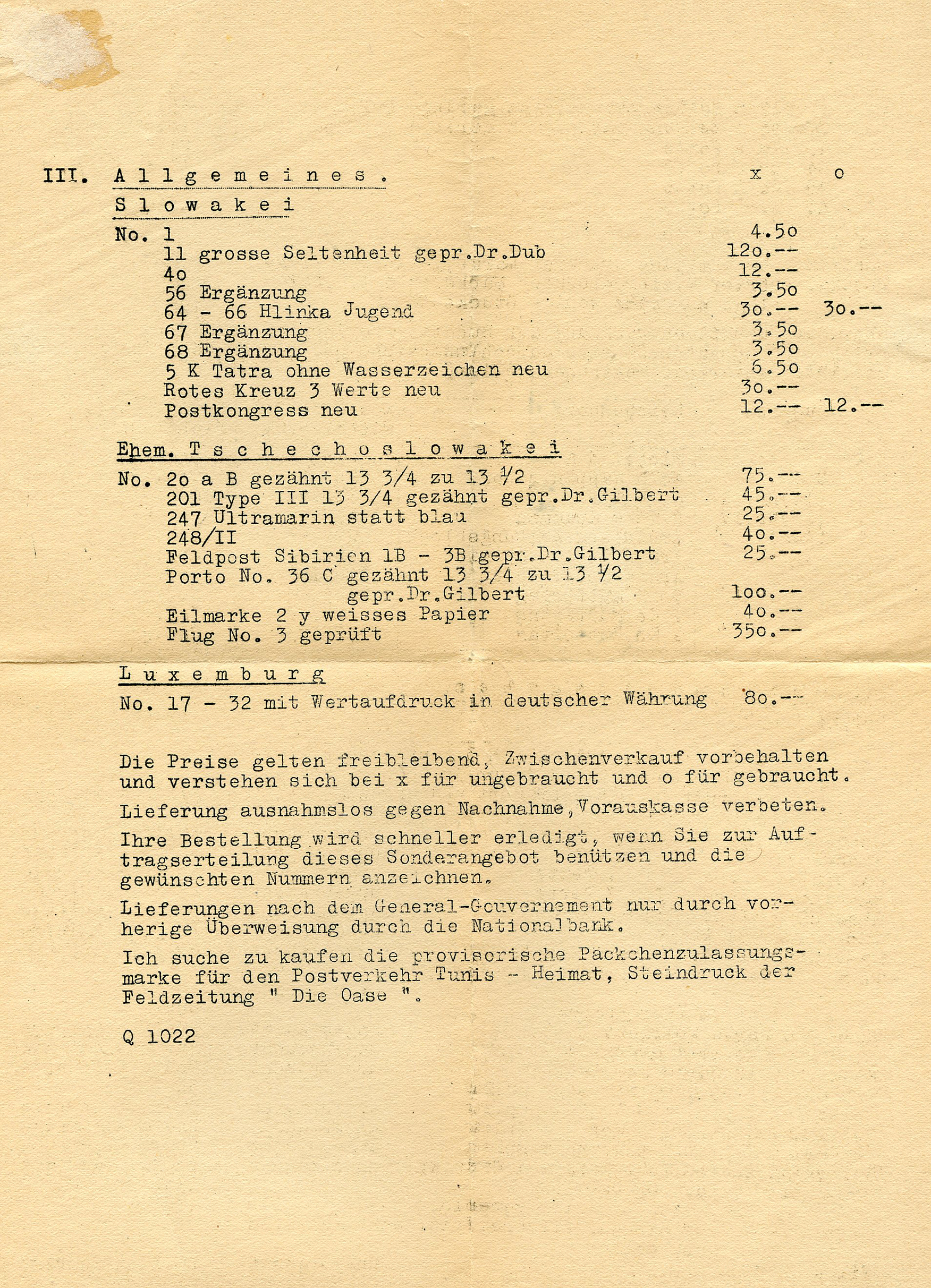
[Below: Close-up. This is a rare postage stamp list for stamp collectors. It has some very rare Slovakian stamp for 120 RM (a lot of money then), expertized by a guy named Dr. Dub. Herr Dub was a famous expertizer long after the war, his tiny little 'Dr. Dub' ink stamp (on the backs of expertized stamps) is a familiar sight on many rare Third Reich stamps.]
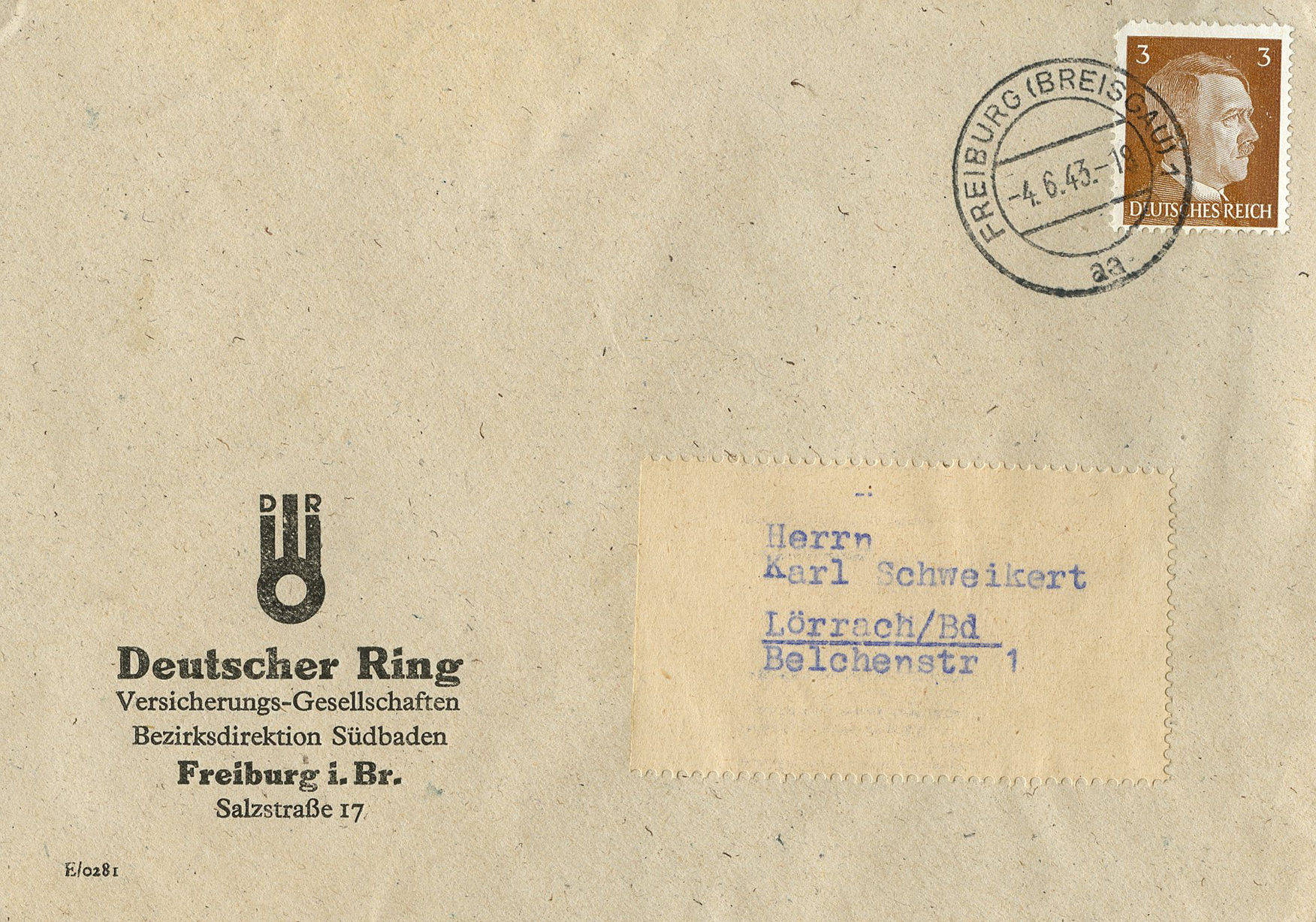
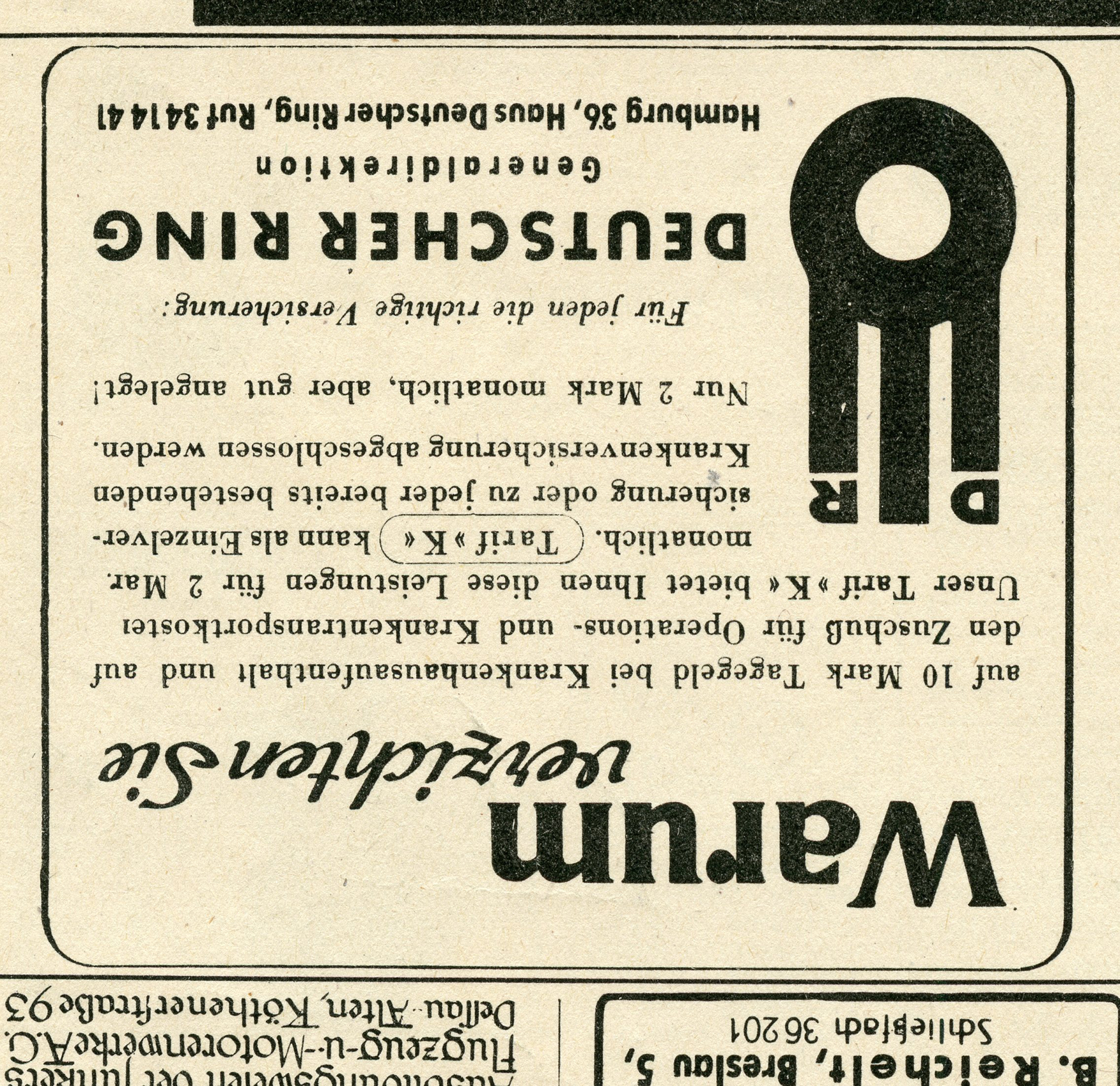
[Below: This is an insurance company that offers its services for a whopping... ready for this? TWO MARKS A MONTH!!! This is staggering. Truly insane. Now people in the great fucking USA are literally bankrupted and destroyed if they get sick. Here is another staggering reality of the greatness of the Third Reich:
The Reichsmark Adjusted for inflation:
'If you translate the 1939 purchasing power into modern money, 1 Nazi Reichsmark had the buying power of roughly $8.00 to $10.00 USD today'. Dated June 4, 1943]
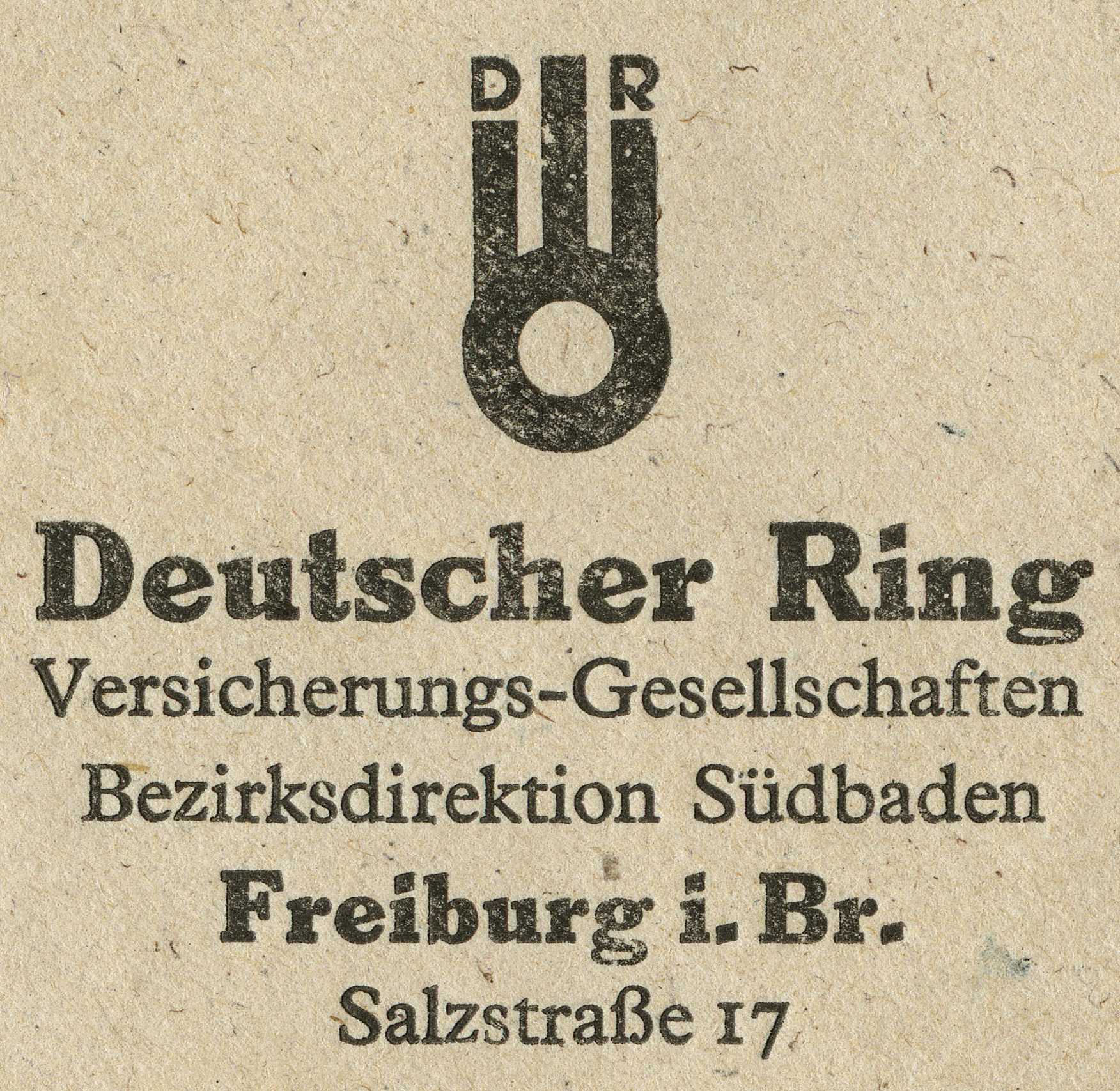
[Below: Close-up.]
[Below: Here is an advertisement for this company I found in a period newspaper.]
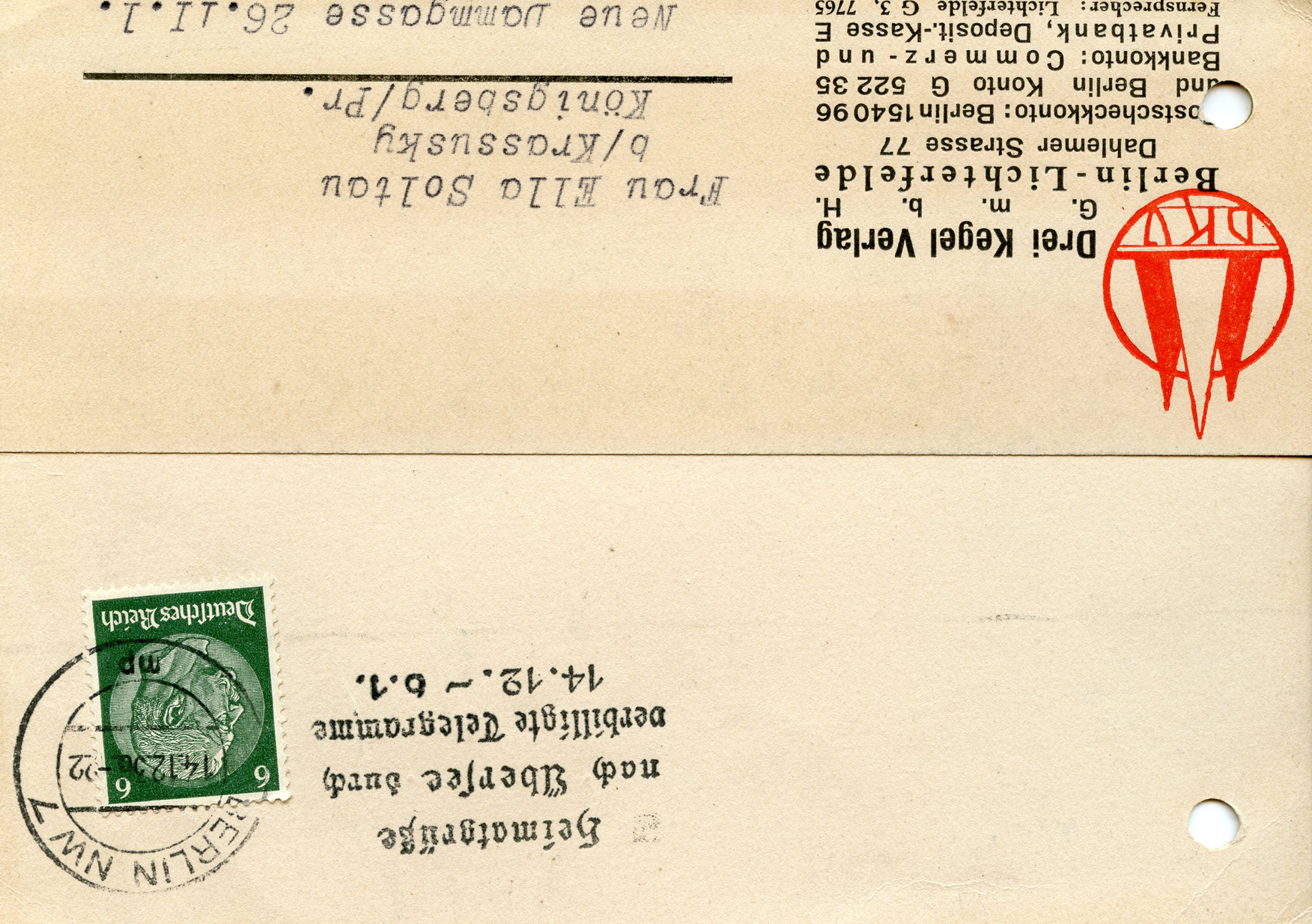
[Below: This is sent from 'Drei Kegel Verlag' (Three Cones Publishing House), December 14, 1936.]
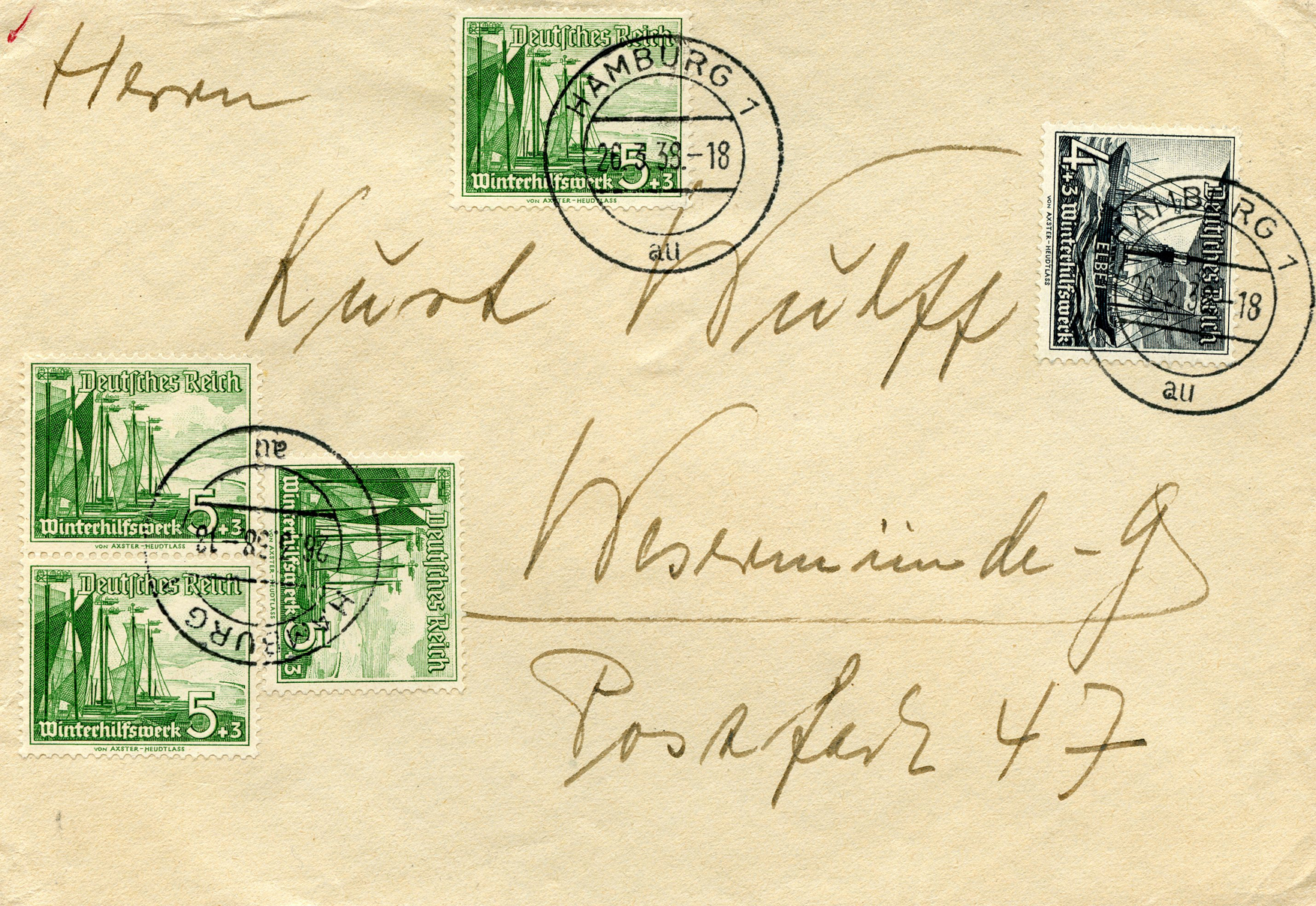
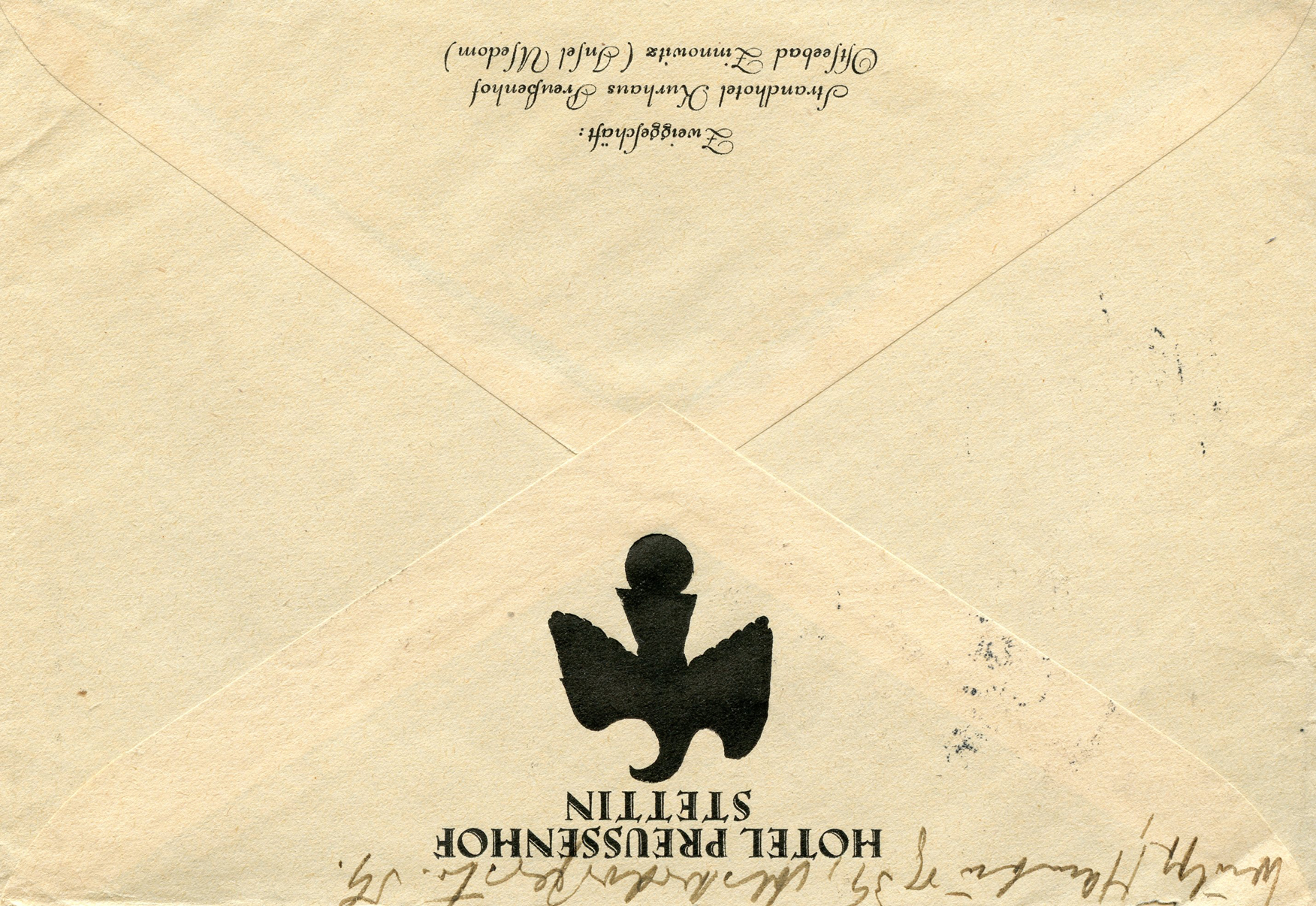
[Below: This is from the Hotel Preussenhof in Stettin, as you'll see below. The Hotel Preussenhof was one of Stettin's 'most luxurious and famous historical hotels. Now, along with Stettin, it was stolen from Germany after the war and given to Poland, March 26, 1938.]
[Below: Close-up.]
[Below: Close-up.]
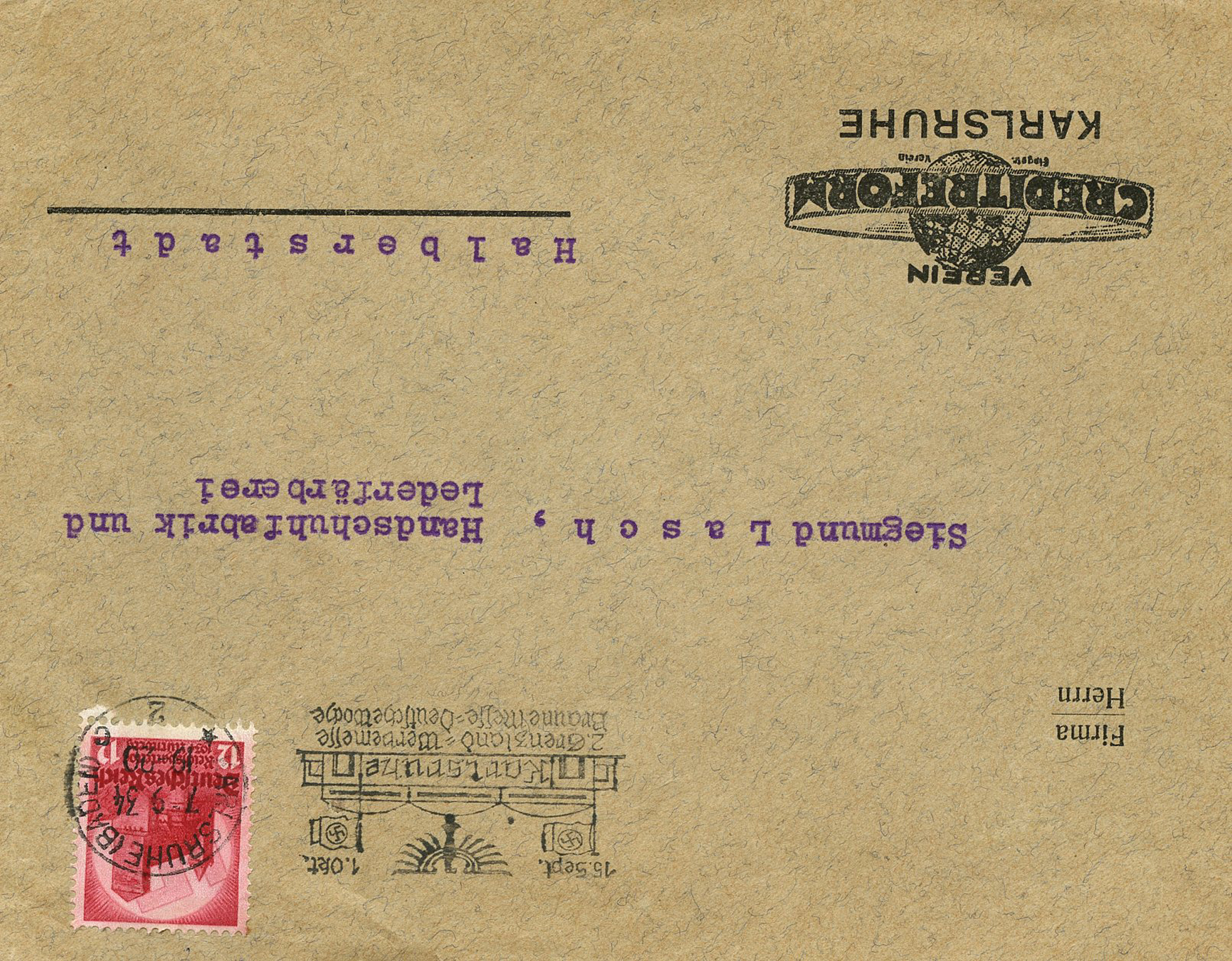
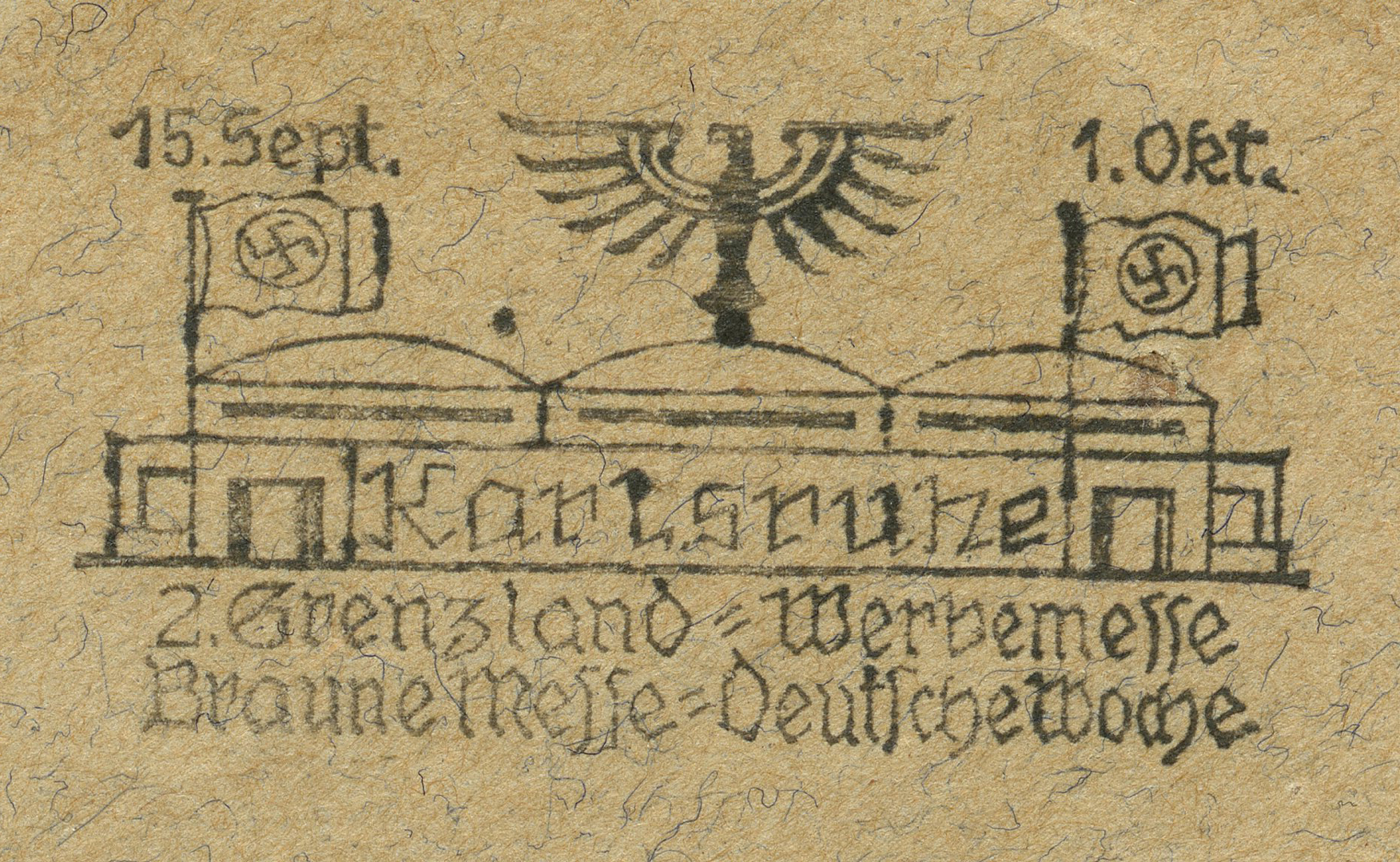
[Below: This is sent from the Credit Reform Association to 'Siegmund Lasch - Glove Factory and Leather Dying Works'. The cancel says '2nd Borderland Advertising Fair', September 7, 1934]
[Below: Close-up.]
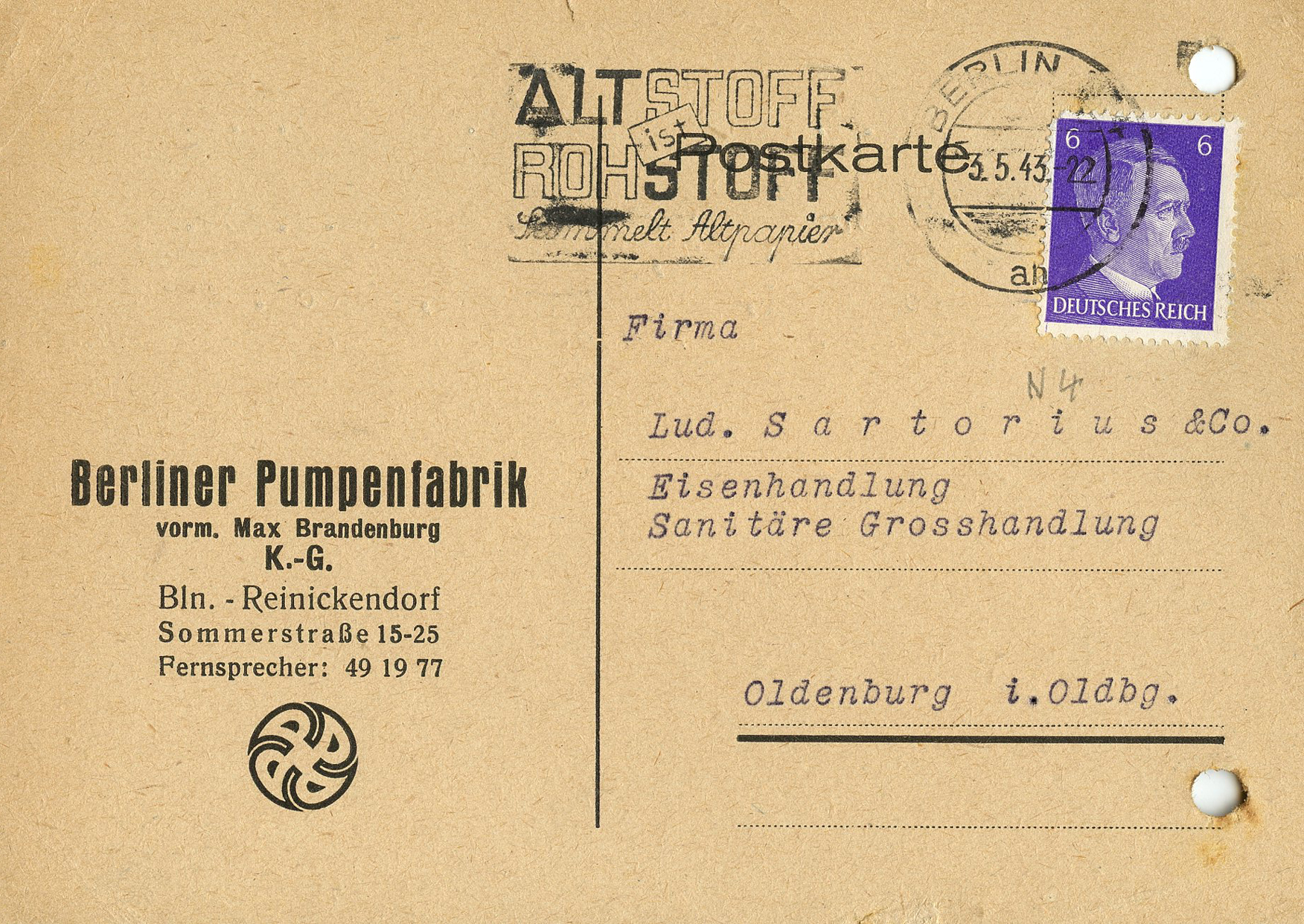
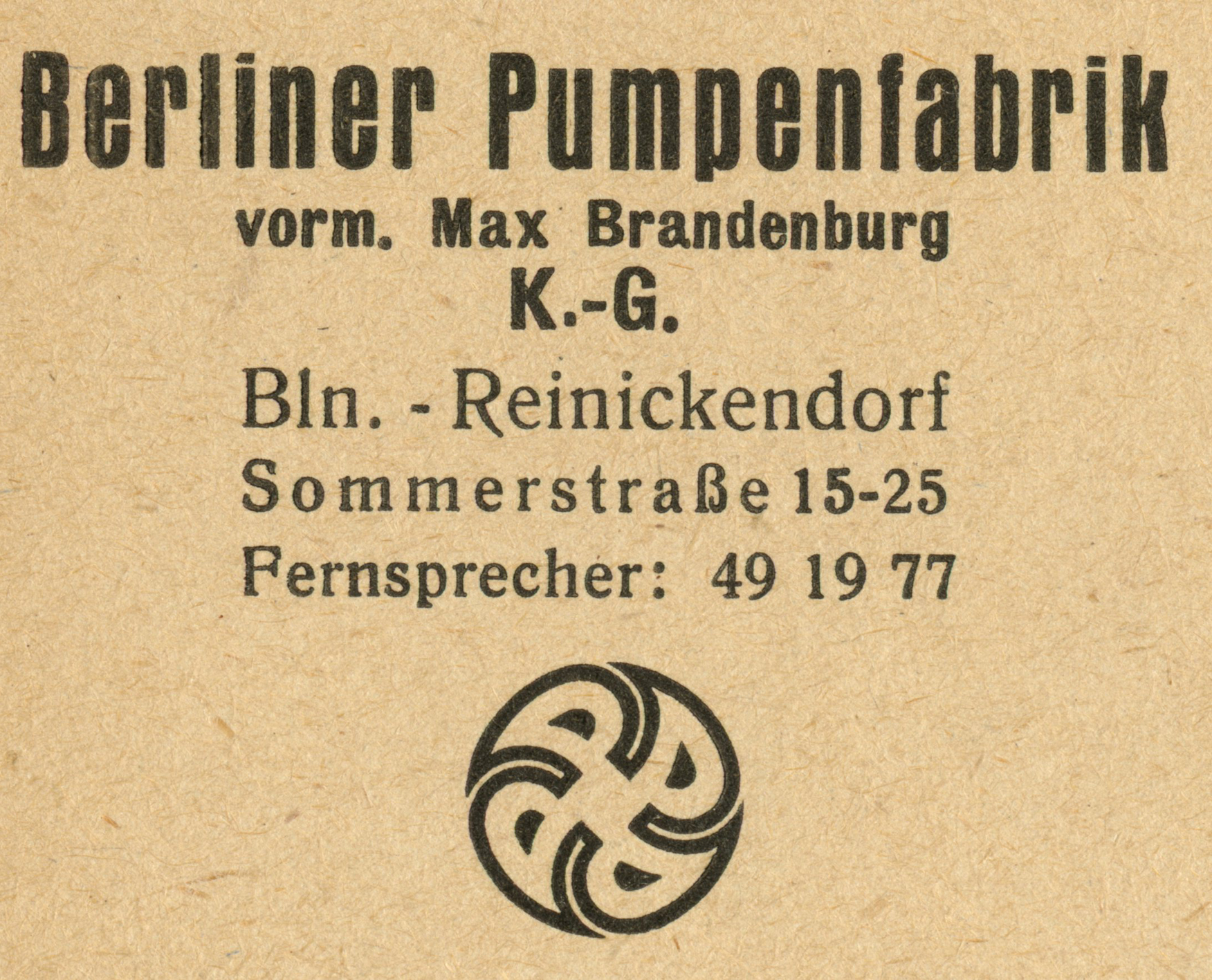
[Below: That's a neat little swastika. This is from the Berlin Pump Factory. The cancel says 'Alt Stoff ist Rohstoff - Sammelt Altpapier' (Used materials are raw materials – Collect waste paper), May 3, 1943.]
[Below: Close-up.]
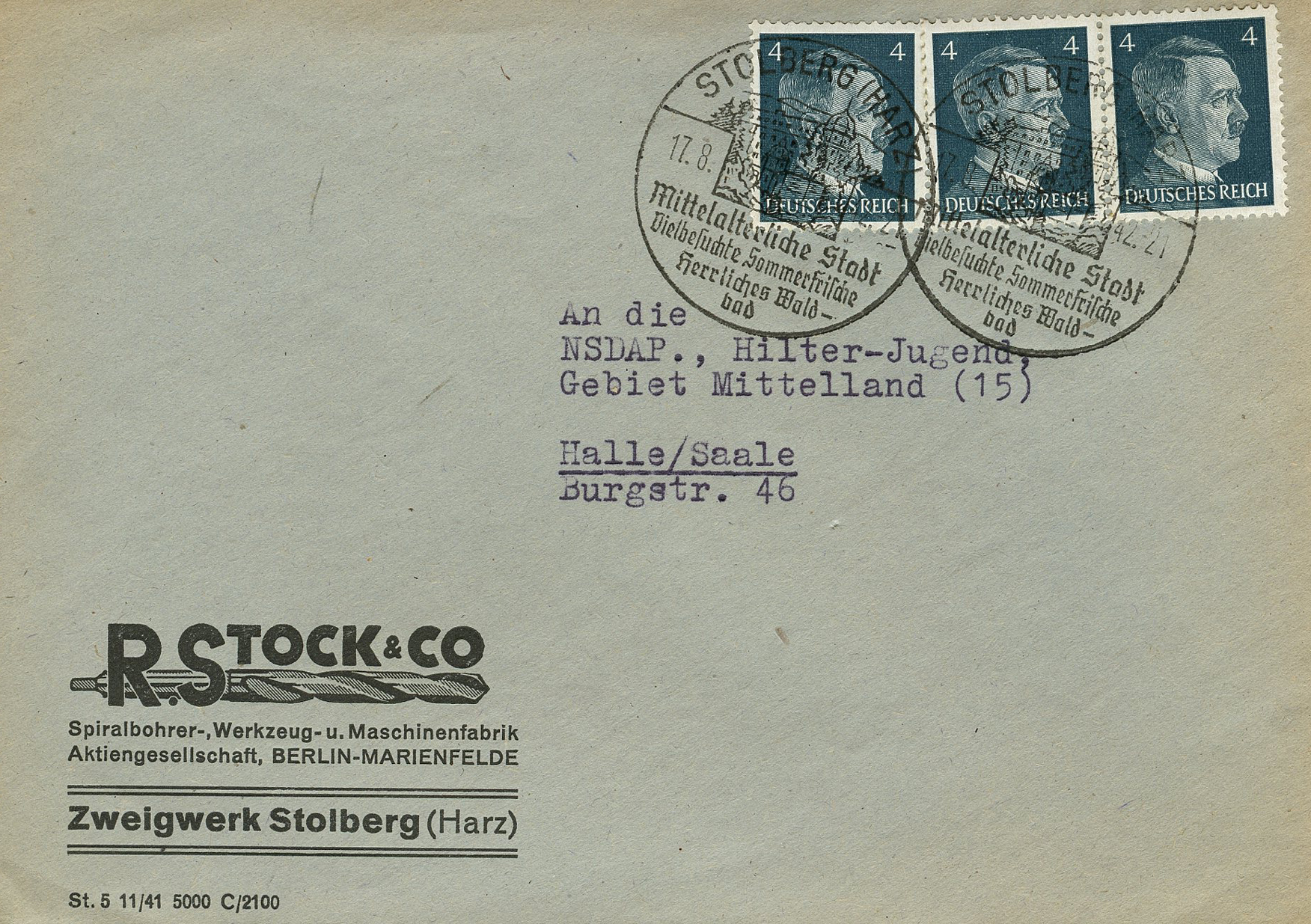
[Below: This was sent to the NSDAP, Hitler Youth Central Region. This was sent for 'R. Stock & Co - Spiral Drill, Tool and Machine Factory', August 17, 1942.]
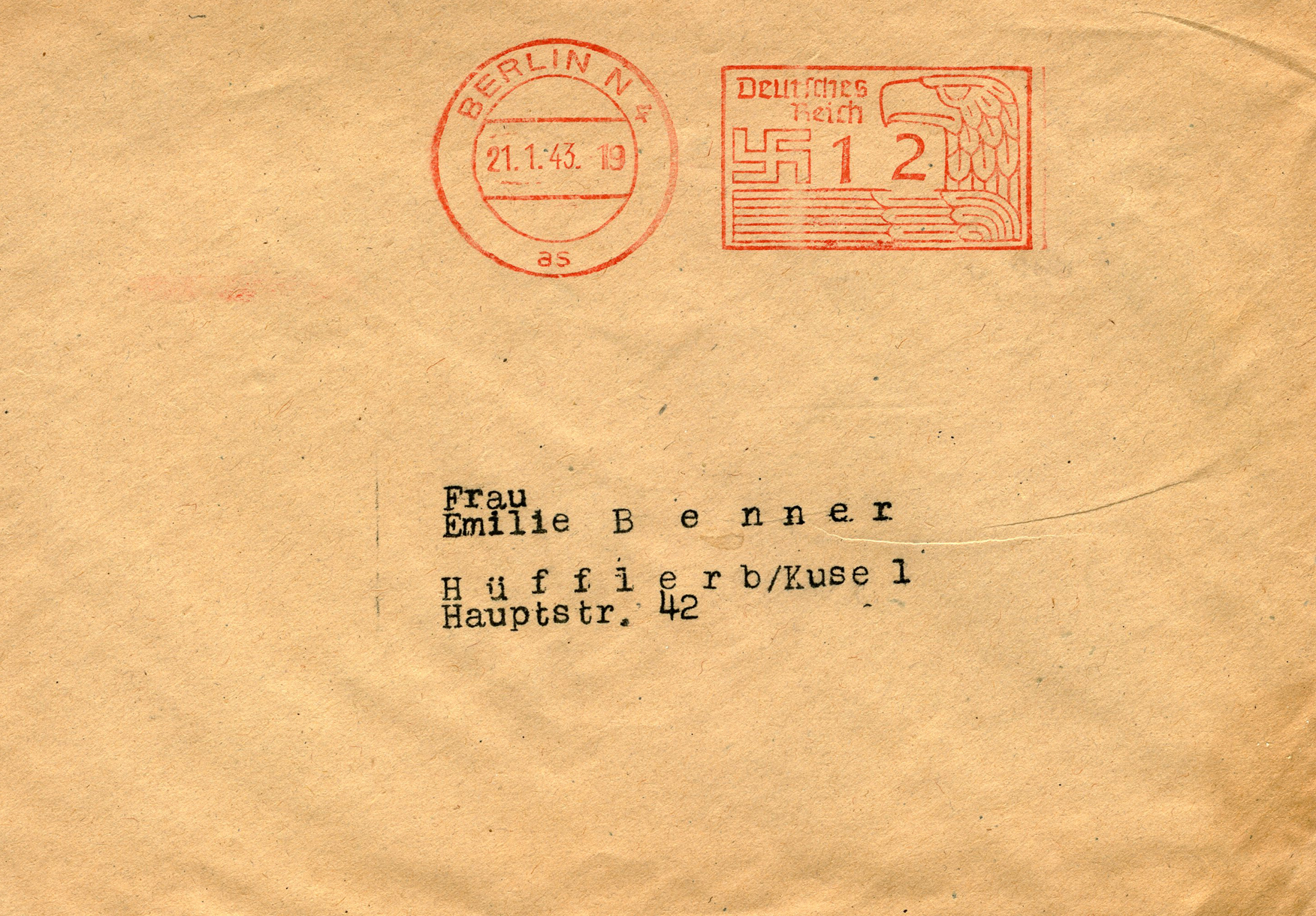
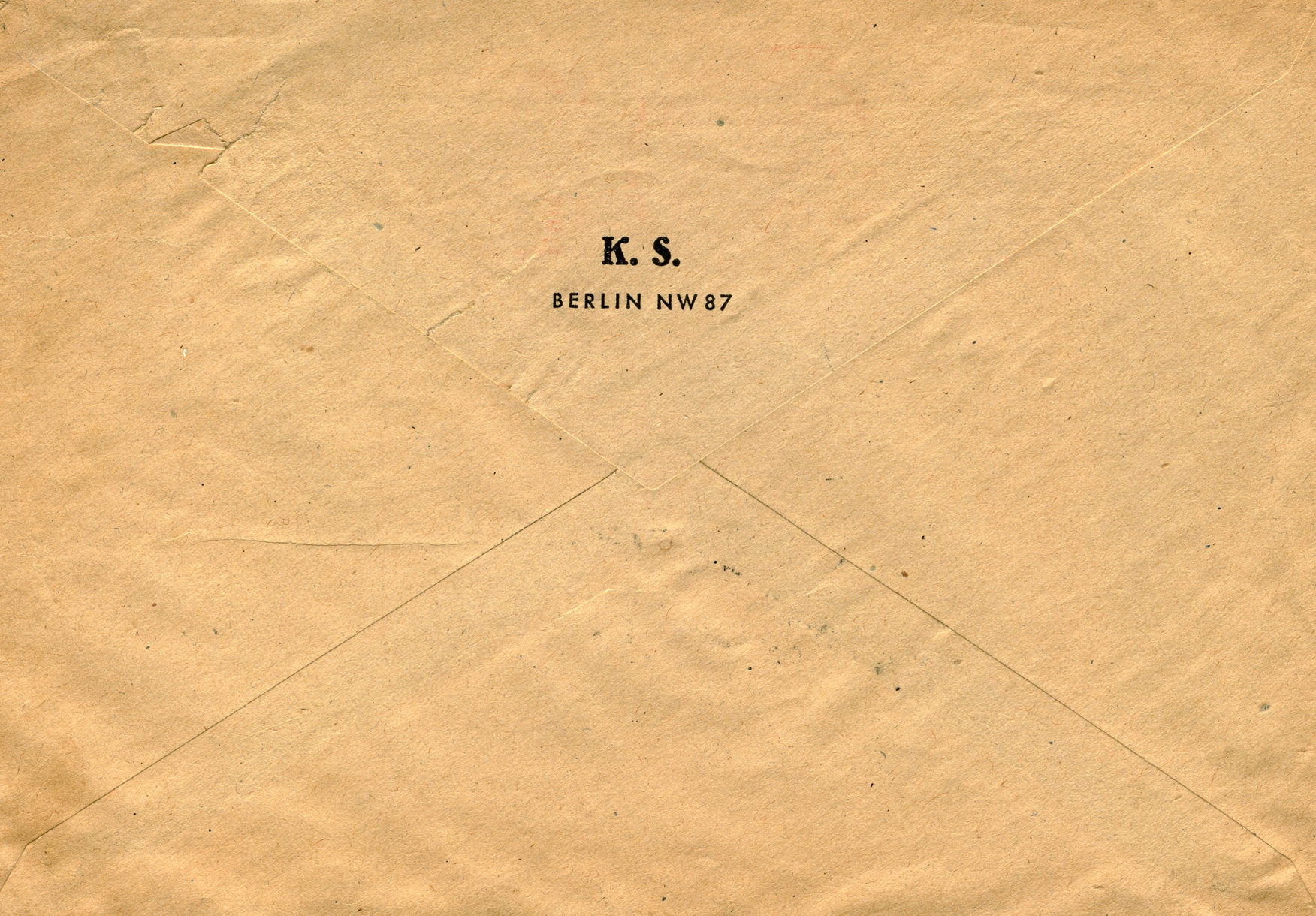
[Below: We don't know who sent this, on the reverse it simply says 'K.S.', perhaps a civilian, but it was sent on January 21, 1943.]
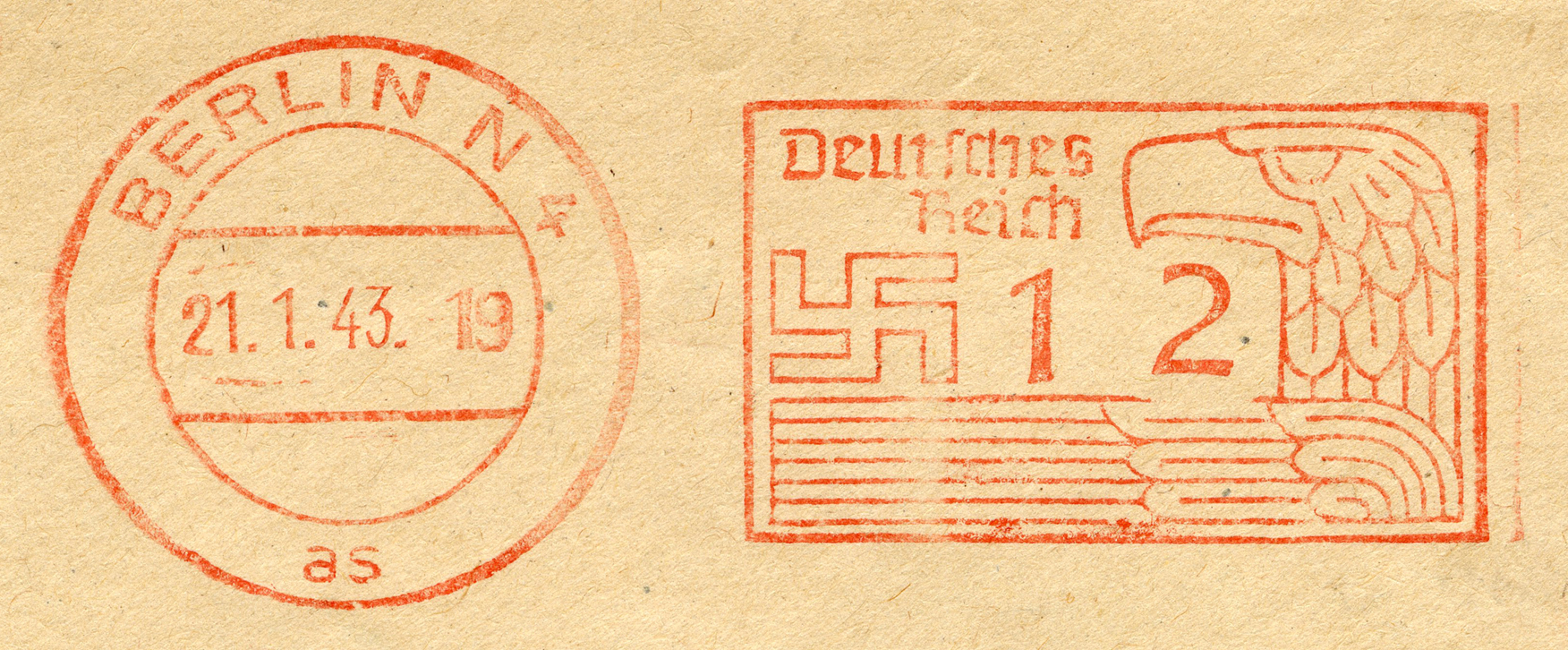
[Below: Close-up.]
[Below: Reverse.]
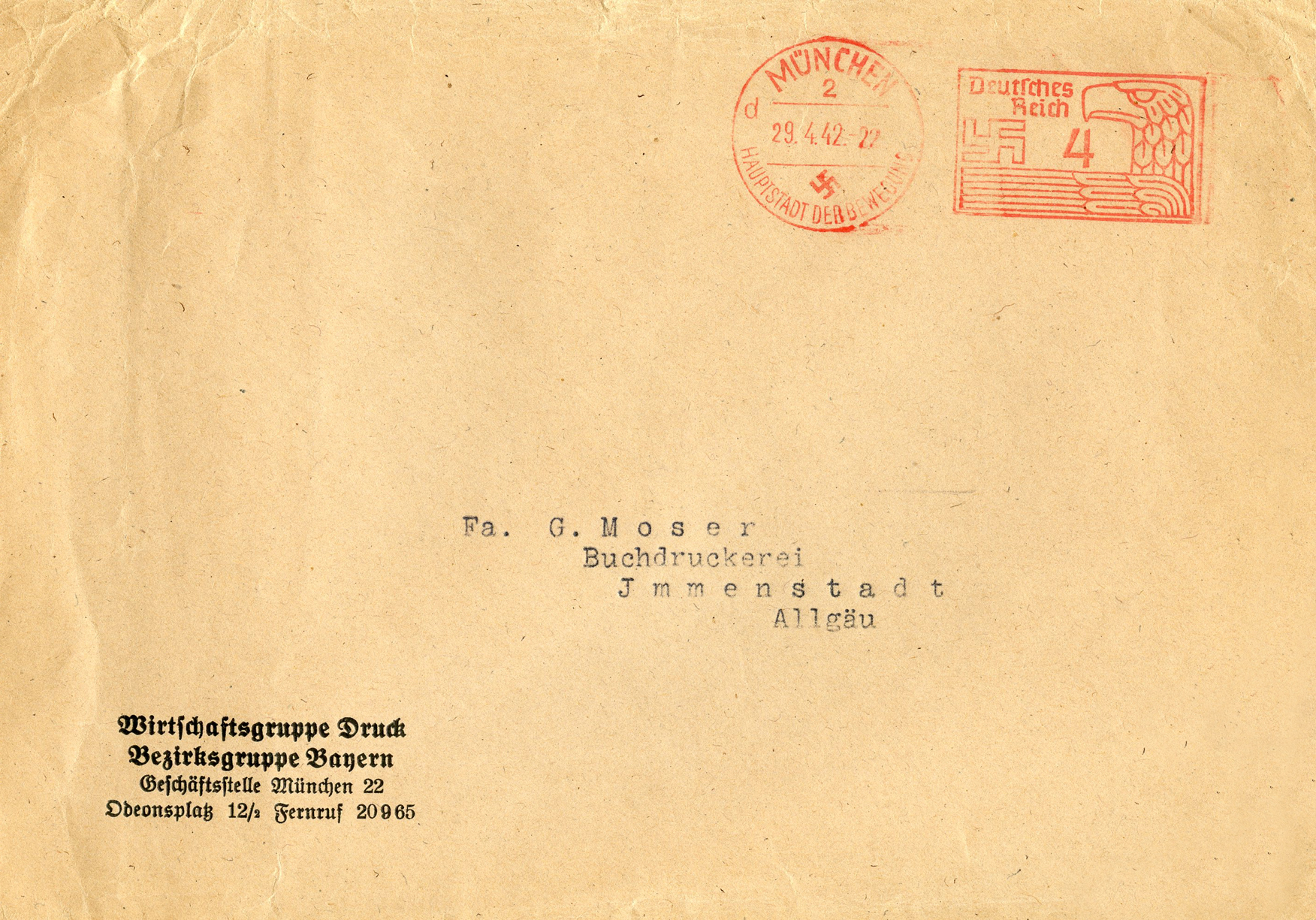
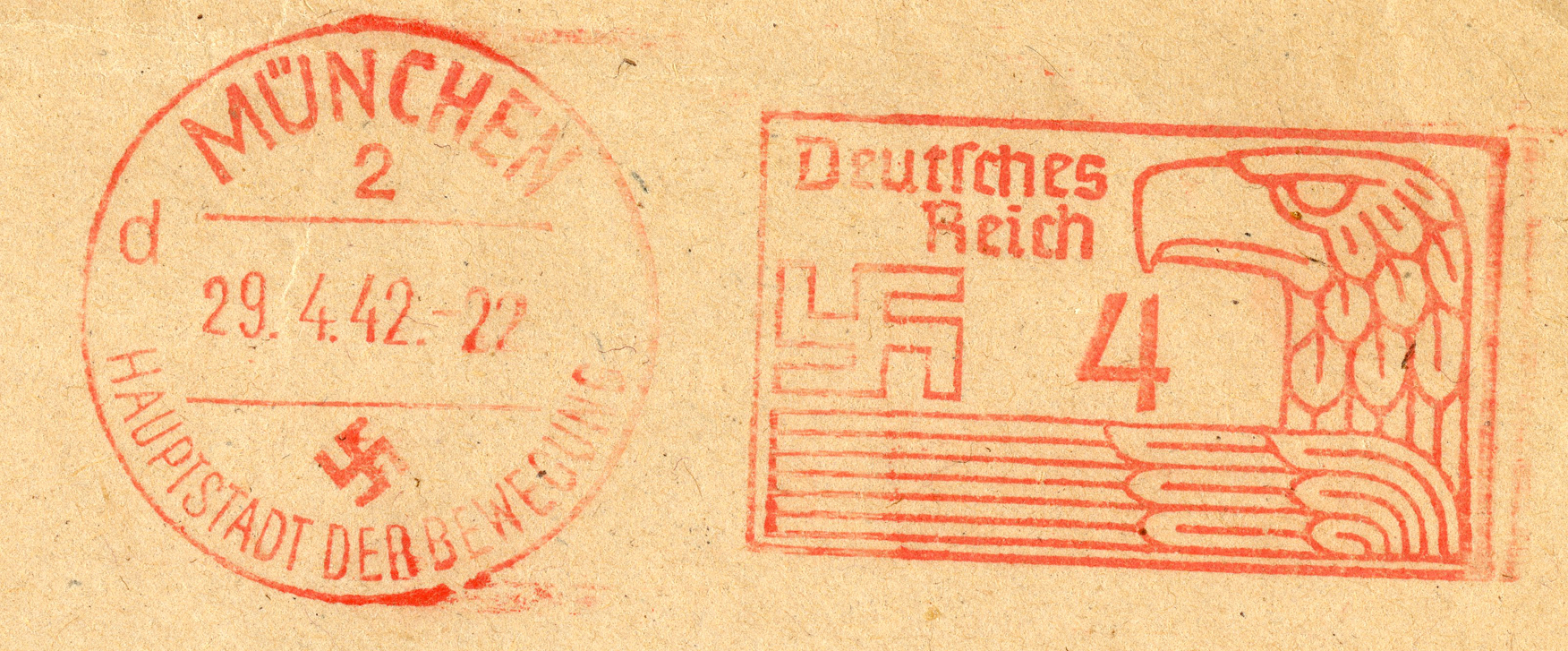
[Below: This was sent from the 'Printing Industry Group, Bavarian District Group' to 'G. Moser Printing Group', postmarked on April 29, 1942.]
[Below: Close-up.]
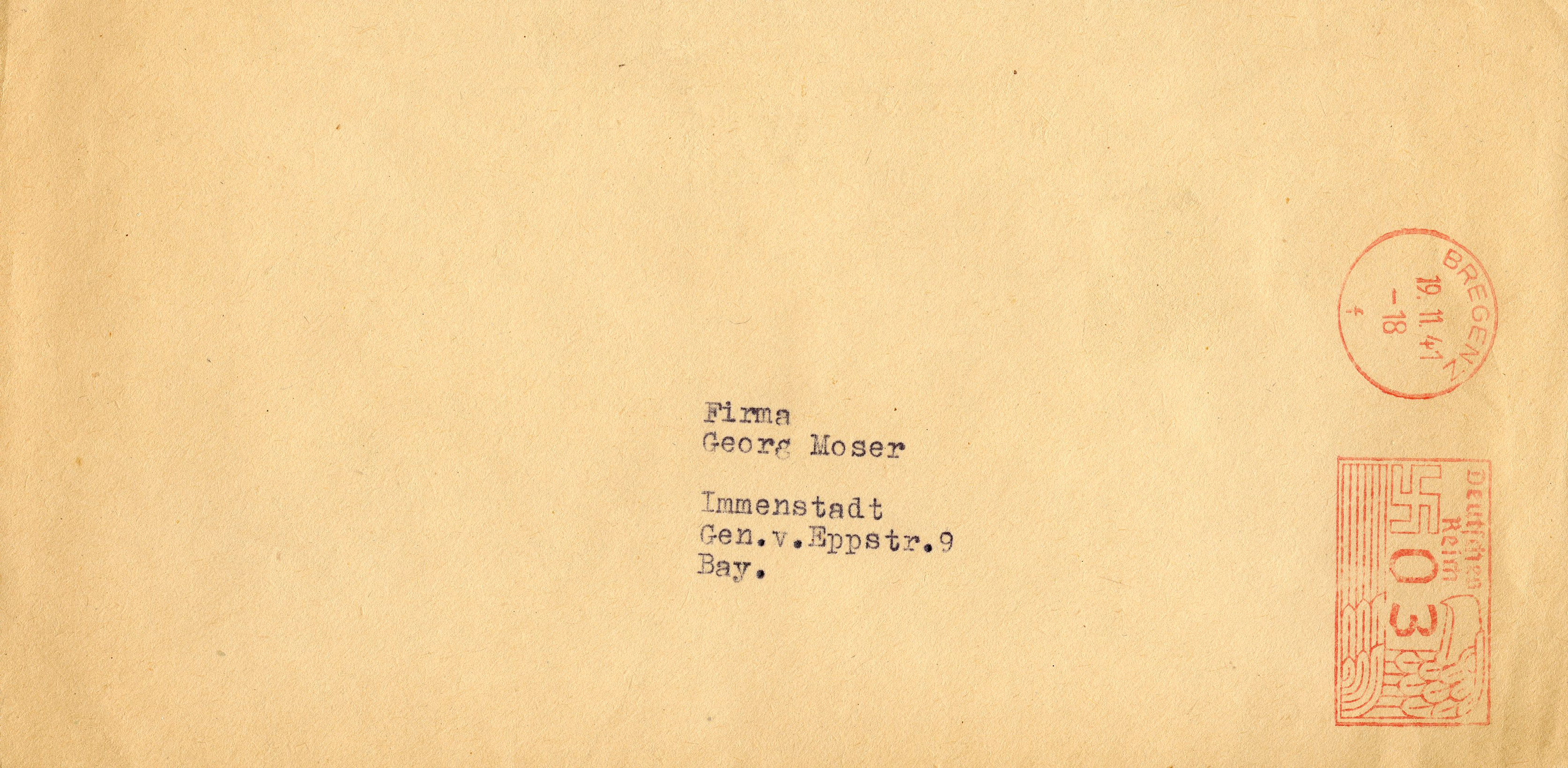
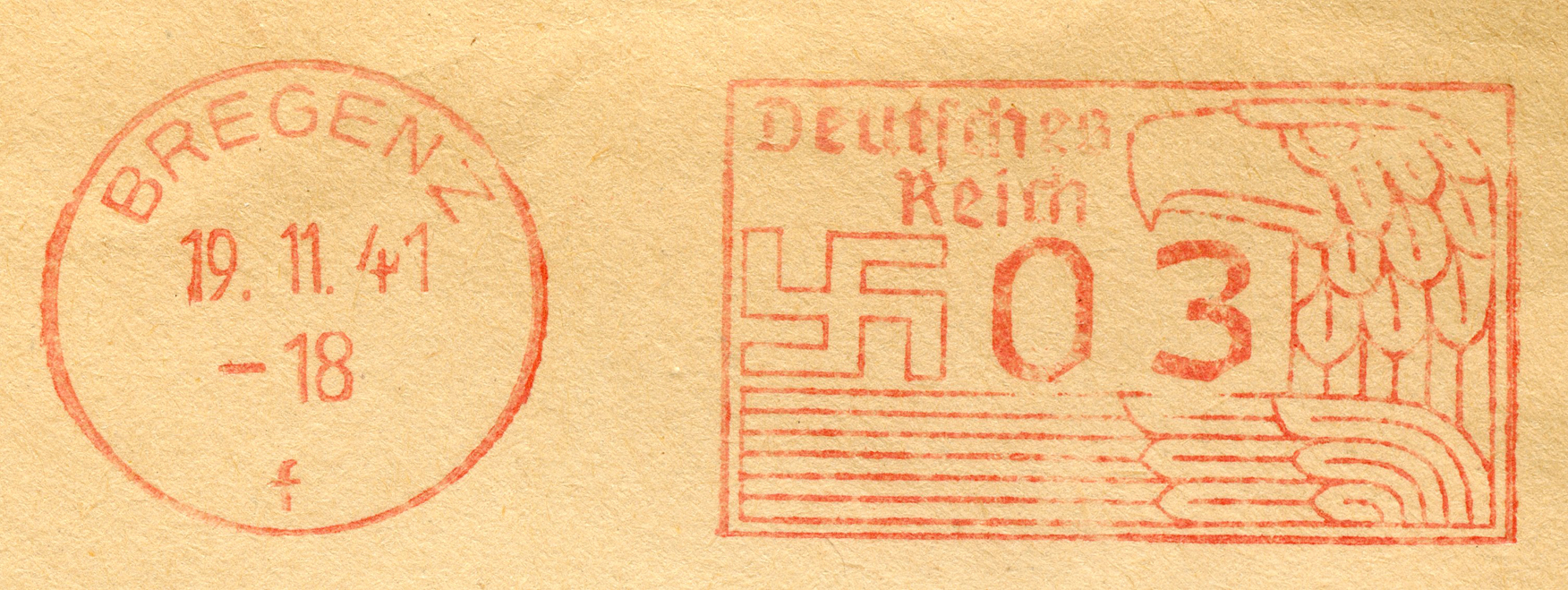
[Below: Stange how this was printed sideways. Anyway, here's another one sent to the Moser Printing Group, we learn that the 'G.' from above stands for Georg, postmarked on September 19, 1941.]
[Below: Close-up.]
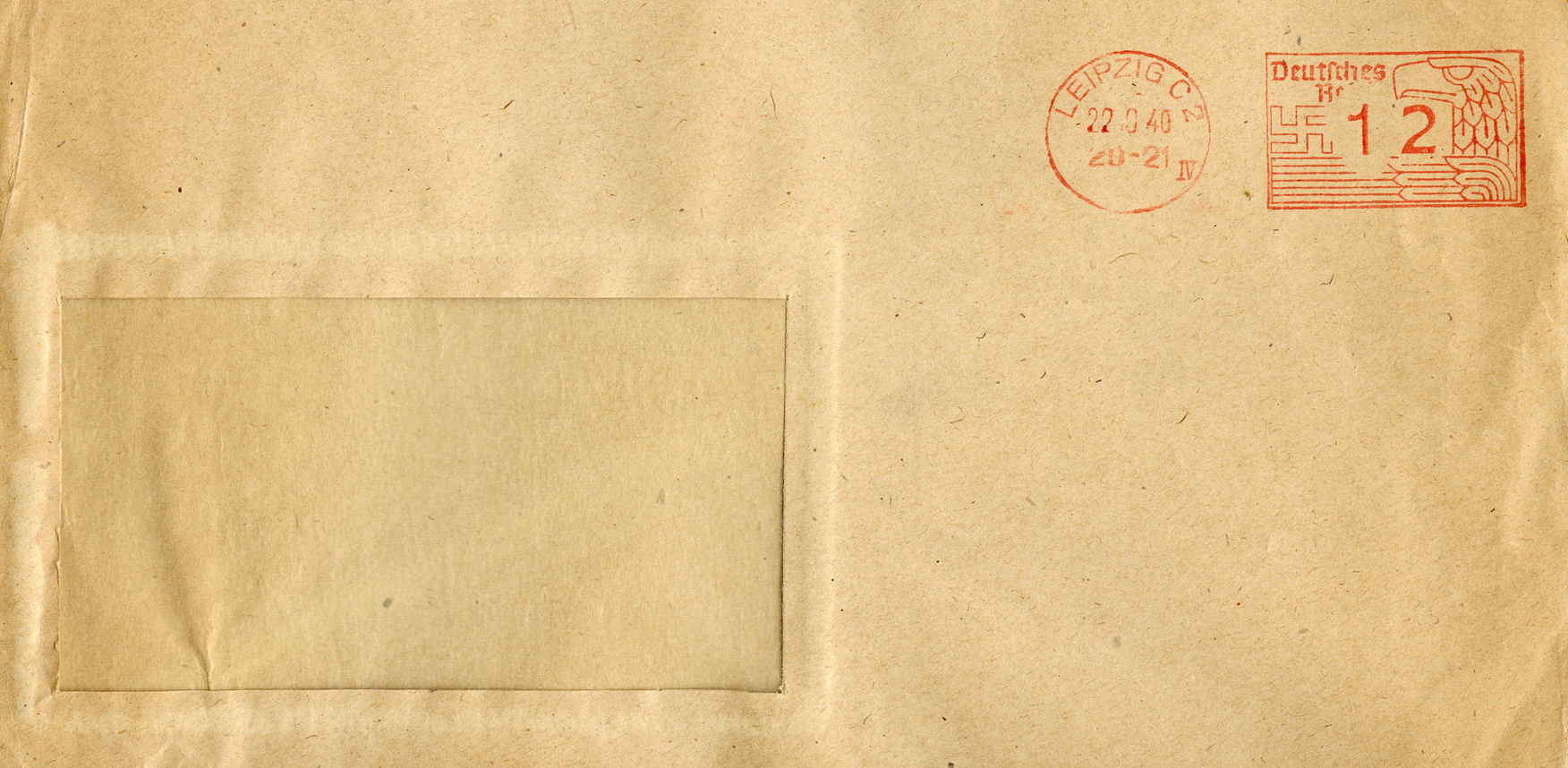
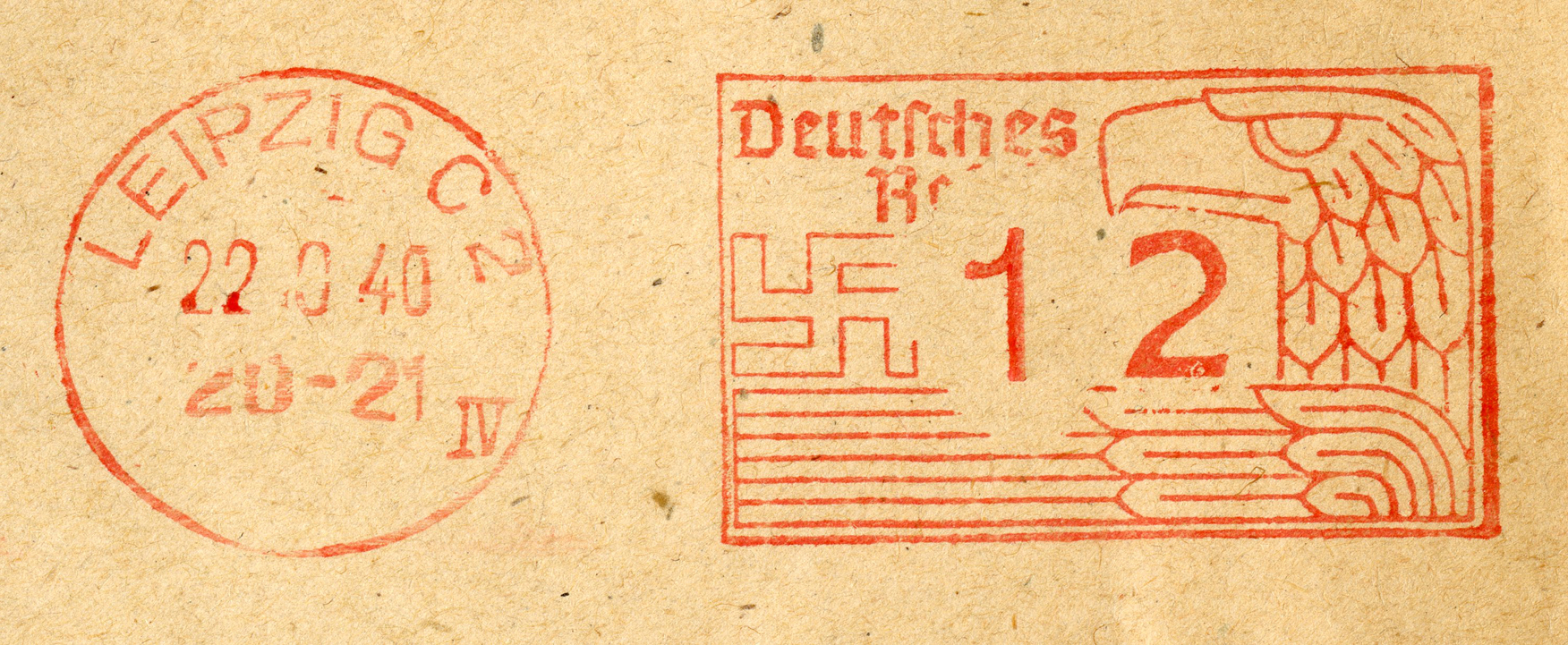
[Below: Since this is a window envelope, we don't know who sent this, or to who, but it was sent from Leipzig, postmarked September 22, 1940.]
[Below: Close-up.]
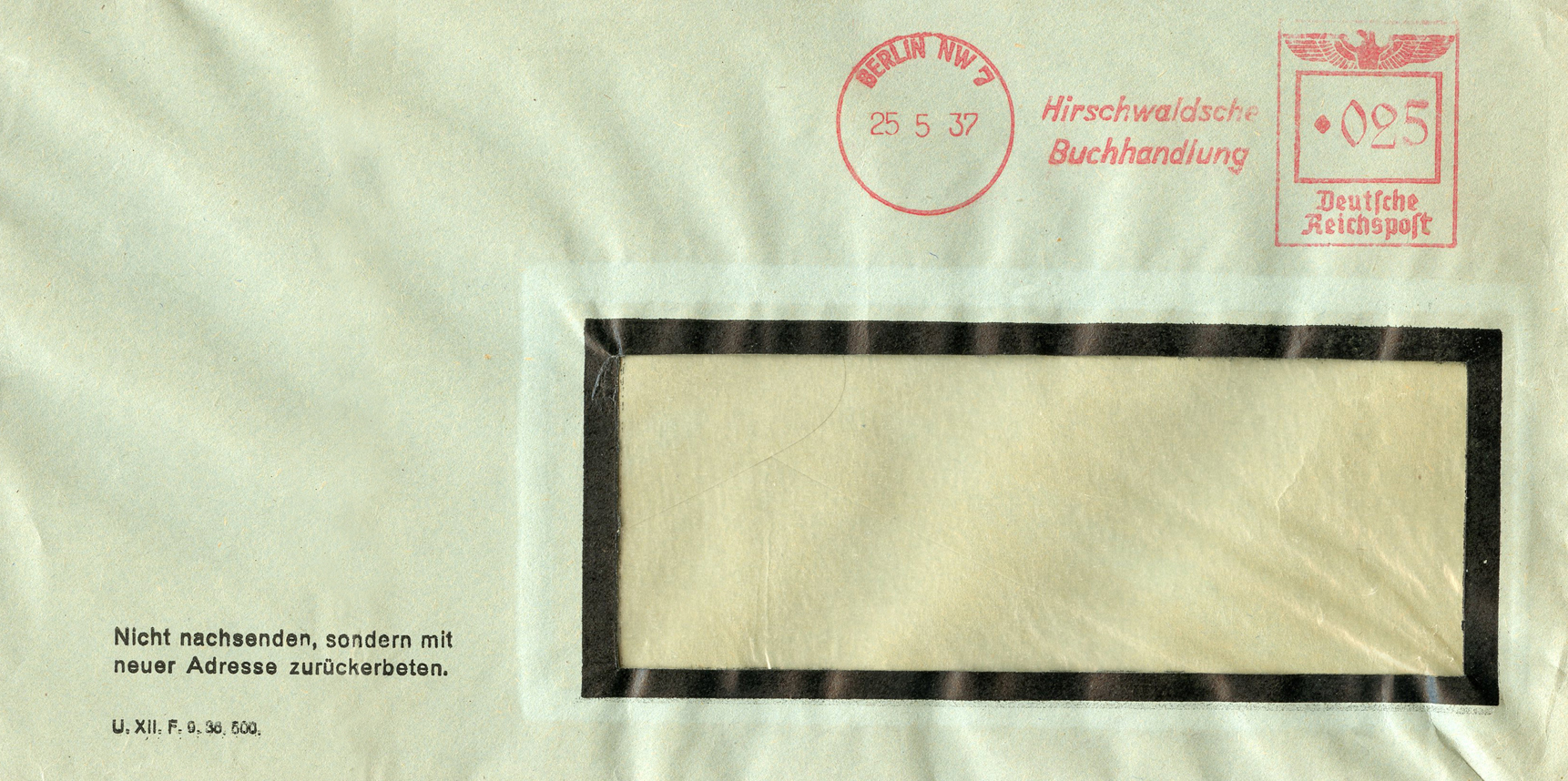
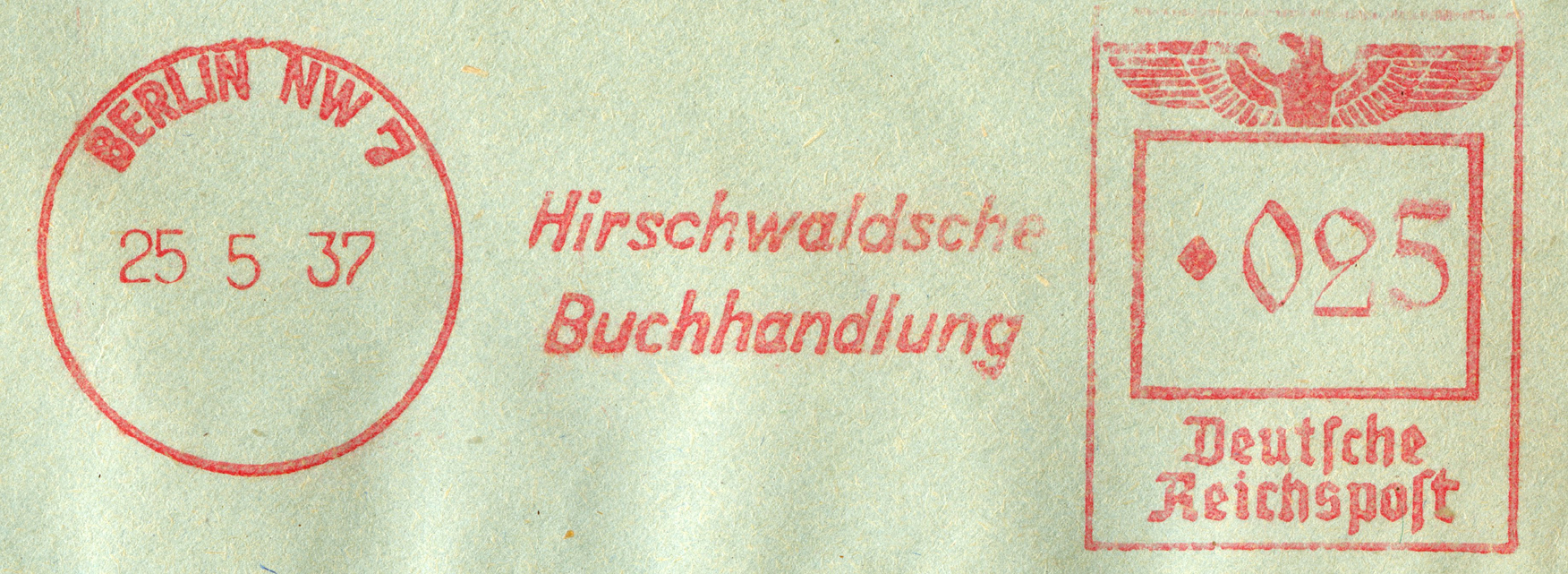
[Below: This was sent from the 'Hirschwald Bookstore', postmarked on May 25, 1937. The bottom left just says 'Do not forward, but return with your new address'.]
[Below: Close-up.]
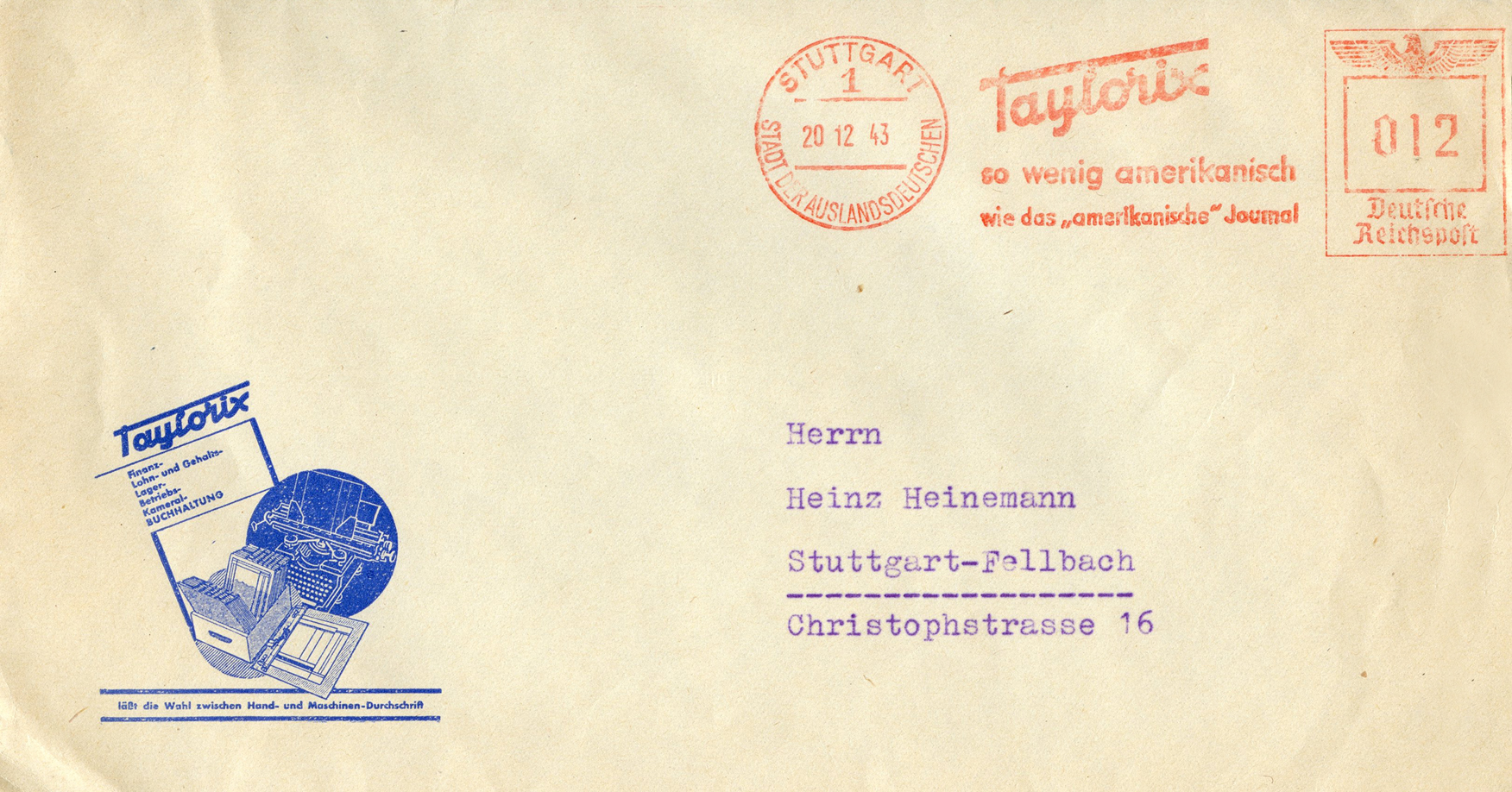
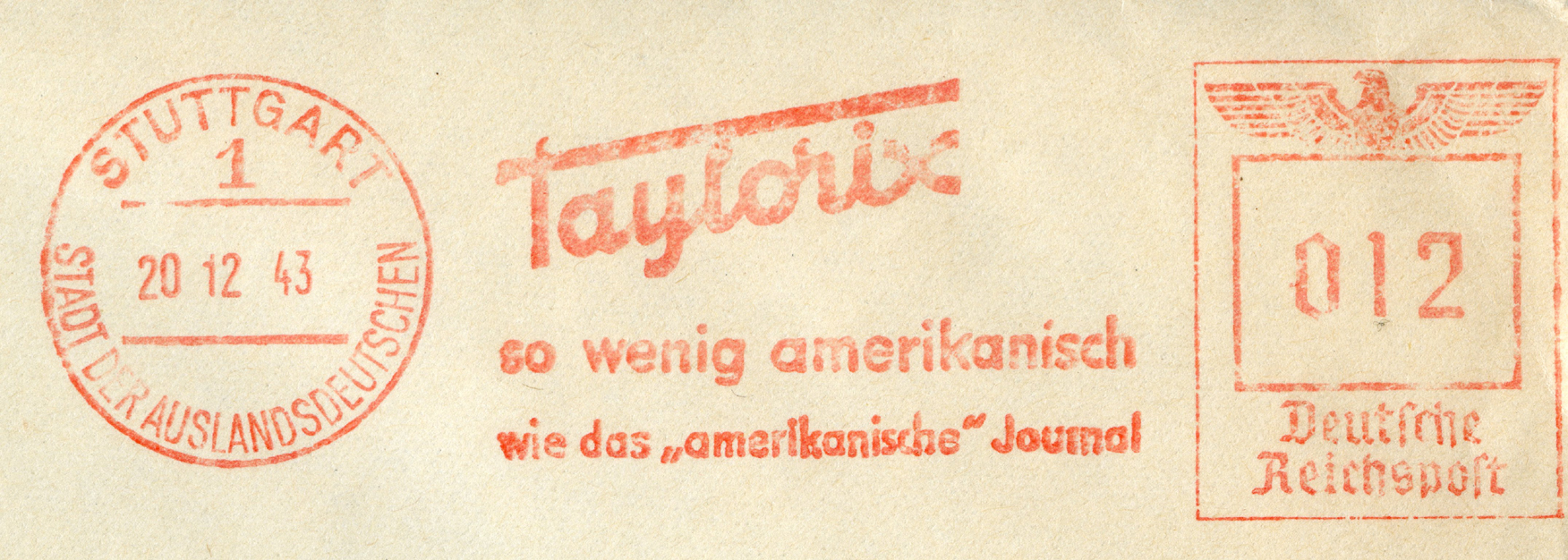
[Below: This was sent by 'Taylorix - as un-American as the "American" Journal"'. Hmm... I wonder what that means? This was postmarked on December 20, 1943. Taylorix 'was a 20th-century German company best known for its specialized accounting typewriters' and was 'Founded in Stuttgart in 1921, the firm took its name from Frederick Winslow Taylor, the pioneer of industrial efficiency. Operating decades ahead of modern digital spreadsheets, Taylorix provided complete, highly efficient "micro-enterprise" office systems that combined specialty forms, desks, and rebranded typewriters. Okay, as we could have guessed, here is the answer 'the founders named "Taylorix" to honor an American engineer. By 1942, Nazi Germany was deep into World War II, and having a company name tied to American business practices became a major liability. Printing a slogan that called the company "un-American" was a clever marketing pivot to protect the brand from being labeled as an "enemy sympathizer."']
[Below: Close-up.]
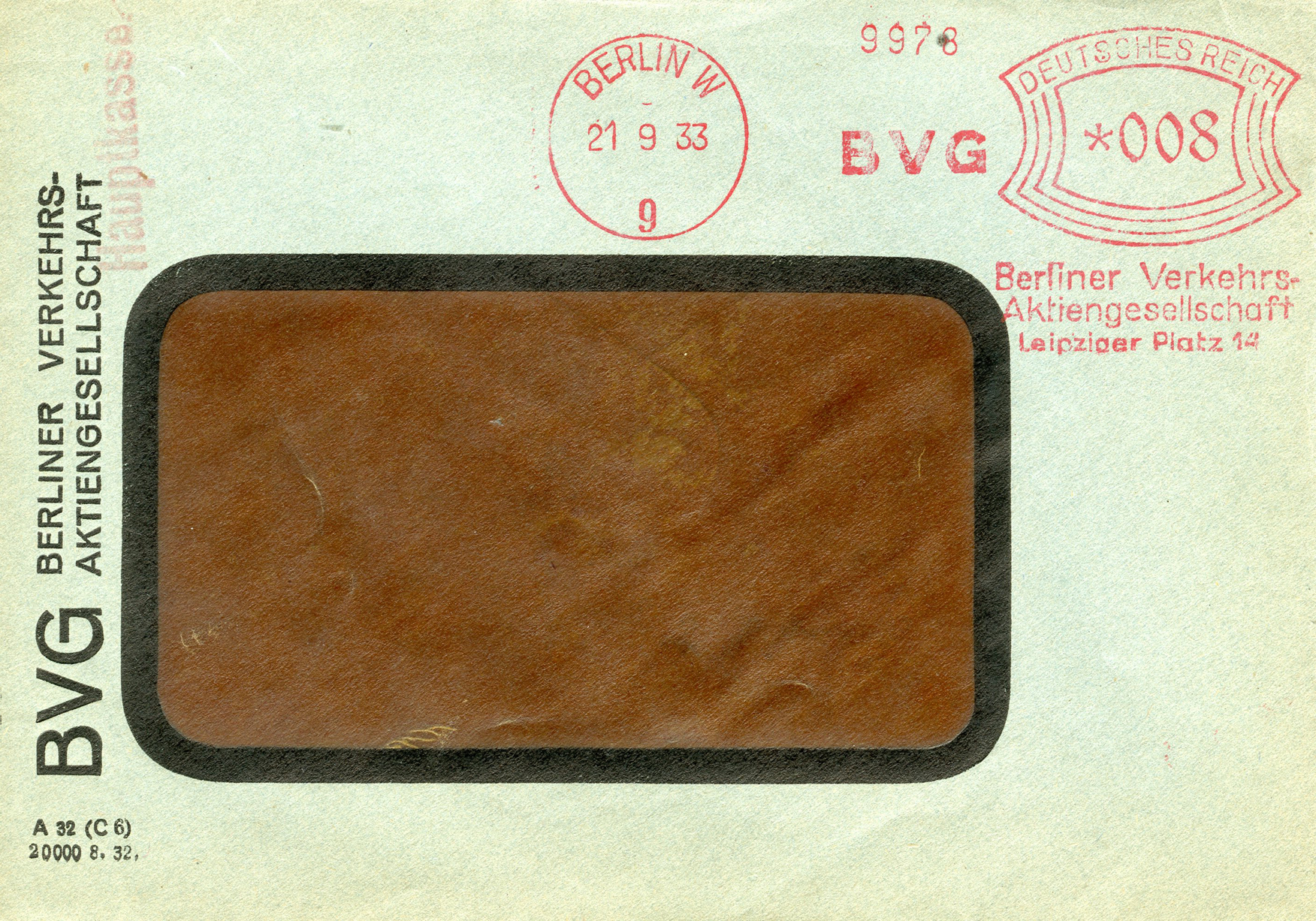
[Below: This was sent from the 'Berlin Transport Corporation', postmarked on September 21, 1933.]
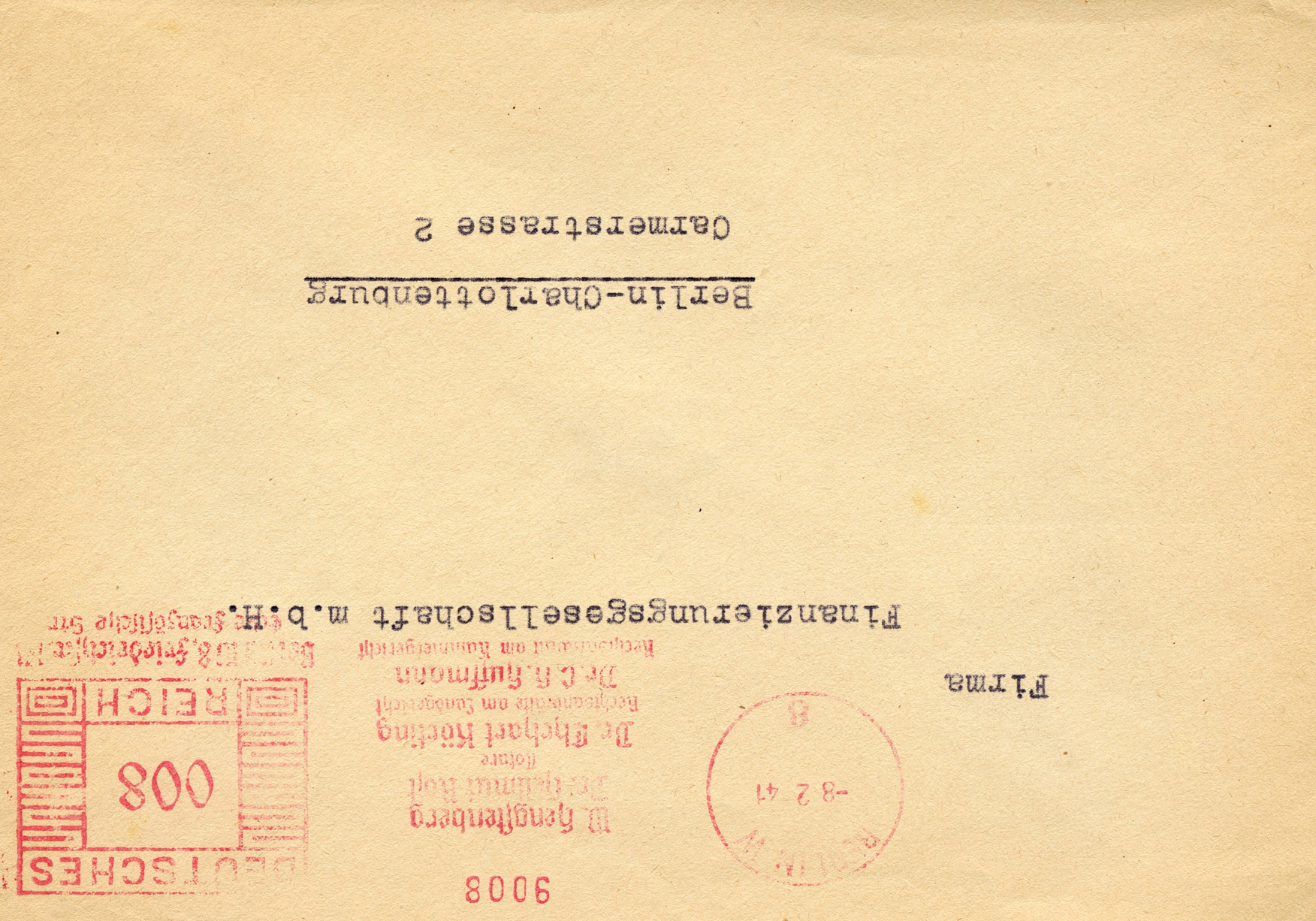
[Below: This was sent from a law firm to a financing company, postmarked on February 8, 1941. The cancel has a mess of names...]
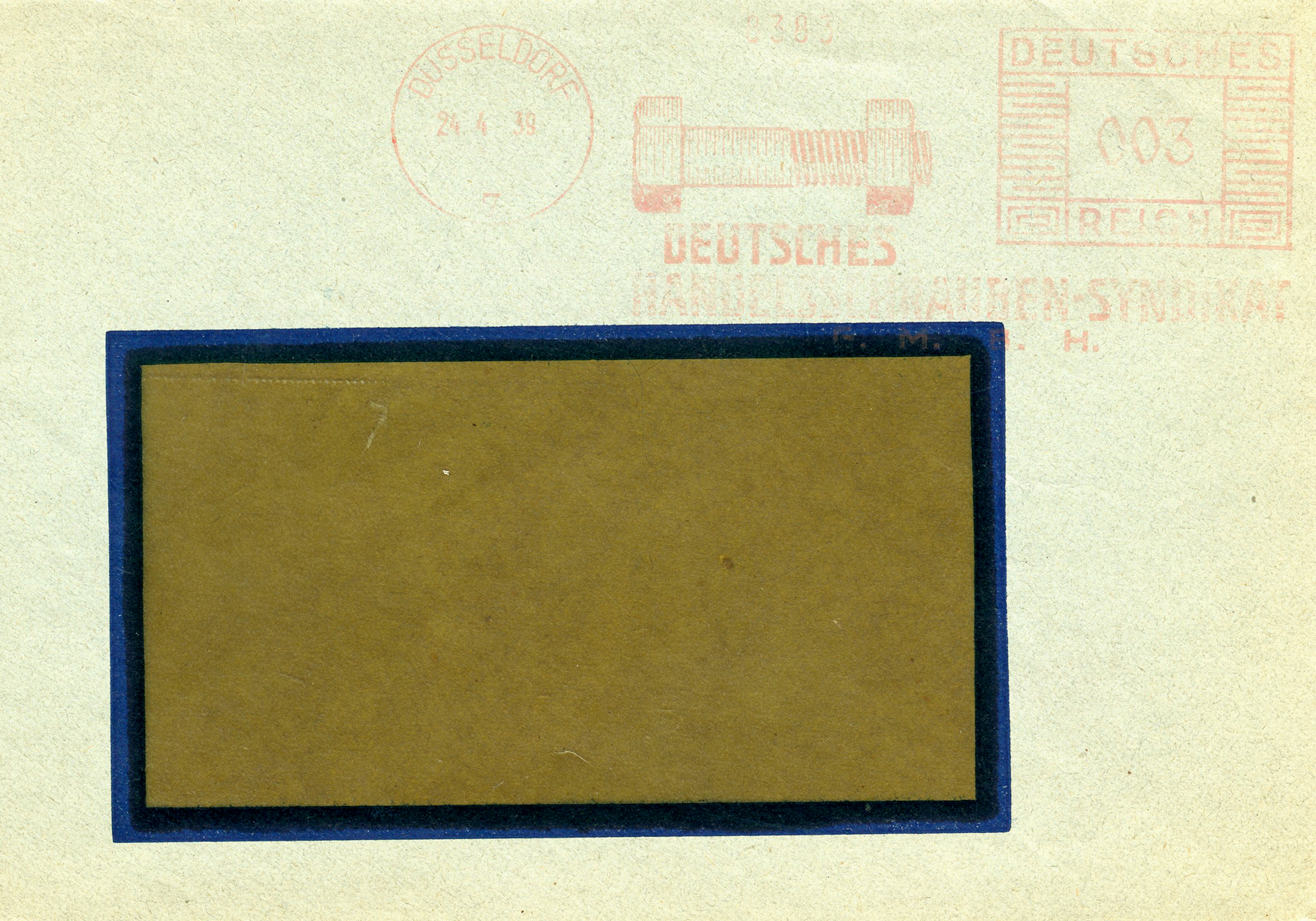
[Below: This has a great image, but it is imprinted to lightly to read it. This was postmarked on April 24, 1939]
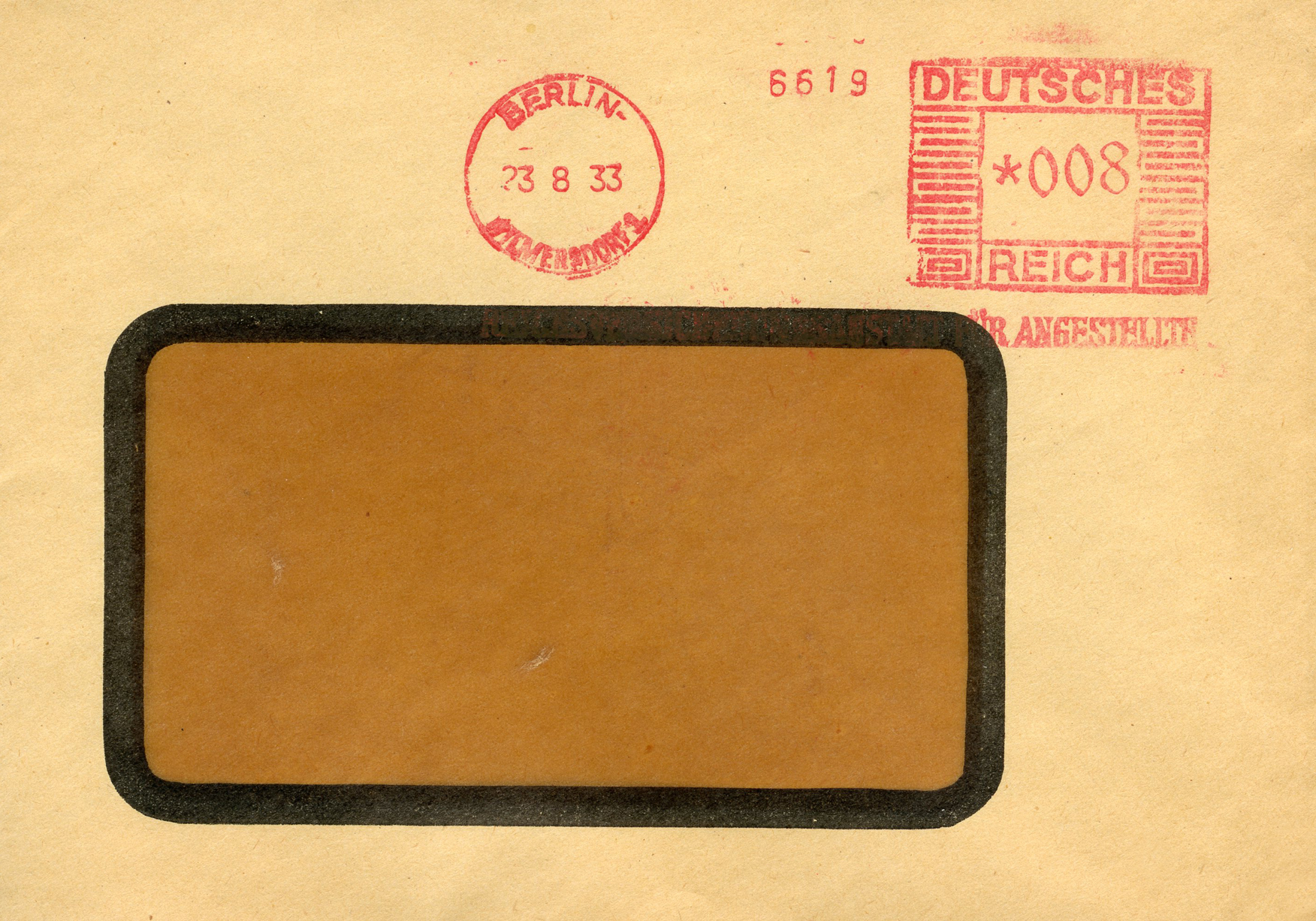
[Below: They printed the company cancel over the blank bar, so we can't see who sent this, but it was sent from Berlin on August 23, 1933.]
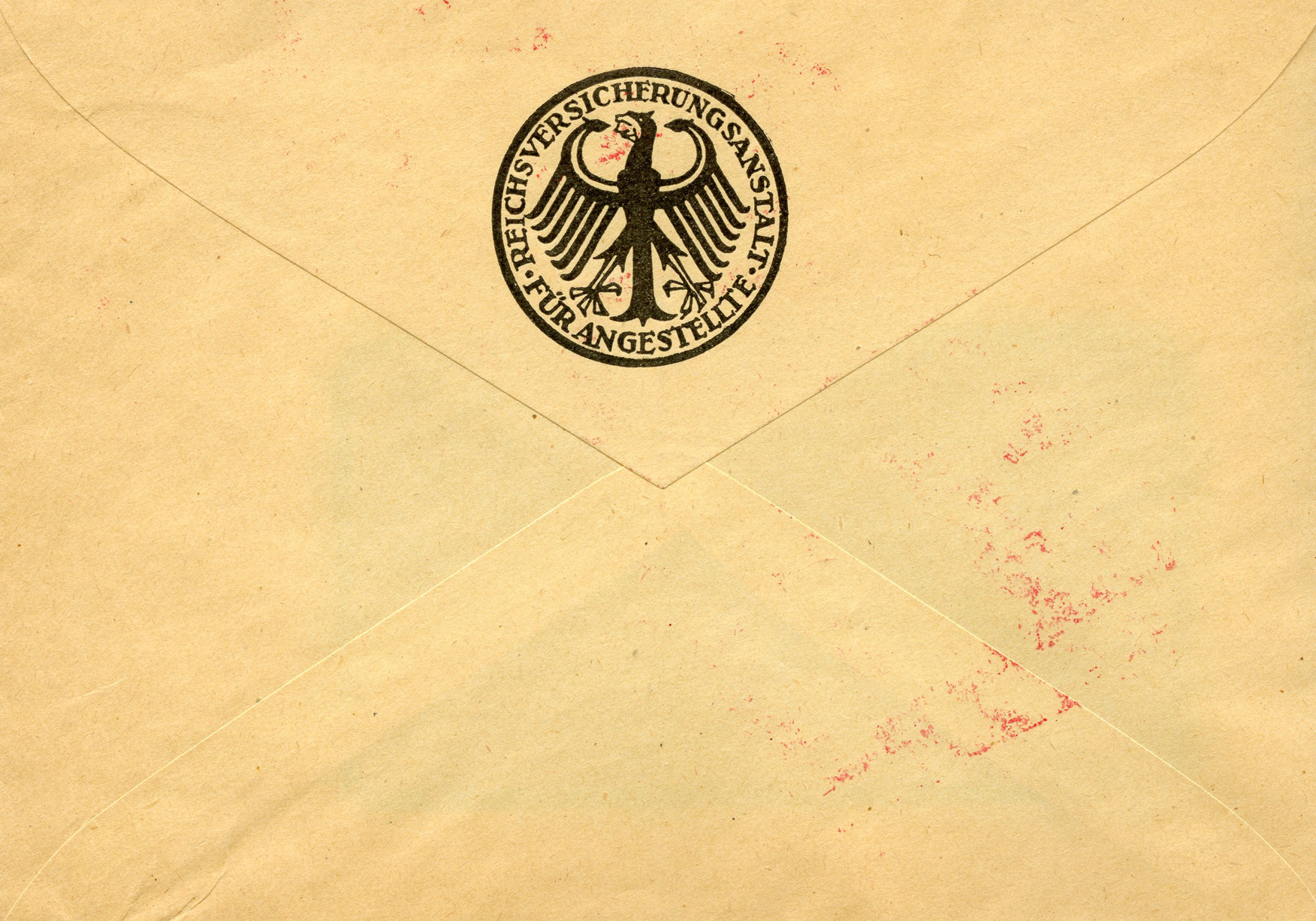
[Below: Reverse. Okay, here we see the company information around this neat-looking eagle, apparently it is from an employee insurance company, which by the eagle it might be government based.]
[Below: Close-up.]

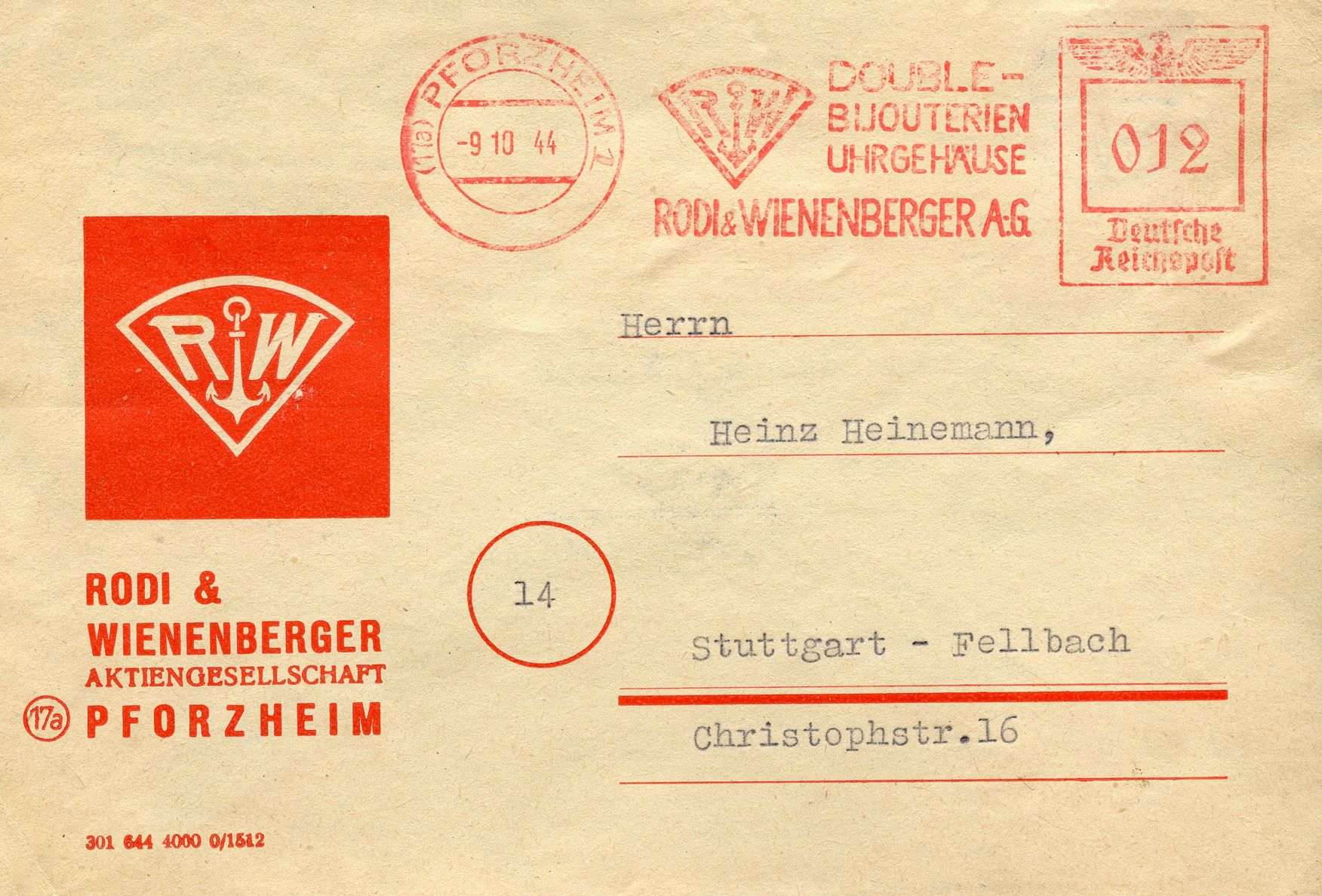
[Below: This was sent from 'Rodi & Wienenberger Joint-Stock Company for Rolled-Gold Jewelry and Watch Cases'. I learned that 'Rolled gold is a material made by mechanically bonding a thick layer of gold to a base metal core (like brass or copper) using heat and pressure. It offers the look and durability of solid gold at a fraction of the cost.'Postmarked on October 9, 1944.]
[Below: Reverse. This shows layers of paper that were used when this envelope was reused due to paper shortages, in this case, this was used three times, once originally, and two reuses.]
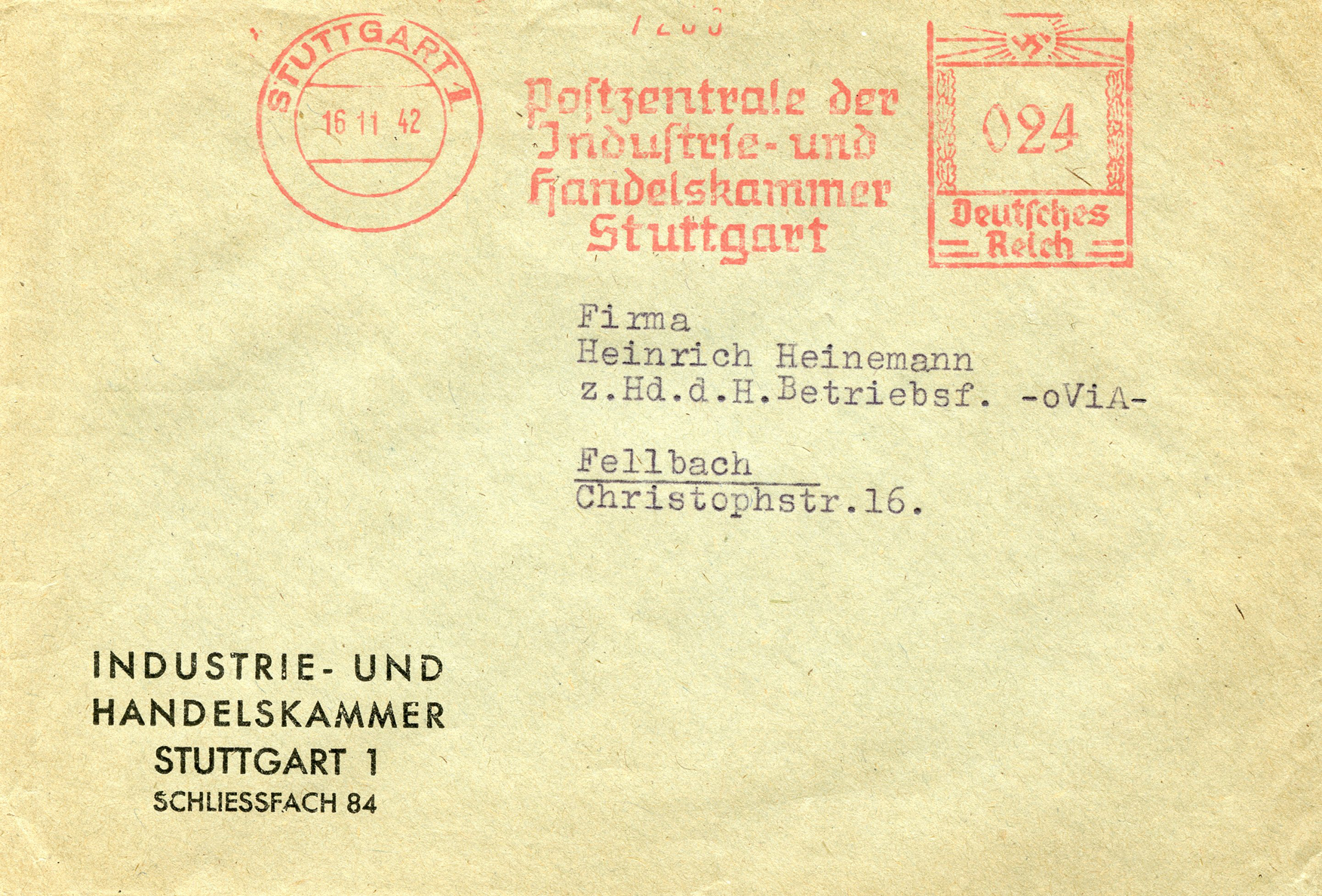
[Below: This was sent by the 'Stuttgart Chamber of Industry and Commerce'. The cancel says 'Central Mailroom of the Stuttgart Chamber of Industry and Commerce', postmarked on November 16, 1942.]
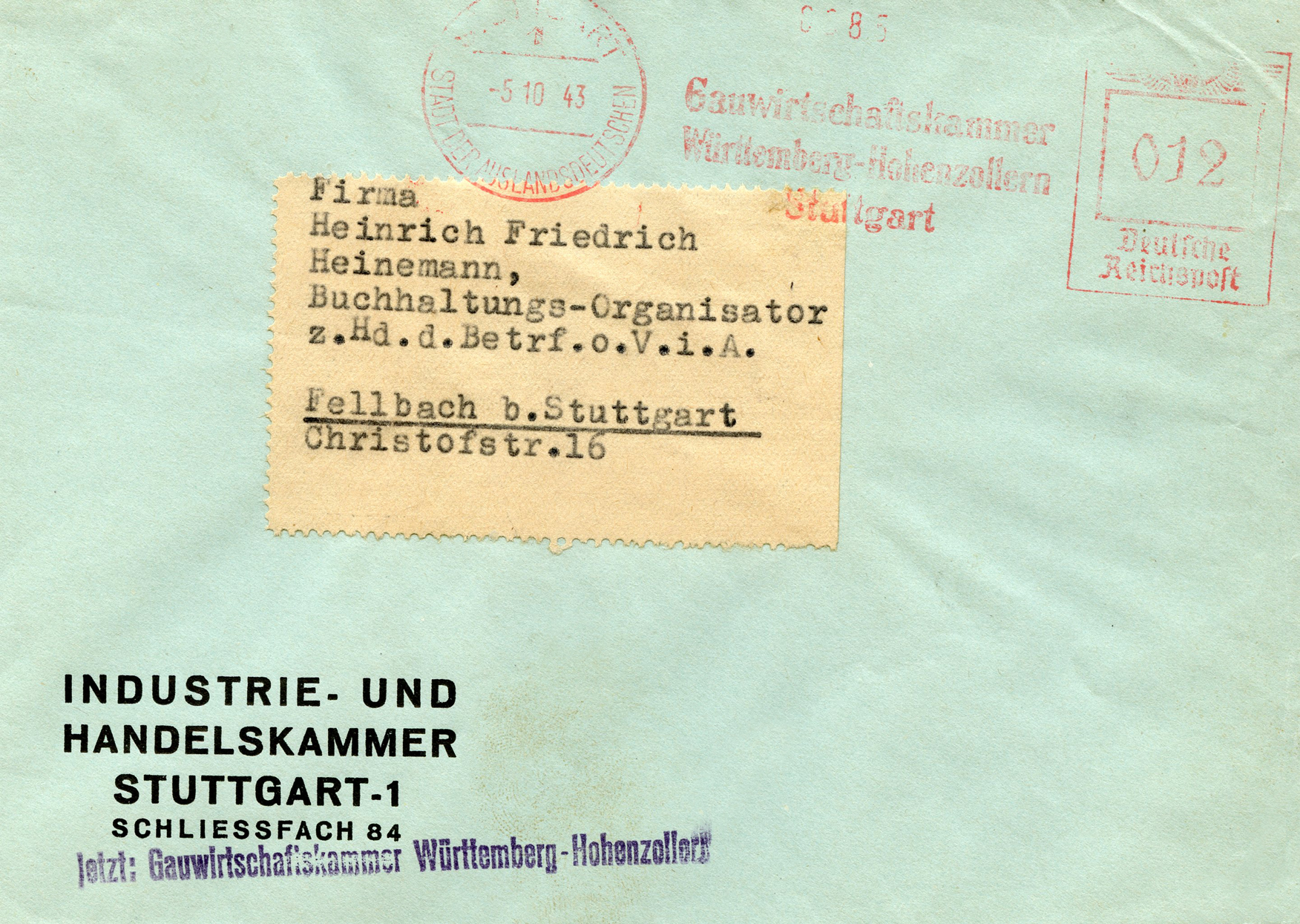
[Below: This was also sent by the 'Stuttgart Chamber of Industry and Commerce', but it now it also says 'Now [the] Württemberg-Hohenzollern District Chamber of Commerce', postmarked October 5, 1943.]
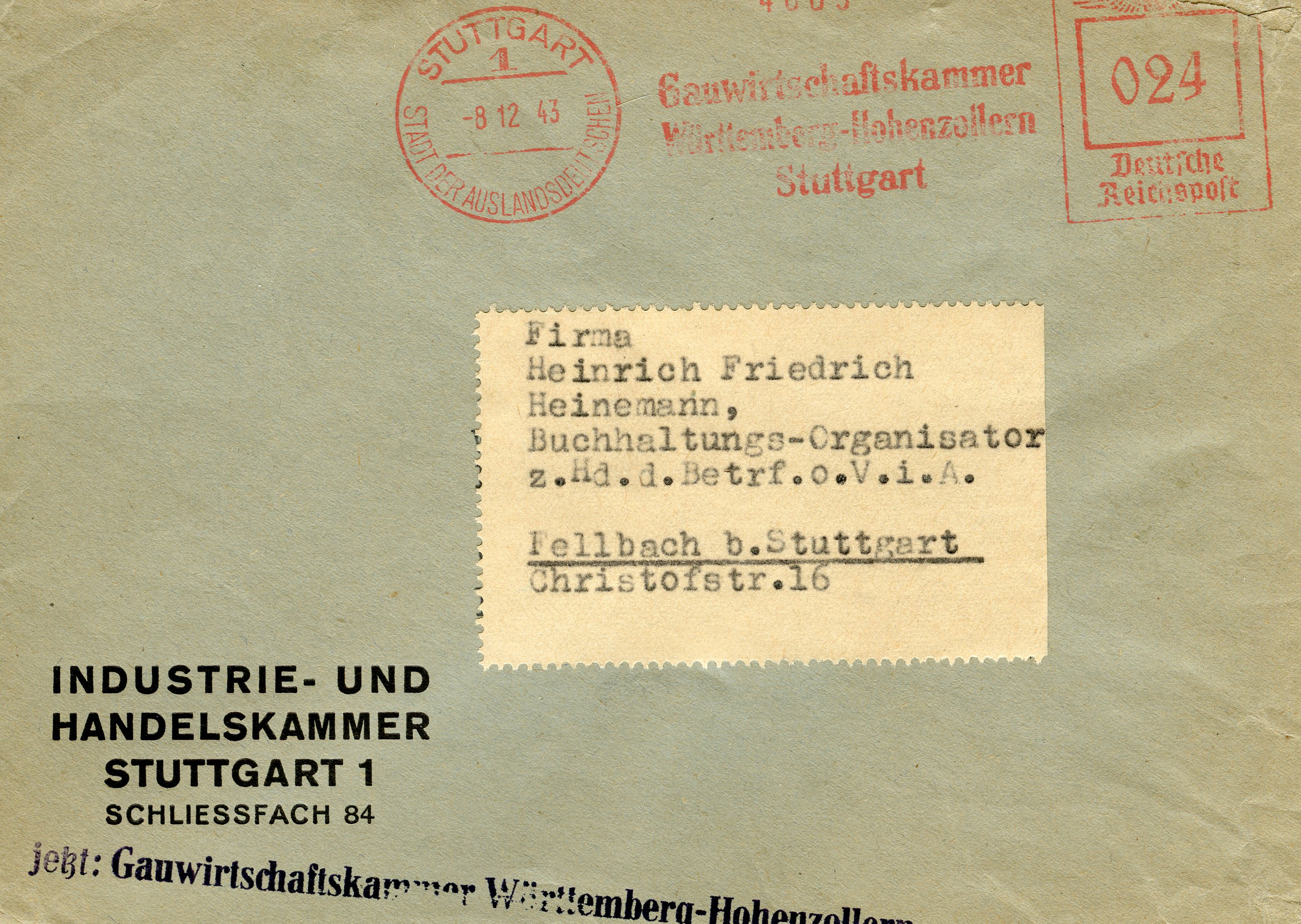
[Below: Same as above, postmarked on December 8, 1943.]
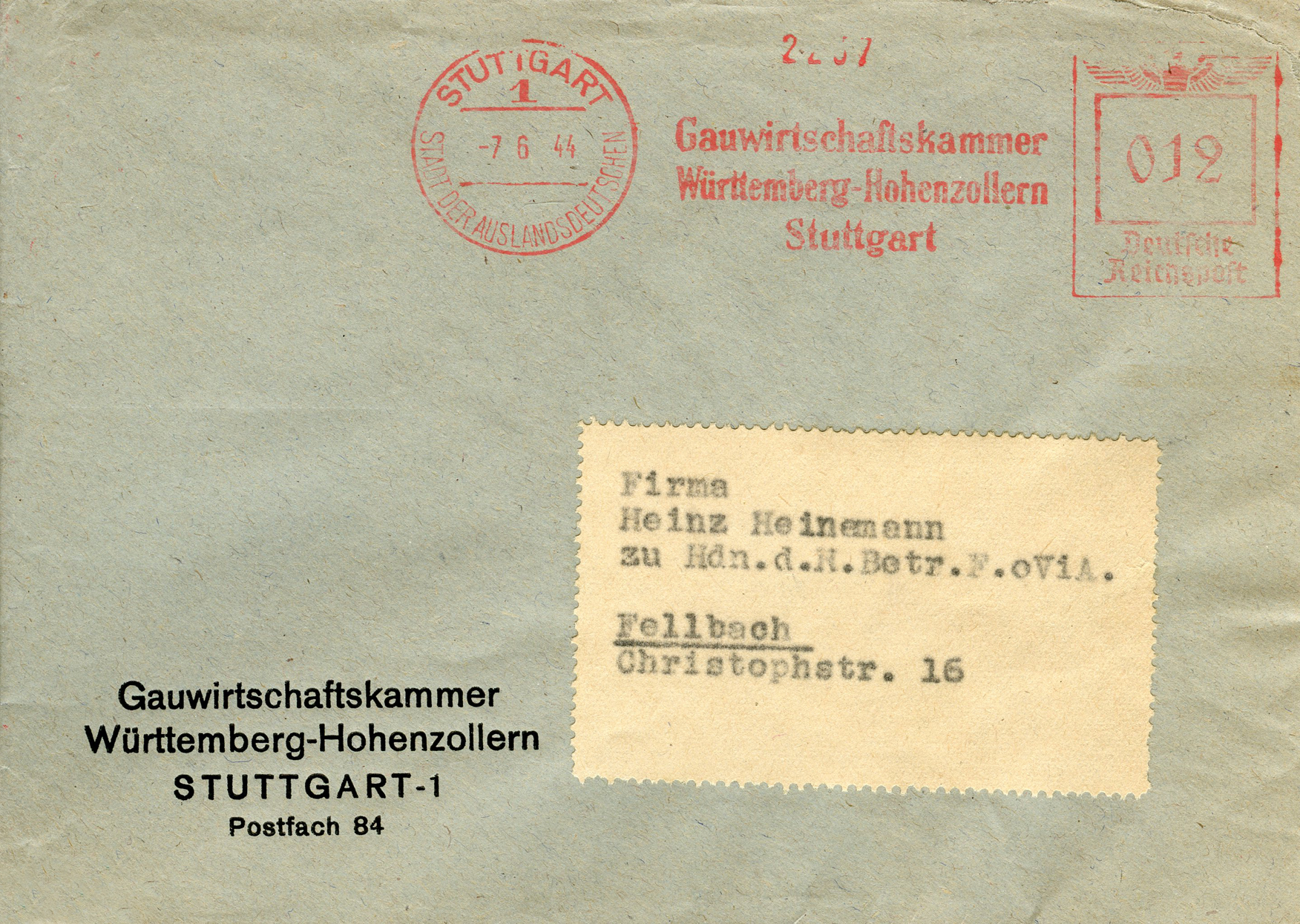
[Below: Here we see the name change is in full effect, postmarked on July 7, 1944.]
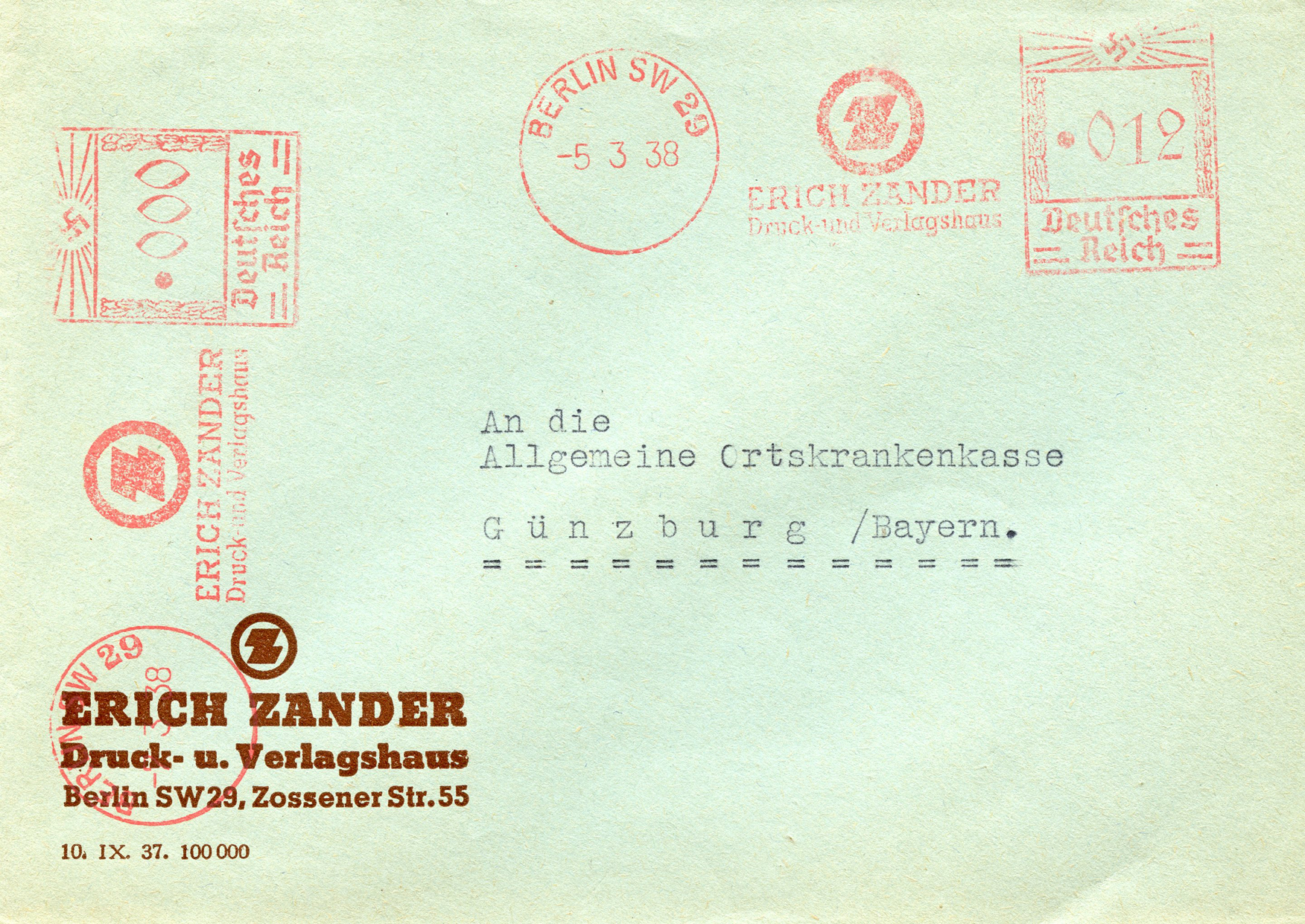
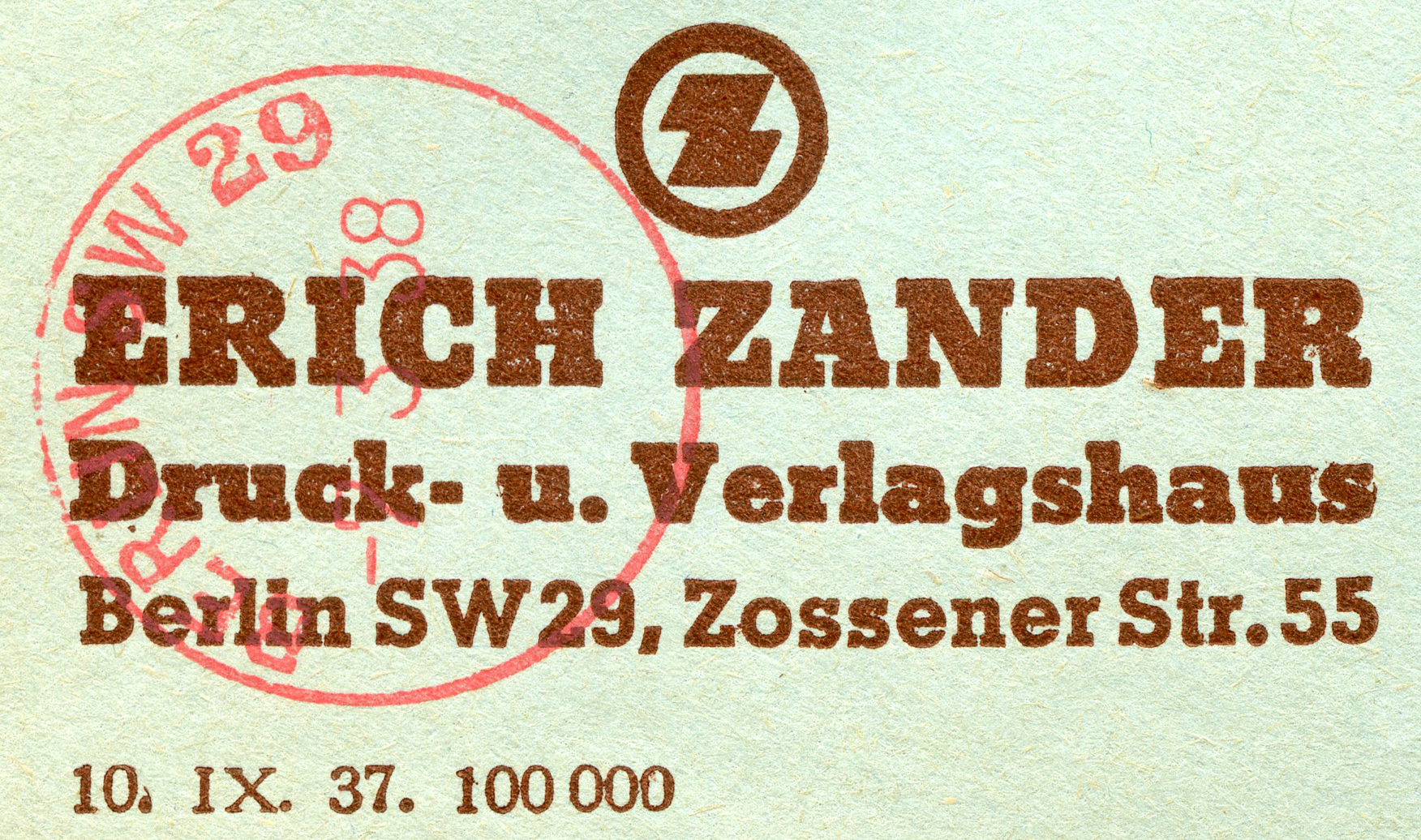
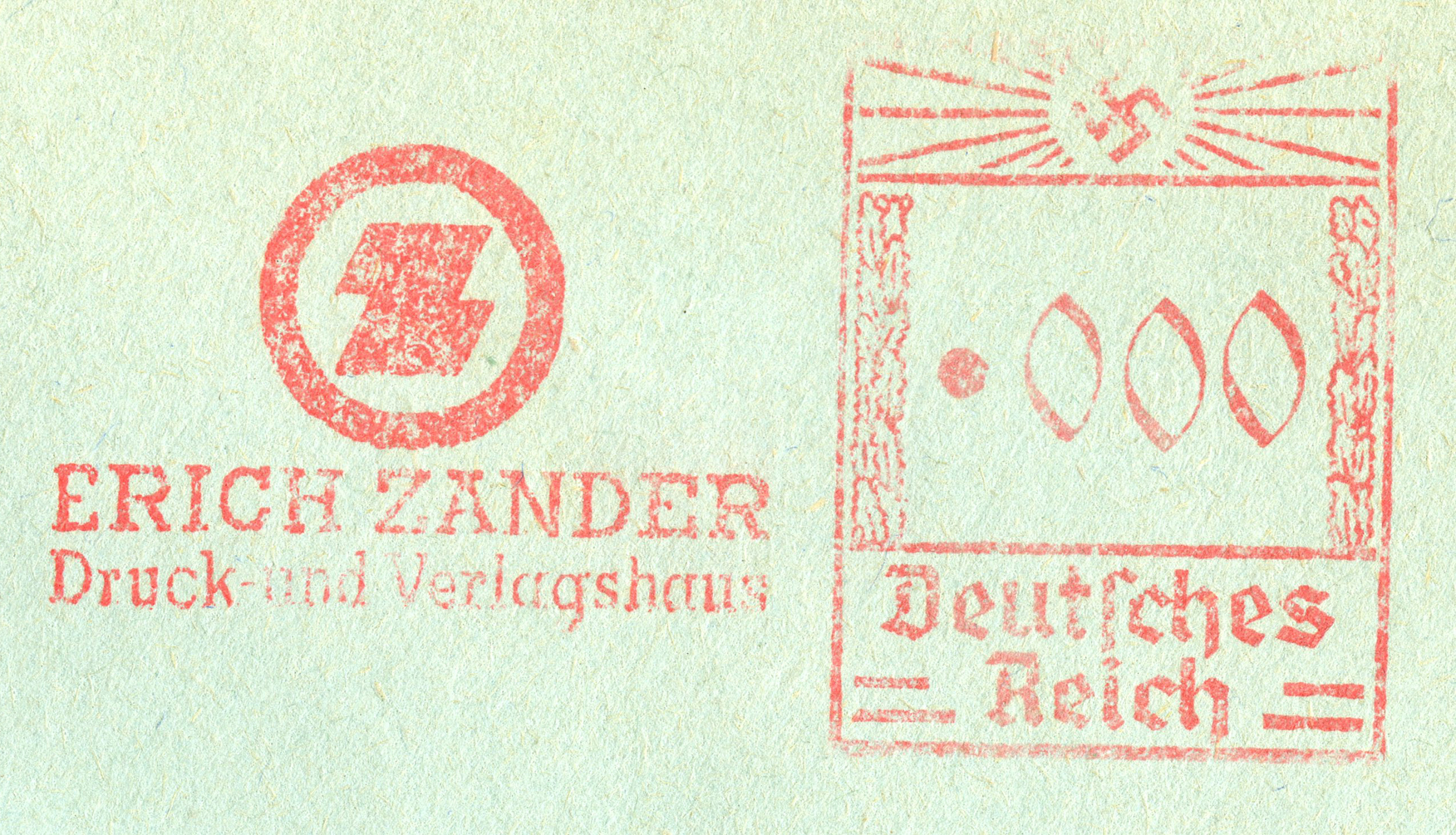
[Below: This is sent from 'Erich Zander Printing and Publishing'. A pretty strange logo/symbol, the 'Z' looks like to SS runes to me.]
[Below: Close-up.]
[Below: Close-up.]
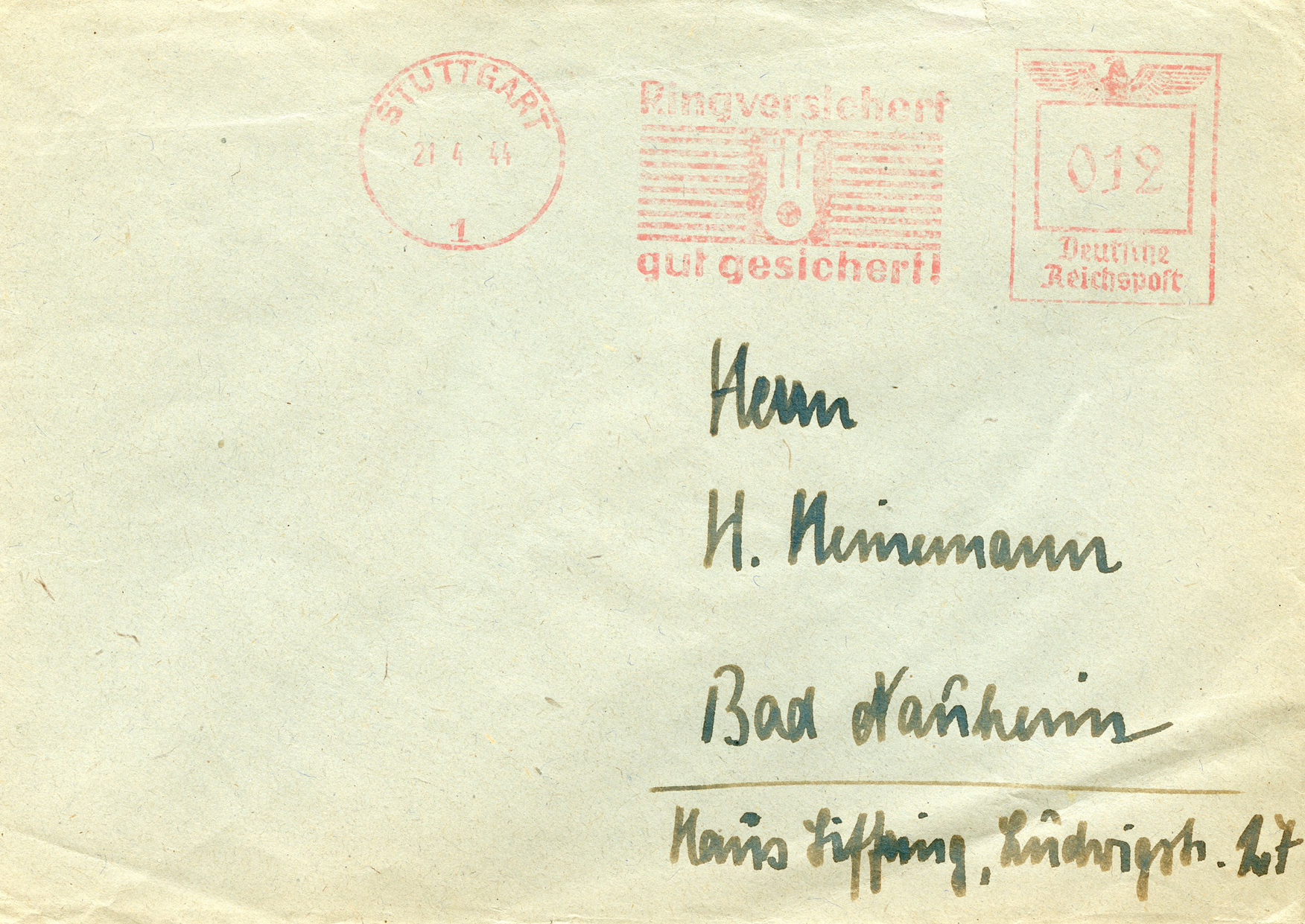
[Below: This says 'Ring Insured – well secured!', postmarked on April 21, 1944.]
[Below: Close-up.]
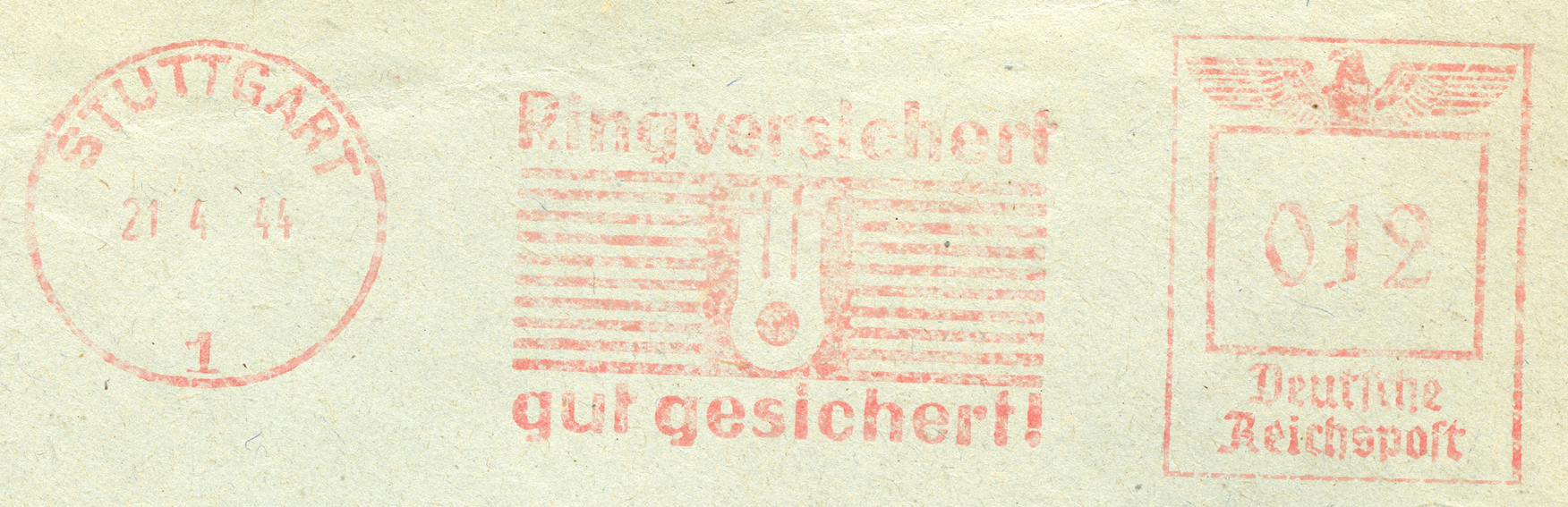
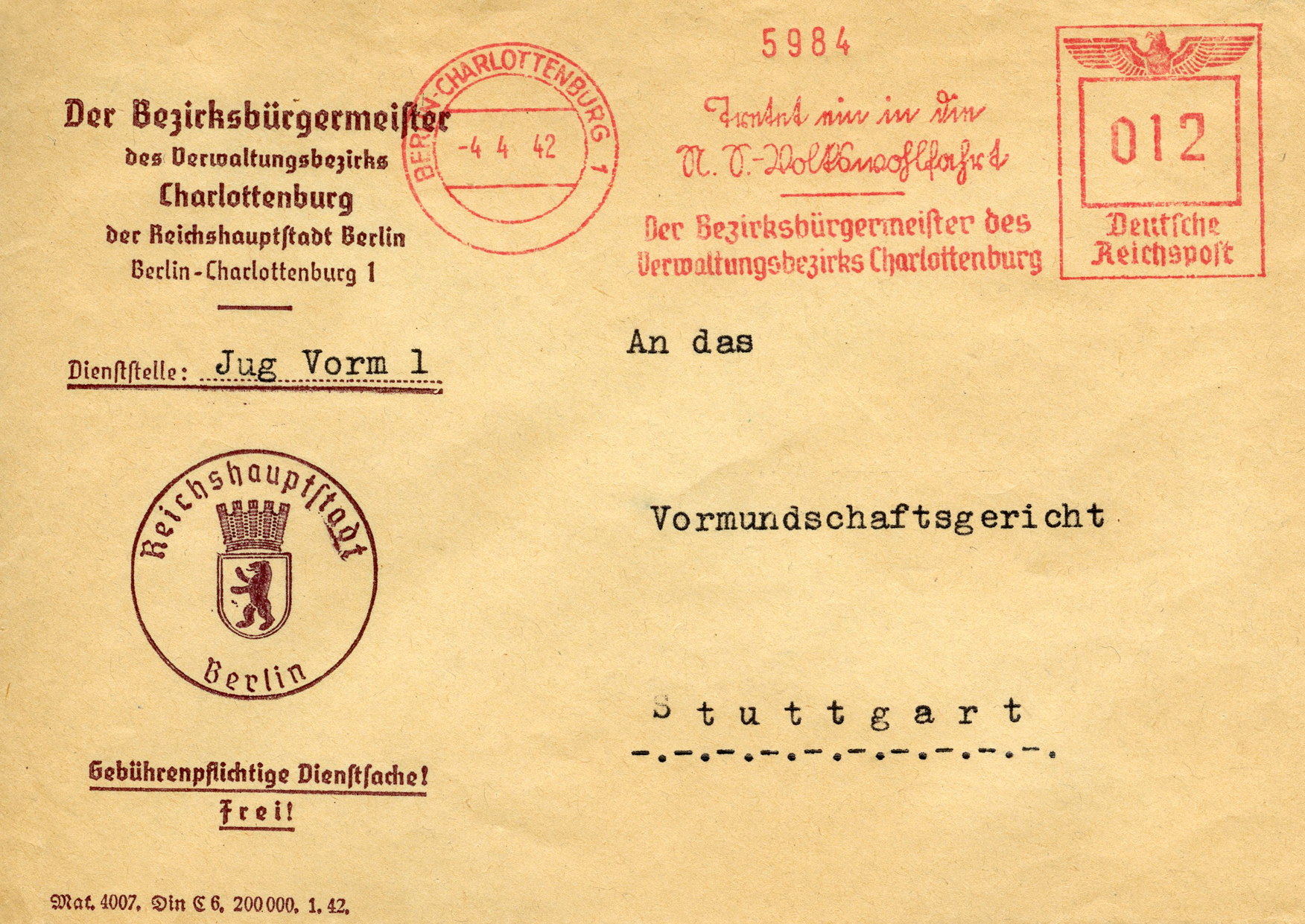
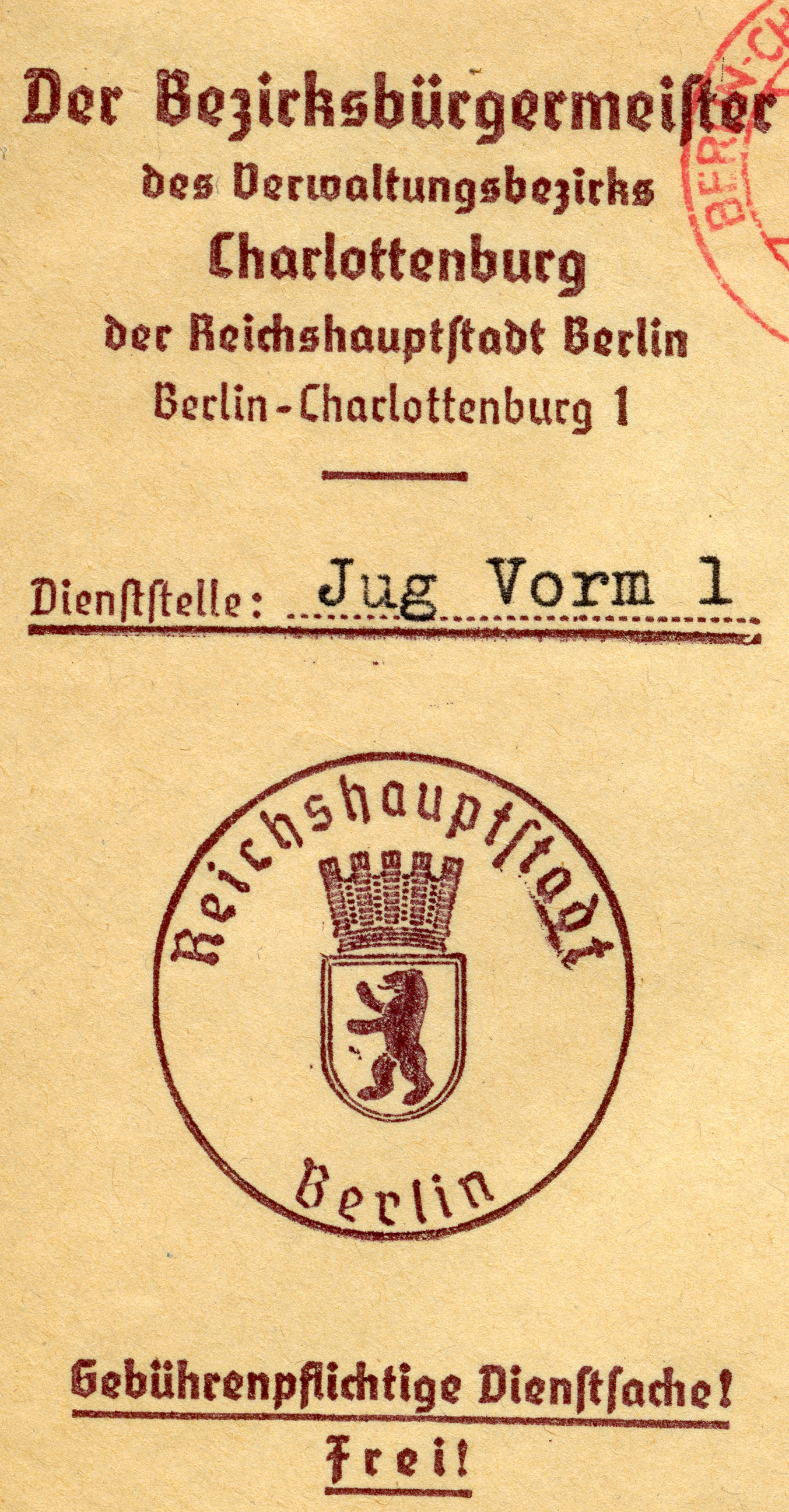
[Below: This is sent from the 'The District Mayor of the Charlottenburg Administrative District of the Reich Capital Berlin Berlin-Charlottenburg 1 - Office: Youth Welfare Office 1' sent to the 'Guardianship Court - Stuttgart', postmarked on April 4, 1942.]
[Below: Close-up.]
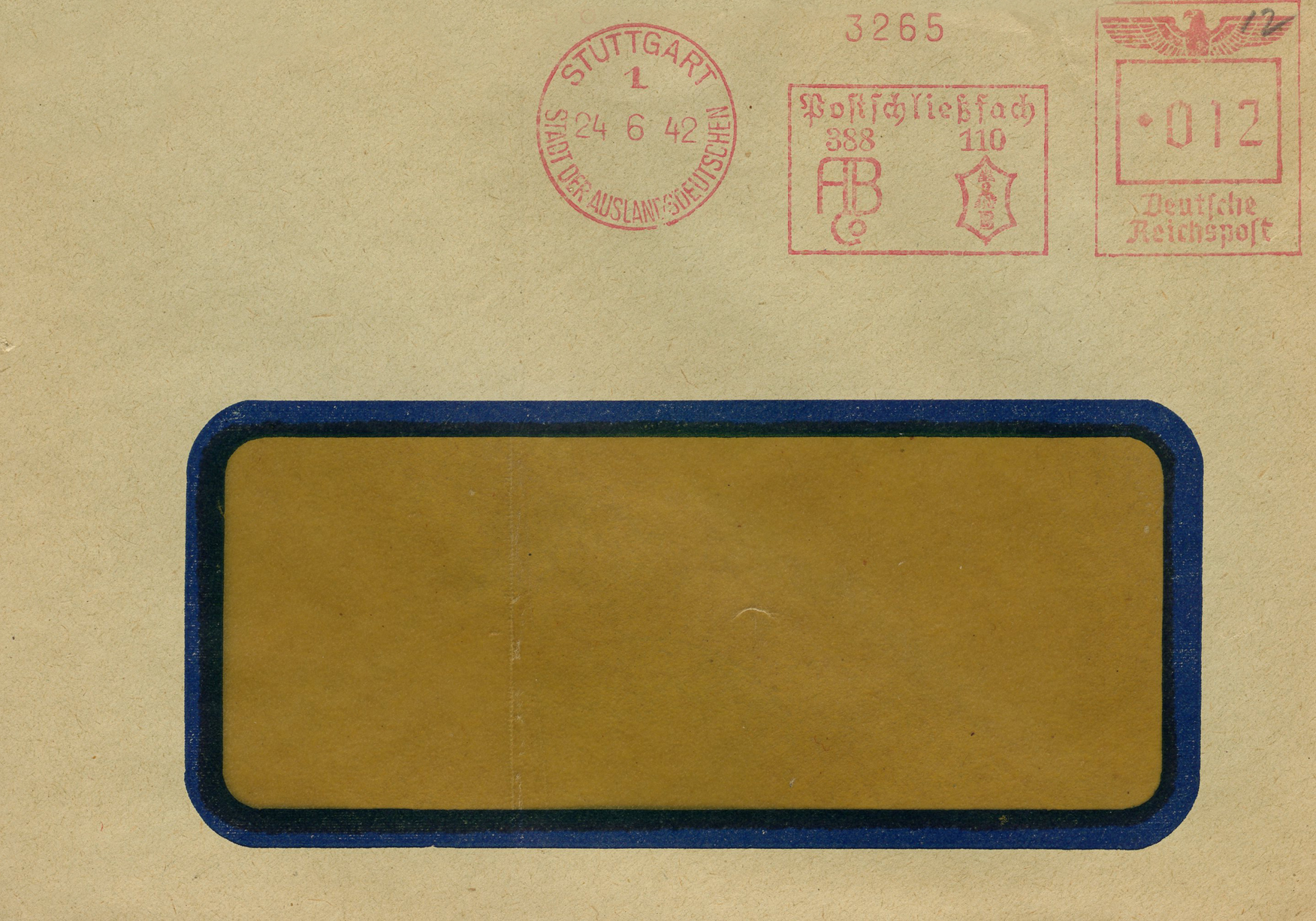
[Below: Not sure who sent this... it simply says 'post office box', postmarked on June 24, 1942.]
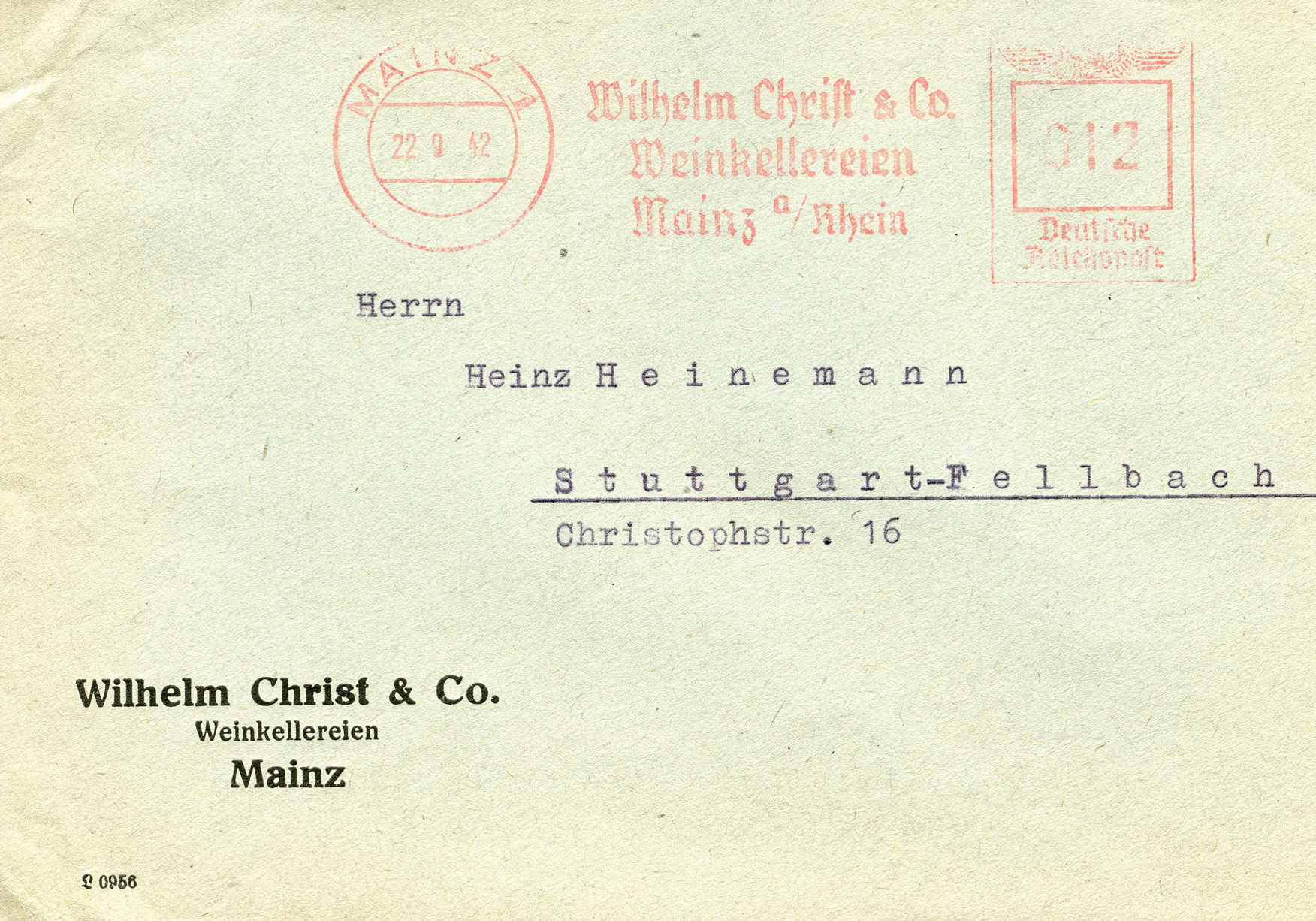
[Below: This was sent from 'Wilhelm Christ & Co. Wine Cellars - Mainz Rhine', postmarked on September 22, 1942. I've never known anyone with the last name Christ...]
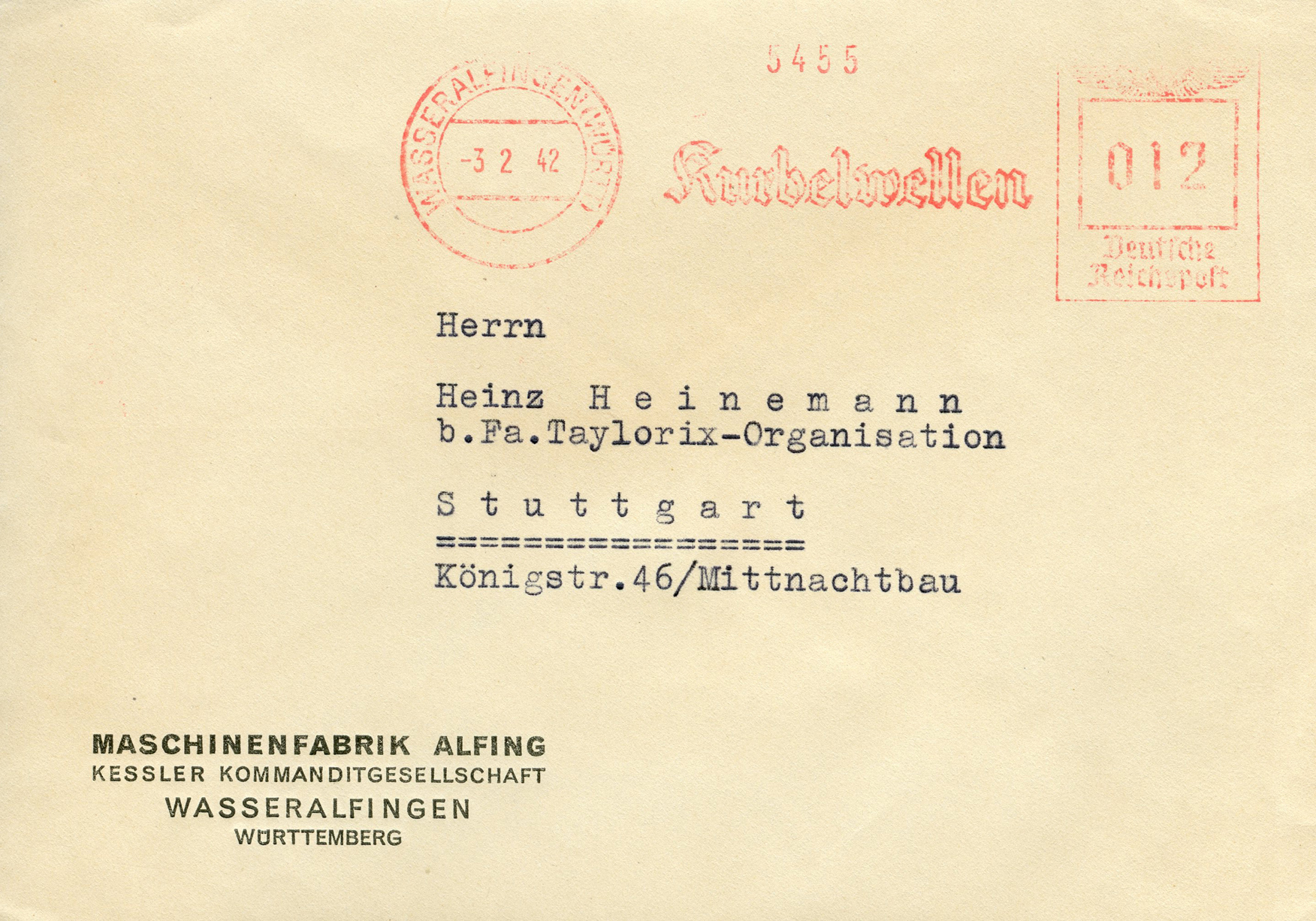
[Below: This is sent from 'Machine Factory Alfing', the cancel says 'Crankshafts', postmarked on February 3, 1942.]
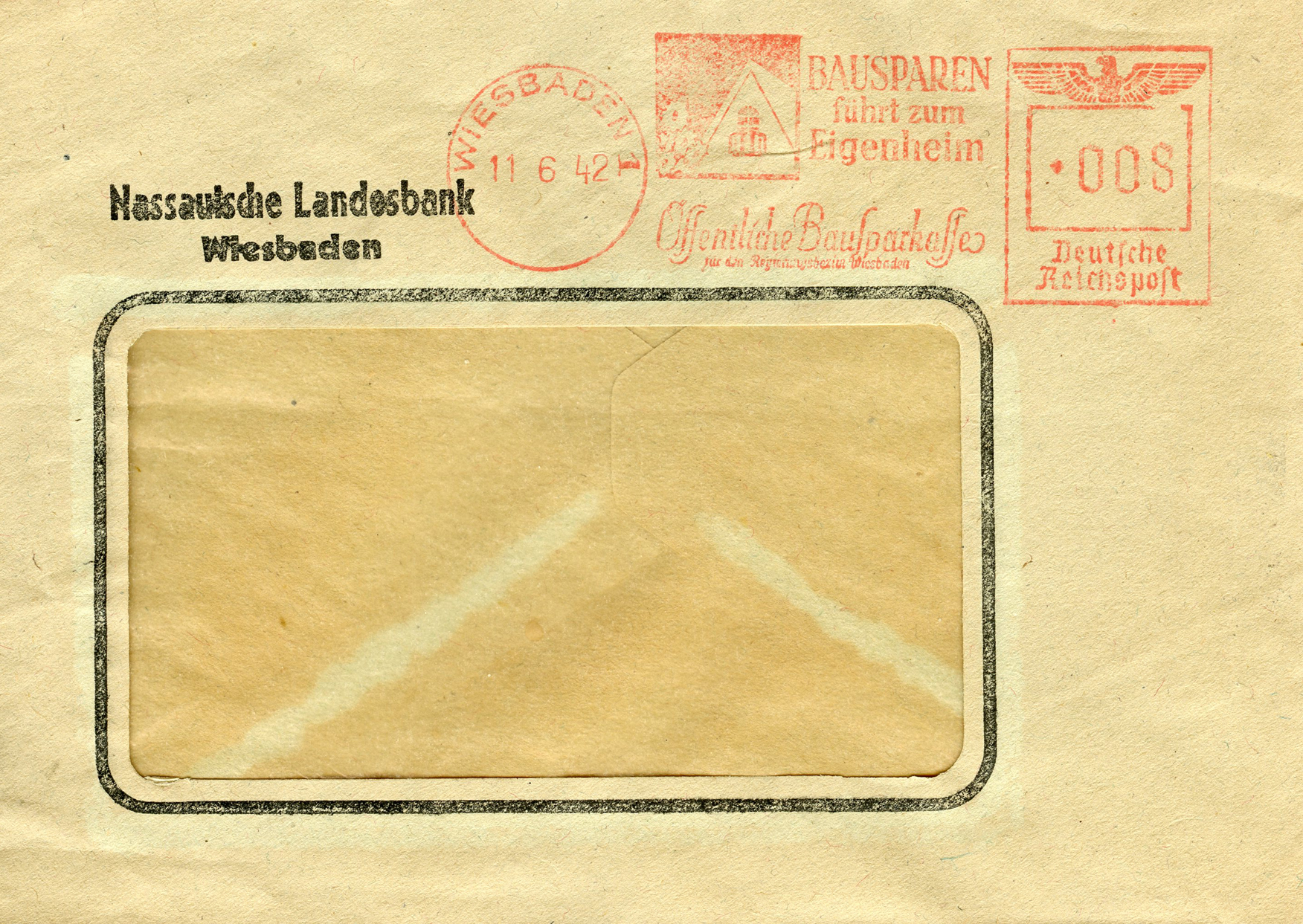
[Below: This was sent from the 'Nassau State Bank - Wiesbaden', the top cancel says 'Building savings leads to home ownership', postmarked June 11, 1942.]
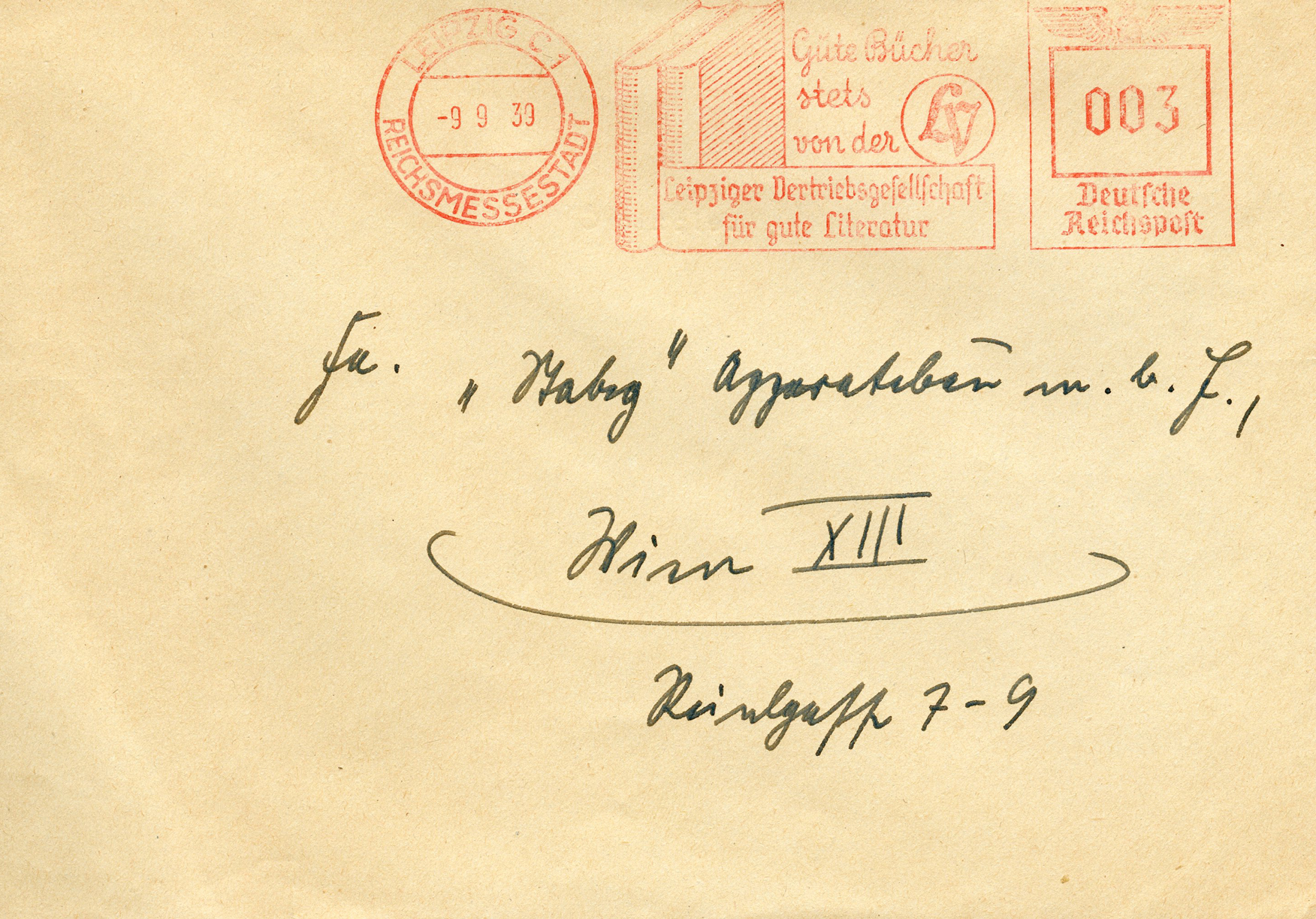
[Below: This was sent from the 'Leipzig Publishing Company for Good Literature', the cancel says 'Good books are always a winner' (very true, I'd recommend Mein Kampf), September 9, 1939.]
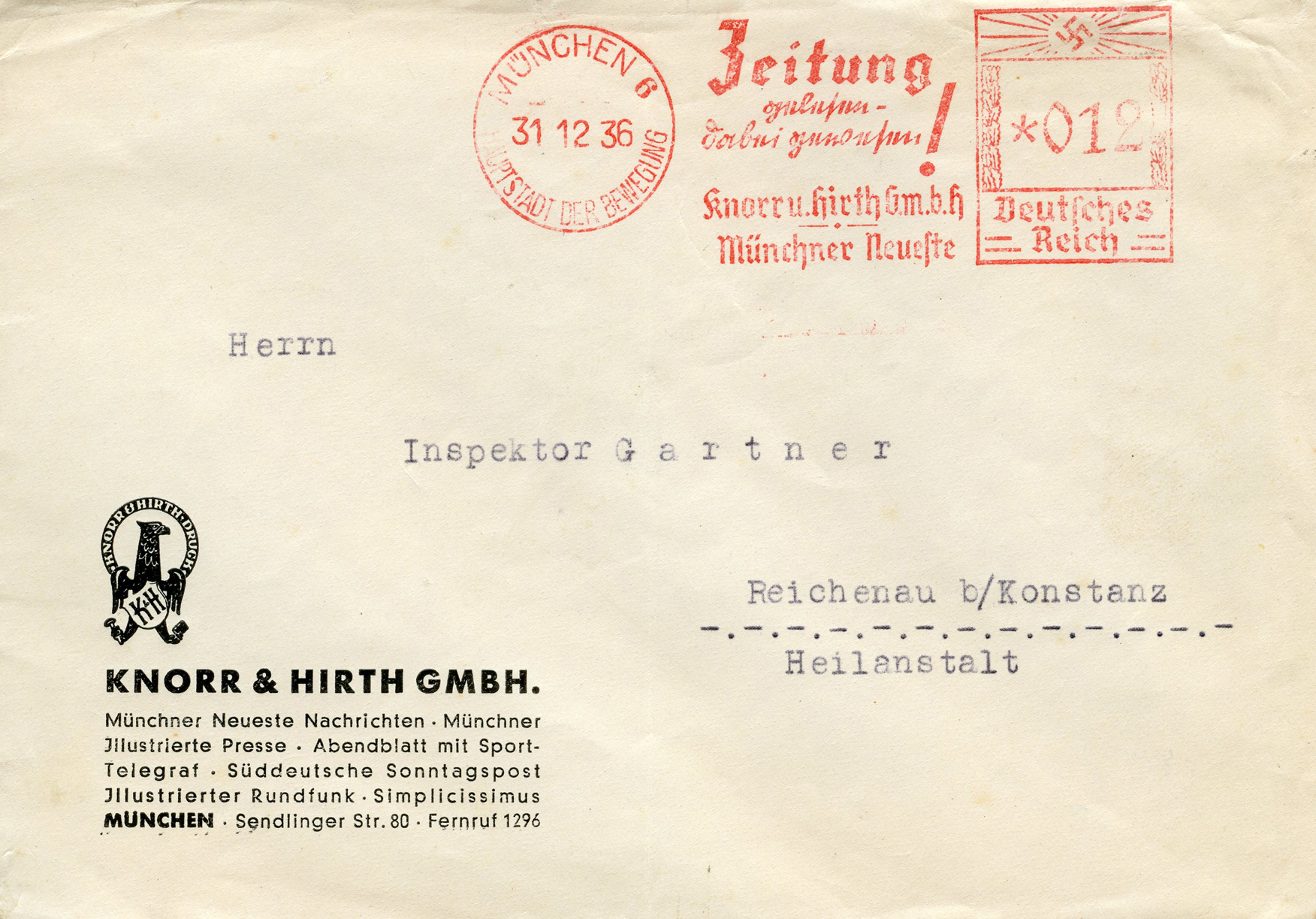
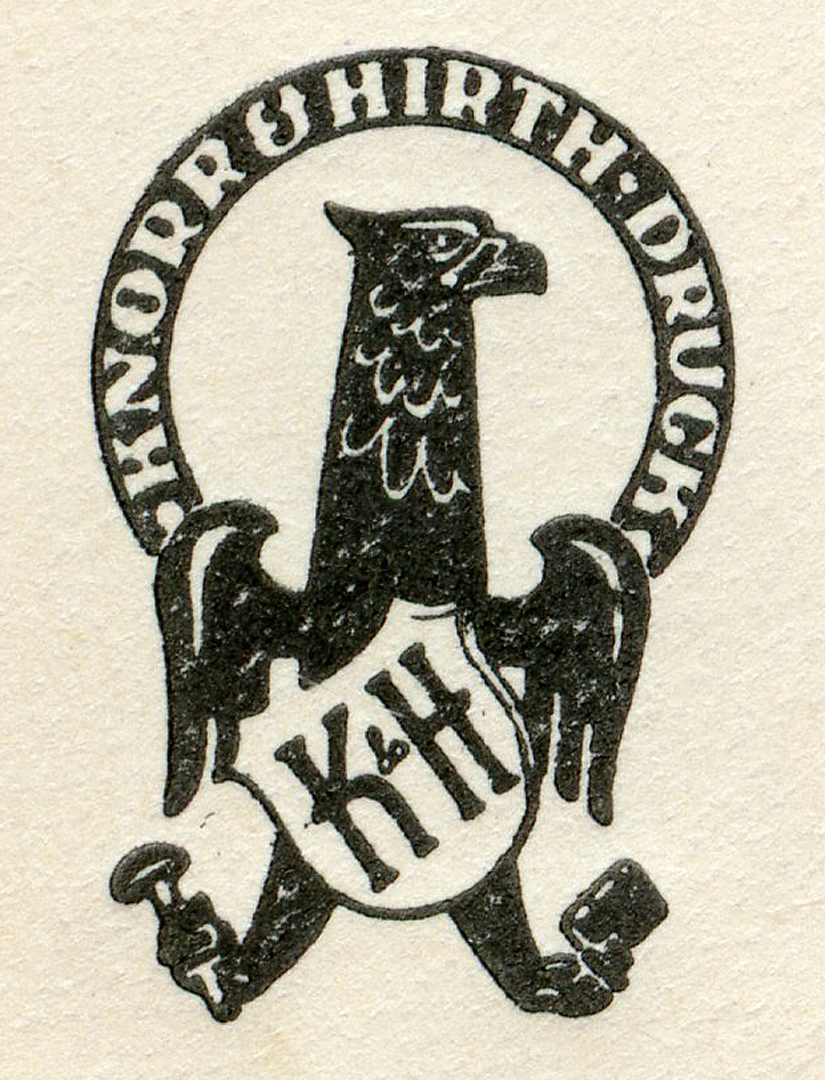
[Below: This was sent from 'KNORR & HIRTH GMBH. and further says 'Munich Latest News, Munich Illustrated Press, Evening Paper with Sports Telegraph, South German Sunday Post, Illustrated Radio, Simplicissimus', postmarked on December 31, 1936, New Year's Eve. I must say that is a very strange eagle. Where is the poor thing's tail? And it has very tiny wings, not to mention its neck is very long. Poor fellow.]
[Below: Close-up.]
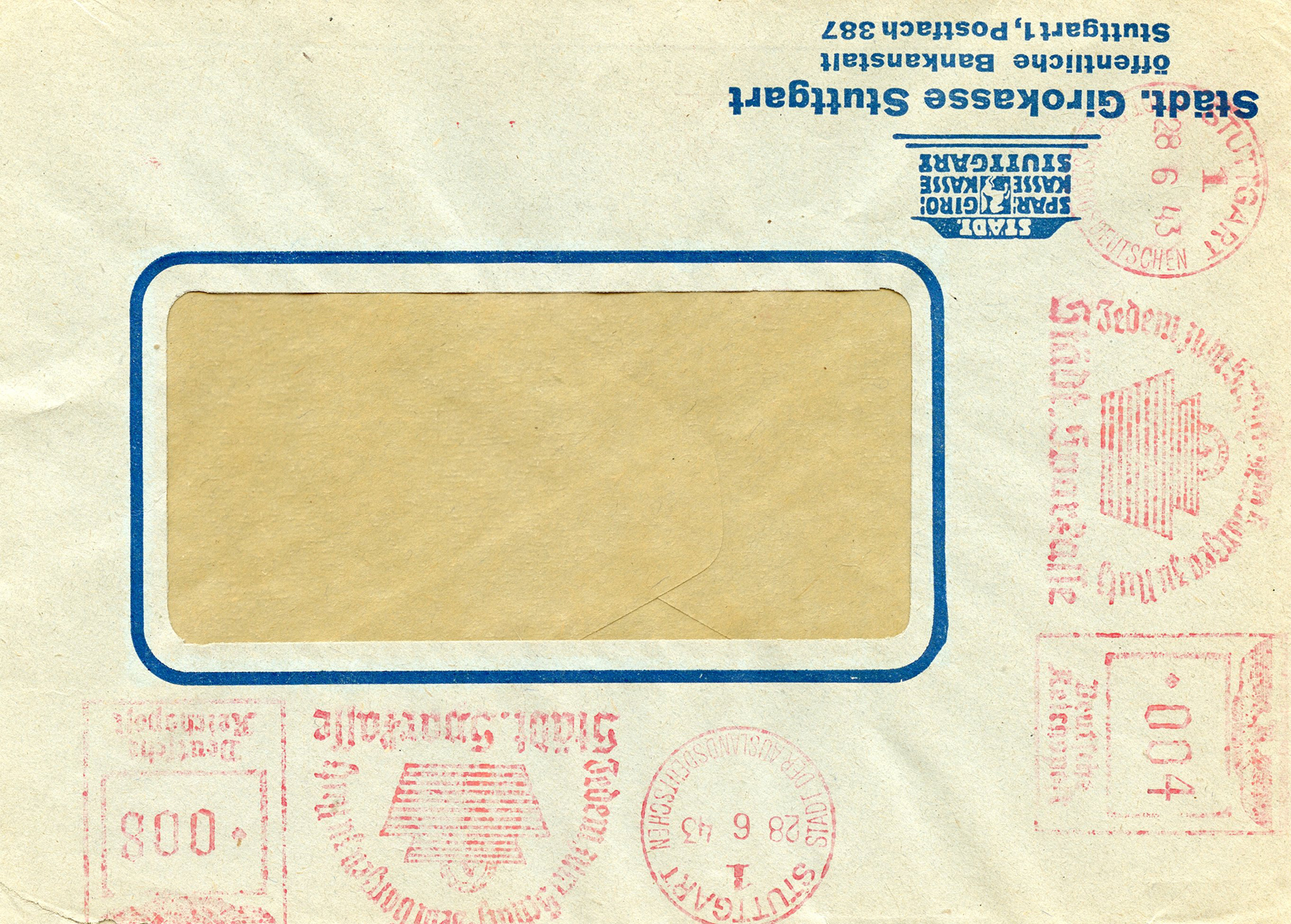
[Below: This was sent from 'Städtische Girokasse Stuttgart', a public savings bank and municipal clearing institution based in Stuttgart, Germany, postmarked on June 28, 1943.]
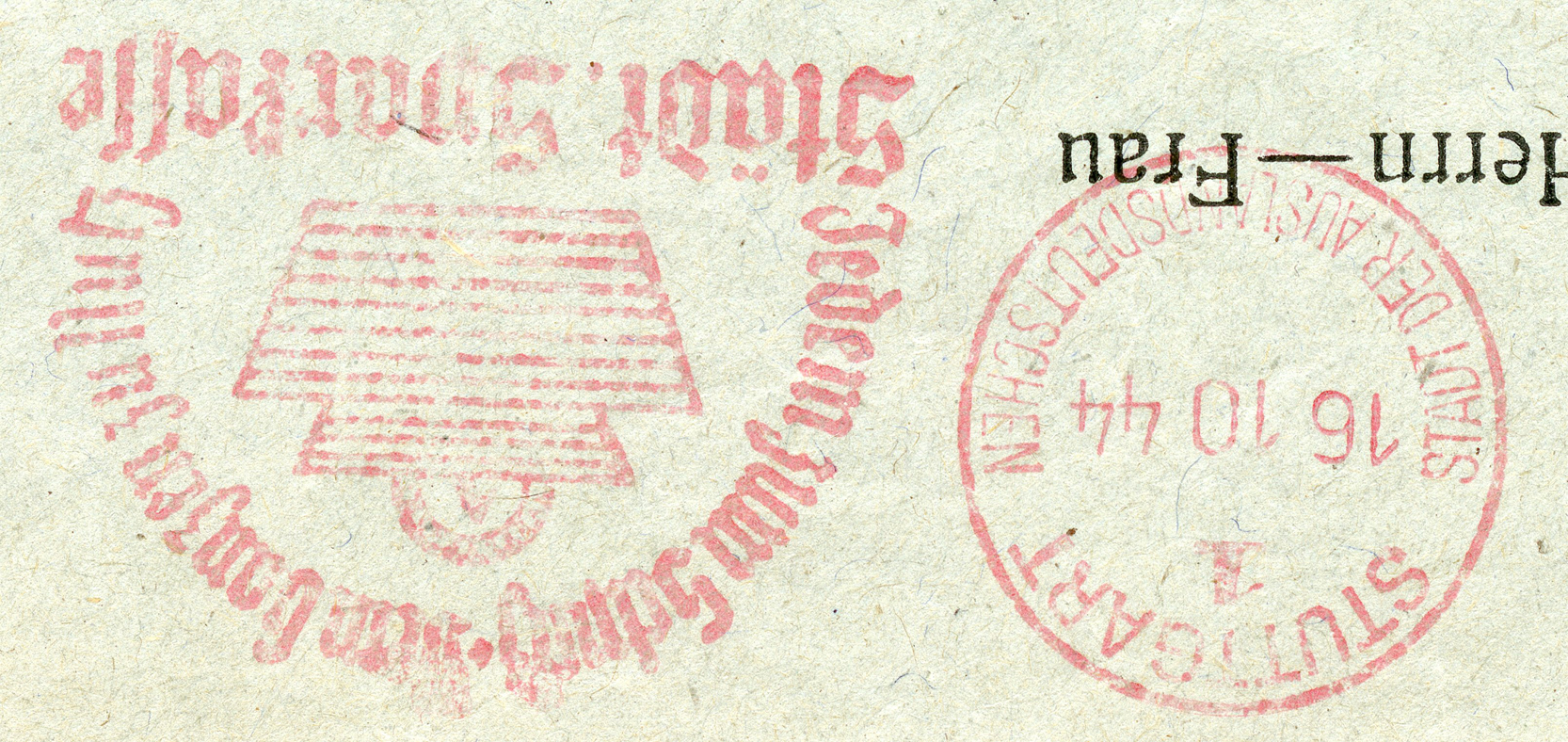
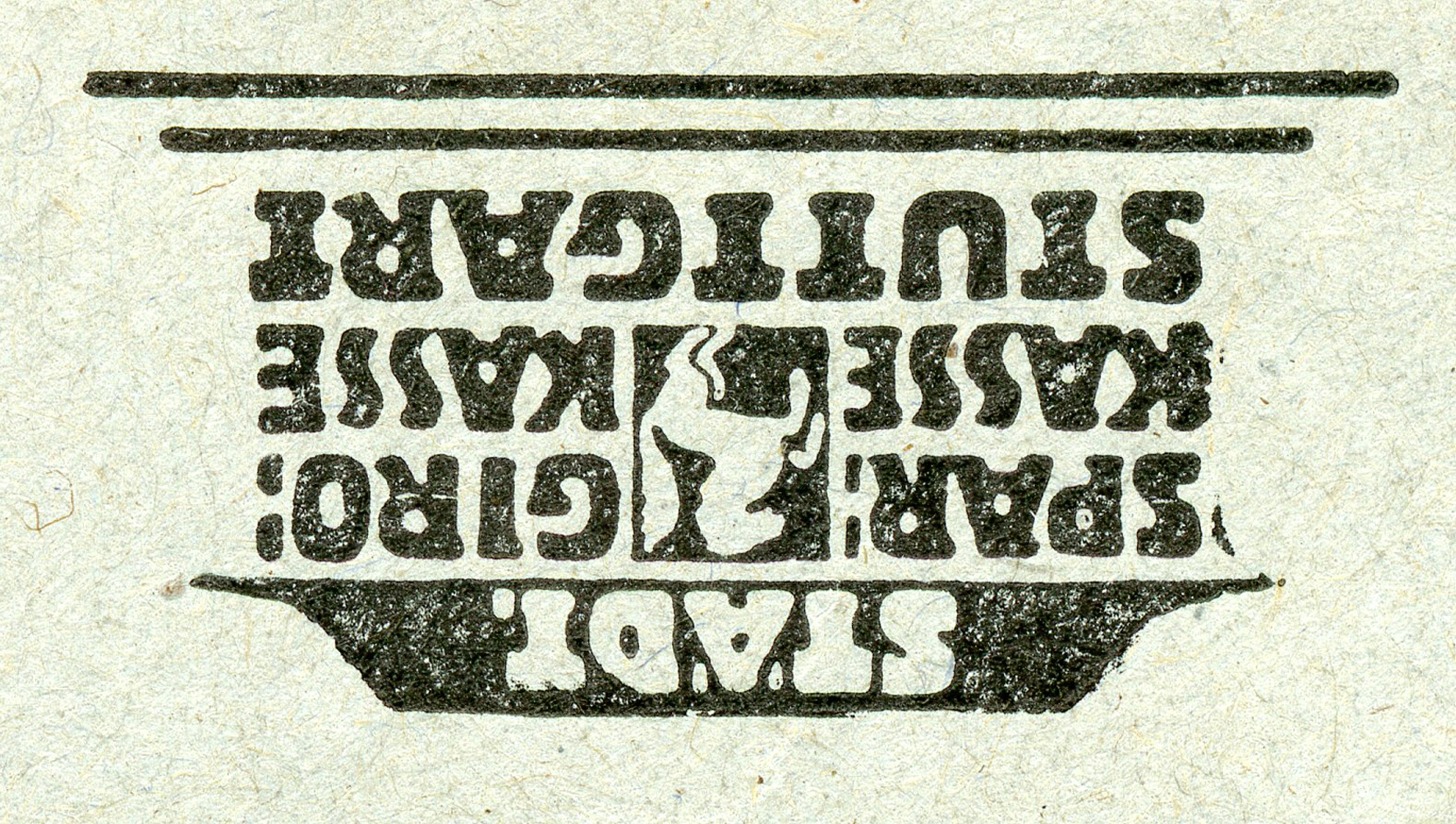
[Below: Another one sent from the 'Städtische Girokasse Stuttgart', postmarked on October 16, 1944.]
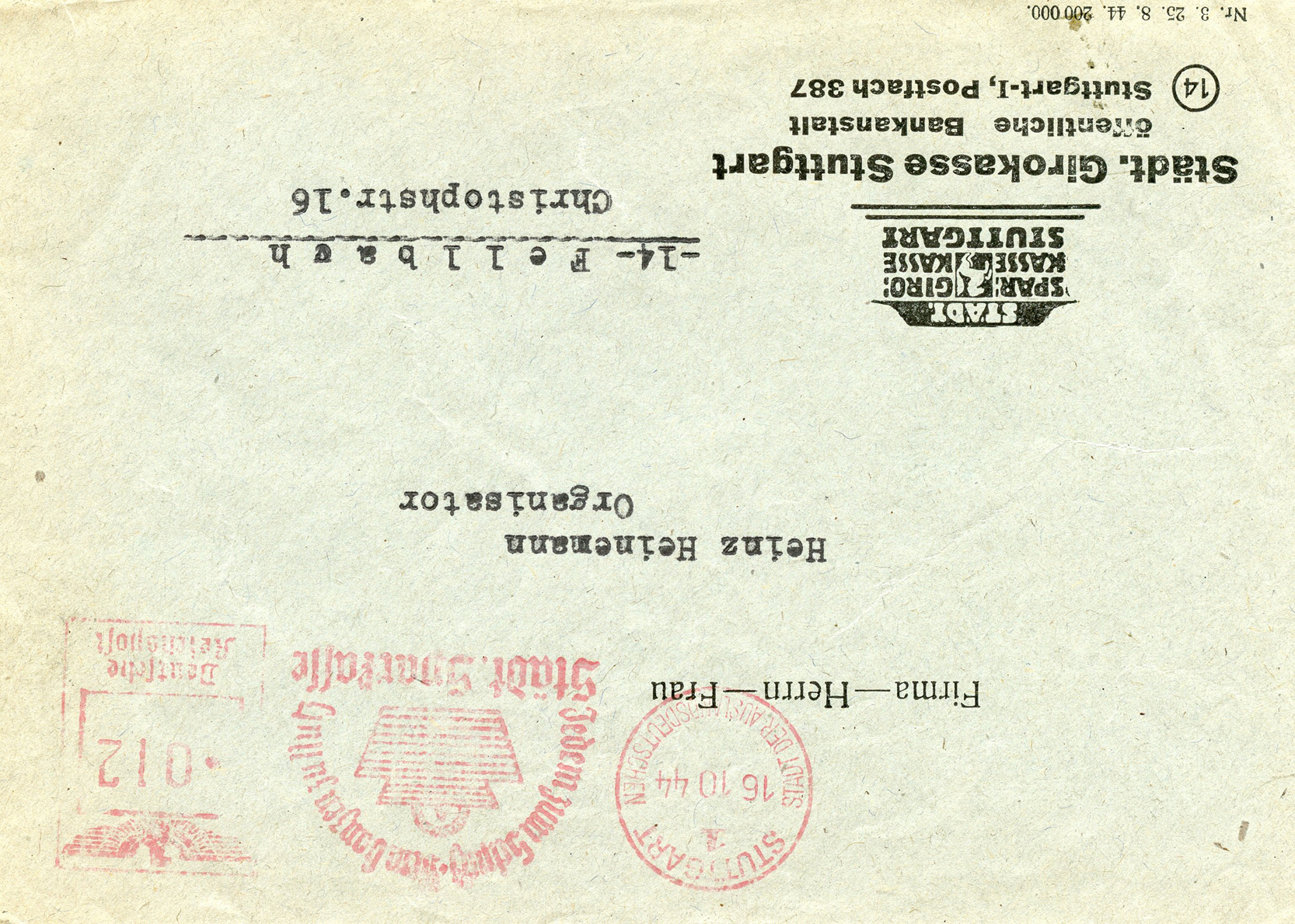
[Below: Close-up.]
[Below: Close-up.]
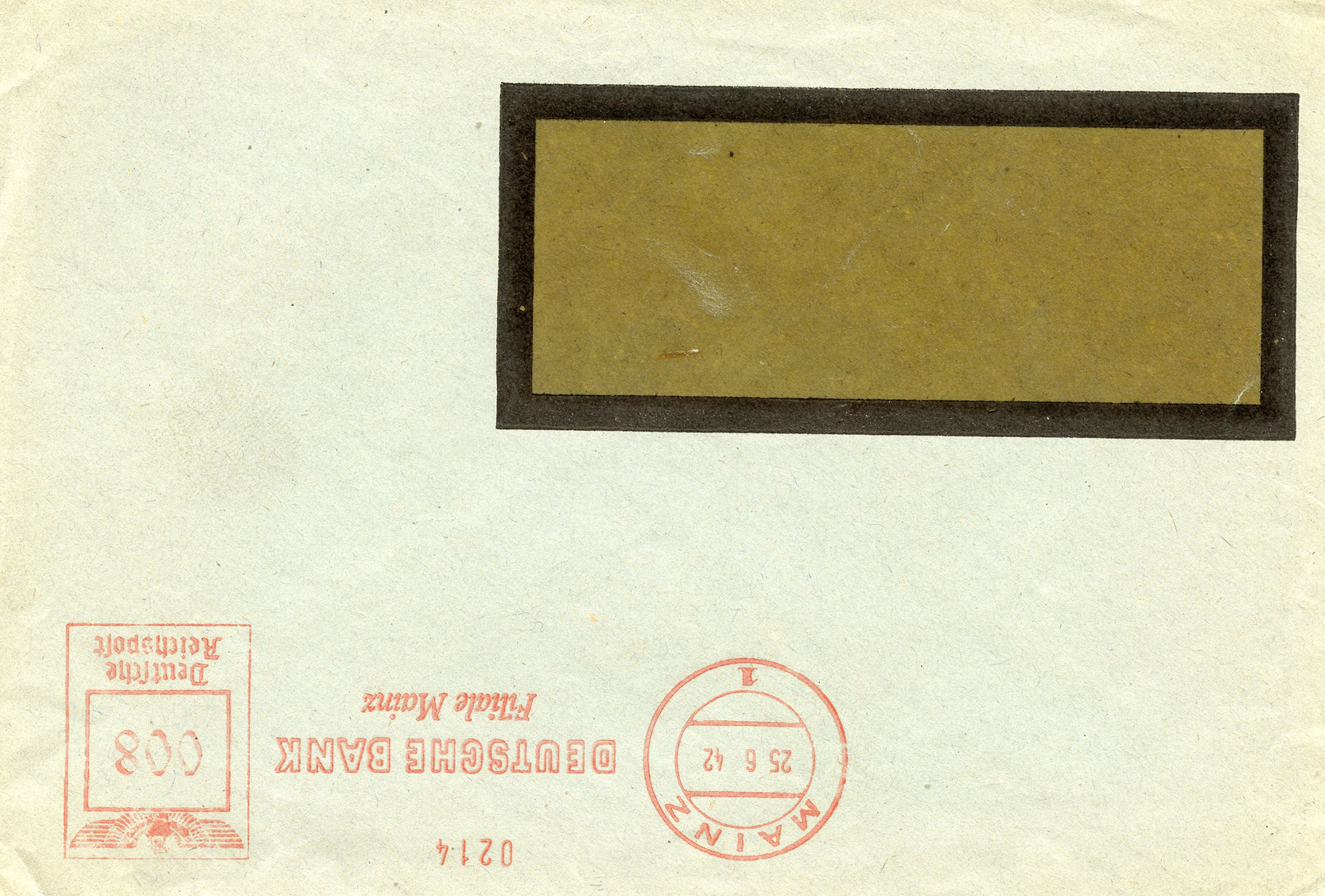
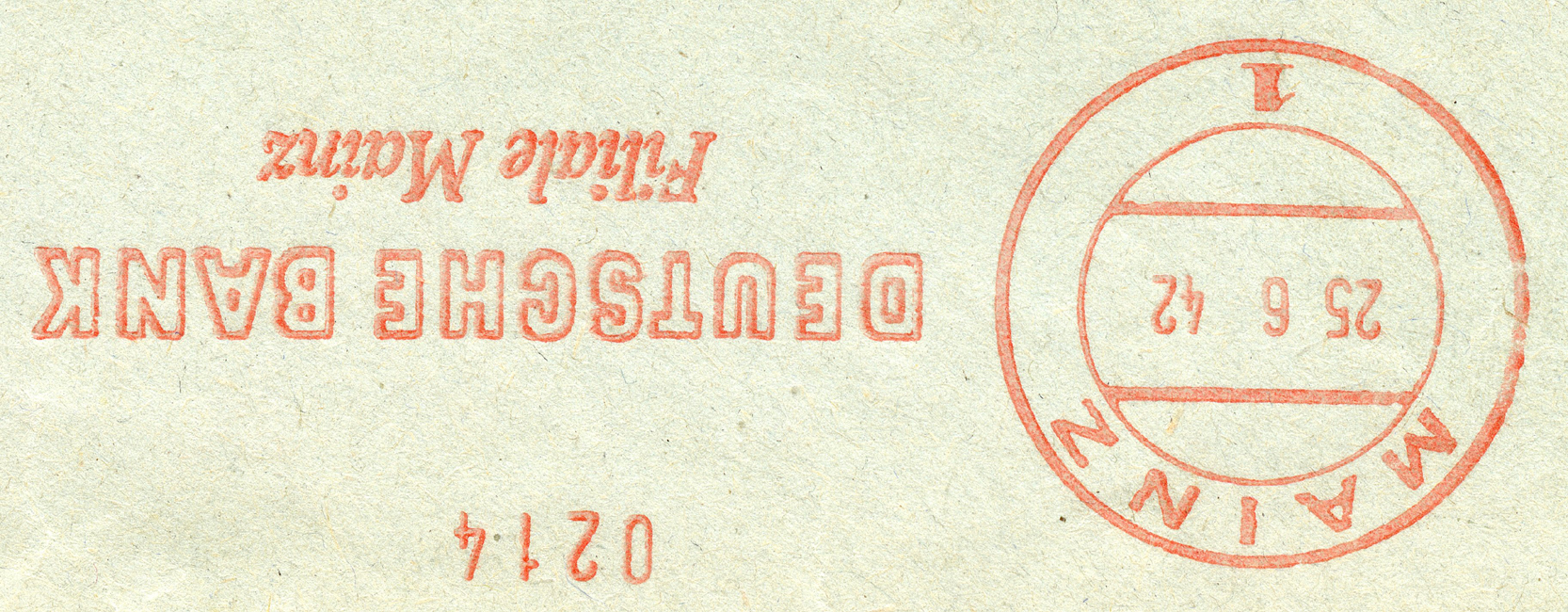
[Below: This was sent from the 'Deutsche Bank', in Mainz, Germany, postmarked on June 25, 1942.]
[Below: Close-up.]
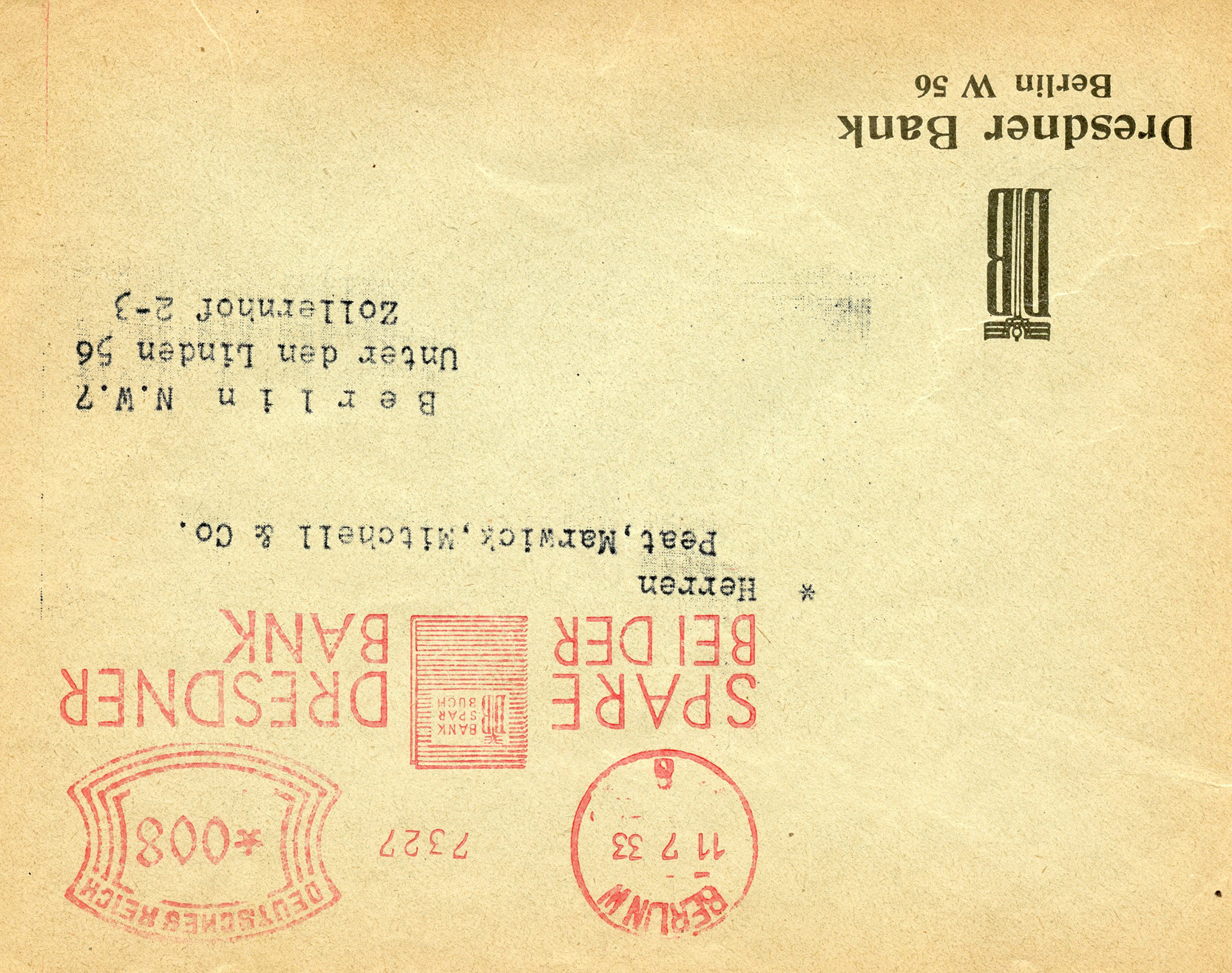
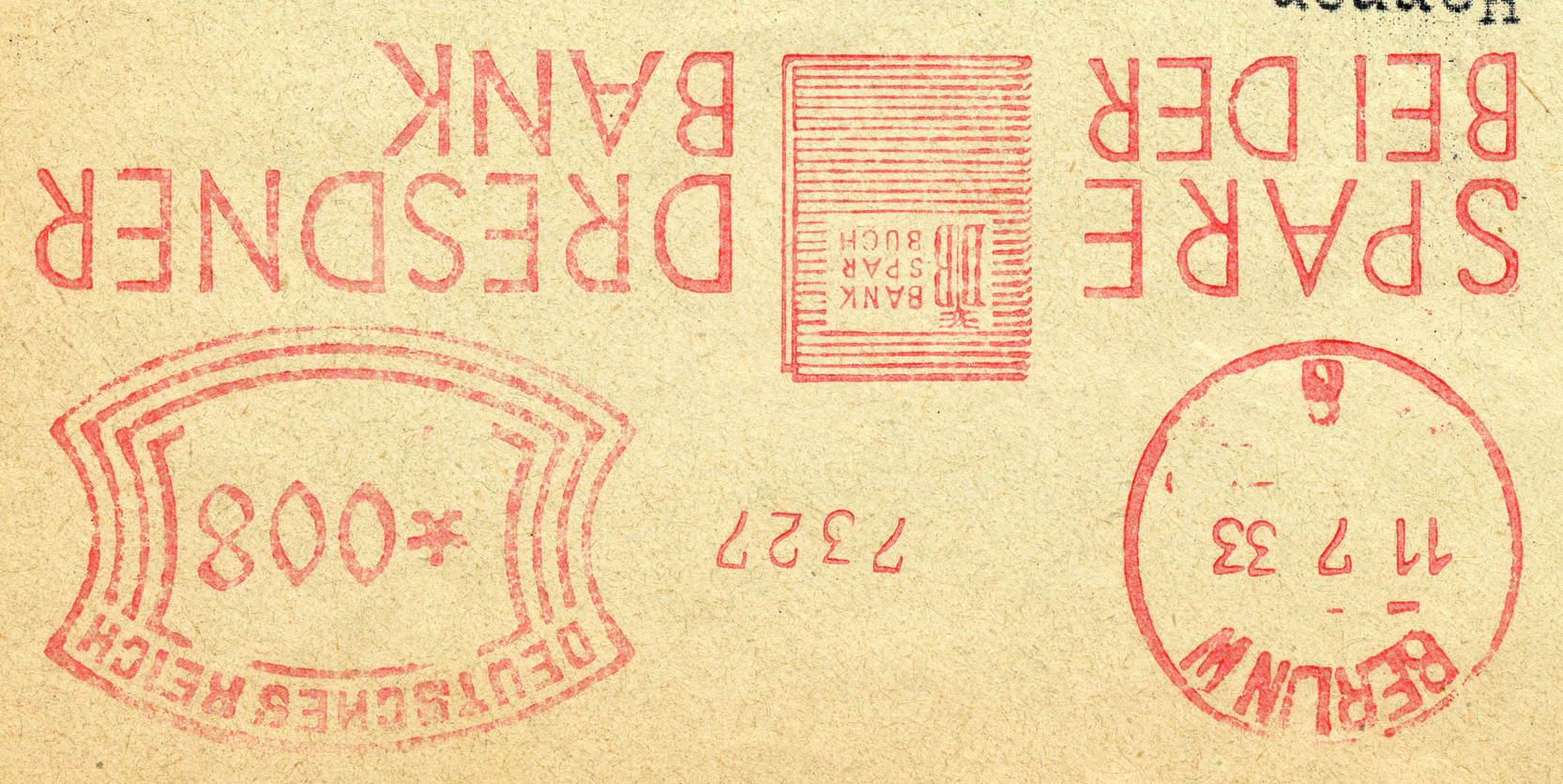
[Below: This was sent from the 'Dresdner Bank', in Mainz, Germany, postmarked on July 11, 1933.]
[Below: Close-up.]
[Below: Close-up.]
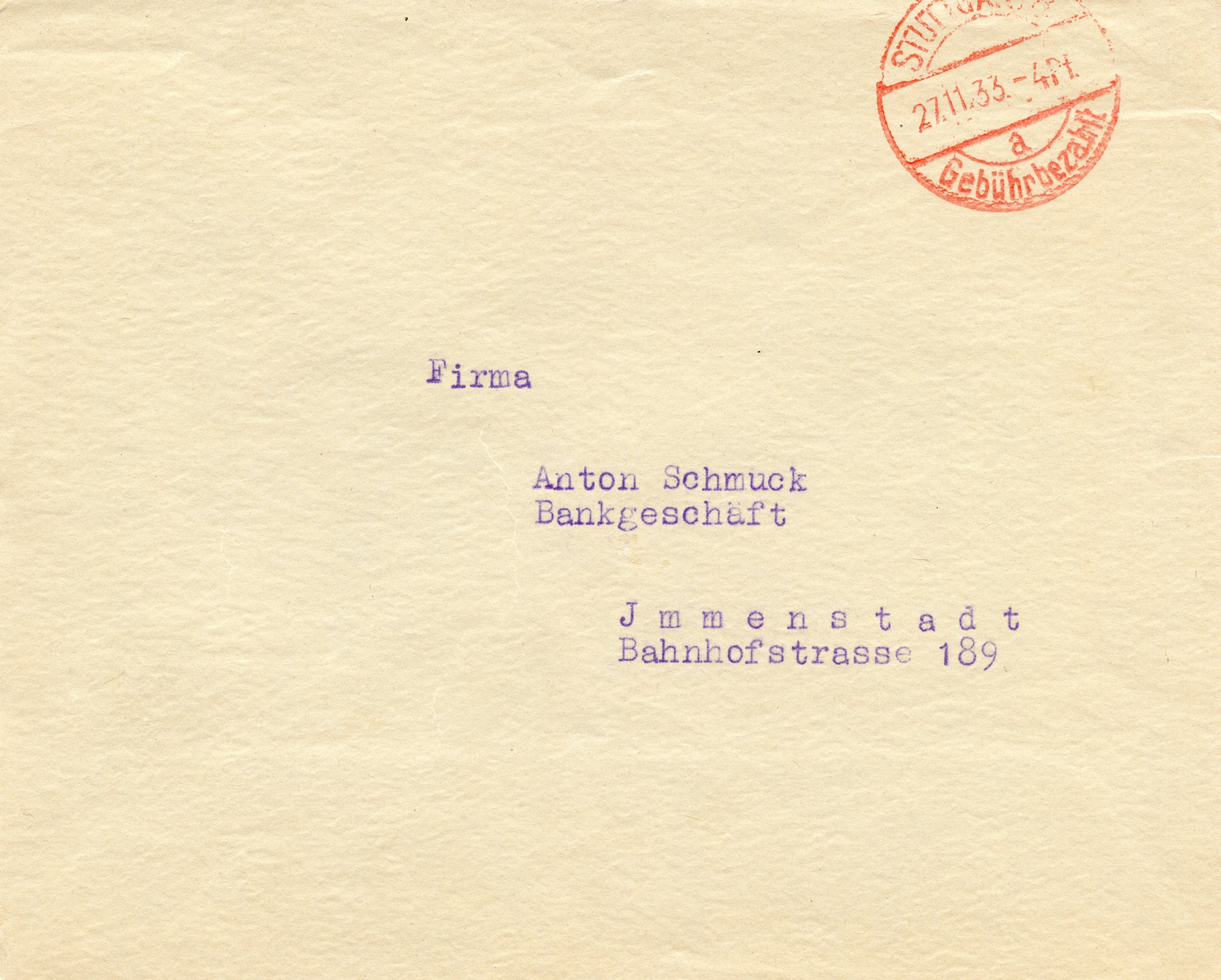
[Below: This was sent to a 'Banking Business', canceled in Stuttgart, Germany, 'Gebührbezahlt' (postage paid), on November 27, 1933.]
[Below: Close-up.]