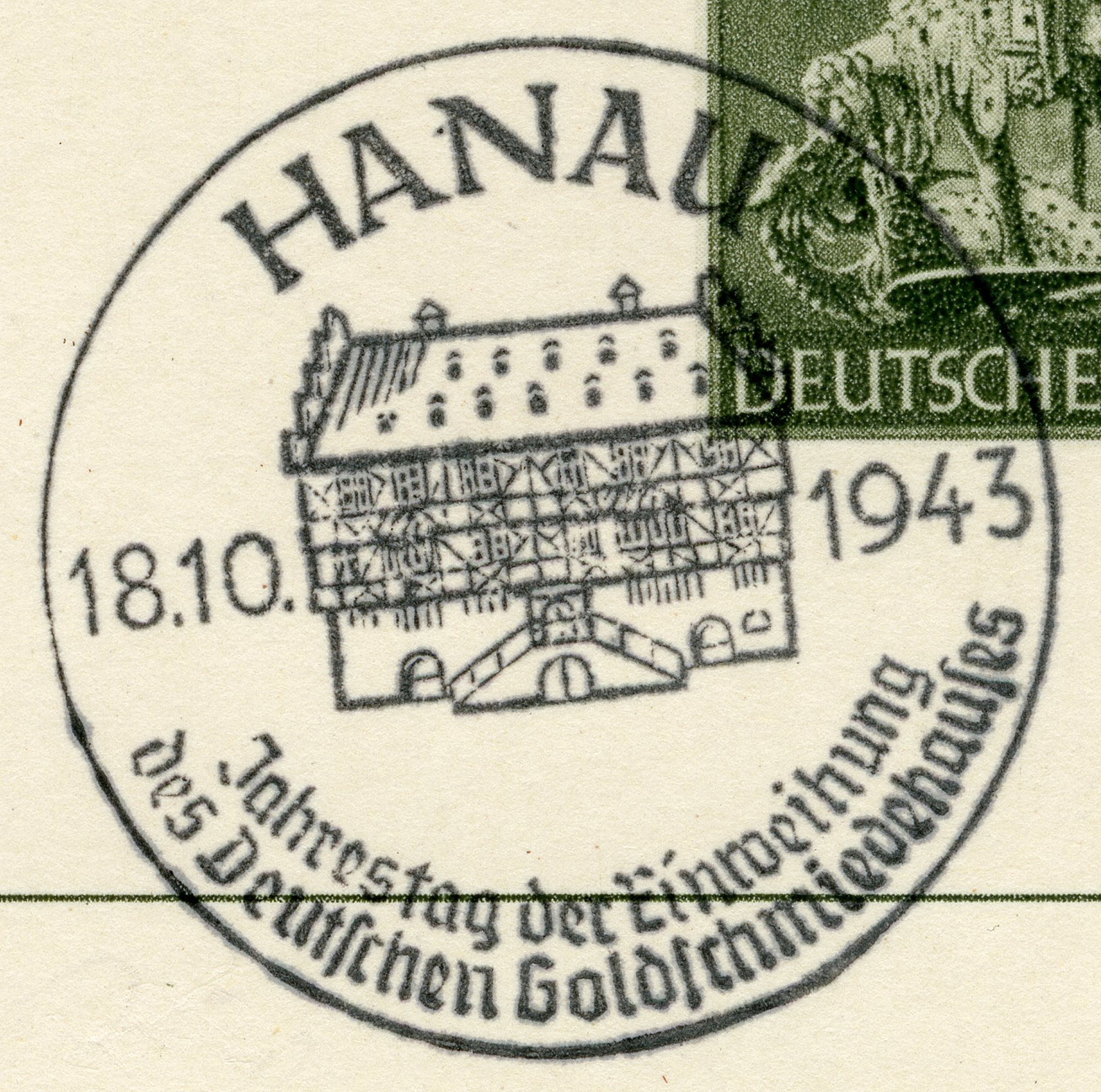
[Below: Here is a very cool large envelope, canceled in August 1942 and sent to Zittau (a German state in Saxony). It utilizes strips of stamps called 'se-tenants' and tęte-bęche. This is philatelic, you can tell by its neat design and the usage of way over the value of stamps that were needed to send this.]

[Below: Back.]


[Below: Here's an envelope with an Adolf Hitler tęte-bęche, canceled on November 12, 1941. The strange lines in the middle of the Hitler stamps are meant to be covered when it was folded and put into a stamp booklet. Originally they came in sheets, however, and a stamp collector probably got a hold of one and added it. Yet oddly it doesn't really look philatelic, it is messy, but who knows?]

[Below: Here's an example of a sheet of stamps before being made into a stamp booklet.]

[Below: An envelope canceled on September 19, 1938 showing s se-tenant and a tęte-bęche.]

[Below: Cancel close-up.]

[Below: An envelope canceled on January 10, 1937 showing two se-tenants. This was sent to Switzerland from Leipzig.]

[Below: Reverse.]

[Below: An envelope canceled on October 2, 1941 showing a se-tenant, which says 'Unterstützt die N.S.=Volks=Wohlfahrt!' (Support the N.S.=People's Welfare!)]

[Below: This is strange and interesting, I've never seen this. This will look very boring to most of you, but to a collector it is interesting. Notice the dark 'blank stamps' above the postage stamp, instead of being white, the same color as the stamp paper, like usual, it is dark. This is called a 'coil leader', because it was from a roll of stamps. Imagine a roll of tape, the last bit is unusable, stuck to the cardboard spindle. For reasons you can imagine, this is very rare to find, especially on an envelope with a correct rate. This was canceled on November 13, 1933.]

[Below: Close-up.]

[Below: Reverse.]

[Below: This postcard was sent with a label attached to the stamp. It says: 'Glückwünsche durch Schmuckblatt-telegramm!' (Congratulations through ornamental sheet telegram!). It was postmarked in Karlsruhe on February 23, 1942.]

[Below: Close-up.]

[Below: Reverse.]

[Below: Strangely, this unaddressed envelope was canceled in Berlin on December 20, 1938 and Okahandja (a town in what is now known as Namibia), Southwest Africa on January 2, 1939. The reverse (technically the front) is blank.]

[Below: Here's another example from the 1920s showing se-tenants and tęte-bęche types.]

[Below: Here's an example showing a se-tenant, postmarked on January 30, 1941.]

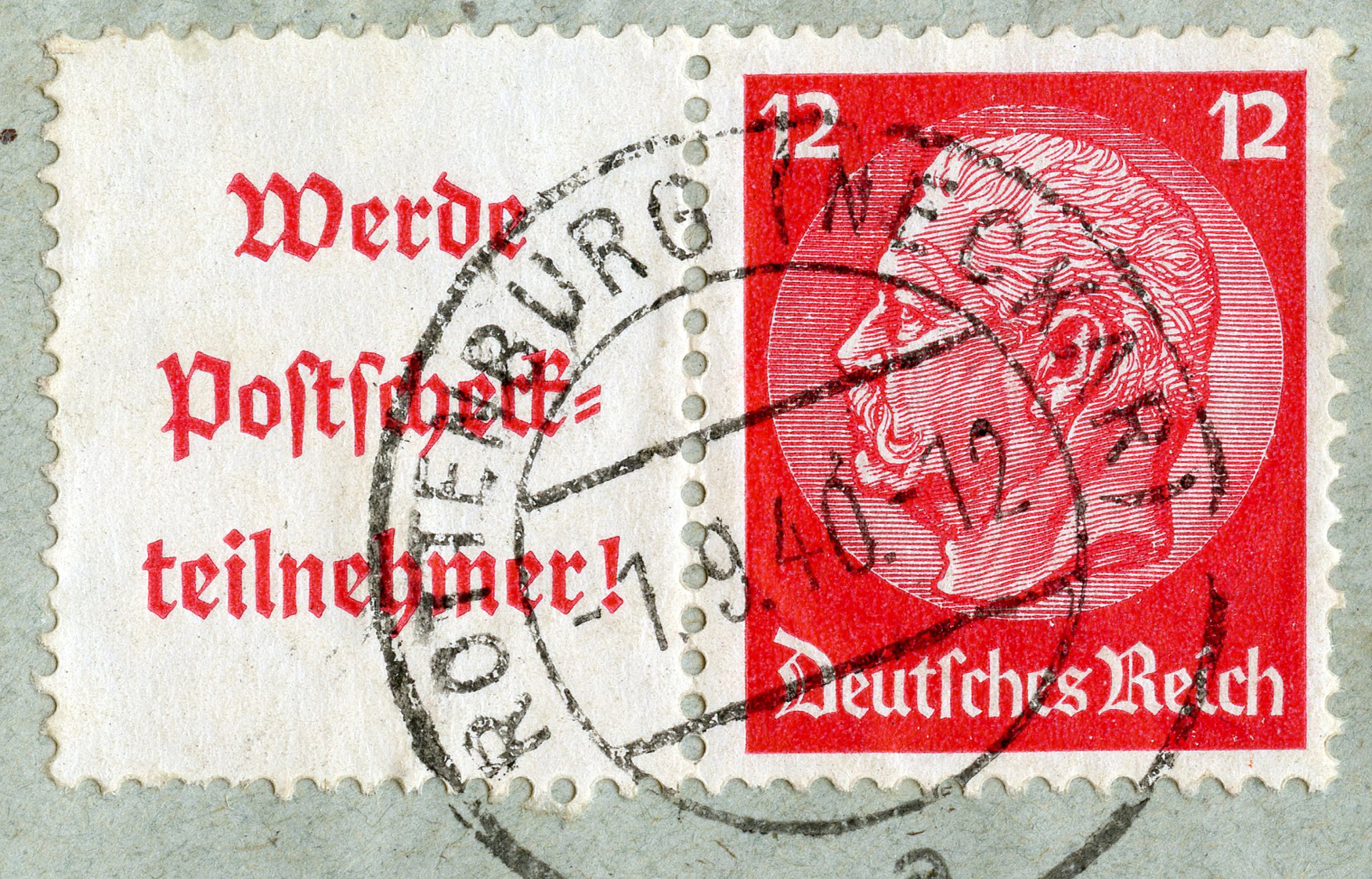
[Below: Here's an example showing a se-tenant, postmarked on September 1, 1940.]
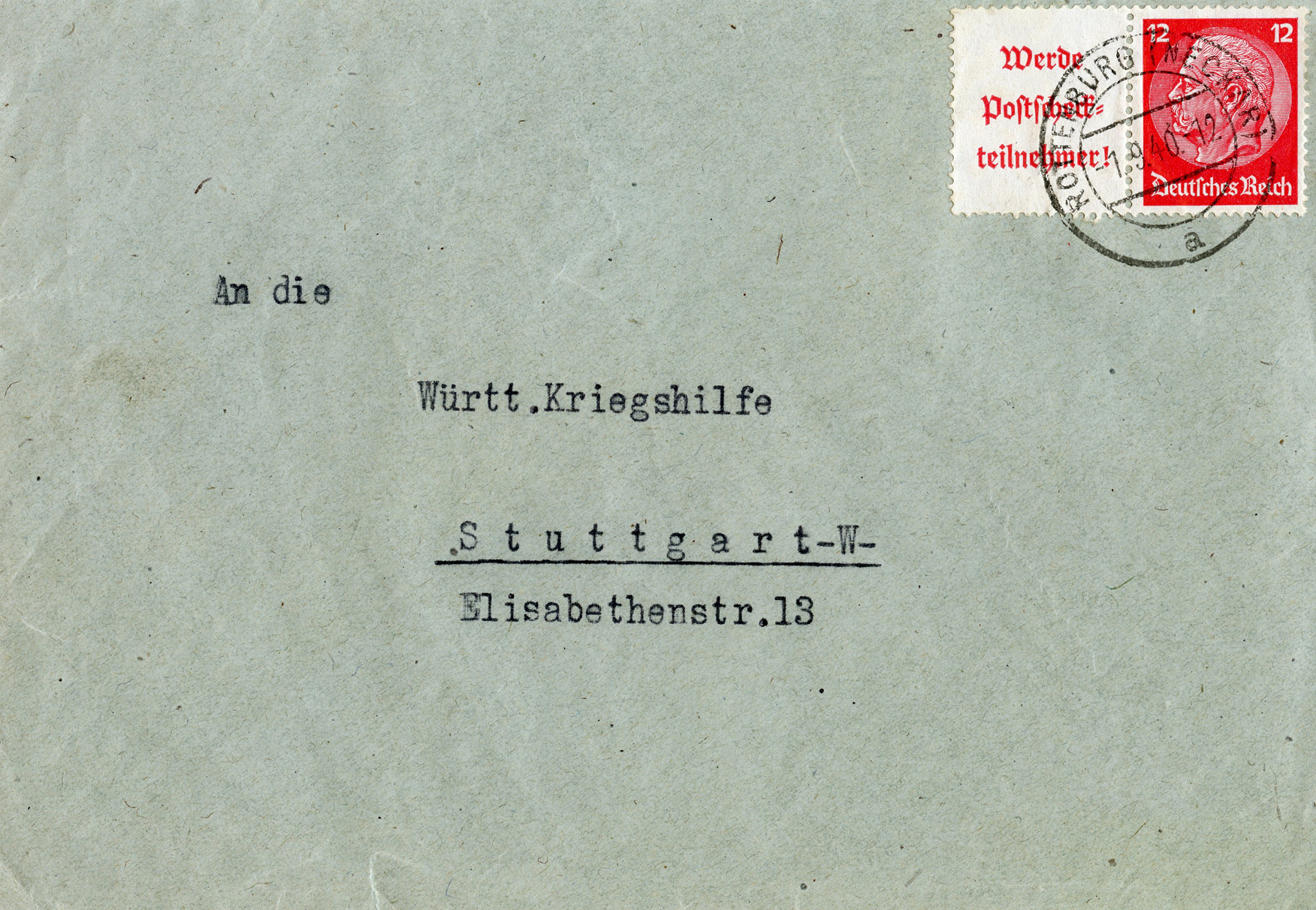
[Below: Close-up.]
[Below: Here's an example showing a se-tenant, postmarked on July 3, 1941.]
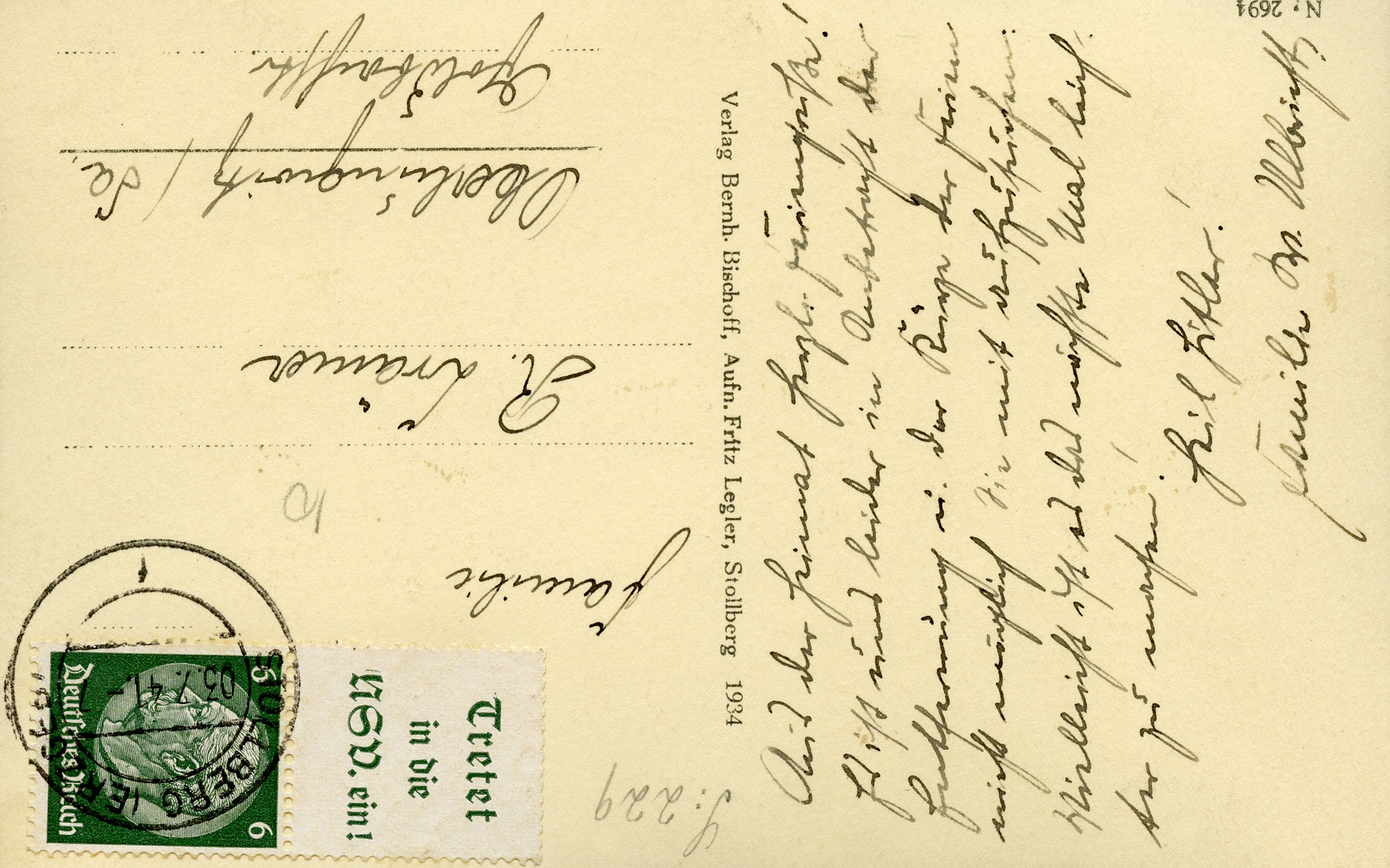
[Below: Close-up.]
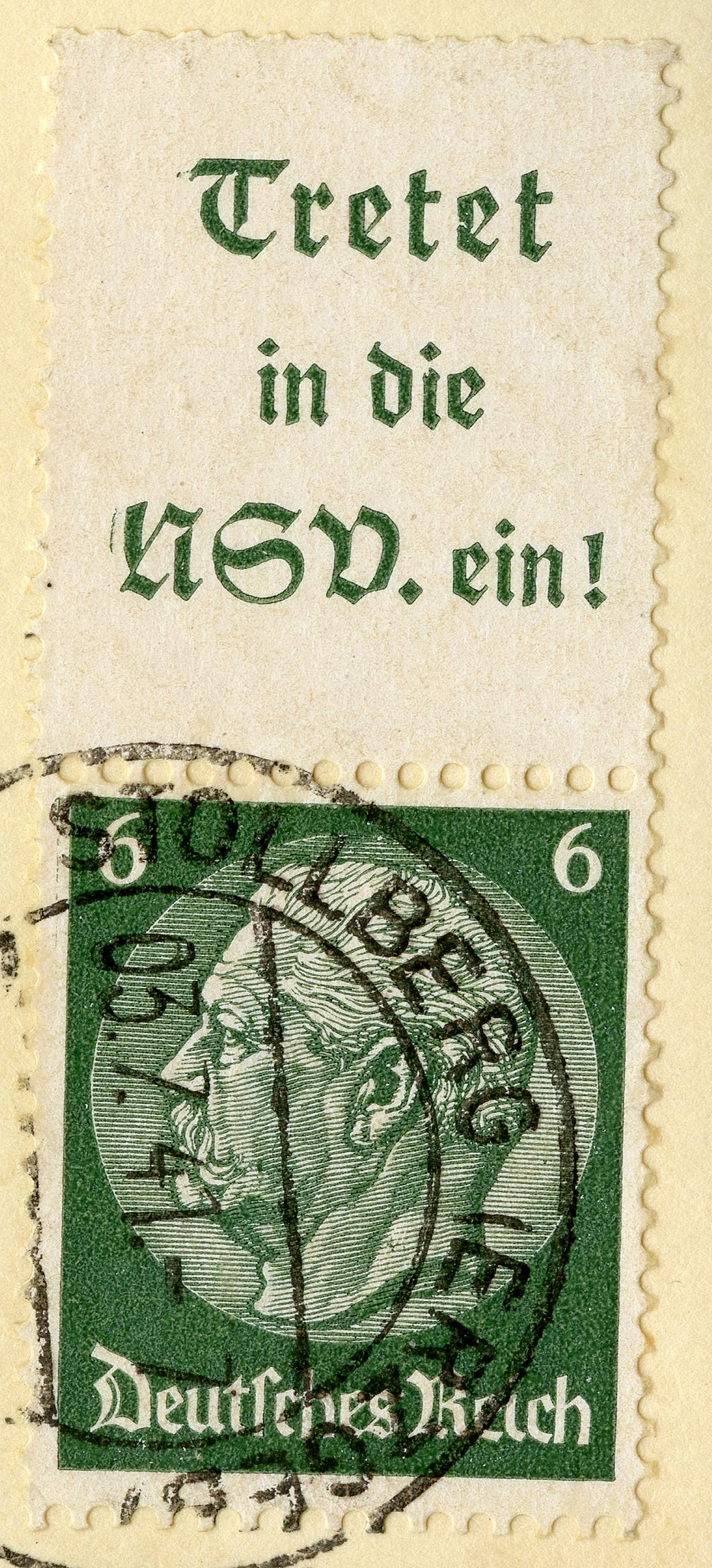
[Below: Reverse.]
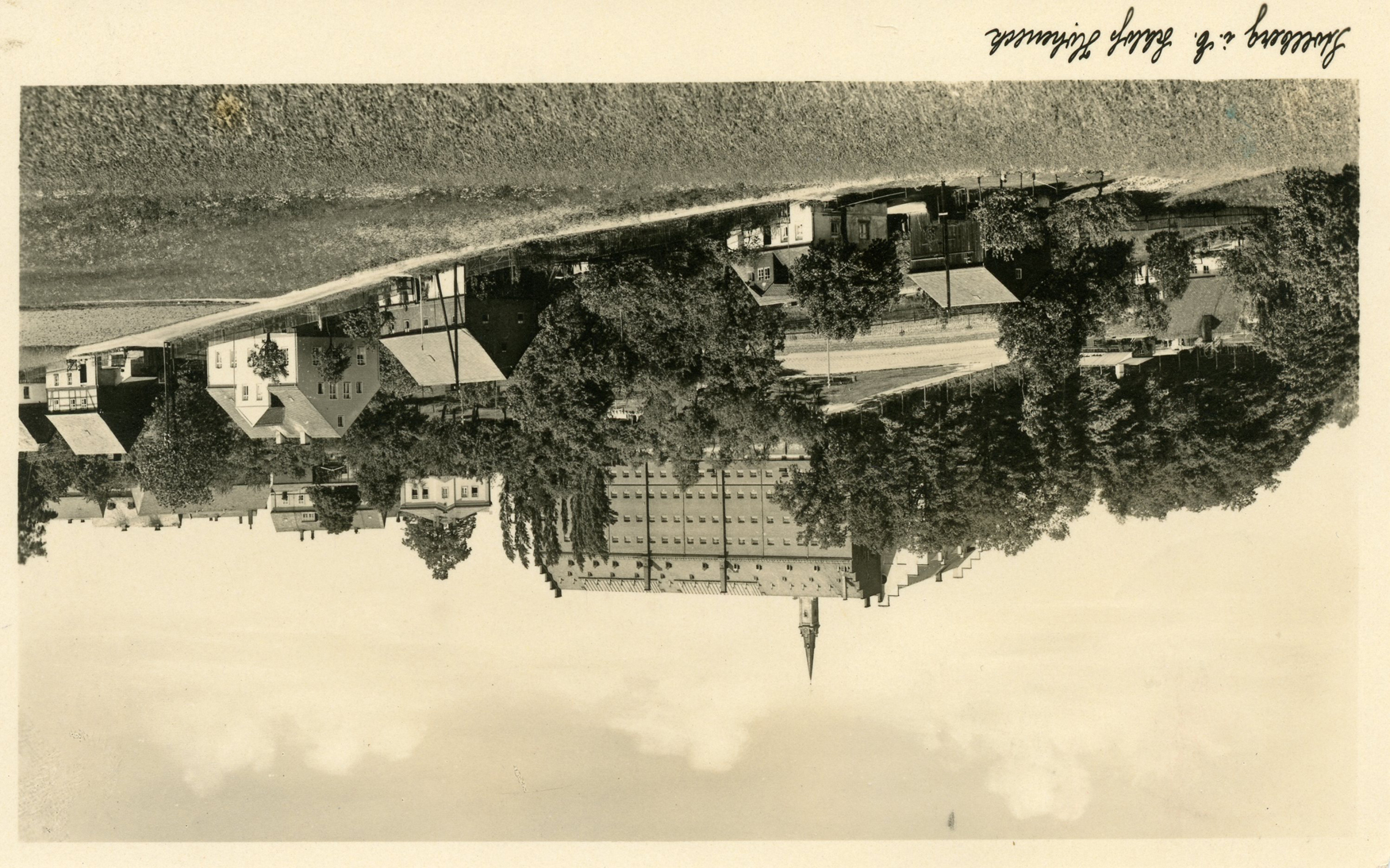
[Below: Here's an example showing a se-tenant, postmarked on February 8, 1942.]
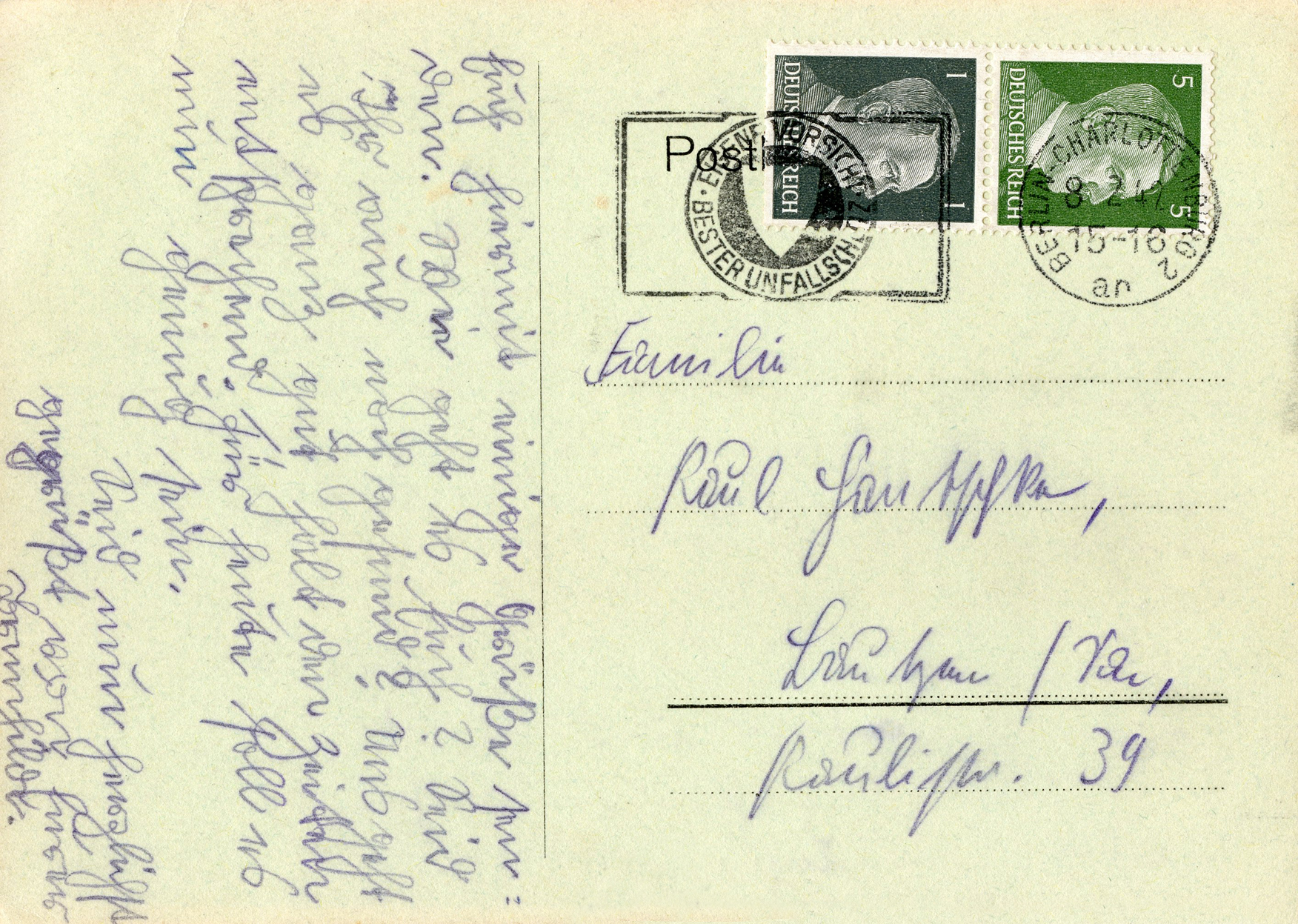
[Below: Close-up.]
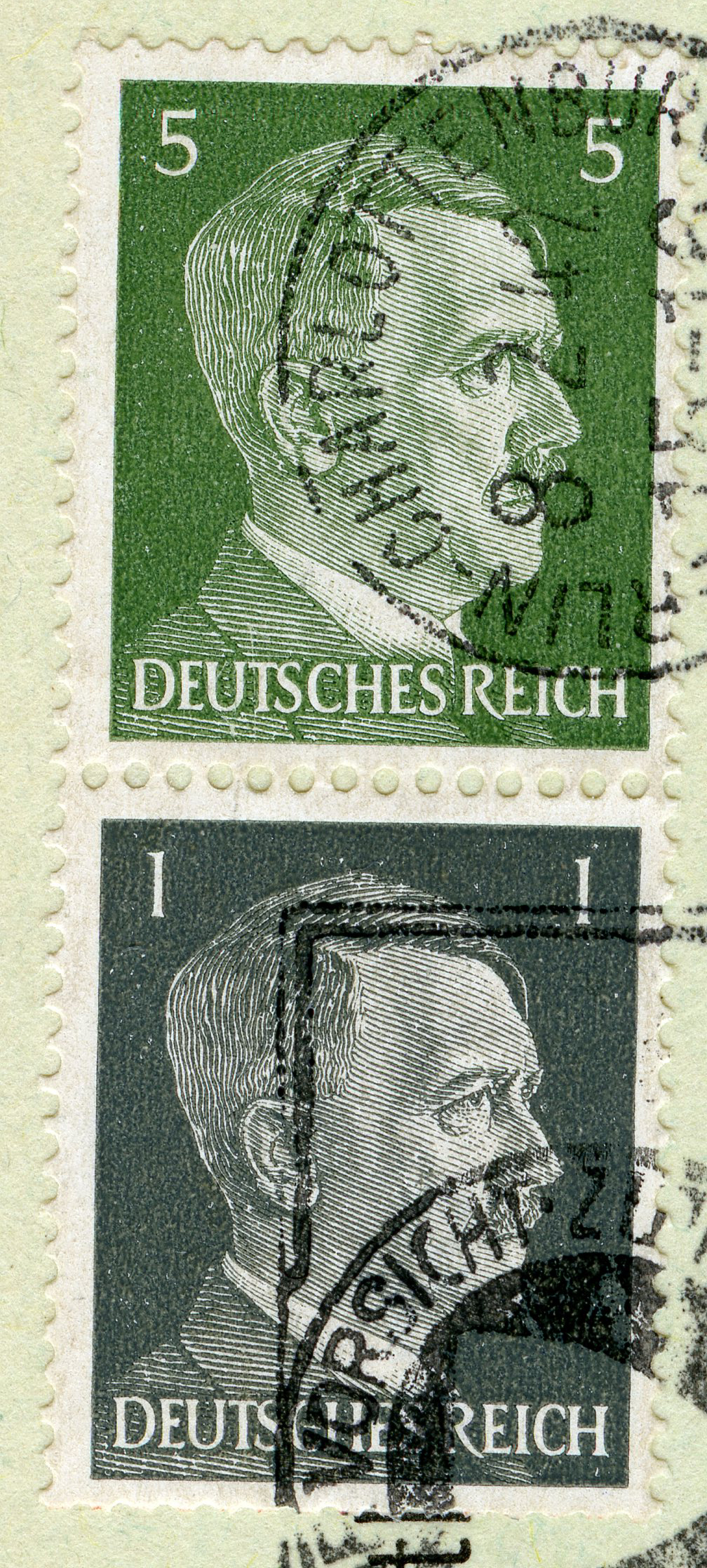
[Below: Reverse.]
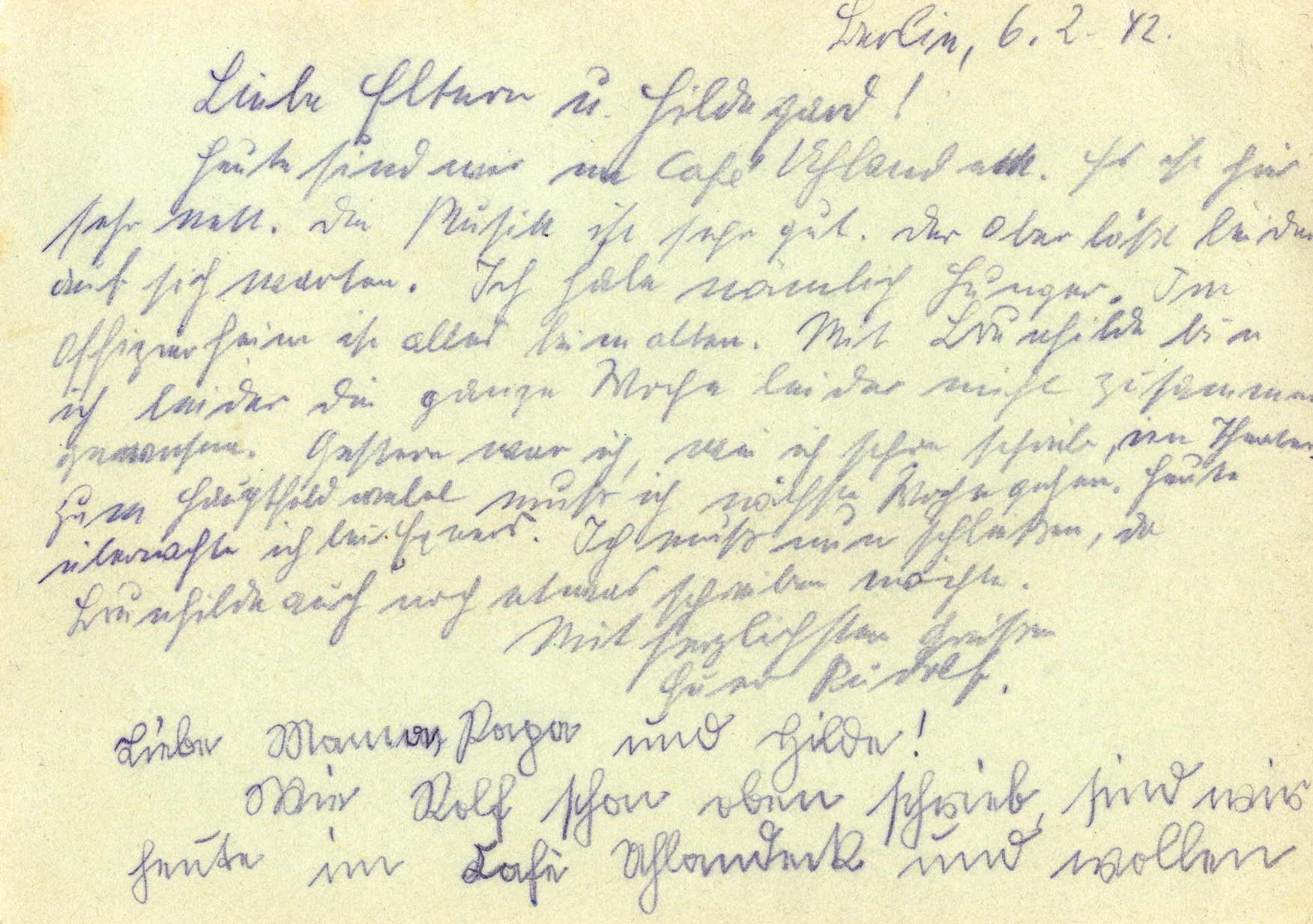
[Below: Here's an example showing a se-tenant, postmarked on May 2, 1942.]
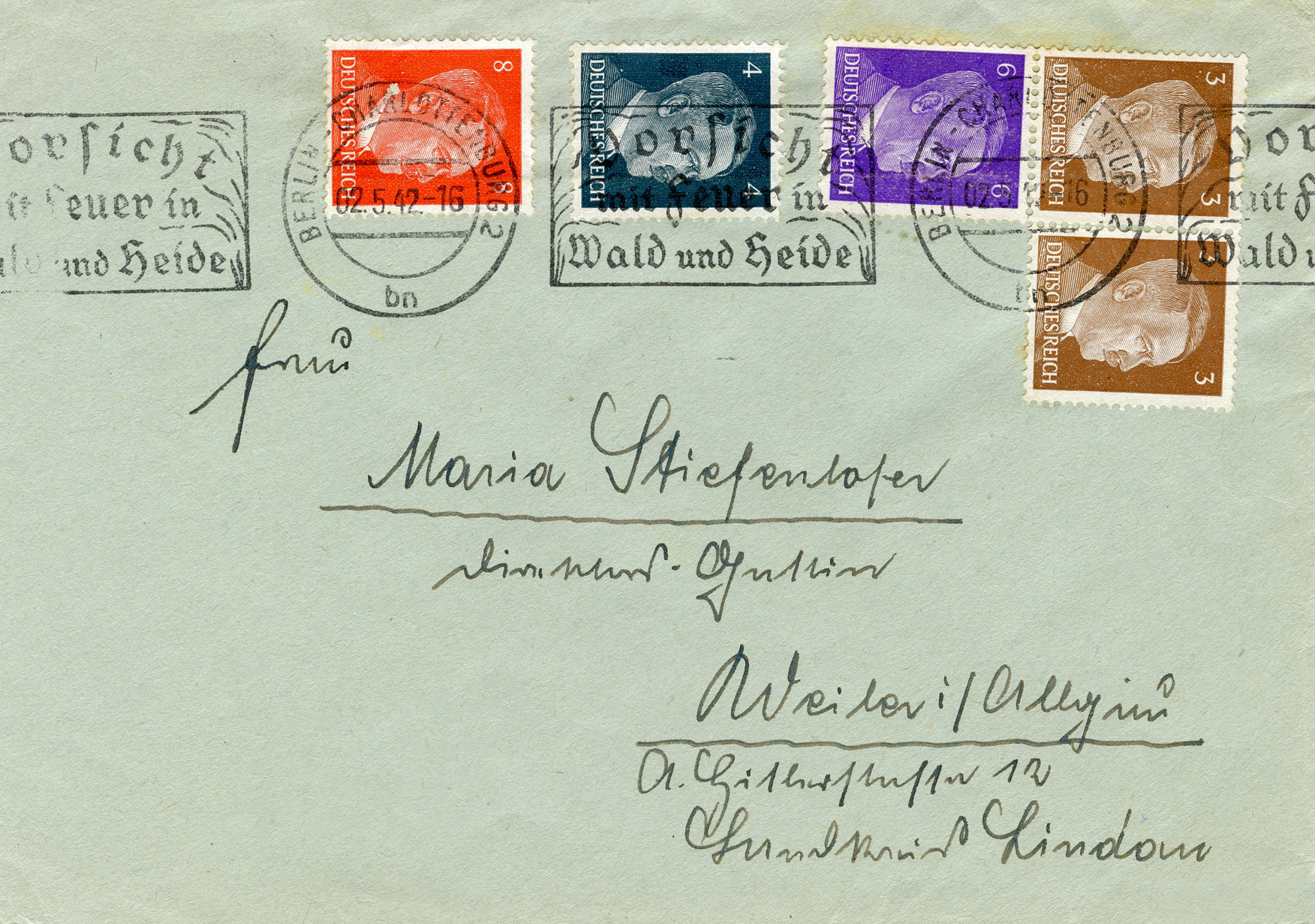
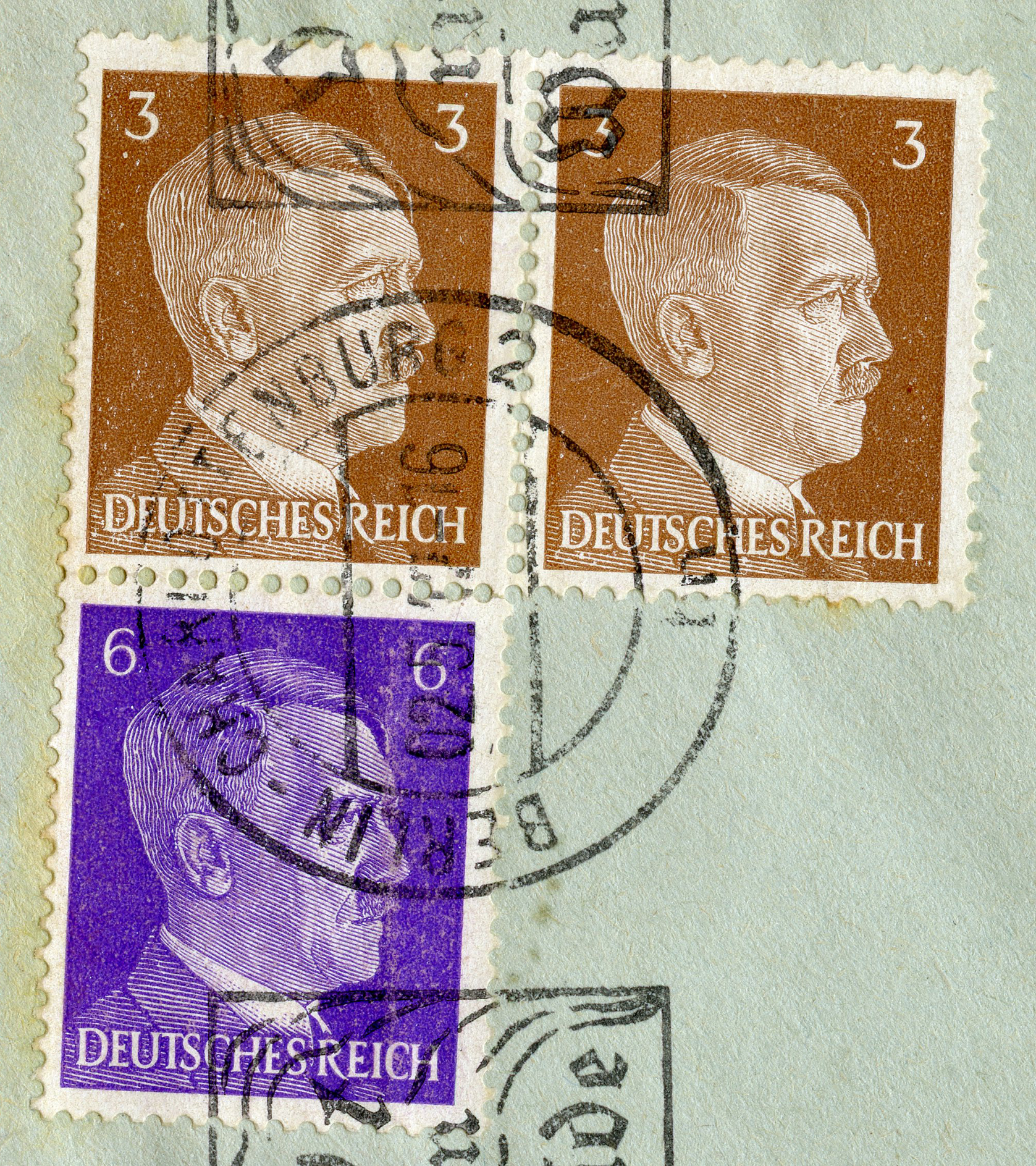
[Below: Close-up.]
[Below: Here's an example showing se-tenants, postmarked on June 5, 1942.]
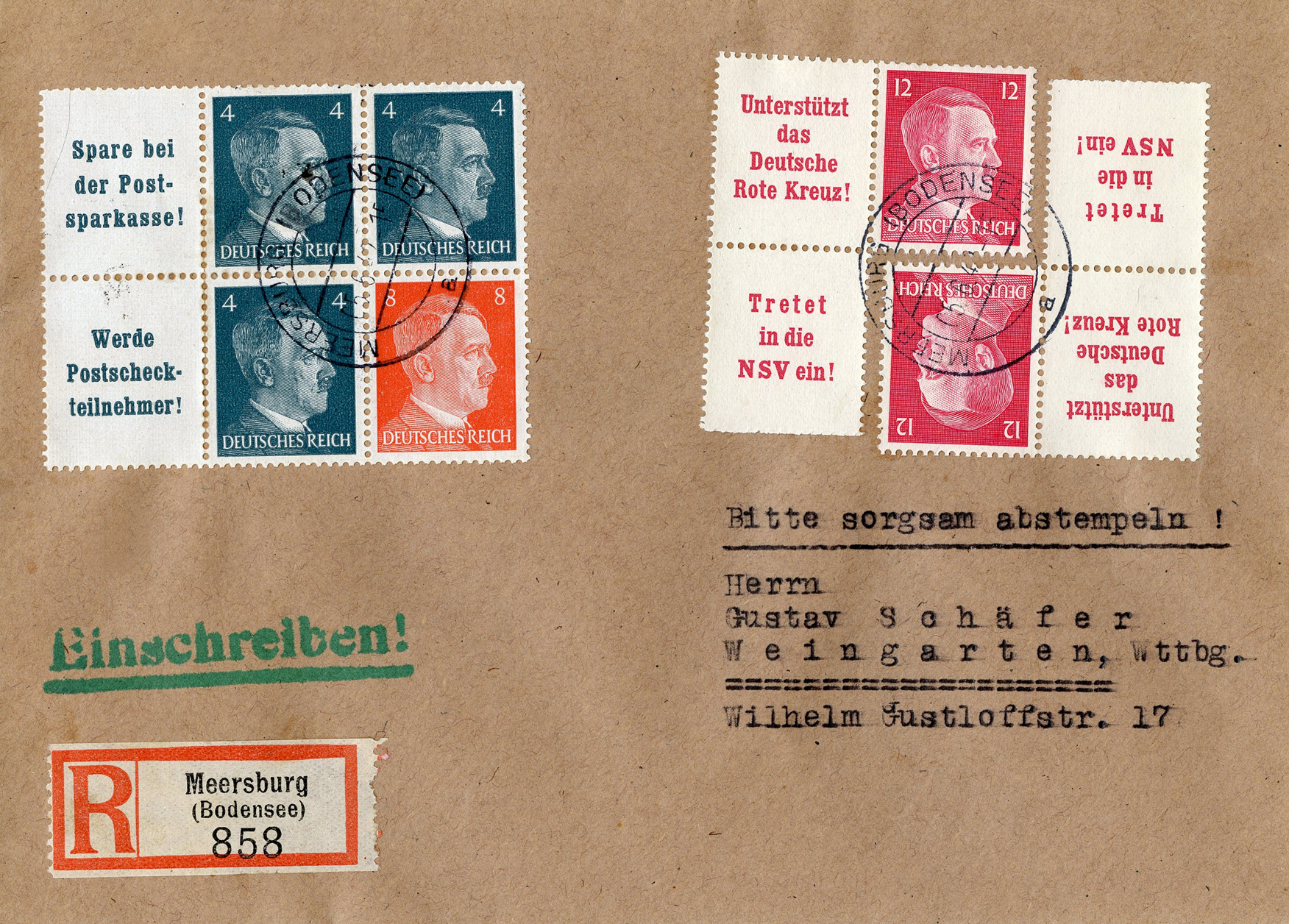
[Below: Close-up.]
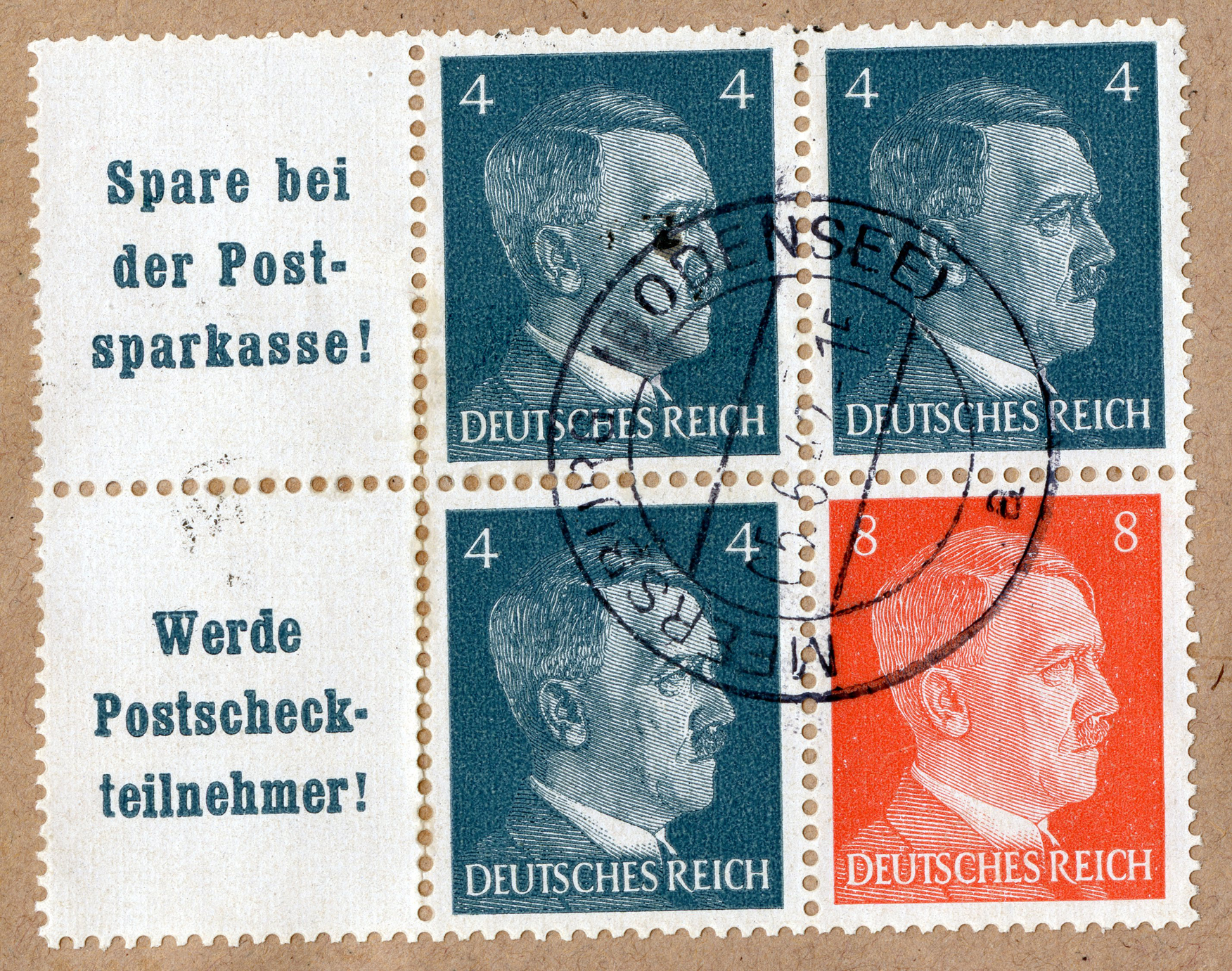
[Below: Close-up.]
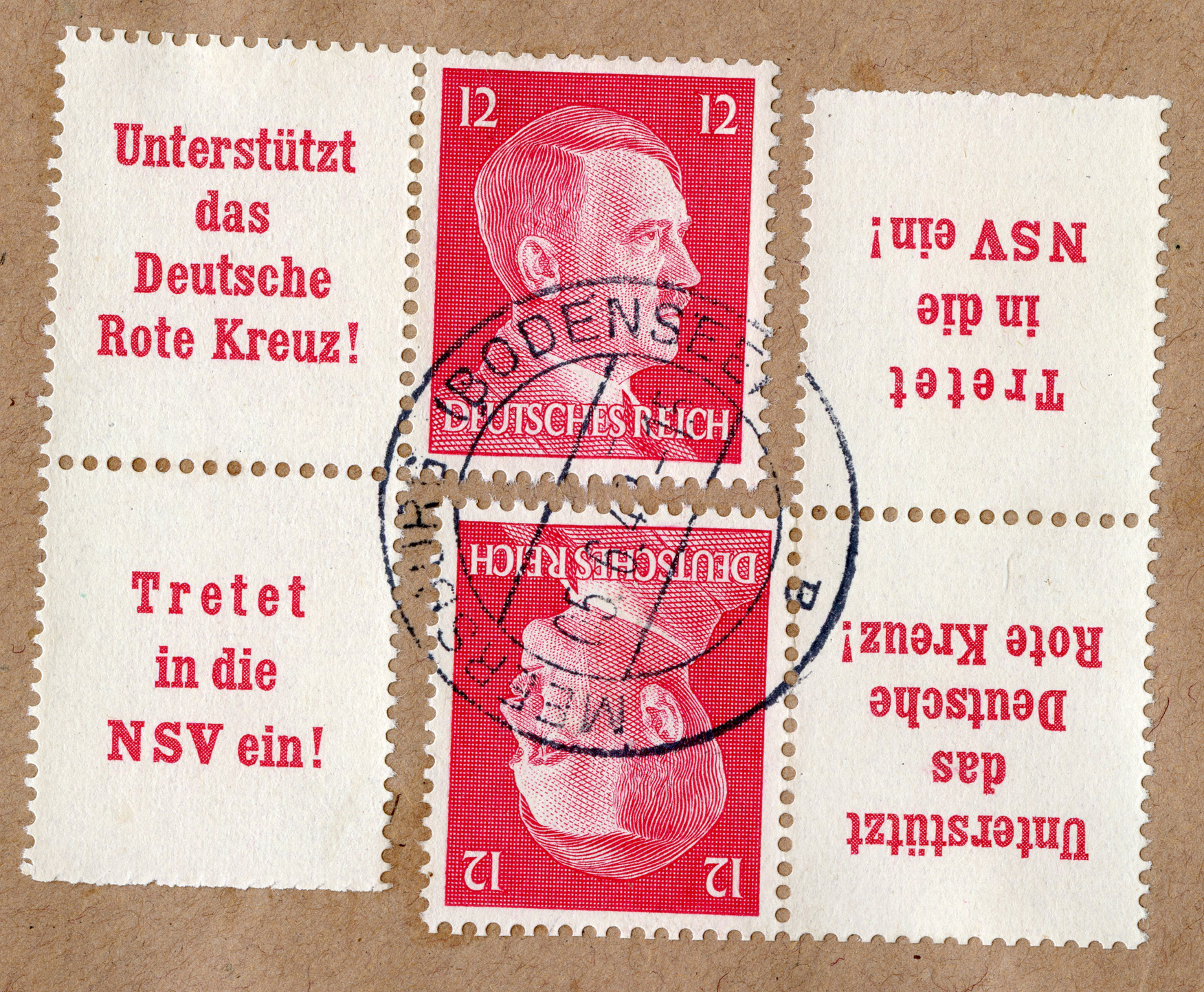
[Below: Reverse.]
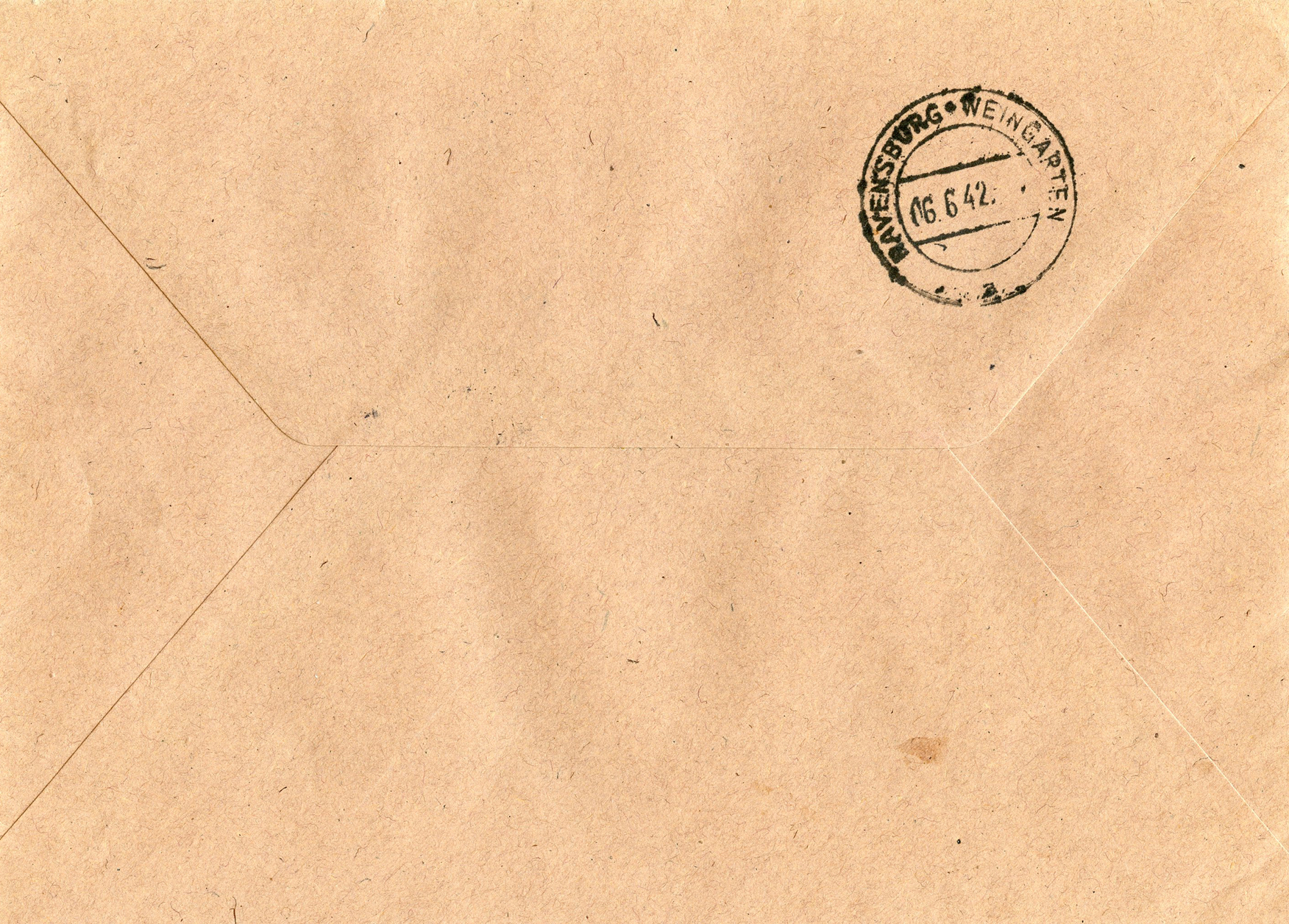
[Below: Here's an example showing a se-tenant, postmarked on February 24, 1942.]
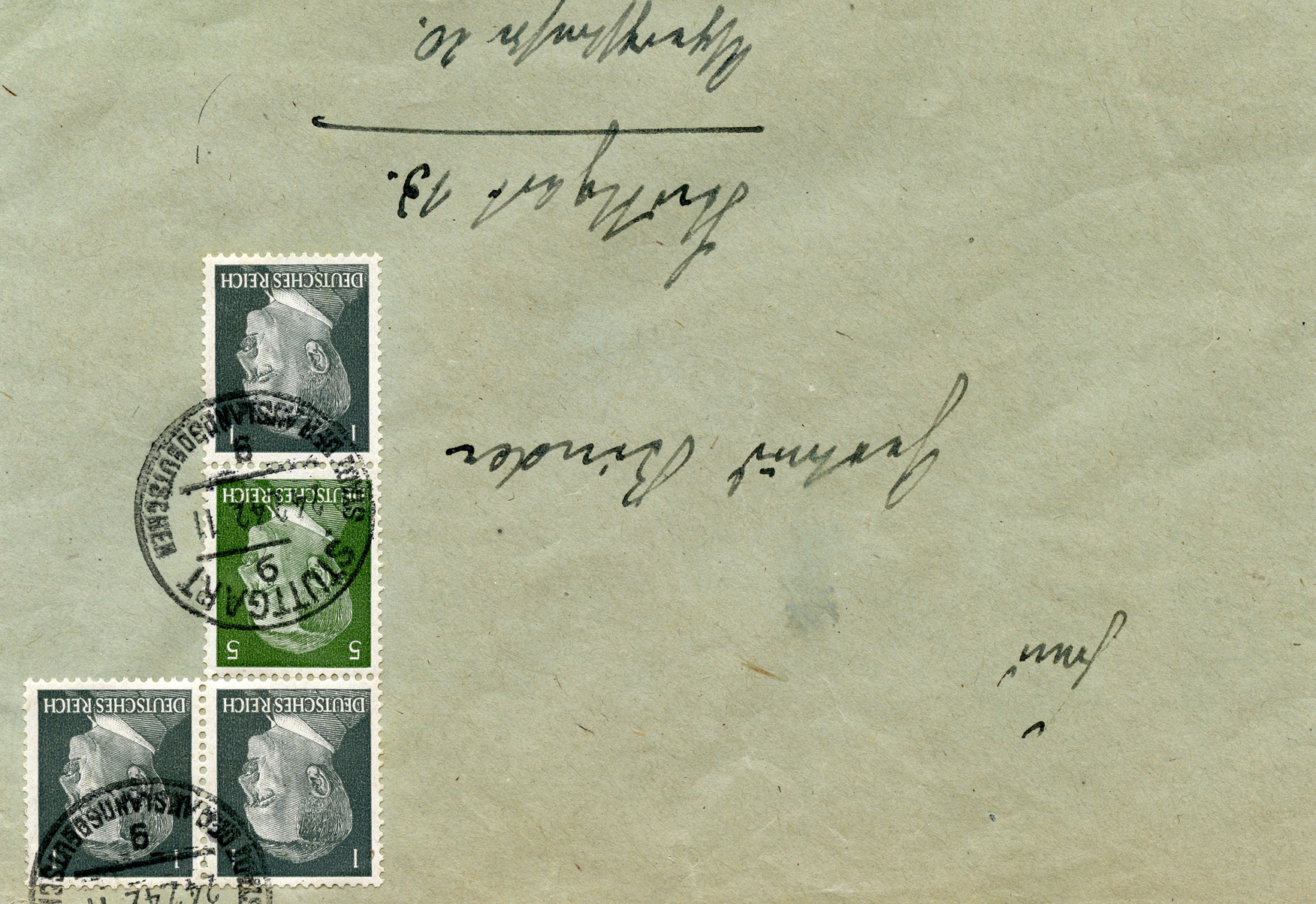
[Below: Close-up.]
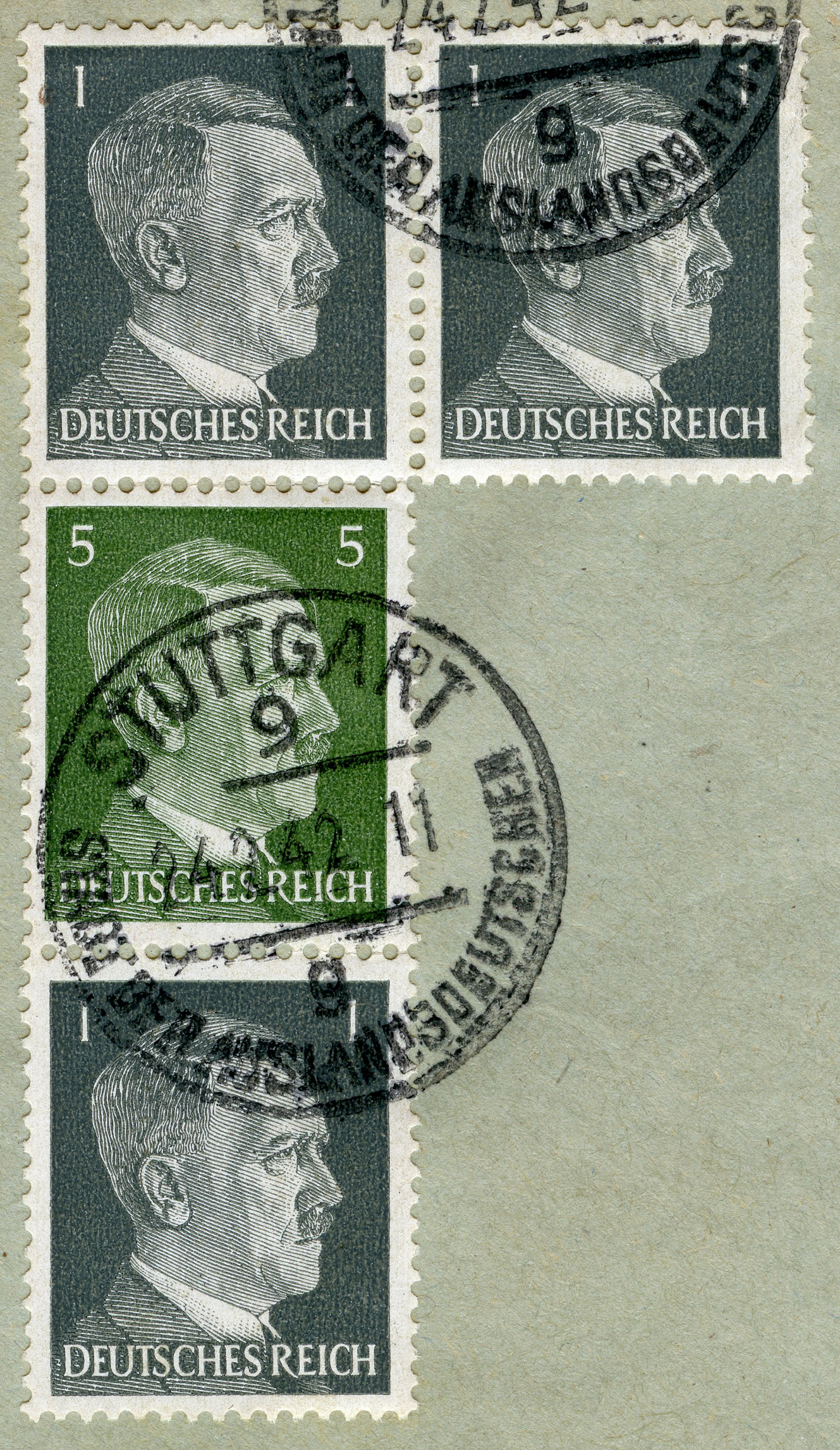
[Below: Here's an example showing a se-tenant, postmarked on January 27, 1942.]
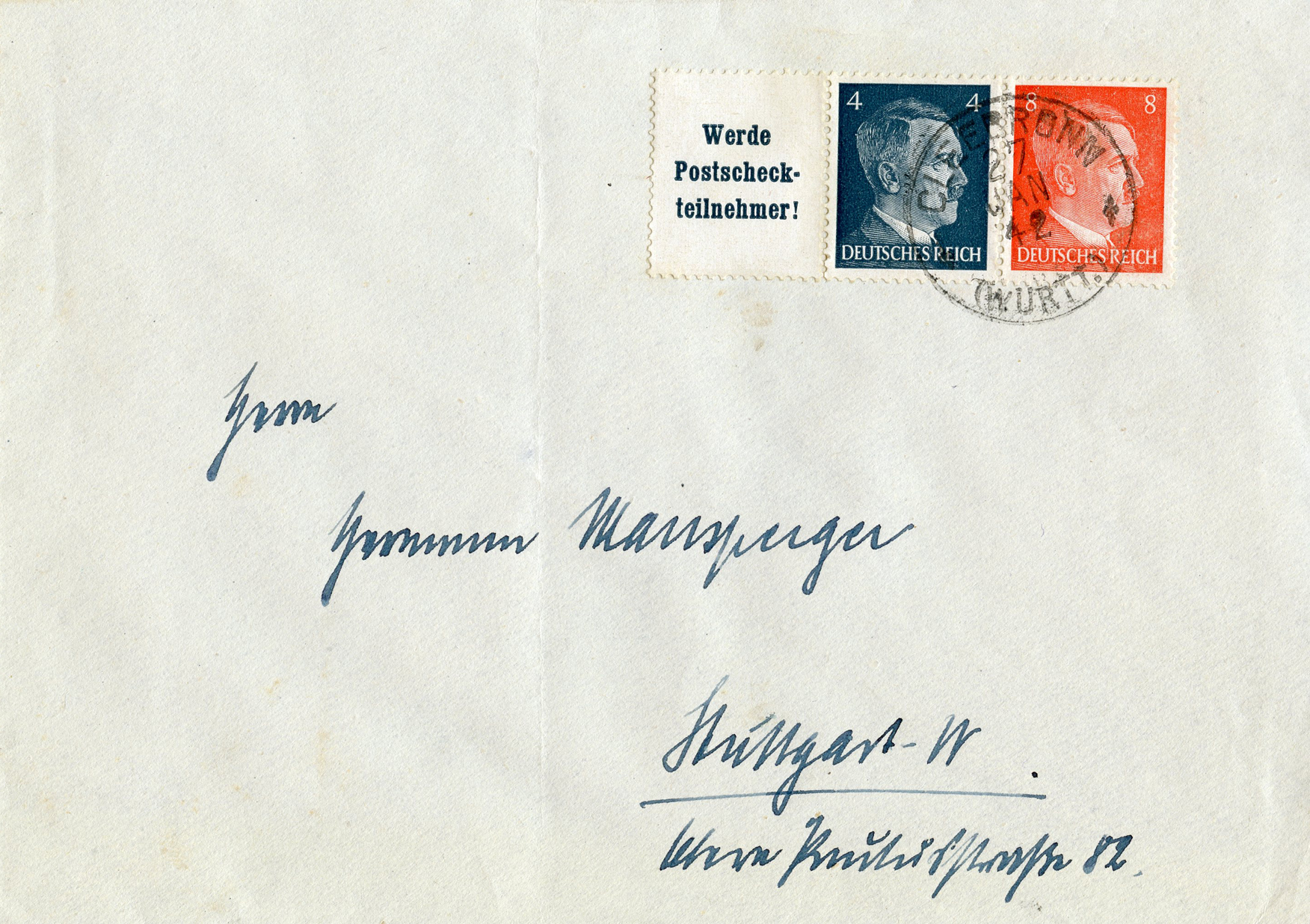
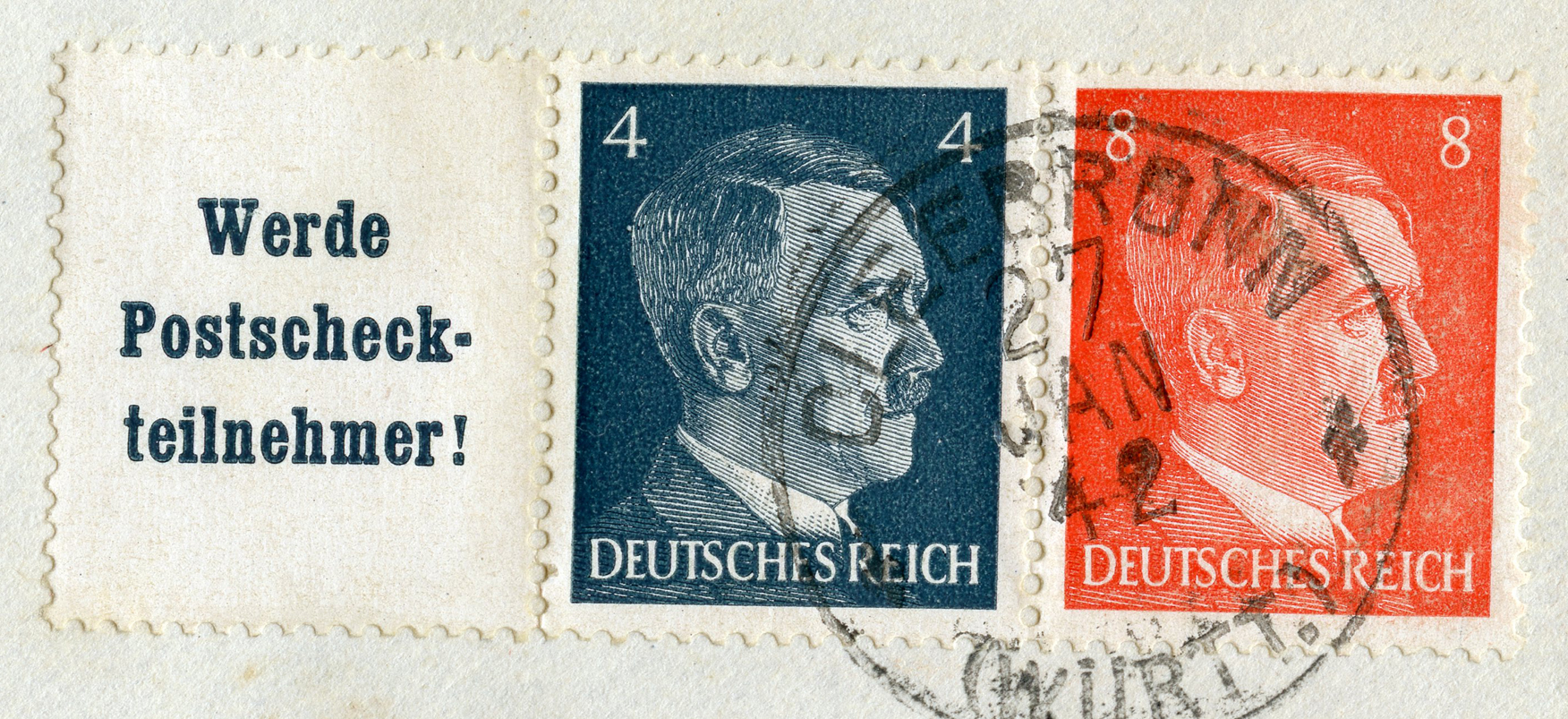
[Below: Close-up.]
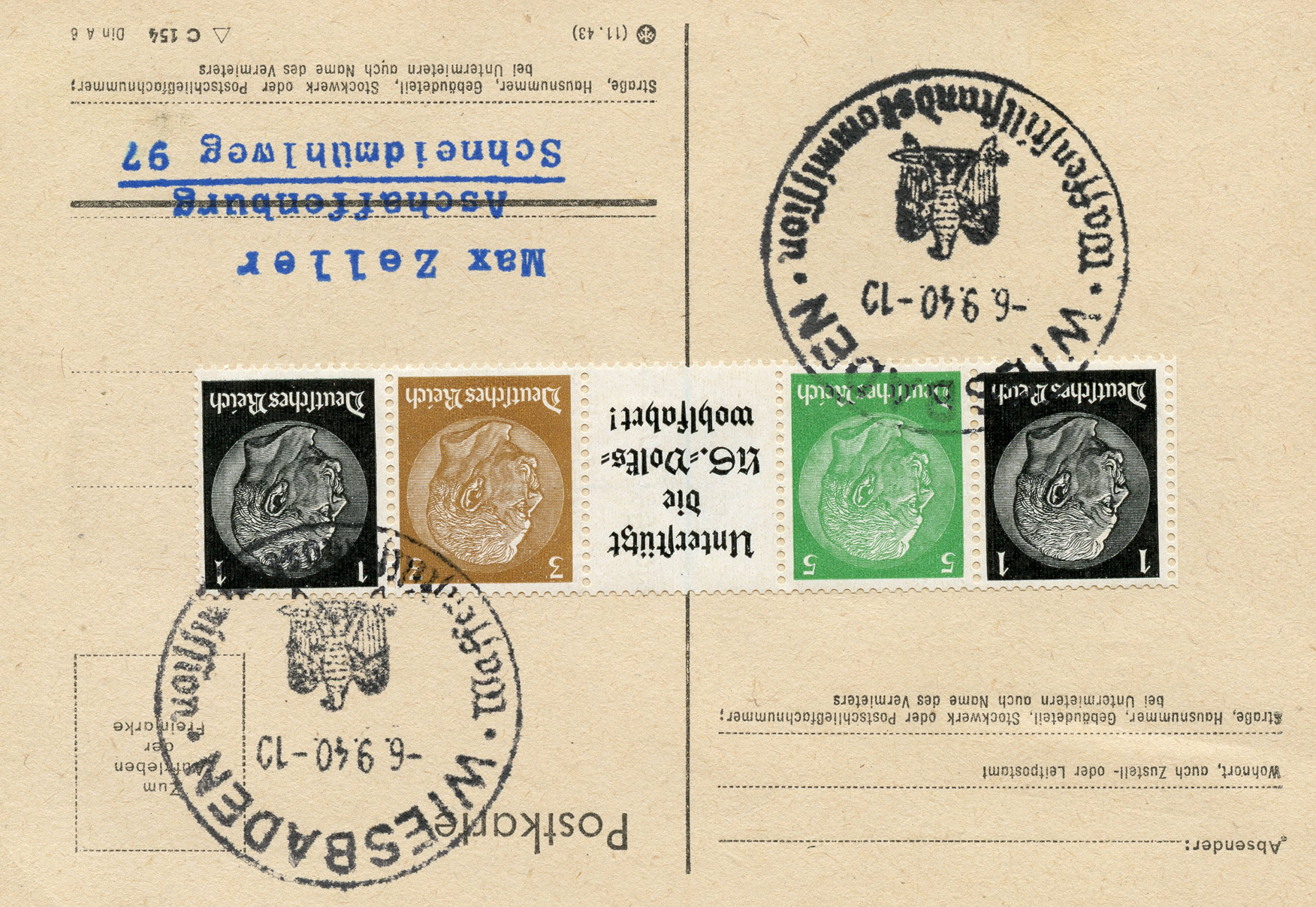
[Below: Here's an example showing a se-tenant, postmarked on September 6, 1940.]
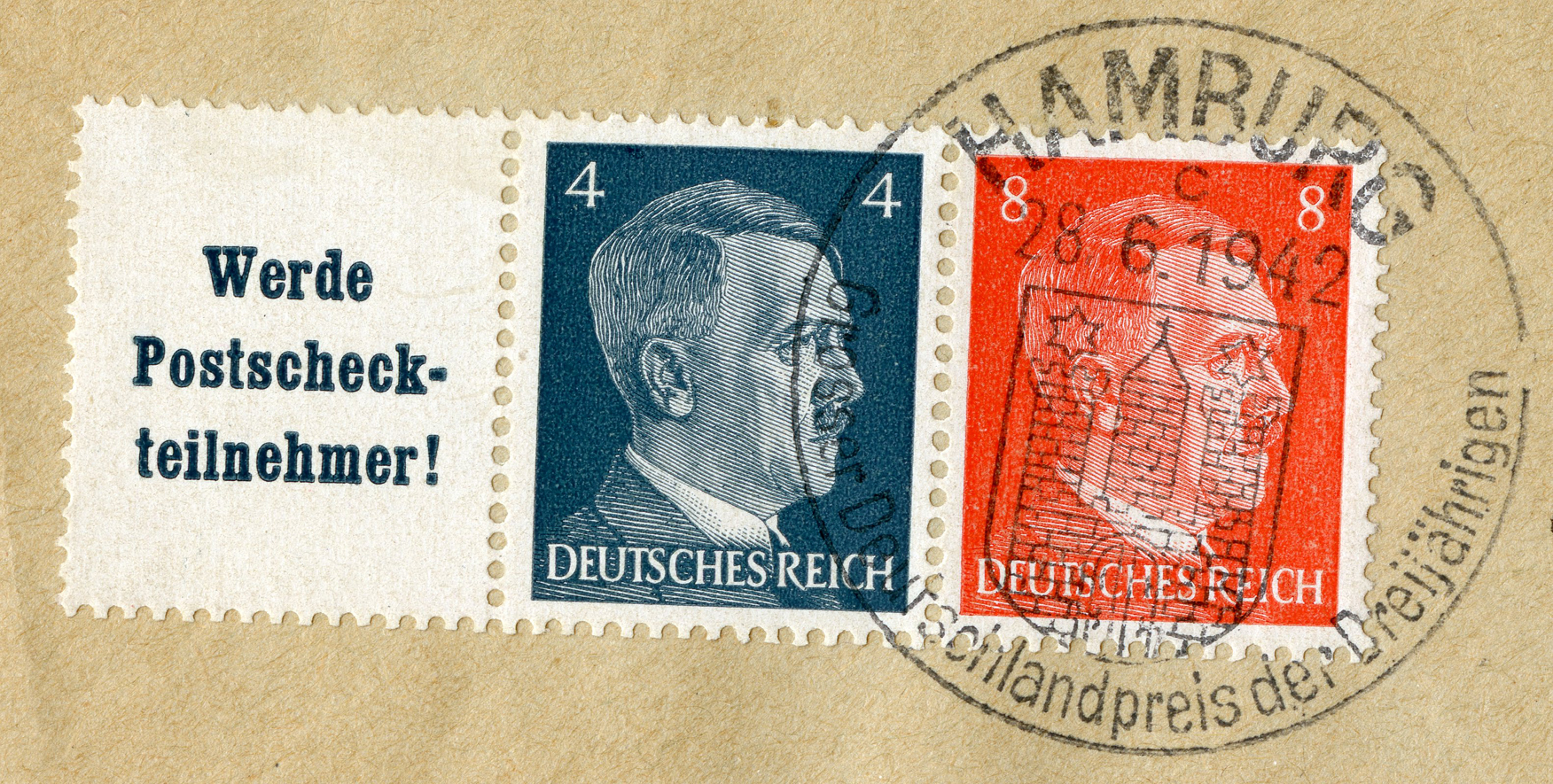
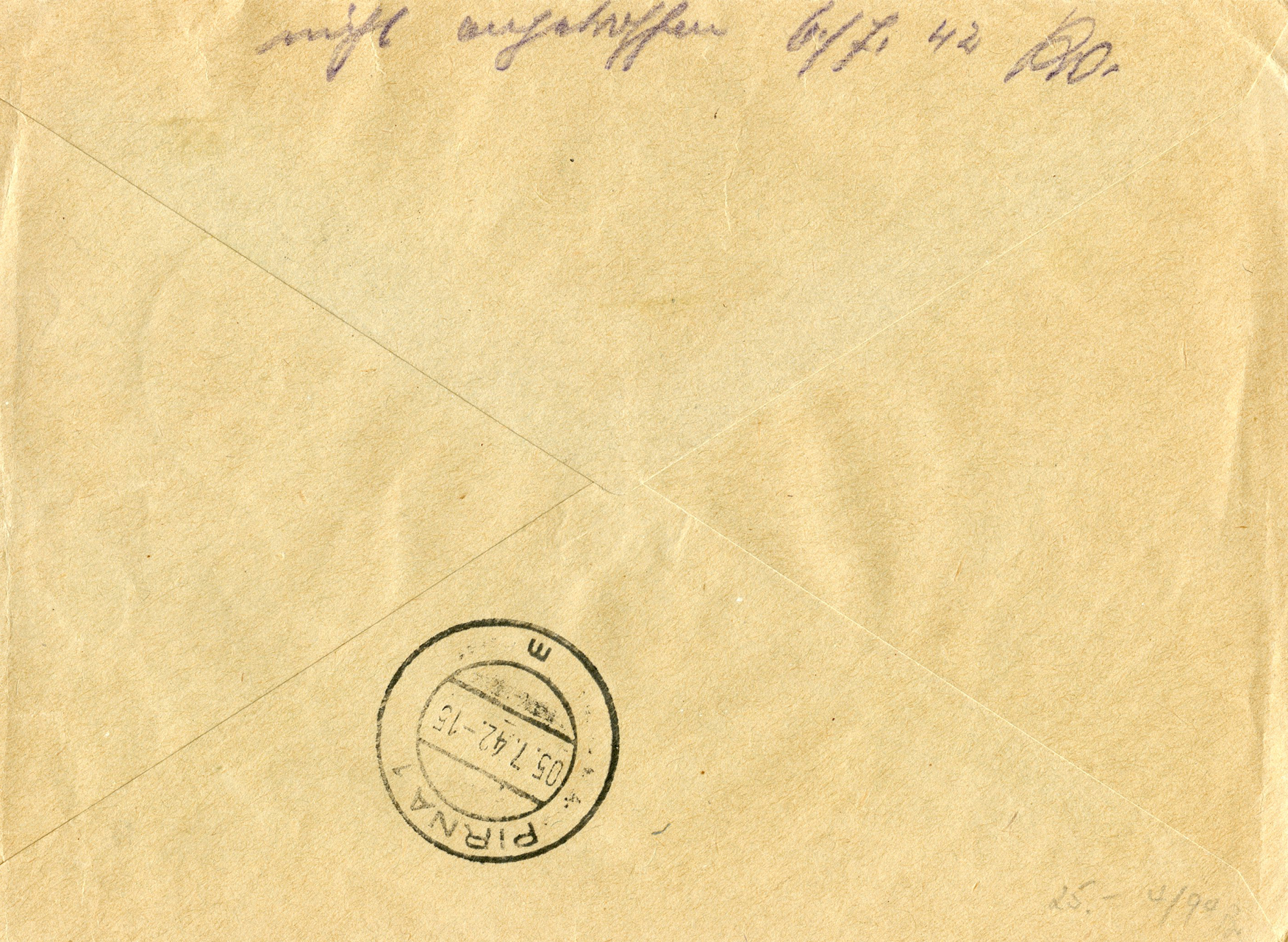
[Below: Here's an example showing a se-tenant, postmarked on June 28, 1942.]
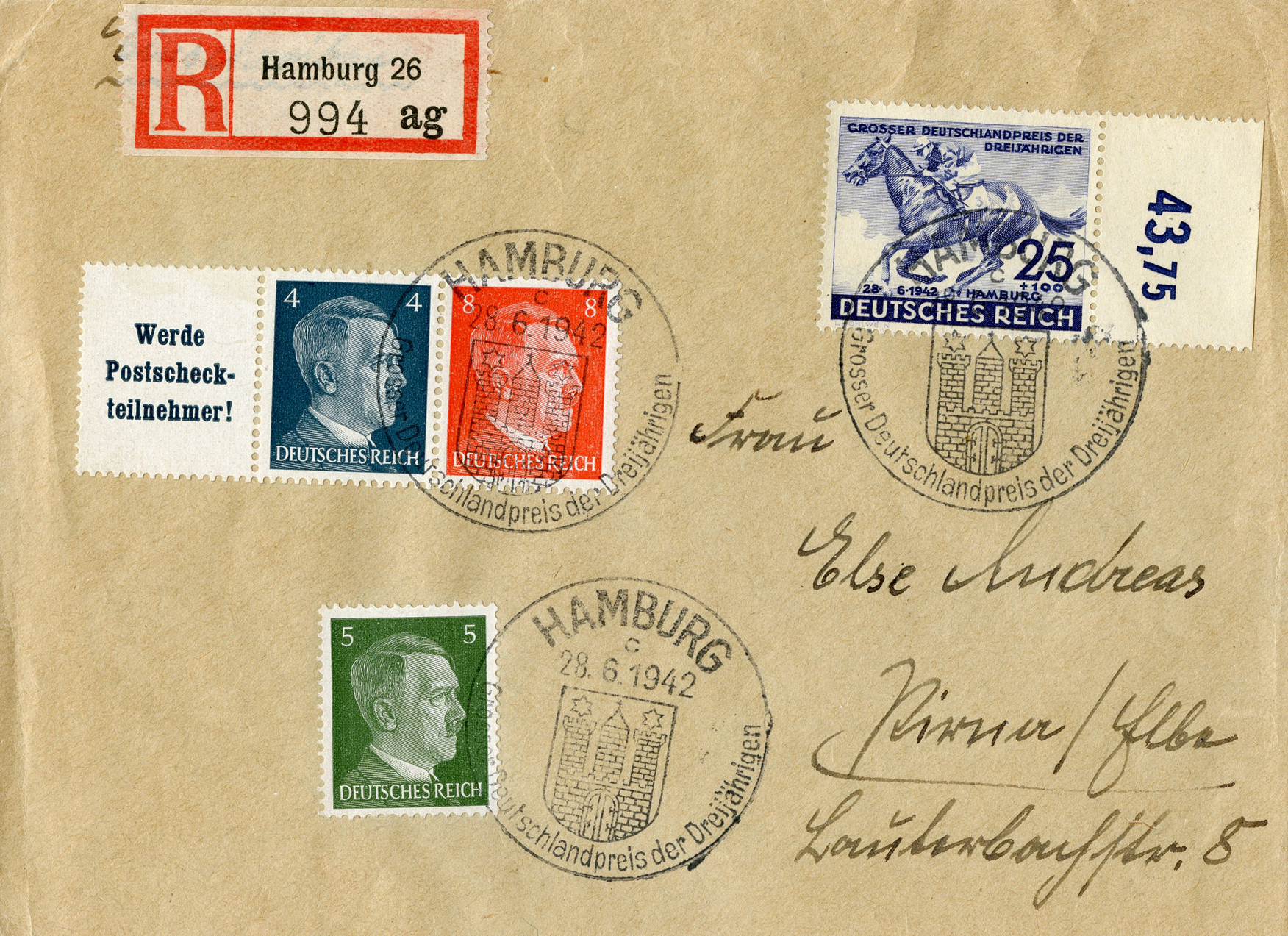
[Below: Close-up.]
[Below: Reverse.]
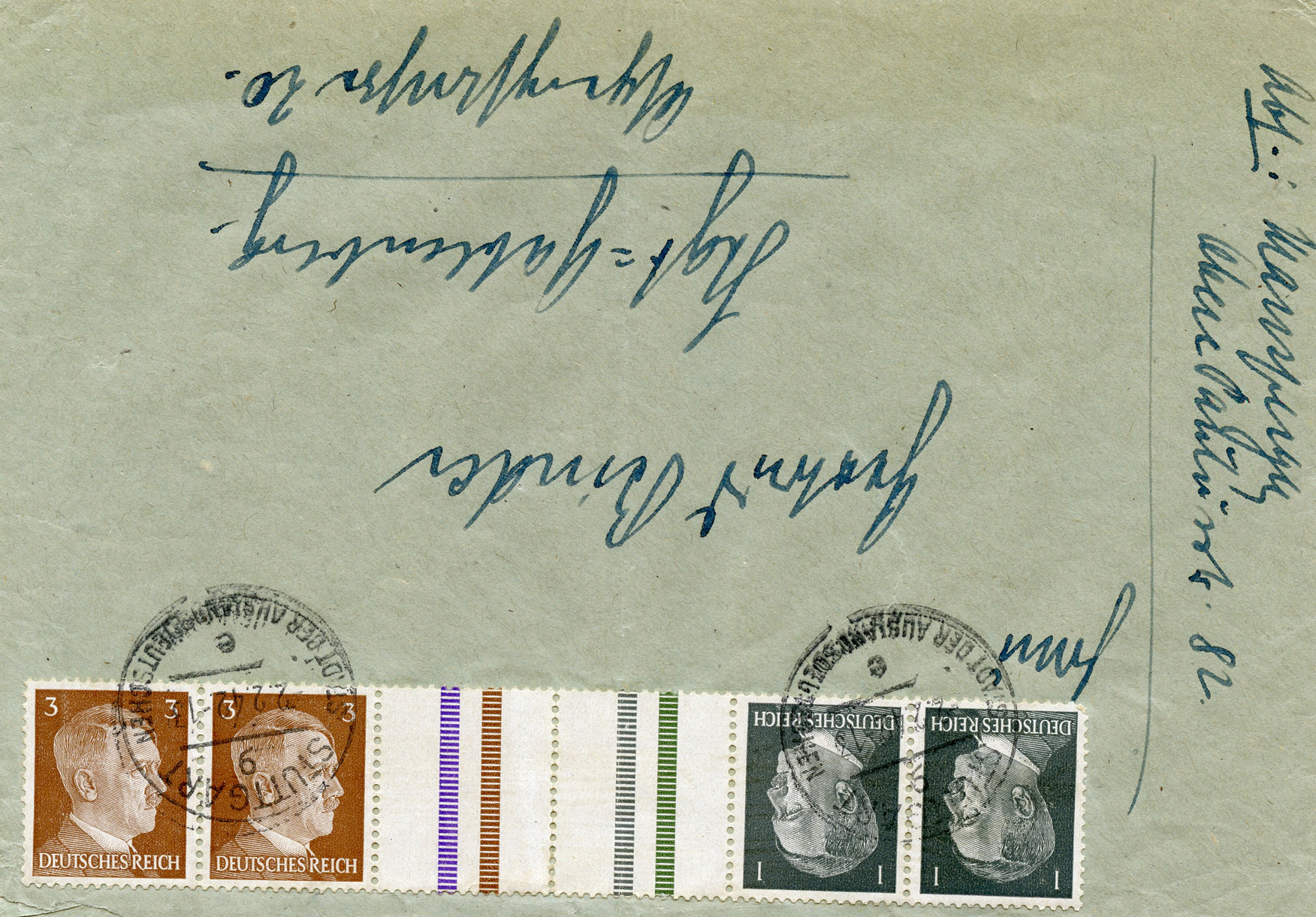
[Below: Here's an example showing a tęte-bęche (a joined pair of stamps in which one is upside-down in relation to the other), postmarked on February 2, 1942.]
[Below: Close-up.]
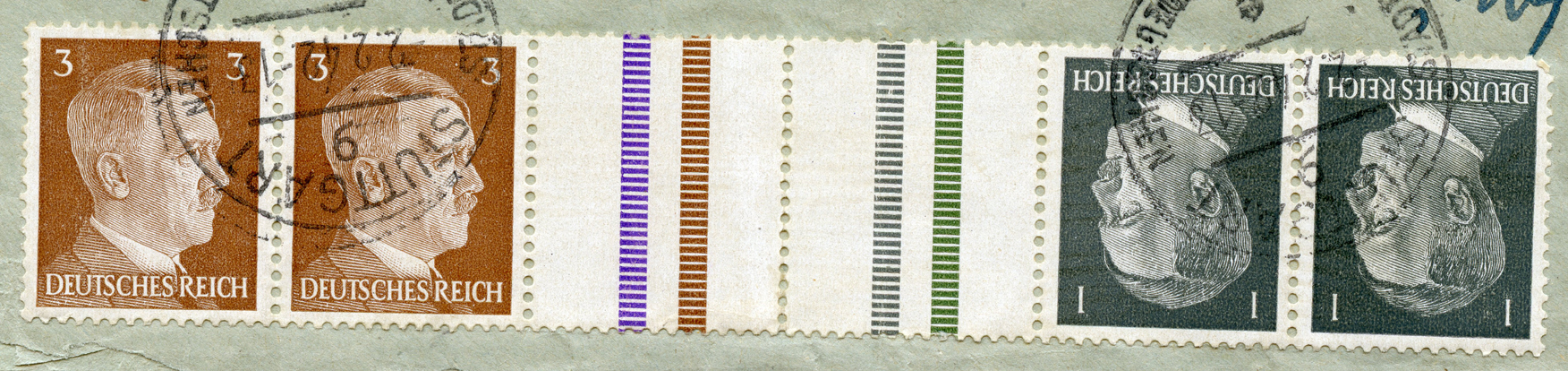
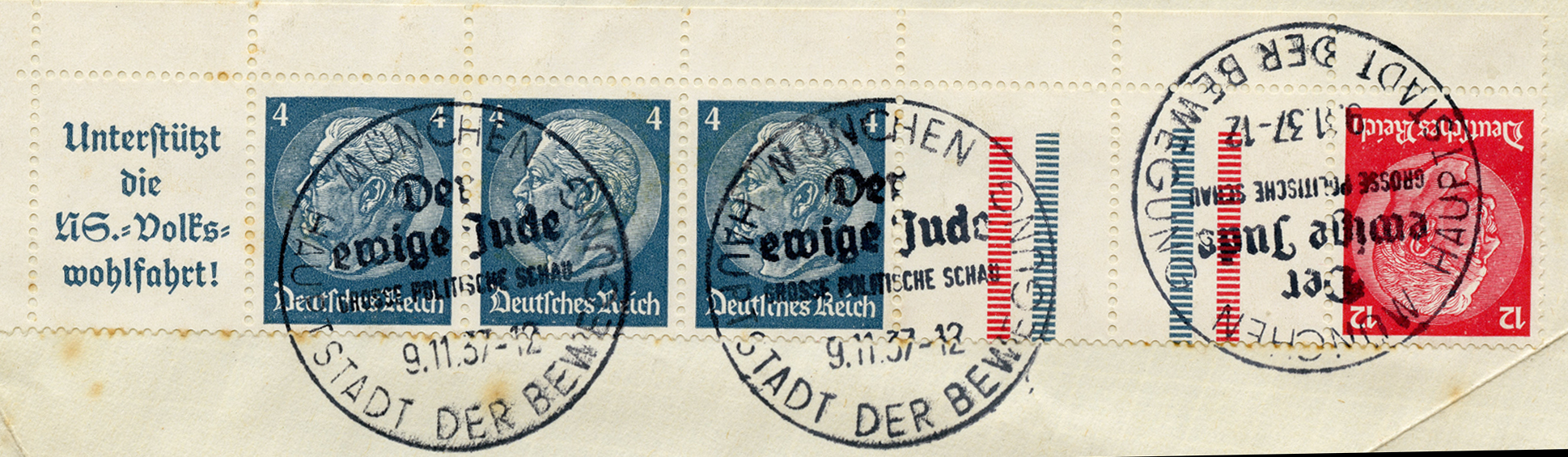
[Below: Here's an example showing a tęte-bęche (a joined pair of stamps in which one is upside-down in relation to the other), with special Eternal Jew postmarks from November 9, 1937.]
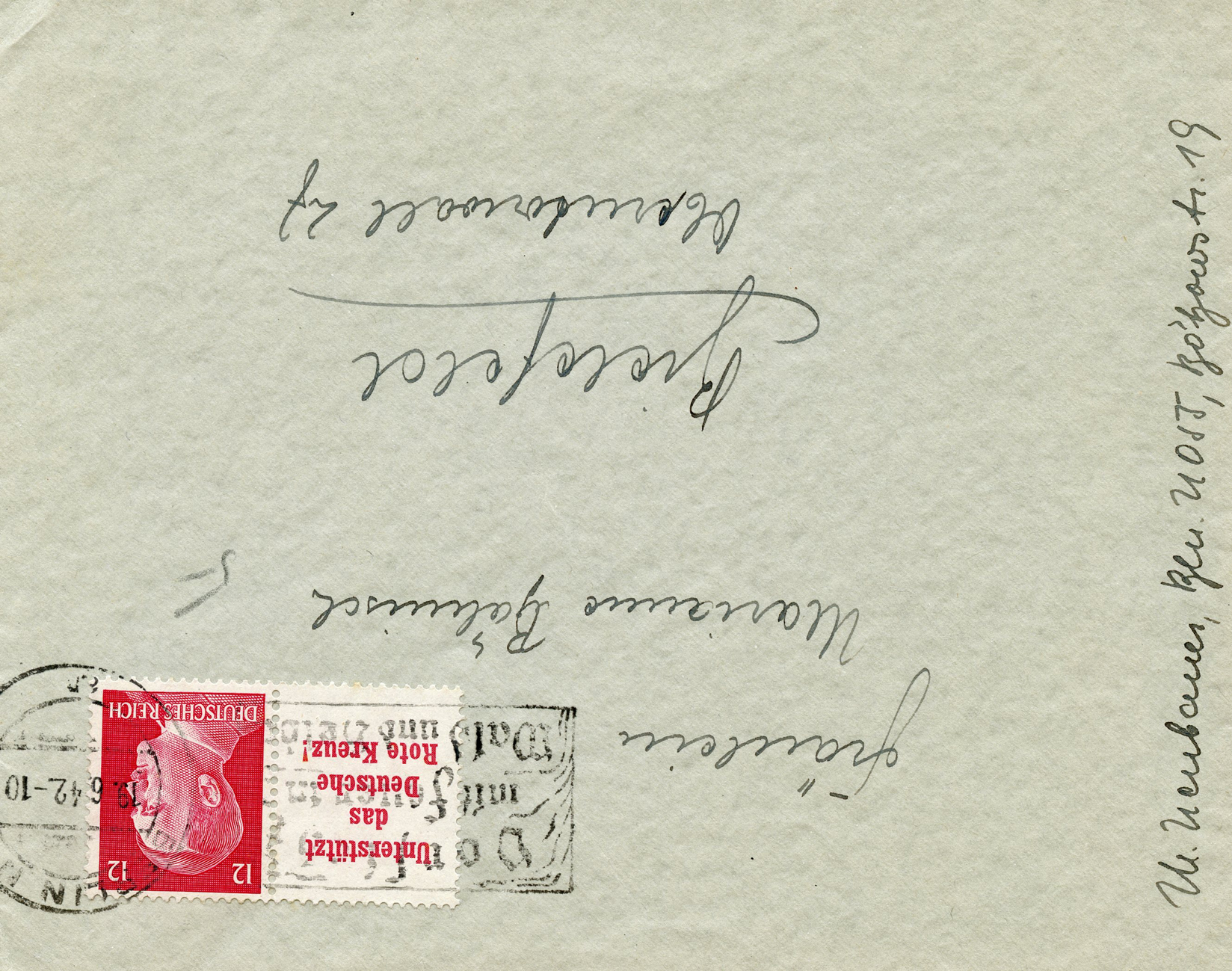
[Below: Here's an example showing a se-tenant, postmarked on June 19, 1942.]
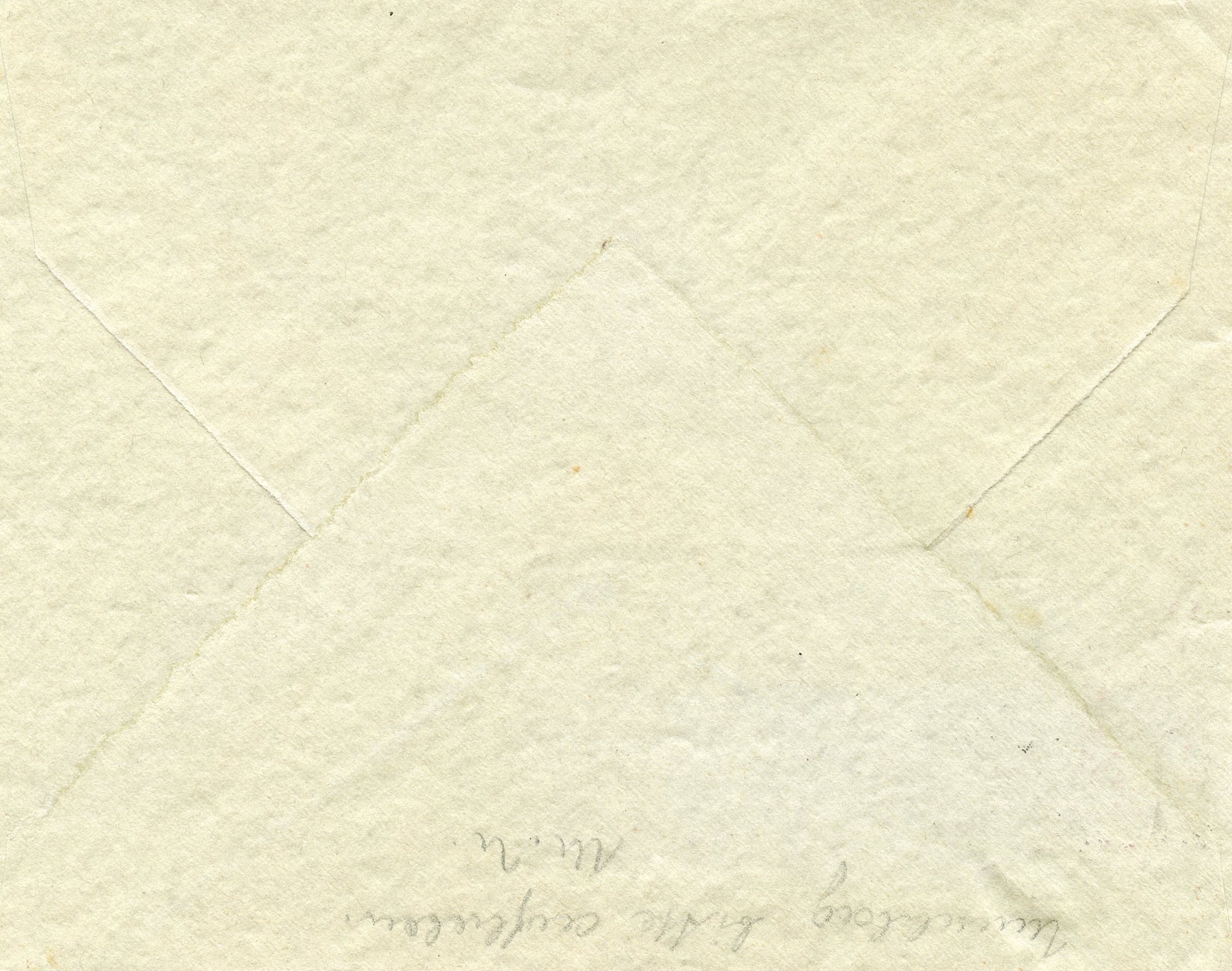
[Below: Reverse.]
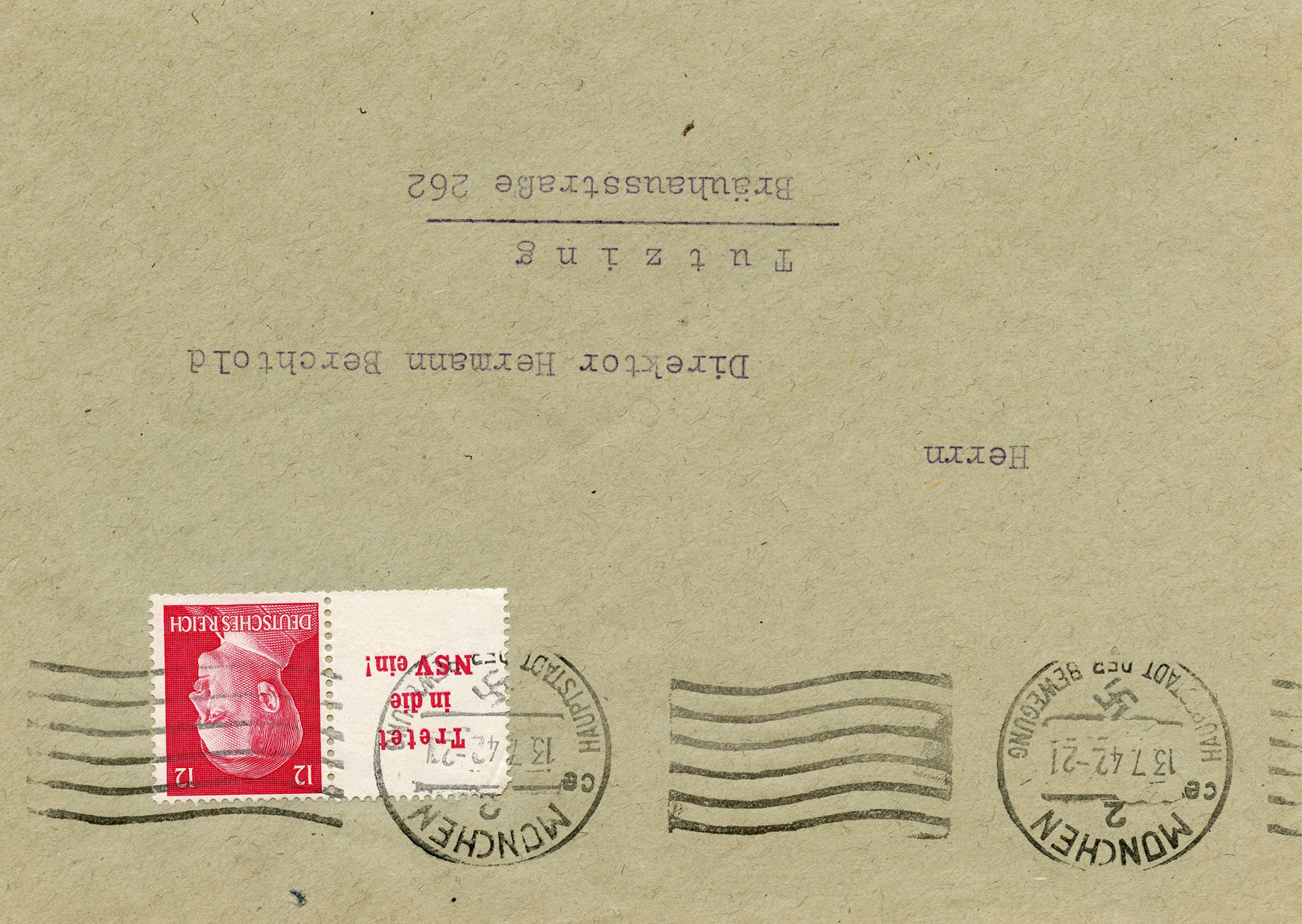
[Below: Here's an example showing a se-tenant, postmarked on July 13, 1942.]
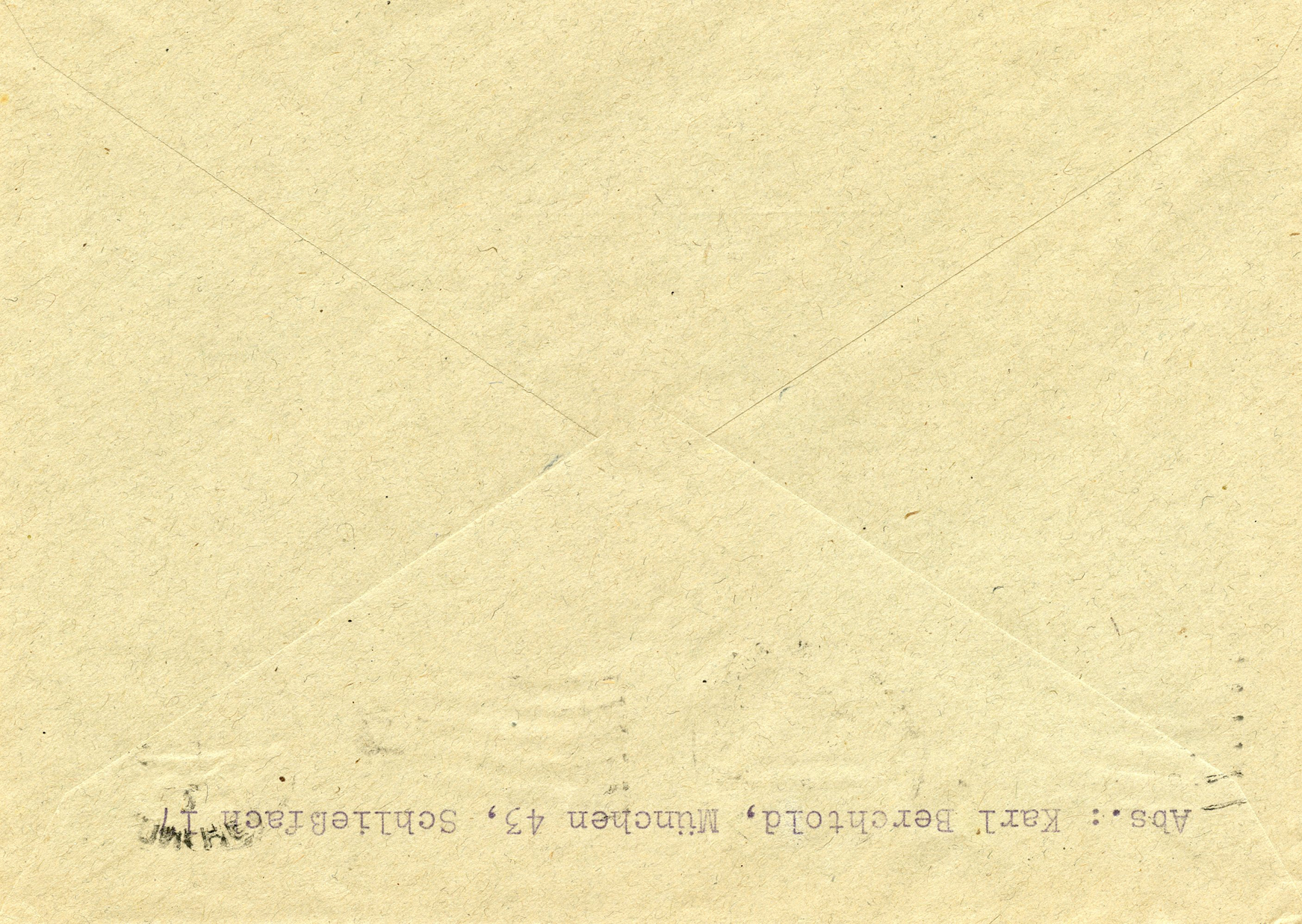
[Below: Reverse.]
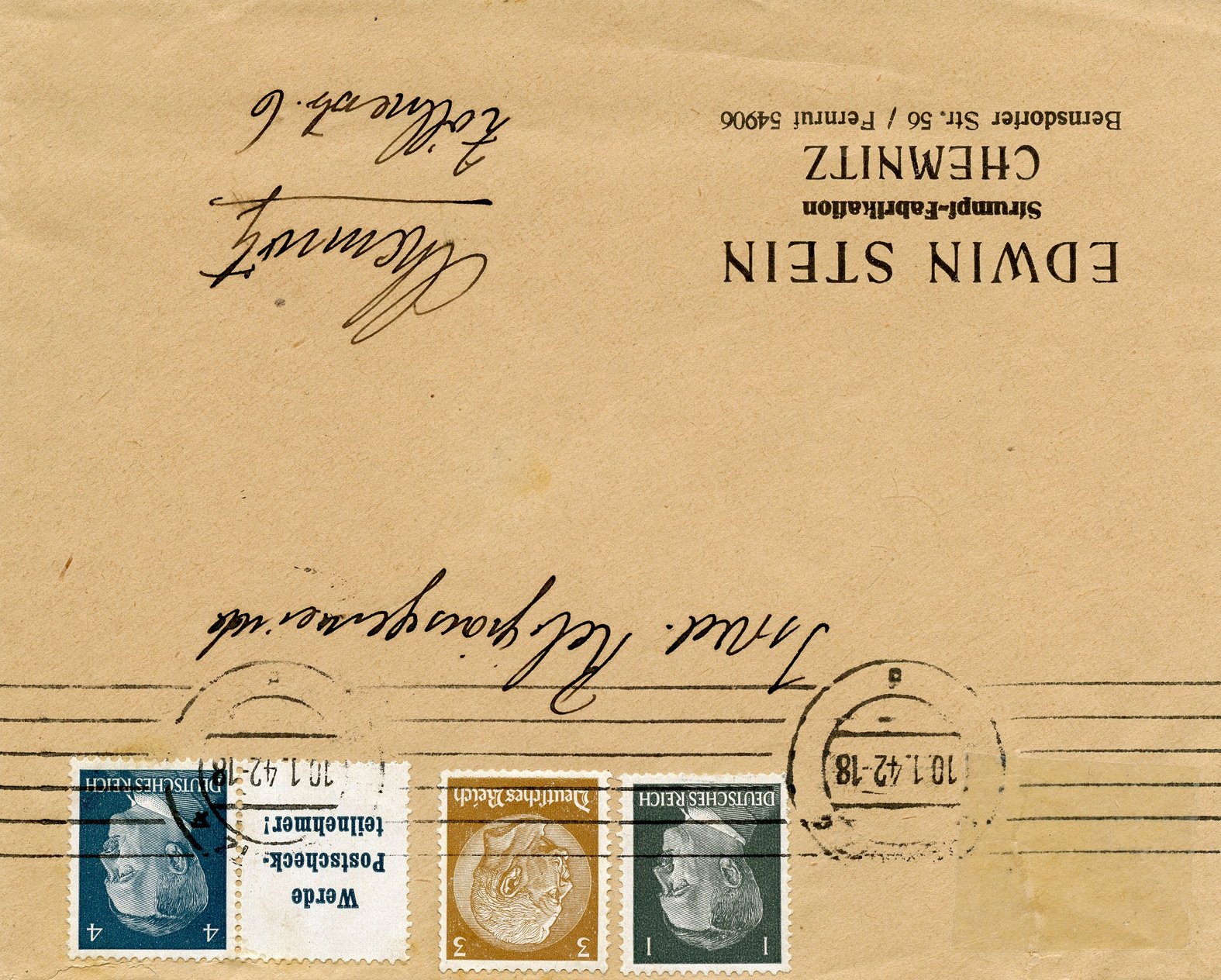
[Below: Here's an example showing a se-tenant, postmarked on January 10, 1942. The reverse is blank.]
[Below: ...]
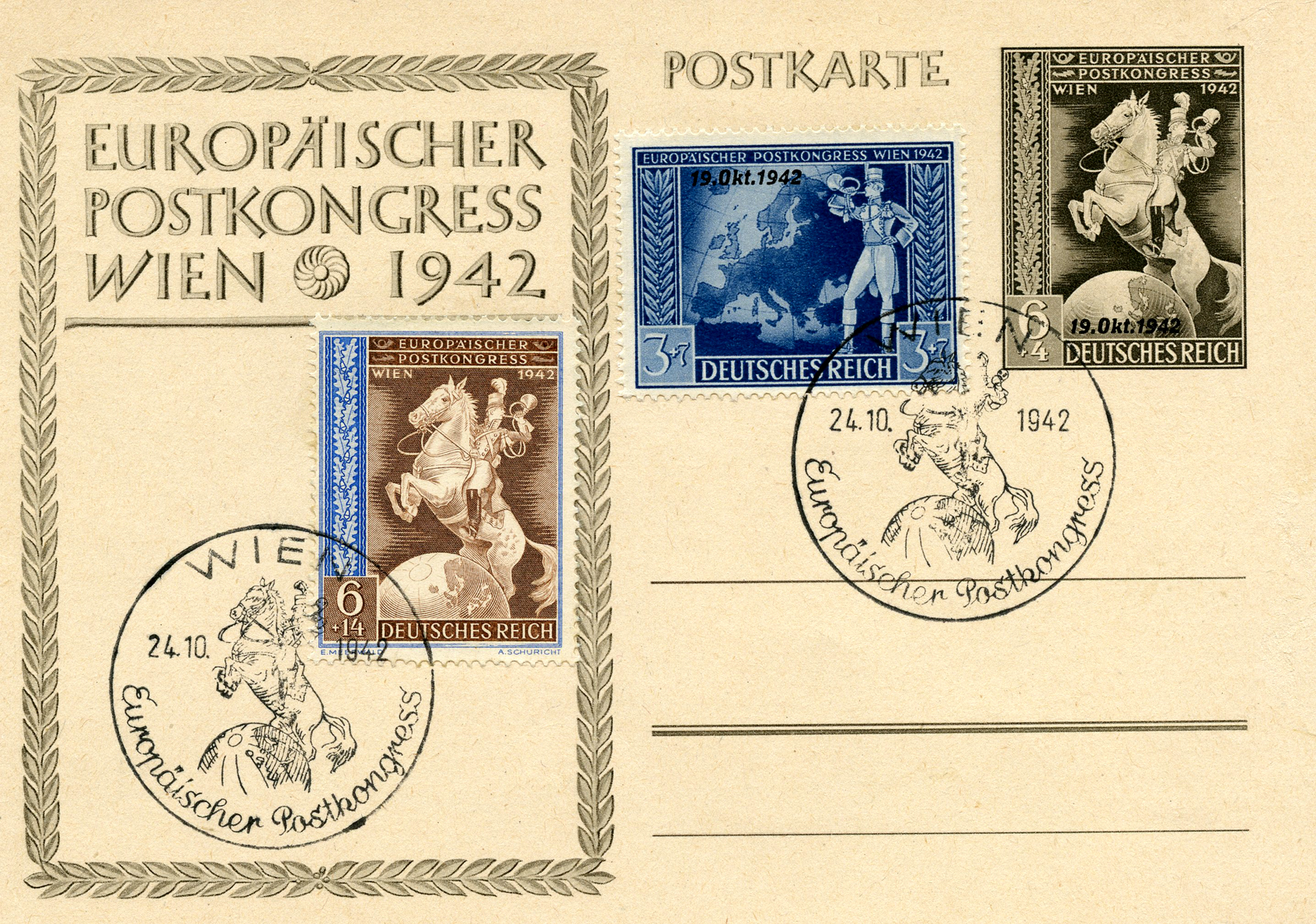
[Below: Same postcard but with very different paper.]
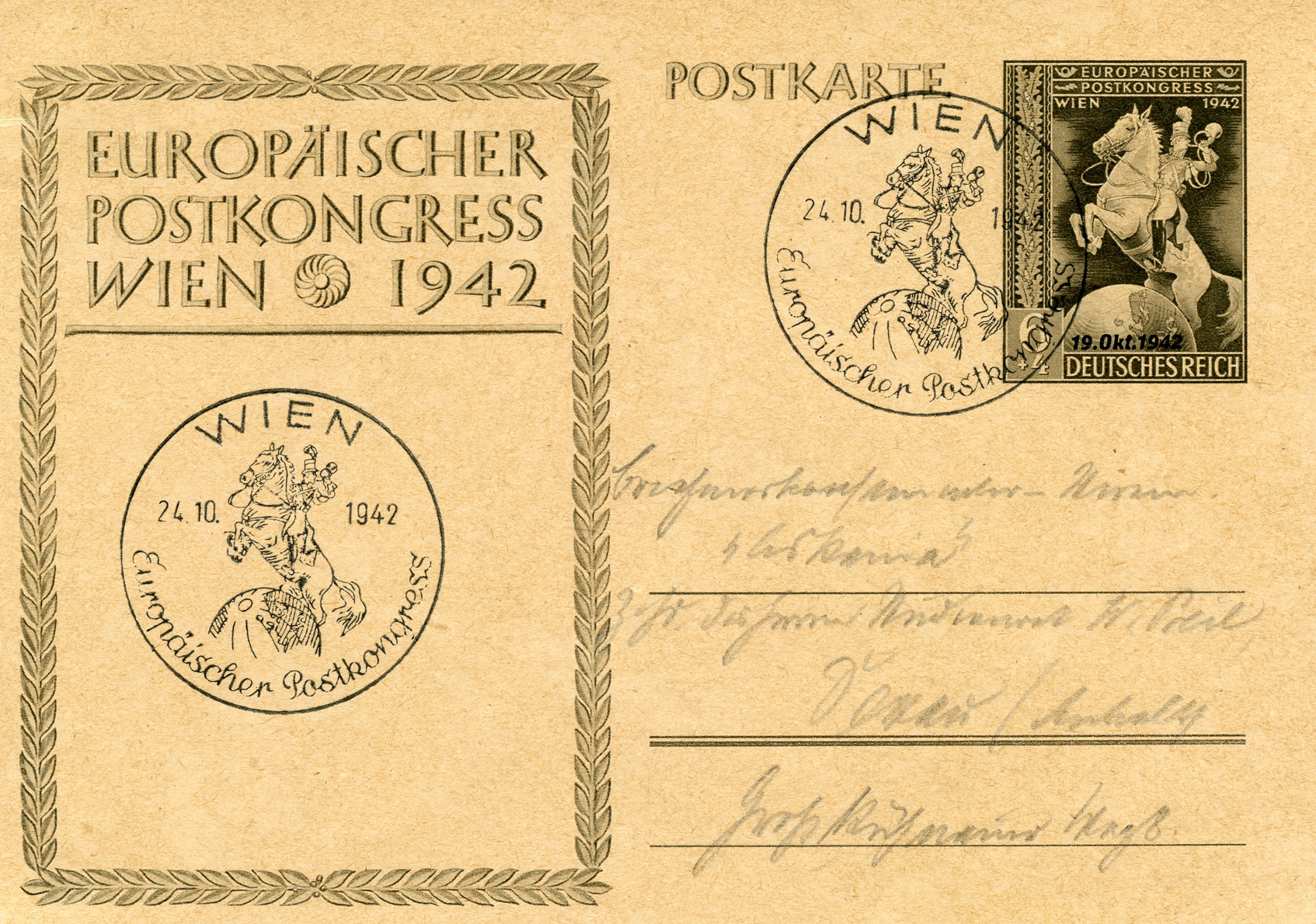
[Below: ...]
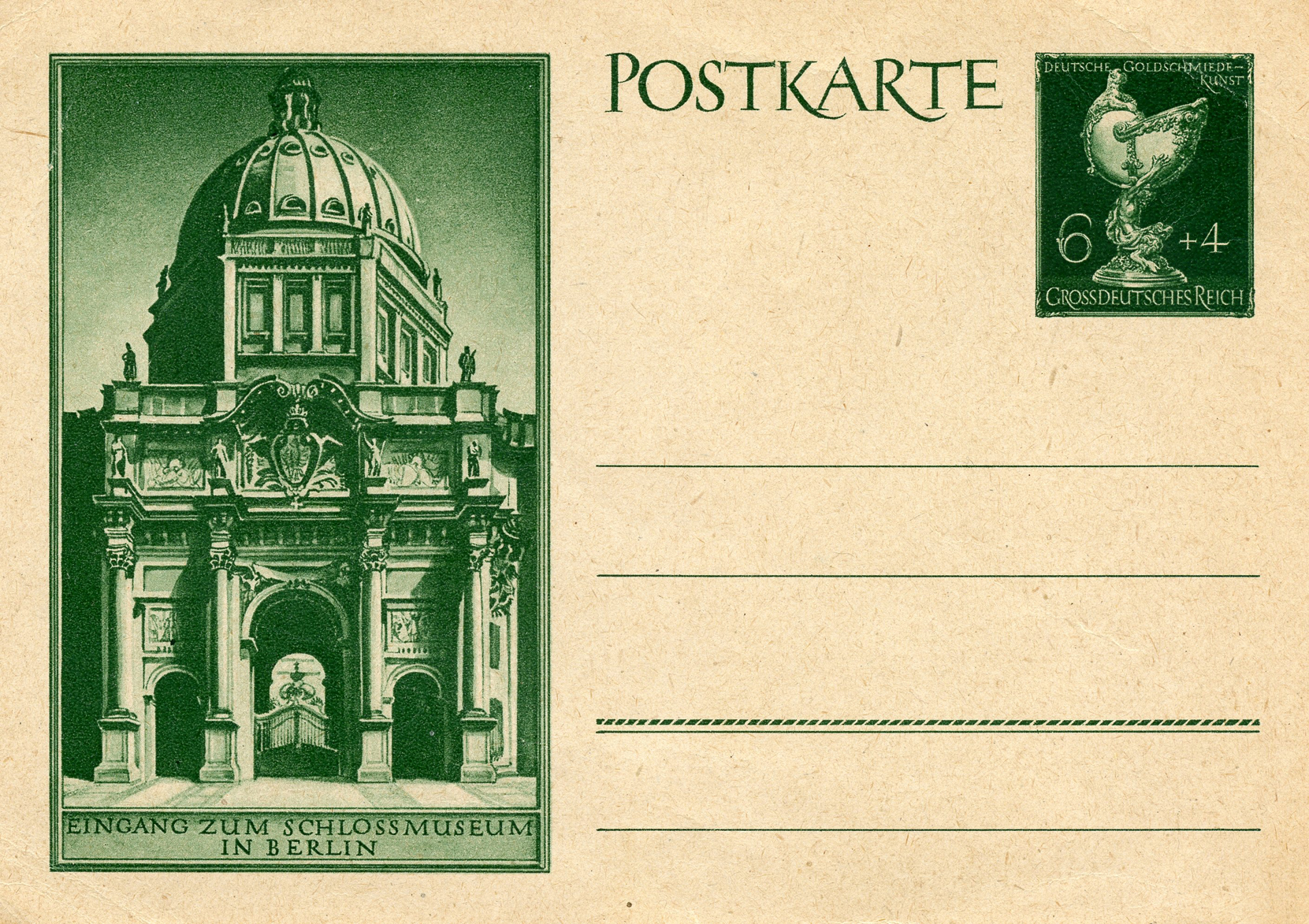
[Below: Close-up.]
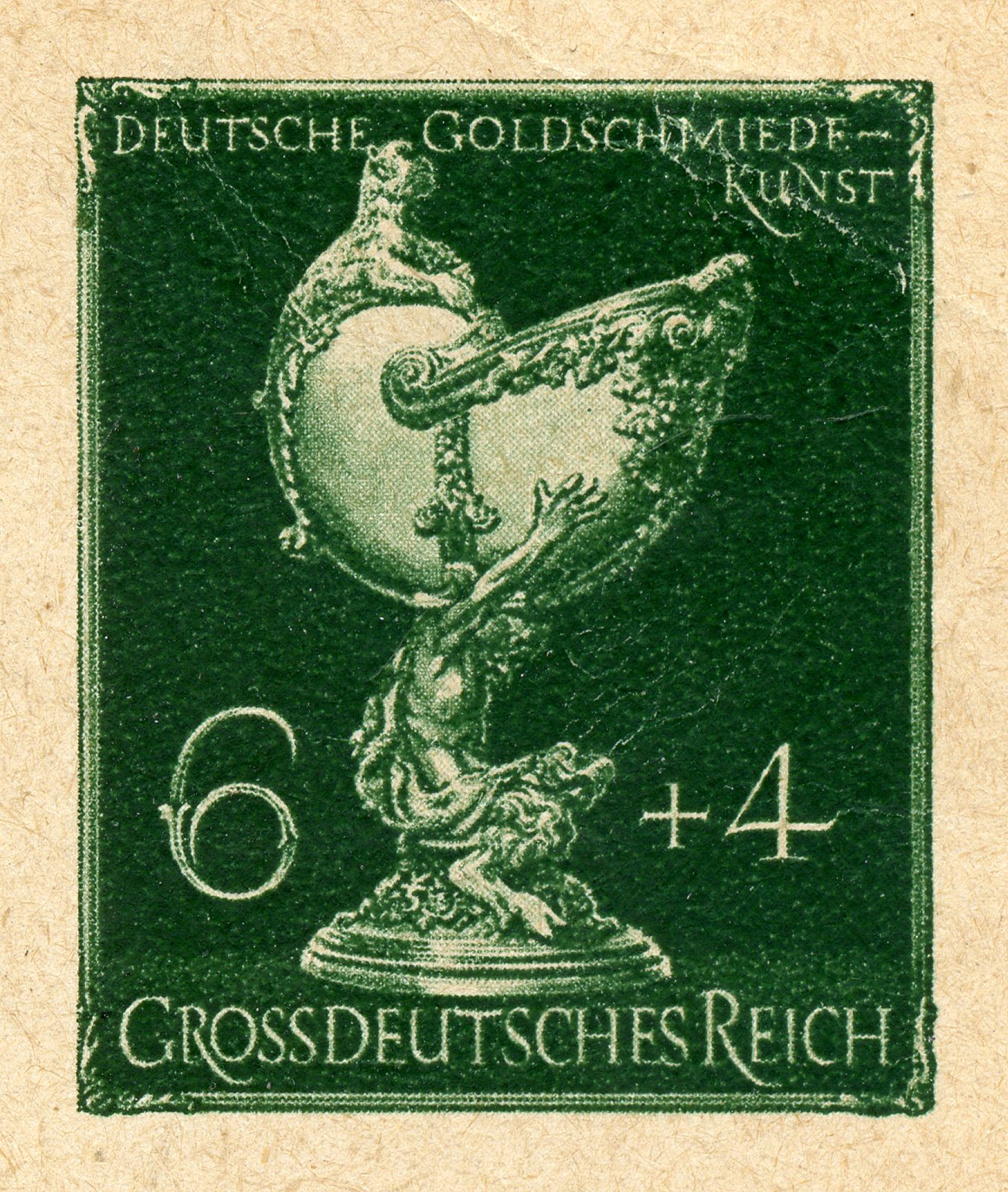
[Below: Used version.]
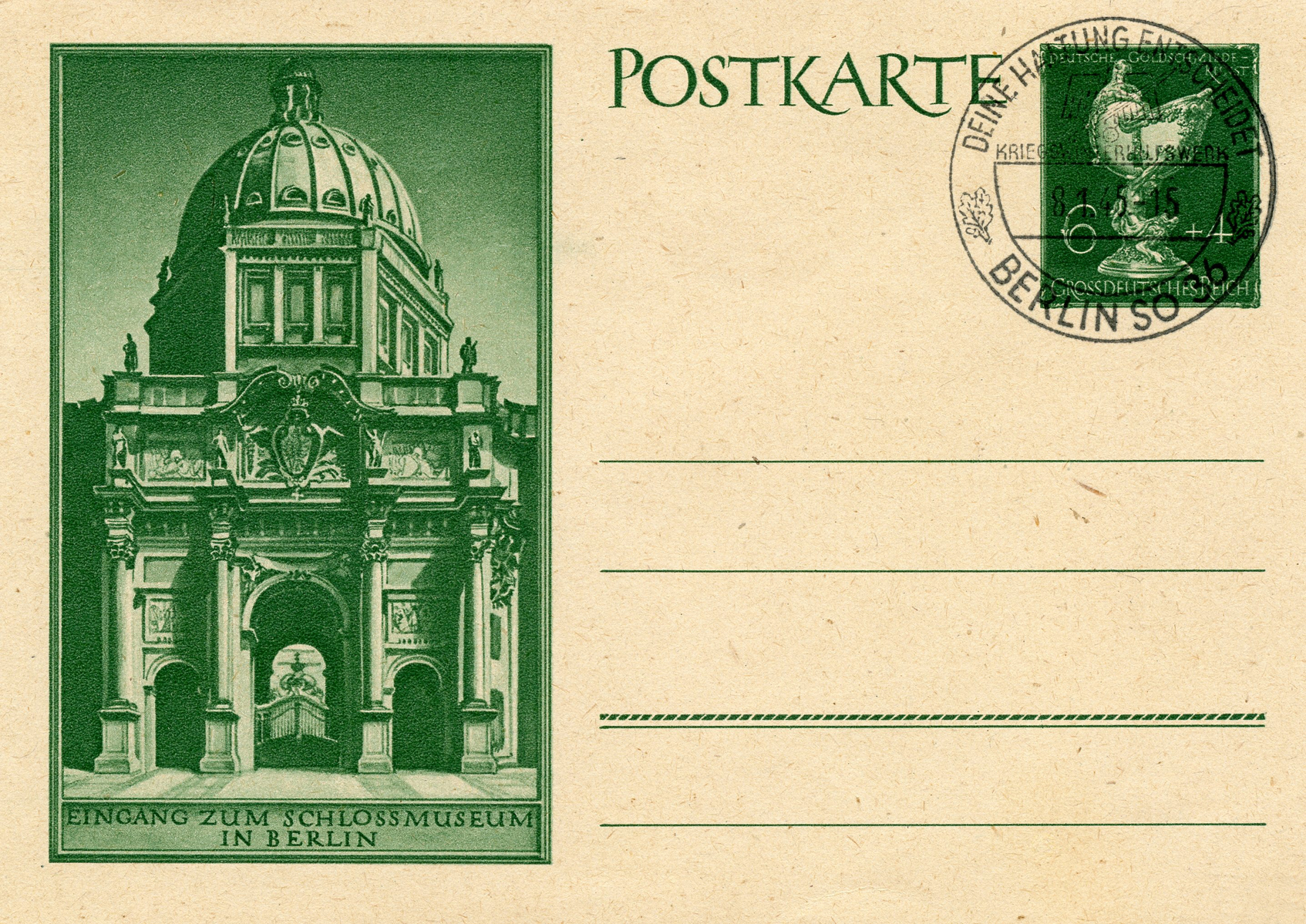
[Below: Close-up.]
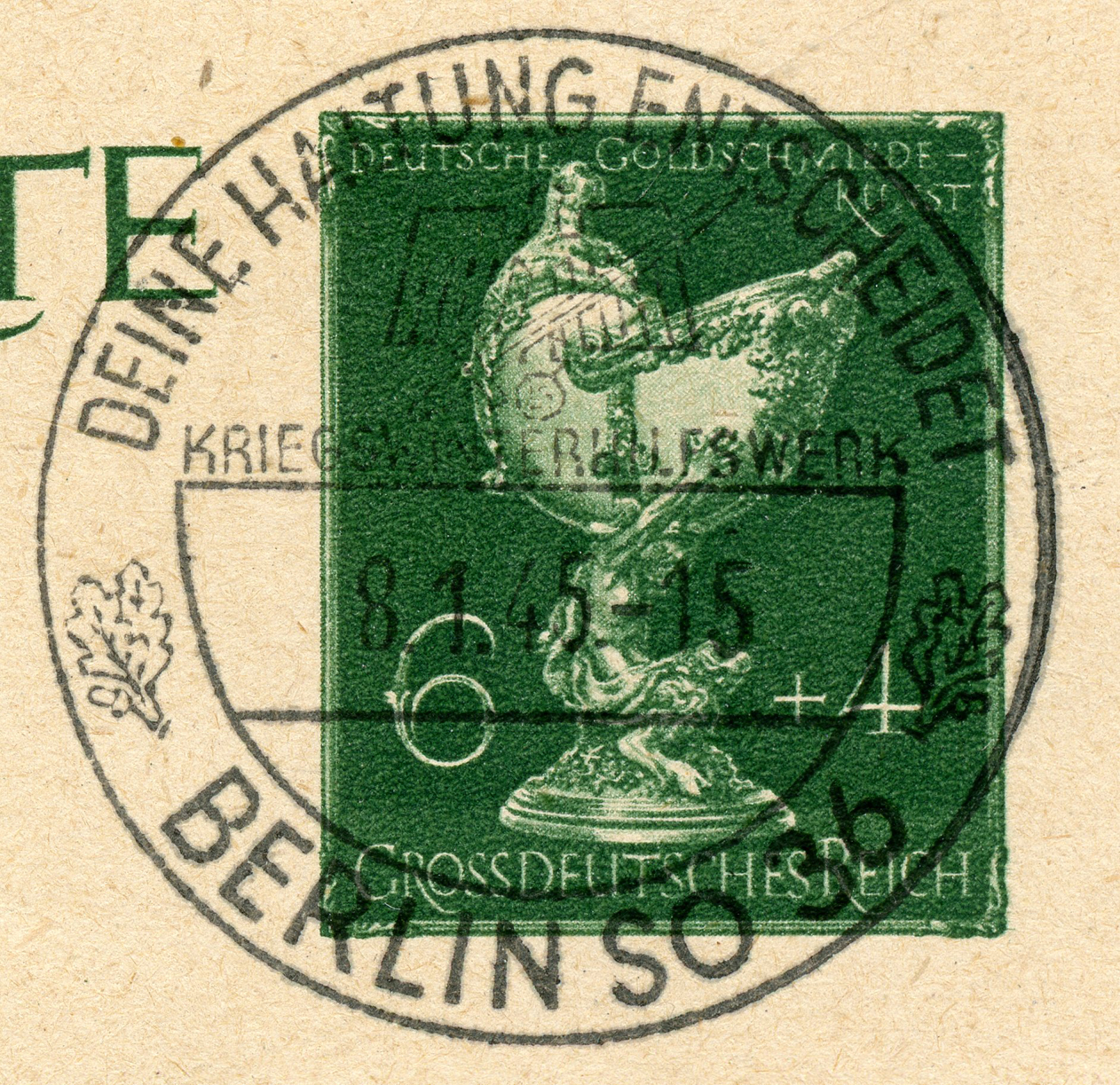
[Below: This postcard is from the same set as the design above.]
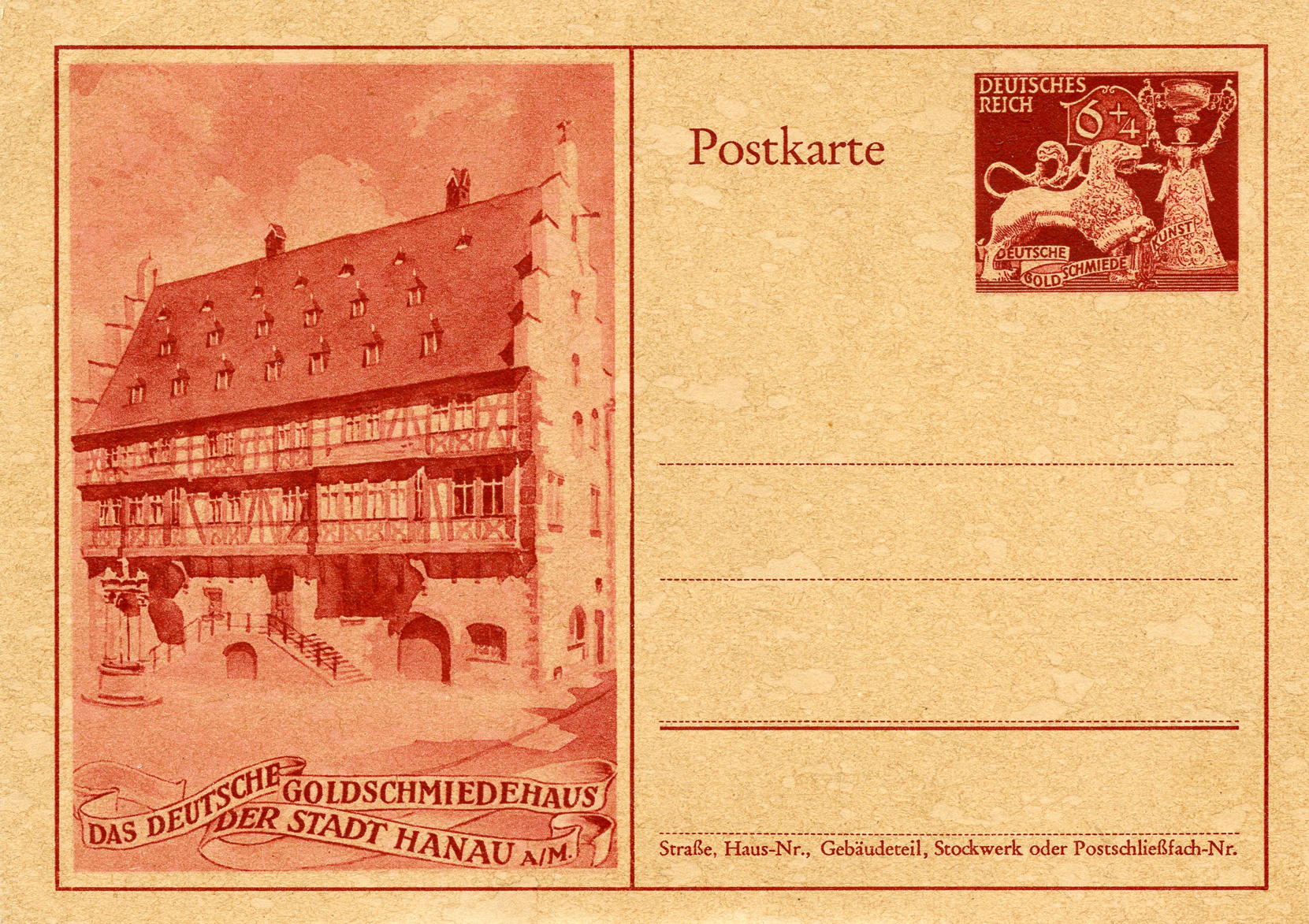
[Below: Close-up.]
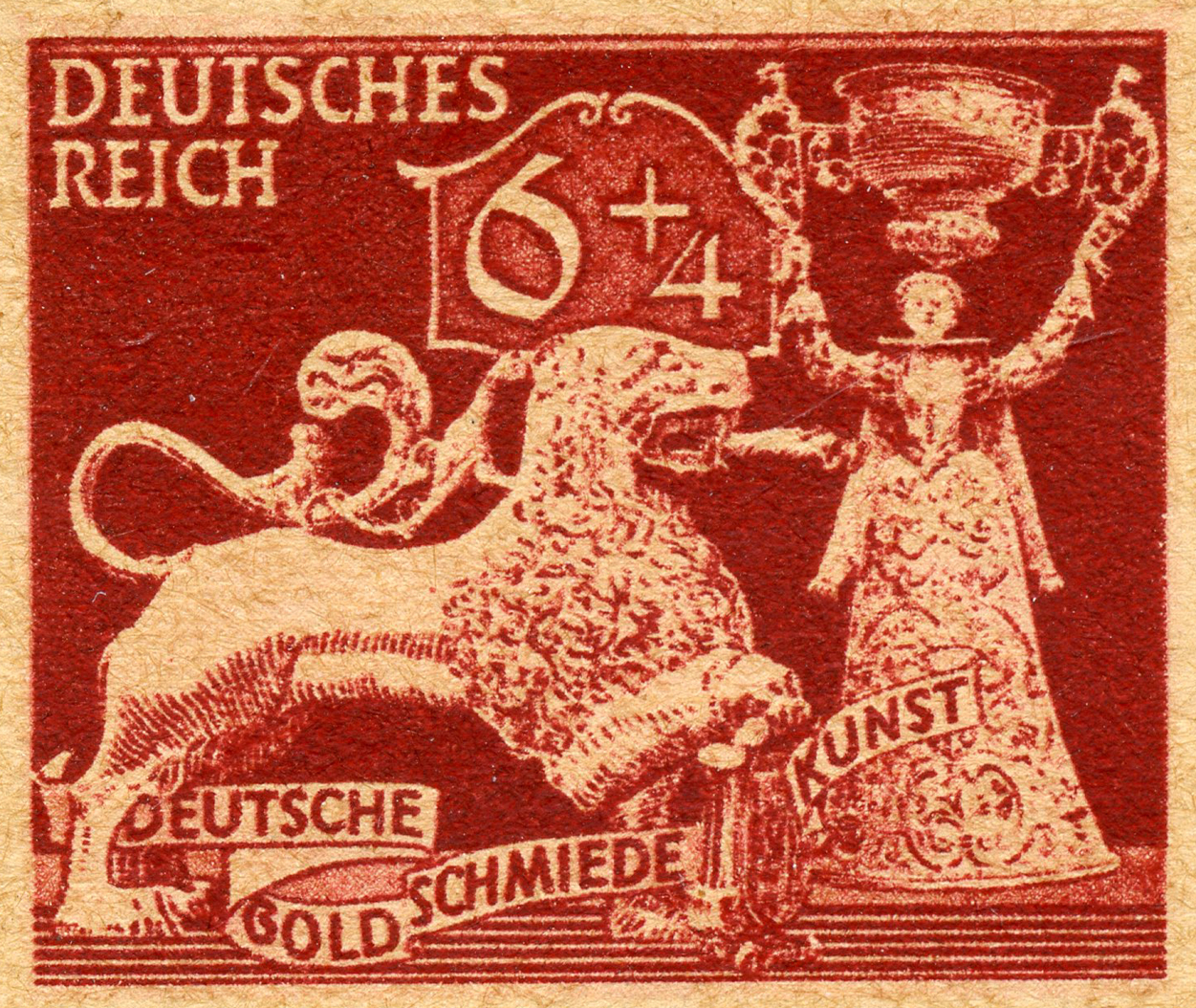
[Below: Used version.]
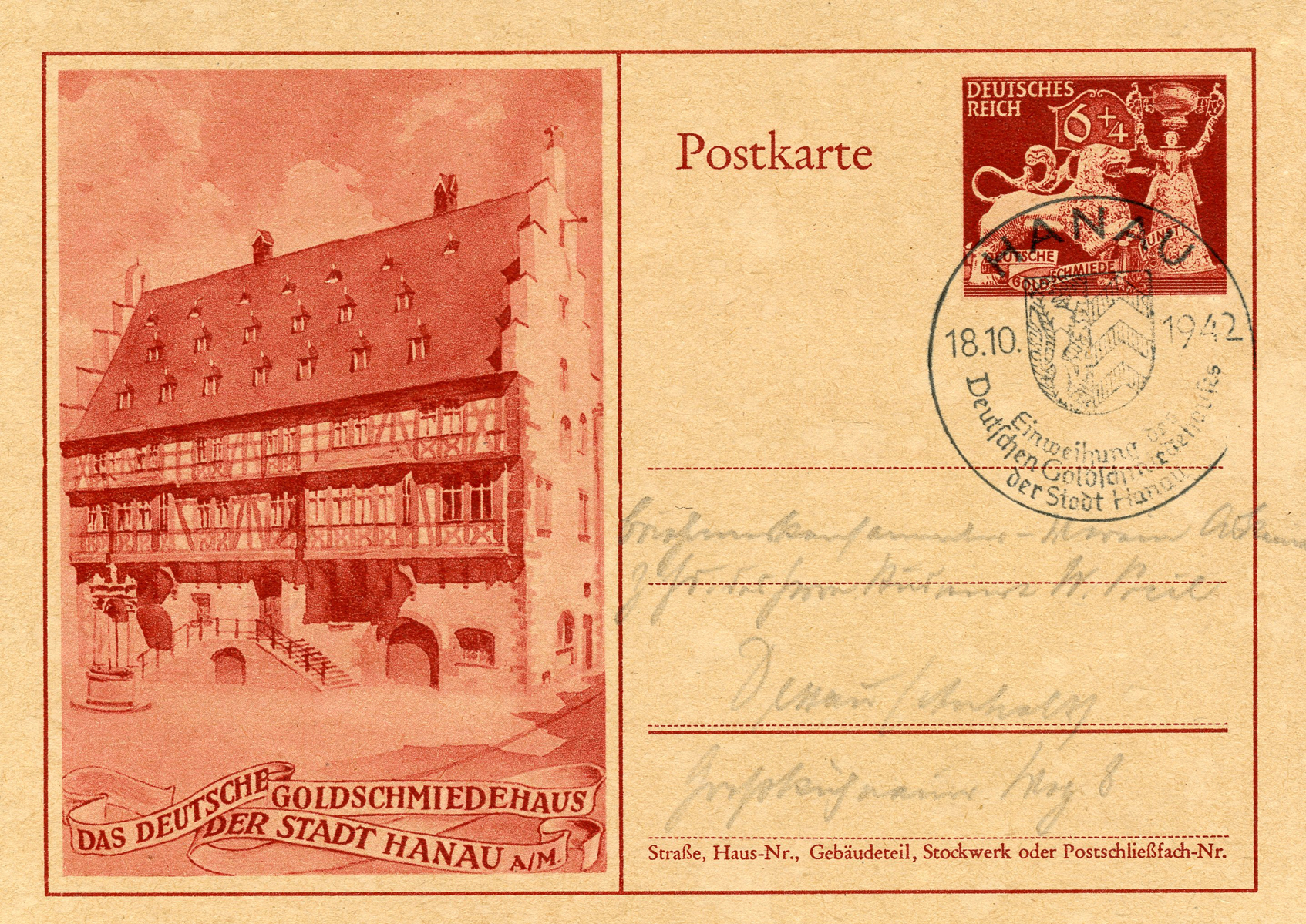
[Below: This postcard is from the same set as the two designs above.]
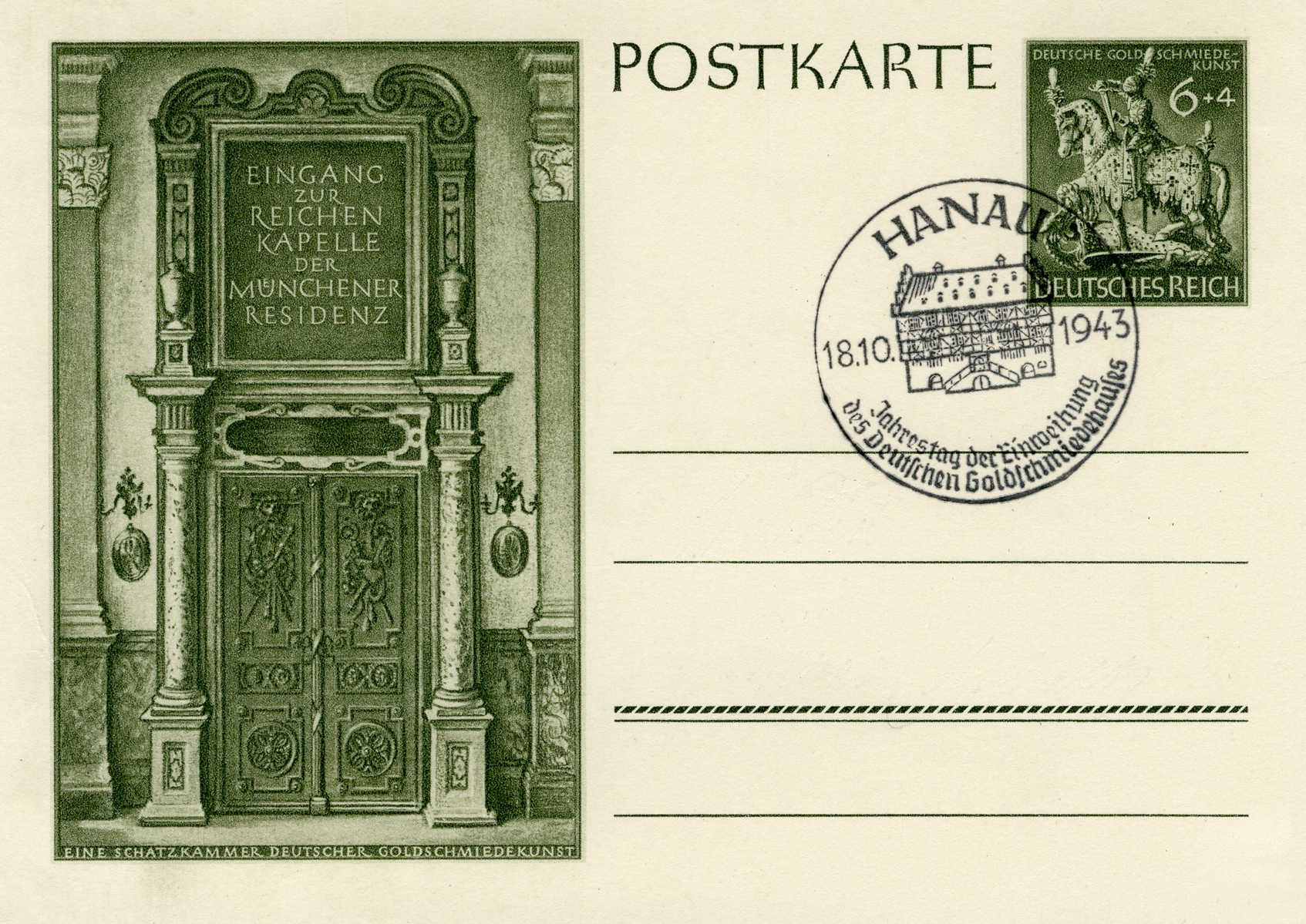
[Below: Close-up.]