Interview with Gotthard, SS Totenkopf medical orderly, Nuremberg, 1991.
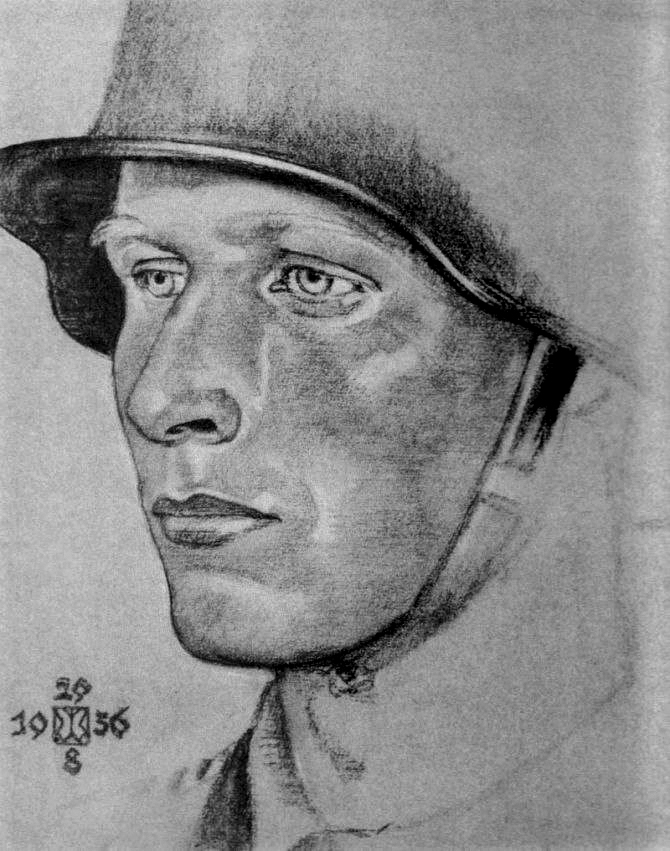
Interview with Gotthard, SS Totenkopf medical orderly, Nuremberg, 1991.
Gotthard: Yes, yes, I was in the Hitler Youth from 1933 and my father was a physician, so I had a stake in medicine. There were recruiting drives by all branches directed towards the HJ [Hitler Jugend, or Hitler Youth], at 18 you had to join one to serve the nation. When I reached 18 I had to do my RAD [Reichsarbeitsdienst, or Reich Labor Service] service for six months, then I applied for the SS and was talked into the Totenkopfverband or TK due to the need for camp orderlies. At the time this was a great way to move up into civil service or for government jobs, as the SS carried a lot weight by this time. In the HJ I was in the medical branch and learned advanced first aid and my father showed me a lot of basic things about heatstroke, hydration and broken bones. When I went through the application process I mentioned my interests and was placed in the medical company of the TK Standarte. I did most training at the Dachau complex, which housed a medical school for aspiring doctors and medical staff.
After training, which lasted all of 1938, I was sent back to Dachau to serve under Dr. [Sigmund] Rascher. I got into a little trouble at the complex, they had prisoners there, and a wing just for women. I met a German woman who was serving time for communist activities; she was caught up in a sting where her then boyfriend used her to help print pro-communist pamphlets. He fled to Poland and left her to face the charges. I felt sorry for her, and gave her books, papers, and sometimes food, which was not allowed. I was in his office with her one day while she was cleaning and talking about the war that just started. She told me she worried about me and did not want anything bad to happen. On impulse, I embraced her right when the boss walked in. At first he said nothing except did we know it was forbidden to engage in relationships. I replied yes, and he dismissed me. The next week I was called to my commander's office. I was told that I was selected to join a new division for the SS, the Totenkopf. I would serve as a medic with combat troops.
I received a promotion to Rottenführer, issued a field grey uniform, and sent for additional training until 1940. I learned that Greta was released soon after also on amnesty, so we started writing without any restrictions. I reported to the division shortly before the war in the west. We had much training to do, as many of us were new, mostly camp personnel and police officers who chose to join up. We had a strange sense of angst to get into the fighting. We knew the French had attacked and seized a small section of territory, and we wanted to get back at them. In contrast, many of us felt peace would be achieved before any real fighting started. We could not see this turning into a large war, none of us had any idea how wrong we were.
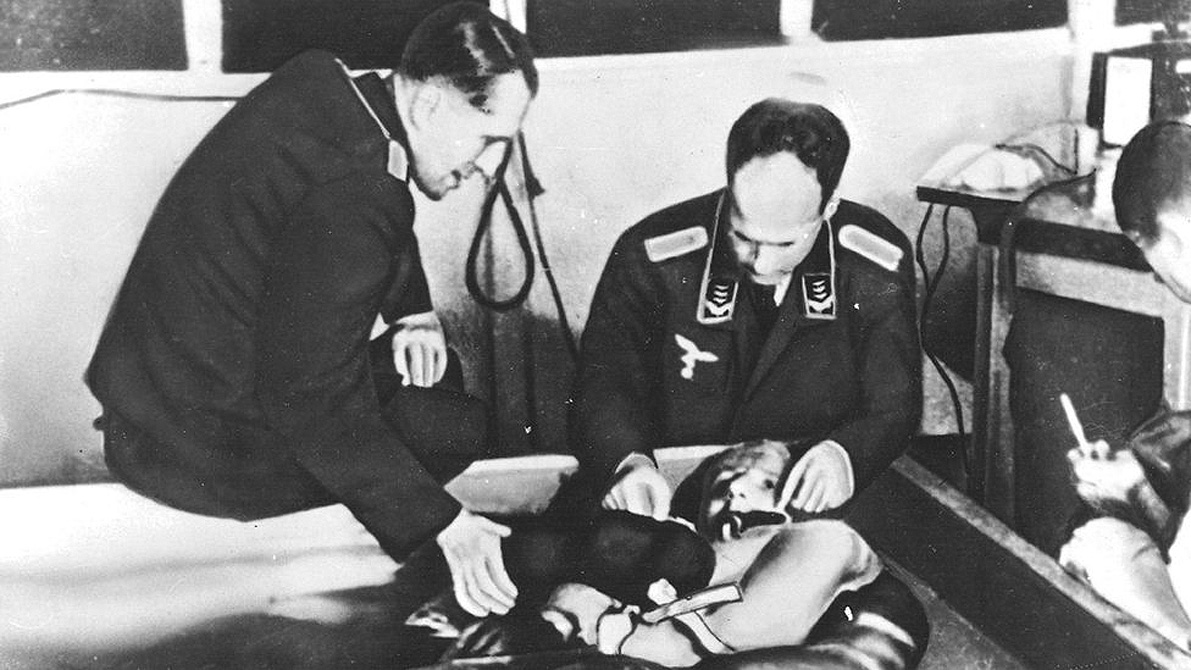
[Above: Dr. Sigmund Rascher (right).]
Why did the SS wear the death's head, does this not prove evilness and a love of killing?
Gotthard: No sir, this symbol is as old as life itself. Most all armies at one time or another, especially in Europe, used this. It simply represents that you are loyal to your king or cause until you are dead. There is nothing sinister about that. It was used in Prussia, France, Russia, England, and so forth. Some of the most famed regiments bear this insignia, some do to this day.
When Himmler and our leadership designed our uniforms and insignia, they were harkening back to the ancestors. To bring respect and reverence to our ancient culture, the runes, swastika, death's head, and festivals were brought into the SS. It is interesting that most SS men were Christian, but also held a deep love of our ancient ways. Christians have forgotten that their festivals were first Germanic festivals.
There is nothing within the framework of the SS that was evil or sinister, all was done out of love and honor for our people. Himmler was trying to rebuild what the centuries had broken down. We were not anti-God either, there was a better way to worship and honor our creator other than bowing to the modern and corrupted church. Loving where you come from has nothing to do with having to hate others.
You were in the 1940 campaign against France?
Gotthard: Yes, the new division was sent into action first into Belgium after two weeks of waiting. [Theodor] Eicke kept us training right up until the order to advance was made. I was with SS Infantry Regiment 2. We were a reserve that was moved into the line next to a Panzer division. We had to advance against French and British units that put up rearguard fights to slow us down. I remember they would fortify houses and farms, sometimes with civilians still inside, which was bad, as we had no choice but to return fire on them. This of course caused deaths we did not intend to cause, bullets do not discriminate.
I want to tell you something that has bothered me since the war, not many people know. Our commander, Fritz Knöchlein, went out of his way to convey orders from Eicke, we must treat surrendered enemy fair and well, per the war conventions. There must be no abuse, looting, or taunting. This was made very clear to us all. It is important to know this, as the British claim we killed surrendered soldiers on purpose.
The fighting against the British was very tough; they proved to be the typical hard-nosed, stubborn soldiers our fathers spoke of. Prisoners we took told of the orders they had, no retreat, fight to the last. For us we did not understand this, they clearly were beaten but refused to give up, causing frustration for us all. I hated to see the needless loss of life that was to be a mainstay of the war. We had to use our limited air cover to break some of their nests. Our artillery was kept very busy as well, I can still hear those weapons booming sometimes.
Our regiment pushed them over a canal, and Panzers crossed a bridge to push their flank back. We took very heavy losses during these fights leading up to Le Paradis and its capture. The French gave up when they saw they were outflanked, but the British resorted to other ways to hold out. Here is some information you might find interesting about the supposed war crime we were accused of.
The British anchored a position on a large farm that we eventually broke into and asked for their surrender. Up to this point, the war had been fought fair with no violations. We had started to hear rumors that SS men had been shot down after surrendering, I never saw this, but the rumors were present. In addition, the British soldiers were using old tricks from the first war; hollowed out bullets we called dumdum bullets. They expanded on impact, and caused hideous wounds, often killing the person. They were used to stop an attacker in their tracks with such a devastating blow, so that they were no longer a threat. I treated a comrade and brought him to our aid station who had his leg almost torn off due to these rounds. One of our officers took a sniper shot with one, and he was a mess, the bullet caused his head to explode.
We had become quite angry with the tactics of the British, they would hide in cellars, and when a German unit went by, throw grenades out where it was hard to tell where they came from. This tactic caused some innocent civilians to be felled by over cautious soldiers shooting into cellars to make sure no enemy was inside. Orders had to be given that we had to call out before attacking houses or cellars. We ran into this same situation in Russia. Civilians were armed and encouraged to fire on us as well.
These instances are what set the scene for what happened at the farm. These defenders fought hard, sniping as much as they could, and causing heavy losses to our men. Repeatedly I was seeing evidence of horrible wounds that were not caused by normal 303 rounds [standard British military cartridge for rifles and machine guns]. Anyone in the medical company could attest to this. This is disputed by the British today, but they get to control the story.
When our sister company sought the surrender of the enemy, they hoisted a white flag, and as a party approached, they were gunned down, I believe ten died. This infuriated combat soldiers who saw this, and all barrels opened up on all positions the enemy held. We had lost many men killed and wounded by their actions. I was treating wounded soldiers, both British and German, and ours had much worse wounds. I believe the foreign office protested this, but the British just denied it.
Our command post was not far to our rear, and a larger corps field hospital was farther back. I remember seeing Knöchlein and other officers near us, which is crucial, as he was not at the farm during the shooting. I remember this well as they were upset at the lack of progress being made and shouting orders to riders.
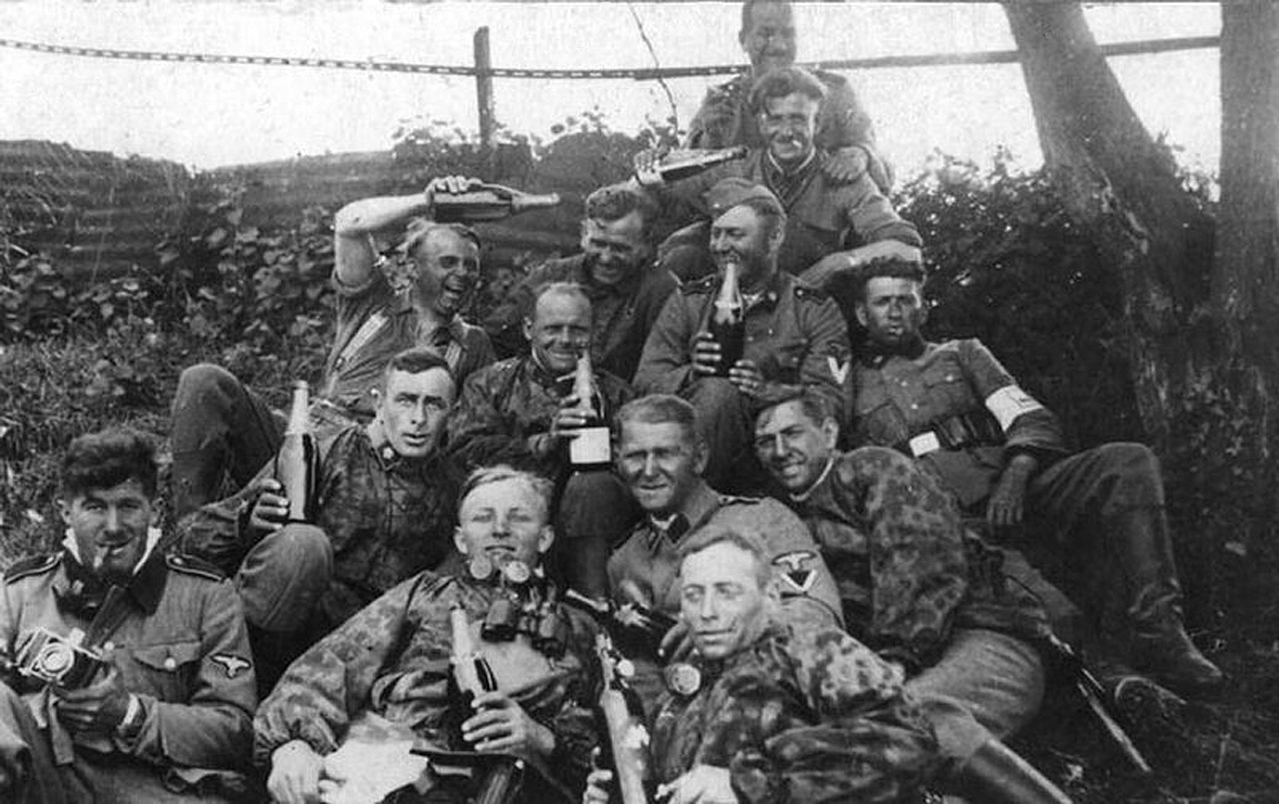
[Above: The boys of SS Totenkopf bask in their victory in France with bottles of champagne, 1940.]
What else do you remember about the shooting of British prisoners?
Gotthard: You must remember that we had orders to obey the rules of war, treat enemies and civilians well, and not abuse prisoners or steal from them. We took hundreds of prisoners, including many negro soldiers from the colonies. They were all well-treated and I have photos to show us relaxing with negroes to show there was no hatred. We despised that the French used them to fight for Europe, but that was war. It did not dawn on them they were being used and taken advantage of for nothing.
I know that when the soldiers at the farm were forced to surrender after running out of ammo, they were taken to a field and disarmed. What I know is secondhand talk that comrades spoke of after. The soldiers were accused of illegal conduct and marched off behind a barn where they were seen laying together after being shot down. I have heard everything from a guard tripped and fired, causing others to fire into them, to an impromptu court martial ordering them shot for illegal killings. Even Eicke was confused, and an army officer claimed SS men shot them in cold blood for no reason.
Eicke later just agreed and said it was due to the dumdum rounds and flag of truce violations. In truth, Eicke was left in the dark, and frankly, he did not care, his focus was on his men. It is entirely possible that angry, combat fatigued soldiers were disgusted at the fighting tactics and manner of the British; they were often times hard to get moving and acted arrogantly. It is possible this was a war crime, but like so many claims against us, you must ask is this really the case? Did the enemy do something that caused a justified reaction or at the least retaliation.
It is likewise possible they tried to escape or do something to a guard that caused this, of course two British witnesses say different, they tell the story that we just liked killing since we were Nazis, but are they being truthful? Is it possible we were mad because they put up such a good fight? It is very clear that we went to great pains to take prisoners, and did not abuse prisoners. The few instances where people and soldiers claim we committed a crime, I say use critical thinking. It was not allowed or encouraged, so what happened?
I do believe British soldiers were shot at the farm, the question is, why? That answer may never come, but I will go to my grave knowing we did not deliberately kill prisoners, there had to be an underlying reason why they were shot. The Allies have no moral authority to pass judgment; they did worse to civilians and us by far. They put on a crown of false morality and cast us as the criminals. They hung an innocent man in 1949 who was not at the farm during the shooting. He was not allowed a real defense.
You were trapped in Demjansk [Russia], what was it like?
Gotthard: It was miserable and probably the worst thing I experienced. We were cut off from our army group. The weather was so bad it slowed the Soviets, allowing us to build fortifications before the Soviets brought larger forces to bear on us. This pocket contained a mix of all troops, even RAD and civilians. No one panicked however; our leaders were tough and focused. They often held morning briefings with their men to update what the situation was that day; this gave a strong sense of duty and unity that we were together.
The Soviets attacked us often and we repulsed them all with well-placed artillery and machine guns. The Soviet soldier was poorly led, and I remember they would attack repeatedly the same spot, hoping to break it. They always yelled when they attacked, I guess to build courage. I remember we had Danes, and nurses were there too. I worked a lot with the various aid stations set up. The women were scared, as the situation was dire at times.
[General Christian] Hansen and Eicke both led parts of our division; I was kept near the medical station as treating the wounded was vital. We constantly needed supplies. The Luftwaffe did well in bringing us what we needed, we were very grateful to the brave aircrews who dodged heavy fire to keep us alive. The snow fell very heavy and made any movement hard, but when thawing started, the Soviets threw everything at us they could.
In spite of being outnumbered heavily, we held out until the summer offensives broke the ring. Our losses were heavy, but I still see the fields of fallen Soviets after every attack. We wondered how they could keep coming at us with the numbers they were using up. The prisoners we took told of vast reserves of soldiers being brought up, which was confirmed by the renewed mass attacks. A myth I want to speak of is that we did not take prisoners. We took thousands and while we may not have been able to feed them daily, like ourselves, we gave them good care. I dressed many wounded, whom seemed likable and some even helped us with rebuilding fortifications. We gave them extra rations.
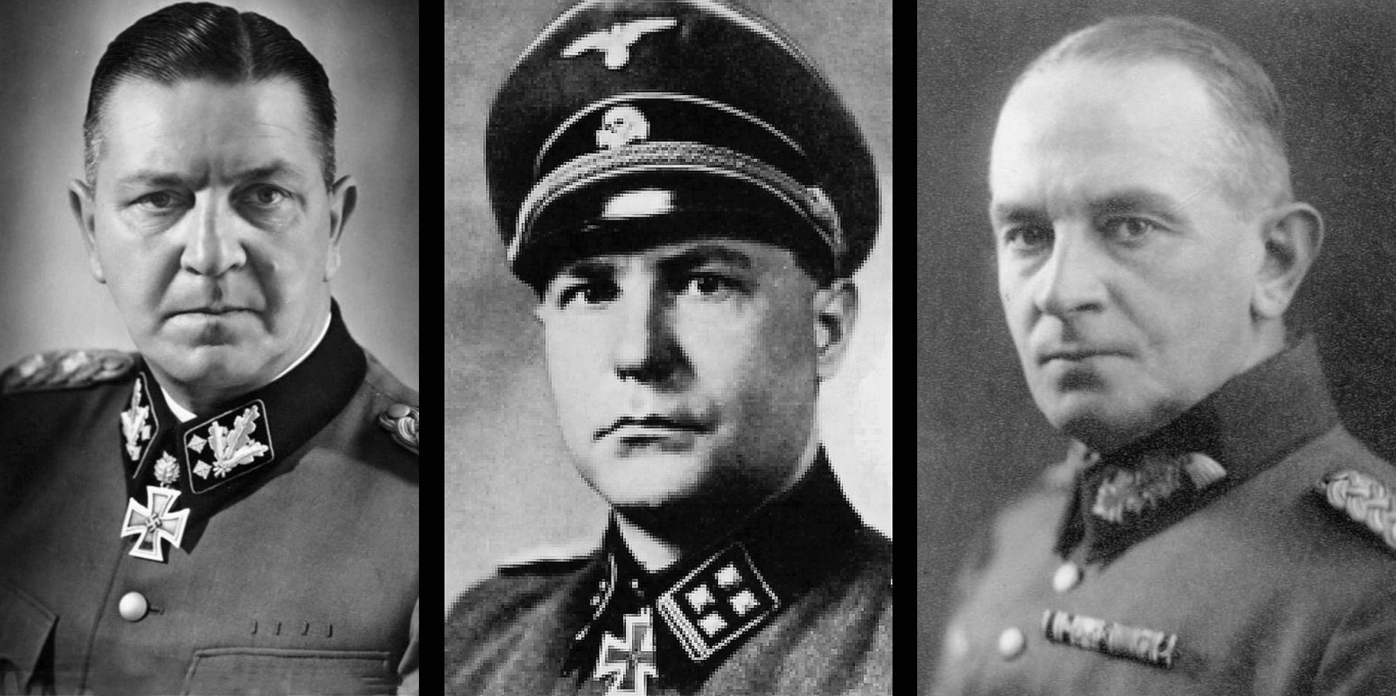
[Above: (right to left) Theodor Eicke, Fritz Knöchlein and Christian Hansen.]
It has been written that Germany was the aggressor nation in the war, and only attacked Russia for living space, and to enslave the Slavs. I have been told even top generals agreed with this.
Gotthard: Yes, we were always the aggressor, according to the victors. In regards to confessions, sometimes it is better to agree with guilt and sound remorseful rather than fighting for the truth. Especially when you remember, we had families to go home to and support, so agreeing with what the victors claimed was an easy choice. Even to this day comrades will take the side of the Allies, as it's safe, and defend their record against us. They have no other choice unless they want to be investigated.
Stalin of course said he had no intentions to attack Germany, and that we broke a pact to take land. Russia had 170 million to our 70 million; it makes no sense for a small nation to attack a much larger one. My government said that Russia was planning an invasion of Europe soon, and we attacked first to stop it. I can attest that when we crossed the border I saw mostly offensive equipment, like bridge building and supply depots. There were no fortifications for a defensive action, in spite of Stalin's claims.
The perceived aim of the communists was to take over the world. I believe they made that clear, and first attempted it in Poland. Some claim our economy was bad, our racist policies wanted slaves, and we needed oil from Russia. Since Germany, which bore the brunt of all war production and contribution, lost, we have to listen to the winners tell the story. Of course, Russia will never admit they planned on attacking. They claim they only moved troops into other nations, violating treaties, to counter us. That the millions of soldiers moved into Poland was only to deter us. Everyone wants to be Nazi victims.
Did you see or feel that there was a bias or rivalry with the Wehrmacht?
Gotthard: Yes of course, mainly early on. We were seen as political soldiers, the military arm of the NSDAP. You may find it interesting that many of us were not members of the party; we joined the SS more for the elite status and the opportunity this opened. The Army saw us as untrained fanatics who swore loyalty to Himmler. We were his black order, a private army with no real use, so they said.
This was shown in Poland and France, when SS units were tasked with police duties, and punished partisans. They complained to the highest levels about the punishments. However, police and army units had to do the same things, with no protests for them. Dealing with saboteurs and partisans is not a pleasant thing. Even in France, army officers did this, treating us as a nuisance who offended them by being on the battlefield. I was told several fights broke out in bars due to this rivalry and attitude. We always respected our comrades in arms.
Of course, once the fighting really got heavy, and our training was better, we earned respect. There are countless times when SS units freed trapped army units. By war's end, since our courage on the battlefield was a matter of record, many of us did feel superior to our army comrades, as we stood and fought, while they ran away. Many SS units broke heavy attacks by sheer will, where the army would break and retreat trying to save themselves. This was an embarrassment for them, which they try to hide by claiming they were refusing senseless orders to hold fast.