Interview with M. Engl, former SA man, Organization Todt supervisor and later in the Volkssturm at war's end. Regensburg, 1990.

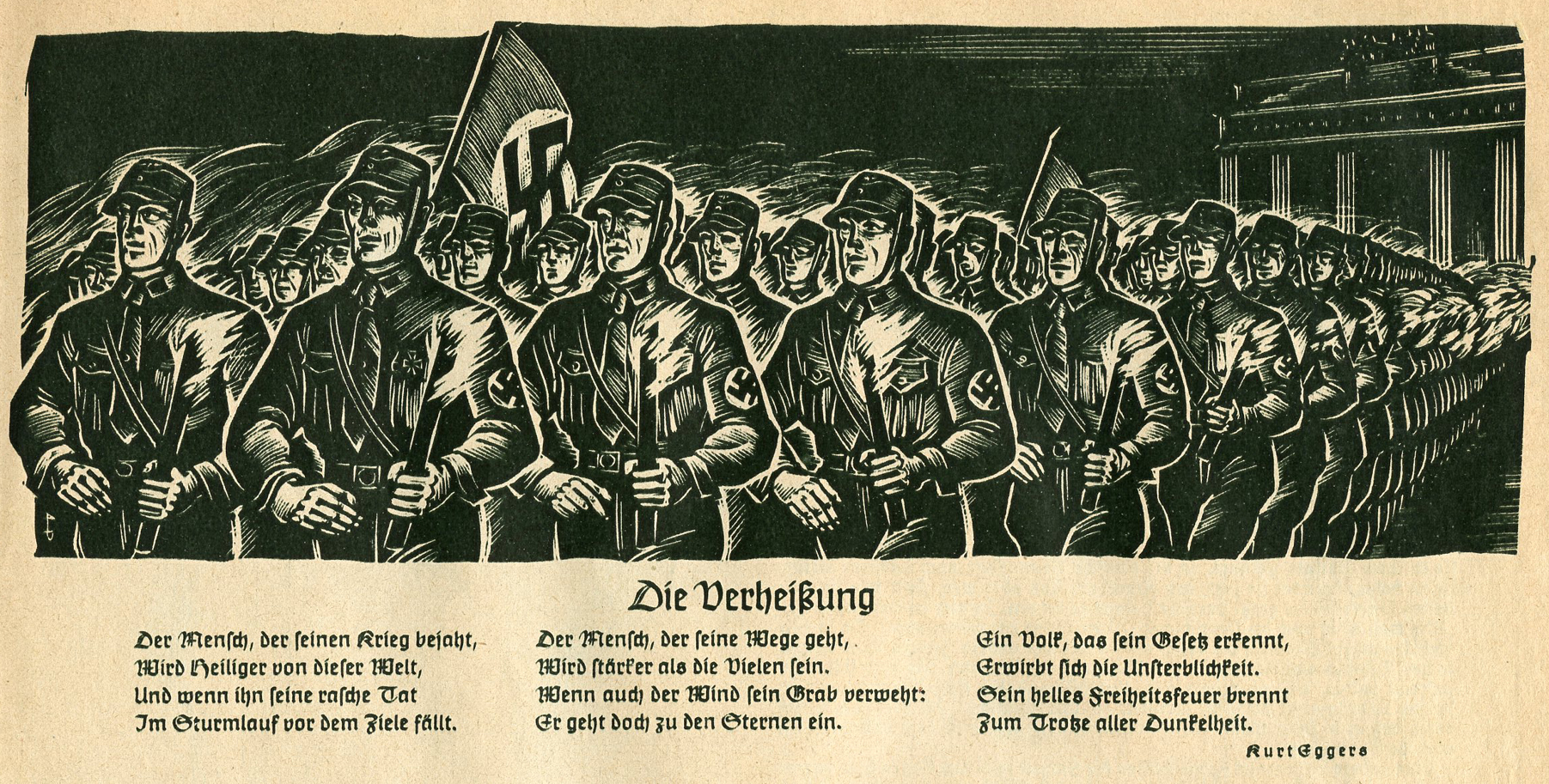
Interview with M. Engl, former SA man, Organization Todt supervisor and later in the Volkssturm at war's end. Regensburg, 1990.
Max: You can, but you may not like what I have to say to you. I for one do not understand why you young ones are so enthralled with that time of our past. It was not a good time and it should not be celebrated. I would never wish to relive the war years no matter what. However, I was born in 1910 living through the first war and will give you a brief history lesson here. Germany was left in chaos after the war was over. There were red revolutions breaking out, here in Bavaria, Berlin, and other cities, reds tried to seize power. Former soldiers joined into Freikorps units and beat them off. Hitler came onto the stage during this time, but did not fight in the units, he spied on them. He joined the NSDAP [technically the Deutsche Arbeiterpartei, or German Worker's Party], and then took it over. They marched in Munich in 1923 and were defeated by the police. This only made him very popular with the people as Germany was very unstable and I remember people were very weary of their future. I was brought to the Berlin area as my mother needed work since my father fell. She went to work as a laborer in a shoe factory. I was left to sit around all day watching the world around me. I saw the early Red Front demonstrations, and something inside me revolted against them, even though it shouldn't have.
I saw they just looked like a rag tag bunch, and pushed allegiance to Moscow, and not our homeland. I found that odd. There were many red youth in my neighborhood and they were mostly bullies. I will recount my first taste of them. I was sitting on our building's steps reading a discarded paper. Some Red Front members were trying to sell papers and put up posters. A group of their boys came to me asking if I wanted to help them with money. I said we were poor and had nothing to give. The older boy then pulled me up and demanded I help them sell papers, and he showed me his fist. I was timid so I did not disagree and went with them; I had to go up to people walking and ask for a donation for the papers. One man I asked stopped and berated me, telling me we live in our Germany and should not be supporting another nation, Germany was the home of Germans. That stayed with me and made me go on a path to look into the Hitler Movement [The NSDAP was popularly known as this in the early days]. I kept reading what I could and I saw this Hitler and his men were very eager to save Germany from the reds. I saw my first SA march in 1927 and a street fight where the Red Front rushed these men and tried to break them up. The Brown Shirts held their ground and the police put a stop to it. I was quickly making up my mind that the SA was a good place to be. In 1928 I applied to the Berlin SA and was easily accepted. The pay was not good but it came with free places to stay which also gave me money to give my mother. My time in the Berlin SA did not last long I will tell you. I was able to get into the SA well, and went to many events. The reds would do what they could to disrupt us but we were able to keep meetings secret and had safe places to stay. In 1929 I met that loud mouth Goebbels and he exalted us to fight to no end even though he was not a fighter.
We had many officers who were former soldiers and they actively sought out fights with reds and other political parties they opposed. I was in one such fight in 1930 where we marched, and had a police escort; our officer took us into the red part of the area. They went nuts, and the police backed away. The reds came out in force, throwing bottles, bricks, pipes, and anything else they could carry. I was hit in the head with what my comrades said was a rock and knocked out. I woke up in the hospital with a bad concussion, and under arrest. I was charged with fighting and marching despite a ban. The party had defense counsel already set up and they got the charges dismissed but that was it for my mother. She was furious I was taking up with such scoundrels who openly sought to fight. She had saved enough money somehow, and moved to Bernhardswald [a district of Regensburg in Bavaria] to work. I started working as a day laborer, but things were very bad back then. We lived on low wages and work was hard and long. The reds had infected many in the workforce, as I met many who sided with them, so I had to keep my politics to myself. I would go back to Berlin every so often as I could to see my former comrades, and I followed the papers about the fight for Berlin. I never knew that Horst Wessel, but he was in the Berlin SA as well, and was killed. He wrote the anthem of the party. That was my experience in Berlin, now when Hitler came to power I joined the SA again in 1933, I thought it would be good to help me advance you see.
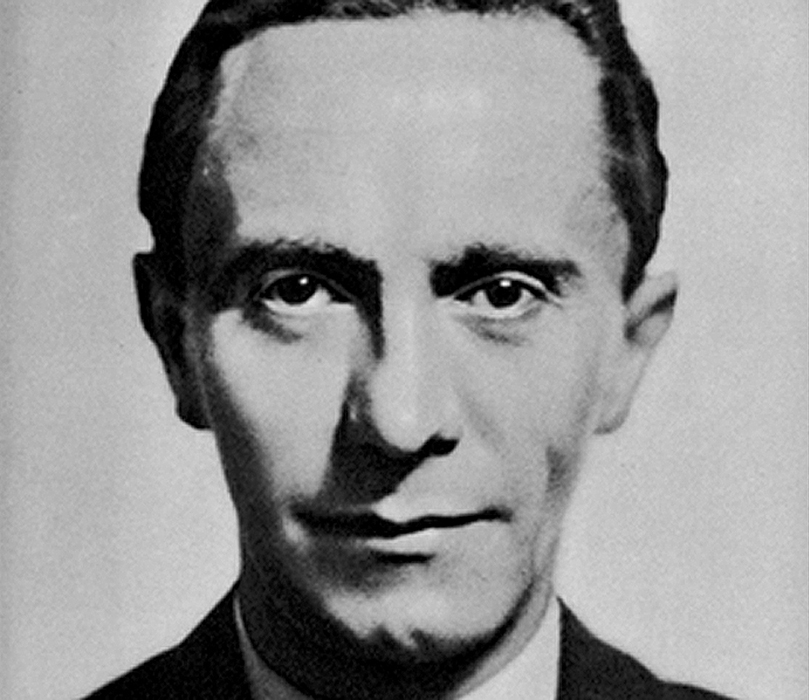
[Above: A rare merging of mind and soul - Joseph Goebbels, the heart of National Socialism.]
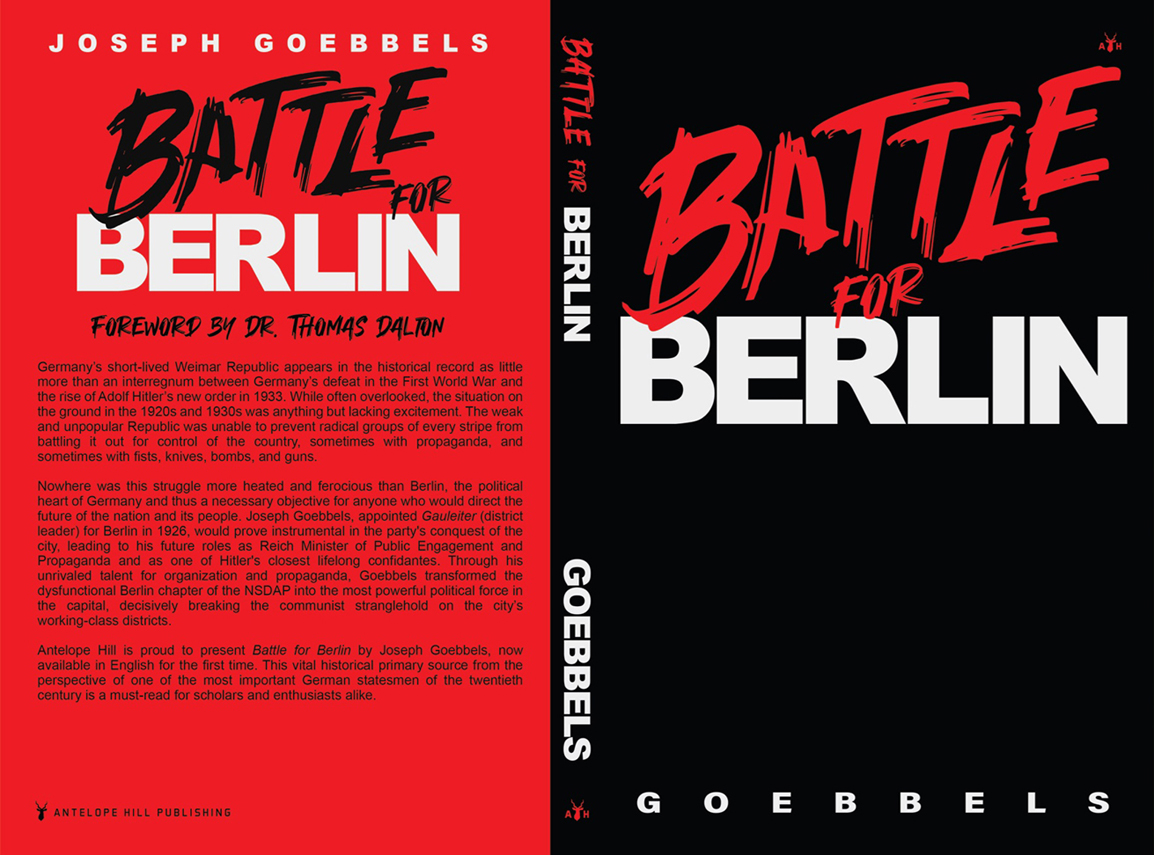
[Above: Joseph Goebbels wrote the 1932 book 'Fight for Berlin' about his experiences battling deeply entrenched communists in Berlin. The communists had a strong grip on the city and many battles were fought in the streets. But ultimately the communist monster was beheaded, further complicating Stalin's dreams of conquering Europe.]
Can I ask what your opinion of the SA was? You joined before the purge so I am curious if you saw anything bad?
Max: Yes I was in the early SA before all the madness. I can tell you I don't remember how I felt back then like I should. After Hitler came to power the SA was tasked with keeping order and providing protection for citizens. You see in those times Germany had bad crime, especially in the big cities. The SA was allowed to be police and could be quite rough with anyone suspected of crime.
My unit was posted in both Nuremberg and Regensburg, where it was very quiet. I have heard in the big cities there were mass arrests of reds and other opponents of the Party. This did not feel right to me. Hitler was taking away the freedom of the people to believe as they wanted. They even went after the churches who allied themselves with opponents.
A local priest was killed during all this, it was claimed he had given the Red Front names of SA men and their addresses so they could be attacked. That was not right naturally, but neither was the revenge. I was hearing many reports from comrades telling us all what was happening in the Reich.
We were posted to walk the streets in shifts to ensure no reds went out smashing things up or putting up posters. It was very boring and I remember we did not get paid which made a lot of us angry. Some of the comrades were starting to get tired of their situation and wanted the revolution to keep going.
I felt as if the SA was being run like a big money racket to be honest. After the seizure of power the fat cats drove around in fancy cars they confiscated or bought with ill-gotten monies. They began to ignore us little fish, and some were openly allowed to bully people. There certainly was an air in 1933 of revenge. Anyone who wronged an SA member or party member was now made to pay.
That did not look good for me; the people I could tell looked at us more like bullies and drunks rather than soldiers who saved them. I saw one SA man get thrown out of a bar for trying to hit on another man's wife, only to come back with comrades and shut the bar down. This was shameless and an example of the power that had been turned over to the SA.
That was not right to do, and I started feeling a disgust at this time. It was in 1934 that I walked away from it all. After the [Ernst] Röhm affair where the high leaders were accused of being homosexuals and attracted to boys, I wanted nothing to do with it.
Do you believe Röhm was actually homosexual and attracted to young boys?
Max: I can not say for certain as I did not know the man, but I can confirm to you there were rumors in the ranks. Many of the men were former soldiers who detested this act; they all preferred the pretty ladies of the opposite sex. Later on I met a man who, when we started speaking about our time in the SA, told me it was all true.
He said the leaders would go into schools and recruit young boys to take on as interns to learn the business so to speak. Many were seduced he said and parents filed complaints and asked for charges with the party. Some SA leaders were reds and wanted Hitler thrown out as they felt he was not revolutionary enough for them.
It was becoming a big problem for Hitler, and he did act in 1934 and purged the SA leadership. I learned our former commander in Berlin was arrested for these things. So I have to tell you I believe all the things they say about the SA are true. They may have started out as a good group to protect the party speakers, and to fight the reds, but they are an example of power corrupting.
I walked away from the whole thing in 1934 and went on to go to trade school to learn to be a bricklayer. The SA did help me there; it paid to be a part of the early struggle as you would get preferential treatment in hiring.
You saw firsthand the street battles between the Red Front and the SA, who do you feel was more violent, or was it equal?
Max: I do not know how to answer that. You must understand the history of the time, which I am slowly forgetting. The reds wanted open revolution and at times were very violent. The SA was formed to stop this and to fight fire with fire. There is no doubt some in the SA were drunkards and violent criminals as well.
They openly would seek out any opponents, not just reds, and fight them. We would disrupt speeches of any political opponent and at times rough up those brave enough to speak out during this. The goal was to show the people only Hitler and the NSDAP would be allowed freedom to speak.
You either got on board with this idea or you opposed it, and if you opposed it then you were no friend of the SA. The Red Front made use of this as propaganda but in truth they were just as bad, if not worse. They would openly attack our marches, assembly houses, and even target the young supporters as well. We never did this, but they killed a few kids they caught putting up posters.
I believe in the overall sense, we had to match their level of violence to beat them, however we did seem more disciplined mostly. There were some who were out of control and did bad actions, but they usually did not last long. We also had some reds that joined the SA to try to bring us down also, they were infiltrators, mostly in Berlin, and would tip off their comrades to our plans.
These men were dealt with in 1933 as well; anyone who was deemed a traitor was not allowed to live. The violence was appalling if you look at it like that, and was not justified, but now you have a sense of why it happened. Both sides could be violent as it was a battle for the heart of the people.
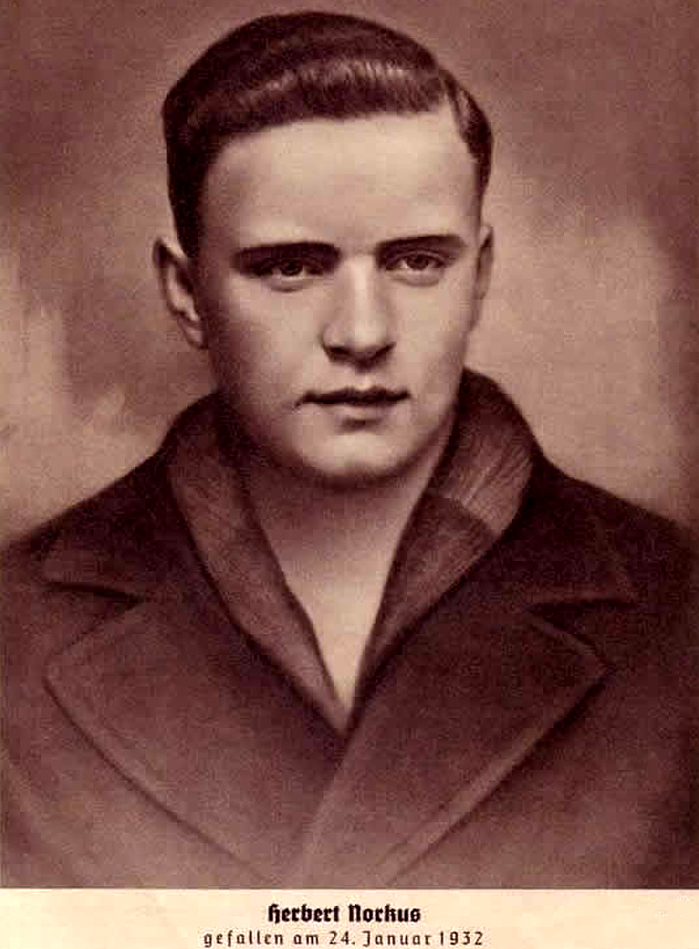
[Above: Herbert Norkus was an early martyr of the National Socialists, who was murdered by communists. He was 15 years old.]
Max: I must admit to you it was not bad after the first year, which was marred by the arrests and excesses. Once Hitler put his plans in motion there was a quick return to order and life got better. There was still the loss of political freedom, but many Germans accepted this since it meant stability. Gone were the days of the street fights, riots, and food lines that the parties only used as propaganda. One thing I will say about the Nazis is that they were the only ones who really stepped in to help the poor; other parties used them for propaganda. I remember helping hand out food that was donated to the Party to feed the poor during a very bad winter. Life was very good from 1935-1939, if you were a hard worker you succeeded in making a good living. I met my first wife on one of the cruises the labor front gave out [He is speaking about the Strength Through Joy program that did extraordinary things for the workers]. We sailed to Portugal and I met her on a beach trip. She worked in Munich as a waitress at a fancy restaurant; you might like to know she met Hitler there early on. We ended up being married in 1938 when I was promoted to be a foreman in my field. Those were very happy times until the demands came to return the lands lost due to Versailles [the Versailles Treaty stole many lands from Germany after losing WWI]. We did not want a war and it seemed like Hitler was bent on bringing one about. I really admired him for what he did with no political experience, but I disagreed with him here, there were other ways to go about a return.
He put Germany in a very bad light in the foreign press and we were always seeing where he was made fun of, and Germany made to look like an aggressive state bent on taking over the world. We only wanted peace and nothing more. Personally I think it was the people in those lands who were encouraged by Nazis to revolt.
These revolts caused the nation to crack down on them, and the nationalists formed militias to fight them. Maybe Hitler did not have all the facts on this and was led into a path to attack the government when it was the German minority [in lands lost, probably referring to the Sudetenland and Poland] who was agitating and causing the responses. Only God knows the truth.
I only say this as I read what is said about it all today, and Germany does not look good in the eyes of the world. If he really wanted peace he would have went about this in a more pacifist way. But alas, in September of 1939 we attacked Poland under the pretext of defending Germans. This shocked us, and made us very sad that we were at war again with England.
My peace did not last as I was conscripted in 1940 into the Organization Todt. I had training in brick and masonry along with road building, which was in high demand after the fighting ended.
What was the Organization Todt all about? I have heard the name but know nothing of it.
Max: This was a large work bureaucracy that was tied to the Labor Front [Deutsch Arbeitfront]. This was used to build the Autobahn, bridges, and many other projects. We had a rank system like the military men did. I was a Bauführer [construction manager, or building supervisor] since I was skilled in overseeing projects.
I had men working for me and I would oversee their projects. For example in Poland we were sent in 1940 to expand and build roads to make it easier for the people to trade and get goods. We also were used in building fortifications later in the war, in Normandy, for example.
Think of this as one big construction company that was sent into all occupied areas to help rebuild from war damage, improve infrastructure, or build fortifications. The dark side of this of course is that we are accused of using slave labor and forced workers. Let me tell you here it is true we did conscript locals to help us, and we used prisoners of war.
In 1944 I saw this; there were many prisoners of war who were sent to us to work on projects. At times we had to force people to help us with a quick project, but I must tell you I never saw them abused. I know some were not happy we had them work, and some went on to complain terribly about it.
I am of the opinion that in all wars people are inconvenienced in many ways and forced to do things they do not want to do. Because we had to do this does not make it right, but it is not wrong when everyone has to help out when needed. There were trials after the war in which it was claimed that Todt worked people to death on purpose, that it false judgment. We were short on labor, so we would take anyone we could get, and made sure they were fed and compensated either in monies or goods.
It would make no sense to need workers and yet starve, beat, or work them to death. We had our own medical staff and hospitals to help with any sickness that would inflict our workers. I am disheartened that all it took to pass judgment on us was one person's testimony where many others defended us.
They could accuse us of something bad and it is taken as truth in the media, even if there are others who counter their story, the media will use it as evidence of crimes. The person could be a liar and no one investigates them, they pass judgment on us with only very slight evidence.
Did you work on any big projects for Todt?
Max: Oh yes, I was in the east working on the rollbahn [a strategically important supply route used by German troops], and in Normandy to build the bunkers, and other Atlantic Wall fortifications. This was in Norway, Denmark, and Holland also. I was in France for all of 1943 working around the Caen and then Normandy area. The Field Marshal Rommel believed the invasion would come there so he was able to have us moved to help there. We built up roads, and oversaw the laying of obstacles.
A big help they ended up being, the Allies just walked right past them.
Do you remember if you thought the fortifications would stop the invasion?
Max: Oh yes, I fully believed all the propaganda of that loud mouth Goebbels. He would go on the radio and proclaim the Allies would be wiped away when they landed, just like [Hermann] Göring who said no bomber would ever bomb the Reich. All full of hot air and nothing else.
The bunkers were well built and placed, when looking out over the countryside I would often think of the carnage these guns would leave when the enemy came. On the beaches it was even better, there were well placed guns and traps to stop the landings, and I thought this was fool proof.
The propaganda films told us that millions of men were coming to defend the Atlantic Wall and stop the Allies. It makes me laugh to hear of this today as the Allies took the beaches with some areas not even firing a shot. The battle to save us and win the war was lost in the first hour. The Allies were able to knock out these fortifications we built with overwhelming artillery fire.
It was such a false hope; we spent a long time building these things, only to hear they lasted at best a few minutes under attack. I hope that answers your question. I was forced into the Volkssturm at the very end.
Can I ask about that? How was it in the Volkssturm?
Max: It was in late 1944 and into 1945, the fronts had collapsed and again the bosses like Goebbels called all old men and young kids to go fight. Todt was used to bolster and build on the West Wall to stop the western Allies, to no avail. When it was seen it was over, we were released to go fight, which few wanted to do. We were given quick training in arms and how to hit the enemy. It was during this that word arrived to me, very late I might add, that my wife had been killed in a bombing attack on our home. For me this was it, and I had no more desire to serve in any of this.
I received leave, and also told our superior I had no desire to return to the service and would refuse orders to fight. He told me I would be arrested and likely shot if that was the case. He did give me a month leave pass but I had no intention of returning.
I went home to see I had nothing left, my wife was buried with others I was told and I was able to stay with an old family who had lost their son in the war.
The losses did not make sense to us and were not worth the price. I stayed with them telling them I would refuse to return and fight, I had paid my dues and lost a wife. I was awaiting the arrival of the people to arrest me but they never came. The Americans came into our area instead and for me the war was over.
I was luckily enough to be older, a forced conscript, and laborer so I was free from arrest and put to work rebuilding Germany. The next years were a blur as we worked almost everyday at first to rebuild our towns, and lives. I met a woman who was expelled from the east and we married in 1952.
Can I ask you how you feel about the war crimes accusations that the Allies accuse Germany of today? I have been taught that the Nazis killed all opponents and waged a war of hate while trying to take over the world.
Max: Yes, that is a common belief in today's Germany. I am afraid the older generation will not agree with that accusation. I have to be frank with you based on what I saw early on. There were men who were given power, great power, and some abused it. Hitler was supposed to be setting up a revolutionary government but actually set up just a different version of the same theme. Fat cats were able to stay in power and were capitalist-minded men.
Many former reds were able to find positions in the government who gave them all open forgiveness. This inflated and emboldened people to act in a manner that made many disappointed in the Hitler regime. Because there were men like this in the ranks, and when war started, they were included in high positions, I cannot say they are innocent. Some of the accusations regarding thefts, intimidation, and illegal arrests I can fully believe and have heard them firsthand.
If you ran afoul of anyone in the party you could be bullied and made to pay a hefty price for the offense. This was not a good thing and should be condemned when it shows up. The abuse of power was not something made up, and there were many charges brought against some of these people, to the credit of the party.
These men were sent out into the field, wearing military uniforms that gave them authority. That would be inevitable that they would become lazy and corrupt, I believe. Now some of the stories I am skeptical of as they sound more like war propaganda than anything else.
The problem is being able to discern wartime propaganda stories with factual crimes. Like I mentioned about our Todt Organization, all it takes is one unhappy person to caste a dark cloud on us. I personally think the same is true with the SS and Wehrmacht, just one person can be taken on their word.
I leave out the treatment of the Jews as I can tell you I saw the anger directed at Jews in Germany, however I never saw the bad treatment they say happened in the east. I was in Russia on the rollbahn, and had many Jewish workers there and while they were not happy with us, they were not abused.
We allowed them to have religious services during a holiday of theirs; I was a witness to that. They were grateful to us for not disrupting them. I never saw them beaten, or belittled, which would not have sat well with many of us. We bought from them and traded with them. I know some lived in communities in the east that were not touched by us.
I have to end by saying yes it is possible these things happened, however we must be cautious of the sources claiming these instances. I do not believe it was a state policy to do these things, but were more an example of loose opportunists who used power as a weapon to do these things. I fully admit it is not a good look on us that whole families were uprooted and moved into ghettos and camps, this is shameful. However Germany was not alone in this and it should not be laid at our feet with endless guilt.
It was not right what happened to the victims, but there were many victims of many nations and I hope the world never has to see a thing like this again. Remember this quote for me, "War devours what peace has accomplished." I felt that was our life during those times, we built a great life, only to destroy ourselves by a senseless war.