Interview with Knight's Cross winner and Fallschirmjäger Alexander Uhlig, Bonn, Germany, 1988.

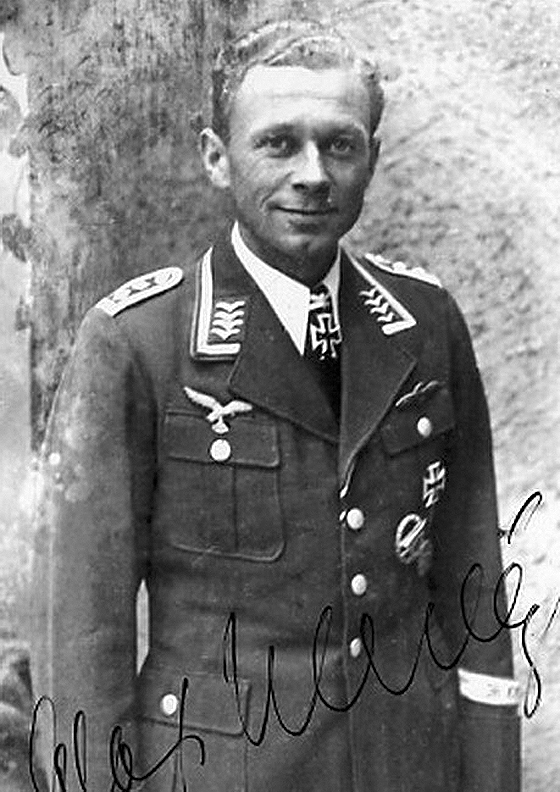
Interview with Knight's Cross winner and Fallschirmjäger Alexander Uhlig, Bonn, Germany, 1988.
Alex: I came to the Fallschirmjäger after much thought. My destiny was to go to school and build things, but my fate was to see things I loved destroyed during the war. The Fallschirmjäger were a trivial thing back in 1937, this concept was in its infancy. With this being said, the men chosen were the best and strongest, in addition to being the bravest for wanting to jump out of a perfectly good plane.
Because of the air of daring and bravery around them, I had a desire to join. I was in the General Göring Regiment at the time. The selection process was hard and training grueling, yet very rewarding. We had a very cavalier attitude, and our trainers and leaders encouraged it. Once at jump school a lad got into a fight with a navy recruiter on who had the hardest job, our man won, and our CO commended him in the end for sticking up for the regiment.
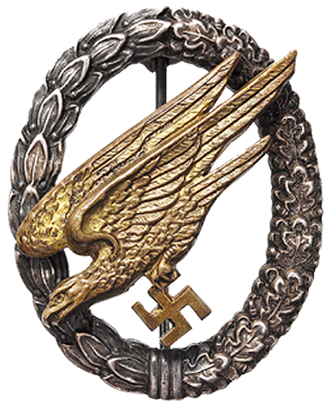
We were given logbooks to record our progress and jumps and after completing the jump courses, which included combat and survival, we received the jump badge. I was eventually selected to form the very first regiment, Fallschirmjäger Rgt 1. We were eventually deployed in 1938 during the annexation of the Sudetenland, which was colloquially called a Flower War.
What was this like, to enter another country?
Alex: It was nothing. Czechoslovakia was created by force through Versailles, and many people did not like it. The new government was not good to the Germans who had been absorbed against their will. This country had a mix of Germans, Austrians, and Hungarians who used to be a part of the ruling countries, now they felt the anger of the ones they used to govern. This is what started much of the crisis.
We were welcomed as liberators and disarmed the Czech army, whom many welcomed us as well and asked about opportunities in the Wehrmacht. Once Tiso [Jozef Tiso (October 13, 1887 – April 18, 1947)] was put in, things went back to normal and we were sent back to Braunschwieg. I remember this was exciting to take part in, yet boring, as most of the time was spend training or interacting with the civilians.
What action did you take part in during the war?
Alex: I was in most all of them. My regiment saw action in Poland where we landed to capture an airfield then went on to combat Polish army units. It was in Poland we had our first losses, but received valuable experiences being behind enemy lines, which helped us in Norway.
Norway was our next action, where we were dropped in bad weather and our relief was held up so we fought while being surrounded. We had the misfortune to drop in an area that was reinforced with fresh units. It was here I was made a prisoner, and I will add the Norwegians treated us well, an act we returned to them when we forced their surrender. We then jumped on Narvik [Norway], which helped turn the tide of the battle and we fought the Allies for the first time.
Here is where I made a decision, I was so impressed by the Ju 52 [Junkers Ju 52 transport aircraft] crews, I had the chance to cross train and become a navigator, which training took the rest of 1940 and into 1941. I was part of the action over Crete, and saw some of my old comrades. This is where I received the Crete Cuff Title, and my Flying Clasp. I went on to win the Iron Cross and all classes of the Flying Clasp. I was moved from a Kampfgeschwader [Kampfgeschwader is the German-language name for (air force) bomber units] to a transport squadron. Then in another turn I decided to return to the Fallschirmjäger and was assigned to the 16/FJ6 and sent to France to face the invasion. This was one of the few front line combat units in Normandy.
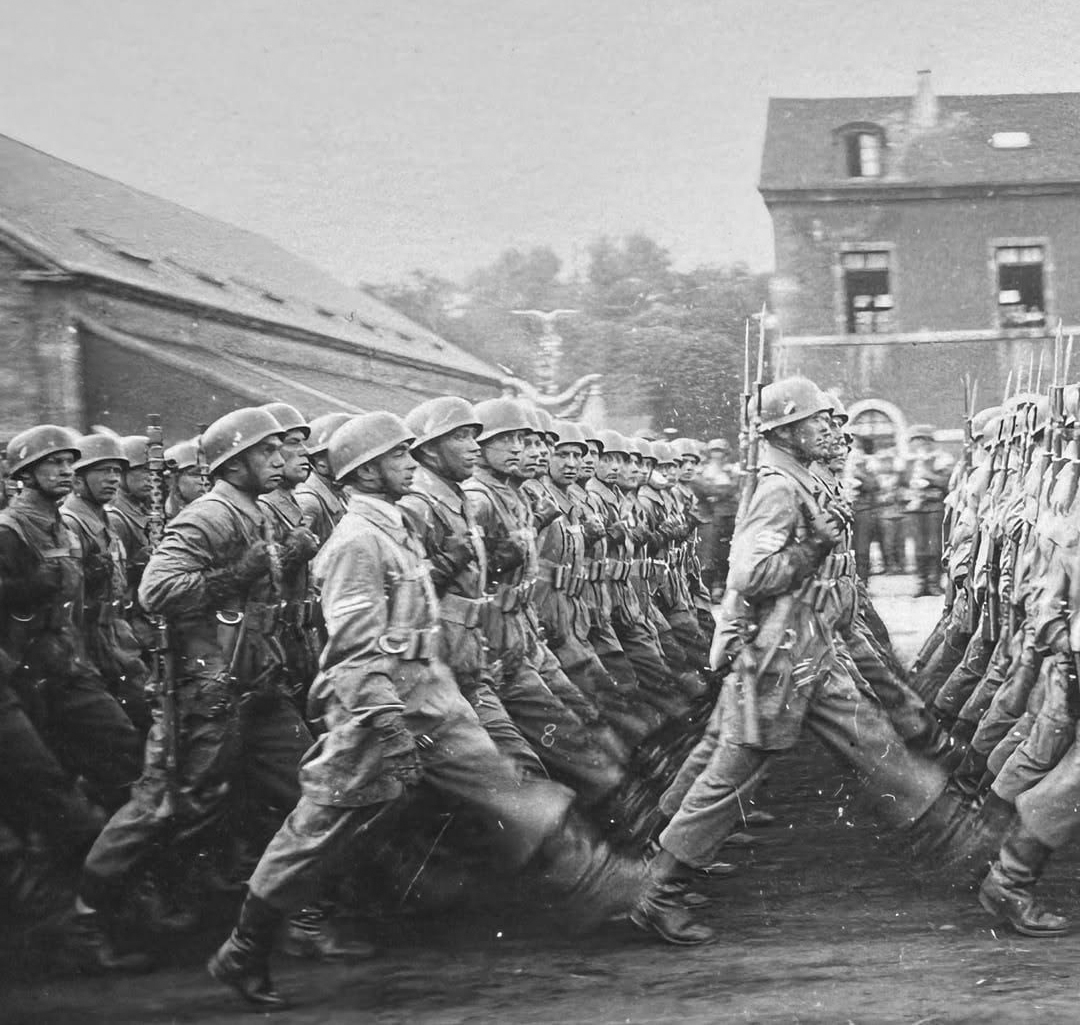
[Above: Parade of the elite Fallschirmjäger Regiment 1 in Stendal (a town in Saxony-Anhalt, Germany), 1940.]
What was your impression of Normandy and the Atlantic Wall?
Alex: The 'Atlantic Wall' was a joke. Our propaganda made it out to be a literal wall from Norway to Spain that would stop the Allies. The Allies built on this and even outdid our own propaganda to make their victory seem improbable and against the odds. They even overstated German strength, not telling the world the truth.
The truth is different. They held a huge advantage over us and we were the underdog. The defenses were very well built but were too far apart leaving huge gaps for an invasion to pour through. The troops defending the landing zones were eastern volunteers who did not want to be in France, they wanted to fight the Soviets. The strength facing the two Allied armies was just three understrength German divisions that were mostly foreigners and old men. I know Rommel [In November 1943 Erwin Rommel was appointed General Inspector of the Western Defenses, with authority to inspect the Atlantic Wall and recommend improvements.] was upset at what he inherited, but did try to put some sort of defense together.
Even my commander was appalled at our situation. The very small German force in Normandy had no air cover, no naval protection, and very few artillery pieces. We saw specialist troops laying mines and trying to create beach obstacles, but we had to mark where they were so it was easy for the invaders to bypass. The only good thing for us was the terrain favored the defender.
To my knowledge, our propaganda kept showing the 'Lindemann' battery as a formidable example of the wall, but they showed it many times over giving the impression they were everywhere. The only batteries in Normandy were very small caliber, and ineffective. The Allies controlled the air which made moving up reserves most difficult. Rommel was correct in wanting all divisions moved to the beaches to be kept ready to move as soon as the landings happened.
Our Fallschirmjäger unit, an infantry division, and the 21st Panzer were the only true weapons able to hit the landings, and were too few and too spread out. The 21st was savaged as they hit prepared British positions that had moved up tank support, which was on the first day. Our defenses were a complete failure, and an example of a nation not prepared to fight this type of war on so many fronts, lacking supplies and men. We literally were fighting the world. The vast armada the Allies put together off Normandy was staggering.
The SS divisions were very good and well-armed when at full strength. They were held miles away from the landings, and the Allies made their advance almost impossible. The Hitler Youth Division [12th SS Panzer Division Hitlerjugend] was not able to make any impact on D-Day. The others shared their fate, they had been held too far back and then suffered terribly while trying to move up. Some had to contend with the illegal acts of the resistance, which held them up to clear roads and bridges.
The Normandy area was quite peaceful and serene, we felt somewhat guilty for imposing on the French, but war is war and we had to do what we needed to stop the invasion. I found the people quite friendly and approachable. We often bought food and patronized their businesses. I heard of very little instances of German soldiers getting into trouble. Mainly it was from farmers trying to keep their daughters away from young soldiers.
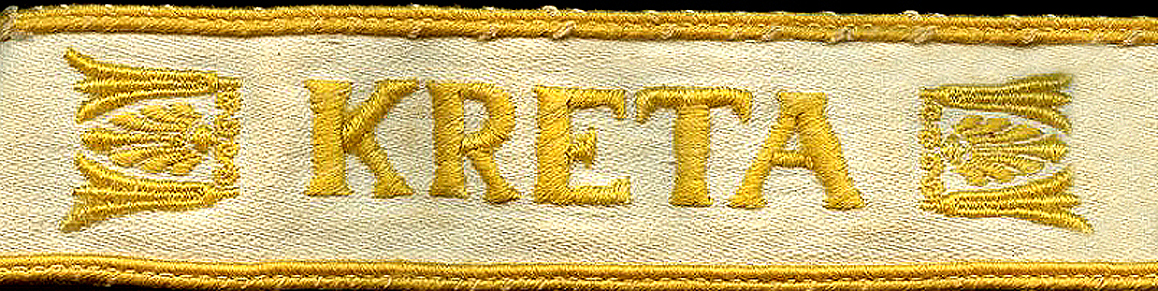
[Above: Crete Cuff Title.]
What was the fighting like for you?
Alex: It was a series of quick attacks and then holding against counterattacks. The Jabos [slang for Allied fighter planes derived from Jagdbomber, literally 'fighter–bombers'] were everywhere, and another example of inadequate equipment, we had very few flak guns. The Jabos roamed at ease most of the time. This is what I mean, the Allies make it seem like they attacked a much superior and impregnable foe, but the truth is we had barely enough men to fill our ranks, and we were considered an elite unit. It is no exaggeration that only a handful of men defended the beaches on D-day against the actual landings. The losses the enemy suffered is testimony of the defenders bravery and refusal to give in to the odds.
On the night of June 6 we were camped in the Contentin area [Manche, Normandy, adjacent to the English Channel] and we were alerted in the early morning hours by the light flak firing at the drone of engines. Soon reports of landings started coming in and we went to high alert status and readied weapons. Patrols were reporting activity in some towns like Sainte-Mère-Église, so we were ordered to proceed to destroy any pockets.
Our regiment was being led by von der Heydte [Friedrich August Freiherr von der Heydte (March 30, 1907 – July 7, 1994)] who was one of the best; he understood the terrain and the air power of the Allies. We kept pressure on the Americans, but lacked any real means of a successful counterattack. I believe we only had one or two vehicles for our resupplies so we ran low on food and ammunition daily. Once we were surrounded, and the Luftwaffe put in a rare appearance to drop supplies to us.
This part of the front held firm until mid-July, which is when we had reinforcements and started to push the Americans back in some areas. This is when I was recommended for the Knight's Cross, for breaking an attack by an American regiment, and then taking many prisoners and shortening their grip.
It was not until mid June that reinforcements arrived and entered the battle, this brought us some relief and with them came better weapons to engage the planes. I saw more flak, both mobile and stationary. More Panzers moved forward, but we could tell they were still outnumbered and many times outmatched by the new Allied types. I did see a battle where one lone Panzer knocked out 3 or 4 tanks, he shot well.
What happened to bring about the award of the Knight's Cross?
Alex: My commander tasked me with attacking what he believed was a small reconnaissance force; I gathered my men and moved out to have a look. Right away, I could see this was a much larger force but I knew it had to be done. I sought more weapons and men to assist. A plan was laid down, and we attacked, driving the enemy back as they were unprepared. We had one Panzer and two heavy machine guns to help.
As we advanced on the enemy they started surrendering and our attack brought us all the way to their command post, I was able to convince the officers the battle was over. Some who tried to escape our attack were hit by the machine guns, so this convinced everyone else to give up. We disarmed them, and made sure any wounded were taken care of.
I had them marched to our command post to be processed and sent to the rear. In every way, they were treated well and we made sure they were not harassed. Some French civilians who must have suffered losses would hurl insults on them. In the end, we took 280 prisoners and took back lost territory. As I look back this was quite an accomplishment as my force was very small and underarmed.
You mention French civilians, what was the feeling of the French during the battle?
Alex: They were not happy for sure, and it was sometimes humorous as some would come out and ask us to leave their property so it did not receive damage. We could not always honor this request. The French suffered greatly due to the bombings, the Allies dropped bombs on towns and villages often. The Allies had an unlimited supply of artillery shells, and would fire on areas haphazardly which caused needless damage and killed French civilians. Some French hated the Allies due to this.
German forces did what we could to help them, and many times, we had to order them to leave their homes and villages to avoid the war. Some would not and paid with their lives when their home was hit. Some of the civilians worked for the Allies in the resistance and unless they attacked us, we left them alone. In our area there was very little resistance, they mostly worked far behind the lines, as they would not face front line combat units.
For me, the bravery and humanity of the German soldiers showed itself in Normandy. We were outnumbered, and in a hopeless situation, but still found a way to help the civilians and show mercy to our enemies. One example was after my unit's attack, which left many American wounded. We treated as many as we could, but some were left out in no man's land, and anytime my men would go try to help, they were fired on. We organized a plan to seek a truce, but it had to be approved.
I noticed a few men ventured out to look for wounded and I ordered my men to hold fire. Shortly after von der Heydte asked to seek a truce in which we traded wounded and helped recover the casualties. This was an act the Americans appreciated and gave praise to our regiment. We even gave some wounded French over to them as they had the means to care for them better than we could.
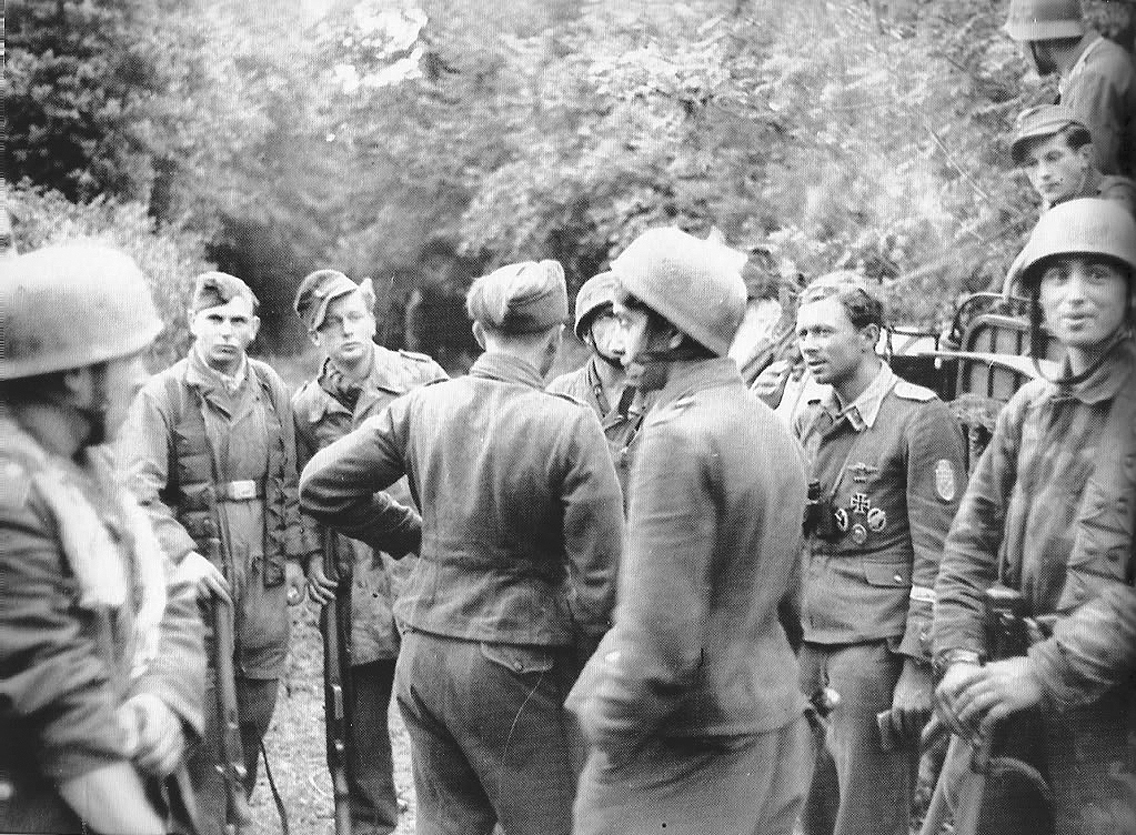
[Above: Alexander Uhlig, second from right. Note his Narvik Shield on his sleeve.]
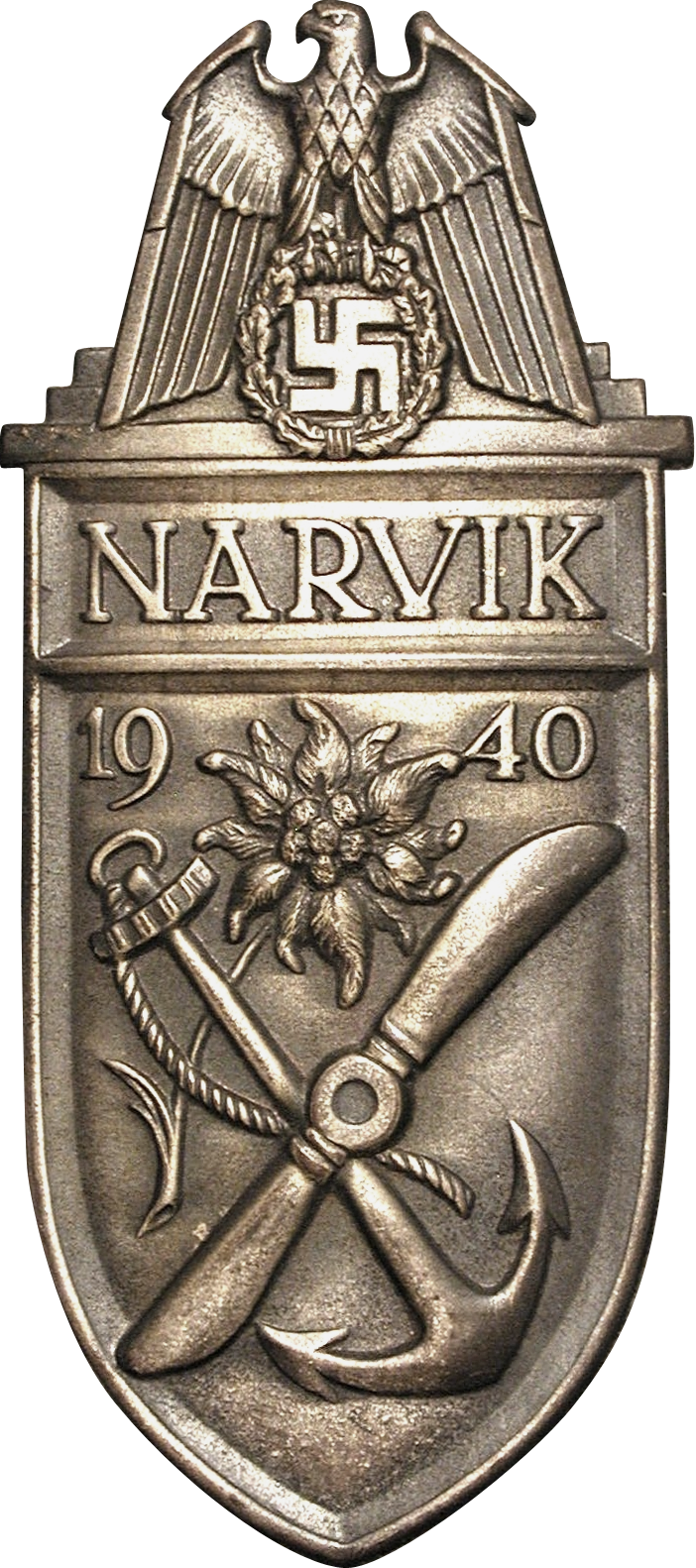
[Above: Narvik Shield.]
The Allies have made claims that German forces committed war crimes in Normandy, did you see any?
Alex: I do not understand the fascination with war crimes. I am told the SS units in Normandy committed some. The Götz von Berlichingen Division behaved well from what I saw. I am not sure where I stand on this. If it is true the perpetrators should be ashamed and held accountable, but the Allies were just as guilty. I know they shot surrendered personnel, attacked a marked field hospital, and strafed marked Red Cross vehicles killing many wounded.
I saw French civilians killed by Allied bombings, artillery attacks, and strafing by roaming planes. To me these are just as bad as what they accuse the SS of doing. I spoke to a young SS grenadier who told me on their way to the front they captured some saboteurs and shot them, but that is not a crime. I have largely avoided the topic of war crimes as I feel like it is very one-sided, and we cannot defend ourselves.
I am friendly with my former enemies and get invited to their reunions and meetings. We only focus on our lost comrades and the good times, we know not to breach the topic of who was bad and who was good. We were only soldiers defending our countries in time of war.
You mentioned you escaped British captivity, how did you do this?
Alex: Yes, as far as I know I was one of only a few to escape British prison camps. I was captured and eventually sent to Britain, the end of the war was announced and celebrated. We all thought we were going home, but the Allies had other plans. They illegally held us, and even though we were mostly treated well, it was wrong to keep us. We had no way to protest.
Germany did not do this, if a nation surrendered all personnel were sent home unless they were being held for other offenses. Even the nations we were actively at war with would have prisoner exchanges and releases if one were severely sick.
In 1947 I was determined to break out; my captors knew this and tried to keep me under close watch. I was able to outsmart them and use a decoy to deceive them. I made my way to the docks, bluffing past security and snuck on a ship bound for Germany. It was very easy that I was surprised I did not run into obstacles, but to most Britons the German accent was no longer a threat.
I made my way through Germany, and could not believe the devastation I saw. On leave, I would see some moderate damage, but now in some cities it was complete destruction. I was able to make my way home in the Russian Zone and started to rebuild my lost years. I was able to reenter school and finally become an engineer.
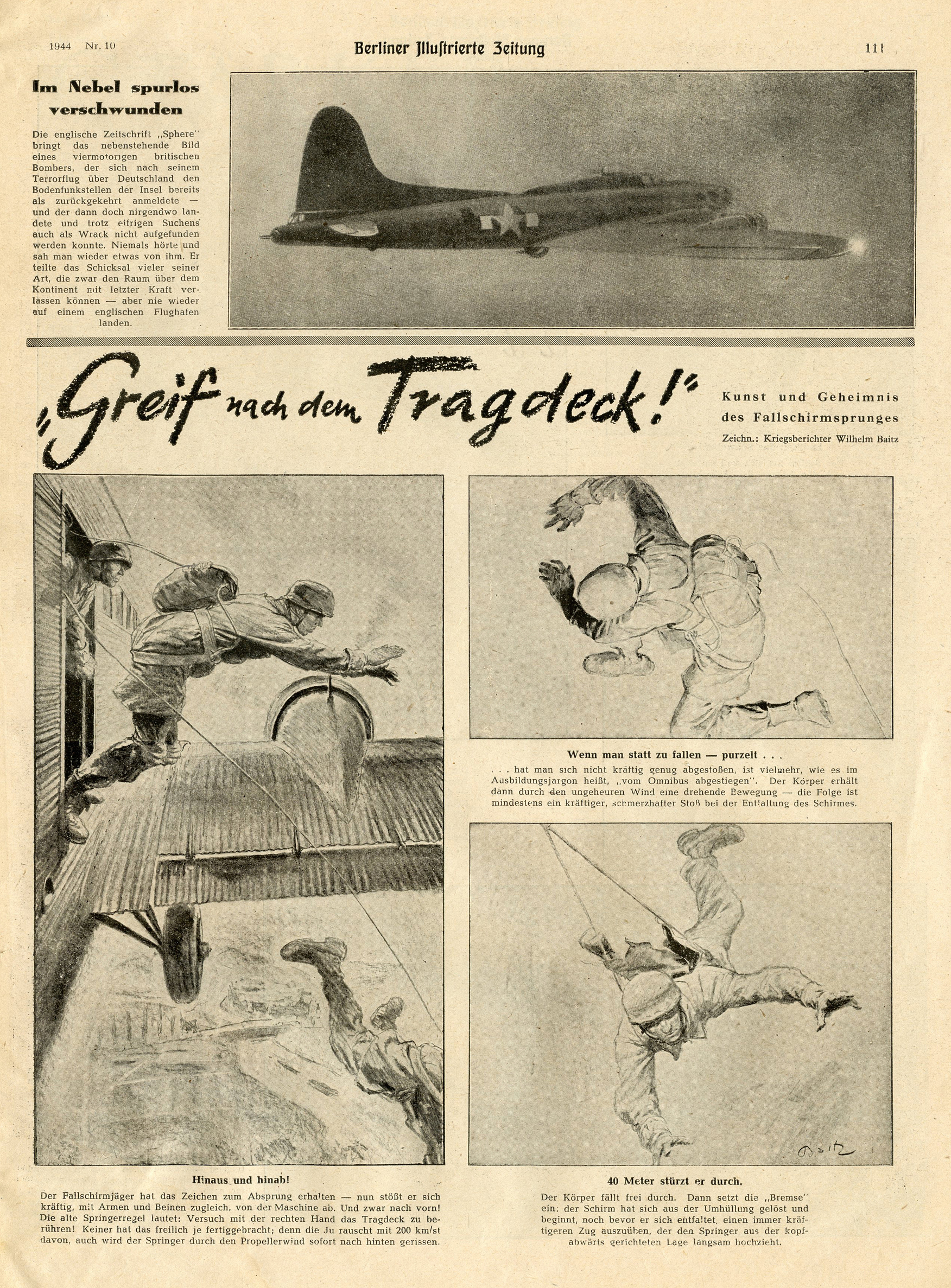
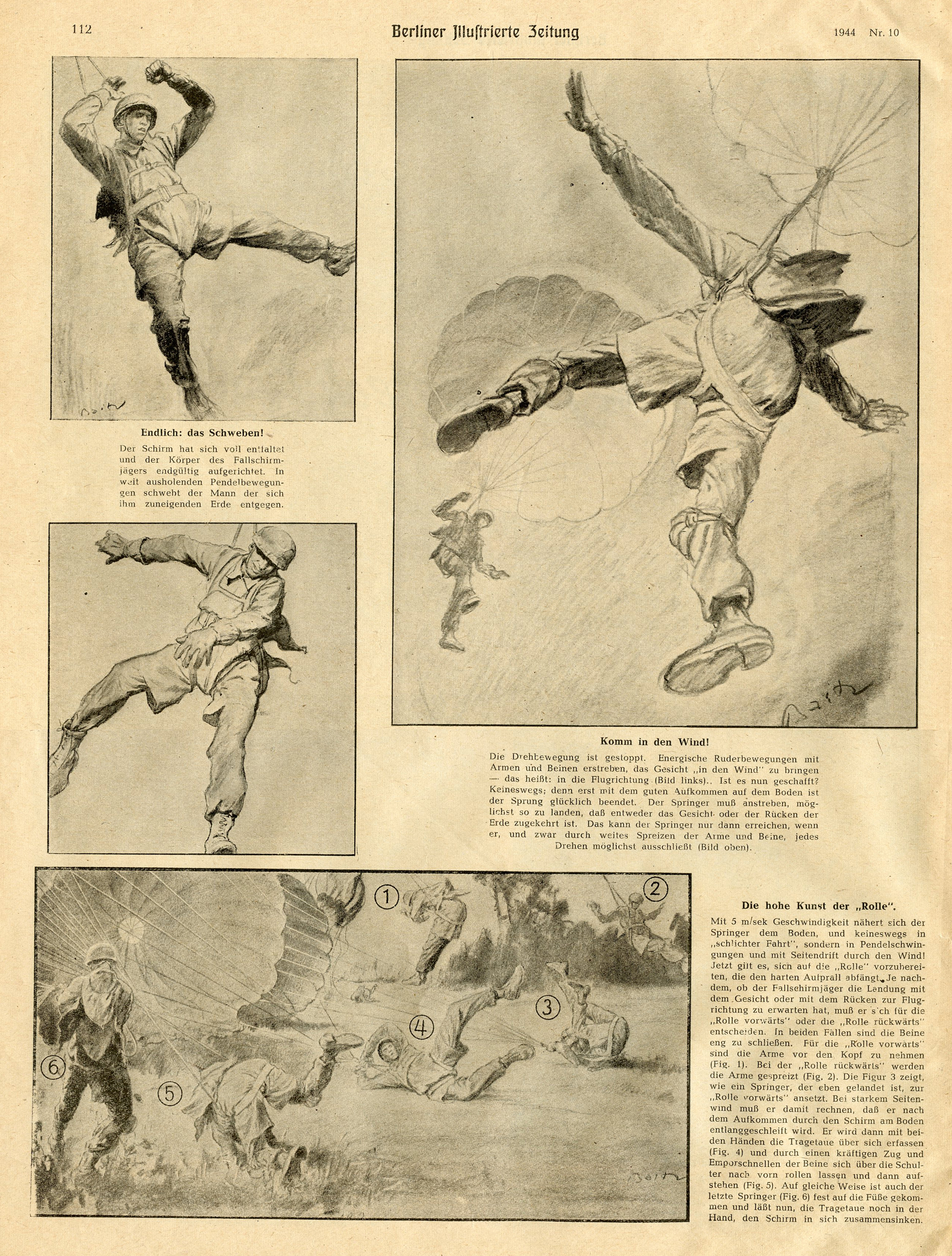
[Above: Illustrierte Zeitung, number 10, March 9, 1944.]
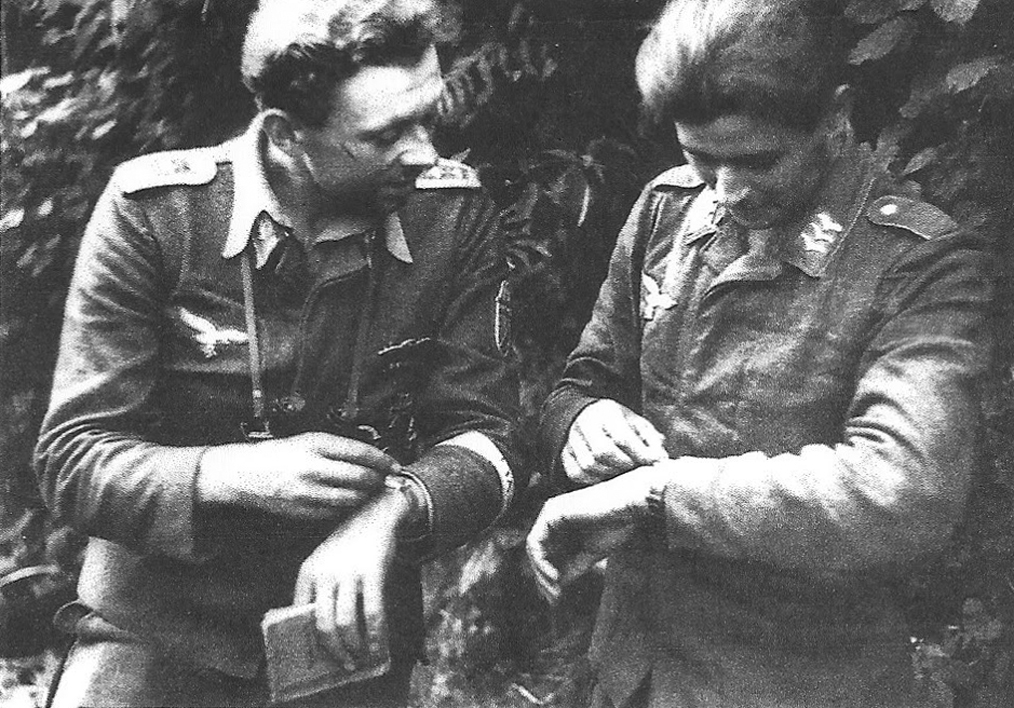
[Above: Uhlig synchronizes his watch with a comrade in the field.]
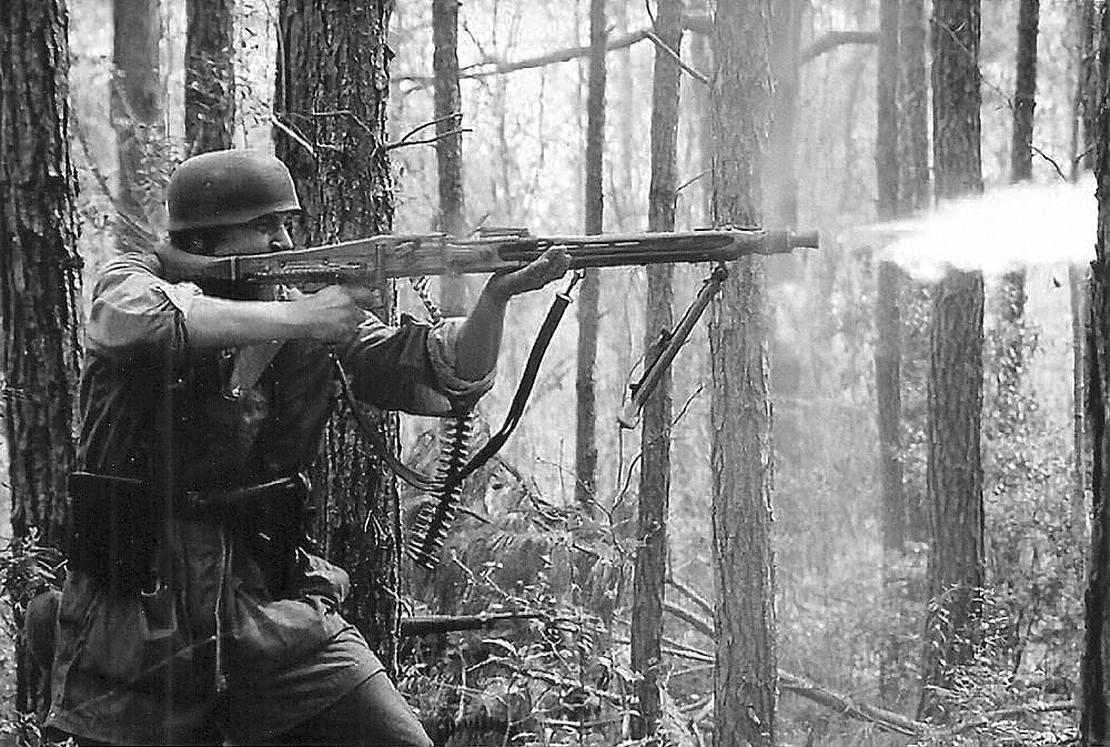
[Above: A bold Fallschirmjäger fires a MG-42 light machine gun.]