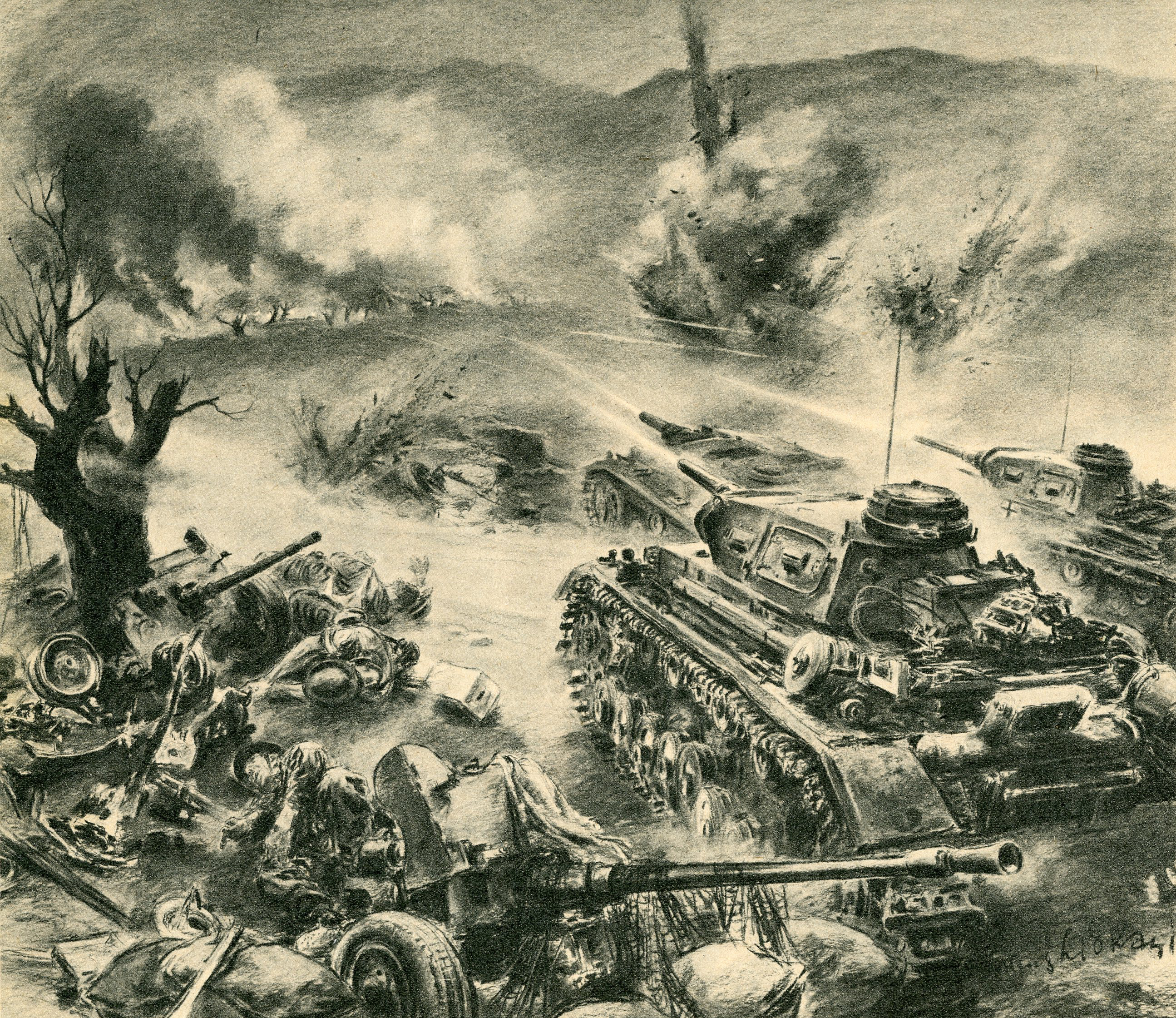
[Above: Taken from the Berliner Illustrierte Zeitung, number 26, June 26, 1941.]
Interview with Gustav Krippl, from SS-Panzer-Regiment 3 'Totenkopf', veteran's reunion, 1990.
Thanks for letting me speak with you, I would be curious to know why you chose the Waffen-SS as the branch to join.
Gustav: Yes, yes, you are good. The decision to join the SS was made for me. When war started my class all wanted to do something, we were foolish. The Hitler Youth conditioned us to be prepared to go to the armed forces after labor service. I was pre-selected you could say to go to the former Waffen-SS.
I was not a party member or fanatic, I only wanted to serve my country and since we could be drafted and not get a choice in where we served, I chose my fate, and ended up with these rough and dirty mates. I was able to go to Panzer school and pass all exams which put me in the Totenkopf Panzer Regiment.
What did the Totenkopf insignia mean to you?
Gustav: It is nothing more than military bravado; all throughout German history the Totenkopf has meant the same thing. It stands for honor, duty, bravery, but above all loyalty; it showed we would be willing to fall to defend our people. It was nothing sinister or bad like what you hear today.
Our former enemies could never seem to understand that, they created all sorts of misinformation about the meaning, and the Waffen-SS. The Panzer arm used the Totenkopf as well and it meant the same thing. It is a symbol used by many former and present armies.
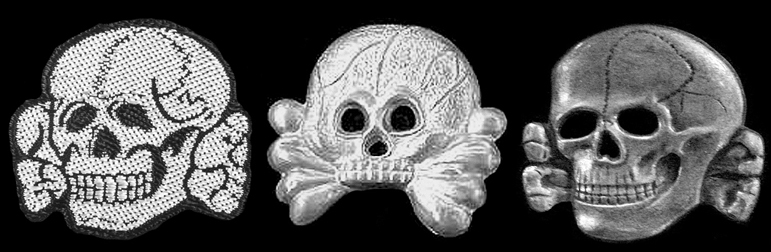
[Above: Waffen-SS insignia and tanker collar tab insignia (middle).]
What was it like being part of a Tiger tank crew?
Gustav: Oh, the big cat was a monster of a Panzer to deal with, let me tell you. On one hand they offered good protection and gave us confidence to face the heaviest of Soviet armor. On the other hand it was too heavy and slow. I remember the tracks too, we had to remove tracks to travel by rail, and you see they had big tracks for the Russian mud.
Sometimes in the cold the starter motor would fail and we had to jump out and use the stator motor [the stationary outer part of an electric motor. It holds copper wire coils. When power flows through these wires, it makes a turning magnetic field. This magnetic field pushes and pulls the inner spinning part, called the rotor, to make the motor turn], which was by hand, it took two of us to do. There were times this was done under fire, and it was quite unnerving I should say. The Tiger [tank] was loud, bumpy, and smoky, we always smelled of oil, fuel, and powder.
We wore the black uniforms just because of all the dirt we were around on a Panzer. Sometimes we looked not much like soldiers we were so dirty. I would wear a grey shirt often instead of the tunic, it became very hot in a Panzer, and so sometimes we were half naked.
I will tell you we also had to watch bridges and roads, sometimes they would collapse, the Tiger was very heavy. They also broke down often, it is testament to our mechanics who worked night and day to keep them running. Boy, when they did run they worked well and the enemy feared them.
As I said, a Tiger gave us confidence we could whip anything that the Ivan had. We had very good optics so it was easy to knock Ivan out at long ranges. Of course as the war came to the Reich there were many obstacles to prevent this. We were not built for city fighting or the hills.
I must say too we had to watch each other, Ivan could shoot back at us, and he had guns that could penetrate. We ran into many pak [Panzerabwehrkanone anti-tank gun] fronts which made it hard for us; they would be well hidden often. Our tally was more often than not Ivan's pak guns; we had to have very good eyes to spot them.
When a shell hit the turret it would give us a hard headache, it was as a bell ringing. Often it would mess up our home, as we scrambled to see if a penetration happened. You see we lived in the Panzer; we started with the smaller MK III and only had a little more room in the Tiger.
The Third Regiment had very few Tigers; we used the MK IV and V so each was different but all were cramped homes. We ate, drank, and slept here. We put up photos of our women and families. If we were lucky someone had a naked poster to put up, but this was frowned upon as it belittled German women to be used as sex symbols.
One good thing was in the winter time we stayed warm when the mud trampers were cold. When nature called it was a different story though, they would laugh at us when we had to jump down to go.
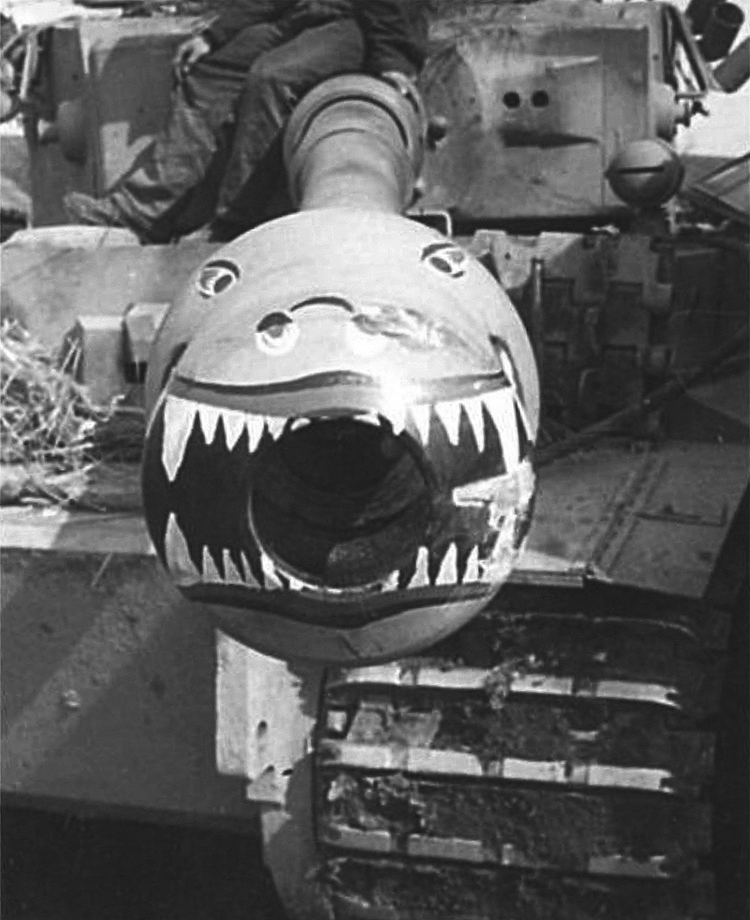
[Above: A Tiger Tank belonging to the Schwere Panzer-Abteilung 502 painted with tiger shark's teeth on the muzzle brake, summer 1944.]
Can I ask you what you think about the Waffen-SS, especially the Totenkopf Division, being accused of war crimes?
Gustav: No you can not, that is bad form and not what this is about. I can give a crap about what former foes think or say. We fought with honor and did our duty to our oath; I would never be a part of something that was criminal. We had nothing to do with the camps and I resent anyone who implies such, they are ignorant to our role.
They want us to be ashamed of our past, and cry like little girls that people were killed, well you know what? Our people suffered more than anyone yet you would not know because we are not a people who cries victim. You can take that to the bank.
I know you were on the East Front, how did the people treat you?
Gustav: Hmm, I would say pretty well considering we were at war. You see many of the civilians viewed us as their liberators and relied on us to destroy Bolshevism. Anyone who was opposed to us just ran over to the other side. We would see them; they would have carts and be headed east.
The vast majority stayed with their homes, and were quite good to us. We often would stop in a hamlet and park our Panzers, and be treated to hospitality. We had orders to commandeer the home if need be, but I do not think this was enforced.
Many of the women were quite old and welcomed us as sons. One stands out who spoke German well, she spoke of the battles during the revolution. She lost her husband to the Bolsheviks and resented them ever since. She had his photo hidden until we came, then put it on display; he was in the Tsar's army.
I often wondered what happened to the people we met, many retreated with us, I saw the long columns. Ivan had no problem attacking them; they looked at them as traitors. I saw many who had been shot down while moving to the west. The Soviets say awfully bad things happened to the people, but I do not believe them, they lie with propaganda.
Do you have any regrets for having been in the Waffen-SS?
Gustav: No, there is no question of that. I am proud to have served with the bravest men who have ever lived. We have nothing to be ashamed of, as someone told you already. You see, our former foes have had nearly 50 years to put their tales together.
They own or control all elements of information so the people only get to hear one side of the war. They balk anytime one of us has tried to defend ourselves; they have created mindless people who can not rationalize. The older ones who lived through it want nothing to do with it again; it is too painful to remember.
I read what transcripts I could find regarding postwar trials, and it is clear to me they forced our leaders to turn on each other. It has been rumored they beat and tortured the men to confess to what they wanted them to say. It would be easy to do, they had the power of life and death, so they told them to say this or die.
Even our comrades went through this in trials and the judges had no interest in proving innocence, only in proving guilt. If you can believe this, it only took a person's word to charge a soldier with a serious crime. It took them up until the 50s to see the faults in the process, by then hundreds had been hung for nothing.
This is why I am not ashamed, we were dragged before the victors as criminals and told to be ashamed of what we had done, of what Germany had done. We only knew that as soldiers we did our best, fought with honor, and were free of crimes. If others have committed crimes then it should not reflect on us.
Our orders were always clear to us, obey the laws of war, treat the civilians well, take and treat prisoners well, and be humane. Anyone not following these commands faced harsh punishment. The only times these commands may have been blurred was by the rear area partisan hunters.
If we ran into terrorists and saboteurs it was a death penalty offense, as in any army. These instances can in no way be seen as a crime, yet they are. That is all I will say on this.
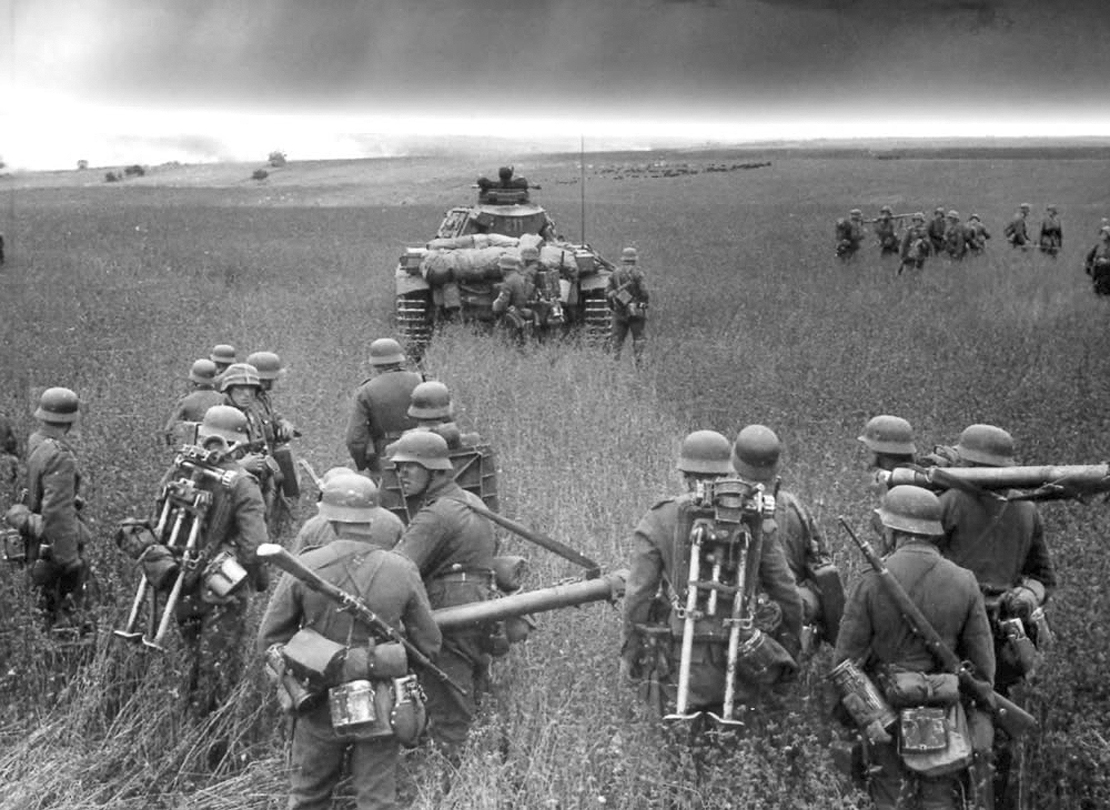
[Above: German soldiers follow a tank somewhere on the Russian steppes.]
Back to Interviews