[Above: .]


     Interview with Oskar P., a veteran from Police Battalion 101 who also played a part in putting down the Warsaw Uprising, 2001, phone conversation.


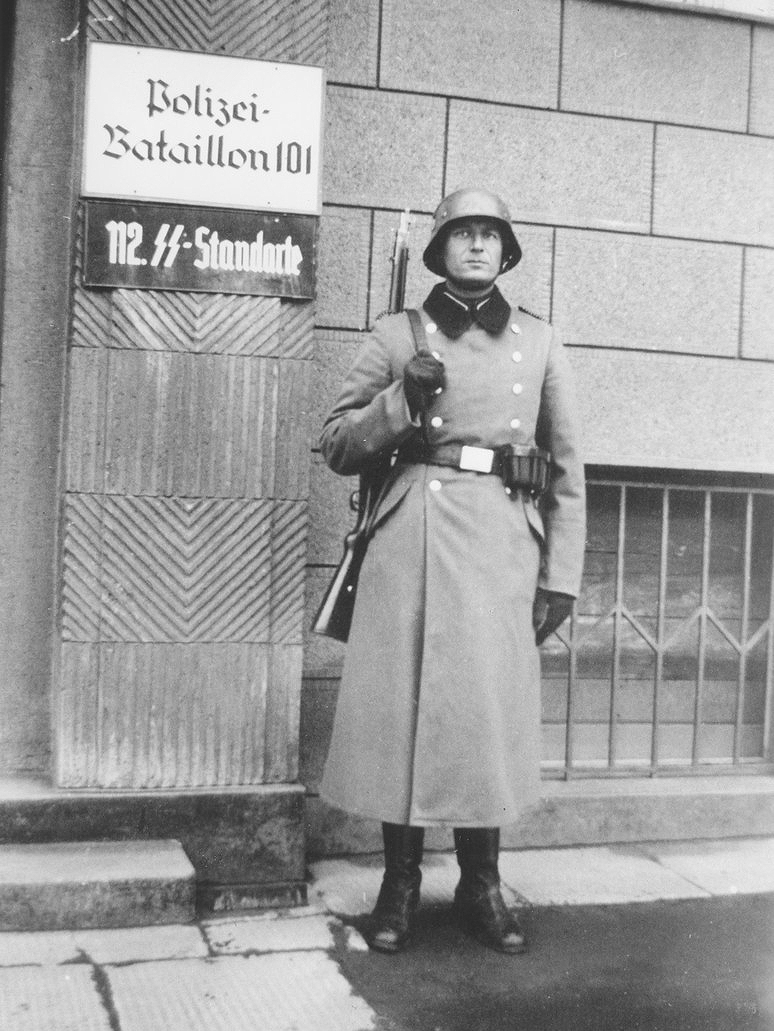
[Above: A soldier stands in front of the Police Battalion 101.]

I would like to ask you some questions regarding your service in the police and experiences in Warsaw if I may. What brought you to the police?

Oskar: I was born in a town called Harburg [a major borough and port area in Hamburg, Germany] and after finishing my schooling in 1940, I enlisted to become a police officer. I always had a great respect for the upholders of law and order. All societies need this or they fall into chaos and anarchy. My parents supported me doing this instead of being drafted.

What was it like being a police officer in the Third Reich?

Oskar: No different from being one during any other time. I came in at a time of war; much of our training was espionage and tracking black marketeering. The German police were divided into various branches to help the population with different issues. There was civil police, which was called the state protection police, to keep people well behaved, and we dealt with stealing, arguments, curfew violations, adultery claims and any other normal law enforcement issues. The SD and Sipo dealt with treason, spies, and espionage.

My training lasted much of 1940, and then I was sworn in as a police officer, assigned to the wharf area, so I worked closely with customs and border police units dealing with thefts from cargo ships. I also had to work with Luftschutz personnel to make sure blackouts were enforced during air alarms. We had a large dock area and railhead that the British liked to target.

You mentioned to me that you were sent to Poland for occupation duties?

Oskar: Yes, in early 1941, Police Battalion 101 was recruiting in Hamburg, they were an armed combat formation, and I thought it would be good to go to the east to see what it was like. I had heard that there was a lot of action dealing with the underground, and that Jews were causing problems. Being a young man, I wanted to see for myself. I was accepted at the same time the battalion returned, so no trip for me anytime soon. I was sent to training along with many of the old hares who had been in the battalion since 1939. They would often talk about how Poland was a good place, but very backwards as it was mostly rural. Many Jews had towns they started and these towns had to be watched closely as Jews tended to specialize in the black market, espionage, and being very sympathetic to the communists. One man told me they would use their children to sell illegal items, or run organized crime rings in the city from these small hamlets. It was so bad that finally many of them were rounded up and moved to the ghetto so they could be concentrated and watched. I was even more curious to get to this area to see for myself what it was like. We had Jews in our city, who moved freely, but were looked upon as having dual loyalty so the security police watched them; this had to have special authorization from higher up.

What finally got me to Poland was an accident. I was ordered to report for machine gun training and certification. I was on the range with an ex-Czech weapon with an older man who was Czech himself. He was telling me in broken German how they made weapons equal to our quality. I started firing and the barrel and breech exploded due to a jam, hit me in the face with shrapnel and I was wounded. My parents were upset and wrote a letter to our local political leader, it was a big embarrassment for me. He came to visit me in the hospital and promised he would look into it. I remember saying it was just an accident and nothing more. It still caused a big stink as the words sabotage and faulty ammo were thrown around which got many excited. Nothing came of it.

When I was healed and ready for action, the 101 was back in Poland. I was sent orders that I was to report to the Warsaw police station for occupation duty. I was mad as hell as I wanted more of a combat role dealing with the underground. I had a commander pull me into his office as he heard my outburst. He told me that in Warsaw there is a large underground and I will be kept busy, so I calmed down and figured it was orders anyway, so no way out. I had no idea of what his words would mean later on, he was quite right about the underground being active.

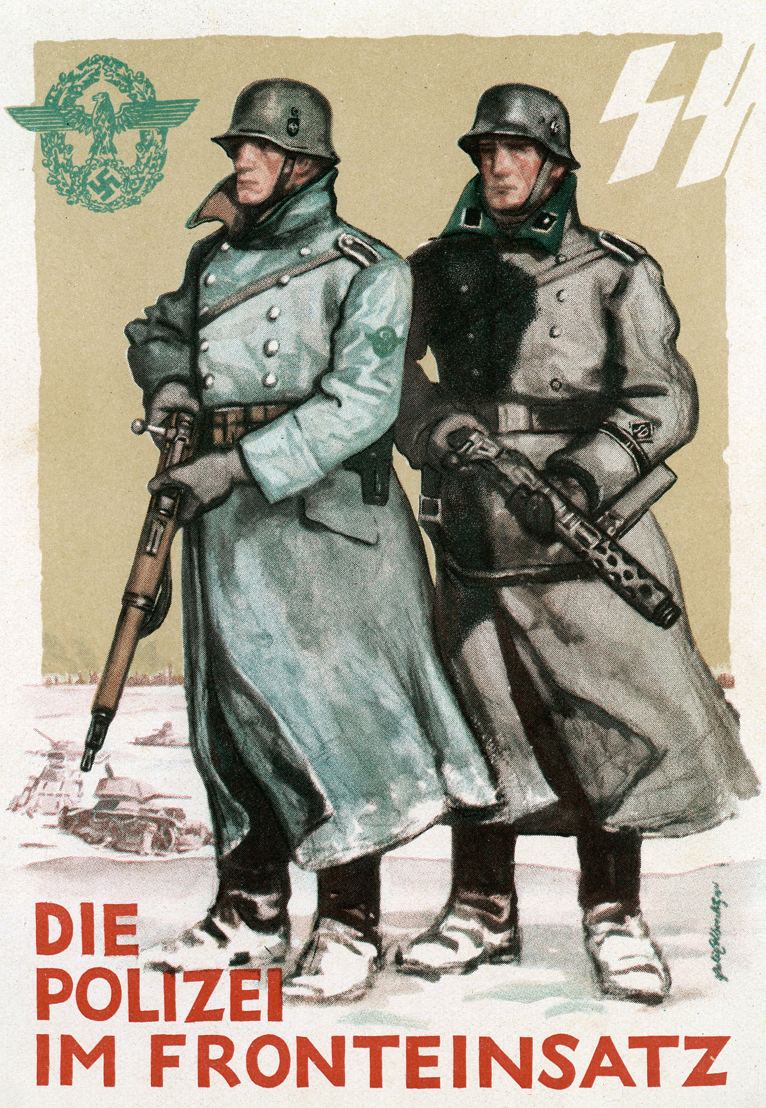
[Above: 1942 postcard celebrating the Day of German Police. Click to see reverse.]

What was Warsaw like for you and how were the civilians? People are taught the Germans harassed and killed off most all Polish citizens for no reason.

Oskar: If we did, I saw nothing of it. There was very little action against the Poles, only the ones who broke laws had problems. My experience early on was very positive. The Polish citizens were friendly and quite helpful. I was housed in an old barracks that we shared with other auxiliaries, including Helferin [female helper, assistant, or female auxiliary] for the police and other organizations. I met many of the girls who were my age and we would often go for walks, ride bikes, and go to dances at the many clubs. I became quite good at this, and the Polish girls would show us their dance styles. It was a great time for me as it was like the war did not exist. I feel like we had a very good relationship with the Polish people, I do not understand all the claims they make now that we hated them. It is foolish; Germany needed them as allies, even though they were former enemies. Many came to Germany to work; we freed many of the prisoners as a gesture of our intentions. However, some were rearrested for breaking the rules of their pardon. We caught one my first month in the city for hanging papers critical of us and encouraging sabotage. He was sent to a work camp.

I had met a girl my age who worked for the city welfare office, her name was Sonja, and she was from Konigsberg. She had made many friends and was quite popular, whenever we went out someone was always greeting her. Many Polish men seemed to be interested in her, which I did not like. My point being we lived in an occupied city that was living just as in peacetime. We could walk downtown and see open-air markets selling trinkets and antiques, restaurants, and fairs and other forms of entertainment were happening all the time. I was in the city in 1943 when the Jewish ghetto erupted in chaos; there had been many examples of Jews committing crimes, from theft to murder while the Ghetto was supposed to be closed off. The town commander was sent over the edge when a Jew who was allowed to come and go, had sex with a Polish child. Her family was outraged and demanded his head. He was tried and executed for this. Some were shot for sneaking off and selling stolen factory goods in the market.

As SS and police units were searching for evidence, they uncovered illegal arms, radios, and counterfeit money. The ghetto had many factories and workshops that the Jews worked in to make money and help the war effort. As arrests were being made, some started attacking our men, and it set off a raging battle. I was put on alert to be prepared to go in, but all I did was watch the actions. Most all Jews wanted nothing to do with what was happening and fled to us for protection. Some stayed to fight. The ones left were the criminals and communists who gave the SS a fight. The British had sent in many weapons including firebombs and explosives. This explained why we would see white parachutes stuck on buildings and hear solo planes at night. That was our fear, but could never prove it.

Are you saying the Jews in the ghetto were wrong in fighting, and it was not due to deportations?

Oskar: Yes, the Jews caused their own misery. Some were being sent east to labor camps, which they volunteered to go, as many came from the east and welcomed a return. Others used the ghetto as a base for their moneymaking operations and criminal activity. Very few were being removed. The action was nothing but the Allies encouraging a civilian populace to fight us, knowing we would have to take measures against them, which we were forced to do, destroying much of the production they helped with. I remember during the battle the Russians bombed Warsaw, and hit the ghetto. There was a conspiracy theory that they did this due to the Polish government asking for an investigation into the mass graves we found. This was big news all over Poland at the time, and questioned why the exile government was allied to them. As punishment, Stalin bombed them killing hundreds, today we get the blame.

I remember hearing the sirens going off, and then seeing flares. I found out later they dropped leaflets telling the Poles to rise up and fight, while bombing them. It was ludicrous. I believe they targeted our main supply routes like the railhead, but had very bad aim. They damaged a large part of the inner city. I had to help the Polish police with crowd control and recovery operations. It was a crazy time, all while insurgents were fighting in the ghetto. SS police units were brought in with special training in urban warfare.

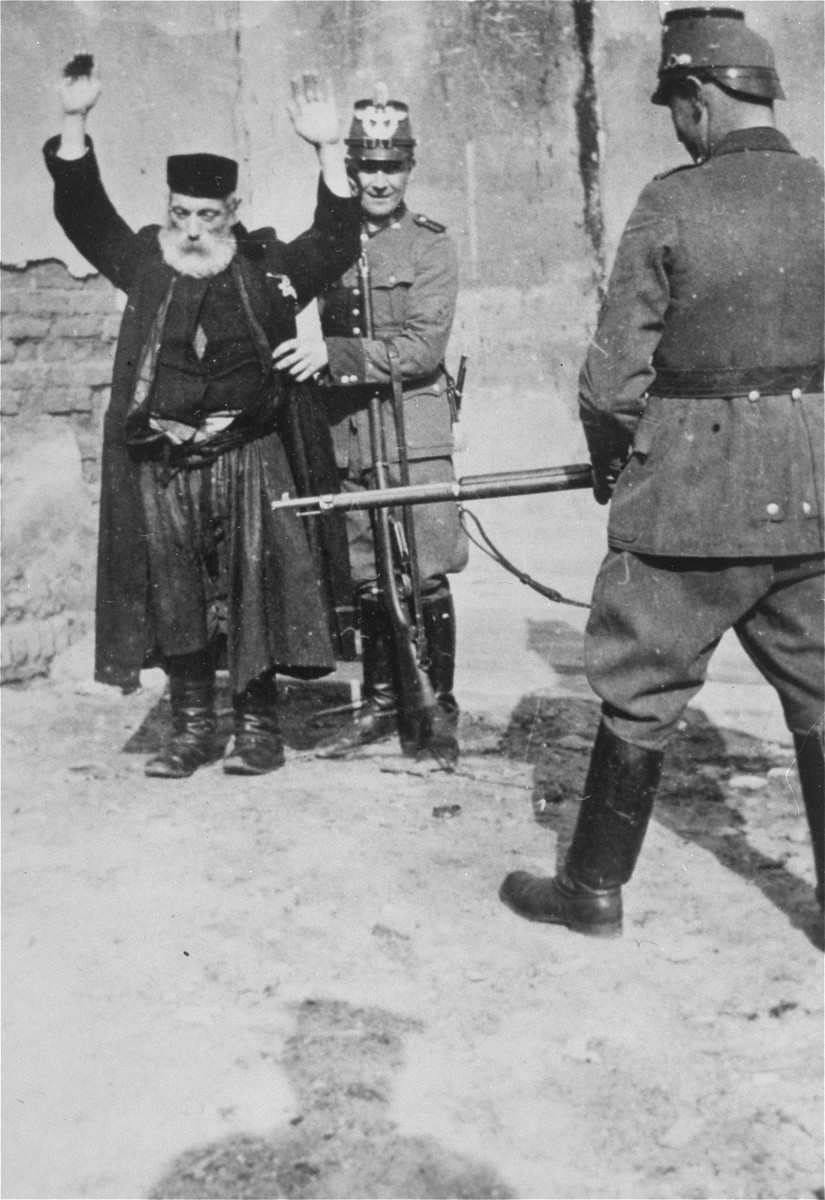
[Above: German police search a Jew.]

You were in Warsaw when the main uprising started, can you describe what you saw?

Oskar: Yes, after the ghetto battles things settled back down and life went on. The war was causing hardships, as rationing had started and many forms of entertainment were curtailed, this people resented. We still had a very good relationship with the population, but we started getting more arrests for painting graffiti, hanging leaflets, and other offensives. We knew there was a large underground organization here, but until they broke the law, we could do nothing. The SD had many Poles working for them to try to root out these people, but they seemed everywhere, from the Church, the universities, and even the government. We never felt enough was done to stop them. An inspector in my precinct had a case in late '43 where a soldier on leave was stabbed to death and an informant led the investigators to a man hiding in a church, being protected.

My life in Warsaw was good up until the Soviet summer offensive of '44; they attacked to help the western allies in Normandy. Warsaw was bustling as transport after transport was moving men and supplies. By late July, one could hear the sounds of distant battles. We noticed more aircraft dropping goods but we only seized a few which contained weapons and ammunition. This was our clue that something was happening, and the city commander started sounding the alarm. The higher ups were much more concerned about the Russians but our alert status was high, I was sent to the university area to escort some underground informants who had been betrayed but escaped and needed our help. It was when I arrived here that the shooting started. I heard booms and saw smoke in the distance. The commander posted guards and met with us to advise of what was happening.

We were part of the defense and were ordered to fortify all buildings. We went through and set about getting ready. We heard more and more gunfire, and the phone lines were cut. We had to deal with snipers taking shots at us, but we had machine guns and could cut them down when found. I manned an MG 42 with a crew of three. They attacked us day and night with grenades and a flamethrower. We were scared, and had no idea what was going on. It took two days to get our first refugee who was a railroad man. He said the whole city has risen up to help the Russians. Our commander wanted to send a small group out to scout our surroundings to confirm. They left at dark but never came back. The refugee said he saw the underground execute several Germans and Poles who collaborated. The Home Army was supposed to wear red and white armbands, which was supposed to help mark them as fighters, but not many did which made it hard to distinguish. Many wore German uniforms, yet demanded to be treated as soldiers when captured and not partisans.

We were told to be careful at who we shoot at, only aim at those carrying weapons since there was over one million people living in the city. Most of whom were peaceful. The underground attacked us again in force, throwing grenades and using the flamethrower again. However, our shots decimated them, killing most all who attacked, exploding the flamethrower. It is sad that they had fools' courage. Sadder also was they had men, women and even teenagers attacking us. We had no choice but to shoot back. I saw a boy fall who was no more than 15. It took many days to break them, then we counterattacked and took a block from them, we fortified this. We found a family hidden in the basement and made them leave under a white flag. A sniper tried to hit the guide who was taking them out, but missed and never fired again. Maybe he saw what was happening and knew these were civilians. I remember feeling very outnumbered in this fight. We held our position all around the university area with only a small mixed force. We had Poles who worked for us here too. One even had his family, but they were kept isolated and well hidden to shield them. As we started to take back the city, I was in an assault force, and started to see the great atrocities that these freedom fighters committed, any German, male or female, was shot or beaten.

We came upon a bunker area where these animals had shot surrendered soldiers. I remember their faces. One was very old and had his ring finger cut off, no doubt for the gold, one was very young maybe 17. This enraged us, as it was pure madness. My unit surprised a large group hiding in a storefront; we threw in all our grenades without hesitation, one stumbled out whom we took prisoner. By now we were in this for a few weeks, it was my hell, my baptism of fire. The dead stunk, as they could not be buried. The city center was burned or knocked down; our Luftwaffe had to be used as they built hardened bunkers all under our noses. It was sad to see places I had fun with friends in ruins, however the Allies caused this by getting the Home Army to form and then used false hope to get them to fight.

The Germans are accused of great atrocities, the Poles claim you killed over 200 thousand, do you think this is right?

Oskar: No, the figures they use are from the communist era, and I believe greatly inflated. Many civilians did die in this battle, the Home Army prevented civilians from getting out, trapping them. Based on prisoner interrogation, the Home Army believed this fight involved every person, and forced him or her into this. We did not target civilians and went out of our way to avoid them, but it was difficult. A young child was used as a nurse's aid, I saw her after it was over. The look in her eyes was one a child should never have. Our medics looked after her, and I heard a Polish police officer chastise the mom for dragging her into this battle that could have caused her death. You would have a building occupied by the enemy, with civilians in the basement. We had to fire on them to break their resistance, but sadly, this caused the deaths of innocents. To be honest with you we really did not care, war causes a lapse in compassion. As far as we were concerned, they started it, and paid a heavy price. However, at no time did we shoot unarmed civilians or violate the rules of war; they however did by taking up arms, wearing our uniforms, and killing wounded and surrendered Germans.

We did, however, shoot armed resisters, saboteurs, and anyone who gave us a hard time after capture. The defiant attitude of some came as a surprise. They really believed the war was over and the Allies were on the doorstep to victory. We had a man just start walking away from an interrogation, so he met his fate. The Allies spread such lies to these idiots, you want to feel sorry for them, but it is hard. They took cars down a main road and just started shooting at Germans eating at restaurants, walking down the streets, and coming out of offices. We saw many, after it was over, who were in the main square, and it looked like they were herded together and shot down. They even shot some Helferinnen, and those who worked with us. We also saw Polish Soviet soldiers fighting; they snuck into the city by the hundreds. The atrocities I saw came from the Home Army, from the very moment they started this. After it was over, I saw the massed columns of the surrendering mobs of civilians; I had to help process them. The armed civilians were treated as POWs instead of partisans, and the civilians who lived in the destroyed parts were sent west for better living conditions. Most all were released, which we opposed, they had broken the law and committed murder, but war has strange rules.

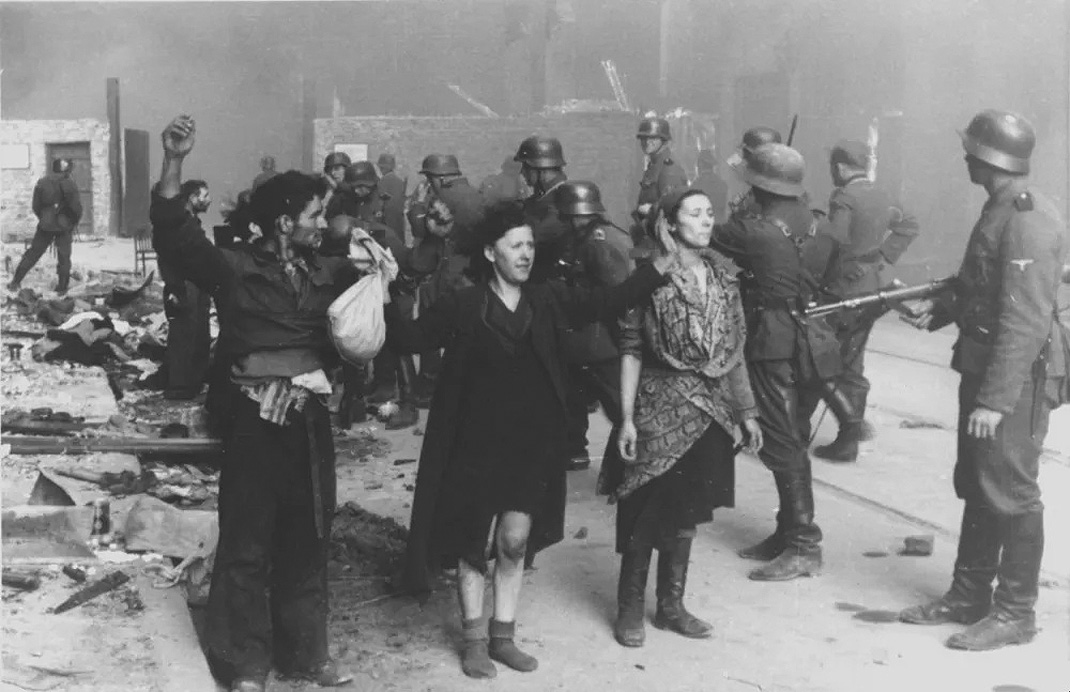
[Above: The Stroop report said 'These bandits offered armed resistance'. This picture was taken near the Jewish ghetto in Warsaw.]

What happened to you at war's end, and why is this view never presented?

Oskar: I was sent to Stettin for care, but was given orders to report to Hamburg and was put on alert and re-armed for a possible attack from Holland. I joined an ad hoc battlegroup with a mix of every branch. We were sent to a small town called Kleve [a town in northwestern Germany in the state of North Rhine-Westphalia] to reinforce the area. I stayed in this area from November until March of '45, which was a nice break. When the British finally attacked, we fought rear guard battles right up to Hamburg. I was captured, being awakened taking a nap, by a British patrol. I had it rather good compared to many of my comrades, being still in police uniform I was given the choice of going to Rheine camps or becoming part of a new police force to help process all the refugees, it was an easy choice to make. More than likely I was saved from death, as many died in the camps, which is hidden today.

I can state with fact, many Poles helped us, not all Jews were interned, and that I never saw any German crimes. I was a police officer in the Reich, and my duty was to be honest, fair, and impartial. I did my duty. Today it is impossible to tell the truth, lest I be hunted and persecuted. In the sixties, some were sought out for prosecution, but cool heads understood that partisan warfare was wrong and incited legal reprisals. Today it is a different story. Since reunification, laws have gotten much worse so one learns to be silent on these matters. Some comrades I had known had their lives ruined simply for being visible and telling the truth. This is why some Germans have broken, and spewed the tales the victors want them to tell. They lived good lives due to agreeing with the lies, writing articles and books to justify the Allied war against us. Telling lies they know never happened.


Back to Interviews