Interview with Léon C., a volunteer in the SS Division 'Walloon', Brussels, 1988.
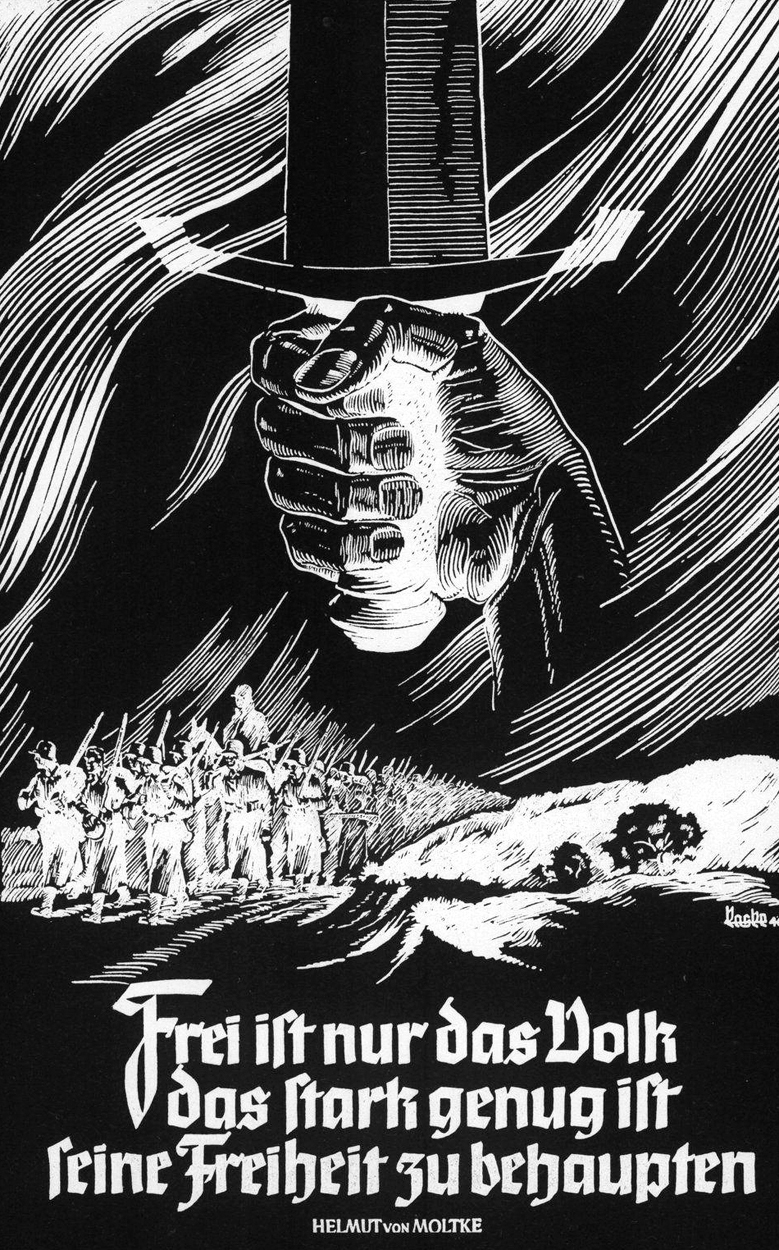
[Above: 'Only the people strong enough to assert their freedom are truly free.'
-Helmut von Moltke
NSDAP Weekly Motto, March 17–23, 1940.]
Thanks for meeting with me, can I ask you first what attracted you to join the Waffen-SS?
Léon: This is a difficult question to answer because there are a few reasons. I was born in Charleroi [city in Wallonia, Belgium] and from a very young age was taught to love my land and the people in it. This area has distinct regions that are fiercely independent from one another. For me personally, I could see that Europe was at a crossroads in the 30s. We would be either Nationalist or Bolshevist. The rich were plundering the middle class, and the poor left to fend for themselves.
Hitler was in power in Germany and his party had transformed Germany into a new state, we were hearing good things from the many German tourists who would come to Belgium. In turn, Belgians were welcomed into Germany as tourists and reported good things. The standard of living went way up, the state paid for homes, and made vacations and travel cheap. The worker was revered, and work honored. I had never had misgivings about Germany, they were supposed to be our enemies, but I did not think so.
People would read in the papers how Germany was oppressing its citizens and had become a police state with the black uniformed SS as the main instruments of this. Papers poked fun at Hitler and his party daily. I saw very Germanic-looking men in those uniforms, and thought to myself that there was much more to this than the editors wanted us to know. This was confirmed in 1939 when a man and his wife came into my shop. He was wearing a suit with a runes pin. They spoke perfect French, and I asked him about the SS pin and if what the papers reported was true.
He told me they represented the National Socialist idea of equality, and had a great reverence for the history of Germany and the continent of Europe. I asked him about what is reported in the press regarding National Socialism, and he laughed saying the press is owned by Jews and they are at war with this idea. I had never thought about this, but they showed me the names of a newspaper and who was listed as owner, editor, and writers, saying those do not sound like true Belgium names. They were not; I recognized them as being of the Jewish people. My eyes were open and I felt that maybe we had not been told the truth about this.
After the German invasion, this same SS officer came into my shop again and told me his wife loved the shoes I had made her, so he ordered more. I told him I was interested in being a part of the SS, as I held many of the beliefs he spoke about. He must have passed on my information, a few weeks later a member of the Rex party stopped by. He had literature and information for me. I was told that joining was the first step, and that my business would be listed as a party business and I would receive more orders. I needed the money, so I gladly accepted.
Therefore, this is how it all started for me; I came to see my country, and Europe were in danger from eastern Bolshevism, and I wanted to do something to stop this. It was not all smooth as there were a few parties trying to attain power, and secular rifts had to be overcome, but when war was declared on Russia, there was a call for unity in which we all answered. I volunteered to go fight under my flag.
What was your training like, and how did the Germans treat you?
Léon: In 1941 the Germans sent out the call for volunteers to join the crusade against Bolshevism, men from all over Europe came to join up. I was recruited into the Walloon Legion for the German Army; there was also a Flemish Legion that was formed. The leader of our party was Léon Degrelle, he took the step to enlist as a private to get more men to commit to this cause, and it worked.
The training was hard, we did not get a lot of drills, and instead it was weapons, exercise, and close combat. We had to attend political classes that could be boring at times; these explained the Soviet soldier and how they fight and why. I remember they brought in a former prisoner who agreed to help the Germans. He spoke about how the Soviets used force and terror to convince people to accept this idea. The Russian people were ready for a change but Stalin's greatest victory was convincing the Russians we had come to kill instead of free them.
We held war games in which we had to quickly cross a barrier under fire. We had live bullets fired at us as it gave a true sense of what battle would be like. These exercises were under tight control, and never reckless. Some author recently reported we had grenades detonated off our helmets, which is insane and not true. Training was hard and realistic, but not deadly.
We were shown films detailing what advancing German units found in the cities, and how much the population suffered at the hands of their masters. One thing that was stressed was the willingness of the Russian population to aid the Germans, and they were not our enemies. That is important for you to know, as today the opposite is said. I remember a senior NCO from the first war stressing how we could turn them into enemies if we did not treat them correctly.
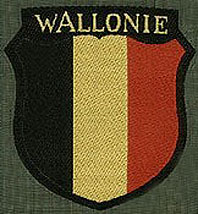
One thing that impressed me about the Germans was they stayed out of our way, and allowed us to be independent. It was made clear that we were not fighting for Germany or Hitler; we were fighting for a Europe free from the idea of Bolshevism. We had our own instructors who spoke French while learning German, and wore our nation's flag. When our training was complete, we held a parade in which our people came out to wish us well.
Once at the front, there was very little to distinguish us from German soldiers, we were treated as comrades and nothing less. Most Germans let us know they were honored to have us in their ranks. I saw very little problems in regards to nationality and language, even in the bars there was respect.
What was your impression of the Soviet soldier?
Léon: I found them to be uneducated and undisciplined. The latter caused them to fight in ways that were not conventional or legal. Sent to Ukraine in early 1942, we immediately had to engage Soviet partisans who had snuck behind the lines, fighting in civilian clothes. There were two kinds of enemies in the east, the regular soldiers of the Soviet Army, and large forces of partisans who were behind the lines.
The regular soldier rarely seemed to obey any wartime conventions. There were times we came into villages they had entered and they exacted a revenge that one cannot properly describe. They killed their own people to make a point of not collaborating. They seemed to view anyone who was friendly with us as spies, and killed them without mercy. When we captured them, they expected to be treated under the Geneva Convention, but did not give the same respect.
I will tell you that they killed many of our men who surrendered when the fight was up. They viewed anyone like us, who volunteered to fight against them, as someone deserving of death. We in turn executed the commissars who gave these orders when we could, but most were seen as prizes who had valuable information so they were sent to the rear, being used as hostages. This had to be done to retaliate when our men were executed. This rarely happened, but I cannot deny that it occurred.
The partisans we had no respect for at all. These animals were a breed not seen on the battlefield before. They fought as civilians, and were cruel in the way they fought. We found many people who suffered torture at their hands. One instance I still have haunting images of is a man and wife, who allowed us to stay on their farm during a time of rest. The partisans came after we left and slit their throats while they sat at the table. They left a placard that said 'death to spies'.
When these animals were tracked down, they rarely surrendered as we hit them with all weapons until we felt they were subdued. This meant most of the time only finding their corpses. On one operation, we did capture a large group who could kill civilians but not face our guns. Special action police units shot the leader and a few others, the rest were sent to prison camps. We freed some hostages they had taken who were badly malnourished. They took wives and children from village leaders to ensure they cooperated with them. Once we found a young boy who was hung, his father was too slow to agree.
How did your people view those who volunteered to help the Germans?
Léon: Most Belgian Walloons were for the Germans, as we saw a stable and strong nation collaborating with us. There was the resistance supposedly, but I never saw anything of them. I tend to believe that after the war, many just said they were part of a resistance to make the Allies not suspicious of them. Many who did oppose the Germans fled with the French and English in 1940. Here is a crime I will tell you about that is forgotten.
When Germany invaded, some left wing politicians and army factions wanted all collaborators shot. They rounded up Rexist and other groups, taking them to Abbeville. This included Degrelle, whom I heard this story first hand. Drunken soldiers pulled him out of a line of prisoners and beat him, which helped him to run away, saving himself from what was to come.
When the Germans were close, a French officer was ordered to shoot all collaborators, and before the killing was halted, twenty people died. Some were not even friendly with the Germans. They just rounded up anyone who was denounced and shot them. This was not the only time this happened, the French portray themselves as peaceful and docile in the war, but they killed civilians who they saw as being friendly with Germans. Lucky for the families of the victims, the Germans paid them handsomely and punished the guilty. After the war, the Allies brought in the left wing leaders who fled in 1940, and put them in charge.
Many of the men who fought in either Flemish or Walloon divisions were put on trial and labeled as traitors. I would not have expected anything less from Bolshevist sympathizers; they preached peace and acceptance, but practiced hate and exclusion if you did not agree with them. They made it as hard as they could for us to return home. Bolshevism clearly won the war hiding under the mask of liberal democracy.
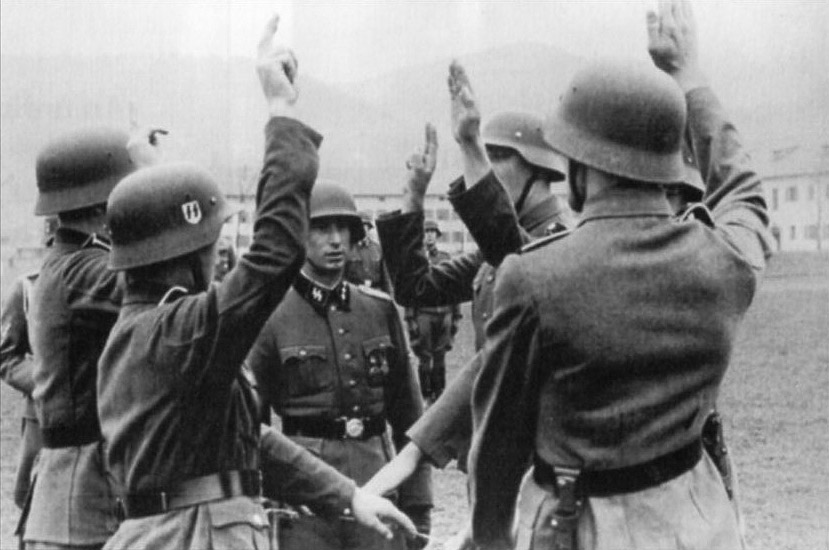
[Above: Walloonian Waffen-SS volunteers take the oath of allegiance.]
You were with the Brigade at Cherkassy; can you describe what it was like?
Léon: It was a very hard fought battle. We were at this time now in the Waffen-SS, Himmler knew the SS had experience with non-German volunteer units, and felt the SS was a better fit for us rather than the army. We went home to refit and replenish our losses after our baptism in 1942. We were back on the east front when in 1944 the Soviets launched massed attacks driving our lines back, and surrounding us. We lost our commander Lucien Lippert [August 25, 1913 - February 13, 1944] in this battle.
At this stage of the war, the Soviets outnumbered us, and could field larger armies; in contrast, we struggled to find men and equipment. Our leader was good at improvising and adapting. Even though we were outnumbered, we caused the enemy huge losses. They hit us on a cold January night and we held our ground while they surged around us. We built fortifications, and defended them well.
They were hoping for a quick surrender but our leaders organized a strong defense that was able to fight off massed attacks. The names of Cholm and Demjansk were still fresh and we knew we could hold out. The Soviets used every means possible to overrun our lines; they did succeed in pushing the pocket back and making it smaller, but we held. We joined with Wiking and after two weeks of holding out a breakout was decided. Wiking would take the lead.
A battle group pushed towards our lines, and Wiking led the push to link up. The fighting was many times close combat, and done with pistols and bayonets. We had Soviet cavalry to fight off to make matters worse. I saw them cut down German army HiWis [German abbreviation of the word 'Hilfswilliger', meaning auxiliary volunteer] who tried to surrender. Our battalion, or what was left of it, was the point of the push, but our rear lines took a beating. Soviet tanks ran through men and animals in a way that should have been a crime. They ran over our ambulance column, killing many already wounded soldiers.
I remember the roads were very bad as it was thawing which made our progress very slow, this caused more losses. Degrelle took command and led us out, literally battling through Soviet soldiers. Our men made a very good showing and caused the enemy massive losses, while keeping ours low. We had a new MG 42 that ran through belt after belt, tearing through the attacks of infantry. The few Panzers we had were going off in every direction, trying to thwart the Soviet tanks. The scene was one of chaos.
We made it after several hours of fighting, linking up with the battle group. The losses we suffered could not be replaced. We left many wounded who could not be moved, a parlay earlier agreed to fair treatment of the wounded, and we released some prisoners to gain good faith. The Soviets driving into marked Red Cross columns was a crime that was never punished. After we linked up, we were sent to the rear to prepare for a rest and refit; we lost most all heavy weapons and vehicles.
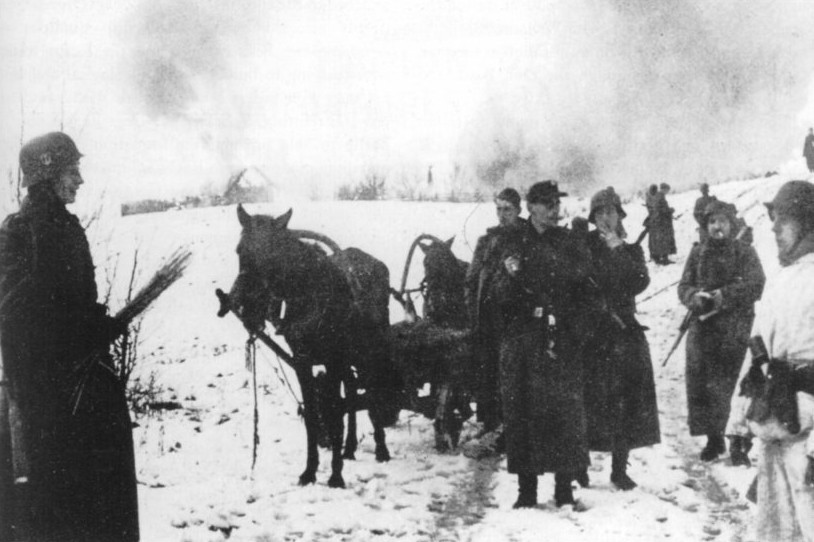
[Above: Walloonian volunteers fighting alongside the Wiking Division in the Cherkassy Pocket, where in February 1944, against overwhelming odds they broke through the surrounding Communist forces, losing half their numbers!]
The Waffen-SS was accused and found guilty of unspeakable crimes, did you witness anything you would call a war crime?
Léon: Yes, I know the charges, and no, I never saw anything that would be considered inappropriate or criminal. Did the SS fight harder than most? Yes we did. Did we inflict uneven causalities on our enemies? I believe so, Lippert once told us we caused the enemy such uneven losses they called us devils. Did I see women and children executed? Yes I did. However, I was there and what you are not told is the circumstances behind the actions which justified the reprisals.
I believe everything German forces are accused of doing was a reaction to a crime committed against us. A 15 year old that is not in the military who kills a soldier is a criminal guilty of murder; military law is quick and instantaneous. When we fought partisans this was common, they taught their children to fight us, when caught alive they mostly were sent to camps, but in some cases, if it was shown they were responsible for taking a life, they paid a price. The Allies did the same thing, the Soviets far worse.
Women fought against us, both in the army, and as partisans. When we captured women soldiers, they were sent to camps for women. If a woman partisan killed a soldier, they normally were executed as a criminal. Some were saved and used as collateral in exchange for a solder's life. The Soviets and their allies have been able to control what is written about the war, and their allies in the west help support their stories. They are still waging this ideological war against a now defenseless enemy.
At no time did Walloon or Wiking commit any crimes against the people of Russia; we treated the civilians as best we could, often times putting ourselves at risk to ensure their safety in fights they were caught in. We fed them and provided medical care without any prejudice. The partisans exacted a terrible revenge on the population who was friendly to us, and during our retreats in '44 and '45, many of them came west with us, there were hundreds of thousands, the Soviets strafed these columns often.
Listen, I would never have fought for an idea that was vile and harmful to anyone. When I see that young child with those bright eyes, I think to myself, I fought for you, and I fought for that woman there, I fought for that man, and I fought for you. We were a brotherhood that went through four years of hell on earth, trying to stop the red flood. Yet we are called criminals at worst, misguided traitors at best. Make no mistake about this, if Germany did not strike Bolshevism, then it would have taken all of Europe. I am convinced of this, they would be on the coast, and there would be millions more corpses.
The crimes I saw were those committed by the Soviets and their helpers against the people of Eastern Europe. The great expulsions, the killing of civilians, of prisoners of war, and wounded soldiers. They did these things, and have the audacity to turn around and accuse us of these deeds, and due to controlling what people read, they control what they know. I am allowed in my homeland again, but it took a lot of effort and pleading. We were all branded as traitors because we fought against Bolshevism to give our people a better life. This is why we fought and I would do it again.

Back to Interviews