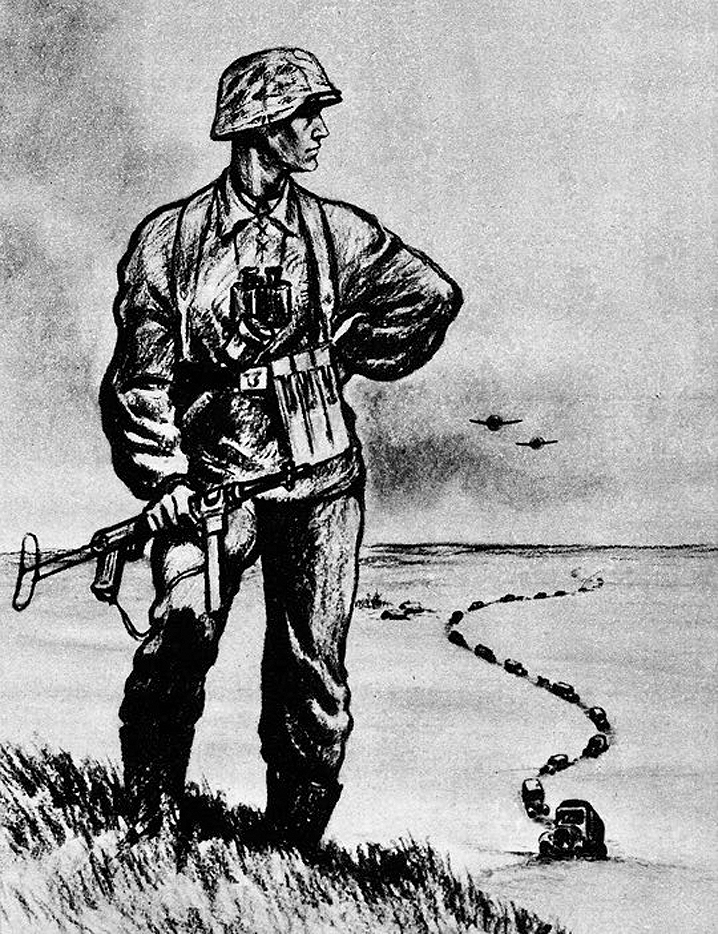
Interview with Heinz Hannemann, member of the SS Heimwehr ‘Danzig’, the Totenkopf Division and the SS Panzer Division 'Hohenstaufen', Germany, 1986.

Interview with Heinz Hannemann, member of the SS Heimwehr ‘Danzig’, the Totenkopf Division and the SS Panzer Division 'Hohenstaufen', Germany, 1986.
Heinz: Growing up I saw my country falling apart, there was a sense of despair, and hopelessness for the common man. One man and his party changed all that. I grew up in a volatile part of the Reich, which was separated [from Germany] by Versailles [Treaty]. When Hitler was elected a new feeling was in the air, and one of his promises was to reunite all the lost territories. Many people scrambled to find positions in the new government, I chose the SS, as it closely resembled the Black Lifeguard Hussars. It was a very elite and loyal group. I applied, underwent the strenuous background checks including physicals, and was one of the few accepted. I proudly donned the black uniform. I was able to stay in Danzig; my SS Standarte was called the Heimwehr ‘Danzig’, to protect the city and border from Polish provocations. I was trained to be a driver, and was able to drive some of our political leaders around, most notably [Danzig’s] Gauleiter [Albert] Forster. I only drove him once, I remember he liked telling jokes.
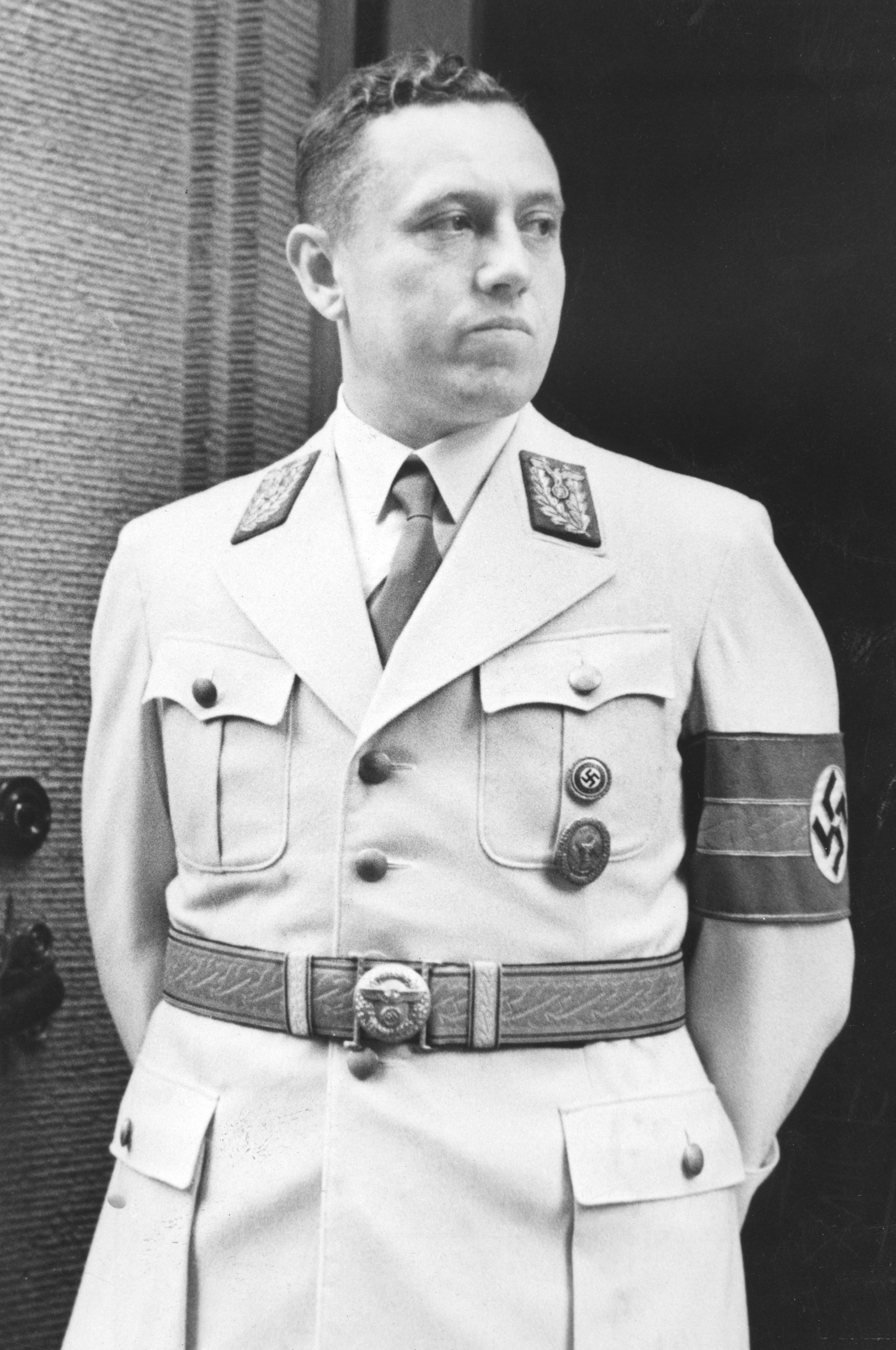
[Above: Gauleiter [Albert] Forster, murdered by Allied beasts on February 28, 1952. *For you WWII buffs out there wondering what badge/medal he is wearing beneath his Golden Party Badge it is a very rare Gau Danzig Award.]
What was the start of the war like for you?
Heinz: I was in the thick of things from the beginning. Tensions with the Poles were simmering ever since the Versailles Treaty; bandits who murdered people who resisted them attacked the Reich borders repeatedly. Even in the Free City [Danzig] there had been attacks, one incident was a German girl who had been raped and strangled by a band of Poles, only quick intervention by Forster avoided a riot. This act had been done by some of many Polish criminals who were protected by the league [The League of Nations] which agitated the German majority.
I saw an influx of refugees heading back to the Reich due to assaults and persecution by their now Polish masters, so we all knew the situation was bad for Germans. By 1939, the Heimwehr 'Danzig' was trained in weapons and military skills. We knew there was a time coming when we would have to defend ourselves, as the Allies increasingly were aggravating an already volatile situation. One could hear Poles saying that soon the capital of Poland will be Berlin. It is a myth that they wanted peace and were the victims of our aggression.
We were briefed in late August that the Poles illegally were strengthening the Westerplatte [The Battle of Westerplatte was the first battle of the German invasion of Poland], and buildings in the Free City. I want to stress this was against the treaties in place. There was an incident in Danzig where a Polish soldier shot a postal worker, and it almost started a fight then. Another time a civilian plane was attacked by Polish flak, all protests were ignored. On Sept 1, we started being able to fight back. These stories are hidden by the occupiers today.
I was part of the initial group to help take the government buildings. It all seems so silly today, but we thought the Poles would just surrender without fighting. Our leader called out to them to come out, as the building now belonged to the German Reich once again. This was met with a hail of gunfire, but he tried again, telling them there was no honor in fighting as Danzig is now under control of the Reich and they are subject to German law. Again, they fired wildly, luck would have it that the streets were clear, and we suffered no losses.
Armored cars from the first war were taken out of a museum and rearmed to deal with the enemy. They raked the front with fire, killing and wounding some of the Poles. The fight did not last long and they finally gave up when a fire was started in the building, and it forced them out. We helped treat the wounded, but could not help but wonder why they put up a fight. Once this was over, I was sent to help comrades taking Westerplatte.
The [German battleship] Schleswig-Holstein was brought in to help combat the large garrison we knew existed, but even her powerful guns had trouble with the well dug-in enemy. They had many machine guns and cannons that stopped our attacks and gave us losses. Our very small force had to use ingenious methods to try to dislodge them. Stukas even launched an attack that looked devastating, but these men were well armed and had built strong fortifications that we struggled with.
After a few days of attacking, we finally forced the situation and they surrendered. It was such a sight to see them trudging out, dirty and smelly, our leader said to their commander 'was all this worth it?', pointing to the dead they had laid out. The war with Poland only lasted a few weeks, after mopping up bands of holdouts, all was over.
Your government claimed part of the reason Poland was attacked was the killing of Germans, especially in Bromberg. Did you see any of this?
Heinz: I will say the stories Germans told of persecution by the Poles were very real, and I will even say that they were downplayed to placate the Poles and to reconcile. During the war these [crimes] were forgotten as we needed the Poles help against Russia. It all started due to Germans still being loyal to the Reich, and this enraged many Polish nationalists, they had a sense of superiority after beating the Red Army. They expected Germans who were ripped from their Reich to now bow down to the new masters, knowing full well when the roles were reversed they did not bow to the Kaiser.
This caused many instances of harassment and attacks. Property was taken, savings were stolen, and there were even rapes and murders before 1939. That is why so many Germans started to flee Poland. Once war was declared, many Germans who stayed were attacked by angry mobs who burned their homes, and many ended up dragged out and beaten or shot. I saw evidence of this. Bromberg was a small town in which the Polish Army enflamed the civilians as they retreated, and many Germans were dragged out of their homes and beaten to death or shot.
The conduct of some Polish people is a stain on their honor. They killed innocent men, women, and children, they today claim it was we who committed terrible acts. After it was over we spent time working with the police to hunt down and round up these killers and saw that they were put on trial.
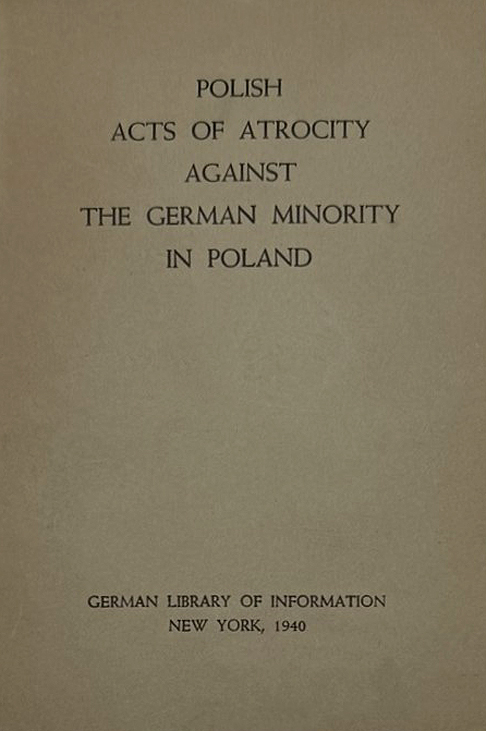
[Above: Important period documentation on the atrocities committed against German civilians which led to the invasion of Poland. Absolutely horrific and painstakingly detailed vision into hell itself.
Understand that these were largely not 'Poles' who carried out these massacres, but the Evil which had overtaken Britain and most the world.
Click here for the PDF: The Polish Atrocities Against the German Minority in Poland (1940)]
You were part of the invasion of France?
Heinz: Yes, after Poland my unit was absorbed into the Totenkopf-Standarte, which was made into the Totenkopf Division. I was in the Third Company of Infantry Regiment 3. We spent the first five months of 1940 drilling and training for action as a coordinated division. We were young and green, not yet ready for action but we did not care. It was with disdain we learned we would not be in the first wave of the attack on the French, we were held in reserve.
It was not until May 16th we moved into Belgium to help army units who were bogged down against the French. We attacked into the flank and quickly overran their lines, but we took our first losses. It was with pride we sent thousands of prisoners to the rear. The Battle of Arras [May 21, 1940] was a rude introduction to the British; they overran our lines with a massed tank attack, which our guns were ineffective against. Thanks to the use of 88s [88mm gun] in a ground role and brave individual soldiers using grenades, we broke their attack.
I want to address a situation my unit is implicated in. I personally witnessed the British fire at me with reversed bullets, which exploded when making impact. These caused horrendous injuries, and were outlawed [by the Hague Declaration of 1899]. I was leaning against a brick house when British infantry attacked our position, I heard a snap and then had shards hit my helmet and entered my back. These reversed bullets made a strange sound when they whizzed by.
I was taken to the field hospital for treatment, and saw some ghastly wounds on men, there was even a French civilian who was killed by this, and officers were examining his body as well as the injured. Their conclusion was the British were using an old trick from the first war. It is claimed we murdered prisoners in cold blood, but in truth, they were shot for murdering soldiers under truce, illegal deception, and illegal use of ammunition. Many who were supposedly murdered had already fallen under a hail of German bullets while they tried to flee when out of ammo.
It is a lie Totenkopf killed these prisoners after surrender. This was a reckless British unit, with bad officers, who allowed the use of illegal ammunition they knew would cause devastating damage. After Arras, we had clearly broken the Allied front and continued to encircle them. We treated the French civilians very well, helping the German Red Cross move in food and water. Refugees made movement very hard, but we kept pushing forward to the coast. By the end of June, it was all over.
What was the Invasion of Russia like for you?
Heinz: France showed Totenkopf needed more training, as our losses were very high due to reckless charges and stands. We trained, and for the first time trained with army units to be more cohesive. After very nice duty on the Spanish border that summer, we were moved to Poland and then on June 22nd attacked the Red army via the Baltic States. I was now a driver and promoted to SS Rottenführer. Having won the Iron Cross and Wound Badge for France I was considered a combat veteran.
We moved into former Soviet territory and immediately saw prisoners, and lots and lots of equipment that was stockpiled. It appeared the Soviets had something brewing and we surprised them. Our Luftwaffe, although thinly dispersed, was often overhead taking on Soviet aircraft, shooting them down in droves. I once saw two fighters bring down eight bombers and the fighter escort they had.
We moved deeper and deeper into Soviet lands, overcoming all stands they made, easily bursting through the vaunted Stalin Line. I still can see all the civilians who came out to wish us well, and give us drink and bread. For the first time in decades clergy could be seen blessing us and displaying the cross of Christ for the first time, which was forbidden under Jewish Bolshevism.
We also started to hear of the dirty tricks of Soviet soldiers, they booby trapped the dead and wounded, would play dead and then fire on soldiers from behind, and use bombs hidden in wood or coal that would blow up stoves. A family a sister unit was billeted with had this happen and it killed the mother and badly wounded her daughter who was making stew. We learned to be very diligent.
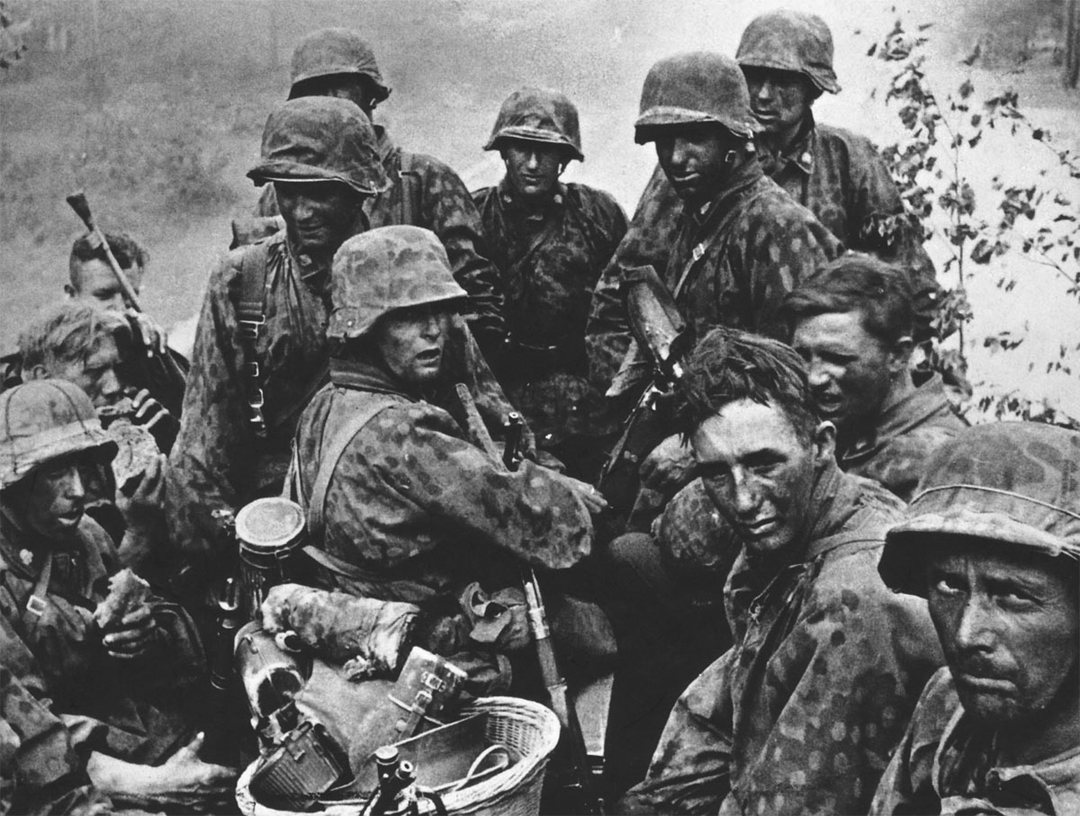
[Above: Tired knights of the elite Totenkopf during a lull in fighting.]
Speaking of civilians, Totenkopf was accused of terrible war crimes, mainly killing Jews, civilians, and POWs; can you share your thoughts on the guilt of the division?
Heinz: It is very sad for us to read in the papers and in the news today all the accusations against Totenkopf. In war sometimes the laws are ignored or blurred, this is true. I can state to you with a clean conscience that I never saw any evidence of crimes by my division and I want to reinforce that. We had a very good relationship with the civilians in any area we stayed. The only time a problem would happen is if a partisan attack happened. The guilty parties were turned over to the police or auxiliaries, tried, and hung if guilty. This did not happen very often, but it did happen. We had orders from [Theodor] Eicke to treat the people very well, as we needed their help and food.
Rarely did we force civilians to aid us, most did so voluntarily, even actively helping track down partisans. Many of the tales told about reprisals and shootings come from our enemies, and I consider them to be nothing but well put tougher propaganda. The Soviets especially put on a show, claiming we killed 30 million, mostly civilians, through systematic policies. Our photos show how the true relationships were. I used to have a scarf given as a gift by a Russian girl who wished me well in our fight against Bolshevism. It was stolen when I was captured.
Much like the claims made by Jews, which are quite incredible, and I knew many comrades who were guards in the camps and spoke about how well they were treated, I do not believe the stories the victors tell.
You went on to see action with Hohenstaufen in Normandy?
Heinz: Yes, the winter in Russia was harsh; I was pulled out of the front for additional treatment of my wounds and training. The cold had aggravated my back, and I was one of many who got frostbite. I worked in the replacement regiment of the division, and then was sent to be an instructor in the driving school. I did not like this, as I wanted to be at the front. I was asked to join a newly formed division, and saw my chance for promotion in another front-line combat unit. Therefore, in mid-1943 I joined Hohenstaufen.
We spent many months training and building, and then we were sent to the east front, which for me was a welcome sight, and a chance to get at the Soviets again. We attacked Tarnopol [a city in western Ukraine] and smashed a vastly superior Soviet tank force, knocking out countless tanks and vehicles. The fighting on the east front had changed much; the Soviet soldier now was a fanatic who was well-trained and equipped. Unlike the early undisciplined mobs we faced, these soldiers were better fed, and better equipped than the average landser. We had clearly lost the initiative and any advantage we had early on, but our spirit was still strong.
Soviet planes now roamed freely, outnumbering the Luftwaffe, but our fighters could still bring them down when they showed up. Our flak received their baptism of fire while we unloaded, and while making our way to the front. They shot down a bomber right in front of us, the pilot making a skillful landing, but then the crew jumped out and started firing at us like crazy men. When they saw a four-barrel flak gun being moved in they quickly surrendered.
After three months back at the front, we learned about the landings in Normandy, and were ordered to the railhead to move west. I was looking forward to seeing the British again. Our journey was forlorn as now we started to see the devastation wrought on the cities, the look on the people's faces was a look of weariness and fear. The Allies did not spare even France; they attacked us as if on cue when we arrived. I thought the east was bad with enemy planes; the west was ten times worse. They harassed us all the way to Caen.
We lost some of our armor on the way, and took causalities. I was not prepared for the power the Allies had, any attacks we tried were driven off by terrific barrages, and massed anti-tank fronts. We could only hope to hold their attacks at bay, which we did well. We became masters of camouflage, ambushing their forces when they showed their faces. Most of the time the Allies had a shield of aircraft that made it very hard for us to organize any strong resistance, we would break, regroup, and retake.
I saw my first American prisoners whom were paratroopers that dropped and hid behind the front. Some holdouts were still being flushed out in early July. I want to tell you also that the Allies caused many casualties among the French; we would hear them [French civilians] mock the supposed 'liberation' as it came with a very heavy price. It was sad to see lovely countryside being bombed and shelled without regard to what was being destroyed. We did what we could for the French, but we had meager supplies.
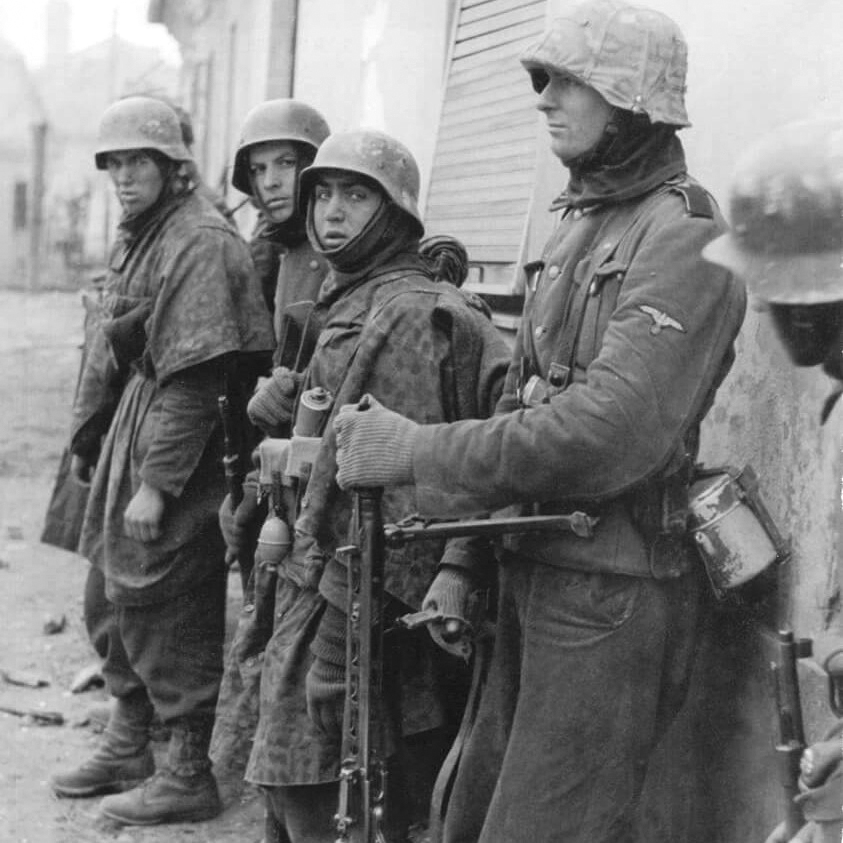
[Above: Brothers of Division Hohenstaufen, ready to sacrifice their lives for Europe.]
What happened after Normandy?
Heinz: By late July, our lines were pierced and we were under threat of encirclement. I was part of the retreat, and made it out of the pocket. I was then posted back to the Reich for additional training and assigned to the driving school for Hohenstaufen. I missed the actions at Arnhem, as I was an instructor, and then promoted to attend officer school in late '44, receiving my commission in early '45. Therefore, I also missed the Ardennes Offensive as well. I rejoined just in time for the attack to relieve Budapest, which even though we caused the Soviets severe losses, it was also our last hurrah. Our strength was gone, and by April so was our will to fight. We looked only towards surviving, retreating back into the Ostmark [Austria] to surrender to the Americans, as we heard horrible stories regarding Soviet treatment of prisoners.
We started to hear from civilians who fled the Soviets that they were raping and killing everything in their path. It sent terror through the ranks of now young boys who never should have seen war. It was with a clear conscience and happy heart I surrendered, and being a driver, I was used by the Americans to help move prisoners and goods to collection camps. One issue that came up that angered us was the Americans started sending former east front soldiers to the Soviets, I was lucky to avoid this, as I never won the Eastern Front Medal and threw my Soldbuch [military identification book] away.
The Americans made up new laws as they went, my comrades and I were held as prisoners even though the war was over and we should have been sent home. I will say to you that some prisoners were treated very well and released after a few months. But others were sent to the Rhine area [the Rhine Meadow Camps, 19 Allied outdoor concentration camps where the Allies murdered 790,000 - 1,000,000 German prisoners, per the 1989 book Other Losses, by Canadian historian and writer James Bacque. The Allies covered this up for years, claiming only 4,500 deaths.] and had to endure very poor rations in outdoor camps, several thousand are said to have died as a result.
[Above: The SS vanguard of Europe.]